
Weekly Hunan–Guangdong–Africa Route Cuts Kenya Delivery Time
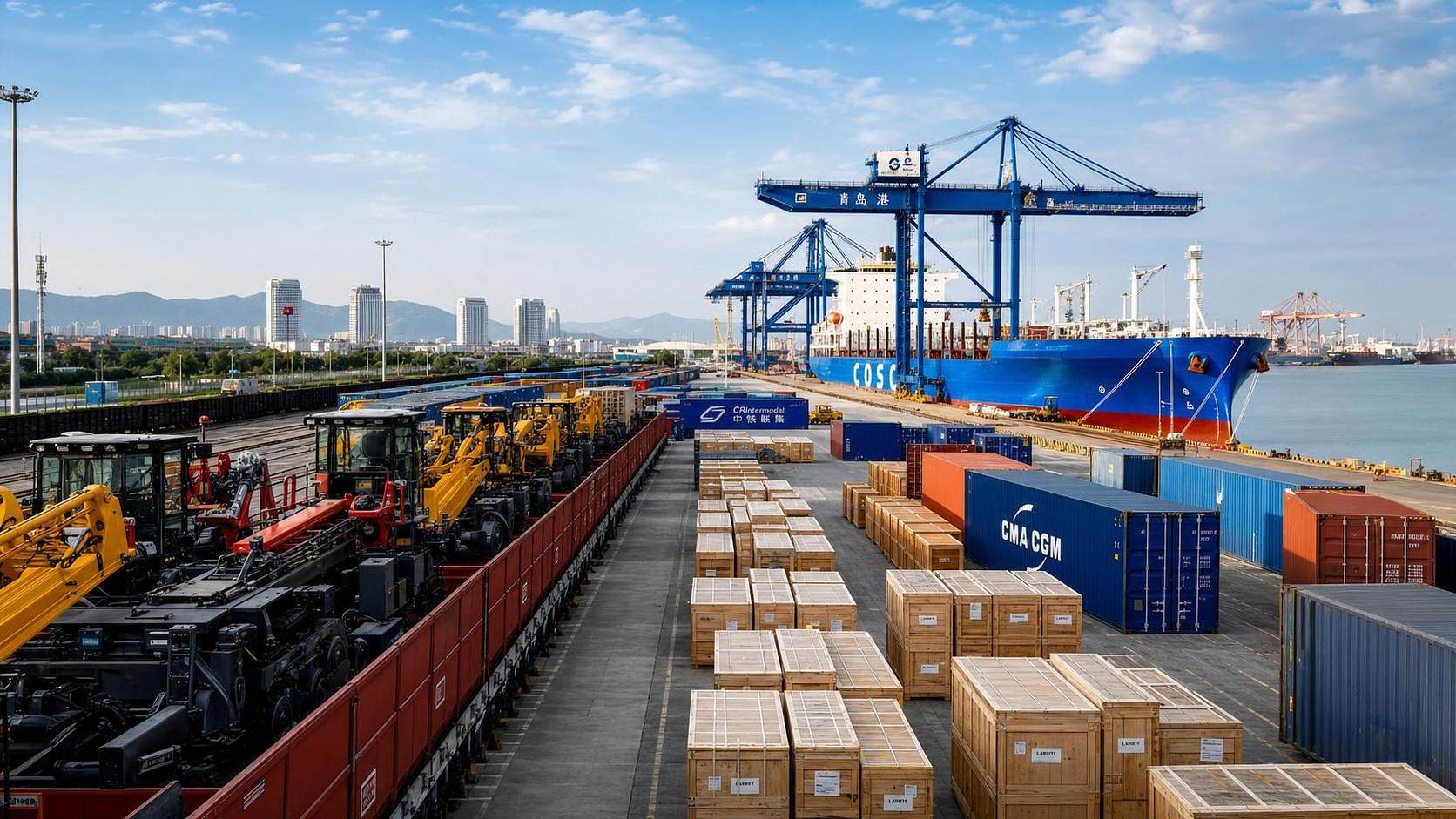




On June 15, 2026, the regular weekly operation of the Hunan-Guangdong-Africa rail-sea corridor signaled more than a logistics update for agricultural machinery exports. With the Changsha-Guangzhou Nansha Port-Nairobi via Mombasa route shortened from an average of 26 days to 18 days, including customs clearance buffer time, and with the corridor now included in the Hunan Department of Commerce green channel for agricultural machinery exports, the development points to a more execution-oriented trade facilitation arrangement. Exporters, component suppliers, logistics providers, and buyers tied to higher-value machinery configurations should pay attention because priority inspection release and space allocation can affect delivery planning, documentation timing, and shipment reliability.
A corridor shift with confirmed execution changes
According to the provided information, the Hunan-Guangdong-Africa rail-sea intermodal corridor began regular weekly train operations on June 15, 2026.
The end-to-end logistics time from Changsha through Guangzhou Nansha Port to Nairobi via Mombasa was reduced from an average of 26 days to 18 days, and that figure includes customs clearance buffer time.
The corridor has also been included in the Hunan Department of Commerce green channel for agricultural machinery exports. Under that arrangement, complete machines carrying higher-value-added components such as CVT Transmissions and Hydraulic Lift Systems receive priority inspection release and shipping space support.
The first batch, consisting of 37 containers and including intelligent hydraulic system components from Zoomlion and Lovol, arrived in Kenya on June 16.
Where the operational impact is most likely to appear
Export scheduling becomes more sensitive to documentation readiness
From an industry perspective, agricultural machinery exporters are among the most directly affected parties because the new weekly rhythm and shorter transit window can shift the pressure point from pure transport time to shipment readiness. The practical impact is likely to appear in export booking, customs filing preparation, packing sequence, and handover coordination between inland rail and port shipment. What deserves closer attention is whether internal export documents, cargo descriptions, and product configuration records are prepared early enough to make effective use of priority release and protected space.
High-value component suppliers may face tighter delivery coordination
Suppliers of assemblies such as CVT Transmissions and Hydraulic Lift Systems may also feel the change because the green channel explicitly references complete machines equipped with higher-value-added parts. Analysis shows that the main issue is not a new technical rule in itself, but a stronger operational link between component availability and export departure windows. For these suppliers, the relevant business effect is likely to center on outbound coordination, traceability records for installed systems, and alignment between component delivery timing and final machine loading plans.
Logistics and forwarding providers will need to adapt to a more rule-based service window
For logistics service providers, the move to regular weekly operation suggests a more stable but also more disciplined planning environment. Observably, the benefit of faster transit can only be realized when rail transfer, port handling, and customs-facing procedures are synchronized. This means service providers should pay close attention to cargo acceptance timing, booking confirmation, and documentary consistency for machinery and components moving under the green-channel arrangement.
Buyers and distribution-side participants may reassess lead-time assumptions
Buyers, distributors, and after-sales networks linked to Kenyan deliveries may also need to adjust planning assumptions. Analysis shows that shorter and more predictable transport timing can affect purchase scheduling, inventory arrival expectations, and commissioning preparation. At the same time, companies should avoid treating the stated timeline as a blanket guarantee for every shipment, because execution still depends on cargo mix, document quality, and actual operating conditions under the route arrangement.
Practical points companies should monitor now
Check whether product files are ready for a faster export cycle
It is more appropriate to understand the current change as a prompt to review export readiness rather than as an automatic acceleration for all orders. Companies shipping complete machines with higher-value-added systems should closely check whether product specifications, packing lists, export declarations, and configuration records are complete and internally consistent before booking against the corridor.
Track how the green-channel treatment is applied in practice
The provided information confirms priority inspection release and space support, but it does not define the detailed execution criteria. What deserves closer attention is whether subsequent official wording, operating notices, or implementation guidance clarify eligibility boundaries, supporting documents, or cargo-priority conditions for machinery fitted with specified high-value-added components.
Align procurement and assembly with weekly departure discipline
For manufacturers and procurement teams, a weekly service pattern can make upstream timing more important. Analysis shows that firms may need to review supplier delivery cadence, final assembly cut-off times, and loading preparation for machines intended for the Kenya route. Where key subsystems are involved, coordination between procurement, production, and export teams becomes a practical compliance issue as much as a scheduling issue.
Prepare for tighter expectations on delivery follow-through
Shorter logistics timing can raise expectations on post-shipment responsiveness. Exporters and after-sales teams should therefore pay attention to shipment traceability, handover records, and product identification materials for machines and related hydraulic components. The current information does not establish any new after-sales rule, but faster routing can make delivery accountability more visible in commercial execution.
Why this looks like an execution signal rather than a broad policy rewrite
Observably, this development is best read as an operational implementation signal tied to trade facilitation, not as a standalone rewrite of export law or machinery regulation. The confirmed facts point to three concrete changes: regular weekly service, reduced end-to-end timing, and inclusion in a green-channel arrangement with priority release and space support for certain complete-machine configurations.
Analysis shows that the industry should focus less on headline transit reduction alone and more on whether this arrangement begins to influence booking behavior, documentation standards, shipment prioritization, and buyer expectations in actual transactions. It is more appropriate to understand this as a landed execution change with broader implications still subject to observation.
How the market is likely to read this development for now
At this stage, the event carries practical significance because it connects logistics regularity with an officially referenced green-channel mechanism for agricultural machinery exports. For companies involved in exporting complete machines and related high-value-added systems, the immediate relevance lies in delivery planning and execution discipline rather than in any confirmed expansion of regulatory obligations.
A rational reading is that this is a meaningful operational change already in effect, while its wider impact on procurement behavior, contract timing, and market practice still needs to be tracked through subsequent implementation and industry feedback.
Basis of this article and what still needs verification
This article is based on the user-provided news title, event date, and event summary. For developments of this kind, commonly relevant source types may include official notices, releases from trade or customs-related authorities, information from competent commerce departments, industry association updates, standards-related documents, and reporting by authoritative media.
No specific official source link was provided in the input, so the underlying official publication path and any later supporting documents still require ongoing verification. Observably, the points that remain worth tracking include any detailed implementation guidance, the practical scope of green-channel treatment, possible changes in tender or procurement documents, market feedback from exporters and buyers, and how companies actually execute shipments under the weekly corridor arrangement.
Related News

How to Select Precision Crop Protection Equipment for Variable Field Conditions
Precision crop protection equipment selection made simple: compare terrain, canopy, weather, control accuracy, and data workflows for reliable applications.

When Does Agricultural Machinery Leasing Cost Less Than Owning Equipment?
Agricultural machinery leasing can lower farm costs when use is seasonal or uncertain. Compare utilization, maintenance, cash flow, and risk to make a smarter equipment decision.

How to Evaluate Precision Fertilization System Suppliers for Farm-Scale Deployment
Precision fertilization systems suppliers: learn how to compare accuracy, integration, uptime, service, and total cost for confident farm-scale deployment.

ISOBUS for Smart Agriculture: How It Connects Tractors, Implements, and Farm Data
ISOBUS for smart agriculture connects tractors, implements, terminals, and farm data—helping growers improve precision, documentation, and smarter field decisions.

Automated Water-Saving Irrigation: How to Cut Water Use Without Reducing Crop Yields
Automated water-saving irrigation helps farms cut water use, protect crop yields, improve scheduling, and gain reliable control with sensors, flow monitoring, and smart zones.

Selecting Grain Farm Equipment by Acreage, Crop Mix, and Harvest Window
Agricultural equipment selection for grain farming: match machinery to acreage, crop mix, and harvest windows to improve uptime, efficiency, and returns.
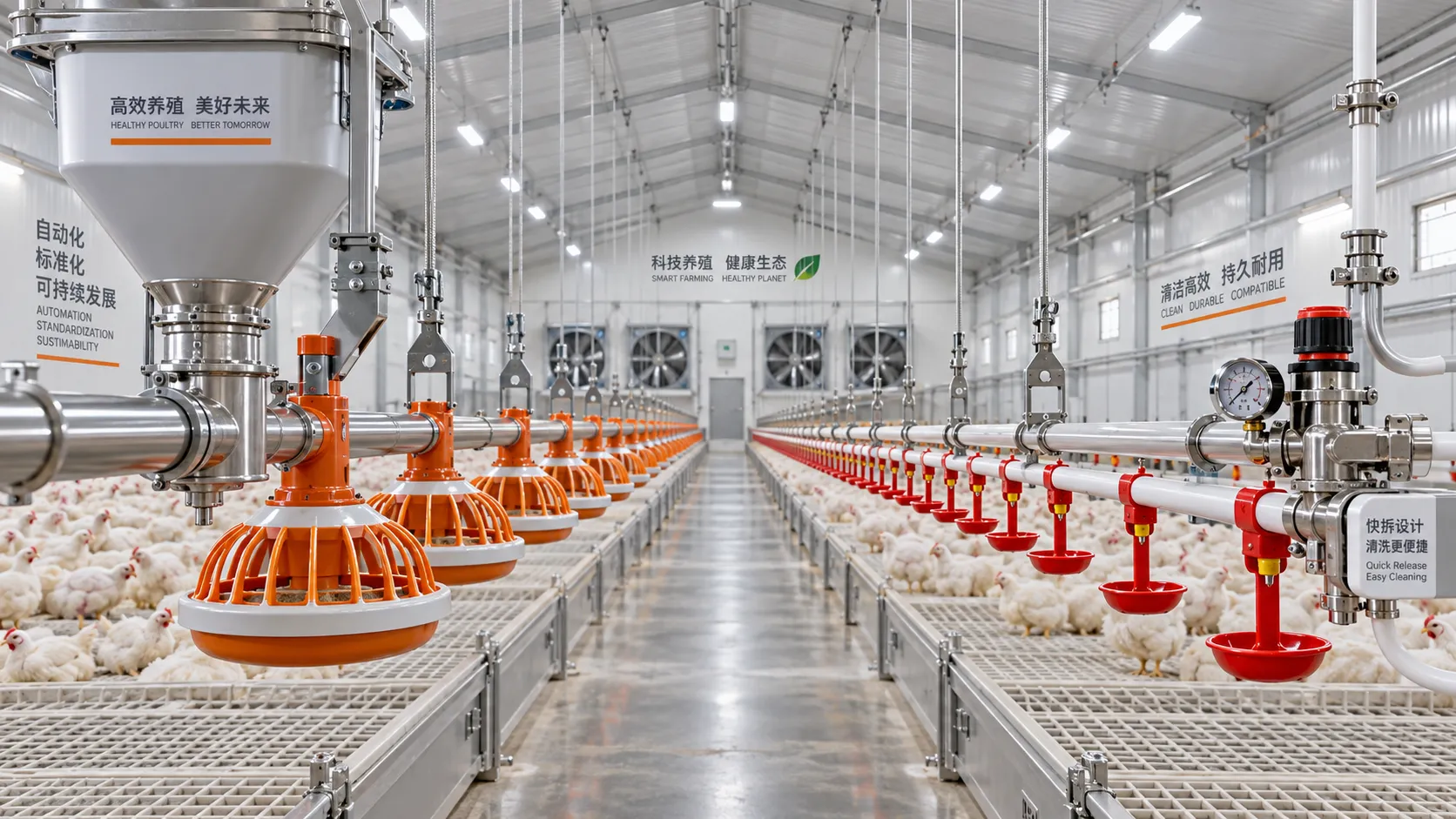
Poultry Equipment Selection: Evaluating Durability, Cleaning, and Compatibility
Poultry equipments selection guide: evaluate durability, cleaning access, and system compatibility to improve hygiene, reduce downtime, and support efficient flock management.

How to Select Heavy-Duty Farm Implements for High-Acreage, High-Horsepower Operations
Heavy duty farm implements: learn how to match draft, hydraulics, hitch capacity, frame strength, and field conditions for reliable high-acreage performance.

Smart Farming Technology for Dairy Farms: Where Automation Delivers Measurable ROI
Smart farming technology for dairy farms delivers measurable ROI through automation, precision feeding, health monitoring, and data-driven cost control.
Related News
- 00
0000-00
Fuel-Efficient Tractor Powertrain: Which Specs Matter Most for Total Operating Cost? - 00
0000-00
CVT Transmissions Price Explained: What Drives Cost in Agricultural Machinery? - 00
0000-00
Dedicated CVT Rail Link Signals New Export Execution Standard - 00
0000-00
TUV Rheinland Sets New ASIL-B Rule for CVT Systems - 00
0000-00
ANVISA Clears First China-Made Bio-Based CVT Fluid for Brazil
Popular Tags
Tractor Power Architect
Weekly Insights
Stay ahead with our curated technology reports delivered every Monday.