
Dedicated CVT Rail Link Signals New Export Execution Standard
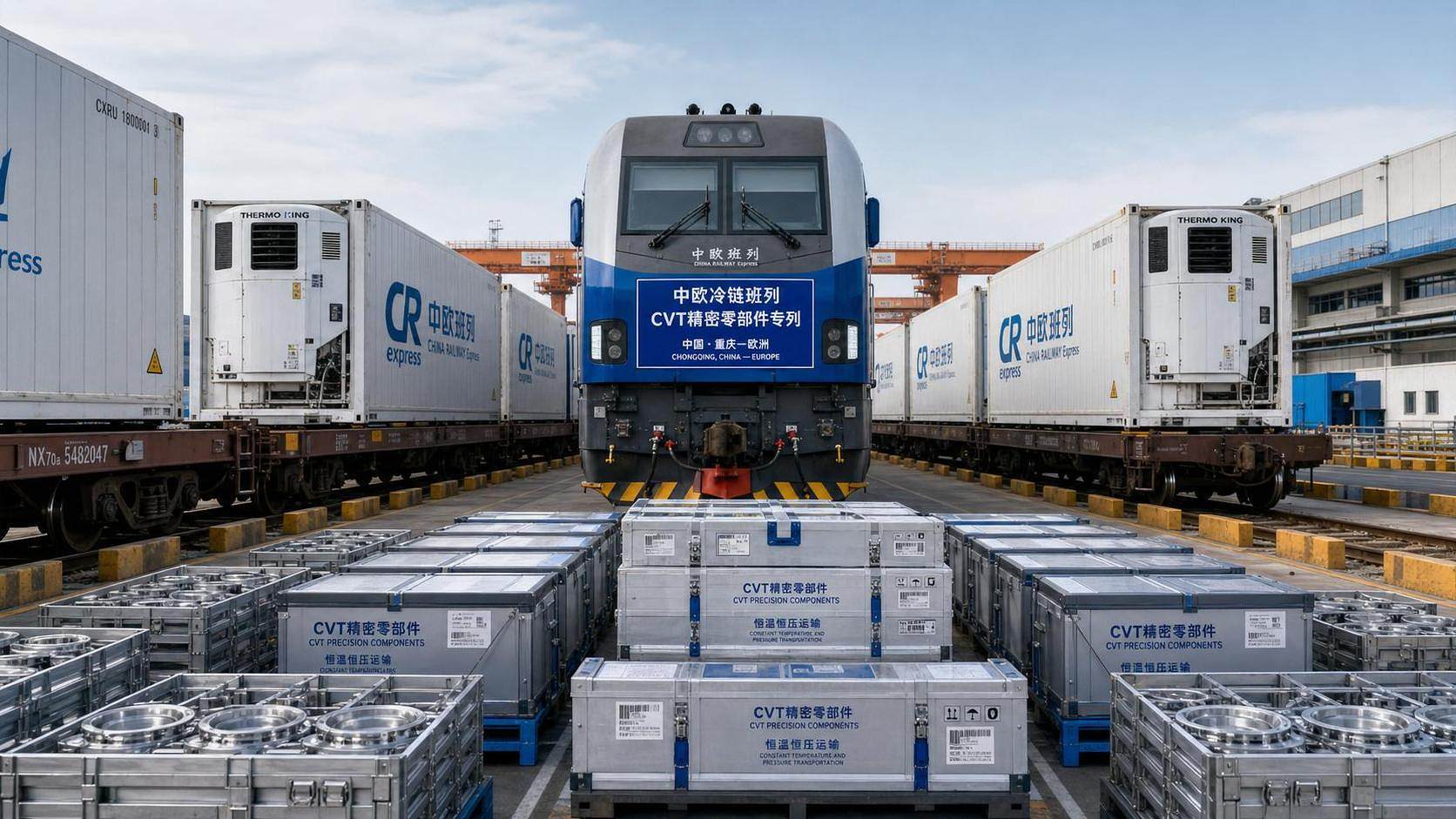




On July 1, 2026, a dedicated China-Europe rail service for CVT transmissions was launched through the Zhengzhou consolidation hub, combining cold-chain temperature control and constant-pressure transport requirements for precision components. For the industry, the development is worth attention not simply as a logistics update, but as an execution signal that transport conditions, delivery timing, and shipment control standards are becoming more closely tied to export performance, procurement planning, and JIT supply reliability for manufacturers, exporters, buyers, and supply chain service providers.
What Has Been Confirmed So Far
The confirmed facts are limited and clear. Zhengzhou International Land Port and DB Cargo opened what was described as the first dedicated cold-chain, constant-pressure rail service for CVT transmissions on July 1, 2026. The service is designed to maintain temperature control within +/-0.5 degrees C and pressure fluctuation within <=+/-3 kPa, with stated suitability for transporting high-precision hydraulic valve bodies and planetary gear sets. The first shipments covered export orders from leading Chinese CVT manufacturers to Poland and Hungary. The reported delivery cycle is 14 days, which is 32 days faster than sea freight, and the arrangement is described as strengthening JIT supply chain resilience for European vehicle manufacturers.
Where the Practical Impact May Appear First
For exporters handling precision transmission assemblies
Analysis shows that exporters of CVT-related products may be affected first because the new service highlights transport-condition control as part of delivery capability rather than a purely downstream logistics matter. In practice, this could influence shipment planning, packing specifications, transport instructions, and the preparation of technical and quality documents that support handling requirements for high-precision parts.
For European buyers and procurement teams using JIT schedules
From an industry perspective, procurement functions may pay closer attention to whether suppliers can align with shorter lead times and more controlled transport conditions. The main impact would likely fall on order scheduling, replenishment planning, and supplier evaluation, especially where delivery reliability matters as much as product conformity. What deserves closer attention is whether transport performance starts appearing more explicitly in procurement requirements, technical bid alignment, or supply agreements.
For logistics and supply chain service providers
Observably, the launch creates a higher bar for service providers involved in cross-border handling of sensitive drivetrain components. The likely pressure point is operational execution: maintaining documented control over temperature and pressure conditions, coordinating rail routing, and matching shipment conditions with product-specific transport needs. Service providers may need to watch for stricter documentation expectations from shippers and buyers, even where no new formal certification requirement has yet been stated in the provided information.
For quality, traceability, and after-sales functions
Where components are sensitive to transport conditions, quality and after-sales teams may also be affected. The relevant issue is not a confirmed new regulation in itself, but the possibility that shipment-condition records, traceability files, and delivery documentation become more important in managing claims, quality verification, and cross-border accountability when lead times are compressed.
What Companies Should Track Next
Transport-condition documentation
Analysis shows that companies shipping CVT transmissions or related precision assemblies should pay attention to how transport-condition records are defined and retained. If temperature and pressure control become part of customer delivery expectations, supporting records may increasingly matter in export documentation, customer audits, or quality follow-up.
Contract and bidding language
What deserves closer attention is whether buyers, especially those relying on JIT manufacturing, begin to reflect controlled rail transport conditions in tender documents, supply contracts, or technical appendices. The current information does not confirm such changes, but it would be premature to treat this rail link as only a logistics option if procurement language starts moving in parallel.
Lead-time assumptions in procurement and production planning
Companies should also review whether shorter delivery cycles alter planning assumptions for inventory, replenishment, and export scheduling. The confirmed 14-day cycle is specific to the reported service and should not be generalized beyond the provided facts, but it is a practical signal that delivery models may need reassessment where rail-based execution becomes commercially usable.
Traceability and post-delivery accountability
Observably, when shipment conditions are tightly specified, the burden of proving compliant handling can shift across manufacturing, logistics, and after-sales functions. Firms should therefore monitor whether customers begin requesting more detailed shipment files, handling instructions, or condition records to support quality traceability after delivery.
Why This Looks More Like an Execution Signal Than a Policy Release
Analysis shows that this development is better understood as an implementation-level signal rather than a standalone policy announcement in the narrow legal sense. No new statute, regulation number, or formal certification rule has been provided in the input. However, the launch still matters because industry rules are often shaped through operating requirements, buyer expectations, transport specifications, and accepted delivery practices before they appear as explicit regulatory text. That is why the market response, document requirements, and customer-side execution standards deserve continued observation.
How the Market May Read This Development
At this stage, it is more appropriate to understand the event as a concrete change in export execution conditions for a specific class of precision automotive transmission products. The importance lies in its potential effect on delivery discipline, procurement expectations, and supply chain coordination, not in any confirmed broad regulatory overhaul. Whether it develops into a wider trade or compliance benchmark will depend on later market adoption, customer requirements, and the way related execution standards are applied in practice.
Basis of This Article and What Still Needs Verification
This article is based on the user-provided news title, event date, and event summary. For developments of this type, commonly relevant source categories may include official announcements, releases from regulatory bodies, customs or trade authorities, industry association updates, standards organization documents, and reporting by authoritative media. No specific official source link was provided in the input, so the underlying source trail still requires ongoing verification. Further observation is also needed on any later policy detail, certification interpretation, tender document changes, industry feedback, and company-level execution practices related to this rail service.
Related News

Climate-Smart Farming for Drought: A Practical Plan for Protecting Yields
Climate-smart farming for drought: build smarter water budgets, protect critical crop stages, improve irrigation uniformity, and safeguard yields with practical field-proven strategies.

How Digital Agriculture Platforms Turn Field Data Into Better Input Decisions
Digital agriculture platforms turn field data into smarter fertilizer, water, seed, and equipment decisions—helping farms cut risk, improve margins, and scale sustainability.

GPS-Guided Farm Machinery: Where It Delivers Measurable Field Efficiency Gains
Agri-mechanization GPS guided systems deliver measurable field efficiency gains through reduced overlap, precise planting, smarter inputs, and reliable farm data.

How Sensor Feedback Enables Accurate Variable-Rate Fertilization in Field Conditions
Precision fertilization systems with sensor feedback improve variable-rate accuracy by verifying flow, managing latency, and ensuring reliable field application.

How to Select Precision Crop Protection Equipment for Variable Field Conditions
Precision crop protection equipment selection made simple: compare terrain, canopy, weather, control accuracy, and data workflows for reliable applications.

When Does Agricultural Machinery Leasing Cost Less Than Owning Equipment?
Agricultural machinery leasing can lower farm costs when use is seasonal or uncertain. Compare utilization, maintenance, cash flow, and risk to make a smarter equipment decision.

How to Evaluate Precision Fertilization System Suppliers for Farm-Scale Deployment
Precision fertilization systems suppliers: learn how to compare accuracy, integration, uptime, service, and total cost for confident farm-scale deployment.

ISOBUS for Smart Agriculture: How It Connects Tractors, Implements, and Farm Data
ISOBUS for smart agriculture connects tractors, implements, terminals, and farm data—helping growers improve precision, documentation, and smarter field decisions.

Automated Water-Saving Irrigation: How to Cut Water Use Without Reducing Crop Yields
Automated water-saving irrigation helps farms cut water use, protect crop yields, improve scheduling, and gain reliable control with sensors, flow monitoring, and smart zones.
Related News
- 00
0000-00
Fuel-Efficient Tractor Powertrain: Which Specs Matter Most for Total Operating Cost? - 00
0000-00
CVT Transmissions Price Explained: What Drives Cost in Agricultural Machinery? - 00
0000-00
Dedicated CVT Rail Link Signals New Export Execution Standard - 00
0000-00
TUV Rheinland Sets New ASIL-B Rule for CVT Systems - 00
0000-00
ANVISA Clears First China-Made Bio-Based CVT Fluid for Brazil
Popular Tags
Tractor Power Architect
Weekly Insights
Stay ahead with our curated technology reports delivered every Monday.