
TUV Rheinland Sets New ASIL-B Rule for CVT Systems





On June 28, 2026, TUV Rheinland issued a new testing addendum for CVT transmissions used in agricultural tractors, tying market access for EU- and Australia-bound products to ASIL-B functional safety validation under ISO 26262. Because the requirement focuses on torque interruption response under sudden hydraulic pressure changes within 150 ms and links non-compliance to loss of CE and RCM marking eligibility, the update deserves attention from transmission manufacturers, exporters, certification teams, procurement functions, and delivery planning units.
What the new addendum explicitly requires
The confirmed fact is that TUV Rheinland released the document titled CVT Transmissions for Agricultural Tractors – Functional Safety Addendum v2.1 on June 28, 2026. According to the provided summary, all CVT transmission systems intended for the EU and Australian markets must pass ASIL-B level functional safety verification. The testing focus highlighted in the input is the system response to torque interruption during sudden hydraulic pressure variation, with a required response time of less than 150 milliseconds. Products that do not meet this requirement will not be able to obtain CE or RCM marking.
Where the commercial and compliance pressure is likely to appear
Market-entry preparation for export-oriented suppliers
From an industry perspective, suppliers shipping CVT systems into the EU or Australia are the first group likely to feel the effect of this change. The immediate pressure point is not only product design, but also whether an export program can still align with the certification path needed for CE or RCM marking. What deserves closer attention is whether technical files, validation records, and pre-shipment compliance checks are prepared in a way that reflects the new ASIL-B requirement.
Testing and certification workflow around transmission programs
Certification-related teams and testing service providers are also likely to see a more defined compliance gate. Analysis shows that once a safety logic requirement is embedded into the test protocol, the certification process may become more dependent on evidence that the transmission can handle the specified hydraulic pressure event within the stated response window. For businesses, that raises practical questions around test planning, report readiness, and whether existing certification documentation remains usable for target-market submissions.
Procurement and supplier qualification in tractor programs
For procurement teams and manufacturers sourcing CVT assemblies, the issue is likely to extend into supplier qualification and delivery assurance. If access to CE or RCM marking depends on passing the updated protocol, buyers may need to examine whether suppliers can provide compliant validation materials and whether contract specifications, bid documents, or incoming technical requirements should be updated. This matters particularly where delivery commitments depend on certification status rather than on component availability alone.
After-sales and traceability responsibilities
After-sales and quality teams may also need to watch the change closely. Observably, when compliance is tied to a defined safety response scenario, the relevance of traceable test evidence and model-specific documentation tends to increase in service, warranty, and market-support contexts. While the provided information does not specify any new post-market obligations, companies involved in support and field response should still pay attention to how compliance records are retained and referenced.
Practical points companies should review now
Check whether existing certification assumptions still hold
Analysis shows that companies targeting the EU and Australian markets should first review whether their current CE or RCM preparation logic assumes older test expectations. The key issue is not to presume continuity where the addendum has introduced a specific ASIL-B verification requirement tied to CVT transmission behavior.
Revisit technical documentation around the specified failure scenario
What deserves closer attention is whether design records, validation reports, and compliance files clearly address torque interruption response during sudden hydraulic pressure change. Even where implementation details are not provided in the input, businesses should treat document completeness as a live issue because the stated requirement is test-specific and time-bound.
Watch procurement terms and bid-language changes
For companies buying or integrating CVT systems, it is more appropriate to understand this as a potential trigger for specification updates in RFQs, supply agreements, and technical bid alignment. The input does not confirm how quickly counterparties will revise procurement language, so this remains a point to monitor rather than an established market outcome.
Build caution into delivery planning
Observably, where marking eligibility depends on passing a new protocol, delivery schedules can become more sensitive to test timing and certification readiness. The available facts do not establish any specific delay pattern, but companies with active export or launch plans should still track whether compliance review could become a gating item in shipment release or acceptance milestones.
Why this looks like an execution signal, not just a technical note
Analysis shows that this update is more than a narrow laboratory adjustment because the stated consequence is direct: products that fail to meet the requirement cannot obtain CE or RCM marking. That makes the addendum more appropriate to understand as an execution-level compliance signal for affected CVT transmission programs. At the same time, it would be premature to treat every downstream business effect as settled fact, because the input does not provide detailed enforcement timing, transitional treatment, or market-by-market implementation practice. Continued attention is therefore warranted around certification interpretation, procurement language, and industry response.
How the market may need to interpret this stage
From an industry perspective, the most balanced reading is that a clearer compliance threshold has been stated for agricultural tractor CVT systems entering the EU and Australian markets. The development should not be overstated beyond the confirmed facts, but it should also not be treated as a routine wording change, given its connection to ASIL-B verification and marking access. At this stage, it is more appropriate to understand the update as a concrete compliance signal with practical implications for certification preparation, supplier review, and delivery planning, while keeping watch for further execution detail.
Basis of this article and what still needs verification
This article is based on the user-provided news title, event date, and event summary. For developments of this type, relevant source categories typically include official notices, regulator or market-access publications, standard-setting documents, certification body releases, industry association updates, and reporting by authoritative trade media. A specific official source link was not provided in the input, so the exact source documentation still needs ongoing verification. Further observation is also needed on detailed implementation language, certification interpretation, procurement document changes, tender requirements, industry feedback, and how companies execute against the stated requirement in practice.
Related News

How to Select Precision Crop Protection Equipment for Variable Field Conditions
Precision crop protection equipment selection made simple: compare terrain, canopy, weather, control accuracy, and data workflows for reliable applications.

When Does Agricultural Machinery Leasing Cost Less Than Owning Equipment?
Agricultural machinery leasing can lower farm costs when use is seasonal or uncertain. Compare utilization, maintenance, cash flow, and risk to make a smarter equipment decision.

How to Evaluate Precision Fertilization System Suppliers for Farm-Scale Deployment
Precision fertilization systems suppliers: learn how to compare accuracy, integration, uptime, service, and total cost for confident farm-scale deployment.
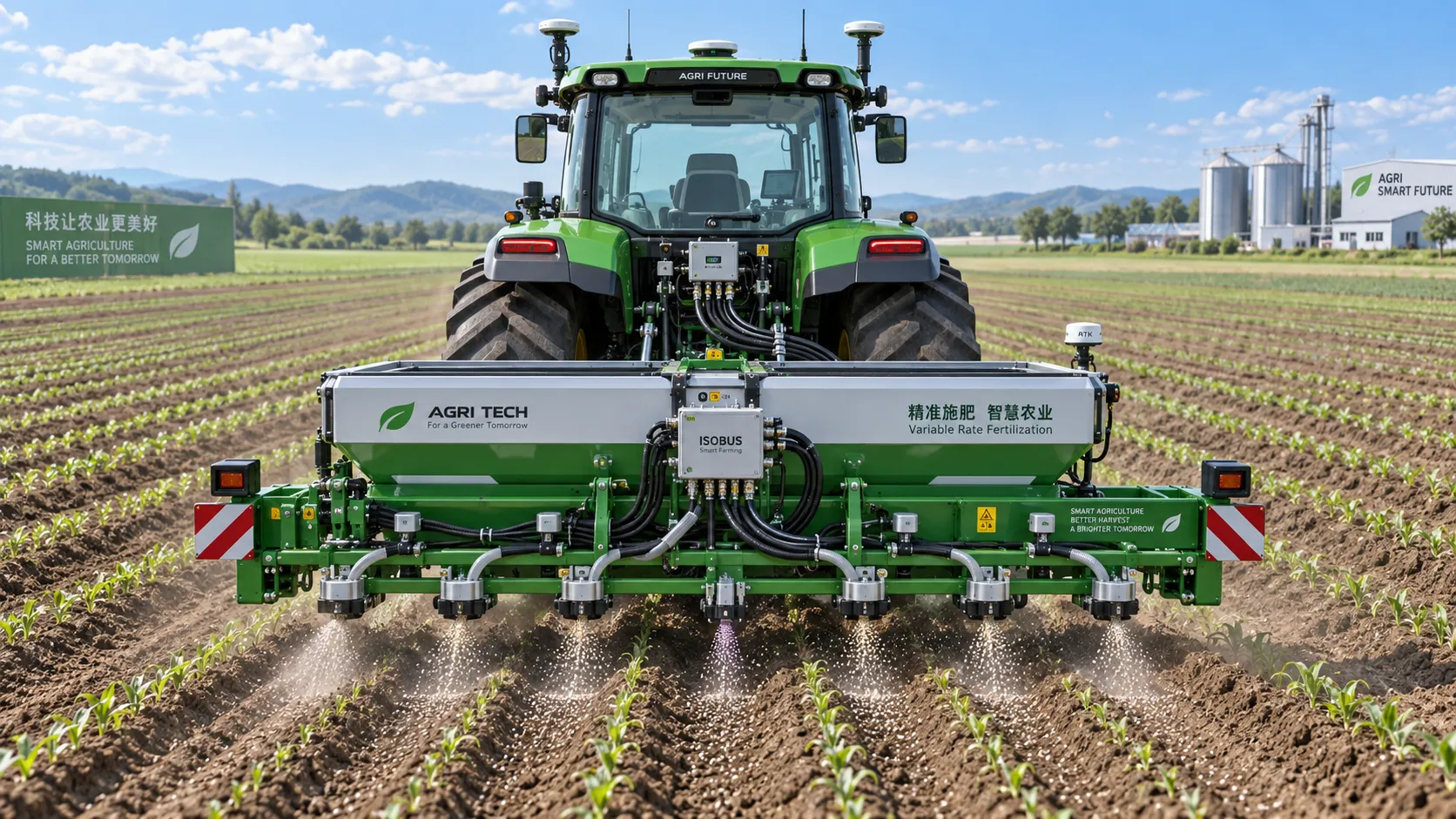
ISOBUS for Smart Agriculture: How It Connects Tractors, Implements, and Farm Data
ISOBUS for smart agriculture connects tractors, implements, terminals, and farm data—helping growers improve precision, documentation, and smarter field decisions.

Automated Water-Saving Irrigation: How to Cut Water Use Without Reducing Crop Yields
Automated water-saving irrigation helps farms cut water use, protect crop yields, improve scheduling, and gain reliable control with sensors, flow monitoring, and smart zones.

Selecting Grain Farm Equipment by Acreage, Crop Mix, and Harvest Window
Agricultural equipment selection for grain farming: match machinery to acreage, crop mix, and harvest windows to improve uptime, efficiency, and returns.
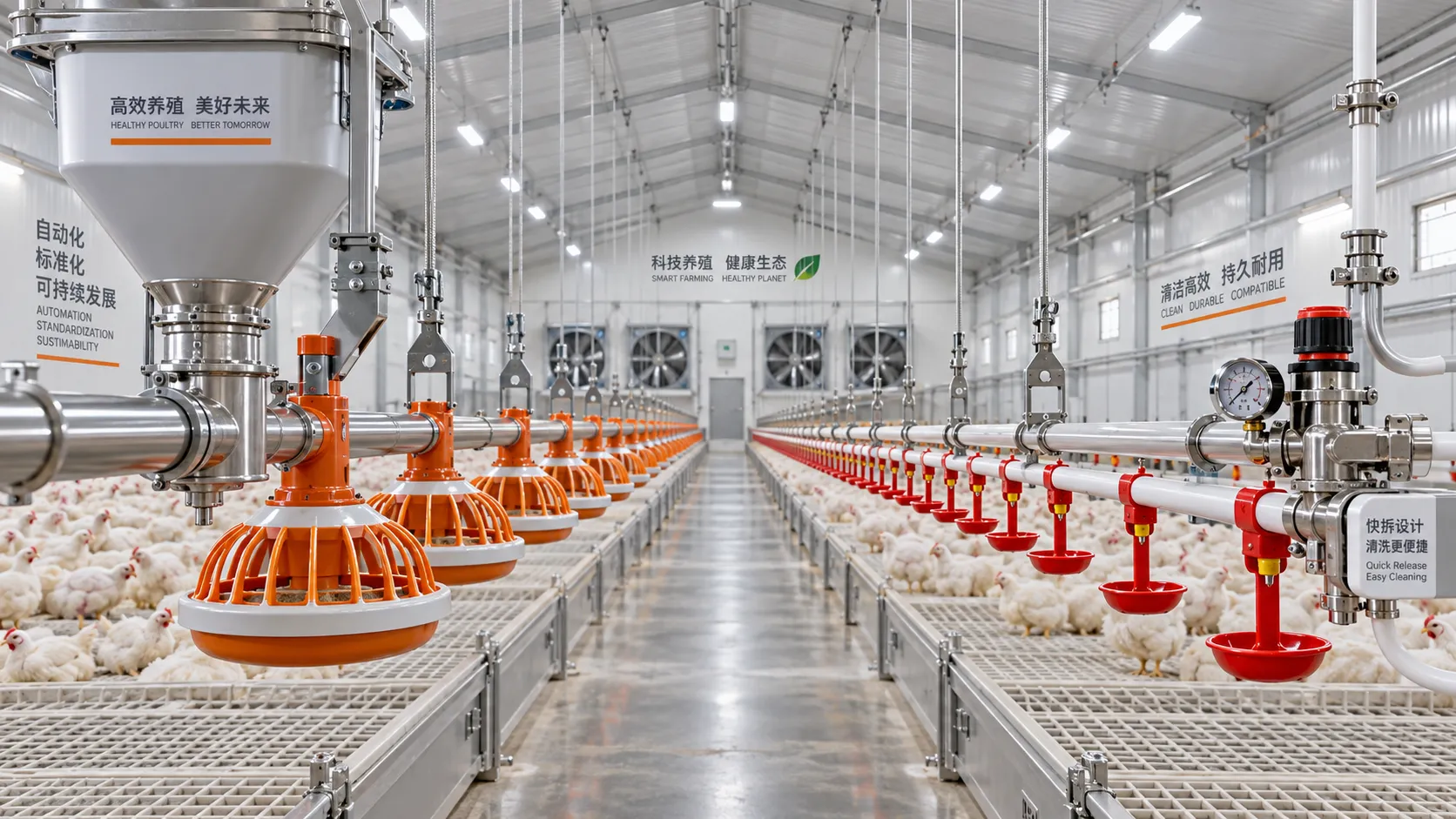
Poultry Equipment Selection: Evaluating Durability, Cleaning, and Compatibility
Poultry equipments selection guide: evaluate durability, cleaning access, and system compatibility to improve hygiene, reduce downtime, and support efficient flock management.

How to Select Heavy-Duty Farm Implements for High-Acreage, High-Horsepower Operations
Heavy duty farm implements: learn how to match draft, hydraulics, hitch capacity, frame strength, and field conditions for reliable high-acreage performance.
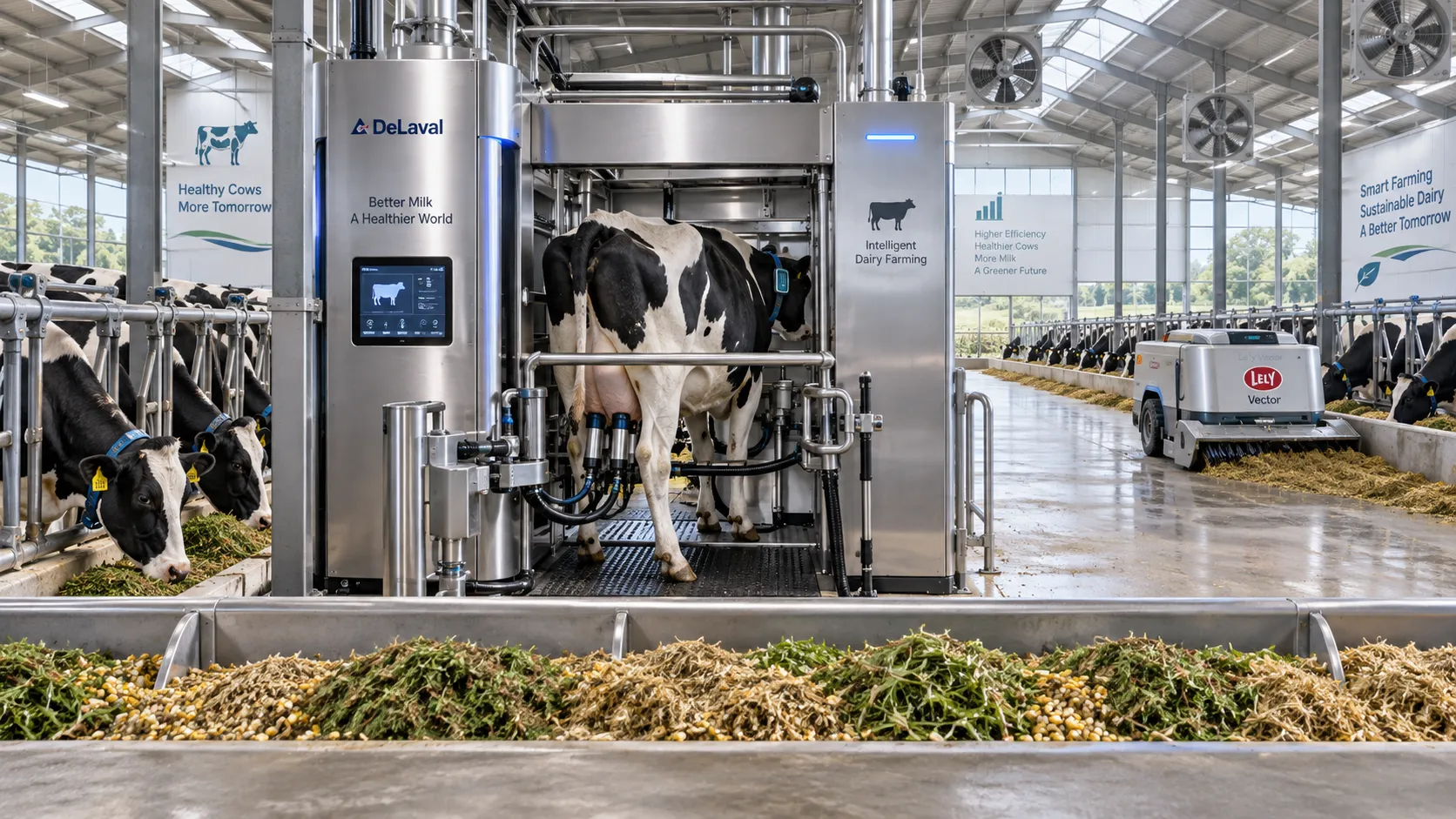
Smart Farming Technology for Dairy Farms: Where Automation Delivers Measurable ROI
Smart farming technology for dairy farms delivers measurable ROI through automation, precision feeding, health monitoring, and data-driven cost control.
Related News
- 00
0000-00
Fuel-Efficient Tractor Powertrain: Which Specs Matter Most for Total Operating Cost? - 00
0000-00
CVT Transmissions Price Explained: What Drives Cost in Agricultural Machinery? - 00
0000-00
Dedicated CVT Rail Link Signals New Export Execution Standard - 00
0000-00
TUV Rheinland Sets New ASIL-B Rule for CVT Systems - 00
0000-00
ANVISA Clears First China-Made Bio-Based CVT Fluid for Brazil
Popular Tags
Tractor Power Architect
Weekly Insights
Stay ahead with our curated technology reports delivered every Monday.