
How to Evaluate a Combine Harvesting Technology Manufacturer for Yield and Downtime?
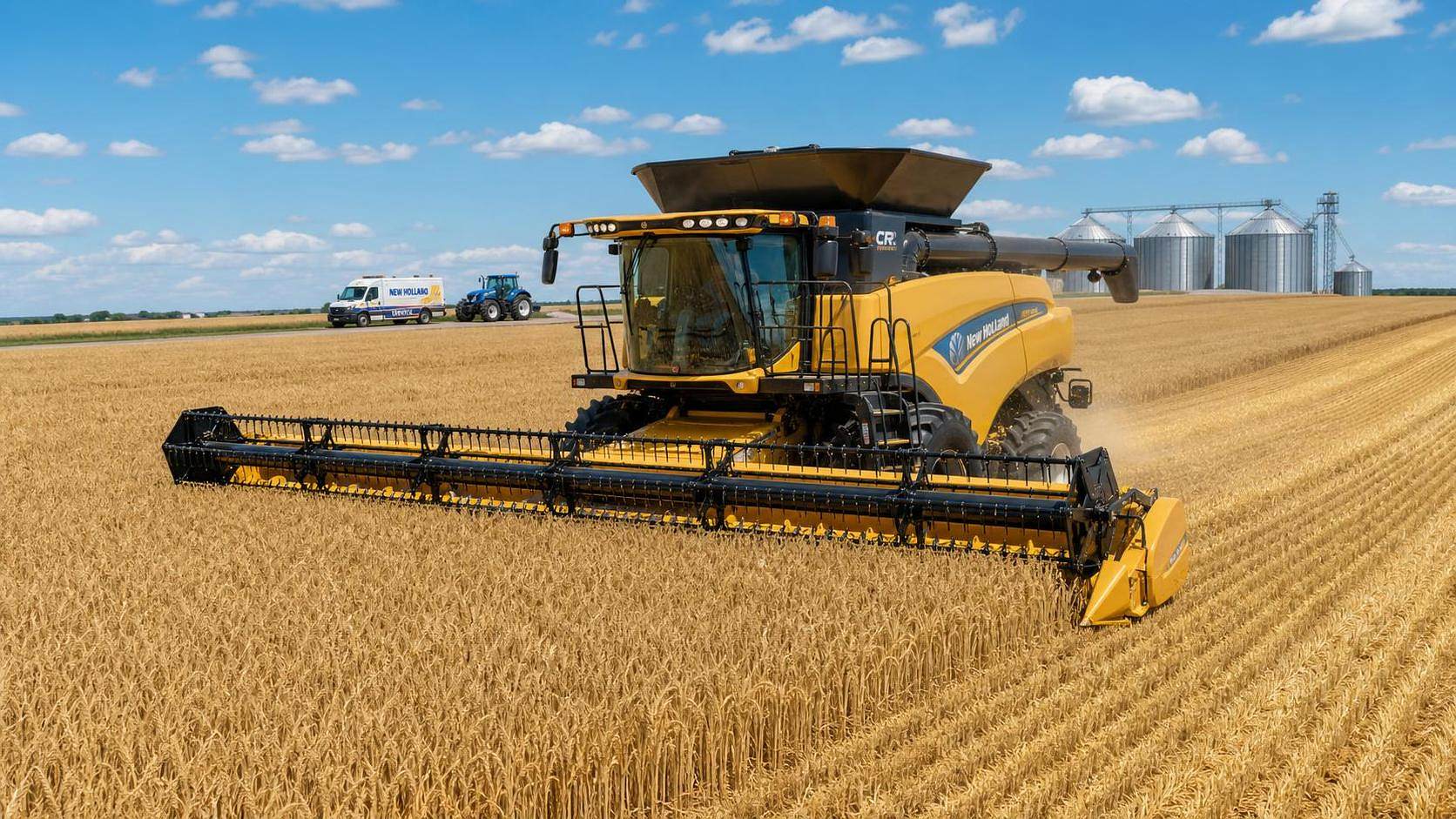




If you are comparing a combine harvesting technology manufacturer, the real question is not who has the most impressive brochure. It is who can protect yield during a narrow harvest window, keep grain loss under control, and recover fast when a machine stops in the field. For procurement teams, that means looking past engine power and header width and judging the full operating system behind the machine: crop adaptability, reliability, service depth, parts access, operator usability, and data support.
A short answer is this: the best manufacturer is usually the one that gives you predictable throughput in your actual crop conditions and the lowest downtime risk across the full season, not just the strongest headline specification.
Start with the field, not the catalog
Many buying mistakes begin with a backward process. A team starts from brand reputation or advertised capacity, then tries to fit that machine into mixed crop, moisture, terrain, and labor conditions. Harvesting does not work that way. A combine that performs well in dry, uniform grain may struggle in lodged crops, green stems, uneven feeding, or short weather windows.
Before evaluating any supplier, define your operating profile clearly:
- Main crops and secondary crops
- Average and peak acreage to be harvested per day
- Moisture variability during harvest
- Field size, road transport needs, and terrain conditions
- Residue management expectations
- Operator skill level and labor turnover
- Service radius and spare parts lead time tolerance
This matters because “higher capacity” is not always “higher output.” In real field conditions, output depends on stable feeding, threshing quality, cleaning efficiency, and how often the operator needs to slow down to prevent loss or blockage.
How a combine harvesting technology manufacturer affects yield
Yield protection is not only about what the crop produced in the field. It is also about how much saleable grain reaches the tank. A strong combine harvesting technology manufacturer should be able to explain, in practical terms, how its platform reduces header loss, threshing loss, and cleaning loss across varying crop conditions.
Procurement teams should ask for more than generic claims like “high efficiency” or “low loss.” Ask how the machine behaves when feed rate changes quickly, when straw is tough, or when grain is fragile. Good manufacturers can discuss rotor or cylinder performance, separation behavior, sieve management, fan control logic, and sensor-assisted adjustment without hiding behind vague marketing language.
Three areas deserve close attention.
1. Feeding stability
Unstable crop flow reduces capacity before the operator even notices visible loss. Look at feeder house design, anti-wrapping measures, stone protection, and how the machine handles uneven crop intake. If your harvest often includes lodged crop or variable biomass, feeding consistency may have more value than peak speed claims.
2. Grain quality and loss control
Broken grain, unthreshed heads, and tailings overload all eat into real returns. The right supplier should provide field evidence, test references, or at least a credible demonstration plan showing how settings can be optimized for your crops. If a manufacturer cannot speak clearly about loss measurement methods, be cautious.
3. Automation that actually helps operators
Automated adjustment systems can improve consistency, but only when they are mature and easy to trust. Some systems reduce the operator burden by adjusting fan speed, rotor load, sieve settings, or ground speed based on sensor feedback. Others add complexity without delivering stable results. A useful question is simple: can an average operator use the system well after training, or does performance depend on one highly experienced person?
Downtime is usually a support problem before it becomes a mechanical problem
Procurement teams often spend too much time comparing machine specifications and too little time testing the manufacturer’s support model. In harvest, one delayed bearing, one unavailable sensor, or one weak dealer technician can cost more than a small purchase price difference.
When evaluating downtime risk, separate it into three layers: machine reliability, service responsiveness, and parts logistics.
Machine reliability is the obvious part. You want durable driveline components, proven hydraulic systems, robust electronics protection, and accessible daily service points. But even reliable machines fail under pressure. That is why the next two layers are often more decisive.
Service responsiveness means how fast the manufacturer or dealer can diagnose and act. Ask for the local service structure: number of trained technicians, harvest-season dispatch process, remote diagnostics capability, escalation path for software faults, and weekend coverage. A manufacturer with good engineering but weak local service can still become a high-risk choice.
Parts logistics deserves direct scrutiny. Ask which fast-moving wear parts are stocked locally, which come from regional hubs, and what the realistic replenishment timeline is during peak season. Official parts policies sound good in presentations, but procurement should verify how they work under harvest pressure.
Do not let demo-day performance decide the purchase
A field demo is useful, but it can also be misleading. Machines are usually prepared carefully, supported by factory staff, and run in favorable conditions. What you need to evaluate is repeatability.
Instead of asking, “Did it look good today?” ask these better questions:
- How sensitive is performance to crop change and moisture swings?
- How long does it take to switch settings between crops or varieties?
- Can operators inspect and clean critical areas without excessive downtime?
- How easy is it to access belts, chains, sieves, and wear components?
- What happens when electronics, sensors, or calibration routines fail?
In practice, a machine that is slightly less impressive in a controlled demo may deliver more usable harvest hours over the season because it is easier to maintain and less sensitive to operator error.
Look at the manufacturer as a long-term operating partner
A combine is not a one-time capital item in the usual sense. It is a seasonal revenue protection asset. That changes how you should judge the supplier.
The strongest manufacturers usually show competence in five areas at once:
- Platform fit for your crop and field profile
- Clear maintenance design and sensible wear-part management
- Reliable dealer or direct service network
- Usable digital tools for diagnostics, machine data, and fleet visibility
- Stable product roadmap rather than constant platform disruption
This last point is often missed. Buyers sometimes assume newer always means better. Not necessarily. If a new machine platform has limited service familiarity, immature software, or uncertain parts stocking, it may increase operational risk in the short term. Mature platforms with proven updates can be the better procurement decision.
For teams that follow broader machinery and precision-ag trends, intelligence platforms such as AP-Strategy can be useful as an early filter. Not because they replace technical validation, but because they help buyers track how manufacturers are positioning around harvesting efficiency, automation logic, and lifecycle support across the wider Agriculture 4.0 landscape.
Questions that expose weak suppliers quickly
Some manufacturers are comfortable discussing output, but become vague when the conversation turns to accountability. That is usually where procurement should lean in harder.
- What are the most common causes of in-season stoppage on this platform?
- Which wear parts should be stocked on-site by the customer?
- What maintenance tasks are required daily, weekly, and pre-season?
- How is grain loss measured during demonstration or commissioning?
- What operator training is included, and who delivers it?
- Can software updates or diagnostics be done remotely?
- What support commitment applies during the harvest peak?
- What configuration changes are recommended for our crop mix?
If answers stay abstract, or every response loops back to brochure language, the supplier may be strong in sales but weak in field delivery.
Total cost of ownership is not the purchase price plus fuel
Procurement teams know this in theory, yet many comparisons still overweight initial quotation. In harvesting, total cost of ownership should include at least these elements:
- Expected grain loss exposure
- Downtime cost during peak harvest days
- Wear-part consumption
- Operator training burden
- Service call frequency
- Resale value and platform acceptance in your market
- Software subscriptions or telematics costs, where applicable
There is no universal formula because crop value, labor cost, and harvest risk vary by region. Still, the principle is stable: a cheaper machine with higher stoppage risk can become the most expensive option when weather closes in and harvest timing matters.
Common evaluation mistakes procurement teams make
One common mistake is buying for rated capacity instead of effective daily throughput. Another is assuming brand size guarantees local service quality. A third is letting one successful reference farm outweigh the differences in your own field conditions.
There is also a frequent misunderstanding around automation. Buyers sometimes treat advanced controls as a guaranteed performance gain. In reality, automation only creates value when sensors are reliable, settings logic is mature, and the local team can support troubleshooting. If not, added complexity can extend downtime rather than reduce it.
And one more point: do not separate machine choice from operator reality. If your labor pool changes often, a machine with simpler setup logic, clearer diagnostics, and easier cleanout may outperform a technically superior model that requires specialist knowledge.
A practical way to make the final decision
If you are down to two or three manufacturers, score them against a short set of weighted criteria tied to your operating risk. Many teams use too many scoring lines and end up hiding the real decision. Keep it disciplined.
- Harvest performance in target crops
- Grain loss control under variable conditions
- Ease of maintenance and cleanout
- Local service response capability
- Parts availability during harvest
- Operator training and usability
- Digital diagnostics and fleet support
- Total operating cost over expected ownership period
Then pressure-test the top option with a final review: if this machine stops for 24 to 48 hours in peak season, how confident are you that the manufacturer can recover the situation quickly? That question often reveals the true winner.
The right combine harvesting technology manufacturer is the one that helps you harvest on time, preserve grain quality, and keep decisions predictable when field conditions stop being ideal. That is the standard worth buying against.
FAQ
Is the biggest combine brand always the safest procurement choice?
No. Brand scale helps, but local dealer strength, parts stocking, and technician quality matter more in harvest-season recovery.
What matters more: machine capacity or grain loss control?
In most real operations, both matter together. High capacity loses value quickly if the machine must slow down often or produces unacceptable loss in mixed conditions.
Should procurement require a field demo before purchase?
Usually yes, but treat it as one input only. Ask for settings transparency, loss-check methods, and support details, not just a visual performance run.
How can we compare manufacturers when official performance data is limited?
Use structured questioning, local reference checks, service network validation, and a crop-specific trial plan. Where facts are not independently verified, confirm them through official technical documentation and local field evidence.
When is advanced automation not worth paying for?
When operator skill is limited, service support is thin, or the system is not proven in your crop conditions. In those cases, simpler and more stable can be the better choice.
Internal link anchor text suggestions
- combine harvester grain loss control: link to a technical guide or knowledge page
- how to reduce harvest downtime: link to a maintenance or service planning article
- precision agriculture equipment buying guide: link to a broader procurement resource
- harvester parts and service evaluation checklist: link to a checklist or downloadable tool
- smart farming machinery trends: link to an industry insights page
External authority source directions
- brand official technical documents and operator manuals
- agricultural extension service or government farm machinery guidance pages
- university or agricultural engineering research on harvesting loss and machine performance
Related News
ISOBUS for Smart Agriculture: How It Connects Tractors, Implements, and Farm Data
ISOBUS for smart agriculture connects tractors, implements, terminals, and farm data—helping growers improve precision, documentation, and smarter field decisions.
Automated Water-Saving Irrigation: How to Cut Water Use Without Reducing Crop Yields
Automated water-saving irrigation helps farms cut water use, protect crop yields, improve scheduling, and gain reliable control with sensors, flow monitoring, and smart zones.
Selecting Grain Farm Equipment by Acreage, Crop Mix, and Harvest Window
Agricultural equipment selection for grain farming: match machinery to acreage, crop mix, and harvest windows to improve uptime, efficiency, and returns.
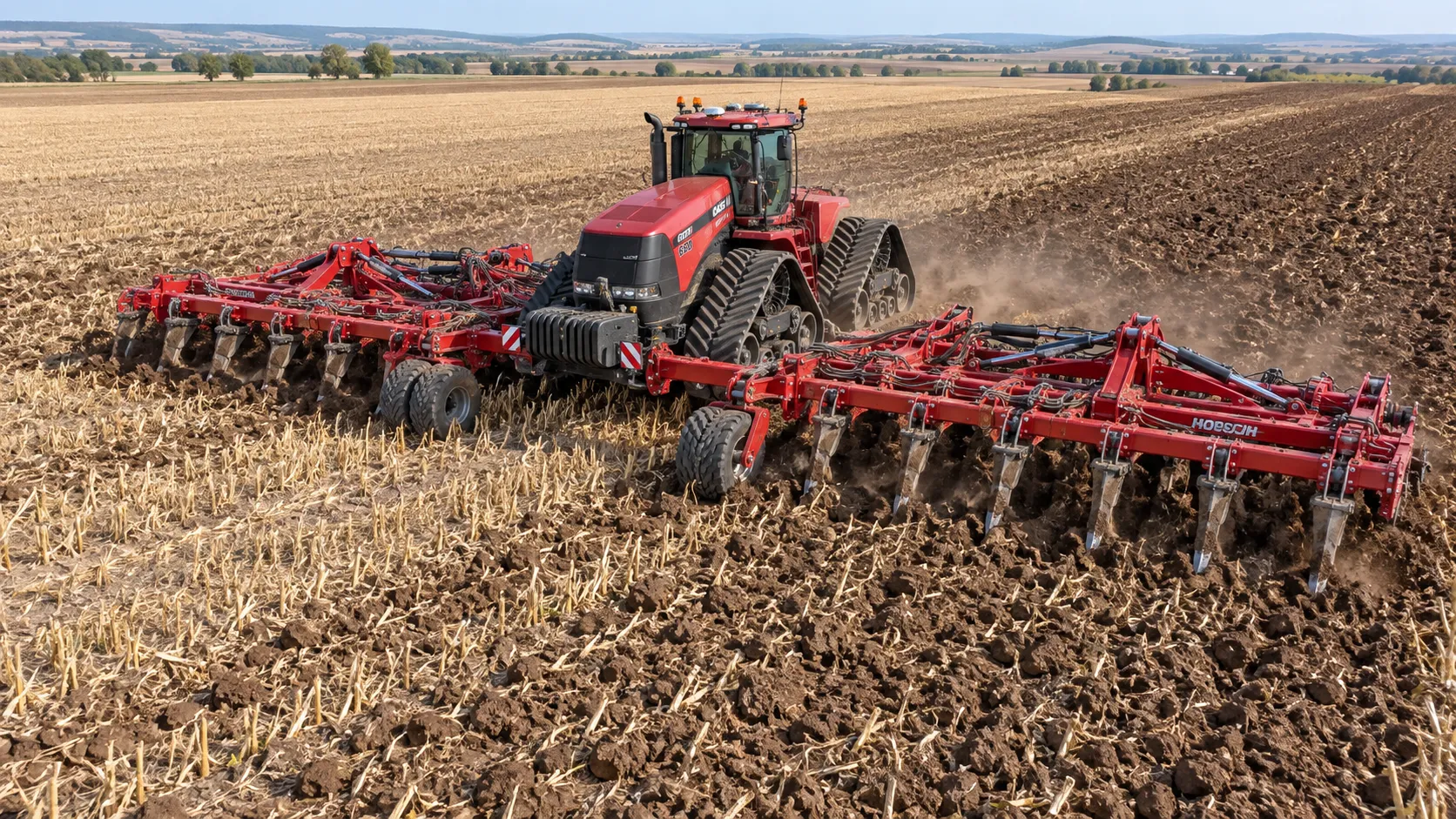
How to Select Heavy-Duty Farm Implements for High-Acreage, High-Horsepower Operations
Heavy duty farm implements: learn how to match draft, hydraulics, hitch capacity, frame strength, and field conditions for reliable high-acreage performance.
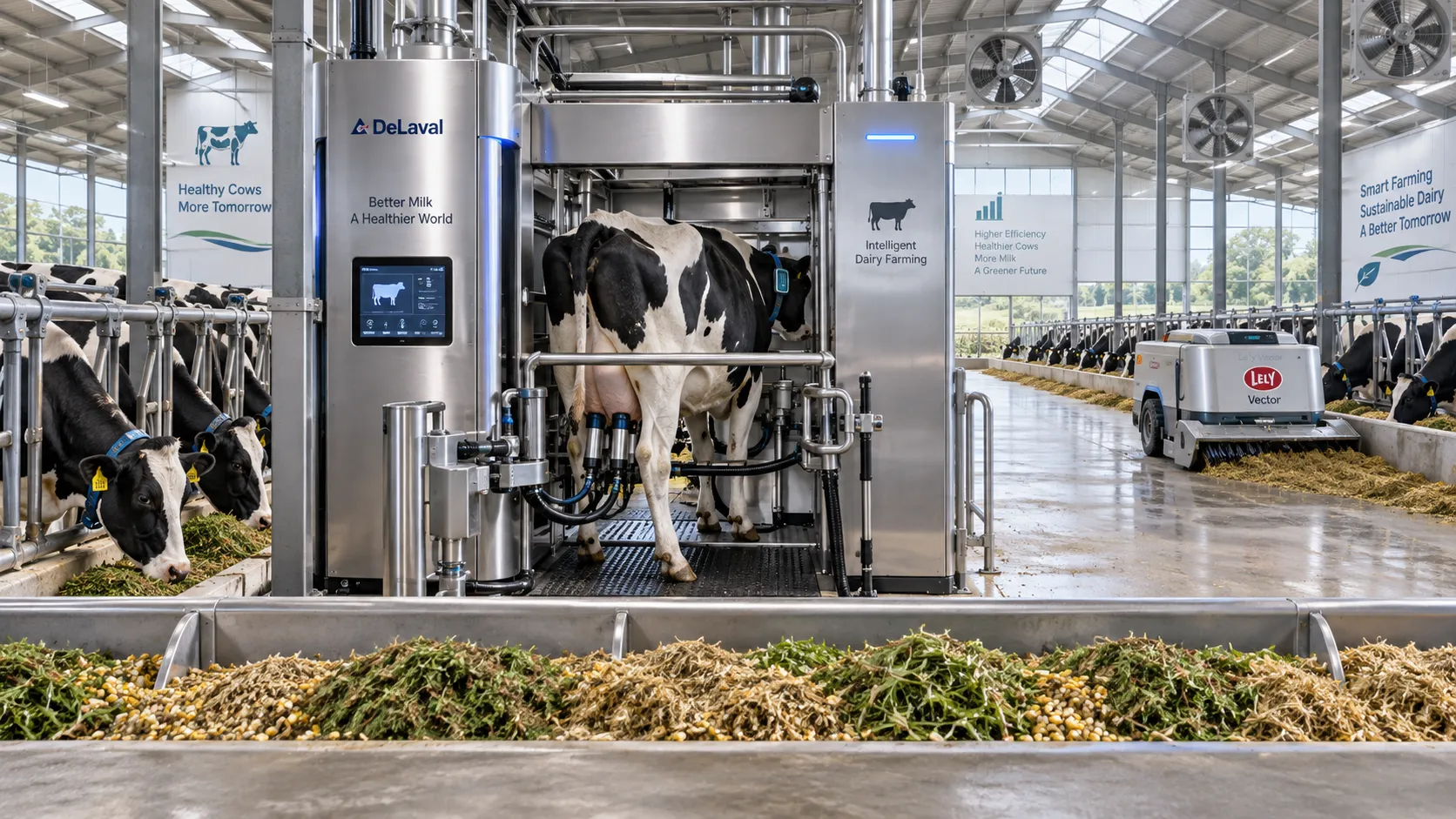
Smart Farming Technology for Dairy Farms: Where Automation Delivers Measurable ROI
Smart farming technology for dairy farms delivers measurable ROI through automation, precision feeding, health monitoring, and data-driven cost control.
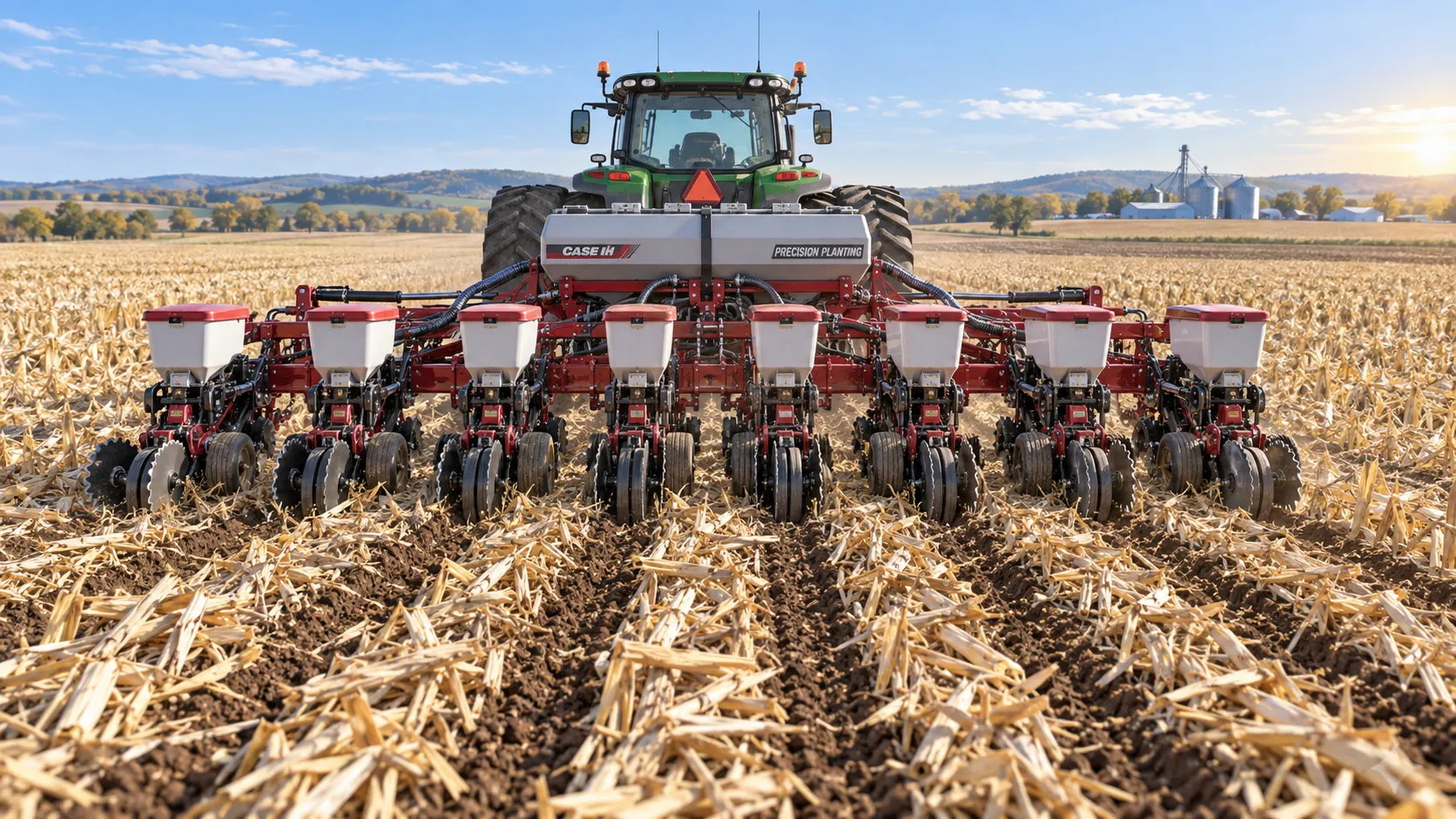
How to Select a Heavy-Duty Seeder for Large Acreage and High-Residue Fields
Heavy duty seeders for large acreage: compare residue handling, depth control, downforce, metering accuracy, and precision features to select the right model.
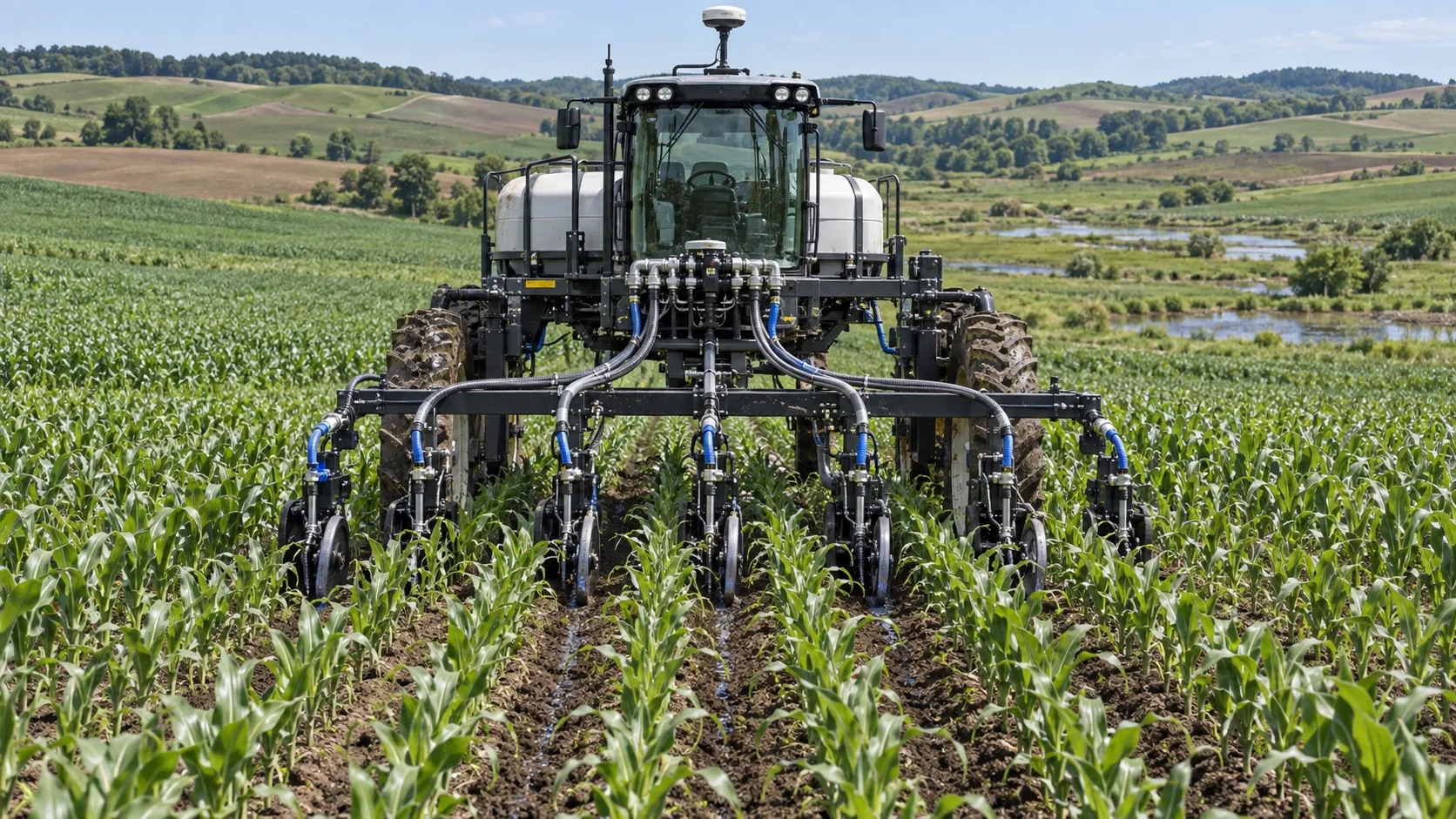
How to Select a Precision Fertilization System for Variable Corn Field Conditions
Precision fertilization systems for corn farming: learn how to match data, placement, control accuracy, and ROI to variable field conditions for better results.
Selecting Precision Farming Products by Application: Field Conditions, Crops, and ROI
Application-based product selection for precision farming: match technology to field conditions, crops, machinery, and ROI for smarter, reliable farm investments.
How to Evaluate Agricultural Product Information Sources for Reliable Farm Decisions
Agricultural product information reference guide: evaluate reliable farm data, verify claims, and make smarter machinery, irrigation, and crop decisions.
Related News
- 00
0000-00
Selecting Grain Farm Equipment by Acreage, Crop Mix, and Harvest Window - 00
0000-00
How to Select Heavy-Duty Farm Implements for High-Acreage, High-Horsepower Operations - 00
0000-00
Smart Farming Technology for Dairy Farms: Where Automation Delivers Measurable ROI - 00
0000-00
Selecting Precision Farming Products by Application: Field Conditions, Crops, and ROI - 00
0000-00
How to Evaluate Agricultural Product Information Sources for Reliable Farm Decisions
Popular Tags
Ms. Elena Rodriguez
Weekly Insights
Stay ahead with our curated technology reports delivered every Monday.