
How to Select a Precision Fertilization System for Variable Corn Field Conditions
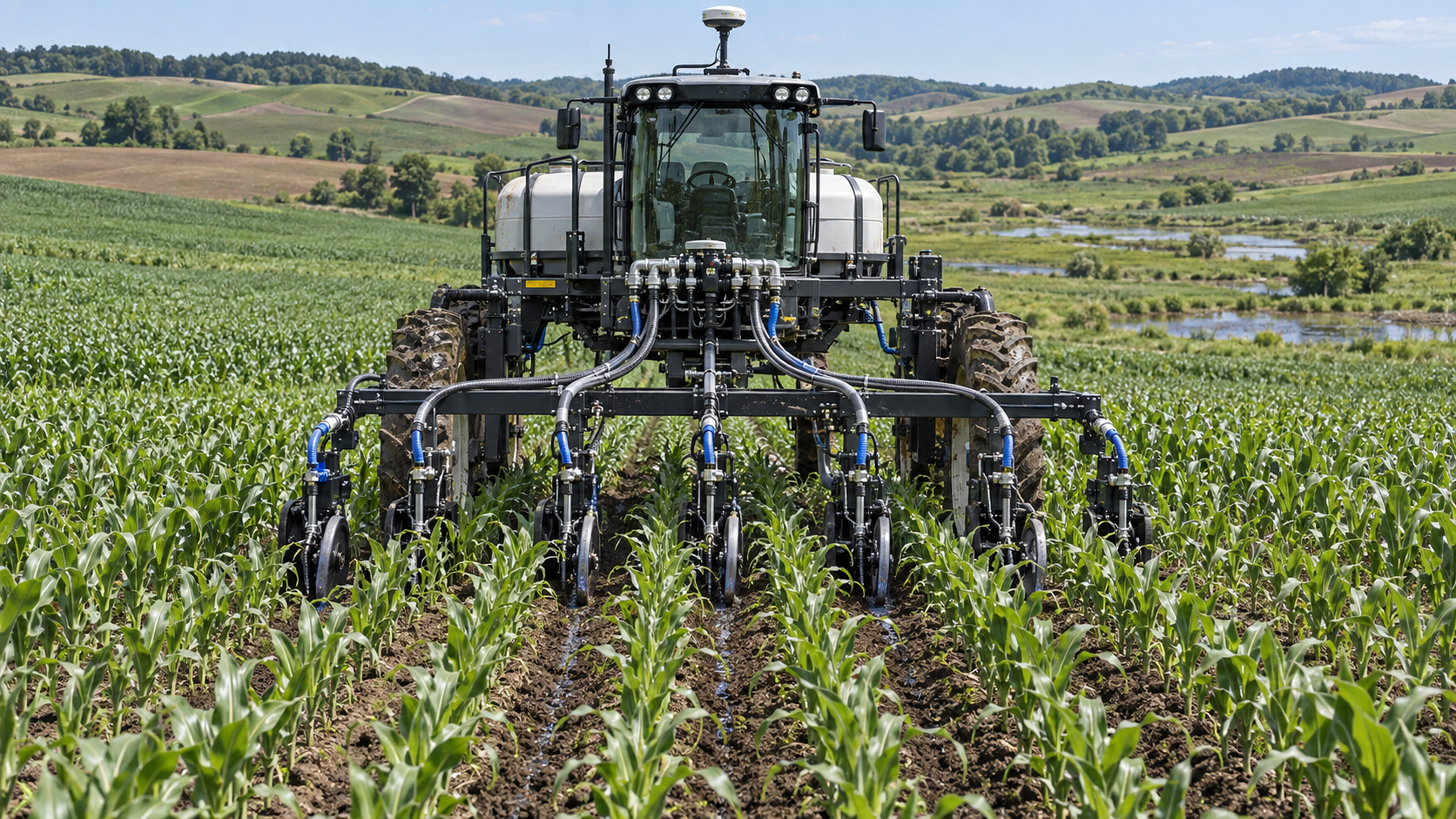




A precision fertilization system should not be selected on the basis of variable-rate capability alone. In corn production, the practical value of variable-rate application depends on whether the system can translate real field variability into repeatable nutrient placement at the correct depth, location, timing, and dose.
That distinction matters because corn fields rarely vary in only one way. A field may combine rolling topography, eroded knolls, poorly drained depressions, changing soil texture, residue bands, irrigation differences, and uneven yield history. A system that produces accurate prescription maps but cannot maintain flow stability on slopes, compensate for travel-speed changes, or place fertilizer consistently beside the seed row will not deliver the intended agronomic result. Selection must therefore begin with the agronomic decision that needs to be executed, then test whether the data chain, machine configuration, and control system can execute it under operating conditions.
Start with the nutrient-placement problem, not the controller
“Precision fertilization” covers several different operations in corn farming. Nitrogen can be applied pre-plant, at planting, sidedress, through irrigation, or as a foliar supplement. Phosphorus and potassium are more often managed as pre-plant broadcast, strip-till, or starter-band nutrients. Each operation places different demands on machinery and control architecture.
A planting-time starter system requires accurate row-level placement and stable metering at low operating speeds. A high-clearance sidedress applicator must retain control accuracy at higher speeds while operating around established plants and across variable canopy conditions. A spreader used for dry nutrient application must manage product segregation, lateral distribution, overlap, and section response. Fertigation depends less on ground-speed control but more on injection accuracy, water-flow measurement, irrigation uniformity, and zone-level hydraulic behavior.
These are not interchangeable applications simply because each can accept a rate map. The relevant question is: which nutrient, at which crop stage, needs to be managed in response to which type of variability? If the answer is unclear, purchasing advanced prescription capability is premature. The system may add data complexity without correcting the actual limiting factor in nutrient use.
Separate stable management zones from short-term crop signals
Variable corn field conditions arise from both persistent and temporary causes. Persistent variability includes soil texture, organic matter, cation exchange capacity, pH, drainage class, topographic position, compaction patterns, and long-term nutrient removal. These factors can support management zones that remain meaningful over several seasons, provided the underlying information is sufficiently dense and current.
Temporary variability is different. Rainfall distribution, early-season saturation, residue cover, planting date variation, insect injury, stand loss, and in-season nitrogen loss can change the crop’s demand or yield potential within a single year. Satellite imagery, crop sensors, canopy reflectance, and drone data can help identify these changes, but their interpretation must be tied to agronomy. Low biomass does not automatically mean that more nitrogen is required. It may indicate waterlogging, shallow soil, poor emergence, root restriction, or a condition in which additional nutrient is unlikely to generate a return.
Systems based primarily on soil and yield data are generally better suited to building baseline phosphorus, potassium, lime, and pre-plant nitrogen strategies. Sensor-guided or imagery-informed approaches are more relevant where in-season nitrogen decisions must respond to crop condition. A robust selection process should allow both forms of information to coexist without forcing them into a single, oversimplified rate rule.
For example, a nitrogen prescription may need an exclusion or reduced-rate rule for chronically wet depressions, a different base rate for productive mid-slope soils, and a sensor-based adjustment only where crop signals are agronomically interpretable. A platform that can import multiple layers but cannot document how those layers were converted into an executable prescription provides limited assurance.
Evaluate the full data chain and its failure points
Precision fertilization systems for corn farming are often assessed through displays, rate controllers, or mapping software in isolation. The useful unit of evaluation is the full chain:
- field boundary and guidance line creation;
- collection and processing of soil, yield, terrain, and crop-condition data;
- prescription design and agronomic review;
- file transfer or cloud synchronization;
- rate execution by the implement controller;
- as-applied recording, reconciliation, and reporting.
Every handoff creates a potential mismatch. Coordinate reference systems, field names, crop-year labels, product definitions, rate units, application-depth settings, and controller configurations must remain consistent. A prescription expressed in kilograms per hectare can be converted incorrectly if a terminal is configured for pounds per acre. Liquid products add another layer: the required rate may be expressed as volume, mass of product, or kilograms of actual nutrient. Those values are not equivalent unless density and nutrient concentration are handled correctly.
Interoperability should be tested with actual files and actual workflow steps before procurement. ISO 11783, commonly referred to as ISOBUS, can improve communication between tractors, implements, terminals, and controllers, but the presence of an ISOBUS connector does not guarantee that all functions will interoperate. Task-control behavior, section control, variable-rate commands, documentation, auxiliary controls, and proprietary software functions can differ among equipment combinations.
A practical acceptance test should include importing a multi-zone prescription, confirming zone transitions on the display, simulating or operating at changing speeds, recording as-applied data, and exporting that record in a usable format. The result should be checked against the original prescription, not merely against the screen indication during operation.
Control accuracy is a system property
Rate accuracy depends on more than the metering device. It is affected by GPS position quality, signal correction, controller update frequency, travel-speed measurement, valve response, pump capacity, distribution plumbing, material properties, and the delay between a command and actual discharge at the outlet.
For liquid fertilizer systems, flow meters, control valves, pumps, agitation, line diameter, and plumbing volume determine how quickly the applied rate can change. Long runs between the meter, control valve, and coulter outlets can create a noticeable lag when moving from one management zone to another. If the prescription contains narrow polygons or frequent rate changes, the equipment may never reach the commanded rate before entering the next zone. In that case, the map resolution exceeds the physical response capability of the applicator.
Dry systems introduce different concerns. Granular fertilizer can bridge, segregate by particle size, change bulk density with moisture, and respond unevenly to hopper level or vibration. Meter calibration must be performed with the actual fertilizer blend, not only with a nominal product category. Spinner spreaders also require attention to transverse distribution; a correct overall mass flow does not ensure even nutrient placement across the swath.
Row-by-row control can be valuable where corn planting geometry, headland shapes, terraces, point rows, or irregular boundaries produce significant overlap risk. However, row-level shutoff is not automatically necessary for every field. It adds sensors, valves, harnesses, diagnostics, and maintenance points. Its value is greatest where the application pattern and field geometry justify the additional complexity.
Rate-response testing should consider steady-state accuracy and transition performance separately. A system can hold a target rate well on a long, uniform pass yet perform poorly when accelerating, decelerating, entering wedges, crossing terraces, or changing from a low-rate to high-rate zone. These transitions are where variable-rate systems either prove their utility or expose their limitations.
Match spatial resolution to machine response and decision confidence
Fine-resolution maps can create an impression of precision that is not supported by either the field data or the applicator. A five-meter grid, for example, is not automatically a five-meter management capability. The effective resolution is constrained by GNSS repeatability, implement width, row spacing, delivery delay, operating speed, sampling density, and confidence in the relationship between measured variability and fertilizer need.
Where soil samples are sparse, creating highly detailed rate zones through interpolation can make uncertainty look like knowledge. Conversely, broad zones may ignore meaningful variation where topography and soil texture shift rapidly over short distances. The appropriate resolution is one that can be justified agronomically and executed mechanically.
This is particularly important on rolling corn ground. Terrain data may identify convex slopes that are prone to drought stress and concave areas with water accumulation, but elevation alone does not determine nutrient demand. The same landscape position can behave differently depending on soil depth, drainage modifications, residue management, irrigation, and seasonal rainfall. Terrain layers are useful decision inputs, not stand-alone fertilizer prescriptions.
Placement consistency may matter more than rate variability
In fields with strong soil variation, it is tempting to focus on changing rates aggressively. Yet poor placement can erase the benefit of a sophisticated rate map. Corn is sensitive to the accessibility of nutrients during early growth, and placement consistency is especially important for starter fertilizer and sidedress nitrogen.
For banded application, assess coulter or knife depth control, row-to-row consistency, closing performance, residue handling, and the ability to maintain intended separation from the seed zone. On variable terrain, toolbar movement can alter depth and lateral placement. Parallel-link row units, gauge-wheel arrangements, downforce systems, and frame stability may therefore be more important than additional software features.
Residue conditions deserve separate scrutiny. Heavy corn residue, cover-crop biomass, and moist soil can affect opener penetration, slot closure, and fertilizer delivery. A system that works well in clean, dry seedbeds may not maintain placement in high-residue strip-till or no-till conditions. Selection should reflect the prevailing establishment system rather than idealized operating conditions.
For sidedress operations, the trade-off between travel speed and placement quality should be explicit. Narrow injection points may improve positional precision but can demand more draft force and create residue or soil-disturbance issues. Surface dribble systems may operate faster and with lower disturbance, yet their effectiveness depends more heavily on rainfall timing, volatilization management, product choice, and local application conditions.
Assess guidance and positioning by the required repeatability
Not every nutrient application requires the same positioning performance. Broadcast pre-plant application may tolerate lower repeatability than strip-till, band placement, controlled-traffic operations, or repeated passes that must align precisely with planted rows. The correction signal, antenna location, terrain compensation, and implement guidance strategy should match the operation.
Tractor position is not always implement position. On slopes or contour passes, drawbar movement, implement drift, and terrain-induced lateral shift can cause the applicator to deviate from the mapped line even when the tractor display indicates acceptable guidance. Implement steering or implement-position sensing can be justified where band placement accuracy is critical, particularly on side slopes and in operations involving narrow row-to-band relationships.
Position logs should also be examined for data quality. Signal interruptions, delayed position updates, inconsistent coverage maps, and unexplained jumps can compromise both real-time section control and the integrity of as-applied records used for later evaluation.
Build calibration and verification into the equipment decision
A fertilizer system that cannot be calibrated efficiently will not remain accurate. Calibration requirements differ by product and application method, but the selection should account for the routine work needed to verify performance during the season.
For liquid systems, useful provisions include accessible cleanout points, pressure monitoring near relevant distribution points, reliable flow sensing within the expected operating range, and diagnostics that distinguish a plugged outlet from a controller or pump fault. For dry systems, calibration should account for blend composition, humidity, particle characteristics, and meter wear. A single pre-season calibration is not a sufficient assurance where product characteristics or field conditions change.
Verification should include physical checks, not only electronic confirmation. Catch tests, weighed output, outlet-flow comparisons, and post-application inventory reconciliation can reveal errors that a controller display will not. The difference between commanded and delivered quantity must be assessed at a meaningful scale: by row, by boom section, by field, and by product batch when warranted.
Serviceability is also a technical criterion. Metering components, seals, strainers, pumps, sensors, harnesses, and outlet tubes are exposed to corrosive materials, vibration, dust, and repeated cleaning cycles. A design with difficult access or proprietary diagnostic barriers can increase downtime precisely during narrow application windows.
Do not treat ROI as a single fertilizer-savings calculation
The economic case for variable-rate fertilization is field-specific. Lower fertilizer use can be one outcome, but it is not the only one and should not be assumed. In some fields, the correct prescription redistributes nutrients rather than reducing total nutrient applied. Value may come from preventing under-application in responsive zones, avoiding excessive rates in limited-yield areas, improving placement, reducing overlap, or creating reliable as-applied documentation.
The evaluation should therefore compare the incremental system cost against the specific management problem it can solve. Include controller hardware, rate-capable implement components, positioning subscriptions where applicable, software, data preparation, operator training, calibration time, maintenance, and the operational cost of slower or more complex application. Then distinguish between benefits that can be measured directly—such as reduced overlap or verified rate execution—and benefits that depend on multi-season agronomic validation.
A system is appropriately selected when its spatial resolution, nutrient strategy, delivery hardware, positioning method, and data workflow are aligned. The most advanced controller cannot compensate for weak agronomic zones, slow hydraulic response, unstable toolbar depth, or unverified application records. For variable corn field conditions, dependable execution is the real definition of precision.
Related News
Selecting Precision Farming Products by Application: Field Conditions, Crops, and ROI
Application-based product selection for precision farming: match technology to field conditions, crops, machinery, and ROI for smarter, reliable farm investments.
How to Evaluate Agricultural Product Information Sources for Reliable Farm Decisions
Agricultural product information reference guide: evaluate reliable farm data, verify claims, and make smarter machinery, irrigation, and crop decisions.
Farm Machinery Guide: Matching Tractor Horsepower and Implements to Farm Size
Farm machinery guide for tractors: match horsepower, implement width, hydraulics, traction, and fleet capacity to farm size for lower costs and reliable field performance.
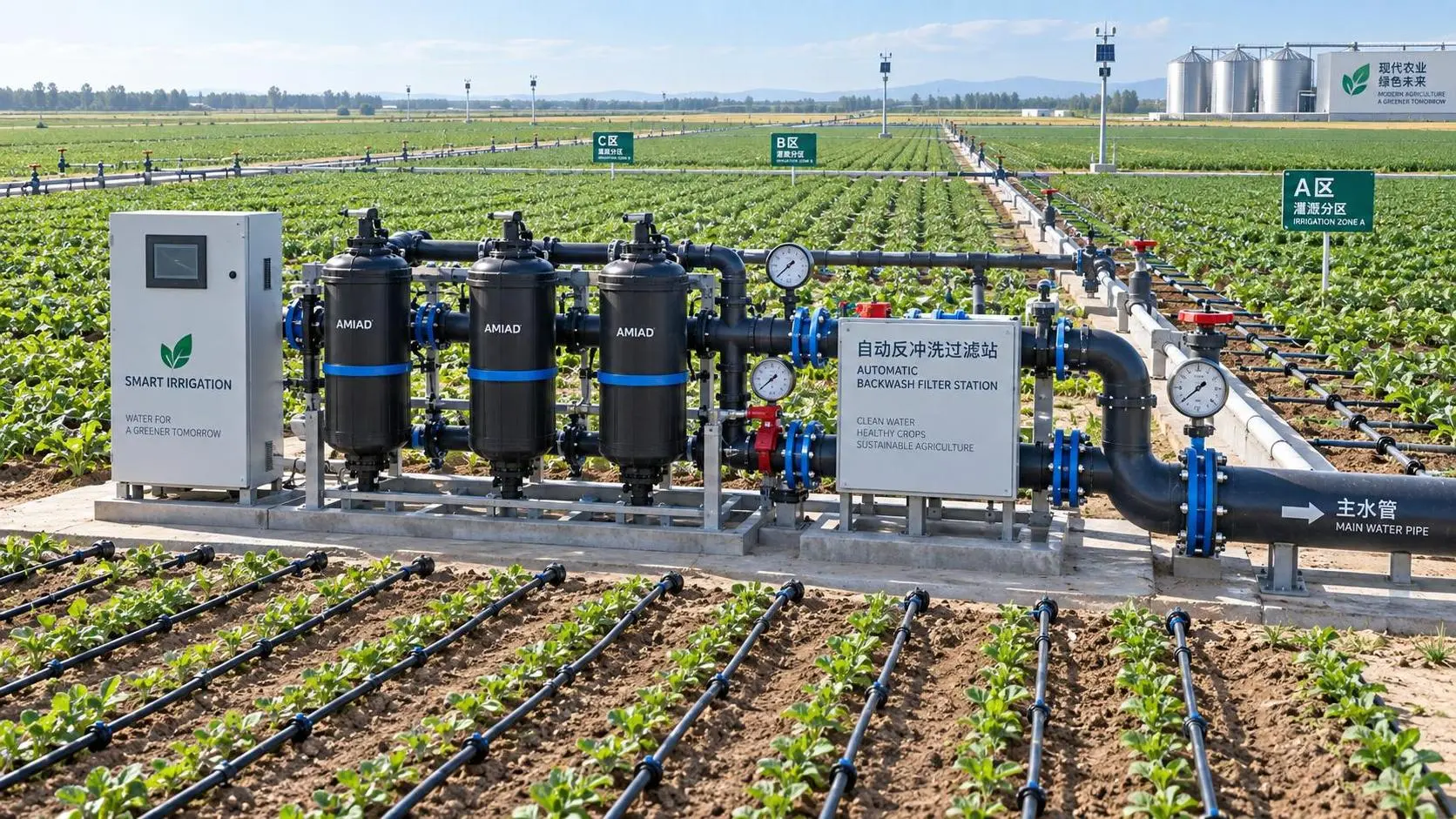
How to Evaluate Drip Irrigation System Manufacturers for Large Farm Projects
Drip irrigation systems manufacturer evaluation guide for large farms: compare hydraulic design, filtration, quality control, scalability, delivery, and support.
Specification Planning: A Practical Framework for Defining Equipment Requirements
Application guidance for specification planning: define measurable equipment requirements, prioritize performance, and avoid costly procurement mistakes.

How North American Farms Can Select Crop Monitoring Systems by Acreage and Connectivity
Crop monitoring systems North America: learn how to match acreage, connectivity, sensors, and data workflows for reliable, actionable farm decisions.

Where to Find Reliable Product Information for Comparing Farm Equipment
Product information resources agriculture buyers can trust: compare farm equipment with technical specs, manuals, field data, dealer support, and lifecycle insights.
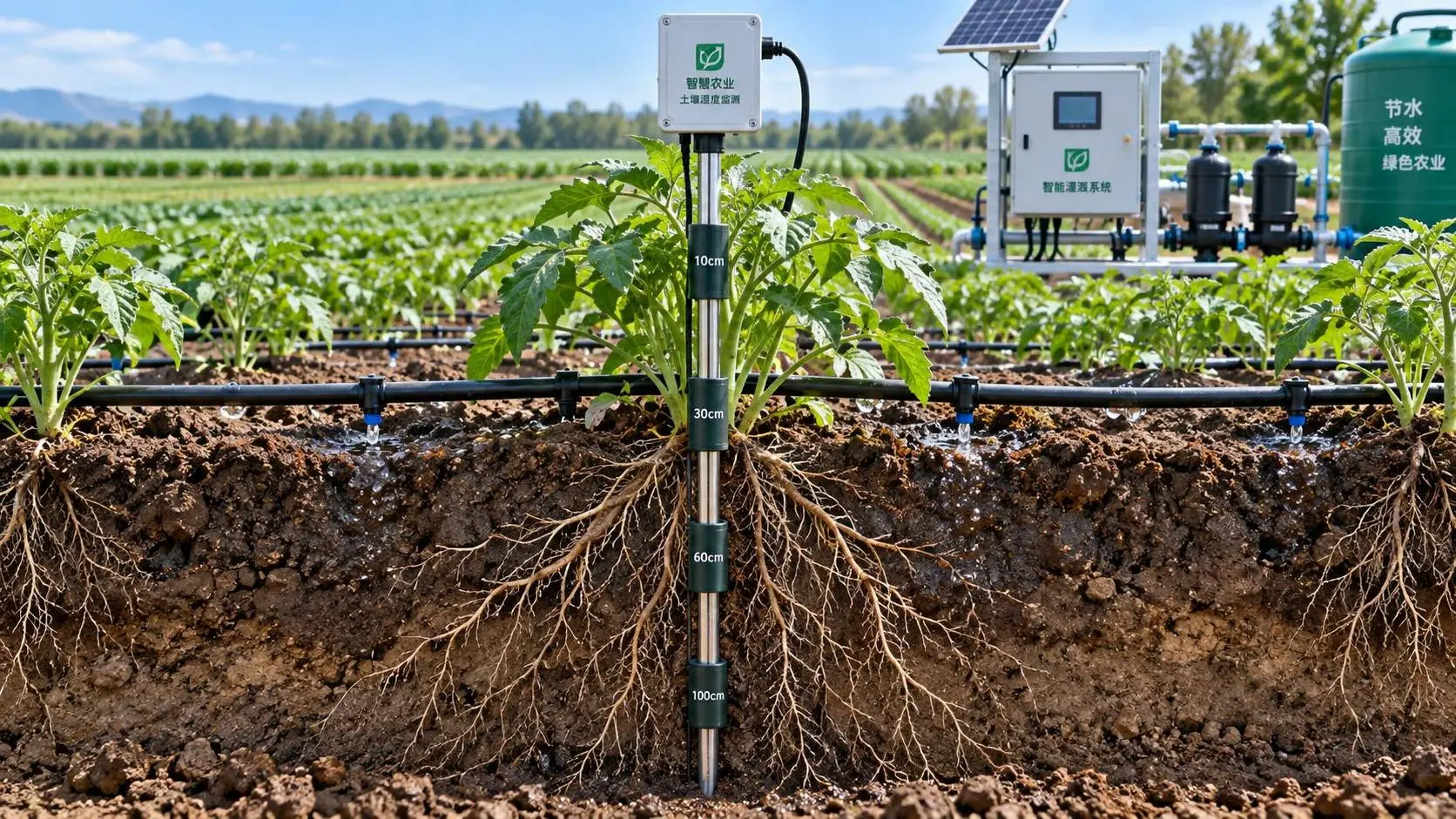
Selecting Real-Time Soil Moisture Sensors for Irrigation Zone Control
Soil moisture sensors real time: learn how to select reliable probes, optimize zone control, improve irrigation decisions, and scale precision water management.
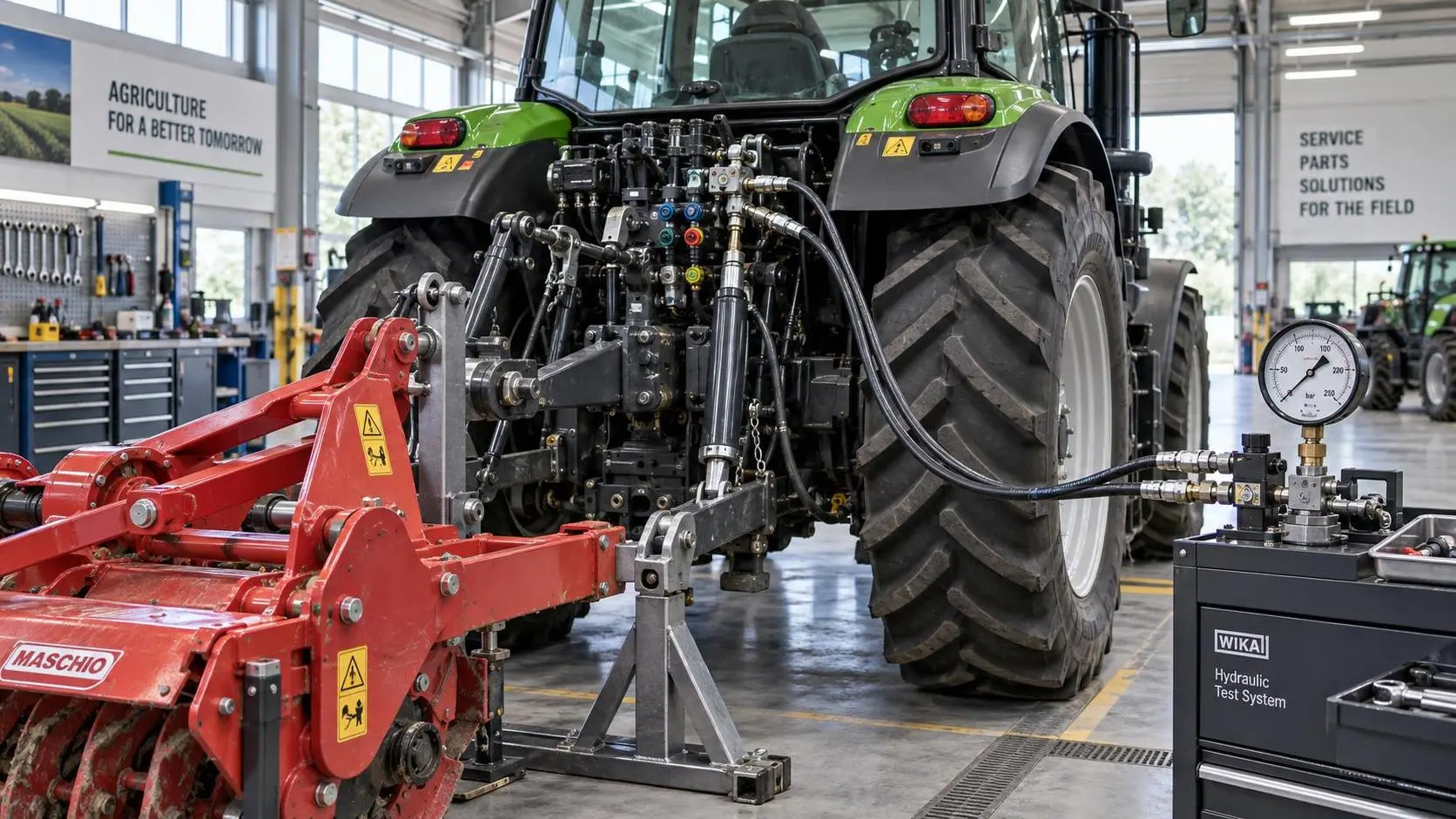
Tractor Hydraulic Systems Troubleshooting: Diagnosing Weak Lift and Slow Implements
Tractor hydraulic systems troubleshooting made practical: diagnose weak lifts and slow implements with proven pressure, flow, valve, and oil-supply checks.
Related News
- 00
0000-00
How to Select a Precision Fertilization System for Variable Corn Field Conditions - 00
0000-00
Precision Farming Solutions with Drone Data for Field Mapping and Crop Decisions - 00
0000-00
Precision Farming Systems for Yield Mapping: Key Technologies and Field Applications - 00
0000-00
How to Validate Precision Farming Algorithm Accuracy Before Field Deployment - 00
0000-00
How to Evaluate Precision Fertilization Equipment for Latin America Farms
Popular Tags
Tractor Power Architect
Weekly Insights
Stay ahead with our curated technology reports delivered every Monday.