
How to Evaluate Dynamic Feedback Algorithm Suppliers for Precision Farming Systems




How to Evaluate Dynamic Feedback Algorithm Suppliers for Precision Farming Systems
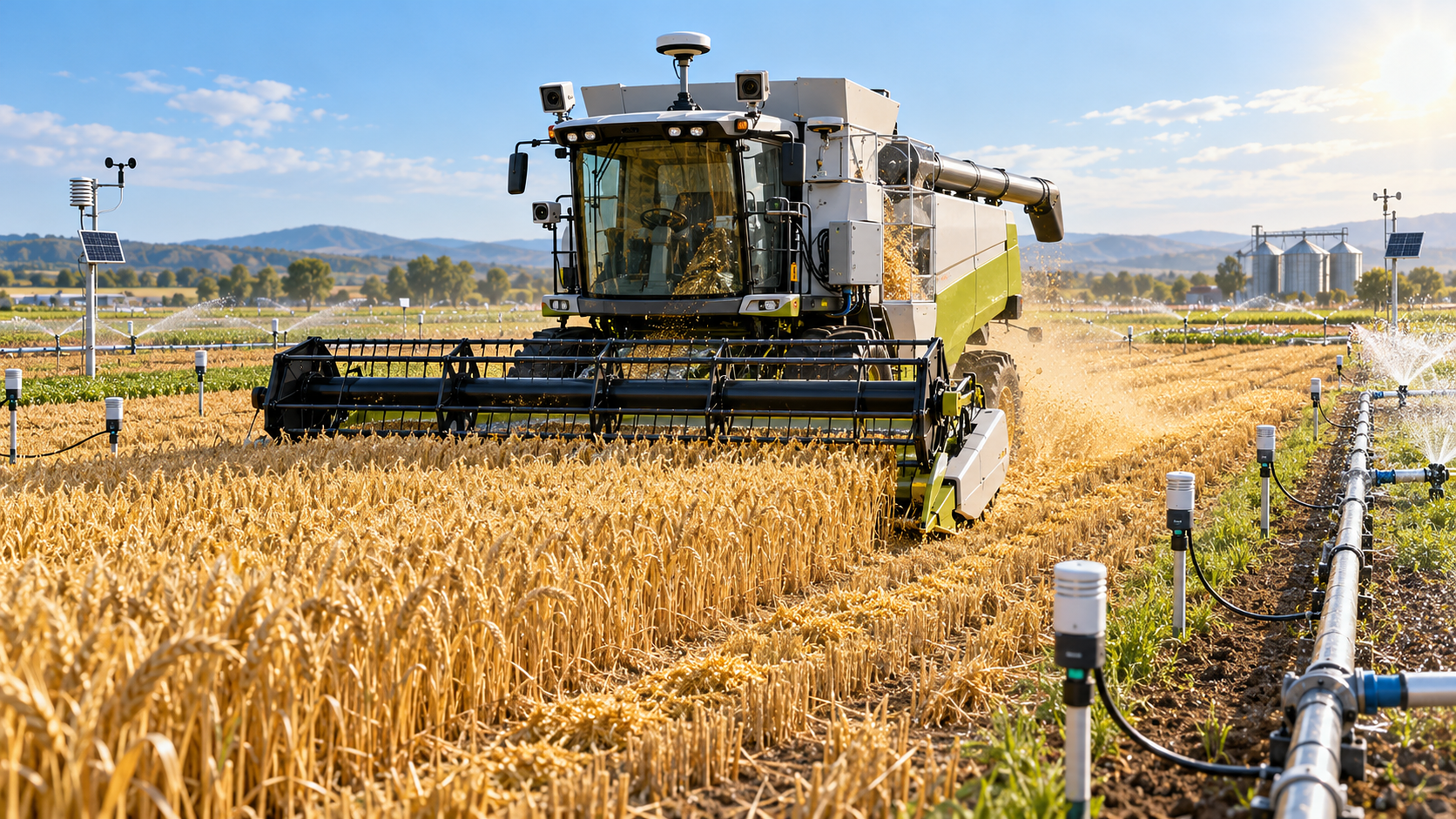
Selecting a dynamic feedback algorithms supplier is a consequential decision for teams building precision farming systems. The algorithm may influence how a combine reacts to changing crop flow, how a tractor-mounted implement maintains a target application rate, or how an irrigation network adjusts to measured soil and plant conditions. Yet the buying decision is rarely about the model alone. A technically impressive algorithm can fail in practical deployment when sensor signals drift, field connectivity drops, machine controllers impose timing constraints, or local agronomic conditions move beyond the data used in development.
Technical evaluators should therefore assess the supplier as a systems partner, not merely a software vendor. The central question is whether its feedback logic can make safe, explainable, repeatable decisions within the physical limits of agricultural machinery and under the uncertainty of real fields.
Start with the Control Problem, Not the Algorithm Label
“Dynamic feedback algorithm” can describe many approaches: conventional closed-loop control, adaptive control, model-predictive control, sensor fusion, machine-learning prediction, or a hybrid architecture combining several of them. The label does not reveal whether a solution is suitable for a specific machine or operation.
Define the operational loop before comparing suppliers. What is being measured? What actuator will be adjusted? How quickly must the system react? What constitutes an acceptable outcome, and what must happen when confidence in the input data falls? For a combine harvester, the loop may use grain-loss, throughput, grain-quality, load, and machine-setting signals to recommend or apply adjustments to fan speed, sieve opening, rotor speed, or travel speed. For intelligent irrigation, the loop may combine pressure, flow, soil-moisture, weather, and evapotranspiration-related inputs to alter zone timing or valve behavior.
These are fundamentally different control environments. Harvesting involves rapid variations in crop density, slope, moisture, and material flow. Irrigation often works on slower cycles but must account for hydraulic delays, uneven distribution, water availability, and agronomic thresholds. A supplier with strong expertise in one domain may still require meaningful adaptation for the other.
A useful requirements brief should identify the target crop or operation, machine platform, available sensors, actuator authority, expected operating envelope, human override requirements, and failure conditions. Without this baseline, demonstrations often become comparisons of attractive interfaces rather than engineering fit.
Examine the Full Feedback Chain
An algorithm only sees the farm through its inputs. In field machinery, signal quality is commonly the limiting factor. Dust, vibration, residue accumulation, changing light, electromagnetic interference, loose connections, calibration drift, and delayed data packets can all distort the feedback loop. A supplier should be able to discuss these issues without treating them as somebody else’s integration problem.
Ask for a data-flow description that traces each signal from sensor acquisition to control output. It should clarify sampling rates, timestamps, synchronization methods, filtering, missing-data treatment, outlier detection, calibration dependencies, and data ownership. This is particularly important when combining GNSS, machine CAN-bus signals, cameras, load sensors, radar, pressure transducers, and soil probes. Sensor fusion can improve robustness, but only if the supplier has a defensible method for resolving conflicting inputs.
Latency deserves close attention. A low-latency algorithm is not automatically a better control solution if the physical actuator responds slowly or if a noisy signal causes unnecessary corrections. Evaluators should distinguish among sensor delay, communication delay, computation time, actuator response time, and the time required for a changed setting to affect the measured outcome. A supplier that cannot describe this timing chain may not yet understand the machine-level application.
Questions that expose integration maturity
- Which inputs are mandatory, optional, or substituted by estimated values?
- How does the system detect a failed, implausible, or stale sensor signal?
- Can it operate in a degraded mode, and what functions are restricted in that state?
- Which machine interfaces and communication protocols are supported today?
- How are controller commands bounded to prevent oscillation, excessive adjustment, or mechanical stress?
- What must be recalibrated when the crop, implement, sensor package, or machine configuration changes?
Demand Evidence of Field Validation, Not Just Model Accuracy
In precision agriculture, a supplier’s validation approach matters as much as its performance claim. Laboratory, simulation, and historical-data testing have value, but they cannot fully reproduce field variability. Crop properties change across a field and through a harvest day. Soil conditions vary at a scale that may not match management zones. Hydraulic systems react differently as pressure, temperature, and emitter condition change.
Ask how the supplier separates development, tuning, and validation data. If machine learning is involved, request a clear explanation of how the model was tested on conditions not represented in training. This is not a demand for proprietary source code; it is a request for disciplined engineering evidence. The supplier should be able to identify the known operating boundaries of its solution and explain what it does outside those boundaries.
The best validation plan is tied to business-relevant technical outcomes. For a harvester, that may include consistency of cleaning-loss estimation, grain sample quality, throughput stability, operator intervention frequency, and the behavior of the controller during abrupt crop changes. For irrigation, measures may include accuracy of delivered water relative to command, pressure stability, response to sensor anomalies, and the traceability of scheduling decisions. Exact acceptance thresholds should be agreed for the project rather than assumed from a generic product brochure.
Evaluate Explainability at the Level Operators and Engineers Need
Agricultural automation is rarely fully hands-off. Operators, fleet managers, agronomists, and service technicians all need to understand why a system changed its recommendation or control action. Explainability does not mean every user needs a mathematical derivation. It means the supplier can make the decision path visible at the appropriate level.
For example, a useful harvester interface might indicate that a setting change followed rising inferred losses under increasing crop intake, while also showing whether the adjustment was constrained by a configured machine limit. In irrigation, a record should make clear whether a schedule changed because of measured soil conditions, a weather input, a pressure fault, or a defined water-allocation rule.
Traceability is also essential during disputes and post-season analysis. Confirm what event logs are retained, whether raw and processed data can be exported, how long records remain accessible, and whether software-version changes are recorded alongside control decisions. If a supplier cannot reconstruct why the system behaved as it did, troubleshooting becomes expensive and trust erodes quickly.
Check Deployment Architecture and Lifecycle Discipline
The choice between edge, cloud, and hybrid processing should follow operational needs. Safety-relevant or time-sensitive control functions generally require local capability because mobile coverage cannot be treated as a guaranteed control channel. Cloud services can still be valuable for fleet learning, model updates, benchmarking, remote diagnostics, and longer-term agronomic analysis.
A credible dynamic feedback algorithms supplier should explain which decisions remain on the machine or irrigation controller, which depend on remote services, and what happens when connectivity is unavailable. It should also state its update process. An algorithm update can improve performance, but it can also alter behavior in ways that require revalidation. Technical teams need version control, rollback capability, release notes, and an agreed method for approving changes before broad deployment.
Cybersecurity and access management belong in the same conversation. Agricultural equipment increasingly connects operational technology, farm records, dealer support, and third-party platforms. Review authentication methods, remote-access permissions, update signing practices, incident reporting, and responsibilities for patching. Applicable requirements will differ by country, customer policy, and machine category, so these points should be verified against the project’s target markets rather than handled as generic assurances.
Do Not Underestimate Mechanical and Agronomic Context
Algorithm suppliers sometimes speak fluently about data while underestimating the mechanical system being controlled. In agricultural machinery, drivetrain behavior, hydraulic response, implement geometry, vibration, wear, and maintenance condition can change the meaning of the same sensor reading. For a tractor chassis, an algorithm intended to manage traction-related feedback should account for tire configuration, ballast, soil variability, and transmission behavior. A control model detached from these realities may produce technically valid but operationally poor decisions.
Agronomy is equally important. A prescription engine that treats all fields as uniform may miss crop stage, residue, soil texture, compaction, disease pressure, or irrigation water quality. Suppliers do not need to replace agronomists, but they should define where agronomic rules, local thresholds, and human expertise enter the system.
This cross-disciplinary view is central to the work followed by The Global Agri-Pulse Hub (AP-Strategy). Its intelligence focus spans large-scale agricultural machinery, combine harvesting technology, tractor chassis, intelligent farm tools, and water-saving irrigation systems. Across these areas, the recurring lesson is that data-driven control only delivers dependable value when mechanical performance, field conditions, and resource constraints are evaluated together.
Compare Suppliers Through a Structured Pilot
A pilot should test the supplier’s implementation discipline, not merely prove that a prototype can work once. Start with a bounded use case and document the baseline machine behavior. Agree on interfaces, sensor condition, success measures, operator responsibilities, data access, and stop criteria before field work begins. If several suppliers are being considered, give them comparable access to the same technical assumptions wherever practical.
During the trial, pay attention to the work around the algorithm: installation effort, calibration time, data labeling or configuration needs, fault diagnosis, response quality from engineering staff, and the clarity of training materials. These often determine total deployment effort more than the initial license price. A supplier that identifies limitations early can be more valuable than one that promises universal autonomy.
Commercial terms should reflect this reality. Clarify ownership and permitted use of operational data, costs for integration and retraining, dependencies on proprietary hardware or cloud services, support coverage during critical seasons, and the consequences of ending the relationship. Where machine communication is relevant, compatibility with established agricultural data interfaces such as ISO 11783 may be worth reviewing, but actual interoperability must be demonstrated for the specific equipment architecture.
Make the Final Decision on Operational Credibility
The strongest supplier is not necessarily the one using the most fashionable algorithm. It is the one that can connect sensing, control, machine limits, agronomic logic, cybersecurity, validation, and support into a deployment path that your organization can realistically maintain.
Before selection, request a final technical review that maps every claimed function to a sensor, a control action, an operating boundary, a fallback behavior, and an acceptance method. That single exercise often reveals whether a proposed solution is ready for precision farming operations or still a promising concept. For teams navigating long-cycle investments in harvesting, autonomous machinery, or intelligent water management, this kind of evidence-based comparison is more useful than broad claims about artificial intelligence or automation.
- combine harvesting technology
- tractor chassis
- intelligent farm tools
- water-saving irrigation
- dynamic feedback algorithms
- autonomous machinery
- agricultural automation
- agricultural machinery
- water-saving irrigation systems
- precision farming systems
- agricultural equipment
- large-scale agricultural machinery
- dynamic feedback algorithms supplier
- combine harvester
- irrigation systems
Related News
How to Specify Combine Harvester Systems for High-Moisture Grain and Variable Field Conditions
Combine harvester systems for high-moisture grain: learn how to specify threshing, cleaning, headers, traction, and automation for reliable harvests in variable fields.
How to Compare Agricultural Equipment Platforms for Fleet Management and ROI
Agricultural equipment platform comparison: evaluate fleet data, maintenance, precision workflows, and ROI to choose a system that delivers measurable results.
Drip vs. Micro-Sprinkler Irrigation: Which System Fits Your Orchard?
Irrigation solution comparison for orchards: discover whether drip or micro-sprinklers best match your water, soil, roots, fertigation, and frost needs.
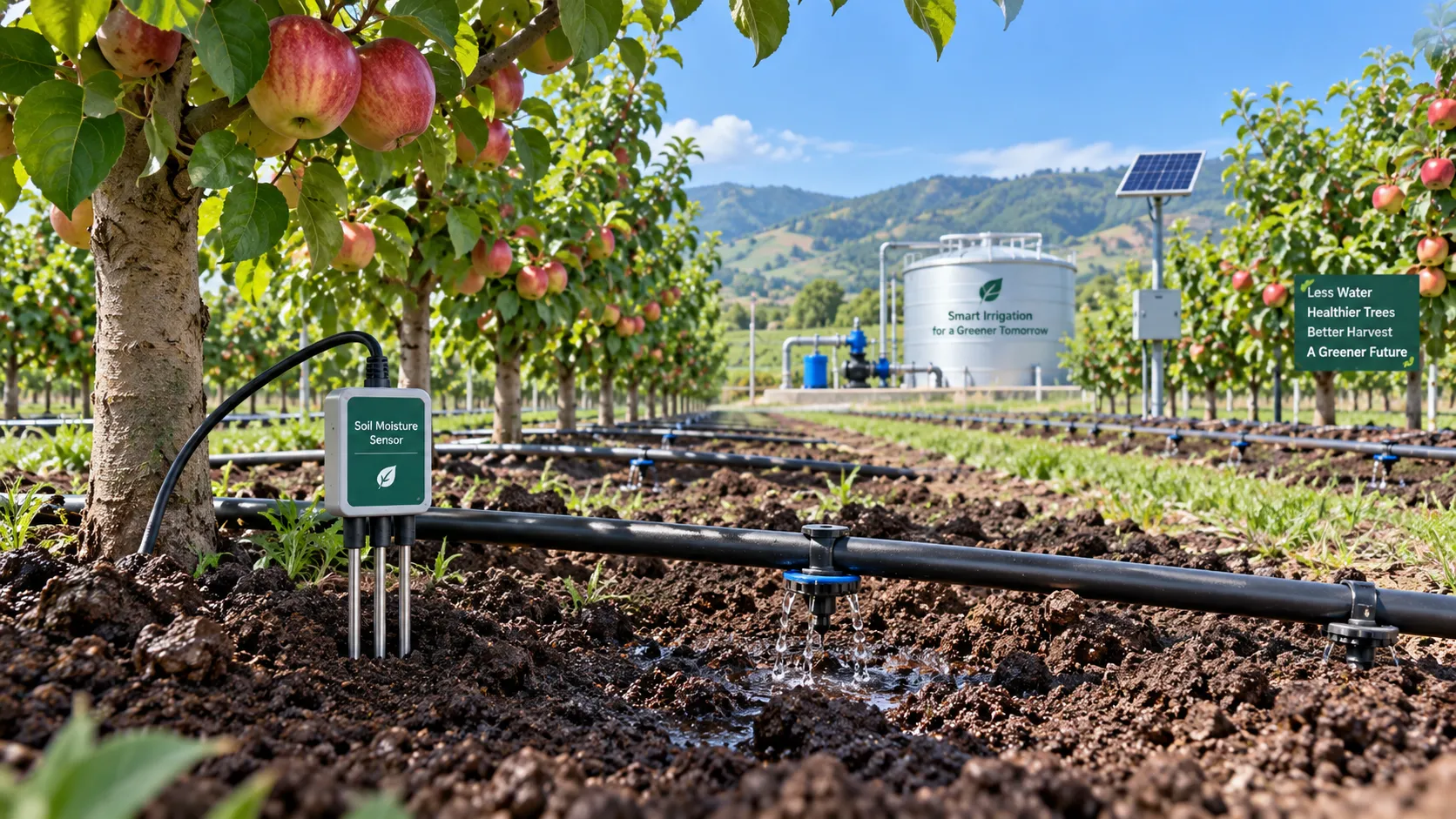
Orchard Water Management: Using Soil Moisture Data to Schedule Irrigation
Agricultural water management for orchards made practical: use soil moisture data to optimize irrigation timing, protect yield, reduce costs, and improve resilience.
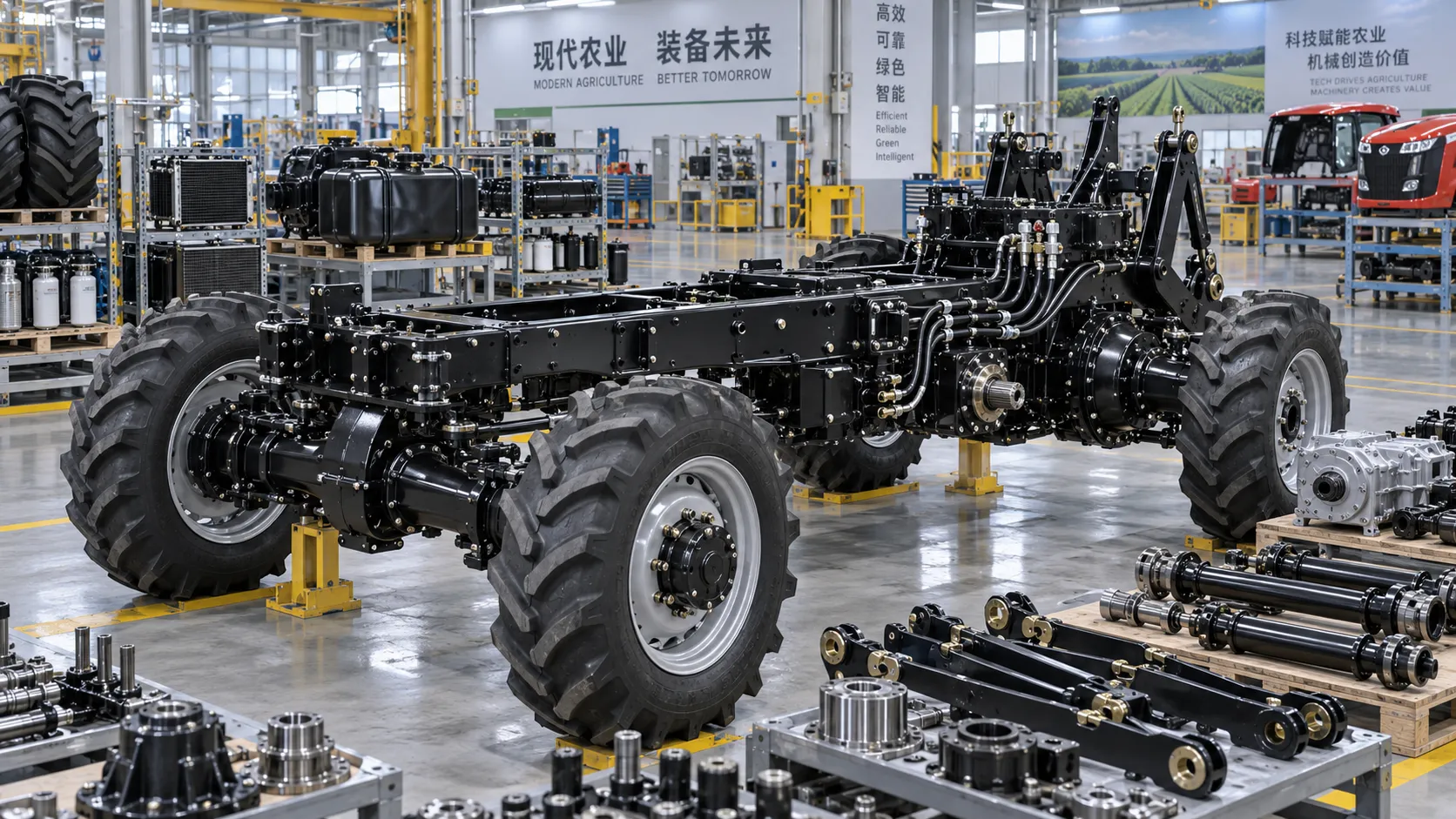
Tractor Chassis Price: What Buyers Should Compare Beyond the Initial Quote
Tractor chassis price is only the start. Compare load capacity, compatibility, durability, and lifecycle costs to choose a reliable, high-value chassis.
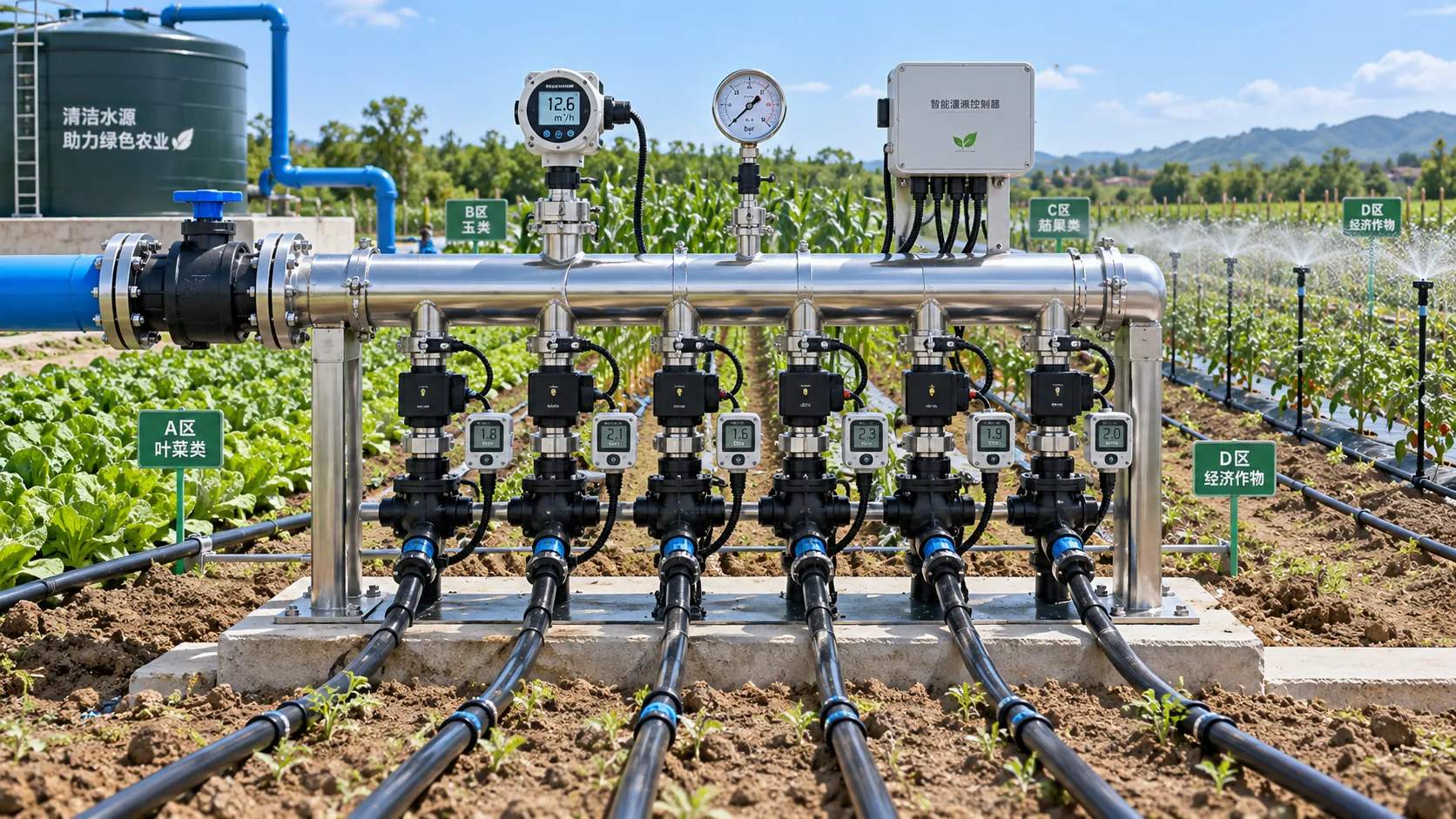
How to Select Smart Irrigation Valves for Multi-Zone Water Management?
Intelligent irrigation systems valves: learn how to match smart valves with multi-zone flow, pressure, control, feedback, and communication needs for reliable water management.
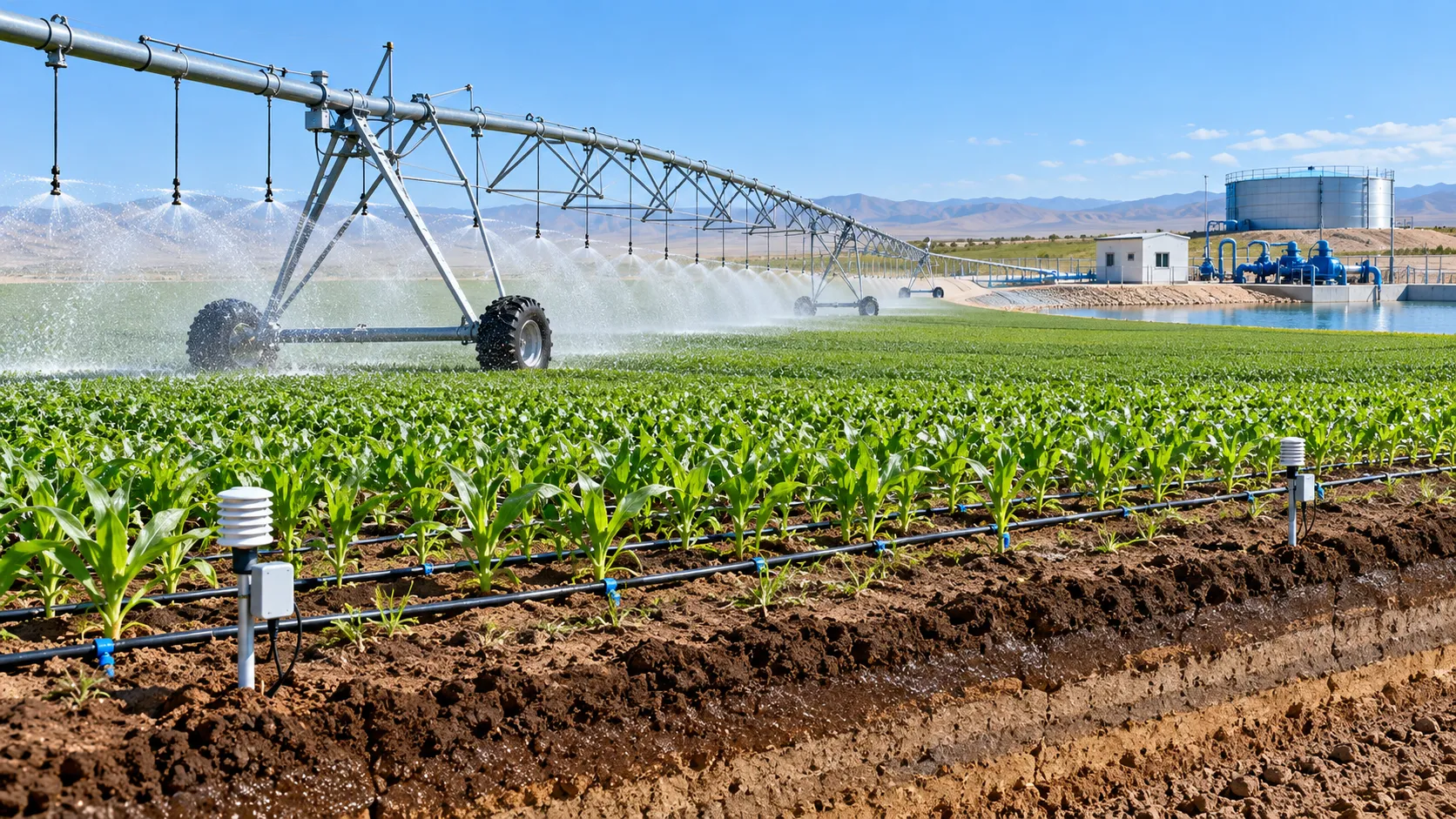
Climate-Smart Farming for Drought: A Practical Plan for Protecting Yields
Climate-smart farming for drought: build smarter water budgets, protect critical crop stages, improve irrigation uniformity, and safeguard yields with practical field-proven strategies.
How Digital Agriculture Platforms Turn Field Data Into Better Input Decisions
Digital agriculture platforms turn field data into smarter fertilizer, water, seed, and equipment decisions—helping farms cut risk, improve margins, and scale sustainability.
GPS-Guided Farm Machinery: Where It Delivers Measurable Field Efficiency Gains
Agri-mechanization GPS guided systems deliver measurable field efficiency gains through reduced overlap, precise planting, smarter inputs, and reliable farm data.
Related News
- 00
0000-00
How to Evaluate Dynamic Feedback Algorithm Suppliers for Precision Farming Systems - 00
0000-00
How Sensor Feedback Enables Accurate Variable-Rate Fertilization in Field Conditions - 00
0000-00
How to Select Precision Crop Protection Equipment for Variable Field Conditions - 00
0000-00
How to Evaluate Precision Fertilization System Suppliers for Farm-Scale Deployment - 00
0000-00
How to Select a Precision Fertilization System for Variable Corn Field Conditions
Popular Tags
Tractor Power Architect
Weekly Insights
Stay ahead with our curated technology reports delivered every Monday.