
Drip vs. Micro-Sprinkler Irrigation: Which System Fits Your Orchard?
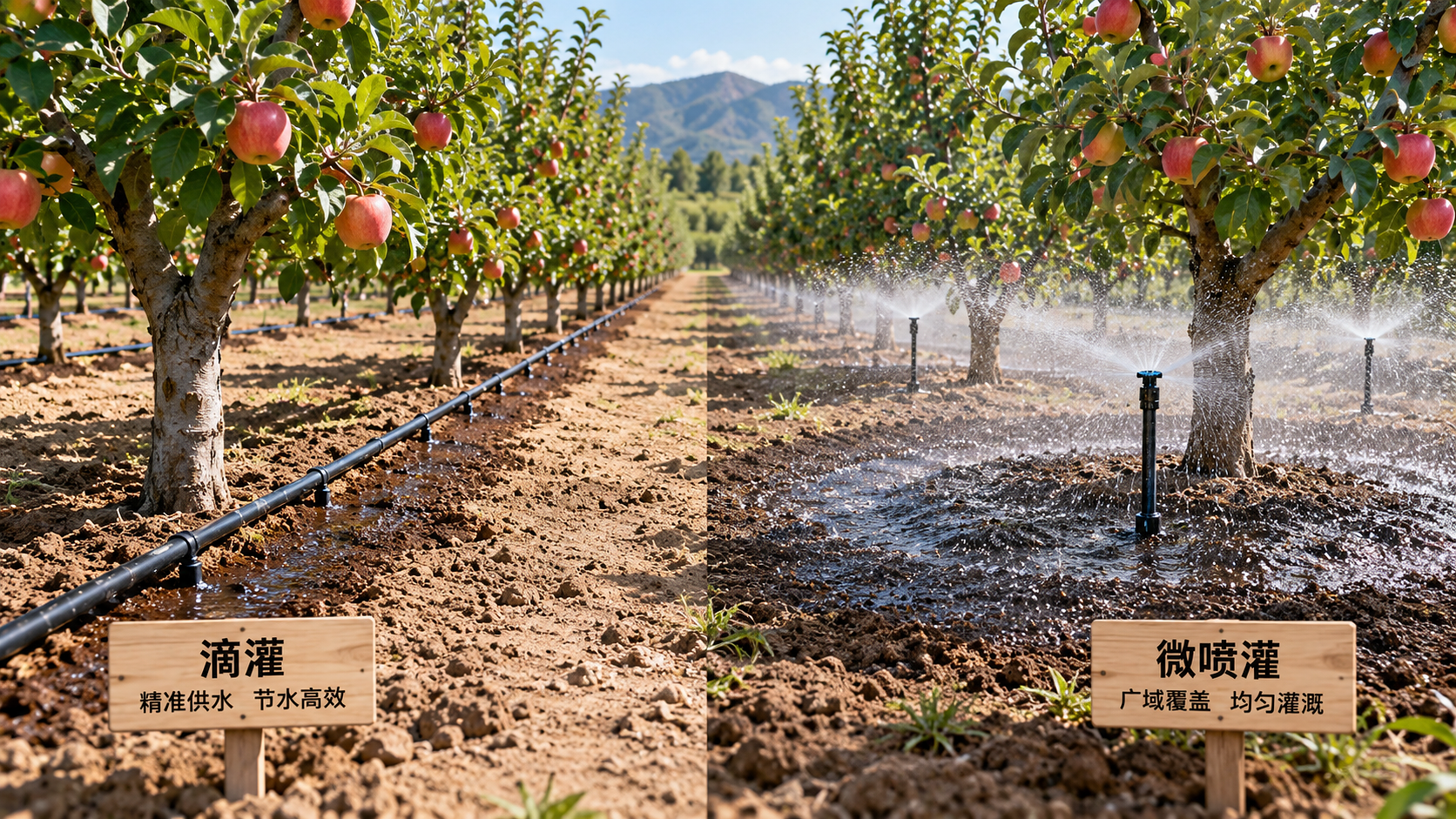




For most mature orchards, the choice comes down to one practical question: do you need to wet a defined strip of soil with maximum precision, or a broader portion of the orchard floor with added environmental benefits? Drip irrigation usually wins when water is scarce, fertigation precision is central, and canopy conditions make leaf wetting undesirable. Micro-sprinklers are often the stronger fit where young trees need a wider wetted root zone, soil salinity requires periodic leaching, frost protection is part of the design, or the orchard floor needs cooling and humidity management.
This irrigation solution comparison for orchards should not be treated as a contest between a “high-efficiency” system and a “traditional” one. Both can perform well when they match the tree age, soil profile, water source, orchard geometry, climate, and operating strategy. A poor hydraulic design, inadequate filtration, or weak maintenance program will undermine either system.
Start with the root zone, not the irrigation hardware
Drip and micro-sprinkler systems distribute water differently, so they shape root development differently over time. That matters more than the visible equipment cost.
Drip irrigation releases water at low flow from emitters placed along one or more laterals. It creates concentrated wetting zones around the emitters. In loam or clay soils, lateral water movement can connect those zones into a relatively continuous wetted strip. In sandy soil, water tends to move downward more quickly, leaving narrower wetting patterns unless emitters are closely spaced or more lines are installed.
Micro-sprinklers apply water over a circular or partial-circle pattern near the tree. They wet a larger soil surface area, usually encouraging a broader root system. That can be useful for young trees that have not yet developed an extensive root zone, orchards with shallow effective soil depth, or blocks where tree-to-tree variability makes a narrow wetted band risky.
The important distinction is not simply “localized” versus “broad.” It is whether the wetted volume matches the active roots during the period when the tree is taking up water and nutrients. A drip design that wets only a small fraction of a mature tree’s active root zone can limit uniformity even when the total seasonal water application appears adequate. A micro-sprinkler design that wets excessive area can lose water to evaporation, support unwanted groundcover growth, and increase pumping demand.
Where each system tends to fit best
The table is a screening tool, not a substitute for a layout and hydraulic review. For example, a high-value orchard in a dry region may favor drip even in sandy soil, but only if the design provides enough emitters, operating zones, and cycle flexibility to keep the active root volume supplied.
Water efficiency is more than emitter efficiency
Drip is commonly chosen for its water-saving potential, and that logic is sound when the system is designed and managed well. The water is applied beneath the canopy, usually with less evaporation from exposed wet soil and less wind drift than a spray system. It also supports short, frequent irrigation events that can match crop demand closely.
However, drip’s efficiency can be overstated when the design ignores soil constraints. On coarse soils, a long irrigation set may push water below the primary root zone. On sloping blocks, pressure variation can create unequal application unless pressure-compensating emitters, pressure regulation, and appropriate zoning are used. Clogged emitters may go unnoticed until canopy stress becomes visible, by which point uniformity has already declined.
Micro-sprinklers expose more water to the air and wet more orchard-floor area, so they usually have a higher potential for evaporative and wind-related loss. Their value lies elsewhere: they can wet a larger root volume in one event, handle wider tree spacing without adding multiple drip lines, and create management options beyond irrigation. In hot, dry conditions, an under-tree micro-sprinkler program may moderate the immediate orchard-floor environment. That benefit must be weighed against water availability and disease pressure.
Do not select a system based only on annual water allocation. Compare the system’s ability to deliver the required water during peak demand. Pump capacity, available operating hours, pressure loss across long runs, block size, and the number of irrigation zones often determine whether a theoretically efficient system can keep up in practice.
Filtration and water quality can decide the project
Many irrigation comparisons start with emitters and sprinklers, but the water source should be assessed first. Drip emitters have narrow flow passages and are particularly vulnerable to physical particles, biological growth, and mineral precipitation. Surface water, algae-prone storage, sediment-laden wells, or water with dissolved minerals can all change the filtration and maintenance burden.
Micro-sprinkler nozzles also clog, but their passages are often less restrictive than drip emitters. That does not make filtration optional. Plugged nozzles can distort spray patterns, reduce wetted diameter, and create dry zones that are difficult to spot from the edge of the block.
A sound selection process considers three water-quality risks:
- Physical contamination: sand, silt, organic debris, and suspended particles require filtration suited to the source and system components.
- Biological contamination: algae, bacterial slime, and organic matter can build up in filters, lines, emitters, and nozzles when maintenance is inconsistent.
- Chemical precipitation: dissolved minerals can form deposits when water chemistry, fertilizer injection, and pH conditions interact unfavorably.
Filtration must be sized for actual flow and designed for cleaning without disrupting irrigation schedules. The field layout also needs flushing points at line ends. A system that cannot be flushed properly becomes progressively less uniform, regardless of its original design quality.
Fertigation: precision depends on movement in the soil
Drip irrigation is usually the clearer choice when nutrient placement is a major reason for investing in irrigation automation. Fertilizer can be delivered in smaller doses directly into the wetted root zone, allowing programs to be adjusted by growth stage, block condition, or sensor-informed irrigation scheduling.
Yet “directly to the roots” should not be interpreted too literally. Nutrients move with water, and their final position depends on soil texture, irrigation duration, application timing, and the chemistry of the nutrient source. Overly long irrigation after injection can move mobile nutrients too deeply. Too little post-injection water can leave fertilizer unevenly distributed within the wetted zone.
Micro-sprinkler fertigation can still be appropriate for orchards that need wider nutrient distribution. It may be useful where roots occupy a broad area and soil conditions favor a larger wetted footprint. The tradeoff is that more fertilizer may be exposed to non-target areas, including vegetation between rows. In either system, a separate irrigation and nutrient plan is stronger than treating fertilizer injection as an automatic benefit of the equipment.
Climate, disease pressure, and orchard-floor management
Micro-sprinklers can introduce useful flexibility in climates with frost risk, extreme heat, or salinity concerns. Their wider distribution may support under-tree cooling strategies or leaching programs that a narrow drip pattern cannot achieve as easily. But these benefits are conditional. Wind can disrupt spray distribution, and overspray reaching lower foliage, trunks, or fruit can create management concerns in disease-sensitive orchards.
Drip keeps foliage dry and usually limits humidity created by irrigation near the canopy. That is an advantage where fungal disease pressure is a persistent operational concern. It can also reduce weed growth between rows because only a limited soil area is wetted. Still, weeds may become concentrated along the wetted strip, and rodent damage or mechanical damage to exposed laterals can create ongoing repair work.
Micro-sprinkler hardware is generally easier to inspect visually because a failed or distorted spray pattern can often be seen while the system runs. Drip failures are more subtle. Pressure gauges, flow monitoring, periodic distribution-uniformity checks, and field inspections are essential when drip is used across large orchard blocks.
Common selection errors
One frequent error is choosing drip based on water scarcity without checking whether the planned emitter layout can wet enough soil for the crop’s current and future root system. A young planting may work with a simple layout at establishment, then require added emitters, a second lateral, or changed run times as canopy and root volume expand.
Another is specifying micro-sprinklers for broad coverage without accounting for wind exposure, runoff risk, or the capacity needed to operate the system during peak demand. A large wetted diameter is not automatically better if the soil cannot absorb the application rate or if overlapping patterns create excessive wetness near trunks.
It is also risky to compare capital cost alone. Drip often requires tighter filtration discipline and more attention to invisible clogging. Micro-sprinklers may require more pumping energy, more water, and protection from accidental impacts. The useful comparison is lifecycle operability: how easily can the system be monitored, repaired, expanded, flushed, automated, and managed by the available field team?
A practical decision sequence
Before finalizing equipment, define the required wetted root volume for each major block. Do this separately for young and mature trees, and do not assume every block has the same soil depth or infiltration behavior. Then map water-source quality, available pressure, flow capacity, elevation changes, row length, and the maximum hours available for irrigation during high-demand periods.
Next, identify functions beyond routine watering. Frost protection, salt leaching, cooling, cover-crop management, and fertigation precision can change the preferred system. A block that needs two of these functions may justify micro-sprinklers even when drip appears more efficient on a basic water-use comparison. Conversely, a water-constrained block with dependable filtration and a need for precise nutrient delivery often supports the case for drip.
Finally, evaluate controls as part of the irrigation system rather than as an add-on. Flow meters, pressure sensing, automated valves, soil-moisture measurements, weather-based scheduling, and alerts for abnormal flow can reveal faults earlier and support block-level decisions. AP-Strategy’s coverage of intelligent irrigation systems reflects this operational reality: water-saving performance comes from the combined behavior of hydraulics, field data, maintenance, and scheduling, not from a single emitter or sprinkler choice.
Choose the system that solves the limiting condition
Choose drip when the limiting condition is water supply, fertilizer-placement precision, canopy dryness, or the need to irrigate narrow, controlled root-zone strips. Design it with enough wetted area for the trees, not merely enough emitters to make installation economical.
Choose micro-sprinklers when the limiting condition is broad root-zone wetting, young-tree establishment, salinity management, frost-related functionality, or the need for a wider under-tree application pattern. Design it around infiltration rate, wind exposure, spray placement, and the additional water and pumping requirement.
In orchards with distinct soil zones, tree ages, or water-management objectives, a single answer may be less effective than a block-by-block approach. The best irrigation decision is the one that maintains root-zone uniformity under real operating conditions while giving the orchard enough control to respond when weather, crop stage, or water availability changes.
Related News
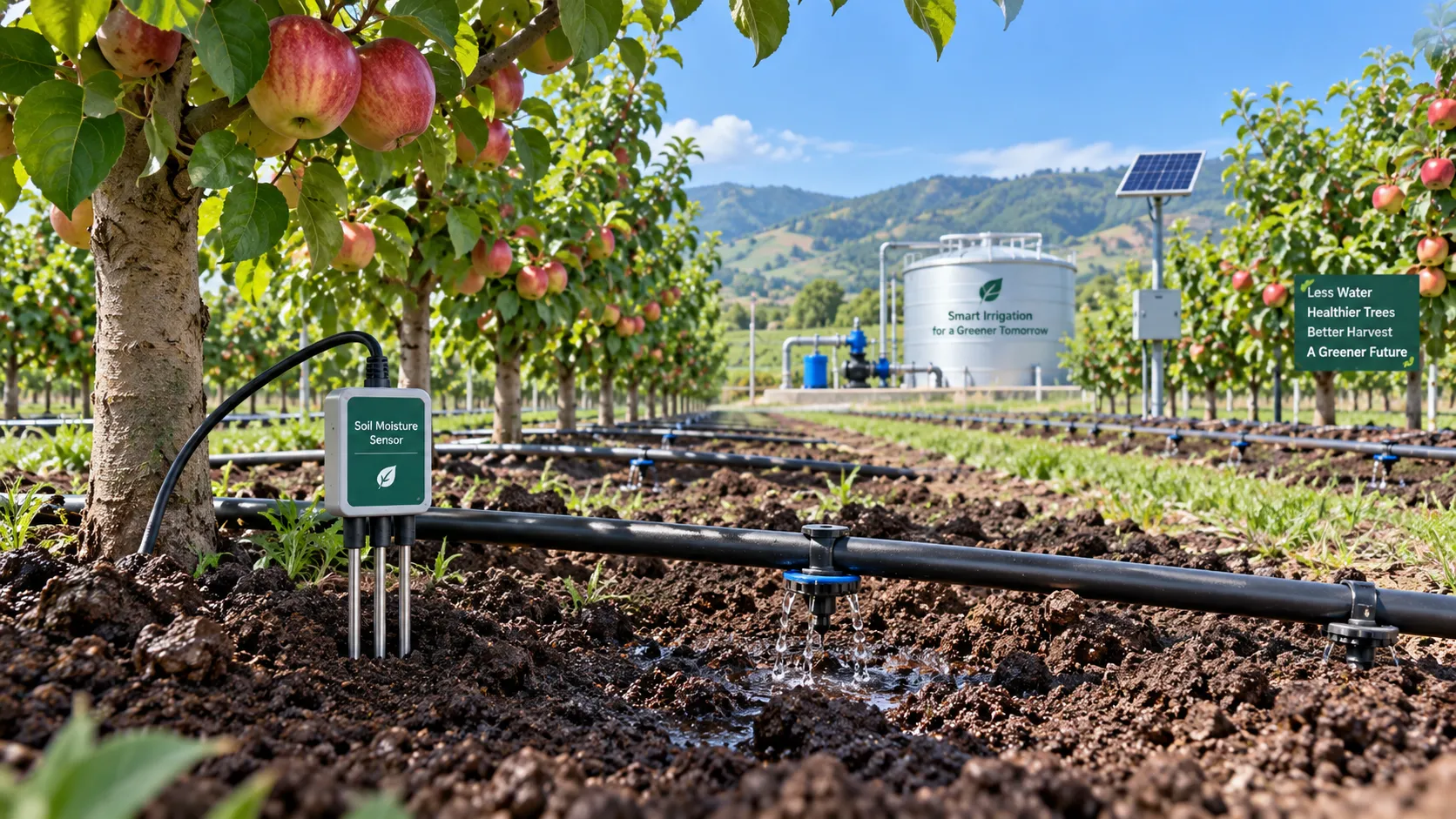
Orchard Water Management: Using Soil Moisture Data to Schedule Irrigation
Agricultural water management for orchards made practical: use soil moisture data to optimize irrigation timing, protect yield, reduce costs, and improve resilience.
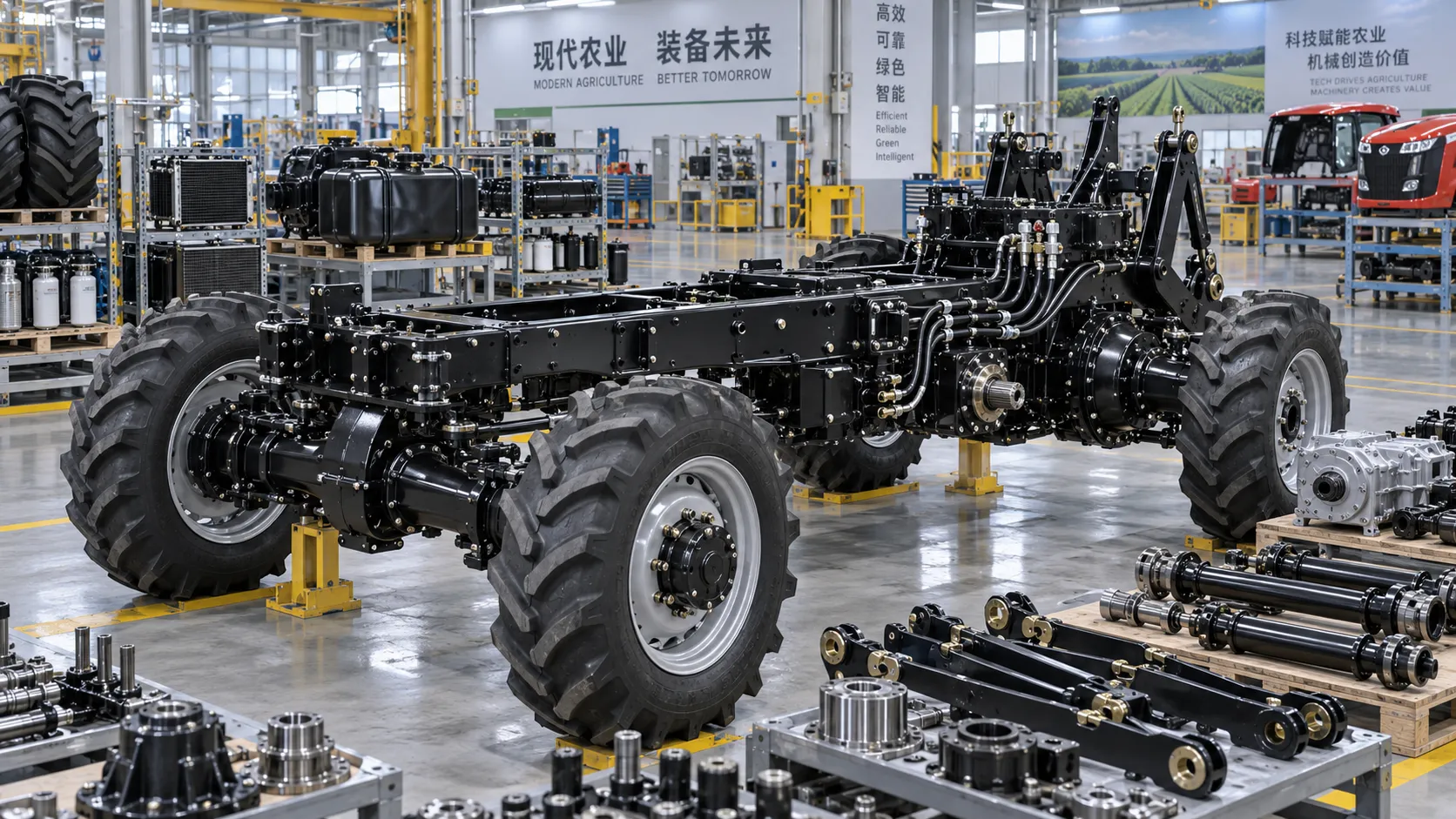
Tractor Chassis Price: What Buyers Should Compare Beyond the Initial Quote
Tractor chassis price is only the start. Compare load capacity, compatibility, durability, and lifecycle costs to choose a reliable, high-value chassis.
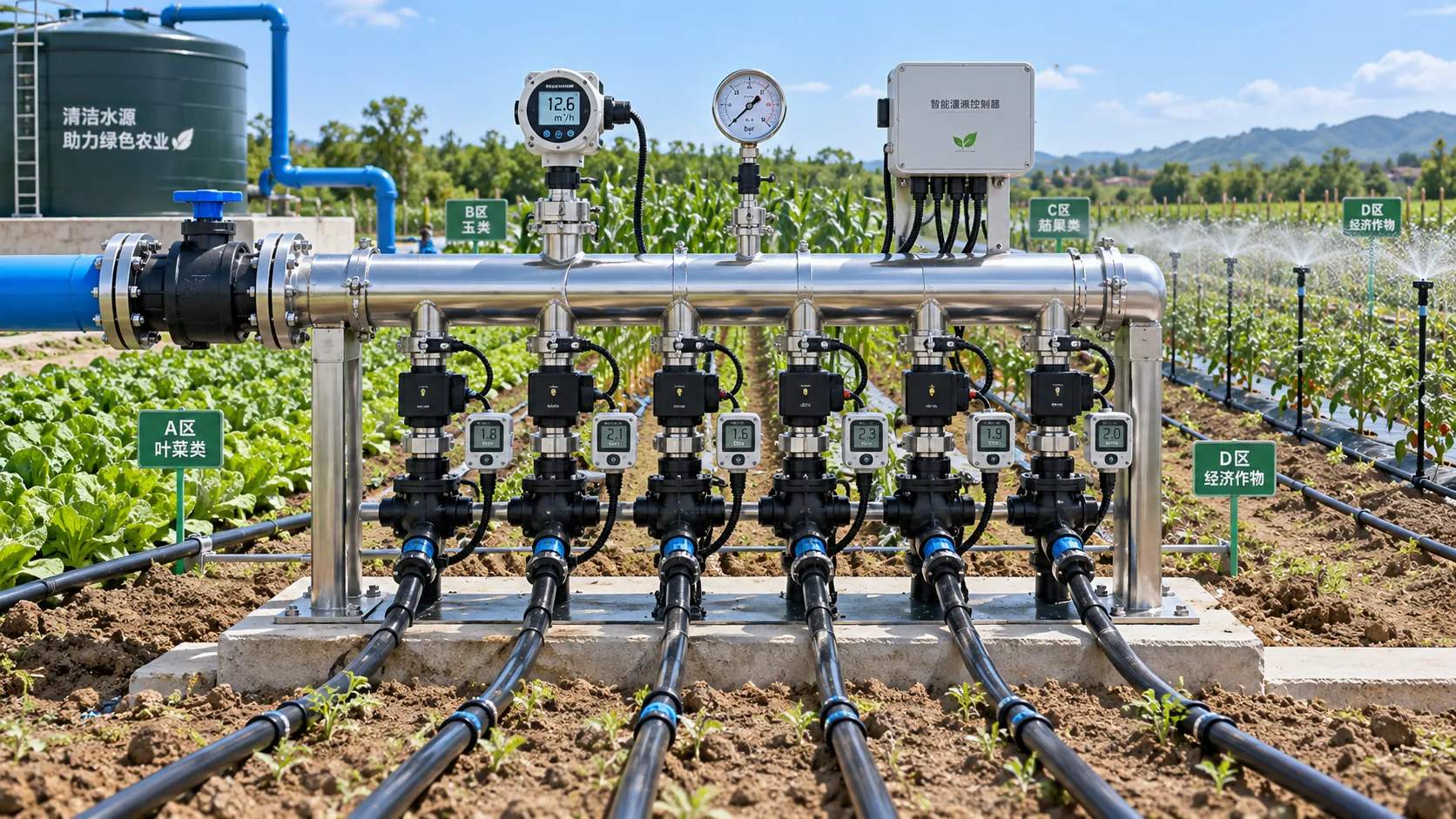
How to Select Smart Irrigation Valves for Multi-Zone Water Management?
Intelligent irrigation systems valves: learn how to match smart valves with multi-zone flow, pressure, control, feedback, and communication needs for reliable water management.
Climate-Smart Farming for Drought: A Practical Plan for Protecting Yields
Climate-smart farming for drought: build smarter water budgets, protect critical crop stages, improve irrigation uniformity, and safeguard yields with practical field-proven strategies.
How Digital Agriculture Platforms Turn Field Data Into Better Input Decisions
Digital agriculture platforms turn field data into smarter fertilizer, water, seed, and equipment decisions—helping farms cut risk, improve margins, and scale sustainability.
GPS-Guided Farm Machinery: Where It Delivers Measurable Field Efficiency Gains
Agri-mechanization GPS guided systems deliver measurable field efficiency gains through reduced overlap, precise planting, smarter inputs, and reliable farm data.
How Sensor Feedback Enables Accurate Variable-Rate Fertilization in Field Conditions
Precision fertilization systems with sensor feedback improve variable-rate accuracy by verifying flow, managing latency, and ensuring reliable field application.
How to Select Precision Crop Protection Equipment for Variable Field Conditions
Precision crop protection equipment selection made simple: compare terrain, canopy, weather, control accuracy, and data workflows for reliable applications.

When Does Agricultural Machinery Leasing Cost Less Than Owning Equipment?
Agricultural machinery leasing can lower farm costs when use is seasonal or uncertain. Compare utilization, maintenance, cash flow, and risk to make a smarter equipment decision.
Related News
- 00
0000-00
Drip vs. Micro-Sprinkler Irrigation: Which System Fits Your Orchard? - 00
0000-00
How to Select Smart Irrigation Valves for Multi-Zone Water Management? - 00
0000-00
Automated Water-Saving Irrigation: How to Cut Water Use Without Reducing Crop Yields - 00
0000-00
How to Evaluate Drip Irrigation System Manufacturers for Large Farm Projects - 00
0000-00
Wireless Agricultural Automation for Remote Irrigation and Field Monitoring
Popular Tags
Hydrological Resource Strategist
Weekly Insights
Stay ahead with our curated technology reports delivered every Monday.