Drip vs. Center Pivot Irrigation: Which Saves More Water for Your Farm?
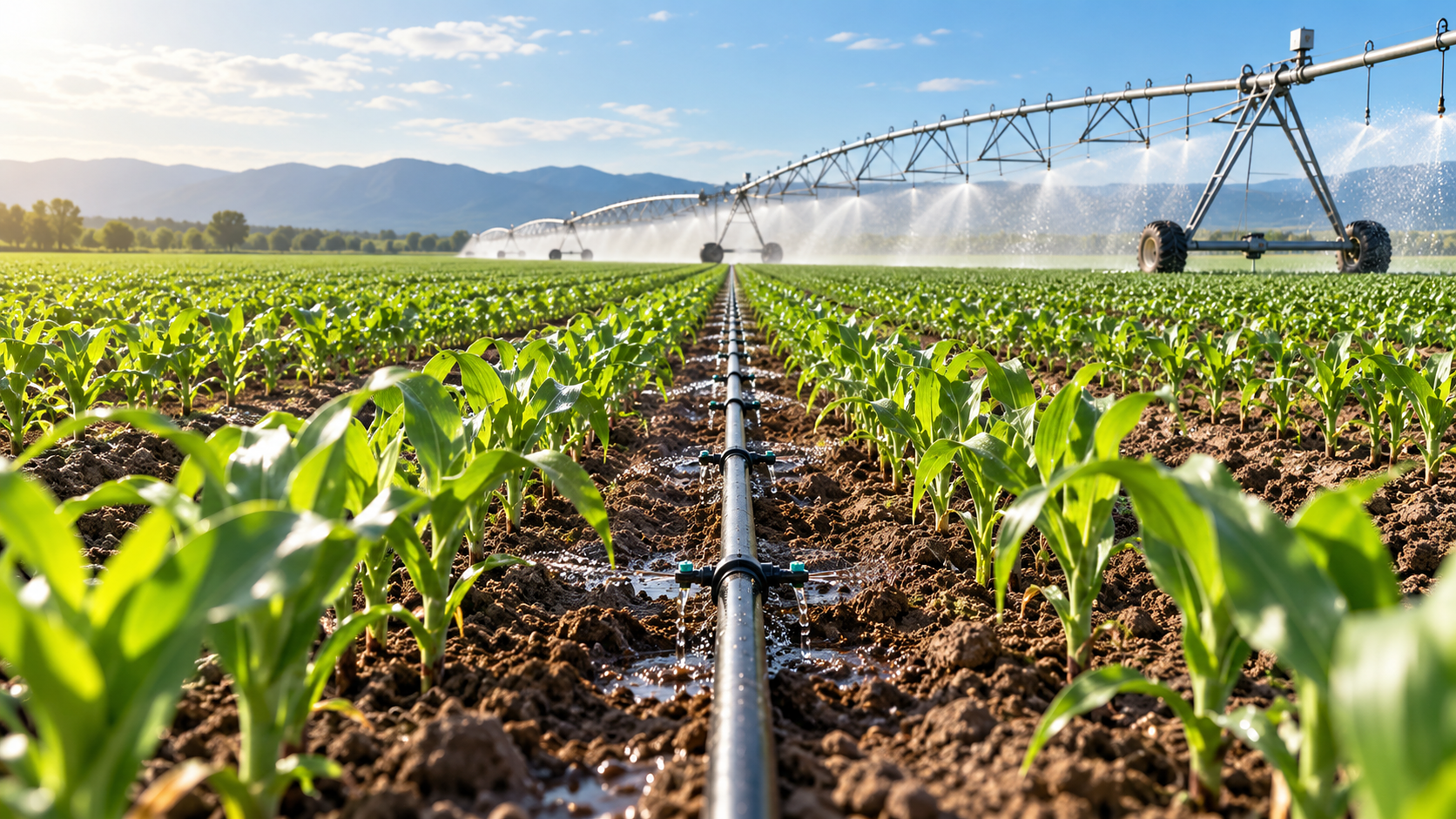




Drip irrigation delivers water close to crop roots, while center pivot systems distribute it across fields through overhead sprinklers. But which approach saves more water in practice? The answer depends on crop type, soil conditions, climate, system design, and operating efficiency. For technical evaluators, irrigation system selection for water saving is not simply a comparison of equipment specifications: it requires assessing evaporation, runoff, distribution uniformity, and maintenance demands. This guide examines the trade-offs to help you choose a system that supports efficient water use and reliable farm performance.
The short answer: drip has an advantage, but management decides the result
Drip irrigation often has the greater potential to reduce evaporation and apply water precisely where a crop can use it. Subsurface drip can limit wetting of the soil surface, while surface drip can concentrate water along crop rows rather than across the entire field. These advantages can be valuable in dry, windy conditions or where water is expensive or tightly constrained.
That does not make drip the automatic winner. A well-designed center pivot, operated with an appropriate sprinkler package and a sound irrigation schedule, can use water efficiently across large fields. It may also be easier to inspect, adapt to crop rotation and keep operational. A neglected drip system with clogged emitters, leaks or excessive run times can waste water and leave parts of the crop under-irrigated.
The right comparison is therefore not “drip versus pivot” in isolation. It is the performance of two complete systems—including their water sources, field layouts, controls, labor requirements and maintenance plans—over the life of the investment.
Define what “saving water” means before comparing designs
A system can reduce the volume pumped without reducing crop water use, especially if it cuts evaporation from bare soil, runoff or deep percolation below the root zone. But lower withdrawal at the pump is not always the same as a basin-wide water saving. Some runoff and drainage may return to a usable water source, while water consumed by evaporation and crop transpiration generally does not return locally in the same way. The distinction matters where water accounting or shared supplies influence the decision.
For a farm-level assessment, compare alternatives using the same crop, area, season and yield target. A useful starting measure is total irrigation water withdrawn per unit of harvested crop. Pair that with field observations of crop uniformity and soil moisture: a lower volume alone is not a success if it comes from leaving part of the field short of water.
Also distinguish application efficiency from distribution uniformity. Application efficiency concerns how much applied water becomes available in the root zone. Uniformity describes how evenly water is distributed across the intended area. Poor uniformity often leads an operator to irrigate longer to protect the driest plants, overwatering other areas in the process.
Where drip irrigation can save more water
Drip is particularly compelling when crops are planted in stable rows, water supply is limited and the operation can support filtration and regular maintenance. Orchards, vineyards and many high-value row crops are common candidates because water can be delivered near active roots without routinely wetting every strip between rows.
Frequent, smaller applications can help match irrigation to crop demand and soil storage capacity. That is useful in soils that hold relatively little plant-available water. Drip also allows fertilizer to be applied through the irrigation system where the design, water chemistry and management plan support fertigation. Neither benefit is automatic: irrigation and nutrient schedules still need to reflect crop growth and field measurements.
The design challenge is getting enough water to the whole effective root zone. Emitter spacing, discharge rate, lateral spacing and irrigation duration must fit the soil’s wetting pattern. On coarse soils, water may move downward faster than it spreads sideways; on other soils, lateral movement can be greater. A design that wets too narrow a volume can stress plants even when total pumped water looks adequate.
Subsurface drip adds another trade-off. Buried lines reduce surface exposure and can work well with repeated field operations when properly placed. Yet leaks and blockages are harder to see, and line depth must be compatible with tillage, planting and harvesting equipment. Germination may also require a separate plan when buried water does not adequately wet the seed zone.
The maintenance condition that changes the answer
Drip performance depends heavily on water quality. Suspended particles, biological growth and chemical precipitation can restrict emitters. Before selecting filtration and treatment, analyze the proposed water source and consider how its quality changes during the season. Screen or media filtration, flushing arrangements and any chemical treatment should be specified for the actual risk, not chosen as generic accessories.
Pressure gauges, flow measurement and access to flush points make troubleshooting more practical. Ask how a blocked section will be identified, how lines will be repaired and who will carry out the work. If those questions have no credible answer, the theoretical water-saving advantage deserves a discount in the evaluation.
When a center pivot is the more practical water-saving choice
Center pivots suit many large, open fields where equipment can travel around a fixed point and crops are rotated. One machine can irrigate a broad area without installing a separate emitter network in every row. Sprinkler packages can be adapted to operating pressure, crop height, wind exposure and field conditions, although each change has consequences for coverage and application intensity.
A pivot can be a strong choice when its simplicity and flexibility make good management more likely. Sprinklers and leaks are generally visible during inspection, and the system can apply water for germination as well as later crop growth. However, a circular machine does not naturally cover every corner of a rectangular field. Corner equipment, another irrigation method or a decision to leave some land unirrigated must be included in the comparison.
Wind drift and evaporation from droplets and wet surfaces can increase losses, especially under hot, windy conditions. Lowering sprinkler outlets or changing nozzle types may help in some settings, but it can also alter the wetted area and increase the rate at which water reaches the soil. A package that saves pressure or reduces drift is not necessarily suitable if it causes ponding and runoff.
Check the outer spans, not just the average rate
The outer part of a pivot travels faster and must serve more area per unit of machine length than the inner part. Its sprinklers can therefore apply water at a higher instantaneous rate. On sloping ground, compacted soil or soil with low infiltration capacity, water may accumulate or run off before it enters the root zone. Wheel tracks can create additional runoff pathways and operational problems.
Request a sprinkler design that considers field infiltration, slope, nozzle placement and operating pressure along the machine. Then verify actual performance in the field. A catch-can evaluation, carried out under appropriate test conditions, can reveal uneven application caused by worn nozzles, incorrect pressure or wind. Soil observations after irrigation show whether water is entering the profile rather than moving across the surface.
Compare both systems against the same field conditions
A useful selection exercise starts with constraints rather than a preferred technology. The following issues often determine which design is credible:
- Crop and rotation: Check row spacing, rooting depth, establishment needs and whether future crops require a different layout. A long-life subsurface drip installation can restrict changes that a pivot accommodates more easily.
- Soil and topography: Assess infiltration, water-holding capacity, slope and variability. For drip, these influence emitter layout and wetting patterns; for a pivot, they influence sprinkler selection and runoff risk.
- Water supply: Confirm seasonal availability, peak flow, water quality and supply reliability. A design must meet crop demand during the critical period, not merely look efficient over a season.
- Field geometry and machinery: Map pivot obstacles and unirrigated corners. For drip, check line placement against planting, cultivation, harvest traffic and any planned tillage.
- Operating capacity: Identify who will monitor pressures, inspect equipment, clean filters, repair damage and adjust schedules. The best design on paper is fragile if those tasks cannot be supported.
Neither method eliminates the need to manage salinity. Localized drip wetting can move salts toward the edge of the wetted zone, where rainfall or changes in irrigation may move them back toward roots. Depending on water quality, soil and drainage, the farm may need a specific leaching and monitoring strategy. A pivot can also contribute to salt accumulation if drainage and leaching are inadequate. Local agronomic advice is important before treating either system as a solution to a salinity problem.
Build the comparison around lifecycle performance
Capital cost matters, but the lowest initial quote is an incomplete basis for selection. For each alternative, include pumps, pipelines, electrical or fuel infrastructure, controls, installation and any work needed to prepare the field. A drip estimate should account for filtration, flushing infrastructure, line replacement and disposal where relevant. A pivot estimate should include the sprinkler package, field access, expected repairs and the treatment of corners.
Energy use needs its own calculation. Drip emitters may operate at relatively low pressure, but filtration losses and elevation changes add to pumping requirements. Pivot pressure needs vary with the sprinkler package, terrain and water-delivery arrangement. Compare expected operating pressures and flow rates at the pump, along with hours of operation; do not assume one system always uses less energy.
Then test the result against uncertainty. What happens if water quality deteriorates, a crop rotation changes or a repair interrupts irrigation during peak demand? Include spare parts availability and realistic service response in the assessment. A system that cannot be restored quickly during a critical growth stage creates a risk that a simple cost-per-hectare comparison can miss.
Controls help only when they inform a decision
Soil-moisture sensors, weather data and crop evapotranspiration estimates can improve scheduling for both drip and pivot systems. Their value comes from connecting measurements to an action: when to irrigate, how much to apply and whether the previous irrigation reached the intended depth. A sensor placed in an unrepresentative location can give a precise reading that leads to the wrong field-wide decision.
Variable-rate pivot controls can be useful where mapped soil differences or management zones justify different application depths. Drip systems can also be divided into independently controlled zones. In either case, zoning adds complexity and only pays for itself when the variation is understood and the operator can maintain the controls. Remote monitoring should supplement field checks, not replace them.
This is where the broader Agriculture 4.0 perspective matters. Water measurements, machinery movement and crop-management plans need to be assessed together rather than as separate technology purchases. AP-Strategy’s focus on intelligent irrigation and large-scale equipment reflects that practical connection: a water-saving layout must still fit the machines and decisions that keep the farm operating.
What to request before making the final choice
Ask prospective designers to work from the same field map, crop plan, water analysis and supply assumptions. Request an irrigation schedule for peak demand, expected pressure and flow at key points, a uniformity assessment method, and an explanation of how the system handles the field’s most difficult soil or slope. For drip, ask for the proposed filtration, flushing and leak-detection approach. For a pivot, ask for the sprinkler package, coverage map and runoff assessment, particularly near the outer spans.
Drip is often the stronger candidate when water scarcity, stable crop layout and localized application justify the maintenance commitment. A center pivot may be the better decision when field scale, rotation flexibility and serviceability support consistent operation. Choose the system that can meet the crop’s peak demand with measurable uniformity—and that the farm can maintain well enough to retain those savings year after year.
Related News
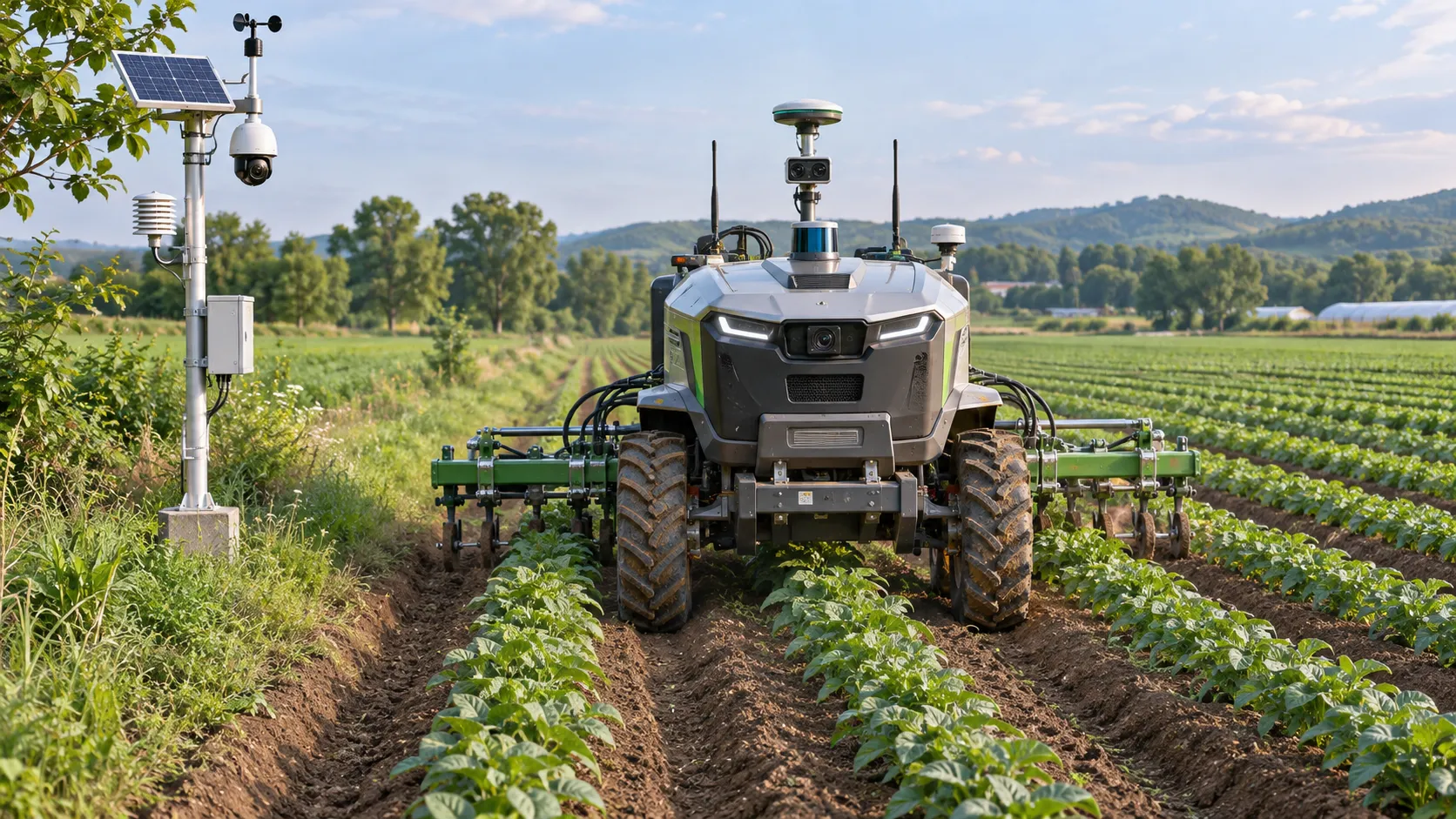
Agricultural Automation Still Needs Human Oversight, Study Finds
Agricultural automation still needs human oversight. Discover how AI and smart equipment are reshaping farm jobs, skills, and decisions.
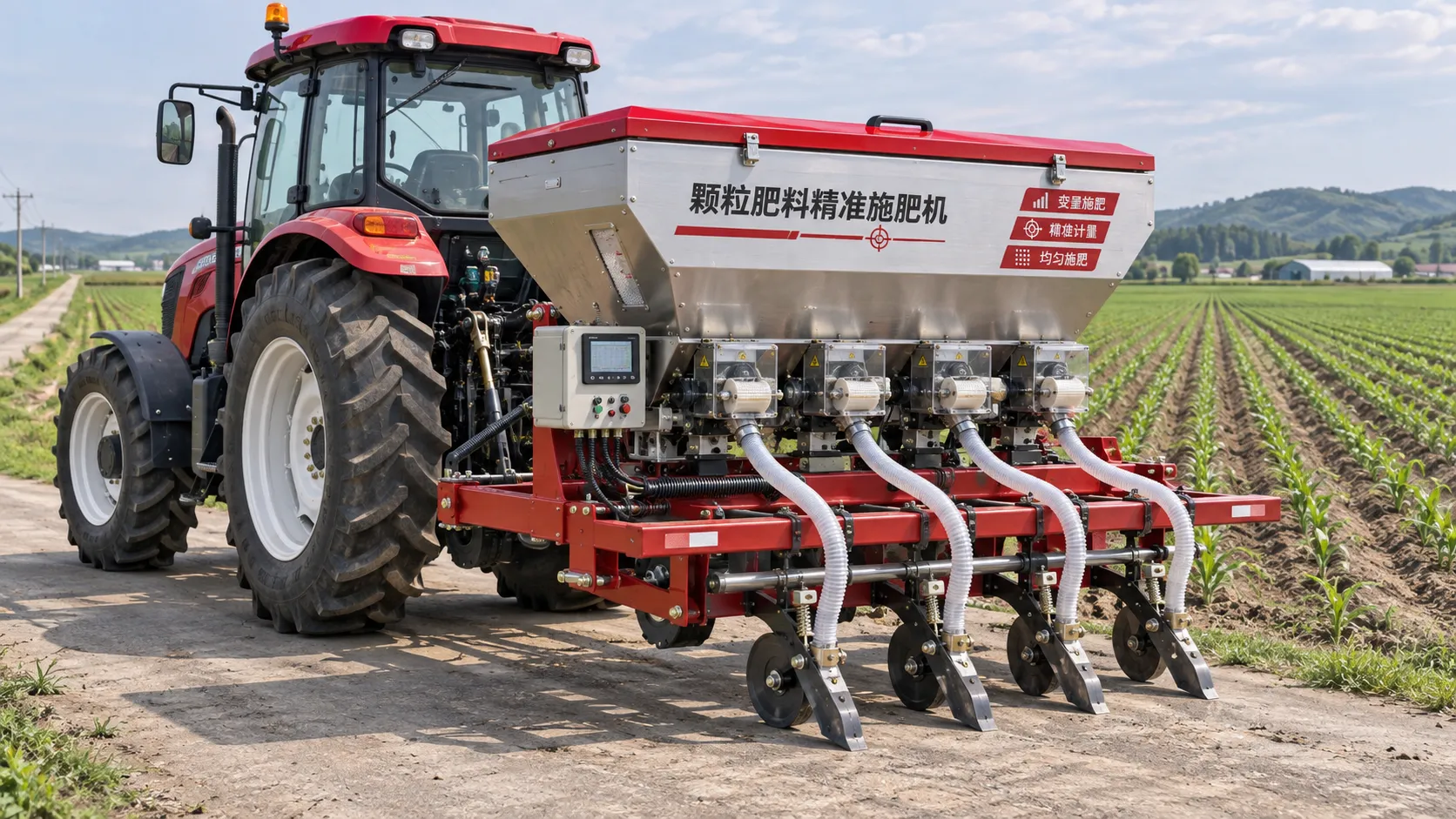
Choosing a Precision Fertilization Equipment Manufacturer: What to Check
Choose a precision fertilization equipment manufacturer with confidence. Compare accuracy, compatibility, service and total ownership costs before you buy.
China's Autumn Grain Harvest Highlights Role of Machinery and Precision Farming
China's autumn grain harvest highlights machinery and precision farming. Explore how coordinated practices support harvesting and yield improvement.
Drip vs. Center Pivot Irrigation: Maintenance Tasks and Costs Compared
Use this irrigation solution comparison by maintenance to weigh drip vs. center pivot tasks, costs and downtime—and choose the best fit for your field.
EIMA 2026: Six Tractor of the Year Awards Include Autonomous Robot
Explore the Tractor of the Year awards at EIMA 2026, featuring six winners, including the AgXeed autonomous robot and leading tractor models.
Choosing Irrigation Systems for Government Projects: Water, Cost and Compliance
What factors affect irrigation system selection for government projects? Explore water supply, lifecycle costs and compliance to make a confident, well-informed choice.
Choosing an Agricultural Machinery Platform: Listings, Pricing, and Support
Choosing an agricultural machinery platform? Compare listings, pricing, supplier verification, and support to make a more confident equipment purchase.
Ofwat Launches £8 Million Agri-Water Innovation Challenge
Ofwat’s £8 million Agri-Water Innovation Challenge supports smart irrigation, water reuse and water-saving solutions. Explore the funding and its potential impact.
Choosing a Water-Saving Irrigation Supplier: 5 Key Procurement Criteria
Choose a water-saving irrigation systems supplier with confidence. Explore five procurement criteria to reduce risk and maximize long-term value.
Related News
- 00
0000-00
Drip vs. Center Pivot Irrigation: Which Saves More Water for Your Farm? - 00
0000-00
Low-Pressure Drip Irrigation: Choosing Emitters to Save Water and Maintain Uniformity - 00
0000-00
Choosing Smart Irrigation Equipment for Orchards With Existing Drip Systems - 00
0000-00
Smart Irrigation Equipment for Drip Systems: Key Compatibility Checks - 00
0000-00
Choosing Drip Irrigation Systems for Open Fields: Soil, Slope, and Water Quality
0000-00
Popular Tags
Hydrological Resource Strategist
Weekly Insights
Stay ahead with our curated technology reports delivered every Monday.