Choosing Drip Irrigation Systems for Open Fields: Soil, Slope, and Water Quality
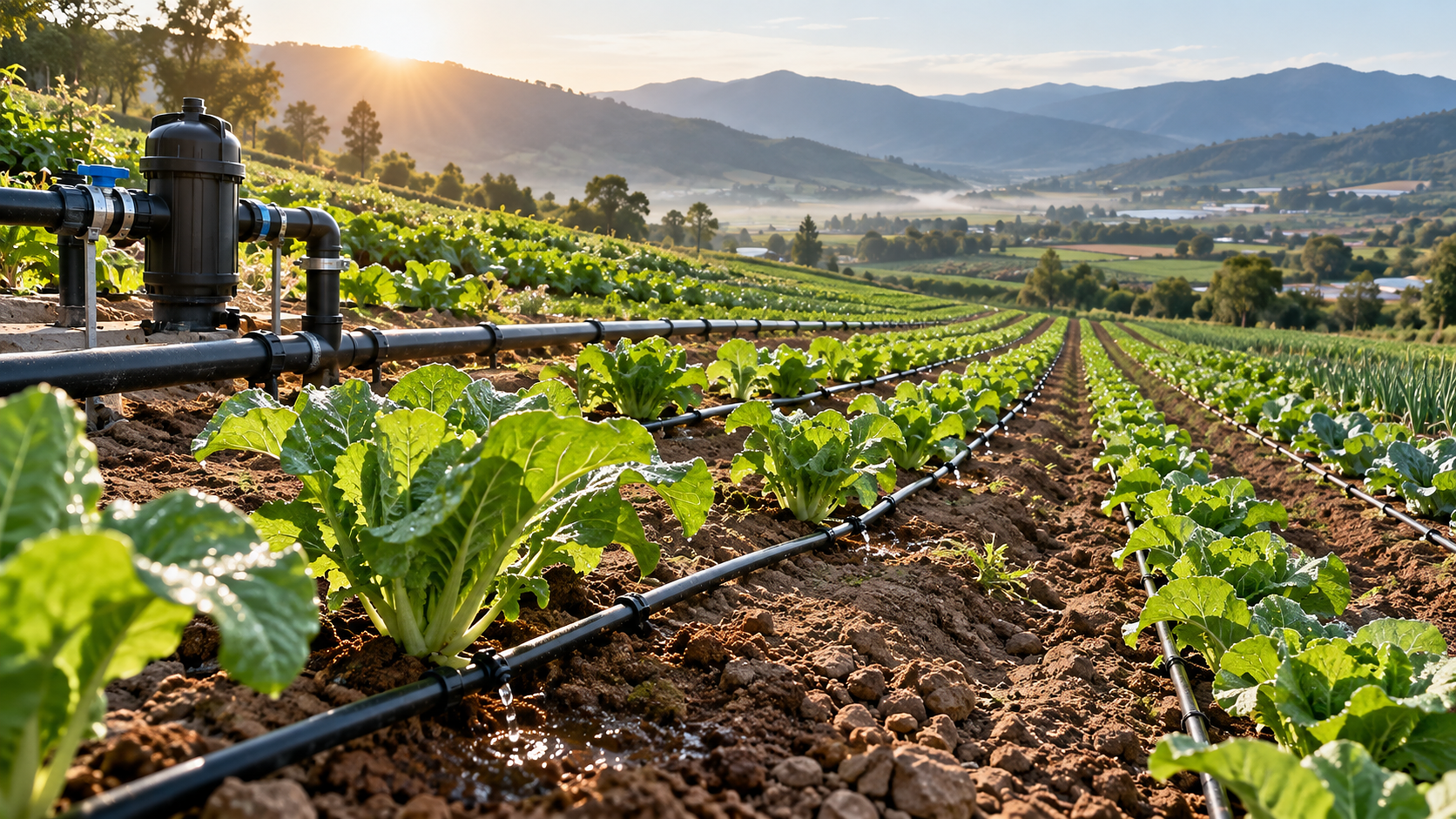




Choosing drip irrigation systems for open fields starts with three connected questions: where will water move in the soil, how will pressure vary across the field, and what could block the emitters? A system can perform well on a supplier’s specification sheet yet leave dry strips, overwater low areas, or require more cleaning than the farm can support.
The strongest choice matches emitter spacing and discharge to the root zone, keeps operating pressure within the emitter’s working range, and includes filtration and treatment suited to the water source. Compare purchase prices only after those requirements are defined. Otherwise, apparently similar quotations may represent very different levels of field performance.
Define the field conditions before comparing equipment
A useful design brief combines soil observations, an elevation survey, crop requirements, water analysis, and the farm’s operating schedule. Field area and row spacing alone cannot establish suitable lateral lengths, irrigation blocks, or pump capacity.
Map changes within the field. A sandy ridge and a heavier low area may need different irrigation schedules even when they grow the same crop. Likewise, two blocks at similar elevations can have different pressure requirements because their pipe routes and lateral lengths differ.
Establish these inputs before requesting a detailed proposal:
- Root-zone conditions: soil texture, layering, compaction, effective rooting depth, and drainage restrictions.
- Field geometry: row direction, elevation changes, proposed lateral lengths, and machinery access.
- Water availability: sustainable source flow, seasonal supply constraints, available pressure, and permitted irrigation hours.
- Water characteristics: suspended solids, biological loading, dissolved minerals, salinity, and seasonal variation.
- Operating requirements: peak crop demand, fertigation plans, available labor, and intended system life.
The irrigation window deserves particular attention. A design may deliver enough water over a full day but fall short when pumping is restricted to selected hours or several blocks must share the same supply.
Match emitter spacing to the wetted root zone
Soil texture helps predict water movement, but it does not provide a complete spacing rule. Sandy soils commonly allow water to move downward more readily, producing narrower wetted zones. Finer soils often support greater sideways movement, although structure, cracks, compaction, and layering can change that pattern.
On coarse soil, widely spaced emitters may leave gaps between wetted zones. Increasing run time can send water below the active roots before those gaps close. Closer emitter spacing, additional laterals, or a different discharge rate may provide better root-zone coverage, depending on the crop and planting arrangement.
On heavier soil, application must allow water to enter without persistent ponding or surface movement. A lower emitter discharge or shorter irrigation pulses may help where local infiltration is limited. However, cracks can carry water below roots, while compacted layers can cause shallow saturation. A texture label alone will not reveal either problem.
Use a wetting trial to test the proposed layout
Run a representative section of the proposed dripline, then inspect soil moisture across and below the crop row. Test contrasting soil areas and examine the profile after water has had time to redistribute. Surface wetting alone can be misleading, particularly with buried laterals.
The trial should answer a practical question: does the proposed spacing wet enough of the active root zone without excessive deep drainage or prolonged saturation? For widely spaced crops, complete wetting between rows may be unnecessary. For closely planted vegetables, gaps along the crop row can directly affect establishment and uniformity.
Separate irrigation blocks where soil differences require meaningfully different schedules. Pressure-compensating emitters can help equalize discharge, but they cannot make sandy and clay-rich zones store or release water in the same way.
Evaluate slope through pressure calculations, not appearance
Slope affects drip irrigation through elevation-related pressure changes. Friction also reduces pressure as water travels through pipes and laterals. On a downhill lateral, elevation gain in pressure may partly offset friction loss; elsewhere it can create excessive pressure. The resulting pattern requires calculation.
Ask for predicted pressures at the highest, lowest, nearest, and most distant emitters under the intended operating combinations. Include losses through filters, valves, regulators, and injection equipment. A pump-outlet pressure reading cannot establish that every lateral receives suitable pressure.
Pressure-compensating emitters are useful when expected pressure variation would otherwise cause unacceptable discharge differences. Their compensation works only within a specified pressure range. They cannot correct an undersized mainline or inadequate pressure at the end of a long lateral.
Non-compensating dripline can be a reasonable choice on relatively level fields with controlled lateral lengths and stable supply pressure. It may offer a simpler, lower-cost arrangement where hydraulic calculations demonstrate acceptable uniformity. Pressure compensation should follow the field requirements rather than serve as an automatic upgrade.
Block boundaries can make the design easier to operate. Grouping areas with similar elevations and hydraulic requirements allows regulators to serve more consistent conditions. Shortening laterals or changing pipe diameter may also solve a pressure problem more effectively than changing the emitter alone.
Check what happens when irrigation stops
On sloping ground, water remaining in the network can drain toward low points after shutdown. This may leave low areas wetter and delay uniform delivery when the next cycle starts. Evaluate anti-drain features where repeated short irrigations make drainage losses significant.
Air and vacuum management also matters during filling and emptying. Properly selected and positioned valves help manage trapped air and vacuum conditions. Buried dripline needs particular attention because soil ingestion during vacuum events and root intrusion create additional risks; relevant emitter features address different mechanisms and should be evaluated separately.
Let the water analysis determine filtration and treatment
Clear-looking water can still clog emitters. Suspended particles, biological growth, and chemical precipitation require different responses. A filter that removes grit will not remove dissolved salts, and finer filtration alone will not prevent every mineral deposit.
Obtain water samples that represent expected operating conditions. Surface-water quality may change after storms or during algal growth. Groundwater chemistry can also vary between wells or supply blends. A design based only on the cleanest sample can underestimate filtration demand.
Select filtration using the emitter manufacturer’s requirements, filter performance, system flow, and contaminant loading. Mesh numbers alone are a weak basis for comparing proposals because filter construction and rating conventions differ. The proposal should state the filtration rating and explain its suitability for the selected emitter.
Automatic backwashing needs enough pressure and flow to clean effectively. Check whether irrigation delivery remains adequate during cleaning and where backwash water will go. A filter sized for normal flow can still create operational problems if the pumping arrangement cannot support its cleaning cycle.
Chemical treatment should address a defined problem, with appropriate dosing equipment, material compatibility, and backflow protection. Fertilizer compatibility also needs attention: mixing unsuitable products or injecting them into problematic water can create precipitates downstream of the filters.
Salinity requires a separate decision. Drip irrigation influences where salts accumulate around the wetted zone, but it does not remove them. Where drainage is poor or suitable leaching water is unavailable, precise delivery alone may not make the crop and water combination workable.
Choose surface or subsurface drip around field operations
Surface drip tape often suits seasonal crops where lines are installed and retrieved as part of the production cycle. It allows easier visual inspection and access for repairs, but requires protection from machinery, animals, and handling damage. Include installation, retrieval, replacement, and disposal arrangements in the comparison.
More durable surface dripline may suit repeated use where the cropping system allows it. Wall thickness affects mechanical durability; it does not by itself establish hydraulic uniformity or clogging resistance.
Subsurface drip irrigation can keep laterals clear of some surface operations and reduce direct surface wetting. Its suitability depends on crop establishment, tillage depth, root behavior, soil movement, and repair access. Burial depth must match the production system. A layout that serves established roots may not adequately wet the seed zone for germination under dry conditions.
Compare these options against the actual machinery plan, including cultivation, harvesting, and traffic routes. A permanent network loses value if routine field operations repeatedly damage it or prevent practical access to flushing points.
Specify monitoring that reveals delivery problems
Precision irrigation controls add value when they help identify problems and adjust delivery. A weather-based schedule or soil sensor cannot compensate for blocked emitters, inadequate pressure, or unsuitable block design.
Start with flow measurement and pressure monitoring that make each operating block interpretable. Lower-than-expected flow can indicate clogging or restricted supply; higher flow can suggest leaks or broken lines. These signals need pressure readings and field inspection to distinguish causes.
Place soil-moisture sensors in representative root-zone locations, accounting for their distance from emitters. One sensor in an unusually wet position can encourage under-irrigation elsewhere. Fields with contrasting soils may need separate monitoring locations and scheduling decisions.
For connected systems, evaluate communication coverage, manual operation, alarm handling, and access to historical data. The controls should help operators compare intended irrigation with delivered water and root-zone response.
Make the supplier demonstrate a maintainable design
A useful quotation includes a hydraulic layout, block flows, expected pressure ranges, filtration arrangements, and accessible flushing points. Maximum lateral length should be justified for the actual emitter, spacing, pipe size, slope, and uniformity objective. A catalog limit based on different conditions is insufficient.
Compare lifetime operating demands as well as equipment costs. Pumping energy, filter cleaning, treatment chemicals, seasonal labor, repairs, and line replacement can change which proposal offers better value. Maintenance tasks must fit the farm’s staffing and irrigation schedule.
Agree on commissioning checks before installation. These should include measured block flows, pressures at representative locations, sampled emitter discharge across the field, filter cleaning performance, and flushing operation. Establish baseline readings while the system is clean so later changes are easier to diagnose.
Before committing, ask each supplier to explain how the design handles the field’s hardest combination of conditions: a distant high point, a coarse-soil section, or the season’s dirtiest water. A defensible proposal connects those conditions to specific choices in spacing, pressure management, filtration, and operation—and provides measurements that can demonstrate the installed system is working.
Related News
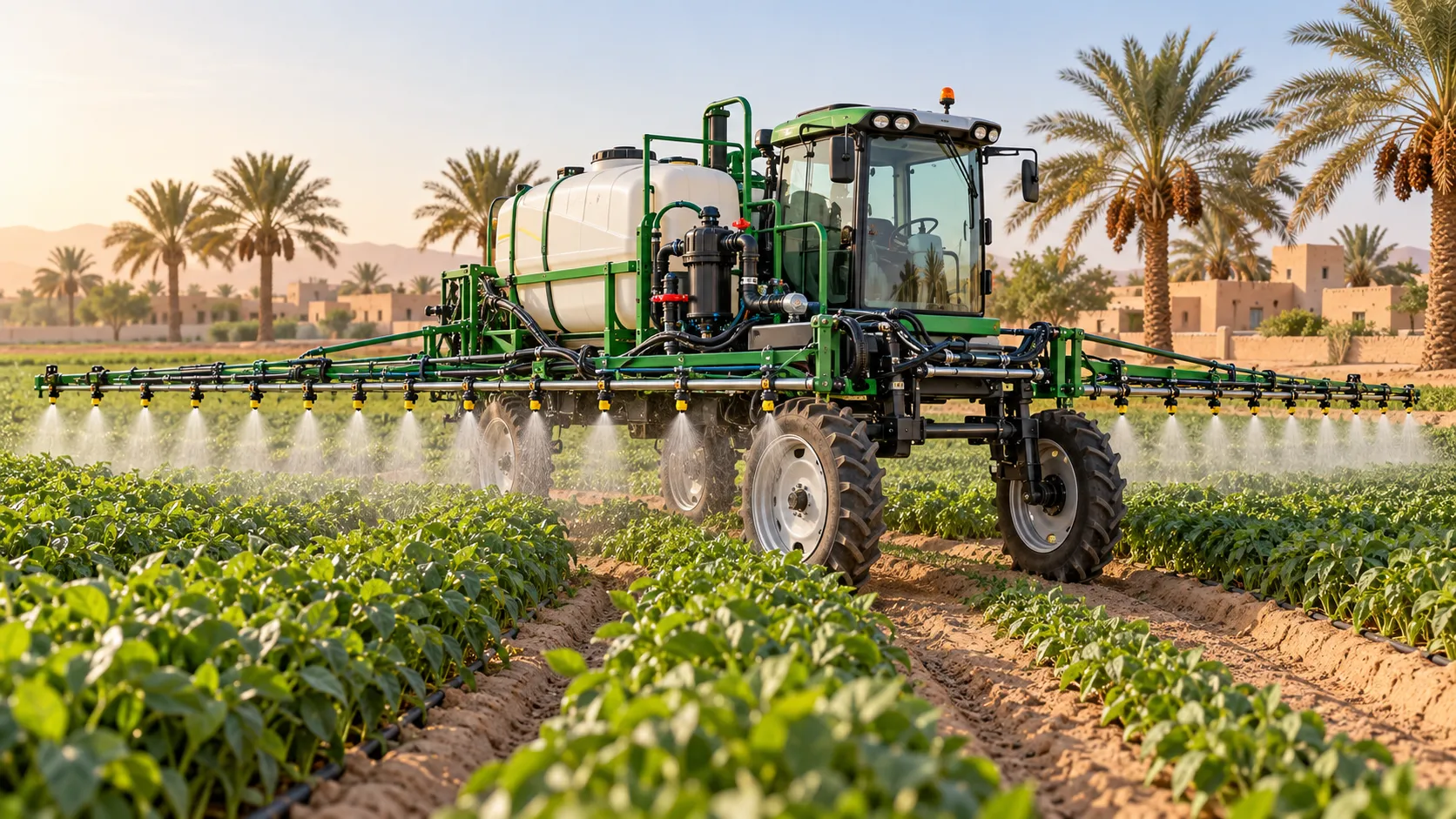
Choosing Crop Protection Equipment for Hot, Windy Middle Eastern Farms
Compare crop protection equipment Middle East farms need for hot, windy conditions. Discover key nozzle, drift-control, and durability checks to choose the right sprayer.
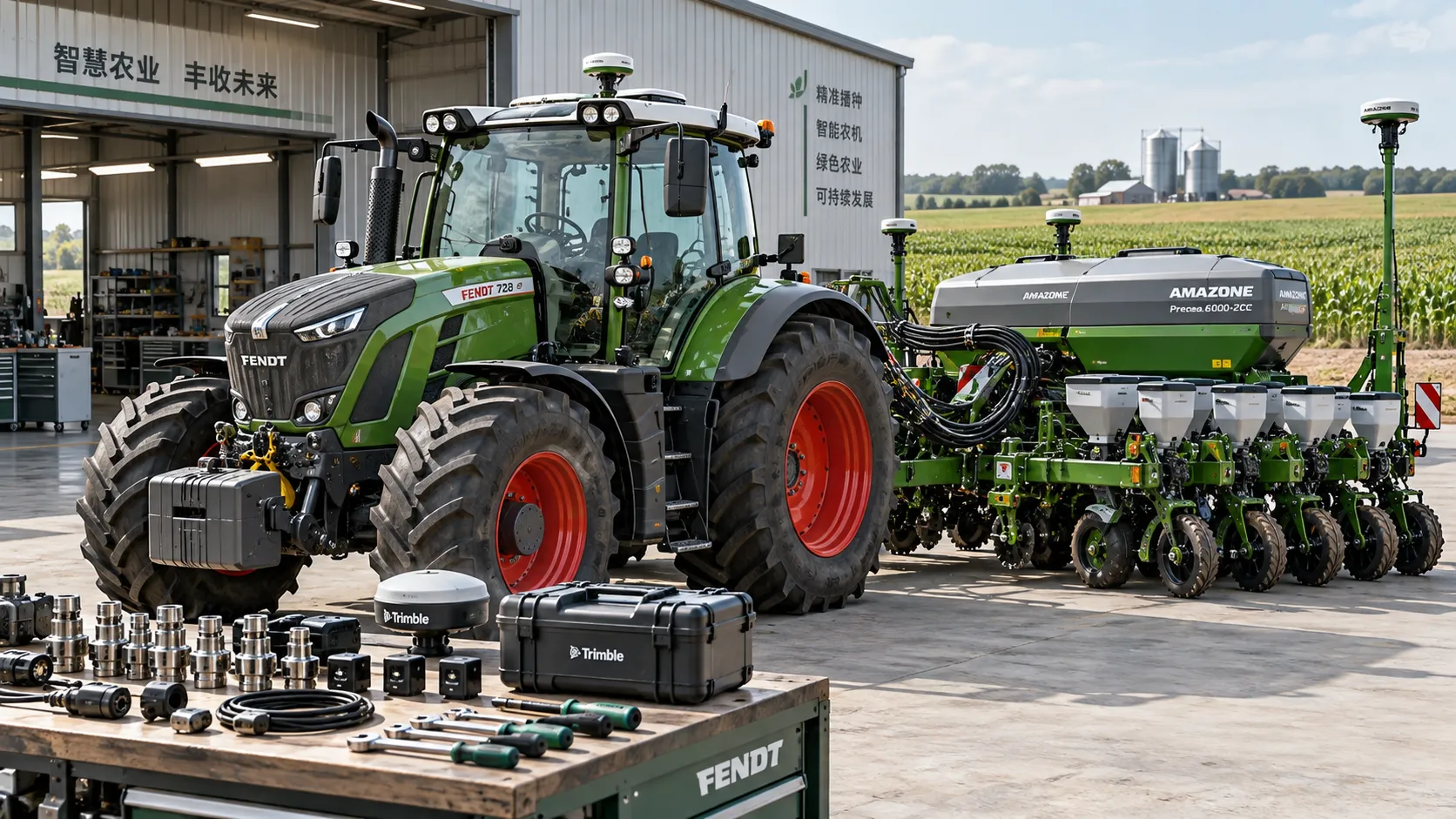
Choosing an Agriculture 4.0 Supplier: Compatibility, Support, and Total Cost
Choose an Agriculture 4.0 supplier with confidence. Learn how to verify compatibility, assess support, and compare total ownership costs to avoid hidden fees and costly downtime.
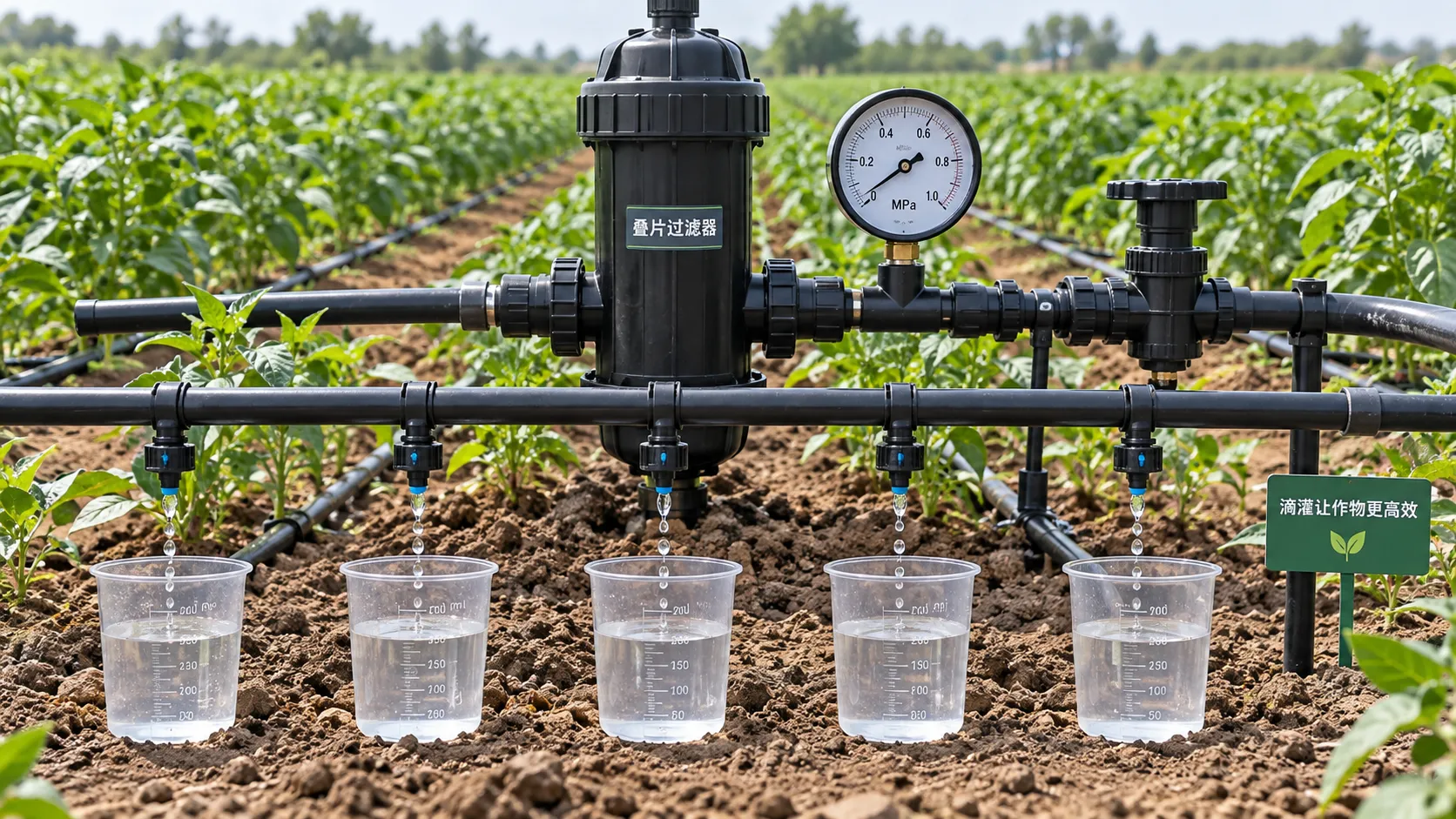
Low-Pressure Drip Irrigation: How to Fix Uneven Watering Without Raising Pressure
Optimize low pressure water-saving irrigation systems: discover how to fix uneven watering, clear blockages, and reduce hydraulic losses without raising supply pressure.
Comparing Farm Equipment Supplier Quotes: Price, Freight, and Warranty
Simplify supplier comparison for farm equipment price: assess freight, field-ready costs, and warranty coverage. Learn how to avoid hidden charges and choose a reliable supplier.
Choosing a Digital Farming Platform Provider: Compatibility and Data Ownership
Compare digital farming platforms providers on equipment compatibility, data ownership, and export rights. Discover practical checks to avoid lock-in and choose with confidence.
How Large-Scale Farm Telematics Cuts Downtime Across Mixed Fleets
Large-scale farm equipment telematics cuts mixed-fleet downtime with real-time alerts, smarter maintenance, and stronger operational control. Learn how to protect critical farm workflows.
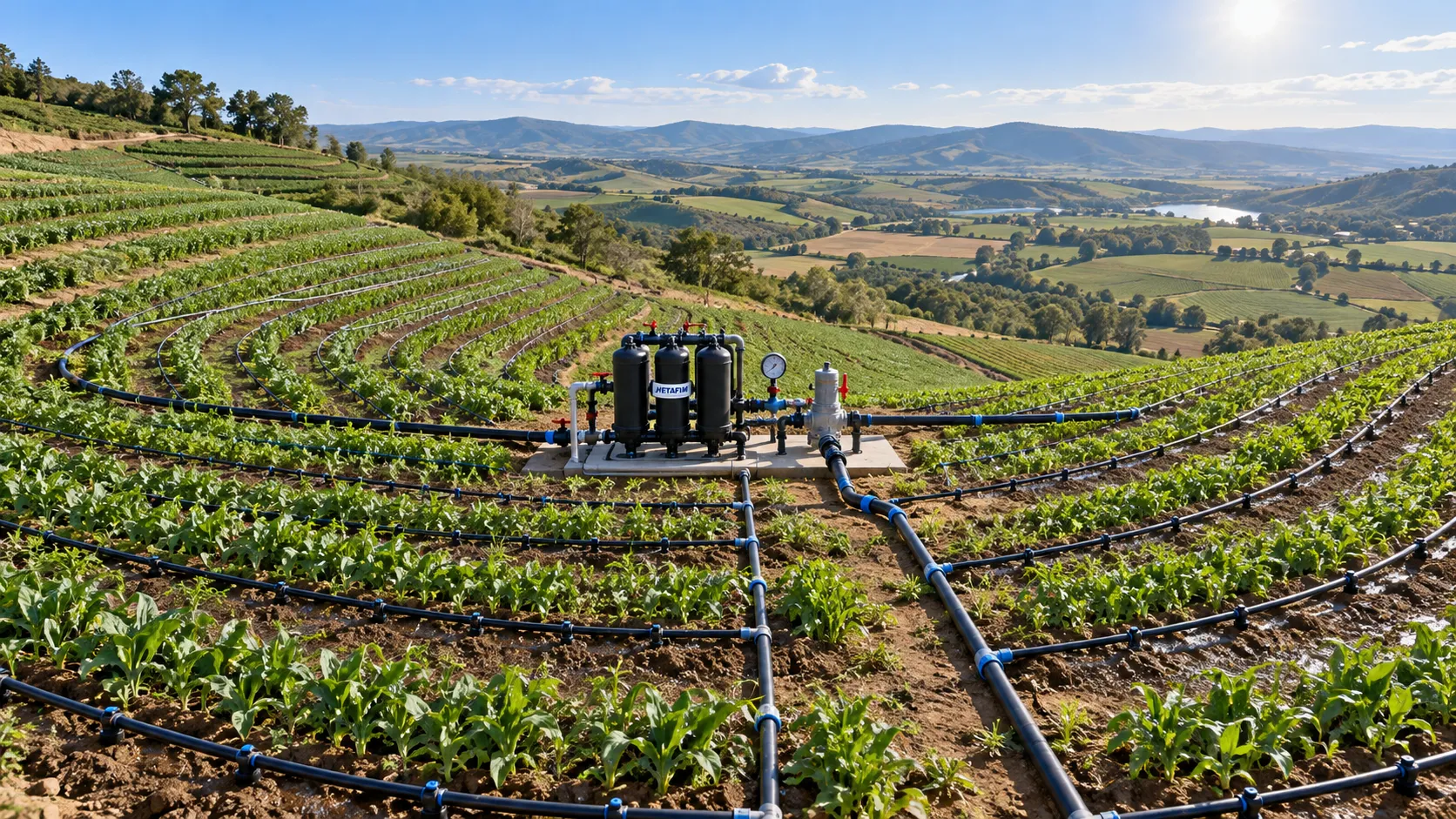
How to Size Low-Pressure Water-Saving Irrigation Systems for Uneven Fields
Low pressure water-saving irrigation systems for uneven fields: learn zoning, pressure mapping, pipe sizing, and pump selection to improve uniformity and reduce water waste.
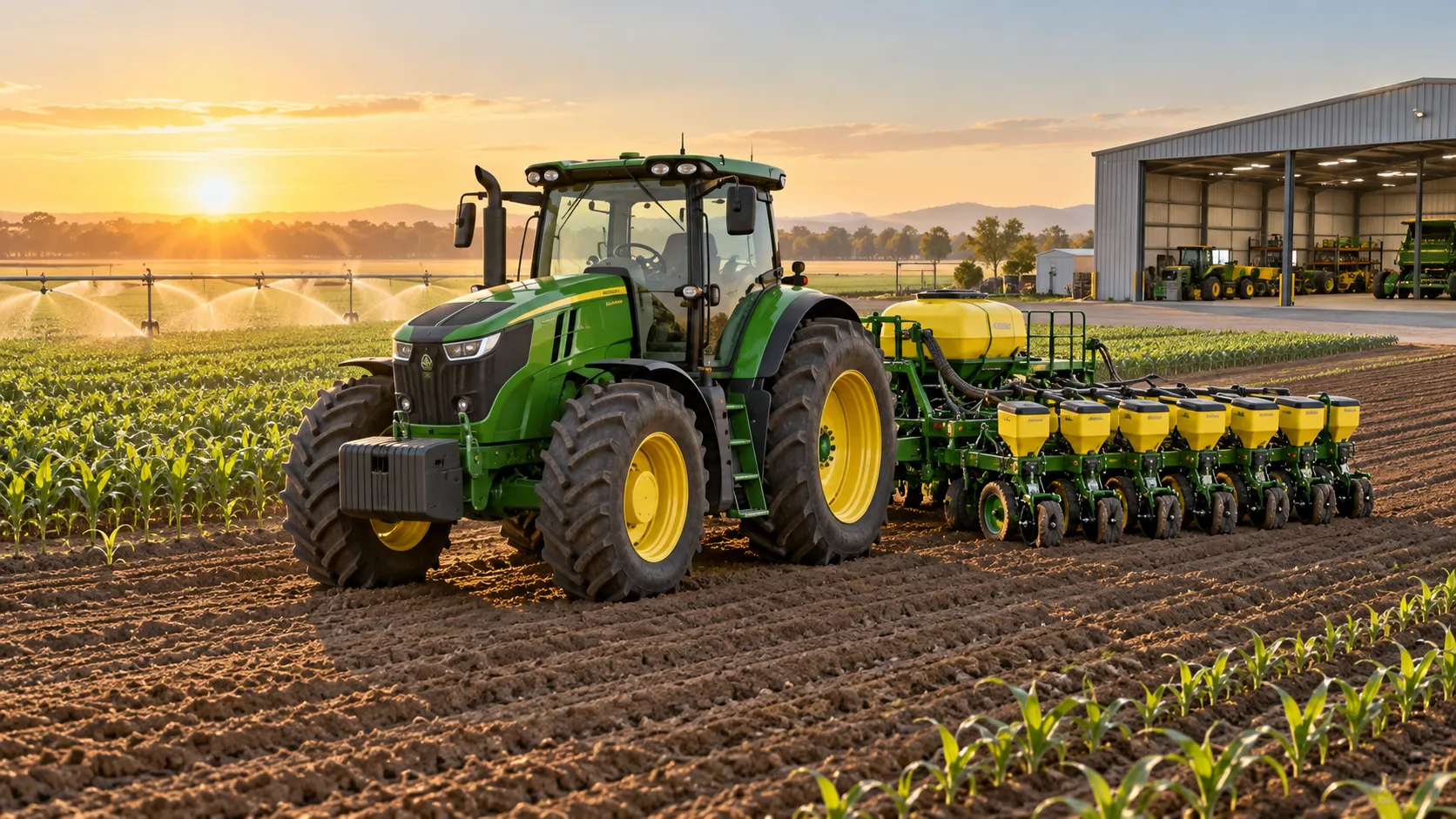
Farm Machinery Sourcing: How to Vet Suppliers, Specs, and Lifecycle Costs
Farm machinery information for sourcing: learn to vet suppliers, compare specifications, control lifecycle costs, and secure reliable uptime for smarter equipment purchases.
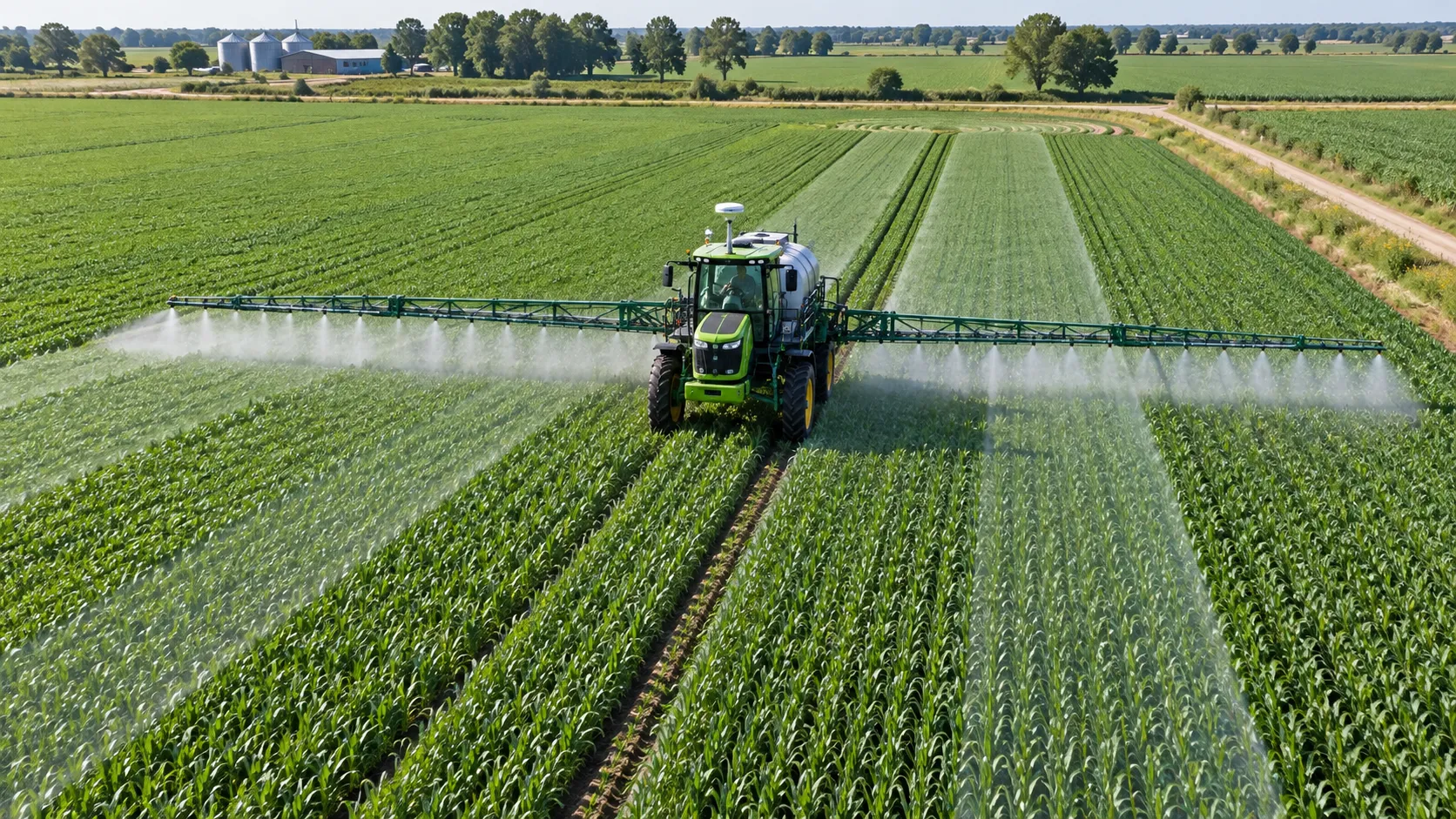
How an automatic guidance system reduces overlap during spraying
Discover how an automatic guidance system reduces spraying overlap, cuts chemical waste, improves coverage accuracy, and boosts farm efficiency.
Related News
- 00
0000-00
Choosing Drip Irrigation Systems for Open Fields: Soil, Slope, and Water Quality - 00
0000-00
Low-Pressure Drip Irrigation: How to Fix Uneven Watering Without Raising Pressure - 00
0000-00
How to Size Low-Pressure Water-Saving Irrigation Systems for Uneven Fields - 00
0000-00
Drip vs. Micro-Sprinkler Irrigation: Which System Fits Your Orchard? - 00
0000-00
How to Select Smart Irrigation Valves for Multi-Zone Water Management?
Popular Tags
Hydrological Resource Strategist
Weekly Insights
Stay ahead with our curated technology reports delivered every Monday.