
Comparing Farm Equipment Supplier Quotes: Price, Freight, and Warranty




Comparing Farm Equipment Supplier Quotes: Price, Freight, and Warranty
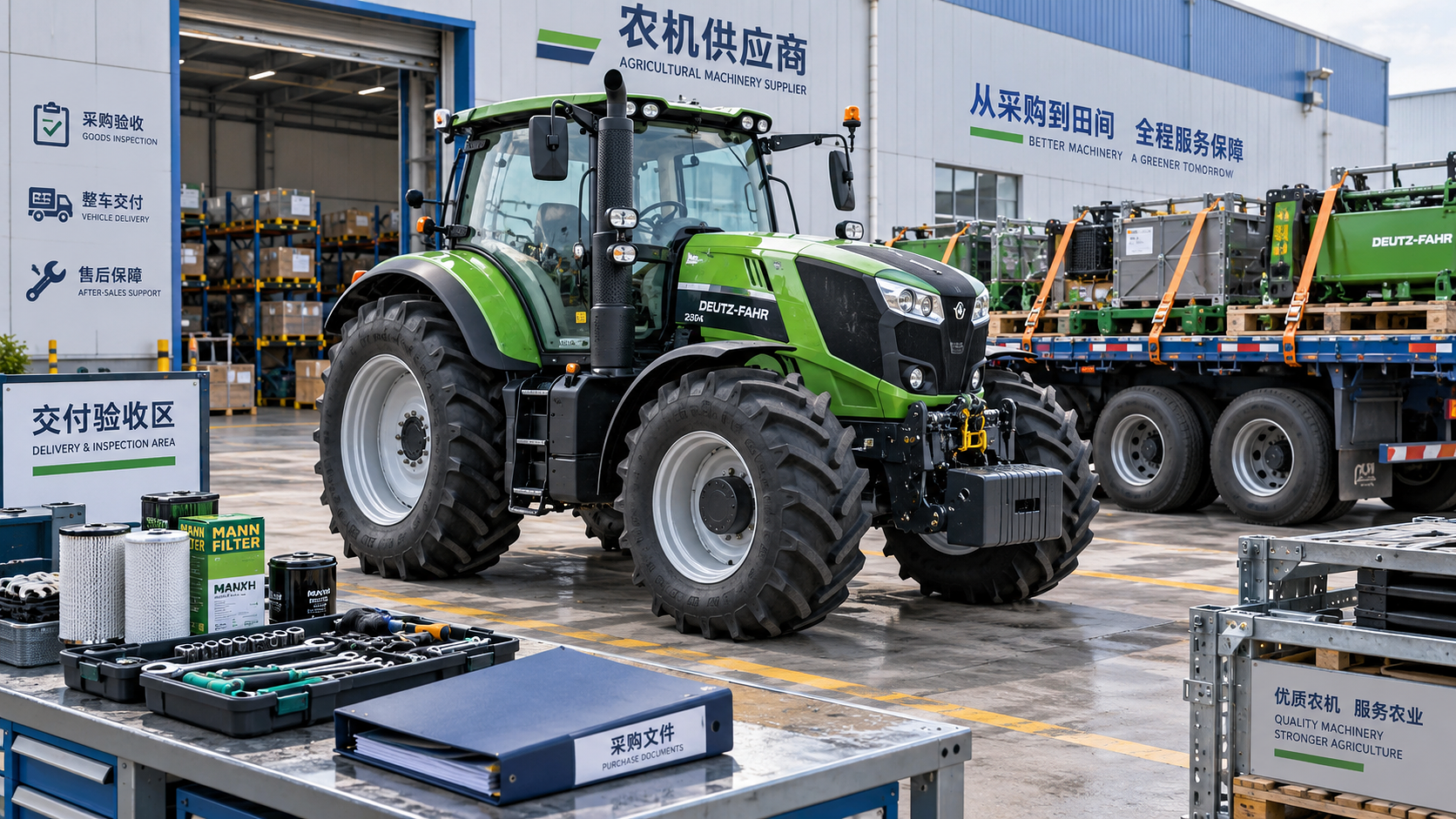
The lowest farm equipment quote is not always the best deal. Freight charges, delivery terms, and warranty exclusions can turn an attractive purchase price into a costly procurement decision. For tractors, combine harvesters, and intelligent irrigation systems, a supplier comparison for farm equipment price needs to go beyond the headline figure.
The practical question is not simply “Which supplier is cheaper?” It is “What will each offer cost to put into reliable service, and who carries the risk if something goes wrong?” A quote should make that answer visible before the purchase order is issued—not after the machine reaches the farm.
Make sure the suppliers are pricing the same working machine
Two quotes with the same model name can cover different configurations. A tractor may have different hydraulic capacity, transmission options, tires, ballast, or guidance hardware. A combine price may exclude the header, header trailer, crop-specific attachments, or commissioning. An irrigation package may include controllers and emitters but leave out filtration, pressure regulation, installation, or communications equipment.
These are not minor details. A tractor that cannot supply the implement’s required hydraulic flow is not a cheaper alternative; it is a specification mismatch. Likewise, a combine offered without the equipment needed for the intended crop should not sit beside a field-ready package as though the offers were equivalent.
Send every bidder the same configuration schedule and ask them to identify deviations explicitly. For used equipment, add serial number, year, operating hours, maintenance records, inspection findings, and known repairs. Hours alone do not establish condition, and a seller’s “fully serviced” description needs a written account of what was inspected or replaced.
Digital equipment deserves its own check. Confirm whether guidance activation, correction services, farm-management integration, connectivity, and software subscriptions are included. Ask which functions stop working when a subscription expires. Hardware ownership does not necessarily mean permanent access to every advertised capability.
Separate landed cost from the cost of becoming field-ready
A useful comparison has two cost boundaries. The first is delivery to the agreed destination. The second is readiness for productive work. Keeping them separate makes omissions easier to spot and prevents freight from hiding installation costs.
Landed acquisition cost = equipment price + packing and transport + insurance + applicable duties and nonrecoverable taxes + clearance and destination charges not already included.
Field-ready cost = landed acquisition cost + unloading, assembly, installation, calibration, required accessories, activation, and operator training not already included.
Mark each charge as included, separately quoted, buyer-estimated, or unresolved. An empty spreadsheet cell should never silently mean zero. If a supplier cannot confirm a charge, retain it as an open exposure rather than presenting the quote as a firm delivered total.
For cross-border purchases, align currency and exchange-rate assumptions. Record quote validity, payment dates, and whether freight is fixed or subject to adjustment. Duties and tax treatment need verification against the equipment classification, origin, destination, and local rules. Recoverable taxes may affect cash flow without becoming a permanent acquisition expense.
Keep financing separate from equipment economics. A lower purchase price tied to a large advance payment may create a different cash-flow burden from a higher-priced offer with staged payments. Compare both, but do not bury financing costs inside an unexplained “total.”
Read freight terms as a division of responsibility
“Freight included” is incomplete unless the quote names the destination and describes the shipment. Delivery to a port, dealer yard, or farm entrance creates very different obligations. Large machinery can require special handling, partial dismantling, route permits, or lifting equipment. Ask for shipping dimensions and weight in the proposed transport configuration, not just operating specifications.
Where Incoterms are used, request the exact rule, named place or port, and version—for example, Incoterms 2020. These rules help allocate delivery obligations, costs, and risk; they do not by themselves settle ownership transfer, payment, or warranty terms.
Under DAP, the buyer normally handles unloading and import clearance. Under DDP, the seller normally takes responsibility for import clearance and applicable import duties, but unloading is still generally the buyer’s task. Confirm whether the seller can actually perform those obligations in the destination country. FOB is intended for sea or inland-waterway transport, so it should not be casually applied to every equipment shipment.
Also check where transport risk transfers. Under some terms, the seller pays carriage while risk transfers earlier in the journey. Payment for freight is therefore not proof that the seller bears all transit risk.
A combine arriving at the farm gate may still need a suitable unloading area, lifting arrangements, reassembly, and inspection. Establish who photographs its condition, records damage, notifies the carrier, and manages an insurance claim. Otherwise, the buyer can end up coordinating a dispute between parties while the machine remains unavailable.
Ask what “delivery date” actually means
Factory completion, dispatch, port arrival, and field-ready handover are different milestones. A harvest purchase should be assessed against the date the equipment can work, including clearance, inland transport, assembly, and commissioning. Ask whether the quoted date is a commitment or an estimate, and which events allow it to change.
A delay does not automatically become a supplier liability. If timing is critical, negotiate milestone reporting, delay notification, and agreed remedies before ordering. Any contract remedy needs review for enforceability in the relevant jurisdiction.
Compare warranty coverage, not just warranty length
A long warranty can still leave substantial repair costs with the buyer. The important distinction is between coverage for a defective component and support for getting the equipment working again. Request the full warranty document, including exclusions and claim procedures, rather than relying on a quotation summary.
- Start and expiry: Does coverage begin at shipment, delivery, registration, or commissioning? Is there an operating-hour limit, with coverage ending at whichever limit comes first?
- Covered costs: Are diagnosis, labor, technician travel, freight for replacement parts, removal, and reinstallation included?
- Exclusions: How are wear items, contamination, corrosion, incorrect operation, unsuitable water quality, and unauthorized modifications treated?
- Claim conditions: What maintenance records, inspection evidence, approvals, and defective-part returns are required?
- Responsible party: Is support provided by the manufacturer, selling dealer, local distributor, or separate component supplier?
Those questions expose differences that a “comprehensive warranty” label can conceal. If a hydraulic component fails, a replacement part may be covered while troubleshooting, travel, and installation are not. For irrigation, controller coverage may be separate from pump coverage, and neither may cover an installation defect.
Imported or independently resold equipment needs particular care. Confirm in writing that the warranty applies in the country of use and identify the organization authorized to perform repairs. Do not assume a nearby dealer will accept warranty work on equipment bought through another channel.
Test whether service promises can survive peak season
Warranty approval does not guarantee a quick repair. For a combine during harvest, parts location and technician access may matter more than an extra period of nominal coverage. For smart irrigation, an unresolved sensor or communications fault can prevent the system from operating as intended even when the mechanical components remain sound.
Ask where relevant parts are stocked and distinguish local stock from items obtainable through a central warehouse. Request availability information for likely service items and model-specific critical components. Also establish whether technicians have the diagnostic tools and software permissions needed for the exact configuration.
Treat “fast response” as an invitation to ask another question. Does it mean a returned call, remote diagnosis, or an on-site visit? What happens outside normal working hours? Loan equipment and emergency support should count in the comparison only when the terms are documented.
AP-Strategy’s focus on machinery, precision farming, and water-saving irrigation makes this distinction especially relevant: mechanical performance and digital support cannot be evaluated in isolation. A capable machine with inaccessible diagnostics, or an irrigation controller without practical calibration support, may be difficult to maintain despite an attractive specification sheet.
Make the award decision with uncertainty still visible
Build the final comparison around field-ready cost, delivery confidence, warranty exposure, and service capability. Do not let a weighted score compensate for a fundamental failure. Missing hydraulic capacity, incompatible controls, or an unacceptable commissioning date should be resolved before price ranking.
For acceptable offers, test the costs the buyer could reasonably face: paying for technician travel, purchasing excluded commissioning services, or arranging temporary equipment after a delay. Use documented rates and the farm’s own operating assumptions. Where information is unavailable, describe the exposure instead of assigning a falsely precise number.
Negotiate the unresolved items, not only the discount. Fixed freight, included setup, an agreed spare-parts package, or clearer service obligations may be more useful than a small reduction in machine price. Check that negotiated commitments appear in the final contract and identify which document takes precedence if terms conflict.
Before signing, someone who did not conduct the negotiations should be able to read the documents and understand what arrives, when it becomes usable, what remains payable, and who handles a failure. If those answers still depend on a reassuring phone conversation, the quotes are not yet ready for a reliable comparison.
Related News
Choosing a Digital Farming Platform Provider: Compatibility and Data Ownership
Compare digital farming platforms providers on equipment compatibility, data ownership, and export rights. Discover practical checks to avoid lock-in and choose with confidence.
How Large-Scale Farm Telematics Cuts Downtime Across Mixed Fleets
Large-scale farm equipment telematics cuts mixed-fleet downtime with real-time alerts, smarter maintenance, and stronger operational control. Learn how to protect critical farm workflows.
How to Size Low-Pressure Water-Saving Irrigation Systems for Uneven Fields
Low pressure water-saving irrigation systems for uneven fields: learn zoning, pressure mapping, pipe sizing, and pump selection to improve uniformity and reduce water waste.
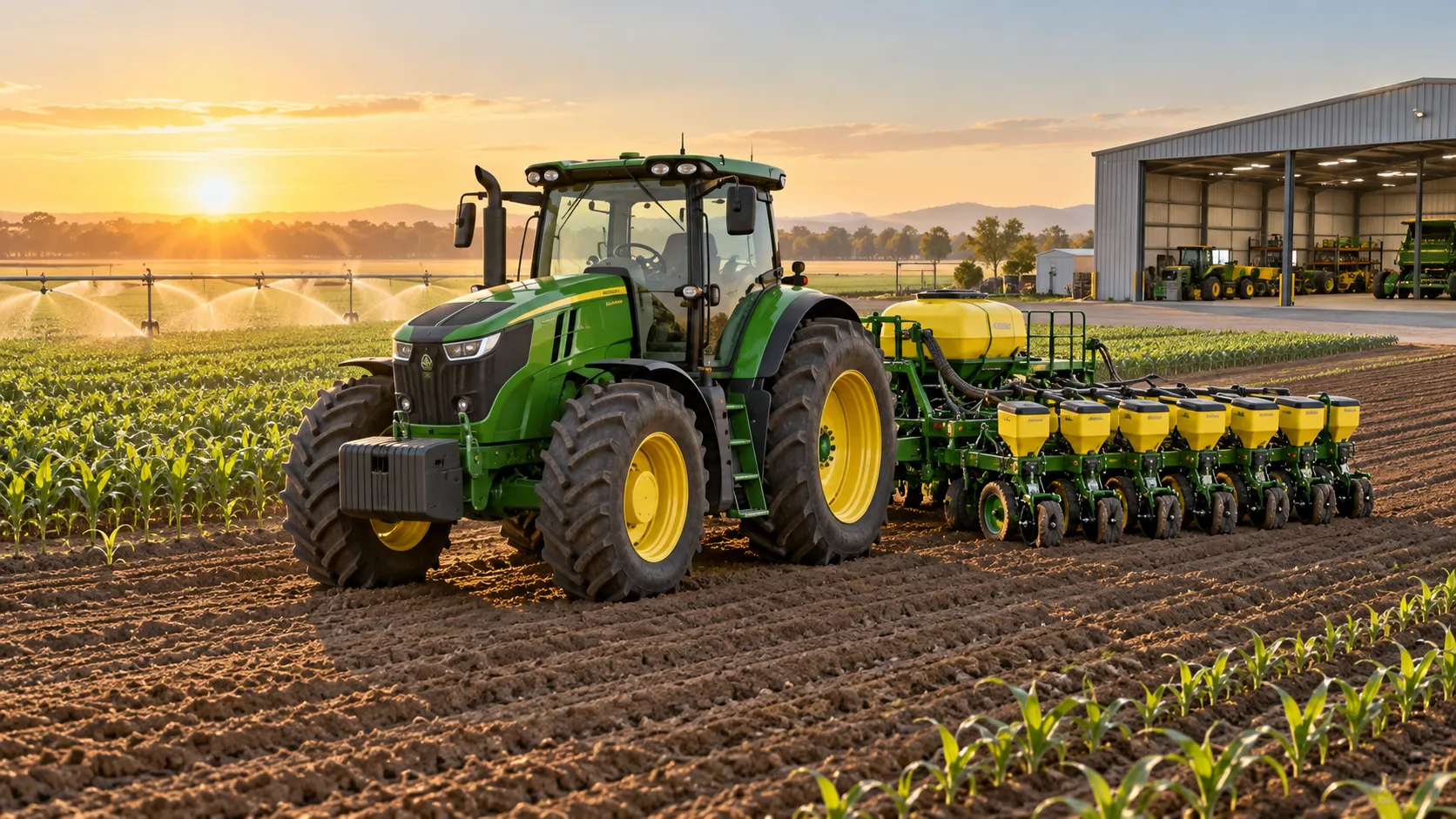
Farm Machinery Sourcing: How to Vet Suppliers, Specs, and Lifecycle Costs
Farm machinery information for sourcing: learn to vet suppliers, compare specifications, control lifecycle costs, and secure reliable uptime for smarter equipment purchases.
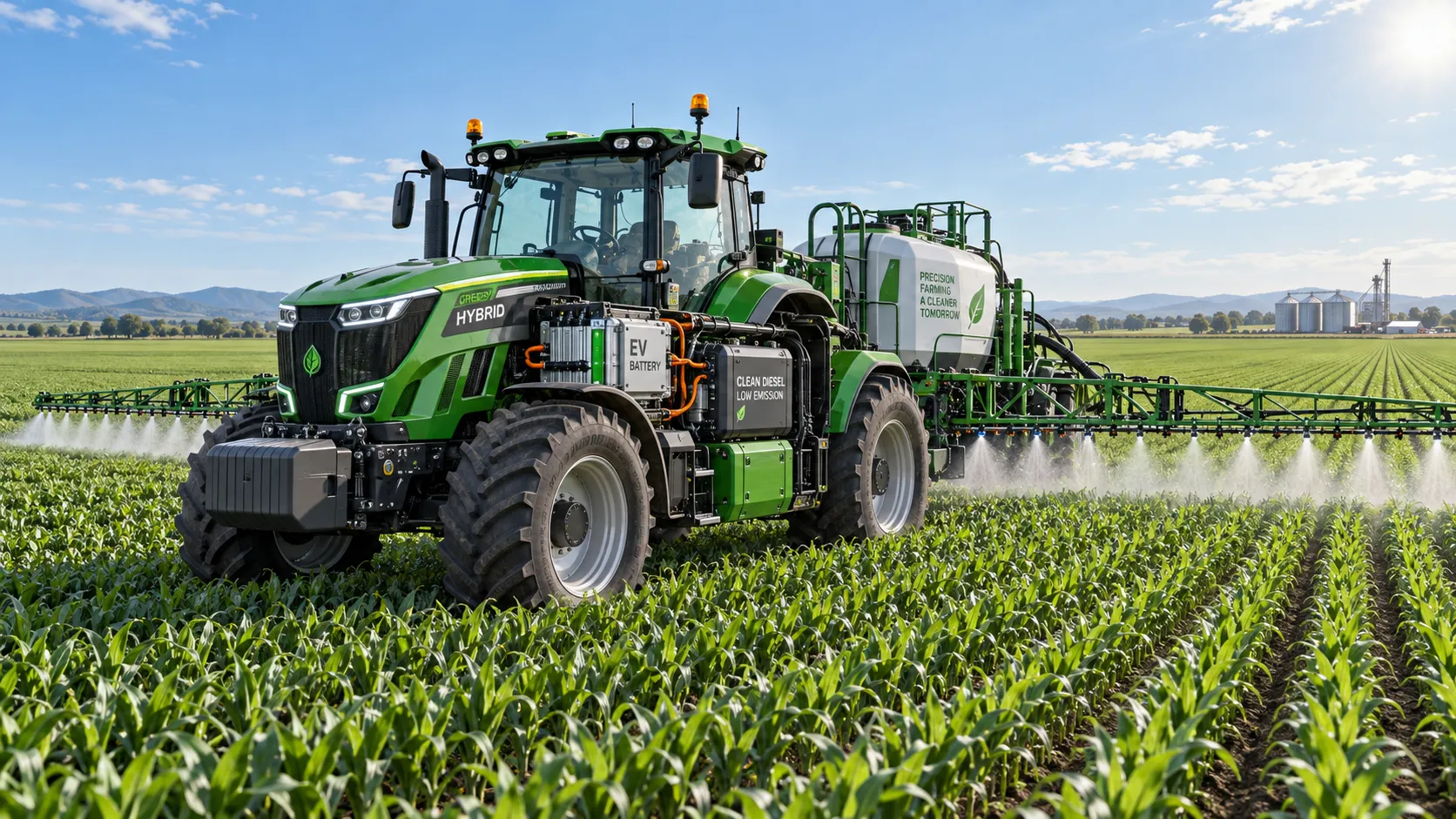
Can hybrid propulsion systems reduce fuel use in farm machinery?
Hybrid propulsion systems for agricultural machinery can cut fuel use and boost productivity. Explore savings potential, key trade-offs, and smart investment factors.
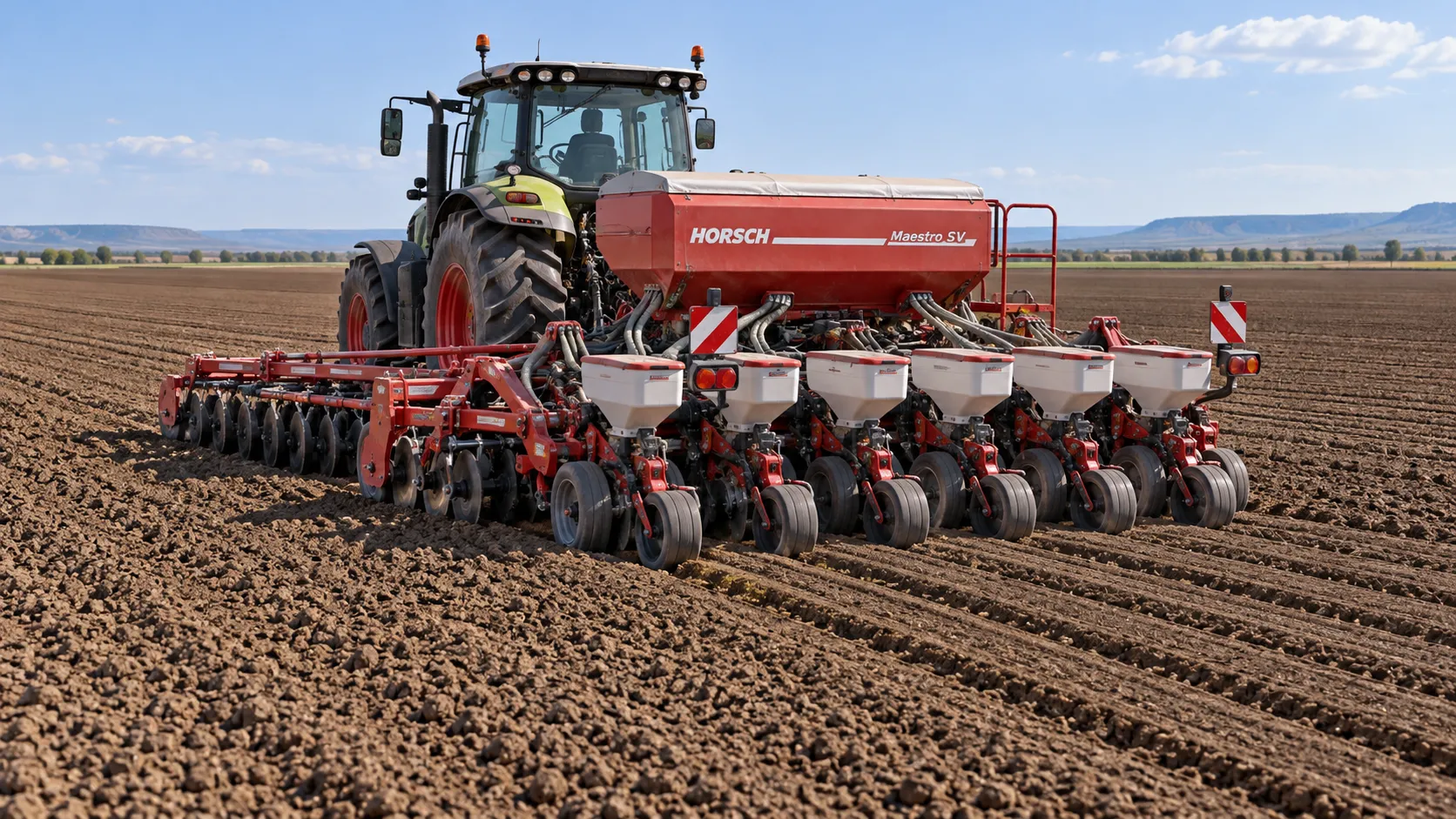
What to compare in integrated seeding combinations for heavy soils
Compare integrated seeding combinations for heavy soils: depth control, residue flow, consolidation, traction, and field capacity for more uniform crop establishment.
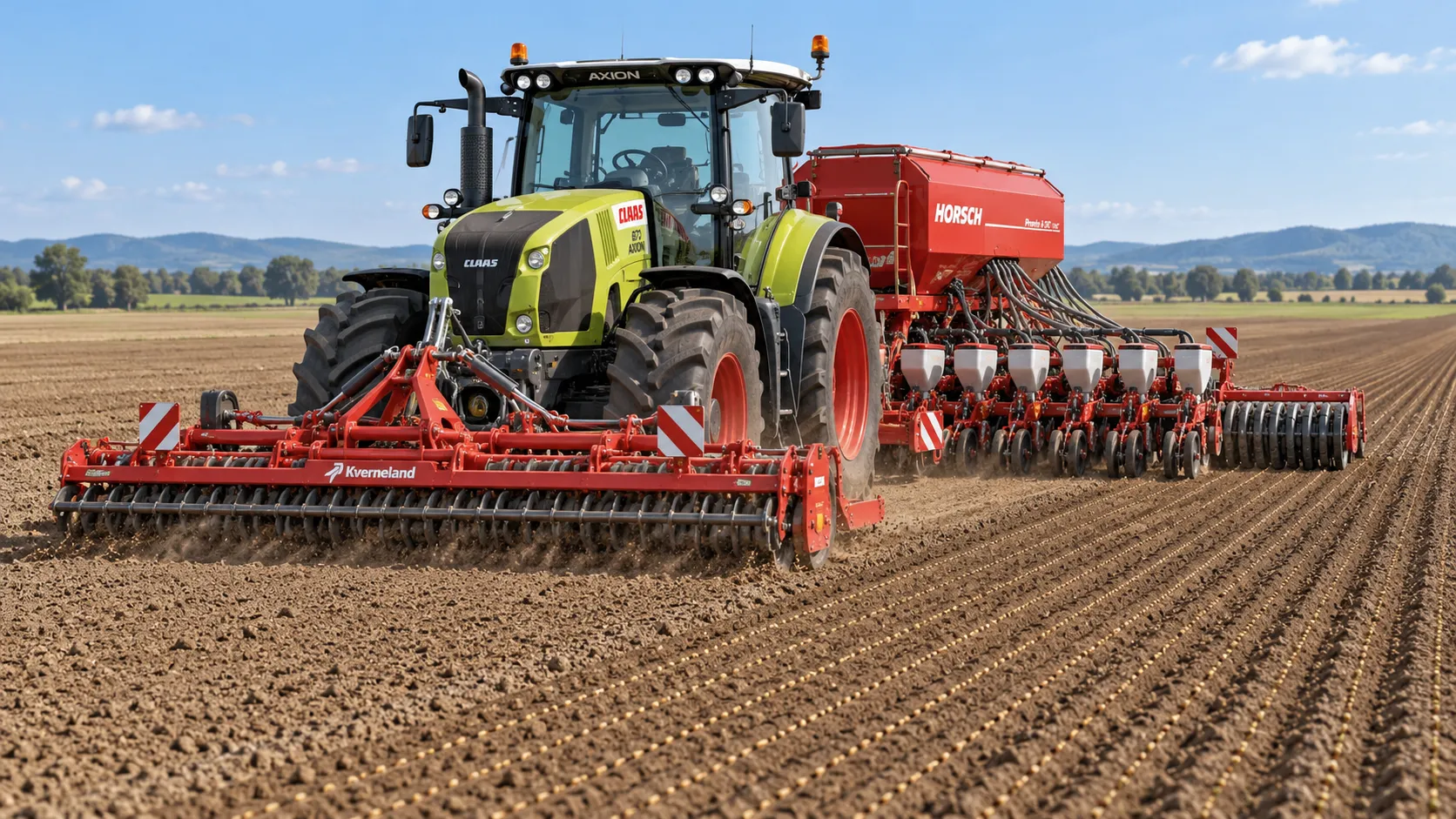
When an integrated seeding combination improves field efficiency
Integrated seeding combination improves field efficiency, protects planting windows, and balances speed with seedbed quality, tractor capacity, and reliable establishment.
Which costs matter most when calculating precision agriculture ROI?
Calculating ROI on precision agriculture equipment? Discover the costs that shape returns, from installation and subscriptions to downtime, labor, and data integration.

How to calculate ROI on precision agriculture equipment before buying
Calculating ROI on precision agriculture equipment: learn to assess total ownership costs, savings, payback, NPV, risks, and farm-scale value before you buy.
Related News
- 00
0000-00
Comparing Farm Equipment Supplier Quotes: Price, Freight, and Warranty - 00
0000-00
Choosing a Digital Farming Platform Provider: Compatibility and Data Ownership - 00
0000-00
How Large-Scale Farm Telematics Cuts Downtime Across Mixed Fleets - 00
0000-00
Farm Machinery Sourcing: How to Vet Suppliers, Specs, and Lifecycle Costs - 00
0000-00
Which costs matter most when calculating precision agriculture ROI?
Popular Tags
Ms. Elena Rodriguez
Weekly Insights
Stay ahead with our curated technology reports delivered every Monday.