What to compare in integrated seeding combinations for heavy soils
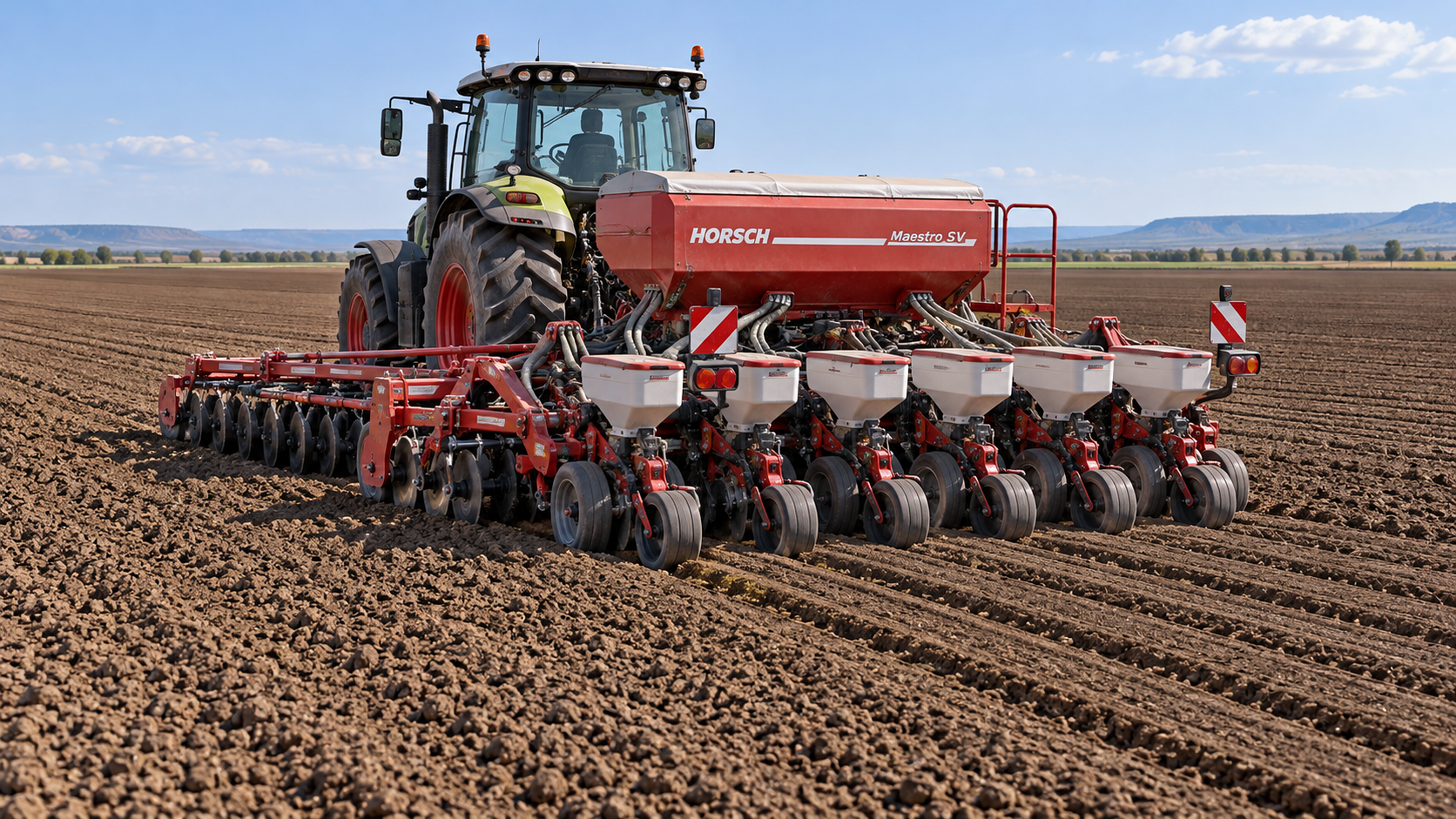




Heavy soils expose weak links in a seeding system quickly. A combination that looks well matched on a specification sheet can struggle when clay is plastic below the surface, seedbeds are cloddy, crop residue is damp, or a narrow weather window forces drilling close to the soil’s moisture limit.
When comparing integrated seeding combinations for these conditions, do not begin with working width or nominal tractor horsepower. Start with the system’s ability to create a repeatable seed environment: a cleared row, a firm but unsealed seed slot, consistent depth, reliable seed-to-soil contact, and enough traction to maintain those results across variable ground. The drill, cultivation tools, packer, tractor, hydraulic system, tyres, and control software must be assessed as one operating unit.
A heavy-soil combination should not be selected because it can work on a good day. It should be selected because it maintains establishment quality through the conditions that most often delay drilling or reduce crop uniformity.
Define the soil problem before comparing machine layouts
“Heavy soil” is too broad to be a useful purchasing category. A high-clay field that drains well after a dry autumn creates different demands from a silty clay that smears easily in spring. Before reviewing machine options, separate the field conditions that drive the decision:
- Is the main limitation surface residue, compaction, large clods, poor drainage, or all of these together?
- Will the machine operate after ploughing, in a reduced-tillage system, or directly into cover-crop residue?
- Is drilling commonly performed in dry, hard seedbeds, marginally wet seedbeds, or both?
- Are fields level and regular, or do headlands, wheelings, slopes, and variable soil zones dominate the workload?
- Which crops require the tightest depth tolerance and the most reliable seedbed structure?
This diagnosis determines whether the combination needs more penetration, more residue clearance, more consolidation control, or a different operating sequence. It also prevents a common error: selecting the most aggressive soil-working machine for land that mainly needs gentler slot formation and better traffic management.
Compare the complete soil-engagement sequence
Integrated seeding combinations may include front-mounted cultivation, a power harrow or disc section, a seed drill, press wheels, and sometimes fertiliser placement. The order and interaction of these components matter more in heavy soils than in lighter ground. Every pass or active tool can improve the seedbed, but it can also create fine soil that caps after rain, smear wet soil, or consume the moisture needed for emergence.
The preferred layout depends on the seedbed objective. A power-driven preparation section can break clods and level cultivated ground effectively, but it needs disciplined depth and speed control. In soil that is close to plastic, aggressive action can smear the worked layer and produce a smooth surface that later seals. A disc-led combination may preserve more structure and handle residue efficiently, but only if the discs maintain cutting action rather than pushing damp material into the slot.
For reduced-tillage systems, compare the ability to clear a narrow planting zone rather than judging residue handling by overall trash movement. A machine that moves residue across the full width may leave the surface visually tidy while placing damp straw directly around seed. The more useful question is whether the seed row is clear, depth-controlled, and closed without bringing wet soil to the surface.
Penetration is not the same as depth consistency
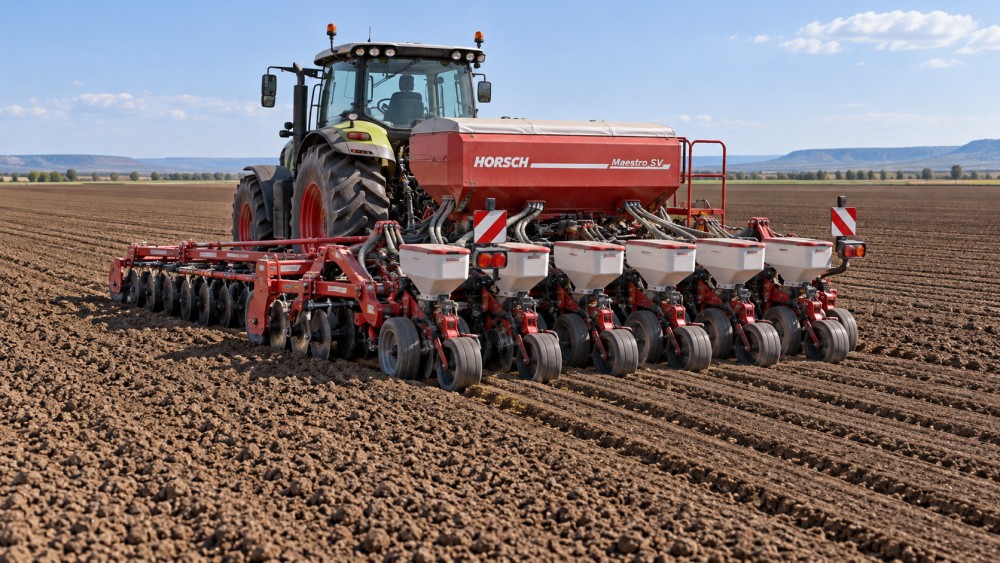
Heavy soil often leads buyers to prioritise coulter downforce. Adequate downforce is essential when the seedbed has dried, when straw is anchored in the surface, or when firm wheelings cross the field. Yet maximum force is not automatically better. Too much pressure can force the opener through a shallow prepared layer into a denser zone, create polished sidewalls, or overload depth-control wheels so they no longer regulate depth accurately.
Compare how the machine maintains depth, not simply its stated force capability. A well-designed system keeps the coulter at the intended position while ground contour changes and while soil resistance varies from one row to the next. This involves the geometry of the coulter linkage, travel available in the parallel linkage, the placement of gauge wheels, and the responsiveness of hydraulic or mechanical pressure control.
Ask to see the drill operate across firm headlands and representative field variability. Inspect seed depth behind several rows rather than checking one convenient location. A seed slot may appear acceptable at the surface while the actual seed placement varies significantly where clods, compacted bands, or residue concentration change.
Assess the depth-control wheel in working conditions
Depth-control wheels are often treated as minor components, but their behaviour is central to heavy-soil performance. Narrow wheels may cut through loose soil effectively, yet can sink unpredictably in soft areas. Wider wheels can provide stability but may collect wet soil or ride on residue. Look at scraper design, adjustment access, bearing sealing, and the available wheel pressure settings.
Sticky clay is especially revealing. If soil accumulates on the wheel, its effective diameter changes and planting depth changes with it. Soil build-up can also cause the wheel to drag, compact the row shoulder, or stop following the ground accurately. A demonstration should include a check for build-up after sustained operation, not only a short pass.
Judge consolidation by seed-row condition, not by a smooth finish
Heavy soils need adequate seed-to-soil contact, but excessive packing is one of the most expensive establishment mistakes. It can restrict early root movement, slow emergence after a crusting rain, and make the drilled surface less able to absorb water. Conversely, insufficient consolidation leaves air gaps around seed and can reduce contact with moisture in a cloddy seedbed.
The right press-wheel arrangement depends on the soil state and crop. Compare whether the system firms the soil directly over the row, closes the slot from the sides, or provides broader surface consolidation. Each approach can work, but the adjustment range matters. A combination used across autumn cereals, spring crops, and variable clay fields needs a practical way to reduce pressure when soil is moist and increase it where seedbeds are dry and open.
Check whether settings can be changed without slowing the drilling operation excessively. If the system needs extensive manual adjustment at every change in field condition, operators will often continue with a compromise setting. Adjustable consolidation only has value when it is realistically used.
Tractor integration can decide whether the drill performs as designed
An integrated seeding combination is a tractor-and-implement package, not an implement operating in isolation. Large mounted systems can transfer substantial weight behind the rear axle. In heavy soil, that affects traction, steering control, wheel slip, headland stability, and the depth performance of both front and rear tools.
Compare the tractor’s rear linkage lift capacity, hydraulic flow and cooling capacity, ballast strategy, tyre or track configuration, and permissible axle loading in the actual operating configuration. The machine may lift safely in the yard while becoming poorly balanced with seed and fertiliser hoppers full. A front-mounted packer, cultivation tool, or weight block can improve balance, but it also adds soil contact and can worsen compaction if the tractor is already heavy for the field conditions.
Hydraulic demand deserves particular attention when the drill uses active fan systems, hydraulic downforce, variable-rate metering, folding sections, and front-mounted equipment. The question is not only whether the tractor has enough outlets. Evaluate whether it can supply the necessary functions continuously while maintaining stable fan output and avoiding excessive oil temperature during long work periods.
Traction should be judged by controlled wheel slip and forward-speed stability, rather than by maximum engine power. A system that repeatedly loses speed in firm clay will change the behaviour of active tools, metering drives, and packers. It may still cover hectares, but it will not deliver the same seedbed from one part of the field to another.
Field capacity must be measured against the useful operating window
Working width is a poor shortcut for capacity on difficult ground. Heavy soils often reduce available drilling time because they become unworkable after rain and harden quickly after drying. A wider machine that requires low speed, frequent blockage clearing, or long refills may offer less useful capacity than a narrower combination that maintains a consistent pace.
Compare the entire operational cycle: loading seed and fertiliser, travelling between fields, folding, calibrating, clearing residue, turning on headlands, and cleaning soil from components. Hopper capacity matters only when the tractor can carry and pull the added mass without harming depth control or causing excessive traffic damage. Large tanks can reduce refill interruptions but can also increase rear axle load at the point when soil is least forgiving.
Headlands require separate evaluation. They tend to be more compacted, wetter, and repeatedly trafficked. Consider turning radius, packer lift behaviour, coulter protection, section control response, and whether the machine avoids dragging openers through tight turns. A system that drills well in the middle of a field but leaves poor headland establishment may create an avoidable yield and weed-management problem.
Use digital functions to manage variability, not to mask poor mechanics
Section control, variable-rate seeding, guidance, blockage monitoring, and application maps can improve operational discipline. On heavy soils, their best use is often to manage predictable field variation: reducing overlap on irregular headlands, adjusting seed rate by management zone, documenting drilling conditions, and confirming that each row continues to meter correctly.
These functions do not compensate for poor slot closure, residue hairpinning, or a tractor that cannot hold the machine at working depth. Compare the accuracy and usability of the control system after the mechanical evaluation is complete. Operators need clear alarms, workable calibration routines, and records that can be linked to field observations after emergence.
For multi-machine fleets, compatibility also matters. Common data formats, guidance integration, remote support arrangements, and the ability to move settings between tractors can reduce setup errors. Equipment intelligence should support the agronomic decision, not create a separate layer of complexity during a short drilling window.
A practical comparison process
Bring representative field information to every supplier discussion: soil texture and drainage pattern, typical residue level, tillage approach, crops, target drilling periods, tractor configuration, and the conditions under which the present system fails. Then compare shortlisted combinations in this order:
- Confirm that the tractor can lift, power, balance, and hydraulically support the fully loaded system.
- Evaluate residue flow and soil preparation at realistic moisture levels.
- Measure seed placement, row clearance, and slot closure across variable ground.
- Check whether consolidation pressure can be adjusted quickly enough for changing soil conditions.
- Review field capacity using realistic work rates, refill intervals, and headland time.
- Inspect daily service points, wear parts, access around the metering system, and the time needed to clear a blockage.
Do not accept a demonstration based only on an ideal, uniform field. Heavy-soil suitability is established by the machine’s response to the awkward areas: old tramlines, residue bands, compacted headlands, damp hollows, and dry ridges. Those are the places where poorly integrated equipment produces uneven emergence.
Where different combinations make sense
A more intensive combination can be appropriate where ploughed or deeply cultivated clay consistently leaves large clods and a level, consolidated seedbed is needed before drilling. Its limits appear when the soil is damp enough to smear or when repeated active cultivation destroys surface structure.
A disc-and-coulter arrangement can suit reduced-tillage heavy soils with manageable residue, particularly where preserving soil structure and limiting disturbance are priorities. It becomes less suitable when compaction below the drilling zone is the primary problem; cutting a clean slot does not relieve a restrictive layer beneath it.
Tine-led systems can provide useful loosening and residue movement in some conditions, but their performance depends heavily on soil moisture and tine geometry. In wet plastic clay, they may lift and smear rather than fracture soil. In dry, hard ground, they may demand more draft than the tractor and tyre setup can deliver efficiently.
The best selection is therefore rarely a choice between “high disturbance” and “low disturbance” alone. It is a choice between systems that consistently achieve the required row condition within the farm’s soil moisture range, residue management approach, tractor capability, and drilling calendar.
AP-Strategy’s broader equipment analysis lens is useful here: assess the drill, tractor chassis, precision controls, and field constraints as an operating system. The final decision should be supported by representative in-field evidence, because establishment quality on heavy soil is determined by how these elements work together under load, not by the strongest individual specification.
Related News
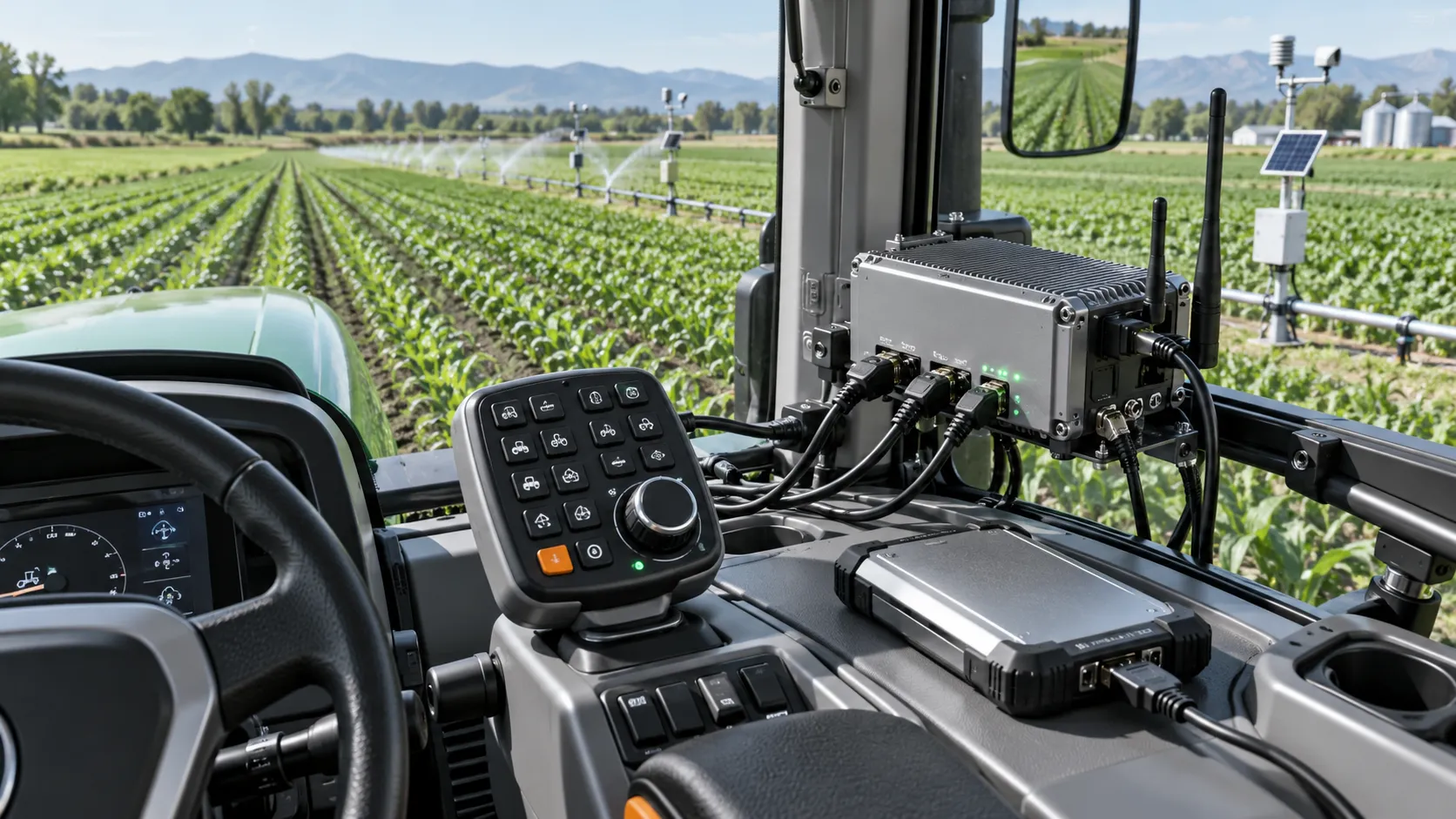
Choosing a Digital Farming Platform Provider: Compatibility and Data Ownership
Compare digital farming platforms providers on equipment compatibility, data ownership, and export rights. Discover practical checks to avoid lock-in and choose with confidence.
How Large-Scale Farm Telematics Cuts Downtime Across Mixed Fleets
Large-scale farm equipment telematics cuts mixed-fleet downtime with real-time alerts, smarter maintenance, and stronger operational control. Learn how to protect critical farm workflows.
How to Size Low-Pressure Water-Saving Irrigation Systems for Uneven Fields
Low pressure water-saving irrigation systems for uneven fields: learn zoning, pressure mapping, pipe sizing, and pump selection to improve uniformity and reduce water waste.
Farm Machinery Sourcing: How to Vet Suppliers, Specs, and Lifecycle Costs
Farm machinery information for sourcing: learn to vet suppliers, compare specifications, control lifecycle costs, and secure reliable uptime for smarter equipment purchases.
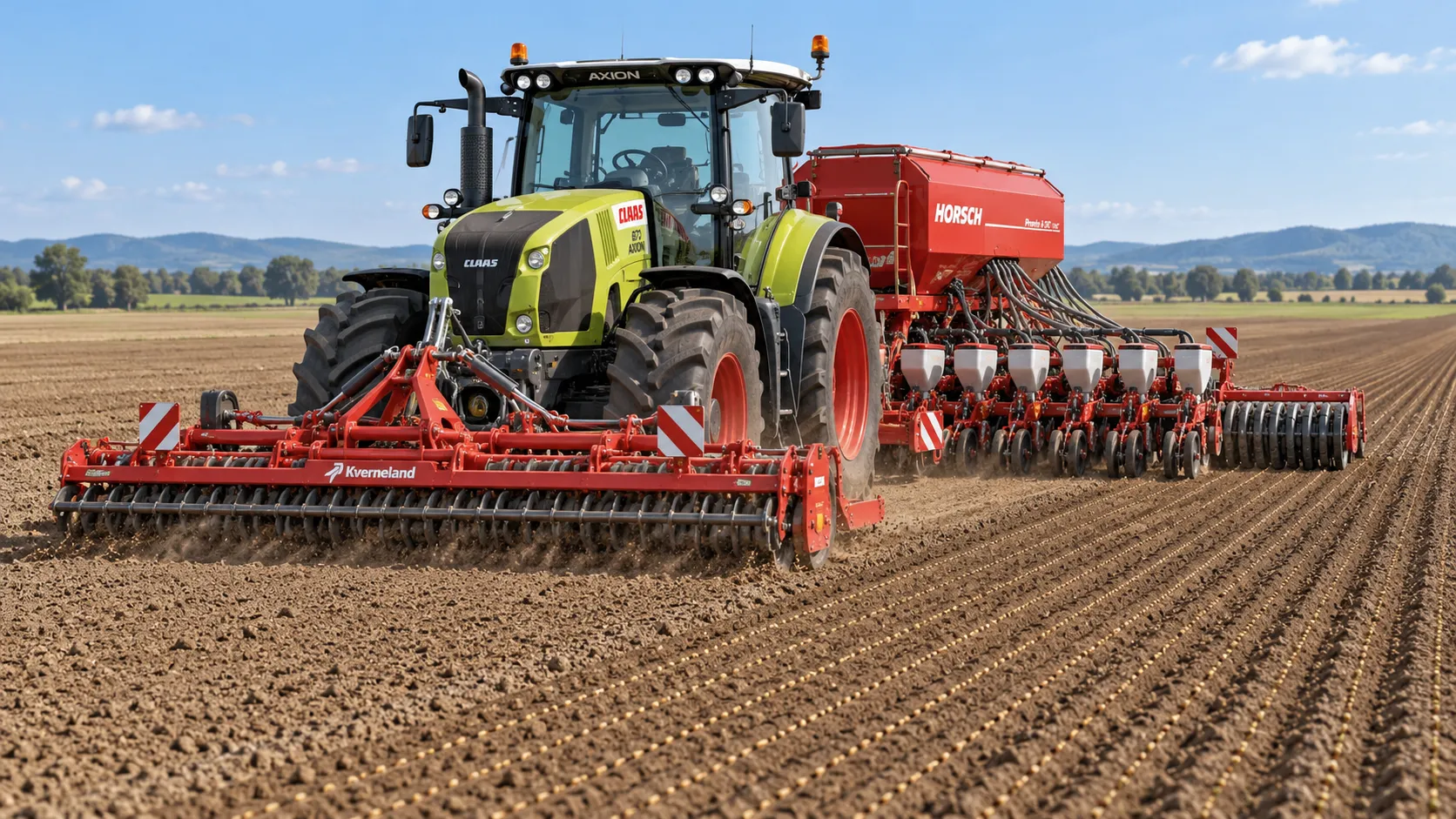
When an integrated seeding combination improves field efficiency
Integrated seeding combination improves field efficiency, protects planting windows, and balances speed with seedbed quality, tractor capacity, and reliable establishment.
Which costs matter most when calculating precision agriculture ROI?
Calculating ROI on precision agriculture equipment? Discover the costs that shape returns, from installation and subscriptions to downtime, labor, and data integration.
How to calculate ROI on precision agriculture equipment before buying
Calculating ROI on precision agriculture equipment: learn to assess total ownership costs, savings, payback, NPV, risks, and farm-scale value before you buy.
Planning Nipple Drinker Installation for Different Chicken House Layouts
How to install nipple drinker for chicken houses: plan line layouts, pressure control, flushing access, and maintenance for reliable water delivery.
Tractor Specification Sheets: Matching PTO, Hydraulics, and Weight to Farm Tasks
Specification-oriented articles for tractors: match PTO, hydraulics, lift capacity, ballast, and weight to real farm tasks for safer, more efficient equipment choices.
Related News
- 00
0000-00
What to compare in integrated seeding combinations for heavy soils - 00
0000-00
When an integrated seeding combination improves field efficiency - 00
0000-00
How to Select a Heavy-Duty Seeder for Large Acreage and High-Residue Fields - 00
0000-00
How to Match Large-Scale Farm Equipment Working Width to Field Size and Crop Rows - 00
0000-00
Farm Implements for Seeding: How to Match Seeders to Crop Type and Soil Conditions
Popular Tags
Agri-Mechanization Fellow
Weekly Insights
Stay ahead with our curated technology reports delivered every Monday.