
How to Select a Heavy-Duty Seeder for Large Acreage and High-Residue Fields
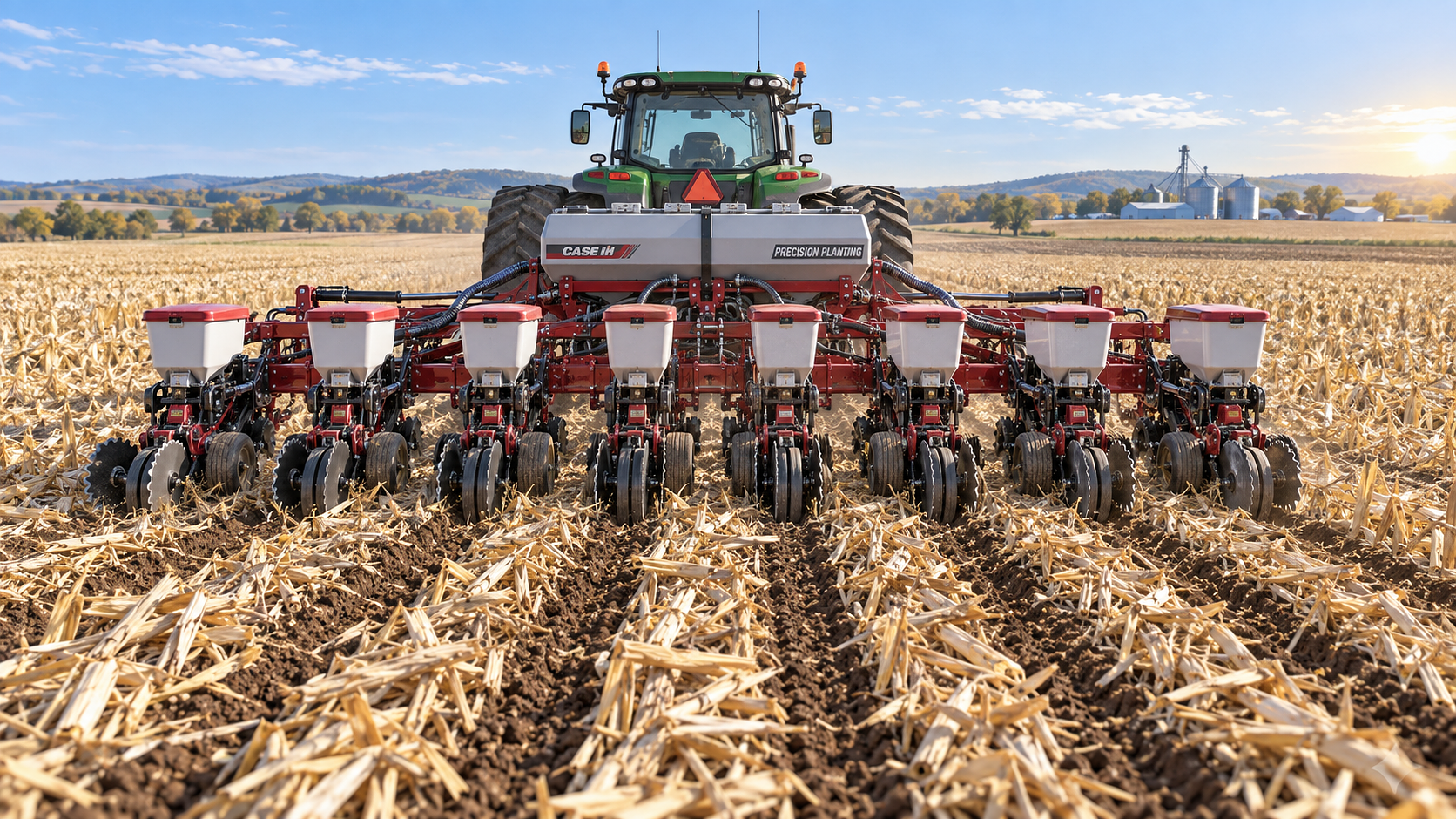




Selecting heavy duty seeders begins with one practical question: can the machine maintain consistent seed placement across residue, variable soils, slopes, and long operating days?
For technical evaluators, advertised working width and daily acreage are useful starting points, but they do not prove establishment performance under difficult planting conditions.
The right decision requires a system-level assessment of residue flow, opener penetration, downforce response, hydraulic capacity, seed metering, transport configuration, and precision integration.
This guide focuses on the technical criteria that matter most when evaluating heavy duty seeders for large acreage, reduced tillage programs, and high-residue crop rotations.
Start With the Intended Field System, Not the Seeder Brochure
The core search intent behind heavy duty seeders is usually comparative and decision-oriented: buyers need to identify equipment that can plant reliably in demanding field conditions.
Technical evaluators are especially concerned about whether claimed capacity remains realistic when residue is wet, soil strength changes, or planting windows become compressed.
Begin by documenting the operation’s agronomic system before comparing models. Include crop rotation, residue volume, tillage approach, soil textures, slope, field size, and expected annual hectares.
A seeder designed for conventional prepared seedbeds may appear highly productive, yet perform poorly where standing stalks, cover crops, or uneven residue dominate.
Residue type matters as much as residue quantity. Corn stalks, cereal straw, cotton residue, and terminated cover crops create different cutting, clearing, and plugging challenges.
Evaluate the worst normal field condition rather than the ideal one. Equipment should be specified for recurring difficult conditions, not rare showroom demonstrations.
Large-acreage operations also need dependable transport logistics. Road width, bridge limits, field access, filling infrastructure, and service support can restrict practical productivity.
Define performance targets in measurable terms, including target emergence consistency, acceptable planting speed range, downtime tolerance, seed-depth variation, and maximum missed-row rate.
This operating profile creates a defensible evaluation baseline. It prevents a purchasing team from selecting a wide machine that lacks sufficient row-unit performance.
Residue Management Determines Whether Capacity Is Real
In high-residue fields, residue management is the first technical filter. A wide toolbar cannot deliver acreage targets if residue repeatedly accumulates around openers.
Assess the complete residue path from front-mounted cutting components through row cleaners, opener discs, closing wheels, press systems, and rear frame clearances.
Front coulters should cut residue without creating excessive soil disturbance. Poorly matched coulters can hairpin residue into the seed trench instead of clearing it.
Hairpinning is particularly damaging because seed may contact residue rather than moist soil, causing uneven water uptake, delayed emergence, and weak early root development.
Row cleaners should move only enough residue to expose a clean planting strip. Aggressive cleaning can remove moisture, create ridges, and increase erosion exposure.
Floating row cleaners often provide better ground-following behavior in uneven fields. Their value depends on adjustment range, bearing durability, and consistent pressure control.
Examine row spacing and inter-row clearance carefully. Narrow spacing can increase crop potential, but it leaves less room for residue movement between adjacent units.
Frame geometry affects flow as well. Cross-members, hose routing, brackets, and gauge-wheel supports must avoid creating points where damp residue can collect.
Request field demonstrations in representative residue, preferably after dew, rain, or partial decomposition. Dry, clean demonstrations rarely reveal the true plugging risk.
Opener Design and Depth Control Drive Emergence Uniformity
The opener system is the most important component for seed placement. Heavy duty seeders must create a consistent trench while preserving enough soil structure for closure.
Double-disc openers remain common because they handle residue effectively and suit many crop types. However, disc diameter, angle, contact area, and bearing design vary substantially.
Single-disc configurations can reduce soil disturbance in some systems, but evaluators should verify sidewall compaction, trench shape, and performance in wet or dense soils.
For each opener design, inspect the achievable depth range and the precision of depth adjustment. Fine graduations are valuable only when settings remain stable under load.
Gauge wheels should maintain close relationship with the opener because separation allows depth variation when row units travel over clods, ruts, residue bunches, or terraces.
Check for robust pivot points, sealed bearings, replaceable bushings, and accessible adjustment mechanisms. Wear in linkage components quickly becomes a depth-control problem.
Closing systems deserve equal attention. They must collapse the seed trench without excessive compaction, particularly where soil moisture varies across the field.
Different closing-wheel combinations fit different soils. Evaluators should compare spike, rubber, cast, angled, and pneumatic options against local soil behavior and planting timing.
Ask manufacturers for measured depth-consistency data, not only design descriptions. A practical validation protocol should include trench inspections and emergence counts at multiple operating speeds.
Downforce Capacity Must Be Matched to Soil Resistance
High-residue and reduced-tillage fields often have variable surface firmness. Without adequate downforce, row units ride upward and place seed too shallowly.
Excessive downforce creates different risks. It can compact furrow sidewalls, overload gauge wheels, increase component wear, and reduce the ability of row units to follow contours.
Mechanical spring systems can be durable and straightforward, but they may require manual adjustment and respond less precisely to rapid changes in soil resistance.
Hydraulic downforce systems generally offer broader adjustment and easier in-cab control. Their advantages depend on hydraulic stability, sensor quality, and effective pressure management.
Pneumatic systems can provide responsive force control, although compressors, air lines, valves, and monitoring systems add maintenance requirements that should be considered early.
Active downforce control is valuable when soil conditions vary significantly within fields. It can reduce shallow placement while avoiding unnecessary loading in softer areas.
Do not evaluate downforce solely by maximum rated force. Review the usable control range, response speed, sensor placement, and ability to maintain consistent gauge-wheel load.
Where possible, conduct testing with row-unit load measurements. A system that displays pressure is not necessarily measuring actual force at the soil interface.
Technical teams should establish acceptable gauge-wheel load targets for their soils. This turns downforce selection from a feature comparison into a measurable agronomic decision.
Metering Accuracy Must Hold at Operational Planting Speeds
Large-acreage planting requires productivity, but speed should not compromise singulation, population accuracy, seed spacing, or seed-to-soil contact across every row.
Compare meter performance across the realistic speed range, not only at a preferred demonstration speed. High speed can amplify vibration, seed bounce, and delivery variation.
Vacuum meters, mechanical meters, and electric-drive systems each have different strengths. The preferred system depends on crop mix, seed size variation, maintenance capability, and prescription requirements.
Electric row drive systems can improve sectional control and variable-rate flexibility. They also introduce wiring, controller, software, and diagnostics requirements that must be supported locally.
Inspect seed delivery paths between the meter and trench. Long tubes, sharp bends, poorly retained sensors, or excessive vibration can undermine otherwise accurate metering.
Seed monitoring should identify blockage, population deviations, skips, doubles, row outages, and delivery problems quickly enough for operators to take corrective action.
For bulk seeders, tank architecture matters. Check compartment capacity, agitation, bridging behavior, cleanout accessibility, calibration convenience, and the ability to handle treated seed safely.
Evaluate refill time as part of field capacity. A seeder with large tanks may reduce stops, but difficult loading procedures can create safety issues and bottlenecks.
Demand test results for the crops and seed treatments actually used. Meter performance with uniform test seed may not represent commercial planting conditions.
Confirm Tractor, Hydraulics, and Transport Compatibility Early
Many heavy duty seeders fail evaluation late because the existing tractor cannot provide the required hydraulic flow, electrical capacity, ballast, drawbar load, or traction.
Review hydraulic specifications in detail. Total flow demand, continuous-flow circuits, pressure requirements, return-line design, cooler capacity, and remote valve availability all affect operation.
Hydraulic requirements increase when the machine uses active downforce, hydraulic fans, variable-rate drives, folding functions, steering, markers, and advanced section control.
Determine whether tractor hydraulics can operate all functions simultaneously at expected engine speed. A machine may function statically yet struggle during real planting operations.
Draft demand should be evaluated across slope, wet soil, and residue conditions. Tractor horsepower alone does not guarantee sufficient traction or stable steering behavior.
Also assess axle loading and ballast. Large mounted seeders can transfer significant weight, while trailed systems create drawbar and transport-control considerations.
Transport width, height, folding sequence, lighting, braking, and tire configuration deserve formal review. These factors influence safety, road access, and travel time between fields.
For very wide seeders, controlled traffic and field-entry planning may be essential. A productive planting system depends on the entire movement and support workflow.
Create a tractor-seeder compatibility sheet before requesting quotations. This document should identify required upgrades, reducing the risk of unexpected capital expenditure after purchase.
Precision Agriculture Compatibility Should Be Tested as a Workflow
Precision features can improve input efficiency and documentation, but only when hardware, software, data formats, and operator workflows function reliably as one integrated system.
Confirm compatibility with the farm’s guidance platform, display hardware, correction signal, farm-management software, and variable-rate prescription format before making a final selection.
Section control is especially valuable on irregular fields, headlands, waterways, and overlapping passes. Verify the minimum controllable section size and response delay.
Row-by-row control can reduce seed overlap substantially, but it increases complexity. Assess controller reliability, diagnostic tools, wiring protection, and local technician expertise.
Variable-rate seeding should be judged by agronomic readiness rather than equipment capability alone. Reliable soil data, management zones, and validated prescriptions are required for useful results.
Documented as-planted data is equally important. Records should capture population, hybrid or variety, planting date, speed, location, and exceptions for later crop-performance analysis.
Consider interoperability during tender evaluation. Proprietary systems may offer strong functionality, but they can limit display choices, data ownership, or future equipment integration.
Ask suppliers to demonstrate setup, calibration, prescription loading, fault response, and data export. The real value of precision equipment appears in daily operator use.
For large operations, remote support and telemetry can reduce downtime. However, connectivity coverage, subscription costs, cybersecurity policies, and data-access terms require review.
Evaluate Reliability, Serviceability, and Total Cost per Planted Acre
Purchase price is only one part of the investment. Heavy duty seeders should be evaluated through total cost per planted acre over their expected service life.
Include depreciation, finance cost, consumable wear parts, labor, fuel, transport, downtime, dealer response, software subscriptions, and expected resale value in the analysis.
Wear components deserve special attention in abrasive soils. Openers, bearings, gauge wheels, closing wheels, seed tubes, bushings, and hoses may determine maintenance budgets.
Inspect service access physically when possible. Daily checks, lubrication points, meter removal, opener replacement, calibration, and cleanout procedures should be practical for field crews.
A machine that is difficult to maintain encourages deferred service. Deferred service can become planting-quality loss before it appears as an obvious mechanical failure.
Ask for parts availability data from the local dealer network. During narrow planting windows, the availability of an opener bearing may matter more than a feature list.
Reference checks should include farms with comparable acreage, residue levels, soil types, and operating hours. Generic testimonials provide limited technical decision value.
Build a weighted scorecard that separates must-have requirements from preferred features. Weight residue handling, emergence performance, support quality, and compatibility more heavily than cosmetic options.
The final selection should show a clear reason why it reduces establishment risk while delivering dependable daily capacity under the operation’s hardest normal conditions.
Use a Structured Field Trial Before Finalizing the Purchase
A field trial remains the strongest way to validate heavy duty seeders. It exposes interactions between soil, residue, tractor, operator, and machine settings.
Test each candidate in at least two representative fields, including the highest-residue area and a field with meaningful soil variability or uneven terrain.
Measure operating speed, fuel use, field efficiency, plugging incidents, row-unit load, seed depth, seed spacing, trench closure, and time required for adjustments.
Dig seed trenches repeatedly across the full toolbar width. Check for depth variation, hairpinning, sidewall smearing, exposed seed, and inadequate seed-to-soil contact.
Record the number of stops and identify their cause. Separate planned refill or adjustment time from unplanned downtime caused by plugging, alarms, failures, or operator confusion.
Return after emergence to assess population consistency, emergence timing, row-to-row variation, and any correlation between poor stands and observed planting defects.
Use the same operator where practical, because unfamiliarity can distort trial results. Supplier support should be available, but test settings should remain documented and repeatable.
Compare results against existing equipment, not just against another candidate. The objective is to identify operational improvement, not merely select the best demonstration machine.
A documented trial gives procurement teams evidence for negotiations, configuration decisions, warranty discussions, and future performance expectations with the selected supplier.
Conclusion: Select for Establishment Reliability First
The best heavy duty seeder is not automatically the widest, fastest, or most electronically advanced option. It is the machine that consistently establishes crops in real field conditions.
For large-acreage, high-residue operations, prioritize residue flow, opener performance, responsive downforce, metering accuracy, tractor compatibility, and service support before optional features.
Technical evaluators should use field-specific requirements, measurable acceptance criteria, and representative trials to convert equipment claims into defensible purchasing decisions.
When heavy duty seeders are matched carefully to the cropping system, they protect planting windows, improve emergence consistency, reduce operational interruptions, and support precision agriculture objectives.
Related News
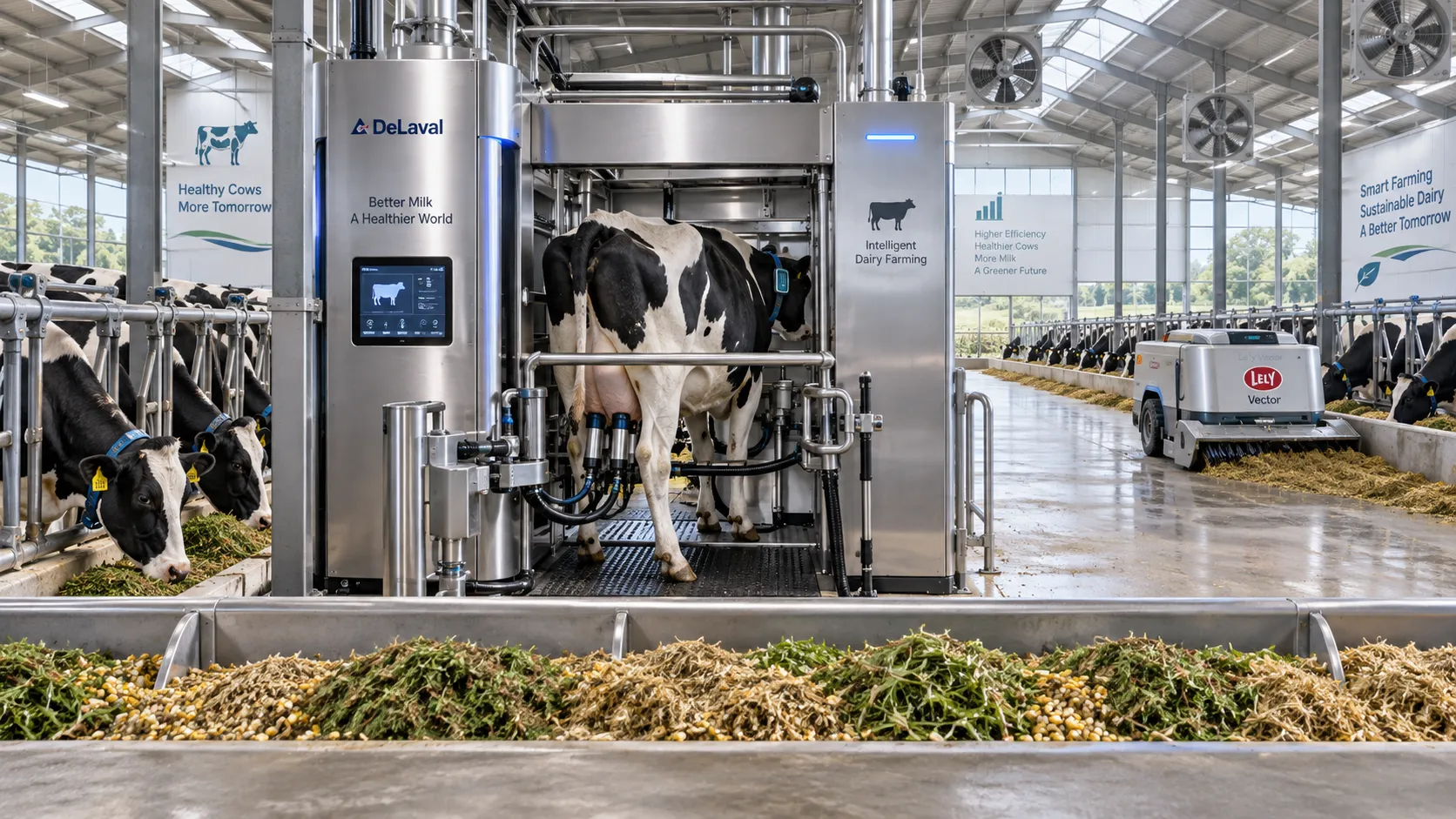
Smart Farming Technology for Dairy Farms: Where Automation Delivers Measurable ROI
Smart farming technology for dairy farms delivers measurable ROI through automation, precision feeding, health monitoring, and data-driven cost control.
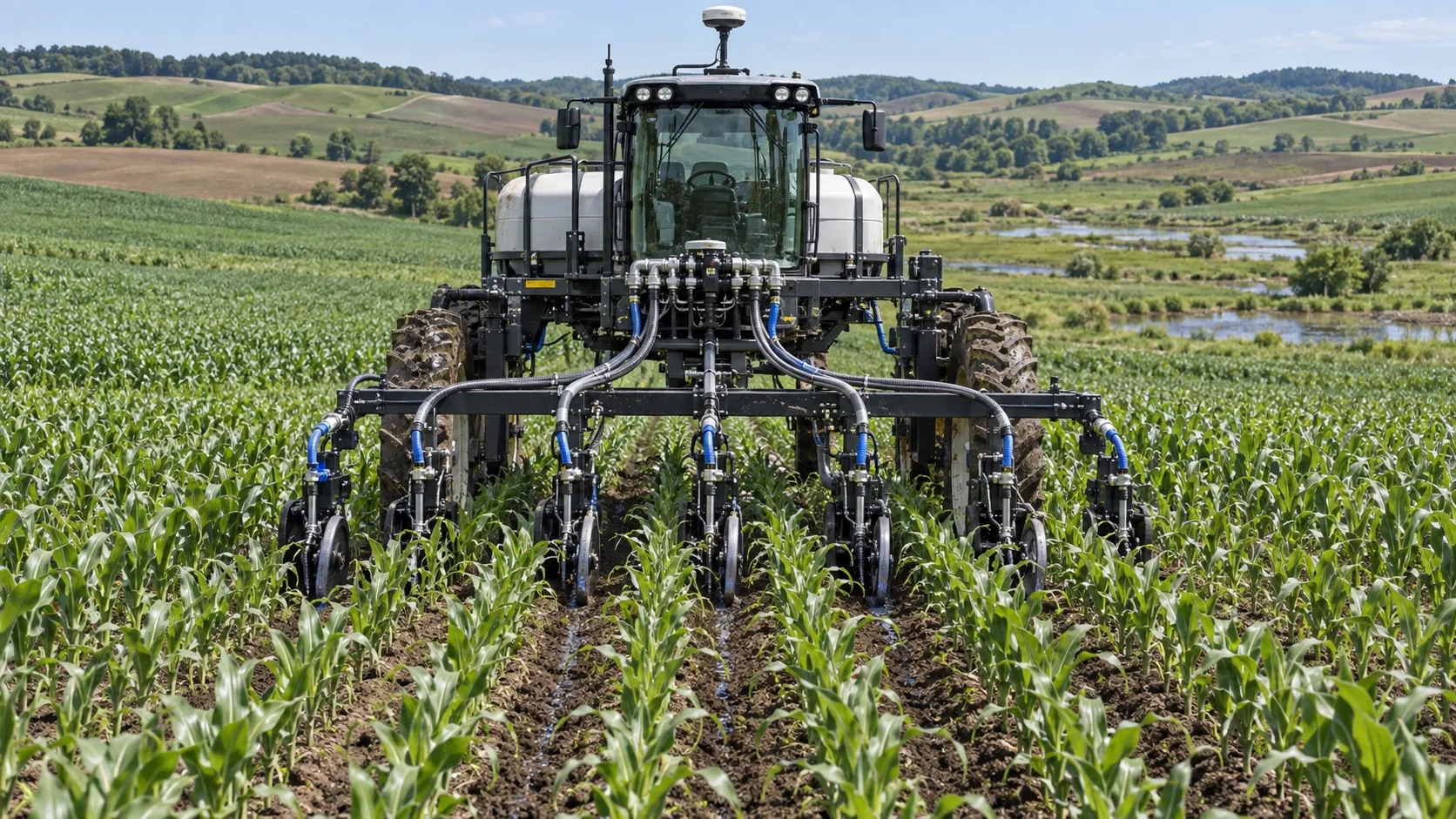
How to Select a Precision Fertilization System for Variable Corn Field Conditions
Precision fertilization systems for corn farming: learn how to match data, placement, control accuracy, and ROI to variable field conditions for better results.
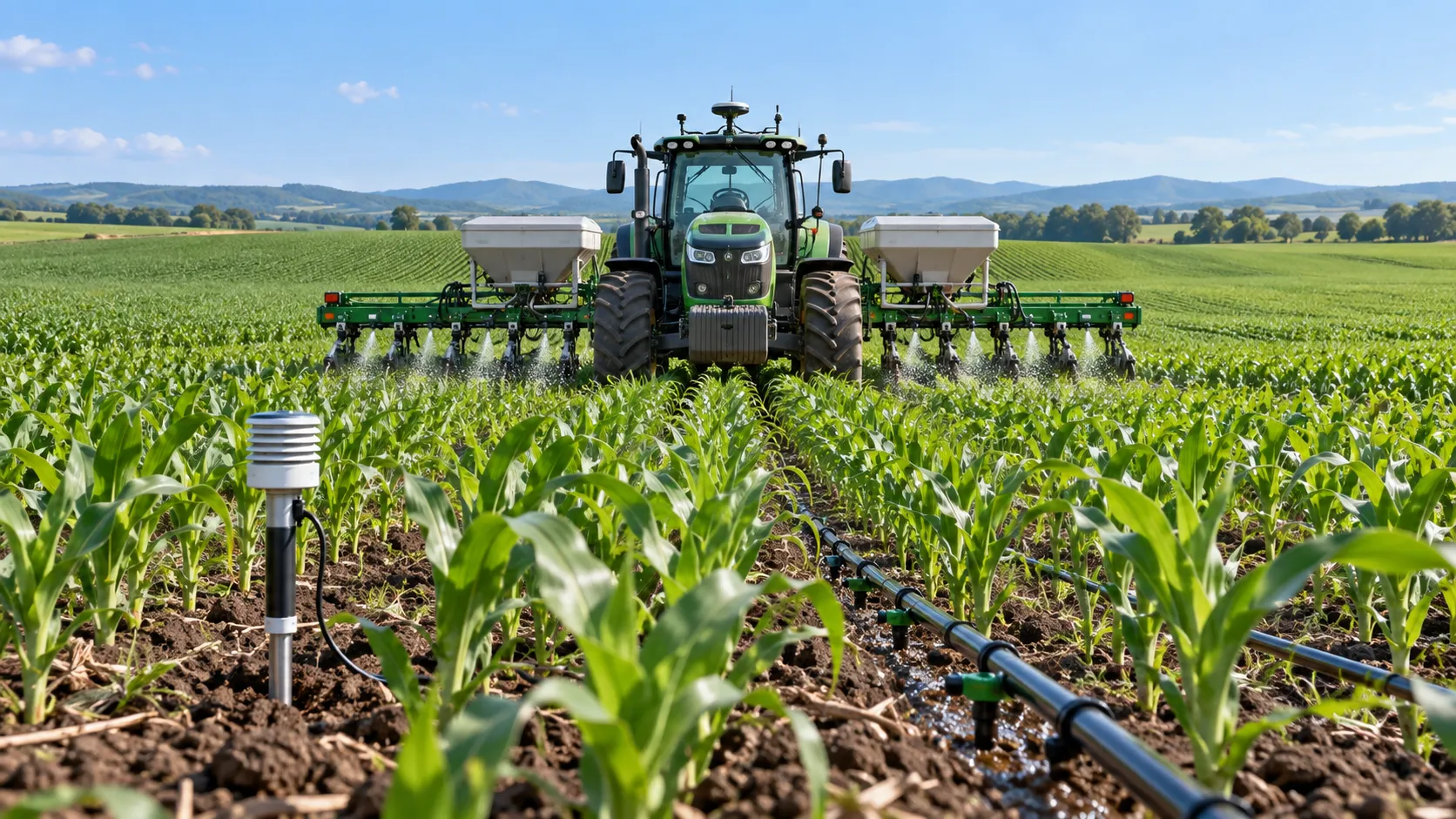
Selecting Precision Farming Products by Application: Field Conditions, Crops, and ROI
Application-based product selection for precision farming: match technology to field conditions, crops, machinery, and ROI for smarter, reliable farm investments.
How to Evaluate Agricultural Product Information Sources for Reliable Farm Decisions
Agricultural product information reference guide: evaluate reliable farm data, verify claims, and make smarter machinery, irrigation, and crop decisions.
Farm Machinery Guide: Matching Tractor Horsepower and Implements to Farm Size
Farm machinery guide for tractors: match horsepower, implement width, hydraulics, traction, and fleet capacity to farm size for lower costs and reliable field performance.
How to Evaluate Drip Irrigation System Manufacturers for Large Farm Projects
Drip irrigation systems manufacturer evaluation guide for large farms: compare hydraulic design, filtration, quality control, scalability, delivery, and support.
Specification Planning: A Practical Framework for Defining Equipment Requirements
Application guidance for specification planning: define measurable equipment requirements, prioritize performance, and avoid costly procurement mistakes.

How North American Farms Can Select Crop Monitoring Systems by Acreage and Connectivity
Crop monitoring systems North America: learn how to match acreage, connectivity, sensors, and data workflows for reliable, actionable farm decisions.

Where to Find Reliable Product Information for Comparing Farm Equipment
Product information resources agriculture buyers can trust: compare farm equipment with technical specs, manuals, field data, dealer support, and lifecycle insights.
Related News
- 00
0000-00
How to Select a Heavy-Duty Seeder for Large Acreage and High-Residue Fields - 00
0000-00
How to Match Large-Scale Farm Equipment Working Width to Field Size and Crop Rows - 00
0000-00
Farm Implements for Seeding: How to Match Seeders to Crop Type and Soil Conditions - 00
0000-00
Ningjin Farm Machinery Cluster Strengthens Export Delivery - 00
0000-00
Ningxia Subsidy Plan Sets New Seeder Benchmarks
Popular Tags
Agri-Mechanization Fellow
Weekly Insights
Stay ahead with our curated technology reports delivered every Monday.