How an automatic guidance system reduces overlap during spraying
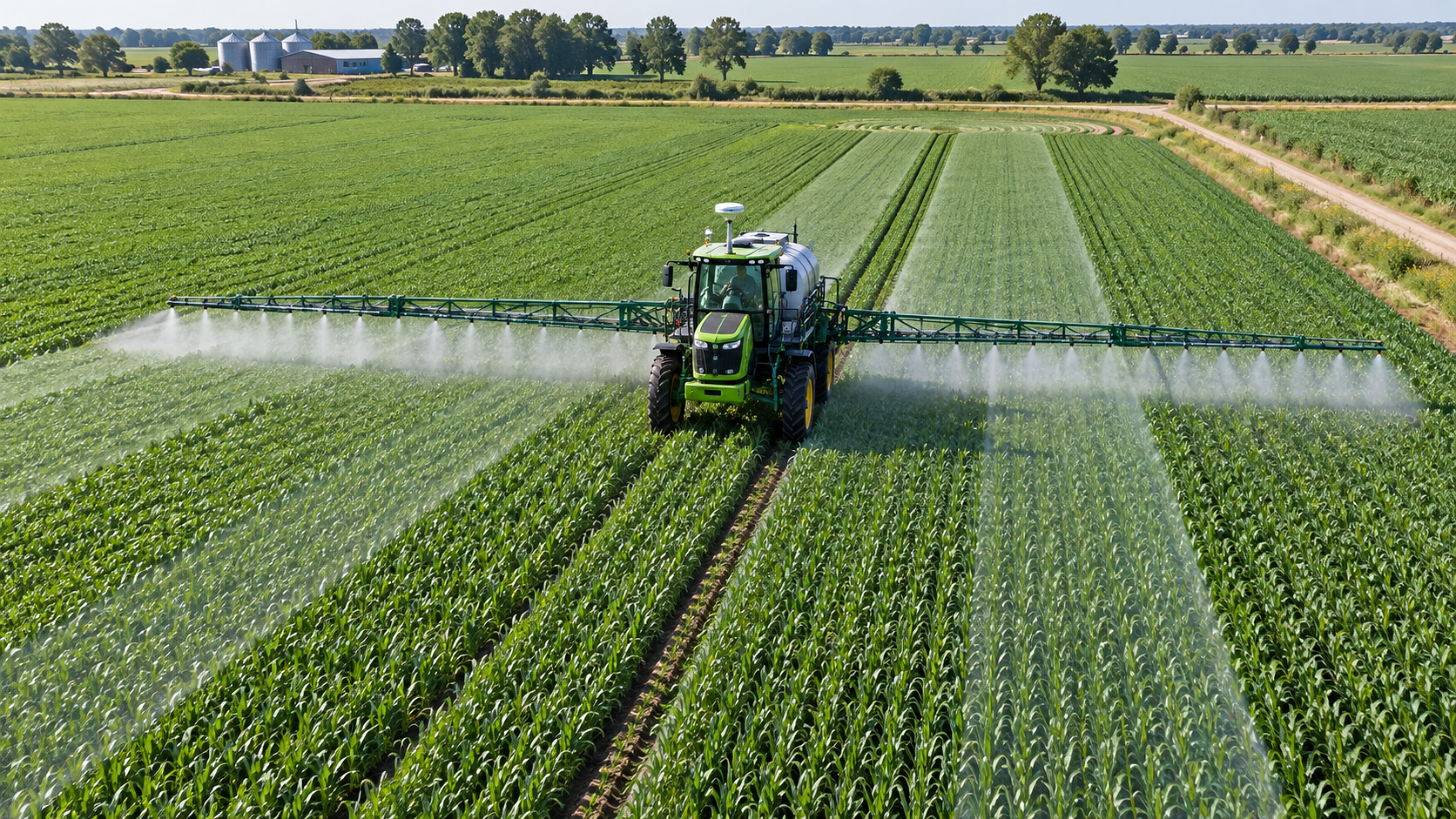




How an Automatic Guidance System Reduces Overlap During Spraying
An automatic guidance system helps spraying operators turn precision into measurable savings. By keeping equipment on accurate, repeatable paths, it reduces overlap, limits chemical waste, protects crop margins, and supports more consistent field coverage. For farms managing long hours, variable terrain, and narrow application windows, guidance technology provides a practical foundation for smarter, more efficient spraying decisions.
Overlap is easy to underestimate from the cab. A few centimetres of double coverage at each pass may seem harmless, especially in irregular fields. Yet the effect accumulates across a wide boom, multiple headlands, point rows, waterways, and long seasonal spraying programmes. The result can be unnecessary input use, uneven crop response, missed operating time, and more pressure on an operator who is already working around weather and crop-stage constraints.
An automatic guidance system does not make every spraying decision for the operator. It does something more fundamental: it holds the machine to a defined travel line with a level of consistency that is difficult to maintain manually over an entire day. That consistency is what turns application planning into repeatable field execution.
Why overlap happens even with experienced operators
Manual steering depends on visual references. Operators may follow tramlines, crop rows, foam markers, previous wheel tracks, field boundaries, or landmarks at the far end of the field. These methods can work reasonably well in favourable conditions, but they are affected by fatigue, dust, glare, darkness, crop canopy, slopes, and changing terrain. Even a highly skilled operator has to continuously judge where the boom edge sits relative to the previous pass.
The challenge becomes more pronounced when the machine is wide, the field has few visible references, or the task involves a pre-emergence application where rows are not yet visible. Variable field shapes create another problem. Triangular ends, curved boundaries, terraces, drainage channels, and obstacles force frequent corrections. Each correction introduces the possibility of either leaving a gap or driving too far into an already treated area.
Spraying also has a different rhythm from tillage. The operator must monitor pressure, nozzle behaviour, tank level, wind conditions, traffic, field access, and crop safety while steering. When attention is divided, maintaining a perfectly parallel path becomes harder. Guidance reduces that steering burden and gives the operator more capacity to monitor the application itself.
The mechanism: repeatable paths instead of visual estimation
At its core, an automatic guidance system combines a positioning receiver, a display or controller, steering hardware, and a correction signal. The system calculates the equipment’s position and compares it with a planned line or recorded pass. It then makes steering corrections so the tractor or self-propelled sprayer follows the intended path.
For spraying, the important reference is not simply where the vehicle travels. It is where the boom is applying product. That distinction matters because an implement can sit behind the tractor, shift slightly on slopes, or move differently during turns. A well-configured setup accounts for machine dimensions, antenna position, implement offsets, boom width, and the desired overlap or coverage margin.
Once the first guidance line is established, each subsequent pass is placed at a consistent spacing. Instead of the operator deciding whether the boom edge is close enough to the prior swath, the system uses the defined working width to maintain parallel tracks. In straight, open fields, this may look simple. Its value becomes clearer after several hours, when reduced fatigue helps preserve the same accuracy from the first tank to the last.
Guidance accuracy depends on the correction method, local signal availability, machine configuration, and operating conditions. It should not be assumed that every positioning level is suitable for every application. Broad-acre work with wider boom widths may tolerate a different degree of pass-to-pass variation than high-value crops, narrow-row systems, controlled-traffic farming, or operations that must return to the same tracks across multiple field events.
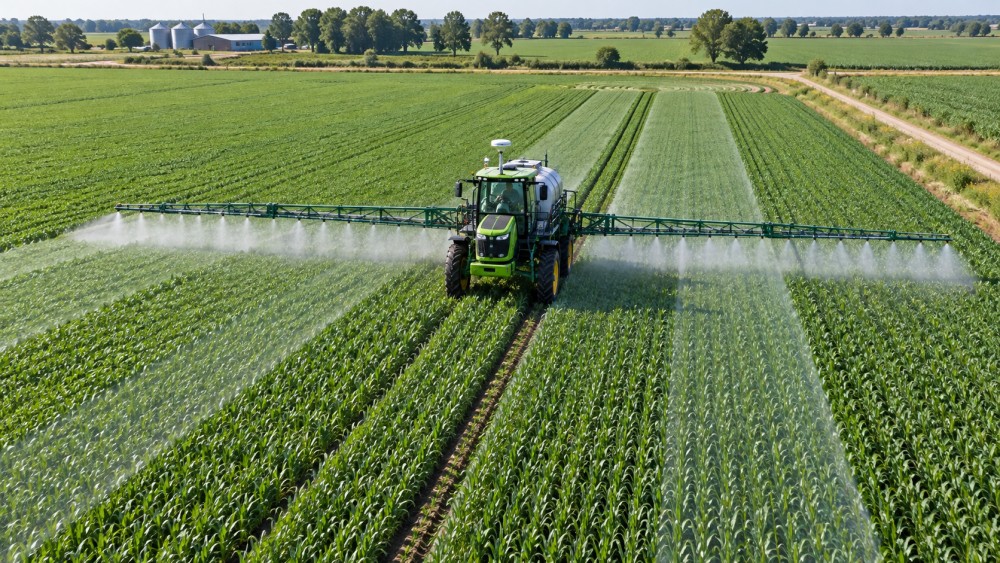
Guidance reduces overlap, but section control finishes the job
Automatic steering primarily addresses overlap between parallel passes. It keeps the machine on line and makes the working width more usable. However, overlap at headlands, wedges, curved boundaries, and irregularly shaped areas requires another layer of control: automated boom section control, or in more advanced systems, individual nozzle control.
Section control uses the machine’s mapped position to switch boom sections on or off when they enter previously treated ground or leave the target area. This is particularly useful at field ends, where several adjacent passes converge. Without control, operators often need to decide manually when to shut sections off while turning and aligning for the next pass. That decision can be delayed by a second or two, which is enough to apply product twice over a substantial strip.
A guidance system and section control should therefore be viewed as connected functions rather than substitutes. Guidance improves the quality of the travel path. Section control responds to what each section of the boom is doing within the field geometry. Where nozzle-by-nozzle control is available and justified, it can further refine coverage around curves and narrow spaces, though the right choice depends on sprayer design, crop value, application frequency, maintenance capability, and budget.
Where the greatest spraying gains are usually found
The most visible improvements are not always in the centre of a large rectangular field. Straight, uniform fields are where an operator may already keep overlap fairly controlled. The larger opportunity is often in places where visual judgment is least reliable:
- headlands that receive several passes during turning and re-entry;
- irregular field boundaries, especially those with curves, corners, and exclusion areas;
- night operations, dusty conditions, or low-contrast crop and soil surfaces;
- fields divided by trees, poles, waterways, terraces, or internal obstacles;
- repeat operations where the same lanes need to be used for spraying, fertilising, or mechanical fieldwork.
These are also the areas where operators may be tempted to apply extra product “just to be safe.” The problem is that risk management through extra overlap can create a separate crop-safety risk. Depending on the product, rate, timing, and crop condition, double application may contribute to visible stress or uneven development. Guidance does not remove the need to follow label instructions and local requirements, but it helps the operator apply the intended plan more faithfully.
The setup details that determine real-world accuracy
A system can have capable hardware and still perform poorly if the machine profile is inaccurate. Before relying on automatic guidance for spraying, operators should verify the entered implement width, number and width of boom sections, antenna height and offset, hitch or drawbar position, and any lateral offset between the guidance reference point and the actual spraying width.
Boom behaviour deserves close attention. On hillsides, a boom may yaw, sway, or drift relative to the vehicle path. On trailed sprayers, drawbar movement can affect where the boom travels through curves or side slopes. Active boom-height systems can help maintain a more stable spray distance from the target, but they solve a different problem from lateral guidance. Operators should understand where each technology begins and ends rather than expecting a single screen to compensate for all machine dynamics.
Calibration should not be treated as a one-time installation task. It is worth checking after major equipment changes, tyre changes, receiver relocation, steering-system servicing, software updates, or switching between mounted, trailed, and self-propelled configurations. A short verification pass in a safe area can reveal whether the displayed path and actual boom coverage agree.
The chosen guidance pattern also affects performance. AB lines are efficient in long, regular fields. Adaptive curves can suit gently varying boundaries, but they require sensible initial recording. Pivot patterns may be useful in circular irrigation layouts. Headland management needs deliberate planning, because the order of work—headlands first or interior first—changes how the operator approaches cut-ins and how section control encounters treated ground.
Avoiding the false sense of precision
An automatic guidance system improves path control; it does not confirm that every nozzle is delivering the correct output. A field can be precisely driven and still be unevenly treated because of blocked nozzles, pressure fluctuations, worn components, incorrect nozzle selection, poor agitation, or unsuitable travel speed. Guidance should sit inside a broader application discipline that includes sprayer inspection, calibration, clean water procedures, weather assessment, and accurate product records.
Signal interruptions and correction-service limitations must also be planned for. Operators should know how the system behaves after a temporary loss of correction, whether it retains guidance lines, and what accuracy is realistic when working near boundaries or sensitive areas. If the work involves local buffer rules, drift restrictions, or specific recordkeeping obligations, those requirements need to be confirmed separately. Positioning technology can support compliance records, but it does not replace the operator’s legal and agronomic responsibility.
There is a human factor as well. Overreliance can lead an operator to stop watching the boom, terrain, and spray quality. The best use of automation is not passive driving. It is a shift in attention: less effort spent making constant steering corrections, more effort spent observing the conditions that determine whether spraying should continue, slow down, or stop.
Choosing a practical system for the spraying operation
The right configuration starts with the job, not the display size. A farm operating broad-acre cereal crops with a wide boom may prioritise reliable pass-to-pass guidance, straightforward line management, and compatibility with existing section valves. A mixed farm with irregular parcels may place more weight on boundary handling, coverage mapping, and flexible field-data transfer. High-value horticultural operations may need closer integration between positioning, implement control, row geometry, and repeatability across the season.
Compatibility is often the less glamorous but more decisive question. Check whether the steering system can communicate with the tractor or sprayer, whether the controller supports the existing boom-control architecture, and whether data can move reliably between machines, farm-management platforms, and service technicians. A technically advanced system that cannot be supported locally or configured consistently across a fleet can become a source of downtime rather than precision.
Training should cover practical exceptions: resuming after a refill, returning to a partially completed field, handling a skipped pass, recording a new boundary, responding to poor signal conditions, and checking whether automatic sections are behaving as expected. These are the moments that determine whether technology saves time in a real season.
From a straighter line to a more controlled farming system
Spraying guidance is often the entry point to a wider precision-farming workflow. The same positional discipline can support controlled traffic, variable-rate applications, field records, targeted fertiliser placement, and more consistent passes for later operations. Its value is not limited to reducing chemical overlap on one day; it lies in making machine movements repeatable enough that agronomic decisions can be carried through the field with less variation.
This connection between machine capability, data, and resource use is central to the Agriculture 4.0 transition observed by AP-Strategy. The Global Agri-Pulse Hub examines large-scale machinery, intelligent farm tools, tractor control systems, combine technology, and water-saving irrigation as parts of one operating system rather than isolated equipment categories. In spraying, that perspective matters: the guidance receiver, boom controller, chassis stability, field map, and operator routine all influence the final application pattern.
Before implementing or upgrading guidance, map the actual sources of overlap on the farm. Review field shapes, boom widths, headland practice, signal coverage, existing control hardware, and the type of applications performed most often. Then test the system against the difficult fields, not only the easiest ones. A credible spraying setup is one that helps the operator maintain coverage discipline when visibility falls, time is short, and the field refuses to be rectangular.
Related News
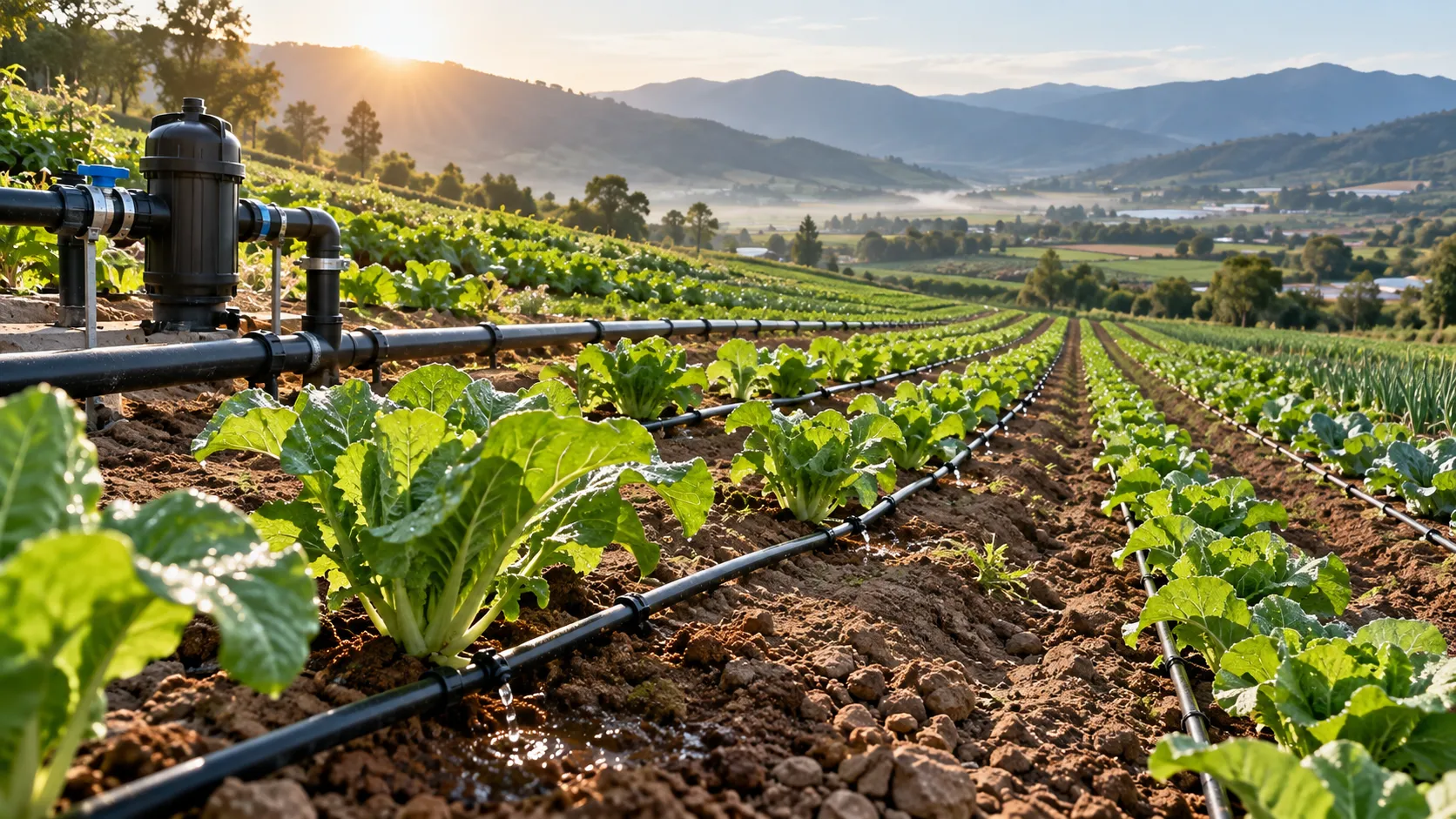
Choosing Drip Irrigation Systems for Open Fields: Soil, Slope, and Water Quality
Choose drip irrigation systems for open fields with confidence. Discover how soil, slope, and water quality shape emitter spacing, pressure, and filtration—and avoid costly design mistakes.
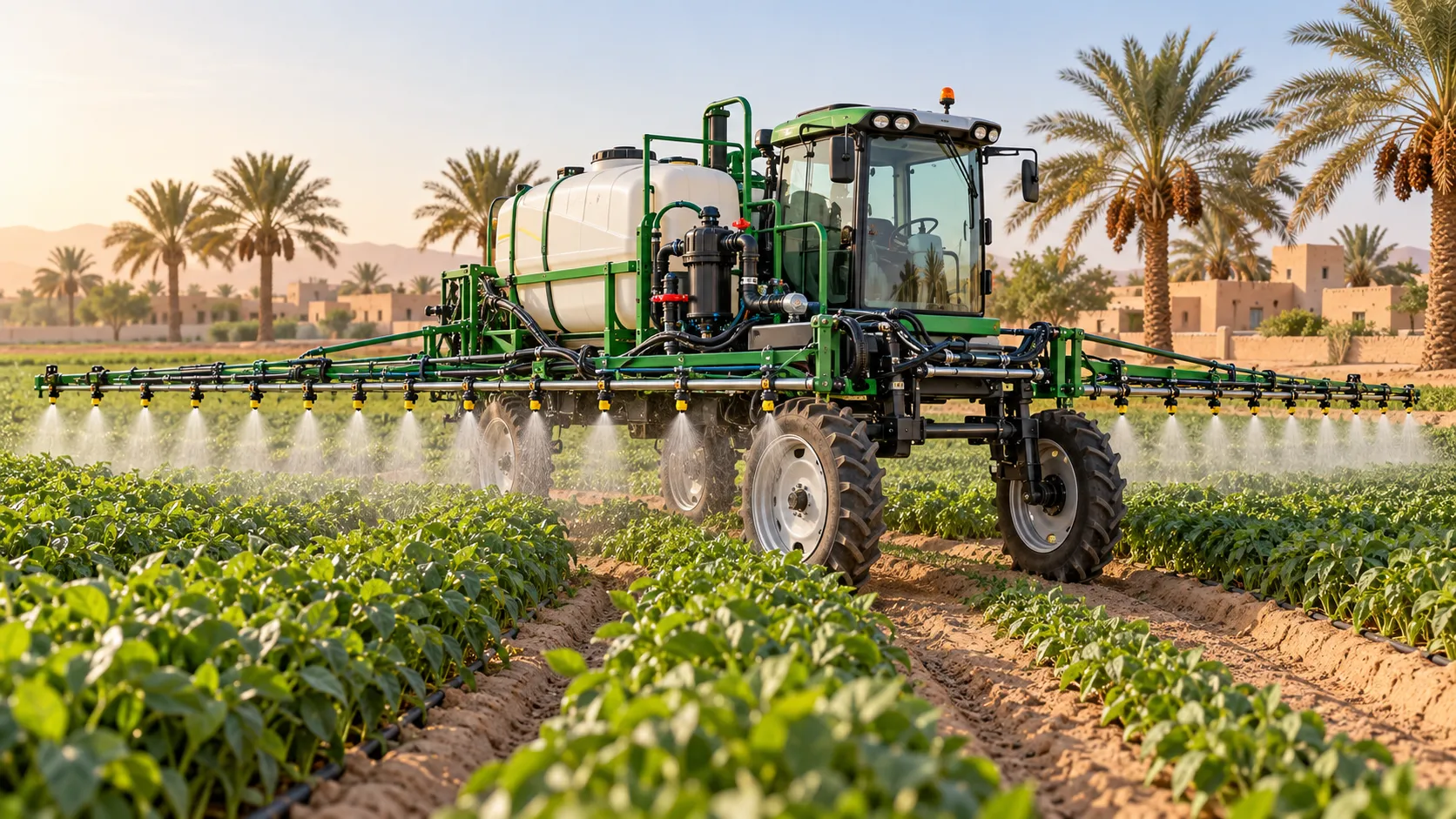
Choosing Crop Protection Equipment for Hot, Windy Middle Eastern Farms
Compare crop protection equipment Middle East farms need for hot, windy conditions. Discover key nozzle, drift-control, and durability checks to choose the right sprayer.
Choosing an Agriculture 4.0 Supplier: Compatibility, Support, and Total Cost
Choose an Agriculture 4.0 supplier with confidence. Learn how to verify compatibility, assess support, and compare total ownership costs to avoid hidden fees and costly downtime.
Low-Pressure Drip Irrigation: How to Fix Uneven Watering Without Raising Pressure
Optimize low pressure water-saving irrigation systems: discover how to fix uneven watering, clear blockages, and reduce hydraulic losses without raising supply pressure.
Comparing Farm Equipment Supplier Quotes: Price, Freight, and Warranty
Simplify supplier comparison for farm equipment price: assess freight, field-ready costs, and warranty coverage. Learn how to avoid hidden charges and choose a reliable supplier.
Choosing a Digital Farming Platform Provider: Compatibility and Data Ownership
Compare digital farming platforms providers on equipment compatibility, data ownership, and export rights. Discover practical checks to avoid lock-in and choose with confidence.
How Large-Scale Farm Telematics Cuts Downtime Across Mixed Fleets
Large-scale farm equipment telematics cuts mixed-fleet downtime with real-time alerts, smarter maintenance, and stronger operational control. Learn how to protect critical farm workflows.
How to Size Low-Pressure Water-Saving Irrigation Systems for Uneven Fields
Low pressure water-saving irrigation systems for uneven fields: learn zoning, pressure mapping, pipe sizing, and pump selection to improve uniformity and reduce water waste.
Farm Machinery Sourcing: How to Vet Suppliers, Specs, and Lifecycle Costs
Farm machinery information for sourcing: learn to vet suppliers, compare specifications, control lifecycle costs, and secure reliable uptime for smarter equipment purchases.
Related News
- 00
0000-00
How an automatic guidance system reduces overlap during spraying - 00
0000-00
GPS-Guided Farm Machinery: Where It Delivers Measurable Field Efficiency Gains - 00
0000-00
ISOBUS for Smart Agriculture: How It Connects Tractors, Implements, and Farm Data - 00
0000-00
How North American Farms Can Select Crop Monitoring Systems by Acreage and Connectivity - 00
0000-00
How Tractor Intelligence Systems Improve Field Efficiency and Input Accuracy
Popular Tags
Tractor Power Architect
Weekly Insights
Stay ahead with our curated technology reports delivered every Monday.