
Choosing Crop Protection Equipment for Hot, Windy Middle Eastern Farms
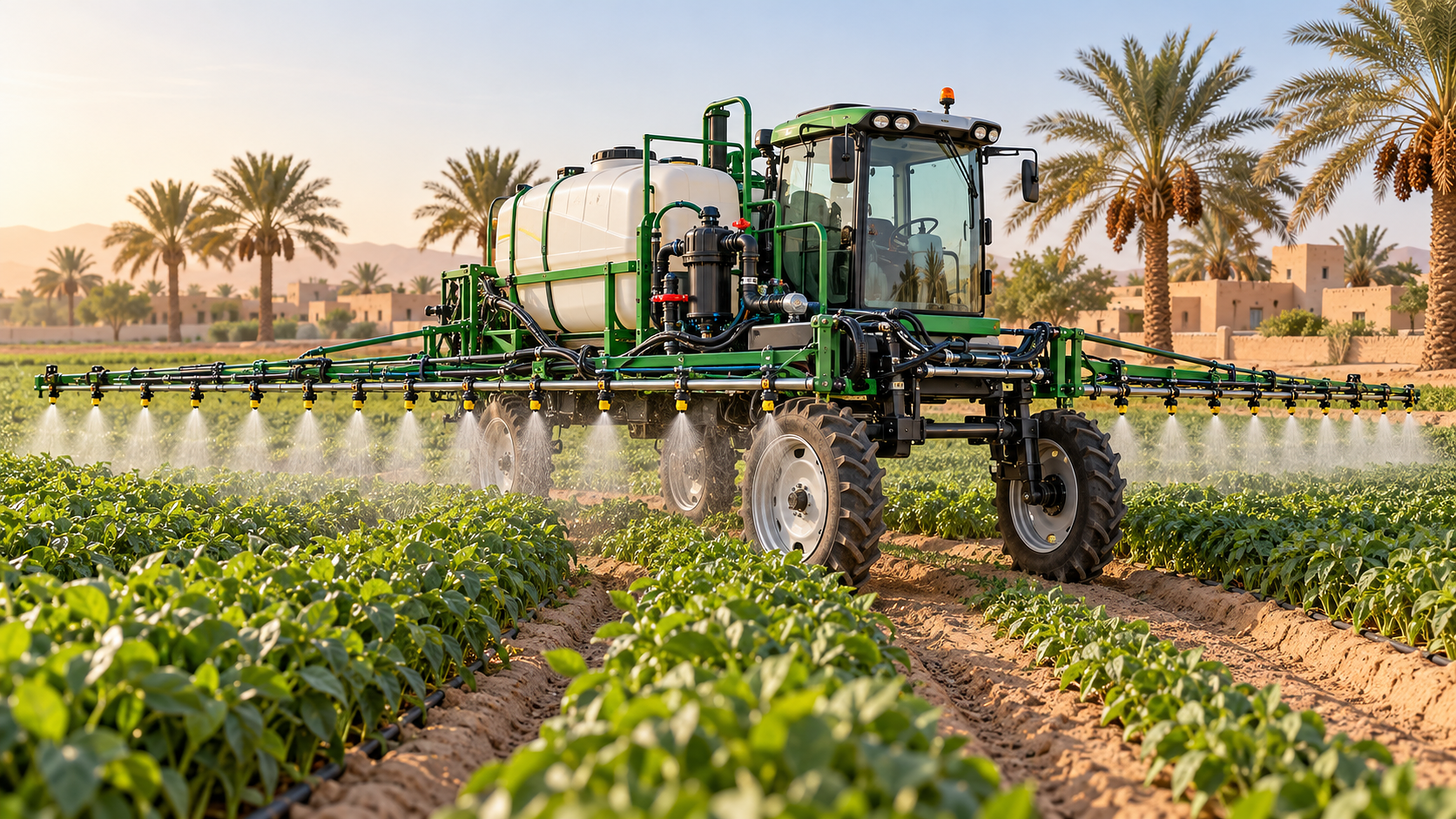




Crop protection equipment for hot, windy Middle Eastern farms should be selected around its ability to deliver an effective application within the farm’s usable weather windows. Tank size and working width matter only after the machine can control droplet size, maintain suitable release height, and tolerate local heat, dust, and water quality. A high-capacity sprayer that produces uneven coverage or excessive drift under working conditions can become an expensive scheduling constraint.
For broadacre crops, a boom sprayer with suitable drift-reducing nozzles, stable height control, and reliable rate regulation is a sensible starting point. Orchards and date plantations need a different assessment, focused on canopy geometry and directed delivery. Across both settings, equipment should be judged against the crop, the intended pesticide applications, and measured field conditions. No nozzle, sensor, or air-assistance system makes spraying acceptable outside the product label and applicable local requirements.
The practical procurement question is therefore specific: can this machine treat the required area, with adequate deposition and manageable drift, during the hours when application is permitted and agronomically suitable? Answering that question requires closer attention to the spray system than a comparison of headline specifications provides.
Start with the crop target and the available spraying window. A field-applied herbicide directed toward a relatively open target presents a different coverage problem from a contact fungicide intended to reach surfaces within a dense canopy. Crop height, row spacing, foliage density, and the location of the pest or disease determine where the spray must arrive. These conditions should shape the equipment shortlist before procurement teams compare automation packages.
Regional descriptions are too broad to define the operating environment. An exposed inland field, a sheltered orchard, and a coastal farm can have different wind patterns, humidity, and drift exposure. Use weather observations from the farm where possible, including conditions during likely treatment periods. Average daily wind speed alone can conceal gusts or direction changes that make individual fields unsuitable for spraying.
Map sensitive areas alongside the crop blocks: neighboring crops, homes, roads, water bodies, and occupied work areas. Their position relative to prevailing winds may constrain which fields can be treated during a particular window. Equipment capacity should then be calculated against the area that can realistically be sprayed, including turning, filling, mixing, cleaning, and travel between fields.
This often changes the value assigned to tank capacity. A larger tank can reduce filling stops, but its benefit depends on available water logistics, soil carrying capacity, and access. If the machine needs to slow substantially to maintain boom stability, its nominal width and travel speed will overstate useful output. Request a work-rate calculation using the farm’s application volume, field layout, and realistic operating speed.
Evaluate droplet control across the full operating range. Heat and low humidity can accelerate evaporation from spray droplets, particularly smaller ones. Wind can carry droplets away from the target, while turbulence and gusts complicate their path. The resulting risk is both off-target movement and insufficient delivery to the intended surface.
Coarser droplets can reduce drift potential, but selecting the coarsest available spray is not a universal solution. Some applications require coverage that a very coarse spray may struggle to provide at the proposed water volume. Contact products and difficult canopy targets deserve particular attention. The acceptable choice must reconcile the pesticide label, nozzle guidance, carrier volume, target coverage, and field conditions.
Ask suppliers to specify nozzle model, orifice size, spacing, pressure range, and spray classification for the intended applications. An “anti-drift” description is insufficient for technical evaluation. Air-induction nozzles can be useful, but their performance depends on the particular design and operating conditions. Also distinguish a documented drift-reduction classification under a defined test scheme from permission to spray in stronger winds.
Rate control creates another selection issue. When a conventional system changes pressure to maintain application rate as travel speed changes, droplet characteristics and spray pattern can change too. A nozzle that works well at one speed may operate poorly when the machine slows for rough ground or accelerates along a clear pass. Check the complete speed range against the nozzle’s recommended pressure limits.
Pulse-width modulation can provide greater flexibility by adjusting flow through rapid valve cycling while maintaining relatively stable pressure. Its value depends on nozzle compatibility, usable duty-cycle range, valve response, and the required flow. It also adds components that need local support. Ask for evidence that the proposed configuration maintains distribution through speed changes and turns, rather than accepting the presence of individual nozzle control as proof of performance.
Boom behavior deserves equal attention. Excessive height increases the distance droplets travel before reaching the target, while unstable movement can produce uneven distribution and increase drift exposure. Automatic height control is useful only if its sensors and control response suit the crop and terrain. Evaluate it over representative ground at working speed, with realistic tank loads, and check how it handles gaps, headlands, and abrupt changes in canopy height.
Keep weather limits separate from equipment capability. A weather station can help operators recognize unsuitable conditions, but a dashboard reading does not establish safe application by itself. Sensor location, shielding, calibration, and airflow around a moving machine affect the usefulness of measurements. Ask how the system measures wind and whether its display represents conditions relevant to the spray release point.
Operating limits should follow the pesticide label and local requirements, with additional restrictions where field sensitivity warrants them. There is no single wind-speed or temperature limit suitable for every product, crop, and location. Gusts, wind direction, humidity, and atmospheric stability can matter alongside the average reading. A machine should make these conditions visible and support a clear stop-work decision.
Moving spraying to evening or early morning can reduce heat exposure, but calm conditions need scrutiny. Temperature inversions can allow suspended droplets to move away from the application area, even when conditions appear quiet at ground level. Operators need a method for recognizing unsuitable atmospheric conditions. A scheduling policy that assumes all nighttime spraying is preferable can simply exchange one drift problem for another.
For farms with short application windows, automatic section control and clear coverage records can improve use of suitable hours by reducing overlap and helping crews resume interrupted work. These functions do not establish deposition quality. Assess their usefulness through the specific problems they solve: missed strips, duplicated treatment, boundary handling, and reliable records when an operation must stop.
For orchards, assess where the air and liquid actually go. Equipment suitable for field crops may be poorly matched to tall or irregular canopies. In orchards and date plantations, nozzle placement, outlet direction, airflow distribution, and access between rows can outweigh boom width. Spray that passes above or through the canopy contributes little to protection and may increase off-target exposure.
An air-assisted sprayer should allow airflow and nozzle output to be adjusted to the crop structure. Maximum fan output is not a useful selection objective on its own. Excessive air can carry droplets beyond a sparse canopy, while inadequate air movement may leave interior targets poorly served. Compare the proposed machine with the actual canopy height, density, row spacing, and seasonal changes in foliage.
Ask for a demonstration that checks deposition at representative target positions, including difficult interior or elevated locations. Water-sensitive paper can reveal distribution patterns and obvious gaps, although it cannot establish pesticide efficacy or fully measure retained dose. Use it to compare settings and identify delivery problems, alongside the agronomic requirements of the planned treatment.
Heat, dust, and water quality determine whether performance lasts. A successful demonstration does not resolve durability. Establish the manufacturer’s permitted ambient operating conditions and any associated derating. Cooling capacity must support the tractor or self-propelled machine, hydraulic system, and electronic controls under the loads expected during spraying. Access for cleaning radiators, screens, and cooling packs matters where airborne dust accumulates.
Inspect electrical connectors, wiring routes, seals, and control enclosures for protection against dust, moisture, and chemical exposure. Ask what any stated enclosure rating covers; a protected controller does not establish that every connector and sensor has equivalent protection. Cab filtration and operator protection also require careful specification. Air conditioning alone does not provide protection from pesticide exposure, and the machine’s cab provisions must be assessed alongside label requirements and protective equipment.
Water should be evaluated as both an application input and a maintenance burden. Suspended solids can block filters and nozzles or accelerate wear. Dissolved salts, hardness, and pH may affect product compatibility or performance, depending on the formulation. Filtration addresses particles; it does not remove dissolved salts or automatically correct unsuitable water chemistry. Assess the intended filling source and use product-specific guidance for any conditioning.
Check whether the pump, filters, plumbing, and agitation system can handle the planned formulations at maximum required flow. Filter selection must suit both nozzle passages and the pesticide formulation. Overly fine filtration can restrict flow or create repeated cleaning demands, while inadequate filtration leaves downstream components exposed. Accessible strainers, clear pressure diagnostics, and convenient flushing points can materially reduce disruption during short spraying windows.
Corrosion resistance should be assessed component by component. Tank fittings, pump internals, seals, valves, fasteners, and exposed frame surfaces face different combinations of chemical contact, saline water, washing, and weather exposure. A general claim of chemical resistance is less useful than a compatibility statement for wetted materials and a clear cleaning procedure.
Make acceptance depend on a representative field demonstration. The final evaluation should use the intended tractor where relevant, realistic travel speeds, representative terrain, and a meaningful tank load. Begin with clean-water checks for leaks, nozzle flow, pressure consistency, shutoff response, and spray distribution. Then examine how the system behaves during speed changes, turns, partial-width operation, and restarts after stopping.
Record weather conditions and equipment settings so the results can be interpreted. A calm demonstration can establish basic function, but it cannot prove performance throughout the farm’s proposed operating envelope. Agree in advance which capabilities require documentation and which will be demonstrated, including cooling limits, material compatibility, control response, and canopy delivery where relevant.
Before committing, establish the local availability and replacement procedure for nozzles, filters, seals, pump service parts, sensors, and control valves. Compare servicing time and likely interruptions as well as purchase price. The strongest candidate is the machine whose spray delivery, weather limits, field capacity, and maintenance demands fit the farm’s treatment schedule—and whose demonstrated performance gives the operator clear grounds to continue, adjust, or stop an application.
Related News
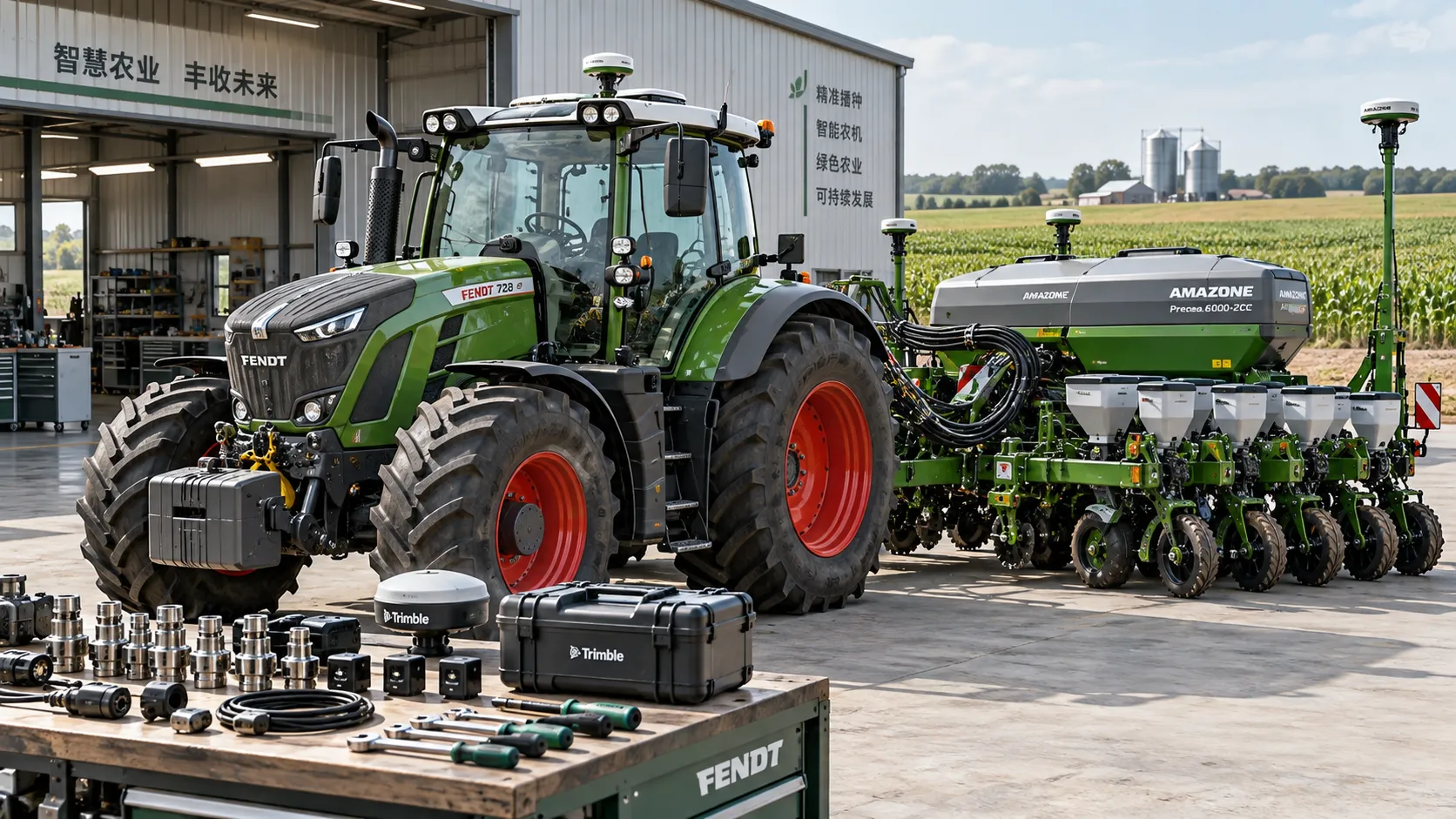
Choosing an Agriculture 4.0 Supplier: Compatibility, Support, and Total Cost
Choose an Agriculture 4.0 supplier with confidence. Learn how to verify compatibility, assess support, and compare total ownership costs to avoid hidden fees and costly downtime.
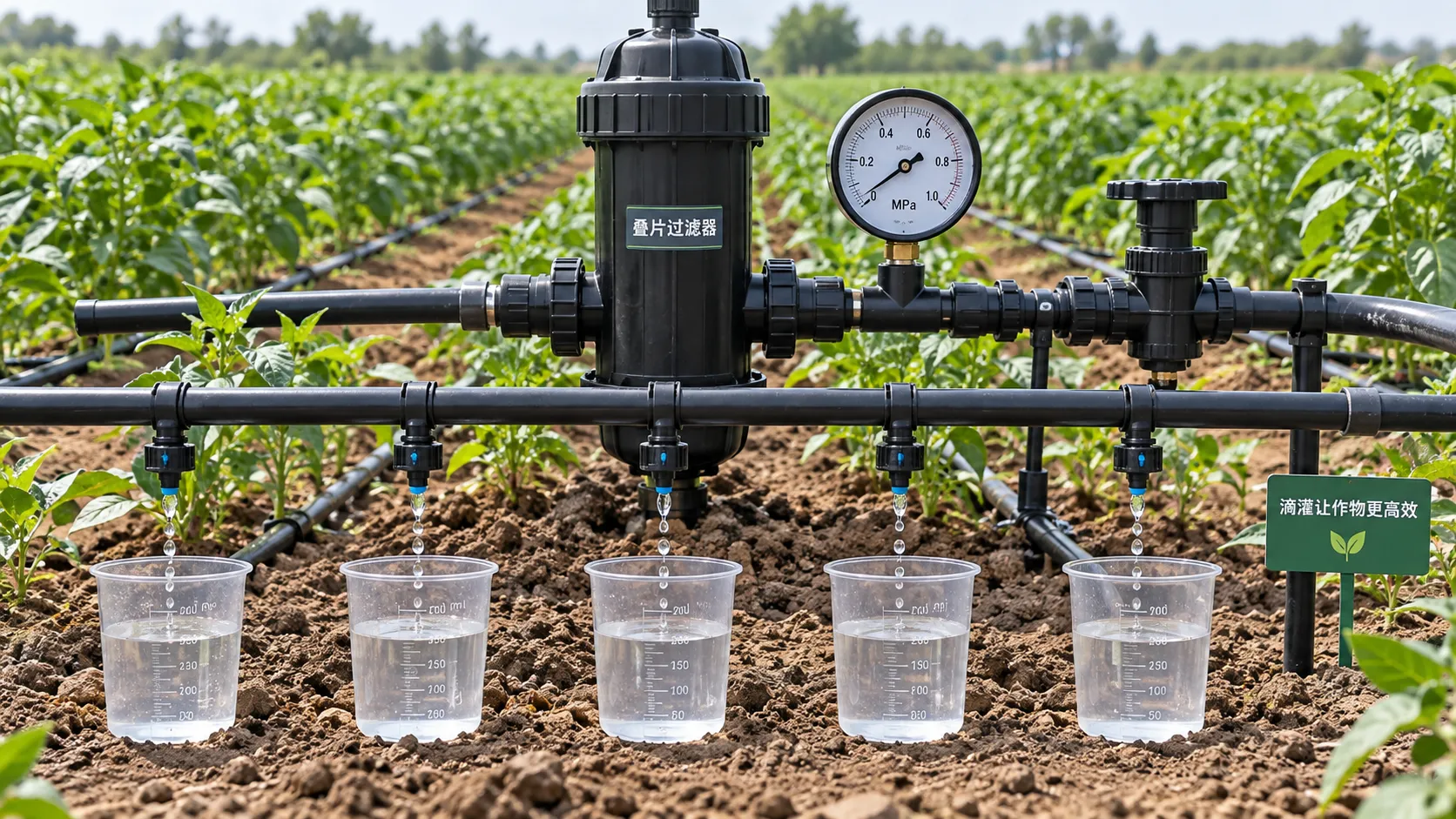
Low-Pressure Drip Irrigation: How to Fix Uneven Watering Without Raising Pressure
Optimize low pressure water-saving irrigation systems: discover how to fix uneven watering, clear blockages, and reduce hydraulic losses without raising supply pressure.
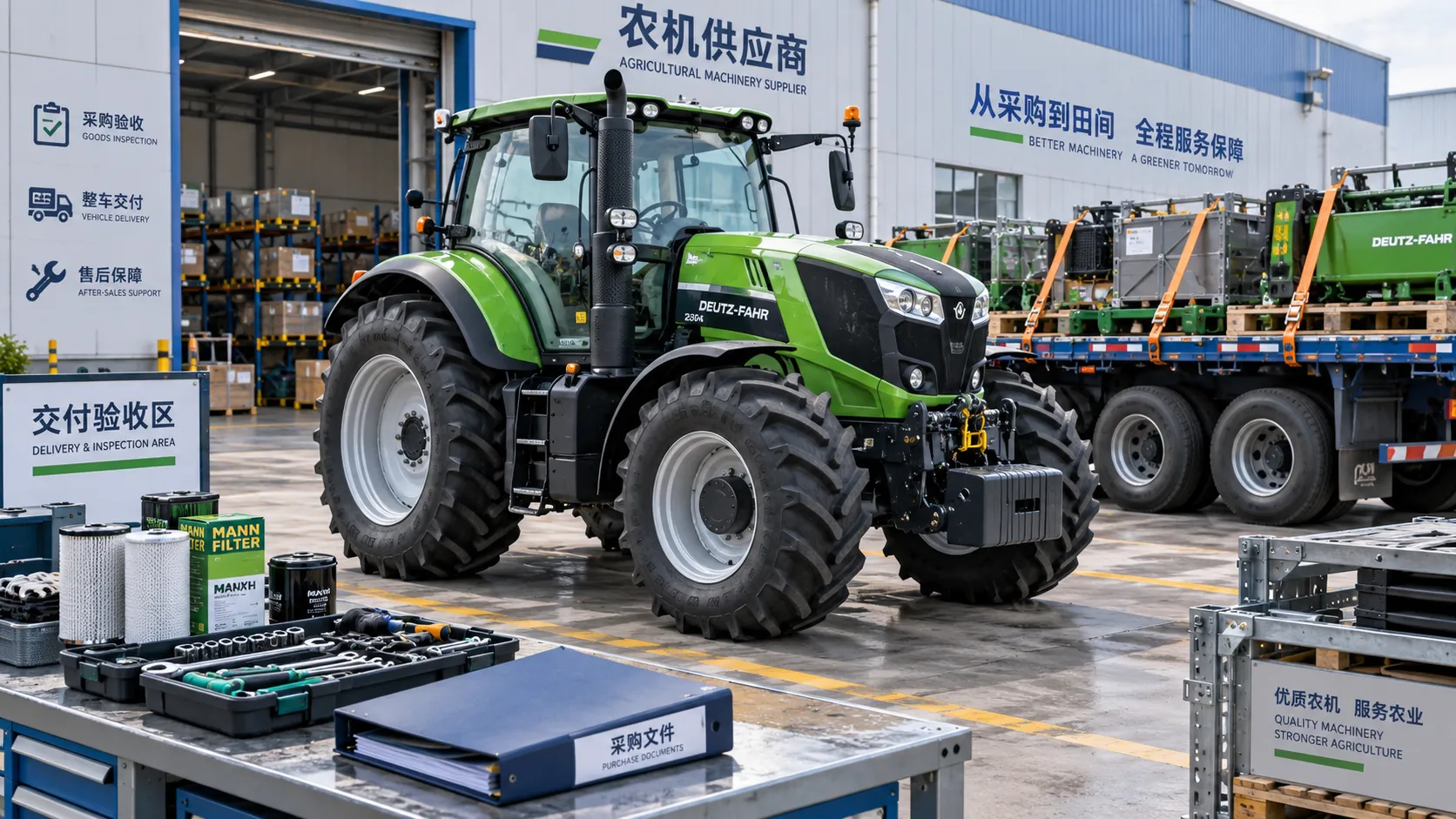
Comparing Farm Equipment Supplier Quotes: Price, Freight, and Warranty
Simplify supplier comparison for farm equipment price: assess freight, field-ready costs, and warranty coverage. Learn how to avoid hidden charges and choose a reliable supplier.
Choosing a Digital Farming Platform Provider: Compatibility and Data Ownership
Compare digital farming platforms providers on equipment compatibility, data ownership, and export rights. Discover practical checks to avoid lock-in and choose with confidence.
How Large-Scale Farm Telematics Cuts Downtime Across Mixed Fleets
Large-scale farm equipment telematics cuts mixed-fleet downtime with real-time alerts, smarter maintenance, and stronger operational control. Learn how to protect critical farm workflows.
How to Size Low-Pressure Water-Saving Irrigation Systems for Uneven Fields
Low pressure water-saving irrigation systems for uneven fields: learn zoning, pressure mapping, pipe sizing, and pump selection to improve uniformity and reduce water waste.
Farm Machinery Sourcing: How to Vet Suppliers, Specs, and Lifecycle Costs
Farm machinery information for sourcing: learn to vet suppliers, compare specifications, control lifecycle costs, and secure reliable uptime for smarter equipment purchases.
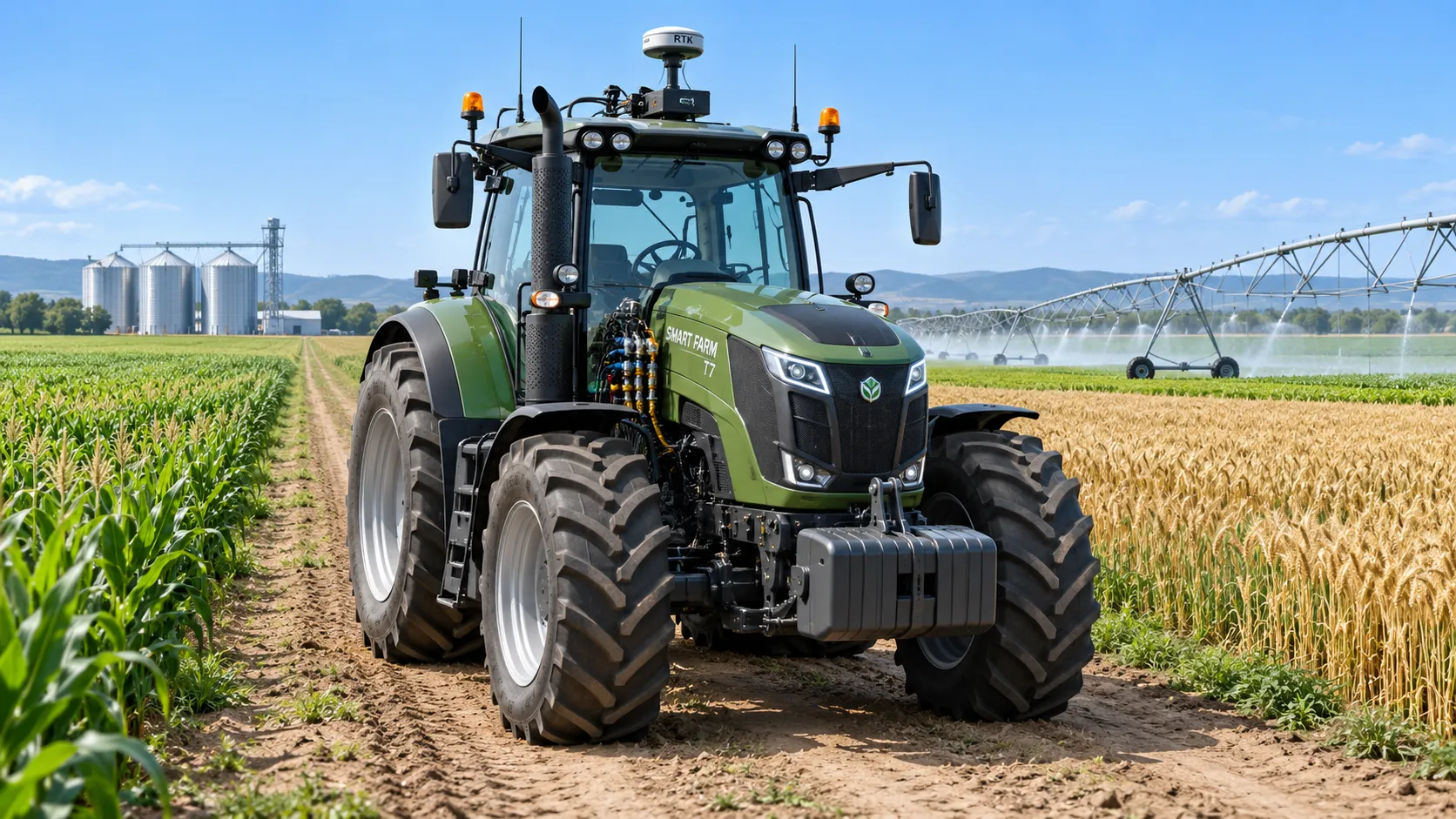
How telemetry for agriculture helps identify equipment downtime
Telemetry for agriculture helps detect early warning signs, prioritize maintenance, and reduce costly equipment downtime before field operations are disrupted.
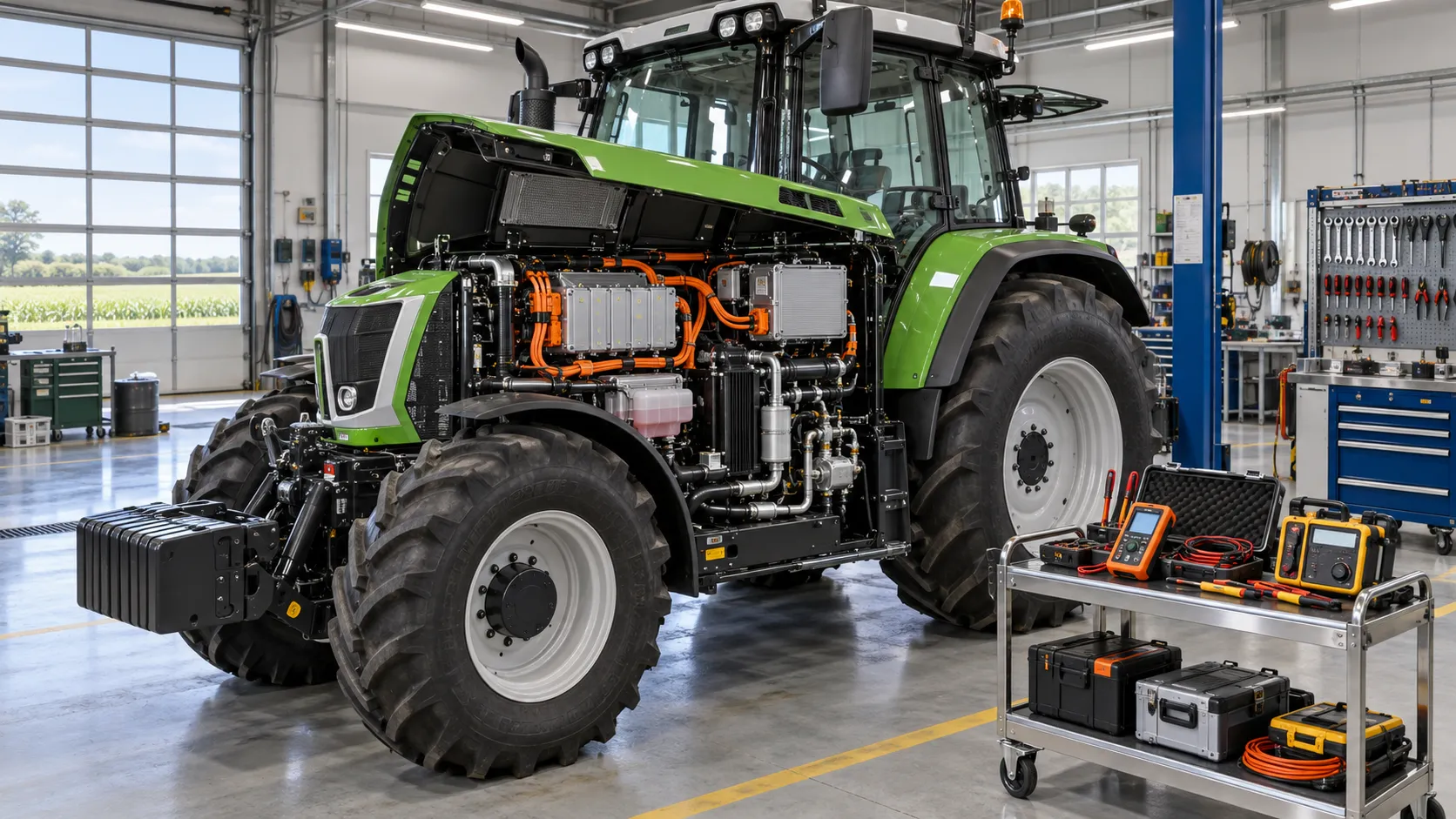
What maintenance challenges come with hybrid agricultural machines?
Hybrid agricultural machines demand smarter maintenance. Discover key challenges in high-voltage safety, batteries, software diagnostics, cooling, and parts planning.
Related News
- 00
0000-00
Choosing Crop Protection Equipment for Hot, Windy Middle Eastern Farms - 00
0000-00
Choosing an Agriculture 4.0 Supplier: Compatibility, Support, and Total Cost - 00
0000-00
Comparing Farm Equipment Supplier Quotes: Price, Freight, and Warranty - 00
0000-00
Choosing a Digital Farming Platform Provider: Compatibility and Data Ownership - 00
0000-00
How Large-Scale Farm Telematics Cuts Downtime Across Mixed Fleets
Popular Tags
Ms. Elena Rodriguez
Weekly Insights
Stay ahead with our curated technology reports delivered every Monday.