What maintenance challenges come with hybrid agricultural machines?




What Maintenance Challenges Come with Hybrid Agricultural Machines?
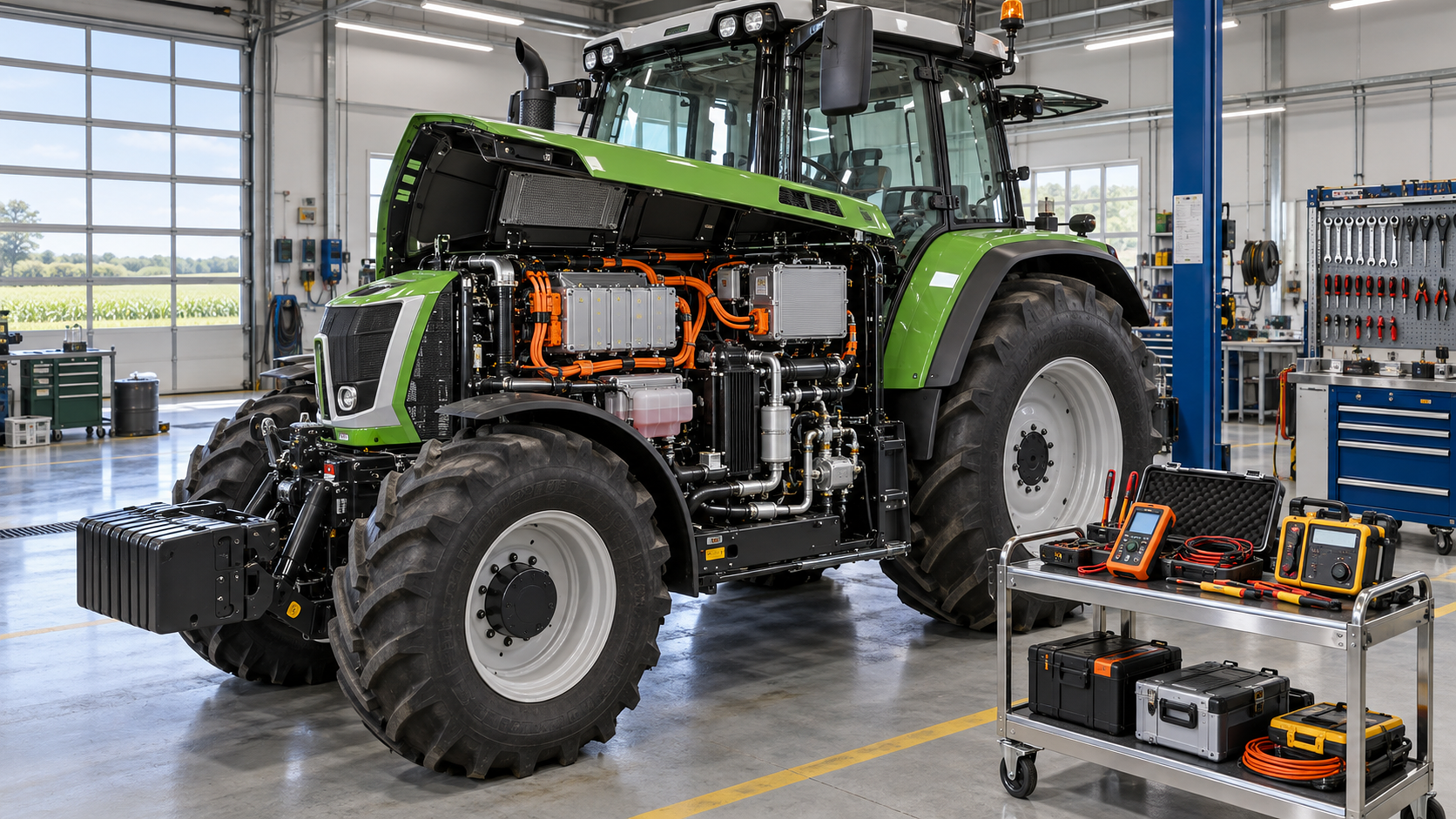
Hybrid agricultural machines can reduce fuel consumption and improve power delivery, but their maintenance burden is broader than conventional diesel equipment.
For after-sales teams, the central issue is not whether hybrid technology works, but whether faults can be isolated safely, repaired quickly, and prevented systematically.
Technicians must now maintain engines, electrical drives, batteries, inverters, hydraulic circuits, sensors, communication networks, and machine software within one connected operating system.
A mechanical symptom may originate in software calibration, while an electrical protection event may appear to operators as weak traction or hydraulic performance.
This changes service priorities. Hybrid agricultural machines require disciplined safety procedures, stronger diagnostic capability, clearer service documentation, and parts strategies designed around electronics.
Why Hybrid Machines Create a Different After-Sales Service Environment
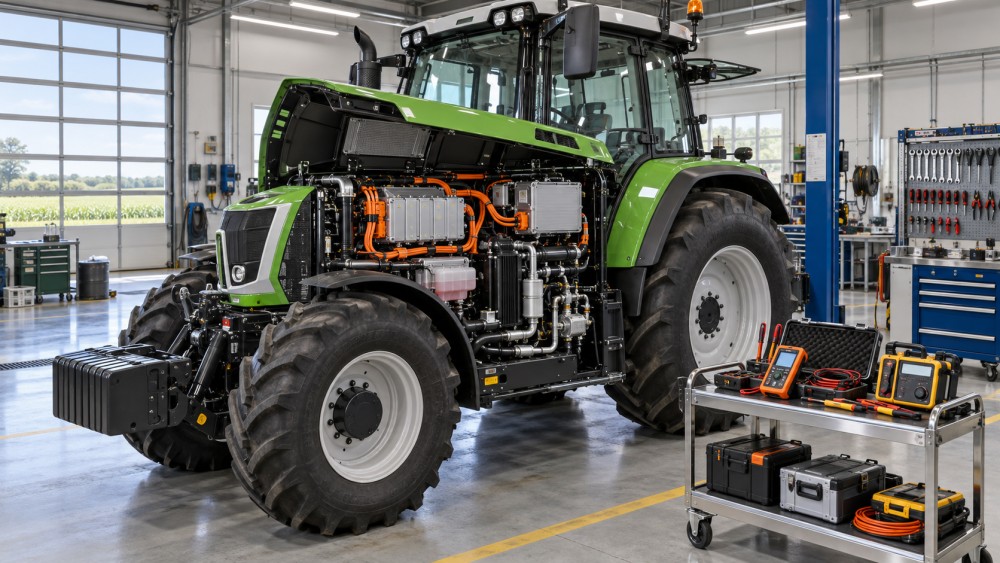
Hybrid tractors, harvesters, loaders, and irrigation power systems combine combustion power with electric motors, energy storage, power electronics, and intelligent control logic.
That integration produces operational benefits, including torque support during peak loads, reduced idling, regenerative energy recovery, and more responsive auxiliary power management.
However, it also creates fault paths that cross traditional workshop boundaries. A technician can no longer inspect only the failed component.
They must assess the machine state, stored diagnostic codes, operating history, wiring condition, software version, and mechanical load before replacing parts.
For after-sales maintenance personnel, this means that a conventional preventive-maintenance schedule remains necessary, but is no longer sufficient on its own.
Filters, belts, cooling systems, bearings, hydraulic oil, and engine components still need routine inspection, especially under dusty and high-load field conditions.
Yet the same service visit should also verify high-voltage isolation, battery cooling, connector integrity, controller updates, grounding points, and sensor plausibility.
The most expensive failures often arise when these interconnected checks are performed separately or when teams assume a warning code identifies the root cause.
High-Voltage Safety Is the First Maintenance Challenge
High-voltage systems are the most immediate maintenance concern because hybrid agricultural machines may retain hazardous electrical energy after the engine is switched off.
Unlike a standard 12-volt starting circuit, traction batteries and inverter assemblies can operate at voltages capable of causing severe injury or equipment damage.
Every service department needs a documented lockout and tagout process specifically designed for each hybrid platform it supports.
Technicians should confirm machine shutdown status, remove or isolate the service disconnect, wait for capacitor discharge, and test for absence of voltage.
That sequence should never be shortened because a dashboard display is dark or because the engine has stopped running.
Inverters, DC-to-DC converters, and power cables may remain energized. Control systems can also wake automatically when remote diagnostics or scheduled functions activate.
Personal protective equipment must match the voltage rating and task. Insulated gloves, face protection, insulated tools, and voltage-rated test instruments are essential.
Service managers should also establish restricted work zones. Untrained staff, customers, and temporary workers should not enter a hybrid machine repair area.
Clear labeling is equally important. Missing warning labels, damaged orange cables, improvised repairs, and unauthorized accessory wiring should be treated as safety defects.
Training must be recurring rather than a single certification event. Safety knowledge degrades quickly when technicians only occasionally encounter high-voltage service work.
Battery Health Depends on More Than State of Charge
Battery complaints are often reported as reduced operating time, weak electric assistance, frequent derating, slow charging, or repeated warning messages during demanding field operations.
State of charge provides only part of the answer. A battery can appear charged while its usable capacity, internal resistance, or cell balance has deteriorated.
After-sales teams should evaluate battery state of health using manufacturer-approved diagnostic tools and compare results with operating hours, temperature exposure, and duty cycles.
High ambient heat, cold starts, extended storage, repeated deep discharge, vibration, and poor cooling can accelerate battery aging in agricultural environments.
Harvesting and tillage work can be particularly demanding because long periods of high load create sustained heat within battery modules and power electronics.
Technicians should inspect cooling ducts, radiator surfaces, coolant concentration, fans, pumps, and thermal sensors whenever a battery-temperature fault appears.
Battery enclosures require careful inspection for impact damage, water ingress, corrosion, loose fasteners, and contamination caused by crop residue or chemical exposure.
Pressure washing deserves special attention. Incorrect washing procedures can force moisture into electrical connectors, vents, seals, and control housings.
Storage guidance also matters. Machines held outside seasonal work periods should follow prescribed charge ranges, temperature limits, and periodic inspection intervals.
A neglected stored machine may return with battery imbalance or low-voltage auxiliary-battery problems before the main field season begins.
Power Electronics and Cooling Systems Need Clean Operating Conditions
Inverters, converters, electric motors, and battery chargers are highly dependent on stable voltage, secure connections, and effective thermal management.
Field dust, chaff, mud, fertilizer residue, and rodents can create failure conditions that resemble internal electronic faults.
For example, restricted cooling airflow can trigger inverter derating, which operators may describe simply as reduced power under load.
Loose terminals can generate resistance and heat. Corroded connectors can distort communication signals, causing intermittent faults that disappear during workshop testing.
Inspection routines should include cable routing, abrasion points, harness clamps, sealing boots, connector locks, and evidence of heat discoloration.
Technicians should never probe high-voltage connectors with unsuitable tools or bypass interlocks to speed up a diagnosis.
Cooling-system maintenance must cover both conventional engine cooling and dedicated electrical cooling loops where fitted. These circuits may use different requirements and service intervals.
Using the wrong coolant, mixing incompatible fluids, or overlooking an air pocket can compromise thermal protection and shorten component life.
Service teams should review machine-specific diagrams before repairs because hybrid layouts vary substantially between manufacturers and product generations.
Software Diagnostics Are Now a Core Workshop Capability
Hybrid agricultural machines rely on multiple electronic control units that exchange data through vehicle communication networks, often including telematics connections.
As a result, software faults, parameter mismatches, failed updates, and communication errors can affect machine availability as much as mechanical wear.
Technicians need approved diagnostic interfaces, current service software, reliable workshop connectivity, and access to manufacturer technical bulletins.
A generic code reader is rarely enough. It may reveal a fault code but not the operating conditions, subsystem interaction, or required calibration procedure.
Before clearing codes, technicians should capture freeze-frame data, event history, battery conditions, temperatures, operating mode, and any related network faults.
This information helps distinguish a persistent component failure from a temporary event caused by overload, low temperature, poor connections, or incorrect operation.
Software updates should be controlled carefully. Confirm machine identification, existing software versions, battery support requirements, and stable communication before programming begins.
An interrupted update can immobilize a machine at the worst possible time, particularly during planting, spraying, or harvest windows.
After programming, technicians should complete required relearn procedures, actuator tests, safety checks, and field verification rather than assuming the update resolved every symptom.
Maintaining accurate digital service records is increasingly valuable. They create evidence for warranty claims and reveal recurring failures across fleets or regions.
Hydraulic and Mechanical Systems Still Drive Many Hybrid Fault Reports
Hybrid systems do not replace traditional agricultural machine maintenance. Instead, they make conventional mechanical health even more important to monitor.
Excessive hydraulic demand, dragging brakes, bearing damage, blocked filters, poor lubrication, or overloaded implements can force electric components to compensate continuously.
That increased demand may trigger thermal derating, unexpected battery depletion, or repeated engine operation at inefficient speeds.
When investigating reduced performance, technicians should measure hydraulic pressure, flow, oil condition, and mechanical resistance before condemning the electric drive system.
Contaminated hydraulic oil remains a major risk. Fine particles can damage valves and pumps while also causing unstable load behavior detected by hybrid controllers.
Hybrid machine calibration may depend on accurate hydraulic sensor readings, transmission feedback, wheel-speed data, and implement communication signals.
A failed sensor can therefore produce misleading power-management behavior even when the engine, motor, and battery are mechanically sound.
After-sales teams should use structured diagnostic order: verify safety, inspect mechanical basics, read system data, test circuits, then validate repairs under realistic load.
Parts Availability and Repair Decisions Can Extend Downtime
Downtime risk increases when dealers treat hybrid components like standard consumable parts. Batteries, inverters, controllers, and specialized harnesses often have longer supply cycles.
Some components require serial-number matching, programming authorization, core return procedures, hazardous-material transport, or manufacturer approval before replacement.
Service planners should identify critical hybrid parts based on local machine population, seasonal workload, historical failure trends, and supplier lead times.
Keeping every expensive electronic module in stock is rarely economical. Maintaining selected fast-moving connectors, sensors, cooling parts, contactors, and diagnostic equipment is more practical.
For high-value fleets, dealers may need escalation agreements with manufacturers or regional hubs for rapid module delivery and remote engineering support.
Repair-versus-replace decisions also need discipline. Improper repair of sealed battery packs, high-voltage cables, or inverter assemblies can create serious reliability and liability issues.
Only approved repair procedures should be used. Where component-level repair is prohibited, technicians should document findings clearly and follow replacement protocols.
Accurate failure documentation helps manufacturers improve design quality and helps service organizations justify inventory, training, and tooling investments.
Technician Skills Must Combine Mechanical and Digital Expertise
The skills gap is one of the largest long-term maintenance challenges associated with hybrid agricultural machines.
Experienced diesel technicians understand field conditions, hydraulic systems, crop-season urgency, and the practical effects of heavy equipment use.
They may still require additional capability in electrical theory, insulation testing, CAN communication, battery management, software configuration, and cybersecurity-aware service practices.
Training should be role-based. Not every employee needs authorization for energized high-voltage work, but every employee needs awareness of hazards and escalation procedures.
Advanced technicians should receive supervised hands-on training using actual machine platforms, fault simulations, manufacturer documentation, and correct diagnostic tools.
Service advisors also need basic hybrid knowledge. They must ask customers useful questions about warning messages, charging behavior, operating conditions, and recent machine changes.
Better job intake prevents wasted visits and allows workshops to prepare correct parts, technicians, safety equipment, and software access before a machine arrives.
Field technicians require additional planning because remote repair conditions may limit safe lifting, weather protection, internet access, electrical isolation, and diagnostic communication.
How After-Sales Teams Can Build a Practical Maintenance Program
A strong maintenance program for hybrid agricultural machines begins with a machine-specific service checklist rather than a generic electrical inspection sheet.
The checklist should combine conventional maintenance tasks with high-voltage safety verification, battery thermal checks, wiring inspection, software review, and diagnostic-history capture.
Schedule inspections around agricultural operating cycles. Pre-season checks can prevent avoidable downtime, while post-season inspections identify stress accumulated during intensive field work.
Customer education should form part of every delivery and service interaction. Operators need to recognize warning indicators, follow charging guidance, and avoid unsafe cleaning practices.
They should also understand when to stop operating. Continuing work after a high-voltage, overheating, insulation, or battery-cooling warning can increase repair cost substantially.
Remote monitoring can improve maintenance planning where telematics data is available. Repeated temperature alarms, charging irregularities, or derating events deserve early investigation.
However, remote data should support technician judgment rather than replace physical inspection. Agricultural environments create contamination and damage that software cannot always detect.
Service leaders should track repeat repairs, mean time to diagnosis, parts delays, seasonal failure patterns, and technician training needs across the hybrid fleet.
These measures reveal whether recurring downtime is caused by product design, operating practice, parts logistics, incomplete diagnostics, or insufficient workshop capability.
Conclusion: Maintenance Readiness Determines Hybrid Machine Value
Hybrid agricultural machines can deliver meaningful efficiency and performance benefits, but those benefits depend on maintenance systems that match their technical complexity.
For after-sales personnel, the priority is clear: protect technicians first, diagnose systems methodically, preserve software and service data, and inspect mechanical causes thoroughly.
Battery care, thermal management, electrical connections, calibration, hydraulic health, and parts planning should be managed as one connected reliability program.
Organizations that invest in authorized training, accurate diagnostic tools, seasonal service planning, and disciplined documentation will reduce downtime and protect customer confidence.
The practical lesson is simple. Hybrid agricultural machines are not harder to maintain because they are electric; they are harder because every system matters together.
Related News
Low-Pressure Drip Irrigation: How to Fix Uneven Watering Without Raising Pressure
Optimize low pressure water-saving irrigation systems: discover how to fix uneven watering, clear blockages, and reduce hydraulic losses without raising supply pressure.
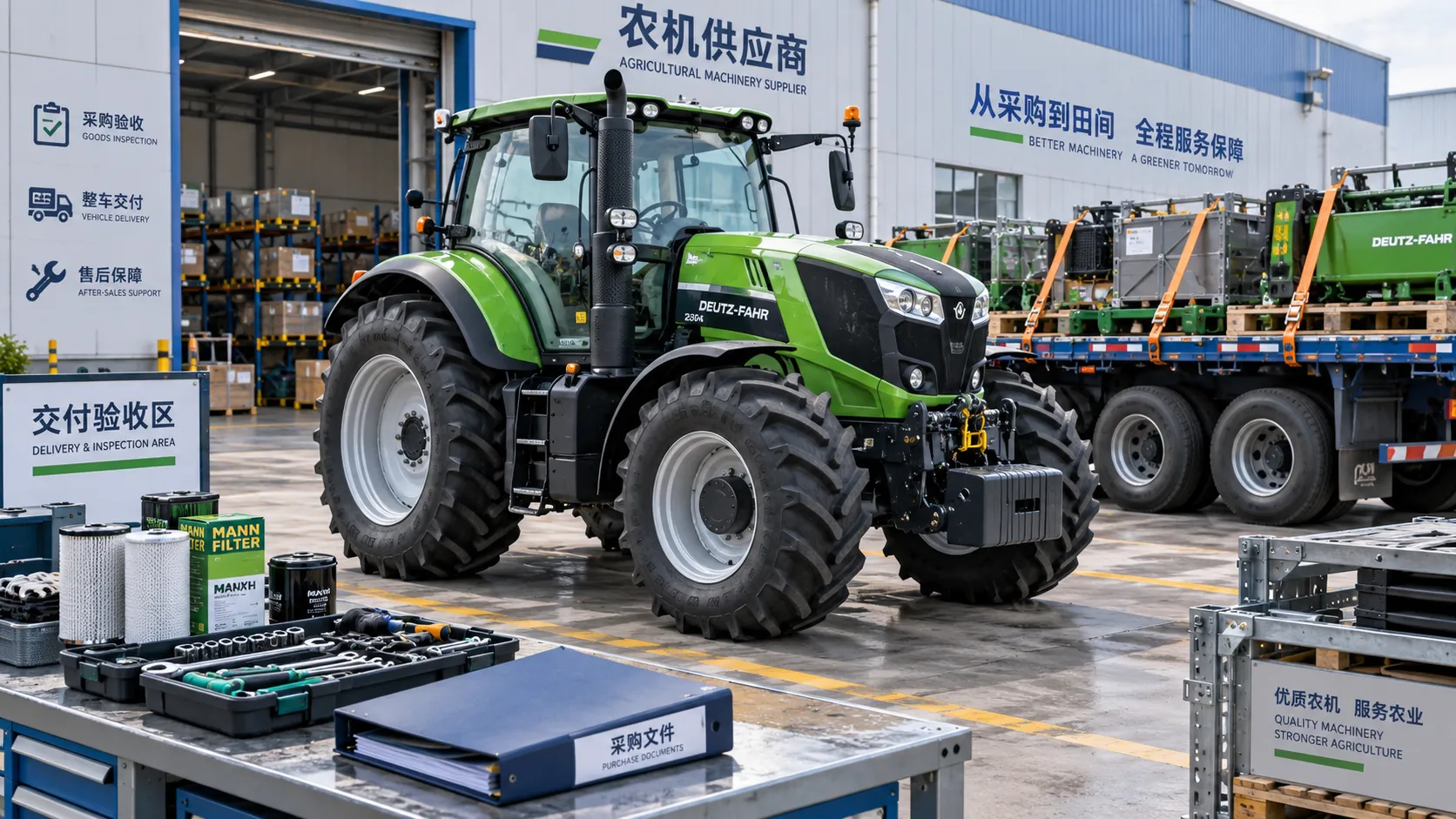
Comparing Farm Equipment Supplier Quotes: Price, Freight, and Warranty
Simplify supplier comparison for farm equipment price: assess freight, field-ready costs, and warranty coverage. Learn how to avoid hidden charges and choose a reliable supplier.
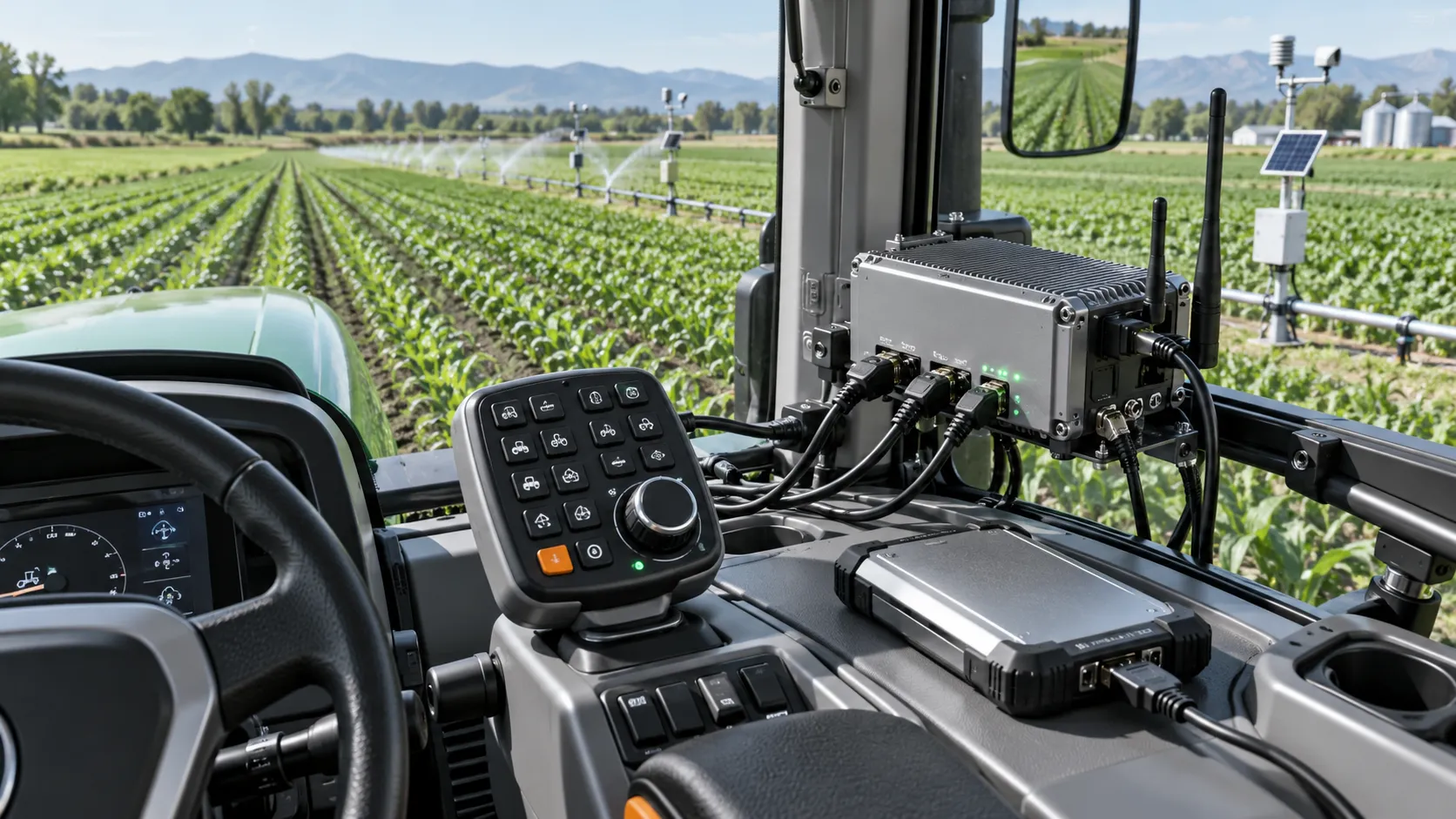
Choosing a Digital Farming Platform Provider: Compatibility and Data Ownership
Compare digital farming platforms providers on equipment compatibility, data ownership, and export rights. Discover practical checks to avoid lock-in and choose with confidence.
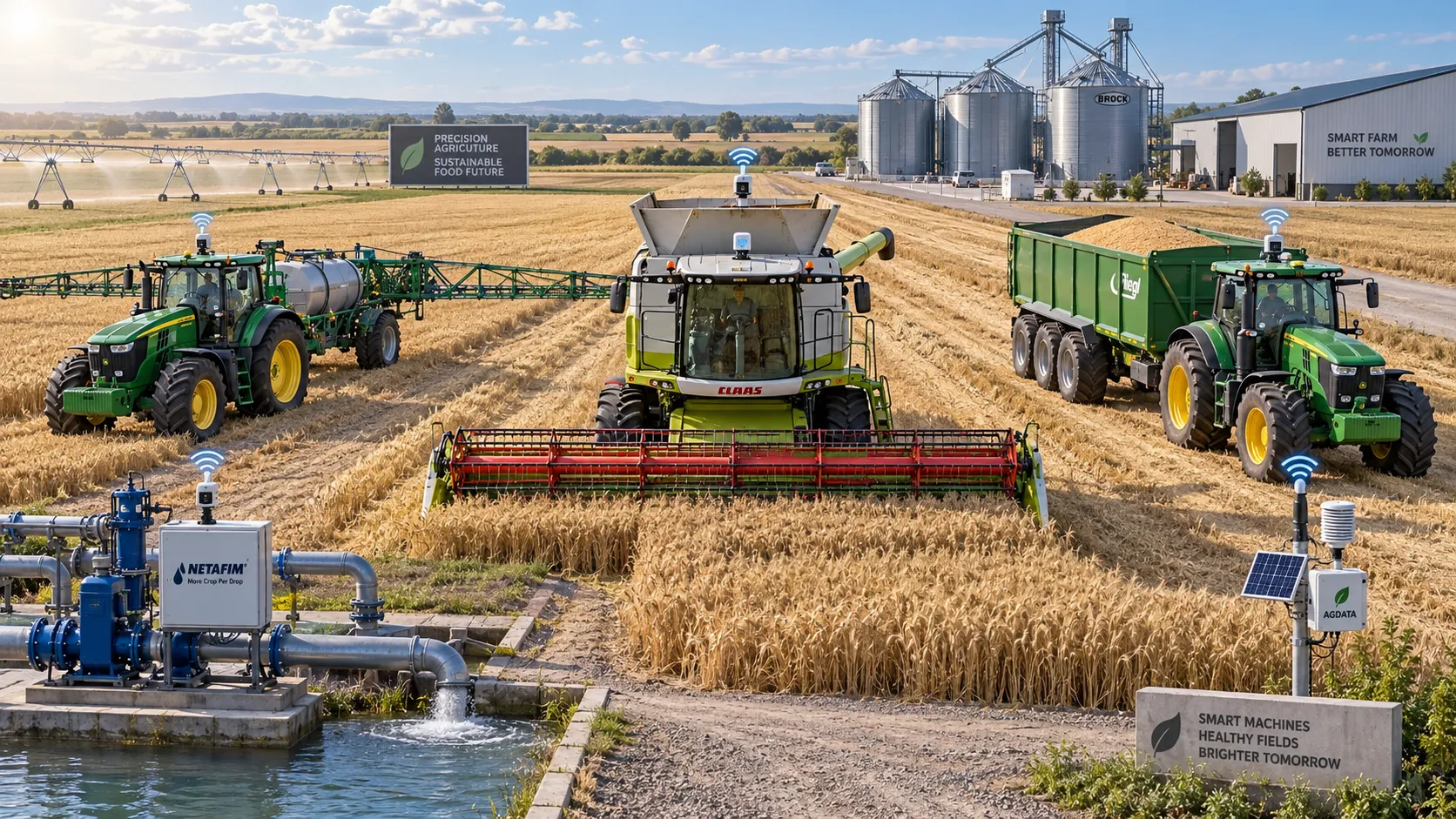
How Large-Scale Farm Telematics Cuts Downtime Across Mixed Fleets
Large-scale farm equipment telematics cuts mixed-fleet downtime with real-time alerts, smarter maintenance, and stronger operational control. Learn how to protect critical farm workflows.
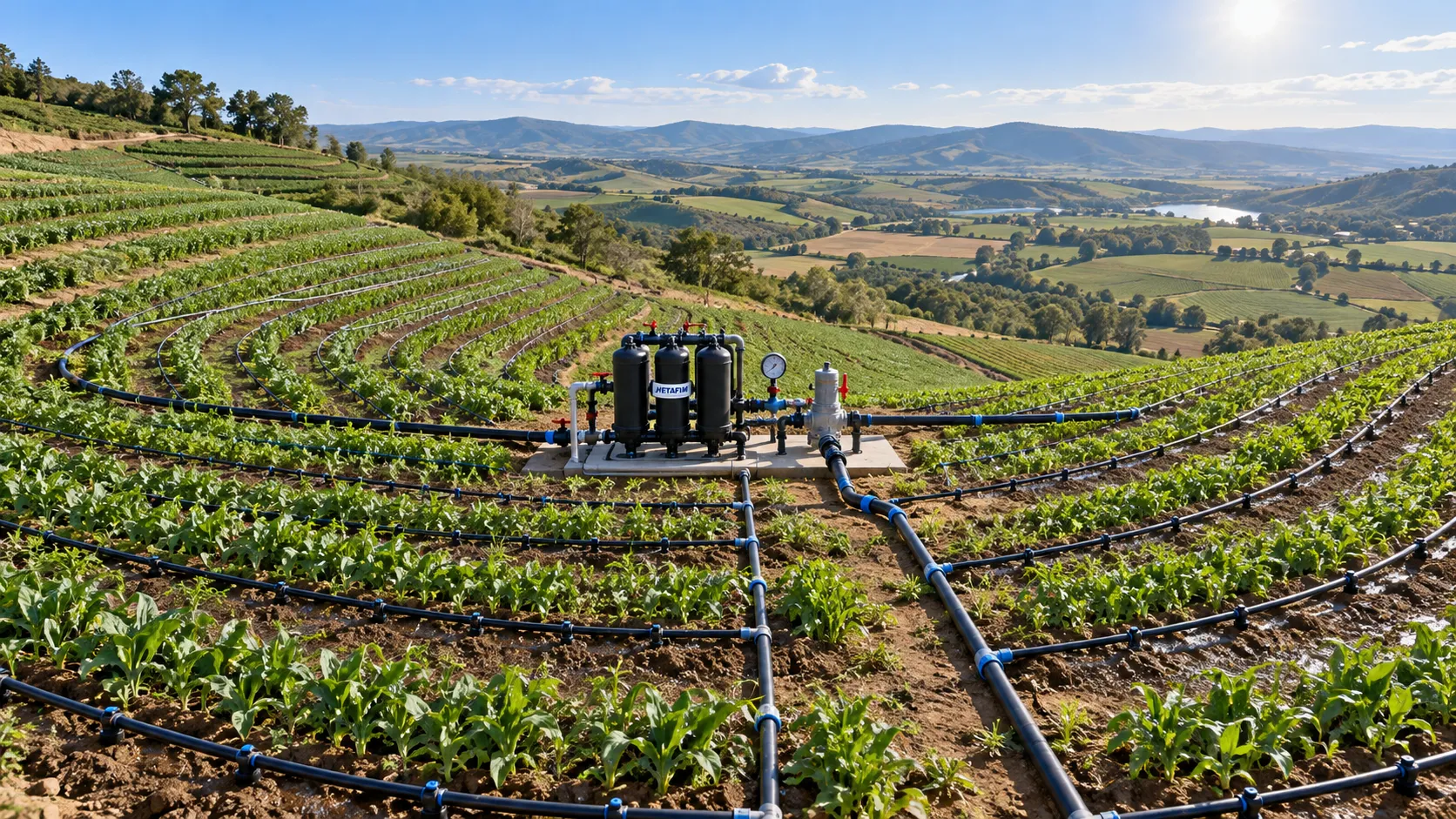
How to Size Low-Pressure Water-Saving Irrigation Systems for Uneven Fields
Low pressure water-saving irrigation systems for uneven fields: learn zoning, pressure mapping, pipe sizing, and pump selection to improve uniformity and reduce water waste.
Farm Machinery Sourcing: How to Vet Suppliers, Specs, and Lifecycle Costs
Farm machinery information for sourcing: learn to vet suppliers, compare specifications, control lifecycle costs, and secure reliable uptime for smarter equipment purchases.
Can hybrid propulsion systems reduce fuel use in farm machinery?
Hybrid propulsion systems for agricultural machinery can cut fuel use and boost productivity. Explore savings potential, key trade-offs, and smart investment factors.
What to compare in integrated seeding combinations for heavy soils
Compare integrated seeding combinations for heavy soils: depth control, residue flow, consolidation, traction, and field capacity for more uniform crop establishment.
When an integrated seeding combination improves field efficiency
Integrated seeding combination improves field efficiency, protects planting windows, and balances speed with seedbed quality, tractor capacity, and reliable establishment.
Related News
- 00
0000-00
What maintenance challenges come with hybrid agricultural machines? - 00
0000-00
Can hybrid propulsion systems reduce fuel use in farm machinery? - 00
0000-00
How Does Farm Mechanization Affect Food Security in Developing Regions? - 00
0000-00
Agricultural Technology Insights by Region: Where Adoption Is Growing Fastest - 00
0000-00
How Climate-Smart Agriculture Technology Improves Yield, Soil Health, and Risk Resilience
Popular Tags
Prof. Marcus Chen
Weekly Insights
Stay ahead with our curated technology reports delivered every Monday.