
How IoT Smart Irrigation Networks Help Farms Cut Water Use and Improve Yield
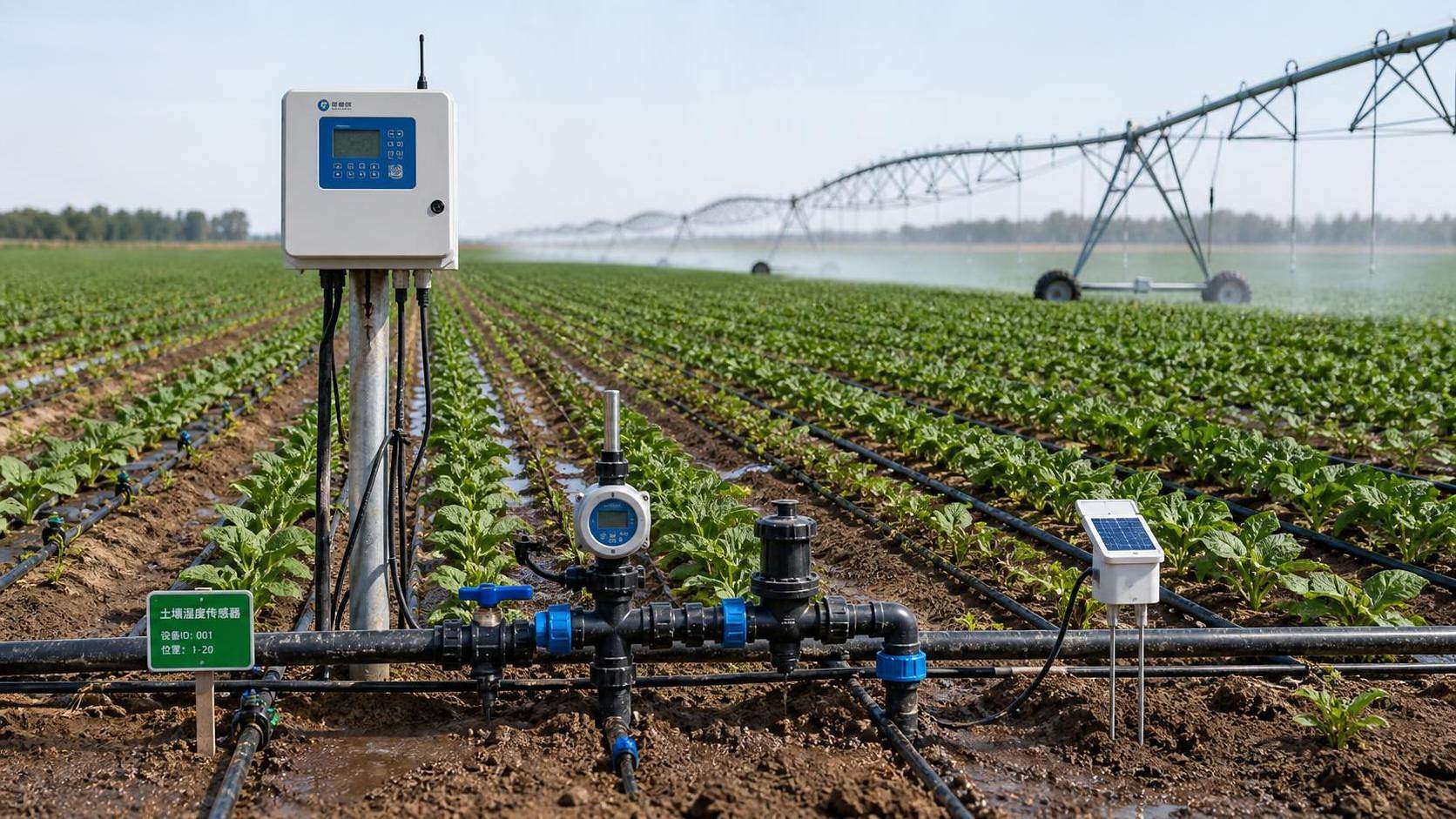




For project managers and engineering leads, IoT smart irrigation networks are no longer a pilot-stage concept reserved for high-tech demonstration farms. They are increasingly a working infrastructure layer for large-scale operations under pressure to reduce water use, control labor dependency, and protect yield consistency. In regions facing aquifer stress, rising pumping costs, volatile weather, and tighter sustainability reporting, irrigation can no longer be managed as a fixed calendar task. It has to be managed as a variable, measurable, and coordinated system.
That is where connected irrigation architecture changes the decision framework. Instead of treating water application as a routine based on habit, operators can link soil moisture probes, weather inputs, flow meters, pressure monitors, pump stations, valve control, and field-level scheduling into one network. The practical value is not that the farm becomes “smart” in a generic sense. The value is that water moves only when, where, and in the quantity the crop and field conditions actually justify.
For engineering teams, the core question is usually not whether the technology exists. It is whether an IoT-based system can perform reliably across dispersed fields, mixed irrigation assets, and uneven digital maturity. The answer depends less on software branding and more on system design discipline, sensor placement logic, hydraulic compatibility, communications reliability, and a realistic operating model after commissioning.
Why irrigation networks are shifting from equipment projects to control projects
Many farms still operate irrigation in fragments: pumps are managed separately, weather data comes from a generic source, field scouting is manual, valve opening follows fixed blocks, and water use is estimated rather than verified. This arrangement can function in stable seasons, but it breaks down quickly when weather swings, labor is stretched, or water allocation becomes constrained.
IoT smart irrigation networks matter because they convert irrigation from a hardware-centered setup into a control-centered system. That shift is significant for project leaders. Traditional upgrades often focused on replacing sprinklers, pivots, or drip lines. Connected irrigation adds a second layer: continuous feedback.
In practical terms, that feedback loop allows teams to answer operational questions that were previously handled by judgment alone:
- Is water reaching the intended zone at the expected pressure and flow?
- Are different soil types in the same block drying at the same rate?
- Is the current irrigation plan still valid after unexpected rain, heat, or wind?
- Is the crop under water stress, or is the field being over-irrigated to stay “safe”?
- Are pumps and valves operating efficiently, or is the system losing water and energy through hidden faults?
When these questions are measured rather than assumed, farms can usually reduce unnecessary application before they make any dramatic infrastructure expansion. In many operations, water waste comes less from catastrophic failure than from small routine inefficiencies repeated across an entire season.
How water savings actually happen in the field
Water reduction claims around digital irrigation are often overstated when presented in abstract terms. On a real farm, savings usually come from a combination of smaller control improvements rather than one single algorithm.
The first source of savings is timing precision. If irrigation starts based on verified root-zone conditions instead of a fixed interval, the system avoids many unnecessary cycles. This matters especially in fields where rainfall distribution is uneven, infiltration varies, or evaporation losses are high.
The second source is spatial precision. A connected network can reveal that not all sections of a field need the same application depth. This is particularly relevant where topography, soil texture, drainage patterns, or crop vigor vary across management zones. Without networked monitoring, operators often irrigate for the driest area and overwater the rest.
The third source is fault detection. Pressure drops, blocked emitters, leaking laterals, malfunctioning valves, and underperforming pumps all distort water delivery. A farm may believe it is applying a planned volume while the actual distribution is uneven. Flow and pressure monitoring can expose these losses early enough to prevent both water waste and yield damage.
The fourth source is weather responsiveness. Forecast-linked scheduling is not just about cancelling irrigation before rain. It also helps avoid poorly timed applications under high wind or peak evaporative demand conditions where water delivery efficiency falls.
For project teams, this means the business case should not be built on a generic promise of “saving water with sensors.” It should be built on identifiable operational mechanisms: fewer unnecessary cycles, better zone-level matching, lower distribution loss, and faster response to field events.
Why yield improvement is usually a stability story, not a miracle story
Yield improvement from IoT smart irrigation networks is often misunderstood. The strongest outcome is not always a dramatic jump in top-end production. More often, it is better yield stability across variable conditions.
That distinction matters when evaluating return on investment. Over-irrigation can reduce oxygen in the root zone, promote disease pressure, and wash nutrients below active uptake zones. Under-irrigation at key growth stages can depress crop performance even if the seasonal water total appears adequate. The issue is less the total volume than the timing and distribution relative to crop demand.
Connected systems help reduce these timing errors. They can support more consistent soil moisture bands, more reliable irrigation at sensitive growth stages, and better coordination between irrigation and fertigation. In high-value crops, this often affects not only yield quantity but also quality uniformity. In broadacre systems, the benefit may appear as reduced stress pockets, more consistent stand performance, and fewer avoidable yield penalties during hot or dry periods.
From a project perspective, this is important because the KPI framework should not rely only on seasonal water reduction. A network that cuts water but increases crop stress is a failed project. The right evaluation combines water productivity, yield stability, labor efficiency, and operating reliability.
Where these networks deliver the most value
Not every farm captures the same benefit from connected irrigation. The strongest use cases tend to share operational complexity or resource pressure.
Large farms with multiple irrigation blocks gain from centralized visibility. If decision-making currently depends on phone calls, manual checks, and scattered records, networked control can materially improve coordination.
Water-constrained regions are another obvious fit. Where withdrawal limits, allocation schedules, or rising pumping costs already shape farm strategy, even modest efficiency gains can have high economic value.
Farms with variable soils or topography also benefit because blanket irrigation is inherently inefficient in those environments. A network does not eliminate physical variability, but it makes it manageable.
Remote fields with limited labor availability are a further strong case. In these settings, remote alerts and automation reduce the operational lag between fault occurrence and corrective action.
High-value crop production often justifies deeper instrumentation because quality losses from irrigation error can be expensive. By contrast, lower-margin broadacre projects usually need a more selective deployment model, focusing on critical zones and practical automation rather than maximum data density.
The implementation challenge is not software, but integration
Many irrigation digitization projects underperform because the planning team underestimates integration complexity. Buying sensors and a dashboard is the easy part. Making a farm-scale network work across legacy equipment, communications gaps, electrical constraints, and field conditions is the difficult part.
Project managers should pay close attention to five integration layers.
Hydraulic compatibility. Automated control only works if the physical system can respond predictably. Pressure instability, poorly balanced zones, or aging pipe networks can undermine digital control from day one.
Communications architecture. Cellular coverage, radio range, gateway placement, power availability, and data transmission frequency all affect reliability. A theoretically strong platform can fail in practice if field connectivity is weak or intermittent.
Sensor strategy. More sensors do not automatically produce better decisions. Placement has to reflect root depth, soil variability, crop stage, and irrigation design. Poorly located probes often create misleading confidence.
Control logic. Teams need to decide how much autonomy the system should have. In some operations, automated irrigation triggers are acceptable. In others, decision support with manual approval is more realistic, especially during early deployment.
Operational ownership. Someone must be responsible for calibration, alert review, maintenance, and seasonal adjustment. Systems often decline after installation because no one owns the agronomic-control layer once the vendor leaves the site.
This is why successful projects usually begin with a mapped operating model, not a product shortlist.
Common mistakes that inflate cost or weaken performance
One recurring mistake is trying to digitize every field equally from the start. A staged rollout is often more effective. Farms usually learn more from instrumenting representative zones well than from deploying shallow coverage everywhere.
Another mistake is selecting platforms based mainly on dashboard appearance. The critical issues are interoperability, control reliability, data quality, and support capacity. If a system cannot integrate with existing pumps, valves, variable-rate capabilities, or farm management workflows, visual simplicity offers little value.
A third mistake is treating weather data as a substitute for field measurement. Weather stations and evapotranspiration models are useful, but they do not replace site-specific confirmation of soil and system conditions. Good irrigation decisions usually require both atmospheric and in-field data.
There is also a frequent assumption that automation will automatically reduce labor. In reality, labor shifts rather than disappears. Manual switching and scouting may decline, but monitoring, maintenance, troubleshooting, and data interpretation increase. Farms that do not plan this transition often become frustrated with a system that was supposed to “run itself.”
Finally, some projects pursue water reduction targets too aggressively in the first season. If thresholds are tightened before the team understands crop response, the farm can create avoidable stress. A measured optimization path is safer than an immediate push for maximum savings.
How project leaders should evaluate a smart irrigation proposal
When reviewing a proposal, the most useful question is not “How advanced is the system?” but “What operational problem does this architecture solve better than our current setup?”
A credible evaluation usually includes:
- Baseline water use by block or crop zone
- Current irrigation scheduling method and its known weaknesses
- Existing equipment condition and retrofit feasibility
- Communications and power constraints by field location
- Expected maintenance load for sensors, controllers, and valves
- Data ownership, platform access, and export compatibility
- Alert management process and escalation responsibility
- Measured KPIs for water, yield, energy, uptime, and labor response
It is also worth testing whether the supplier understands agriculture as an operating system rather than as a device market. Vendors with strong electronics capabilities but weak agronomic and field-service understanding often struggle once conditions move beyond controlled demonstrations.
What to watch as the market matures
The direction of travel is clear: connected irrigation is moving toward more integrated decision systems, not standalone hardware layers. Over time, project teams should expect tighter links between irrigation control, weather intelligence, satellite or drone observation, fertigation management, and whole-farm resource planning.
That said, not all market offerings are equally mature. Interoperability remains a live issue in many deployments. Data standards vary, retrofit quality differs by supplier, and support models are inconsistent across regions. For cross-border procurement or large farm groups, this creates a practical sourcing question: whether to standardize on one ecosystem or maintain a more open architecture with potentially higher integration effort.
There is also growing pressure from sustainability frameworks and water governance trends, although specific reporting or compliance requirements vary significantly by country and basin. Where water accountability is tightening, connected networks may provide not only operational value but also defensible records of application, efficiency, and system performance. Any compliance claims should be checked locally and treated as jurisdiction-specific rather than universal.
A good irrigation network is a management system, not a gadget layer
For project managers and engineering leads, the most useful way to view IoT smart irrigation networks is not as a technology purchase but as a field control project with agronomic consequences. Their ability to cut water use and improve yield depends on whether they are embedded into daily operating decisions, not just installed on top of existing routines.
When designed well, these networks help farms move from reactive irrigation to managed irrigation. That shift can lower waste, expose hidden system losses, improve timing, and protect crop performance under increasingly unstable conditions. The farms that gain the most are usually not the ones chasing novelty. They are the ones using connected infrastructure to make irrigation measurable, accountable, and adaptable at scale.
In the current Agriculture 4.0 environment, that is the real advantage: not more data for its own sake, but better control over one of the farm’s most constrained and expensive resources.
Related News
How to Evaluate Precision Fertilization System Suppliers for Farm-Scale Deployment
Precision fertilization systems suppliers: learn how to compare accuracy, integration, uptime, service, and total cost for confident farm-scale deployment.
ISOBUS for Smart Agriculture: How It Connects Tractors, Implements, and Farm Data
ISOBUS for smart agriculture connects tractors, implements, terminals, and farm data—helping growers improve precision, documentation, and smarter field decisions.
Automated Water-Saving Irrigation: How to Cut Water Use Without Reducing Crop Yields
Automated water-saving irrigation helps farms cut water use, protect crop yields, improve scheduling, and gain reliable control with sensors, flow monitoring, and smart zones.
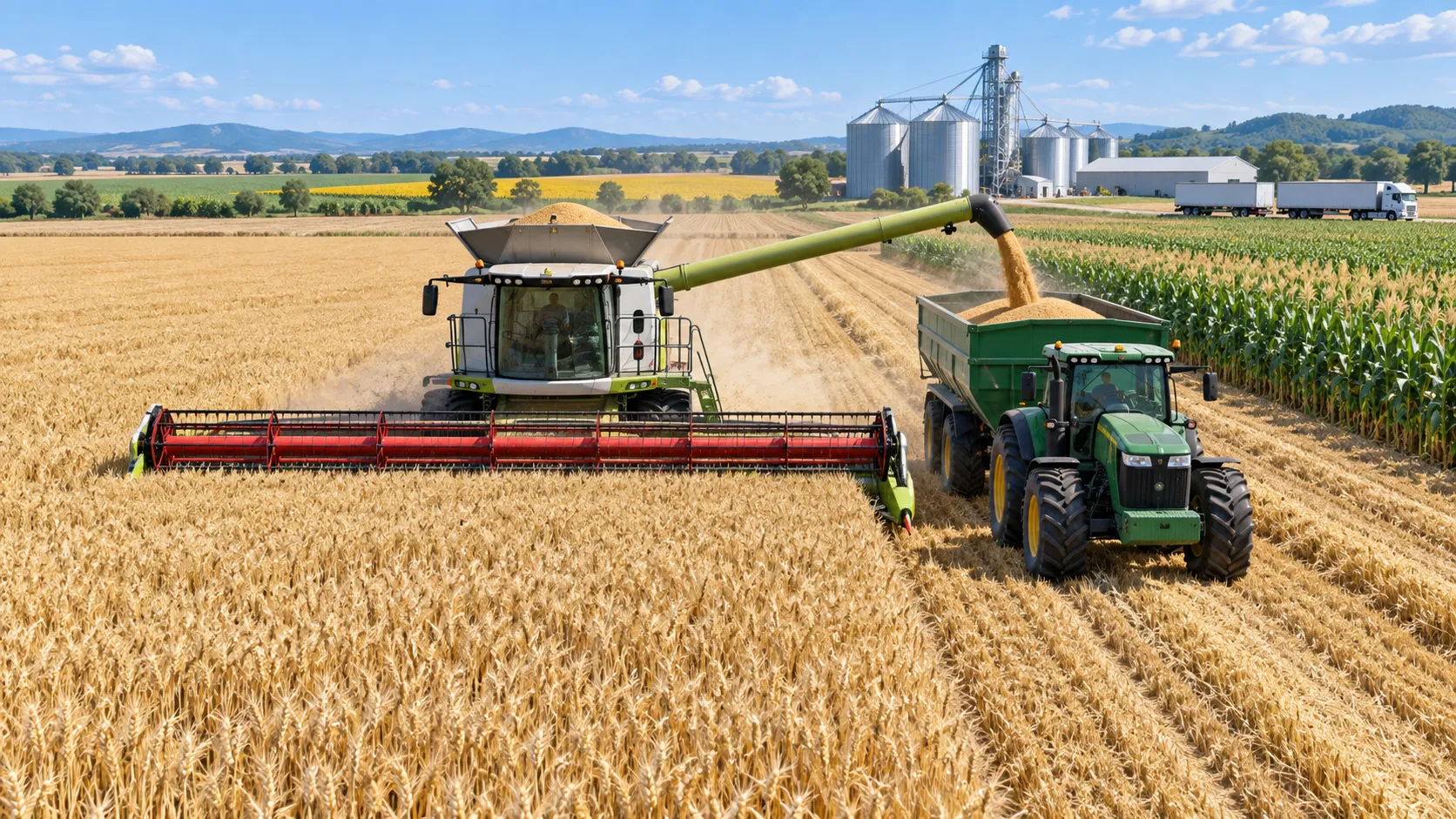
Selecting Grain Farm Equipment by Acreage, Crop Mix, and Harvest Window
Agricultural equipment selection for grain farming: match machinery to acreage, crop mix, and harvest windows to improve uptime, efficiency, and returns.
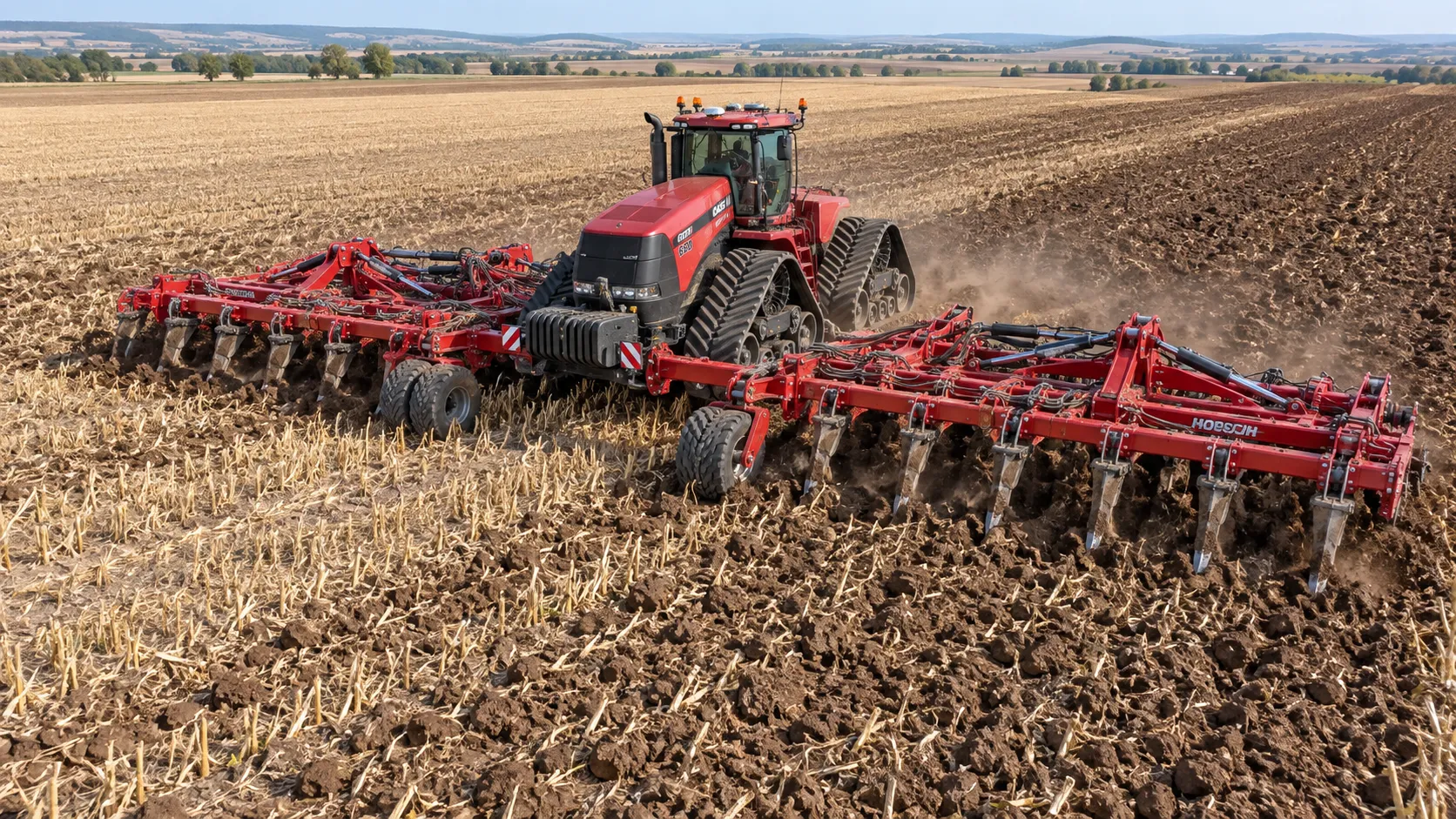
How to Select Heavy-Duty Farm Implements for High-Acreage, High-Horsepower Operations
Heavy duty farm implements: learn how to match draft, hydraulics, hitch capacity, frame strength, and field conditions for reliable high-acreage performance.
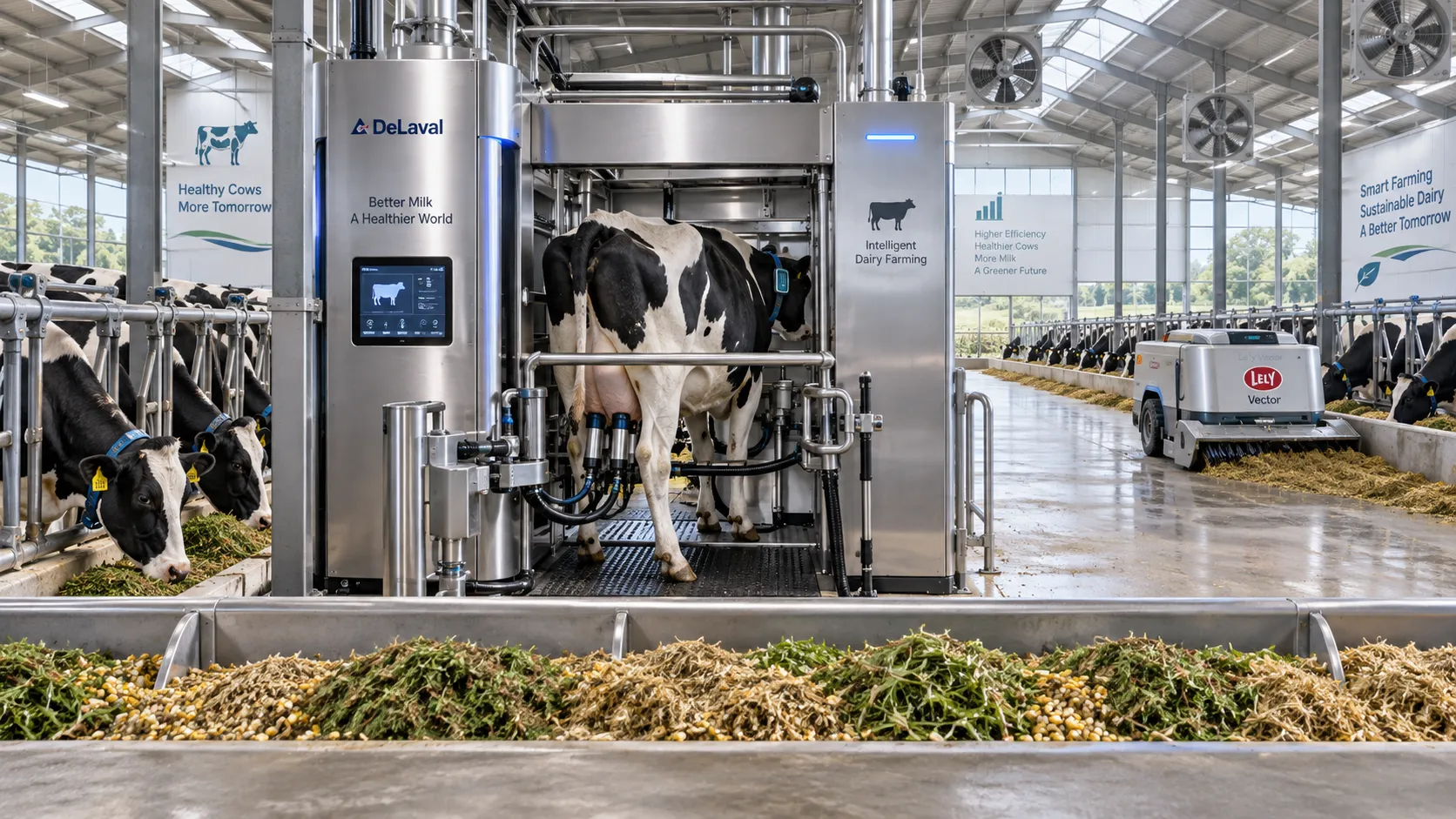
Smart Farming Technology for Dairy Farms: Where Automation Delivers Measurable ROI
Smart farming technology for dairy farms delivers measurable ROI through automation, precision feeding, health monitoring, and data-driven cost control.
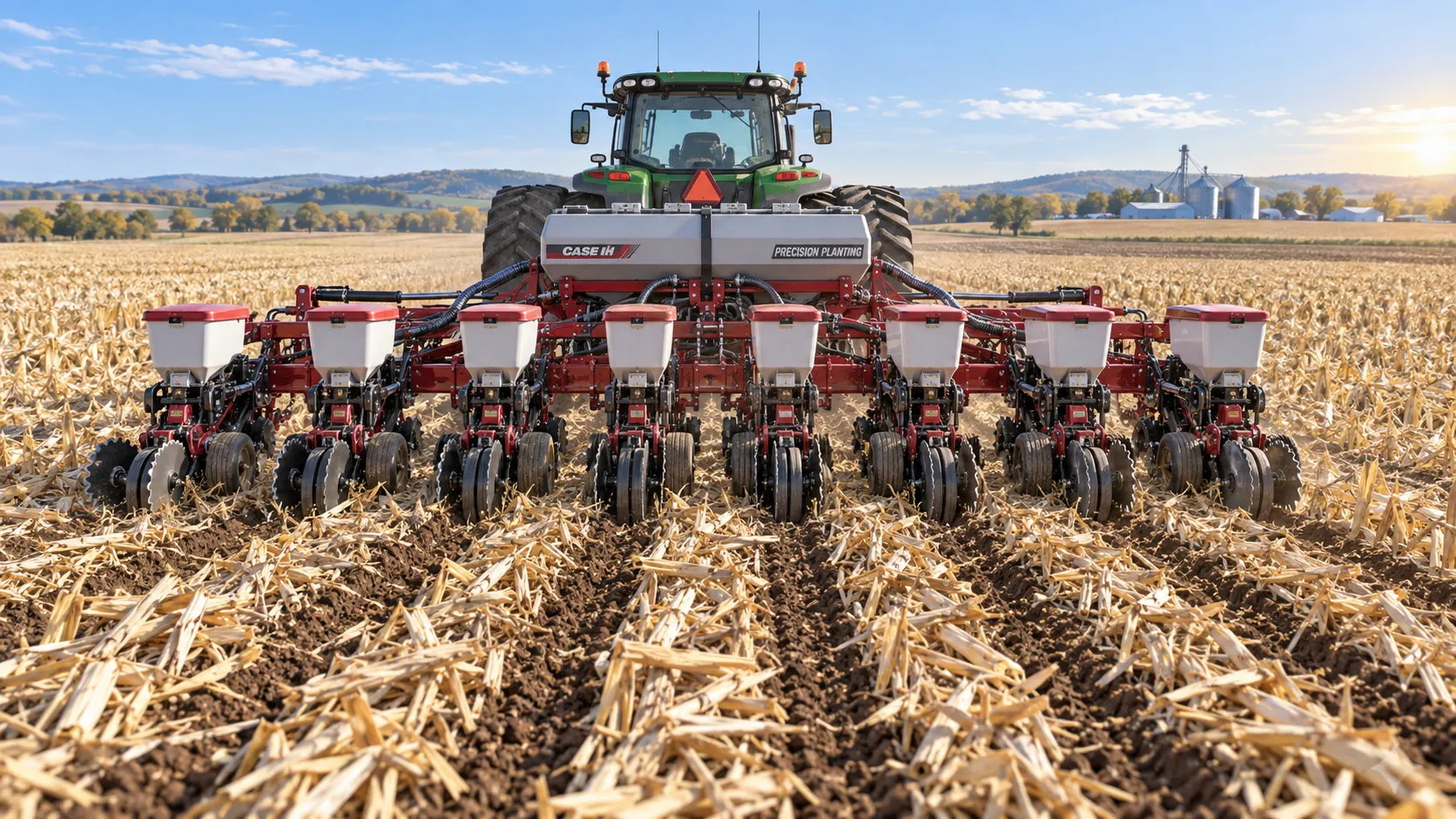
How to Select a Heavy-Duty Seeder for Large Acreage and High-Residue Fields
Heavy duty seeders for large acreage: compare residue handling, depth control, downforce, metering accuracy, and precision features to select the right model.
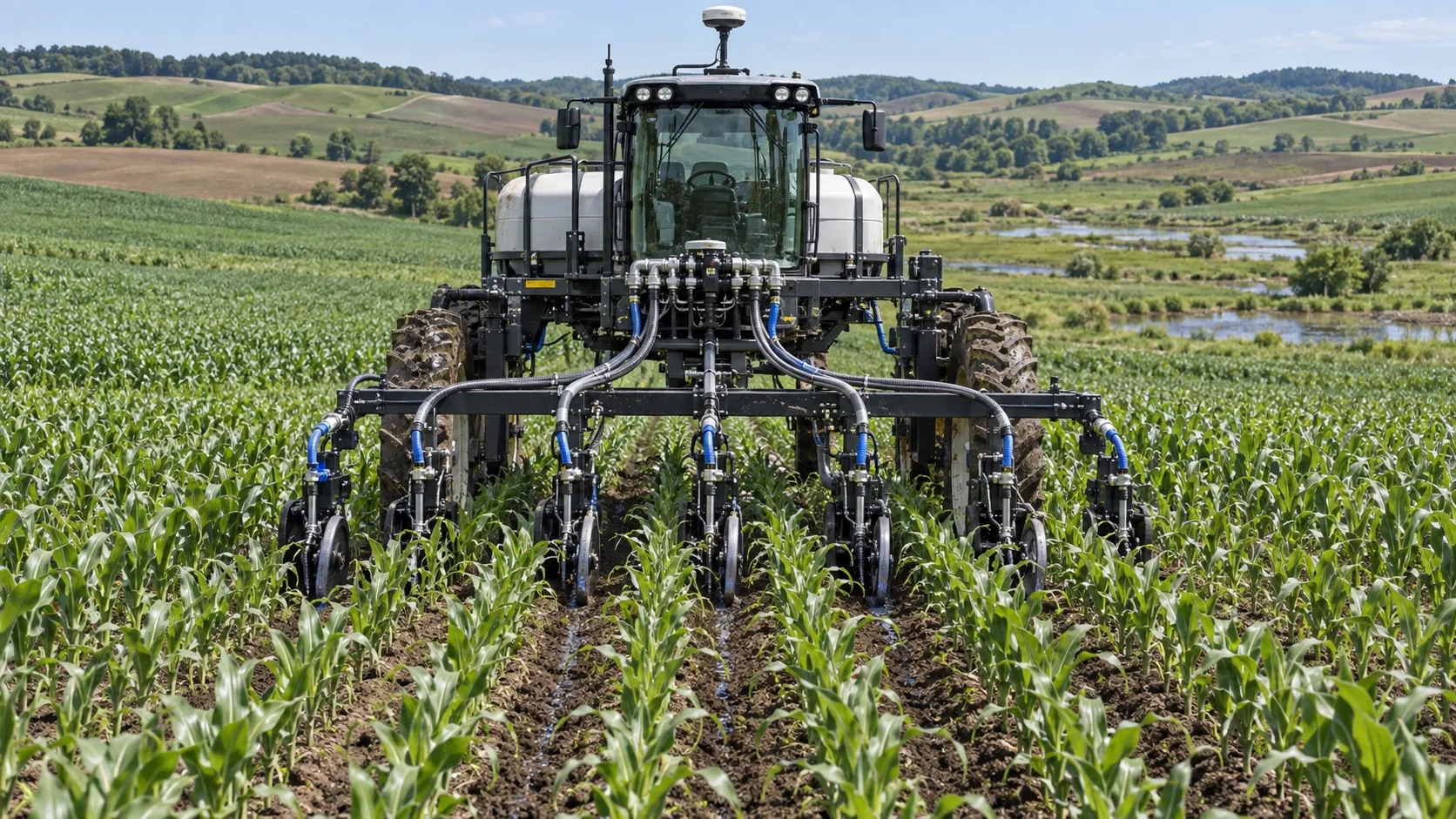
How to Select a Precision Fertilization System for Variable Corn Field Conditions
Precision fertilization systems for corn farming: learn how to match data, placement, control accuracy, and ROI to variable field conditions for better results.
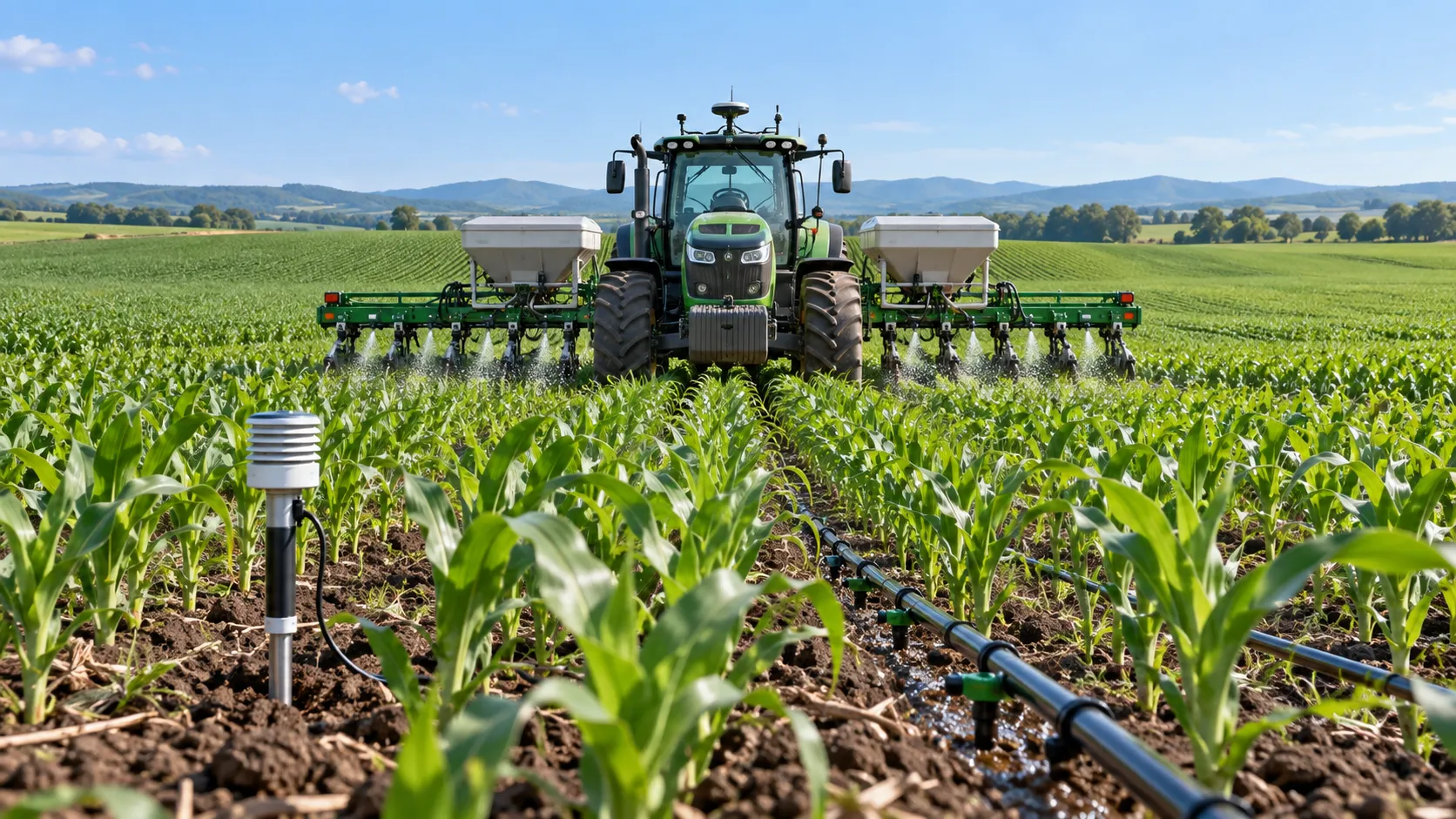
Selecting Precision Farming Products by Application: Field Conditions, Crops, and ROI
Application-based product selection for precision farming: match technology to field conditions, crops, machinery, and ROI for smarter, reliable farm investments.
Related News
- 00
0000-00
Automated Water-Saving Irrigation: How to Cut Water Use Without Reducing Crop Yields - 00
0000-00
How to Evaluate Drip Irrigation System Manufacturers for Large Farm Projects - 00
0000-00
Wireless Agricultural Automation for Remote Irrigation and Field Monitoring - 00
0000-00
Designing Water-Saving Drip Irrigation Systems for High-Value Orchards - 00
0000-00
How to Choose Irrigation Solutions for Arid Regions Based on Water Source and Crop Needs
Popular Tags
Hydrological Resource Strategist
Weekly Insights
Stay ahead with our curated technology reports delivered every Monday.