
CVT Transmissions Price Explained: What Drives Cost in Agricultural Machinery?
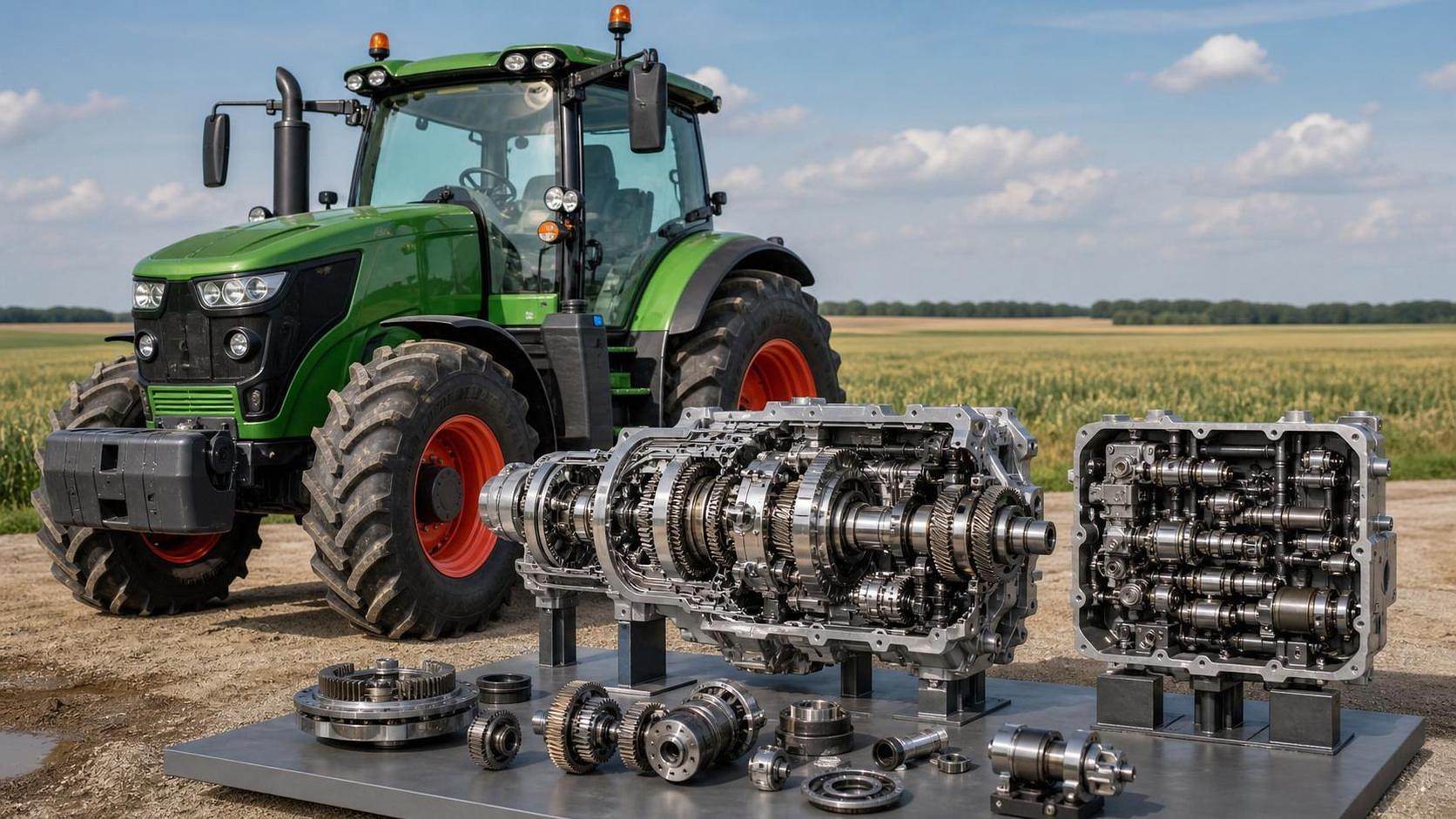




CVT Transmissions Price Explained: What Drives Cost in Agricultural Machinery?
For farm equipment sourcing, CVT transmissions price is never just a parts question.
The transmission sits at the center of power delivery, fuel efficiency, operator comfort, and digital machine control.
That means pricing reflects engineering depth, not only assembly cost.
In agricultural machinery, especially tractors and heavy-duty field units, buyers need to read cost through a wider lens.
A lower upfront quote can still become a higher ownership burden.
A higher initial CVT transmissions price may deliver stronger productivity over long operating cycles.
The real task is separating headline price from working value.
Why CVT Transmissions Price Varies So Much
At first glance, two machines may look similar on paper.
Yet their CVT transmissions price can differ sharply.
The reason is that agricultural CVT systems combine mechanical, hydraulic, and electronic layers into one coordinated drive package.
Each layer adds cost depending on duty demands and system sophistication.
- Torque handling capacity for heavy tillage, hauling, or harvesting support
- Hydro-mechanical design quality and power split efficiency
- Electronic control precision for speed matching and load response
- Integration with hydraulics, PTO, and guidance systems
- Durability targets under long seasonal workloads
- Support network coverage and parts logistics
So when reviewing CVT transmissions price, the gearbox is only one line in a much bigger equation.
Core Engineering Factors Behind CVT Transmissions Price
1. Torque Capacity and Machine Class
One of the biggest cost drivers is torque rating.
A CVT built for mid-range utility tractors is very different from one designed for large row-crop or heavy draft operations.
Higher torque loads require stronger gears, reinforced housings, more robust hydrostatic units, and stricter thermal management.
That pushes CVT transmissions price upward fast.
2. Hydro-Mechanical Architecture
Not all CVT platforms use the same internal architecture.
The ratio between mechanical power flow and hydraulic power flow changes efficiency, smoothness, and service life.
More advanced power split designs usually cost more to engineer and manufacture.
Still, they may lower fuel consumption during variable field loads.
3. Electronic Control Systems
A modern agricultural CVT depends heavily on software and sensors.
Controllers manage engine speed, travel speed, traction response, and shifting logic in real time.
The more refined the control strategy, the better the machine handles mixed field conditions.
That software value is often hidden inside CVT transmissions price.
4. Cooling and Reliability Design
Agricultural use is harsh, dusty, and highly cyclical.
CVT systems must survive long hours under fluctuating torque and temperature.
Larger oil circuits, stronger filtration, better seals, and more rigorous validation all raise cost.
But they also reduce failure risk during critical field windows.
Integration Costs That Buyers Often Miss
A major pricing mistake is evaluating the transmission as an isolated component.
In reality, CVT transmissions price is strongly affected by system integration.
Hydraulic and PTO Compatibility
Many field tasks need stable travel speed and stable implement output at the same time.
That requires close coordination between the CVT, hydraulics, and PTO control logic.
Machines with tighter integration often command higher prices because they protect field accuracy.
Precision Farming Interfaces
As precision agriculture expands, transmission behavior must match guidance, telemetry, and task automation systems.
This is especially relevant in seeding, spraying, and controlled traffic operations.
A higher CVT transmissions price may reflect stronger digital compatibility rather than simple hardware inflation.
Calibration and Commissioning
Some suppliers include calibration, field setup, or software tuning in the commercial package.
Others quote a lower base number, then add service costs later.
This creates misleading comparisons if purchase teams focus only on initial CVT transmissions price.
Brand, Supply Chain, and Aftermarket Effects
From recent market shifts, a clearer signal is that pricing now reflects resilience as much as product design.
Brand reputation, supply chain depth, and service response all matter.
Brand Premium
Established manufacturers often carry a premium CVT transmissions price.
Part of that premium comes from proven field records and broader dealer confidence.
Part also comes from better residual value in secondary equipment markets.
Parts Availability
Downtime during planting or harvest can erase any savings from a lower bid.
Buyers should test whether critical seals, valves, sensors, and control modules are regionally stocked.
A low CVT transmissions price with weak parts support is often false economy.
Service Capability
CVT maintenance and diagnostics need trained technicians and suitable tools.
In practical procurement work, service competency should be costed as part of the package.
That is especially true in remote or multi-country operating environments.
How to Compare CVT Transmissions Price the Right Way
Price comparison becomes more reliable when procurement teams use a structured screen.
This also means RFQs should ask for more than technical brochures.
Useful sourcing questions include the following:
- What operating load range was the CVT designed for?
- What service intervals apply under high-dust field conditions?
- Which failure parts are stocked locally?
- What software updates are included after delivery?
- How does the supplier support diagnostics during peak season?
When a Higher CVT Transmissions Price Makes Sense
Not every operation needs the highest-spec system.
But there are cases where paying more is commercially sound.
- High annual operating hours that magnify fuel and efficiency gains
- Mixed tasks requiring frequent speed adjustments
- Precision fieldwork where speed stability affects application accuracy
- Labor environments where simpler operation reduces training burden
- Regions where downtime costs are commercially severe
In these scenarios, a higher CVT transmissions price may protect output, reduce operator fatigue, and improve machine utilization.
That kind of return is hard to see in a simple purchase spreadsheet, but easy to feel in the field.
Final Procurement Takeaway
The best way to read CVT transmissions price is to treat it as a performance signal, not a standalone number.
Cost is shaped by torque class, control intelligence, integration depth, reliability design, aftermarket support, and resale confidence.
When these factors are measured together, price discussions become far more accurate.
For agricultural machinery sourcing, the strongest decisions usually come from lifecycle comparison, not lowest-entry negotiation.
A disciplined review of CVT transmissions price helps align machinery investment with field productivity, service continuity, and long-term asset value.
That is the basis for better buying decisions in an Agriculture 4.0 market shaped by efficiency, precision, and resilience.
Related News

How to Evaluate Dynamic Feedback Algorithm Suppliers for Precision Farming Systems
Dynamic feedback algorithms supplier evaluation guide for precision farming—compare validation, integration, safety, and pilots to choose with confidence.

How to Specify Combine Harvester Systems for High-Moisture Grain and Variable Field Conditions
Combine harvester systems for high-moisture grain: learn how to specify threshing, cleaning, headers, traction, and automation for reliable harvests in variable fields.

How to Compare Agricultural Equipment Platforms for Fleet Management and ROI
Agricultural equipment platform comparison: evaluate fleet data, maintenance, precision workflows, and ROI to choose a system that delivers measurable results.
Drip vs. Micro-Sprinkler Irrigation: Which System Fits Your Orchard?
Irrigation solution comparison for orchards: discover whether drip or micro-sprinklers best match your water, soil, roots, fertigation, and frost needs.
Orchard Water Management: Using Soil Moisture Data to Schedule Irrigation
Agricultural water management for orchards made practical: use soil moisture data to optimize irrigation timing, protect yield, reduce costs, and improve resilience.
Tractor Chassis Price: What Buyers Should Compare Beyond the Initial Quote
Tractor chassis price is only the start. Compare load capacity, compatibility, durability, and lifecycle costs to choose a reliable, high-value chassis.

How to Select Smart Irrigation Valves for Multi-Zone Water Management?
Intelligent irrigation systems valves: learn how to match smart valves with multi-zone flow, pressure, control, feedback, and communication needs for reliable water management.

Climate-Smart Farming for Drought: A Practical Plan for Protecting Yields
Climate-smart farming for drought: build smarter water budgets, protect critical crop stages, improve irrigation uniformity, and safeguard yields with practical field-proven strategies.

How Digital Agriculture Platforms Turn Field Data Into Better Input Decisions
Digital agriculture platforms turn field data into smarter fertilizer, water, seed, and equipment decisions—helping farms cut risk, improve margins, and scale sustainability.
Related News
- 00
0000-00
Fuel-Efficient Tractor Powertrain: Which Specs Matter Most for Total Operating Cost? - 00
0000-00
CVT Transmissions Price Explained: What Drives Cost in Agricultural Machinery? - 00
0000-00
Dedicated CVT Rail Link Signals New Export Execution Standard - 00
0000-00
TUV Rheinland Sets New ASIL-B Rule for CVT Systems - 00
0000-00
ANVISA Clears First China-Made Bio-Based CVT Fluid for Brazil
Popular Tags
Tractor Power Architect
Weekly Insights
Stay ahead with our curated technology reports delivered every Monday.