
ANVISA Extends Fast-Track Approval for Soil Moisture Sensors
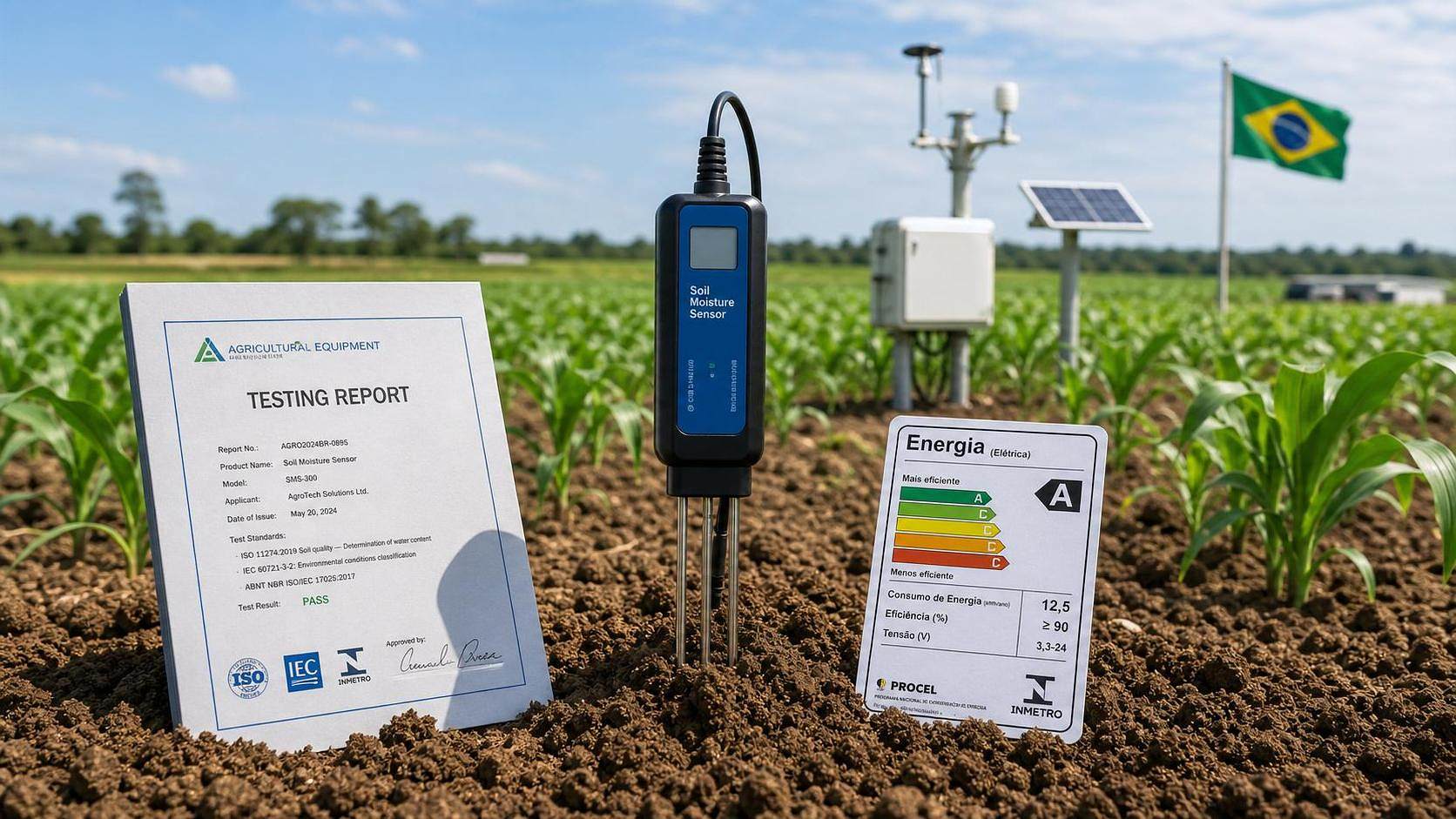




On July 9, 2026, Brazil’s ANVISA announced that the fast-track route under its sustainable agriculture sensor certification program will remain available through December 31, 2026 for Soil Moisture Sensors that meet ISO 11783-12:2025 and local energy labeling requirements. For manufacturers, exporters, testing providers, procurement teams, and channel partners serving the Brazilian market, the development is worth close attention because it links approval speed directly to technical compliance and to the origin of supporting laboratory reports.
What the extension confirms
According to the provided information, ANVISA extended the “sustainable agriculture sensor fast certification program” until December 31, 2026. Under this route, Soil Moisture Sensors that comply with ISO 11783-12:2025 and Brazil’s local energy label requirements can obtain approval within 5 working days. The fast-track channel is valid only when the supporting reports are issued by certification laboratories in 12 eligible countries, including China, Germany, and Japan.
Where the practical impact is likely to appear
Market-entry planning becomes more document-sensitive
From an industry perspective, manufacturers and exporters targeting Brazil may be affected first because the shorter review cycle is tied to two clear conditions: conformity with ISO 11783-12:2025 and fulfillment of local energy labeling requirements. In practical terms, the impact is likely to be felt in product readiness checks, technical file preparation, and pre-shipment compliance planning. What deserves closer attention is whether the certification path chosen by the company matches the laboratory eligibility requirement stated in the program.
Testing and certification workflows may become a gating factor
Certification-related companies and testing service providers may also be directly affected because the value of a test report now depends not only on technical content but also on whether it comes from a laboratory within the countries recognized for this fast-track route. Analysis shows that this may influence laboratory selection, report acceptance planning, and the sequence in which compliance work is arranged before submission.
Procurement and delivery schedules may need recalibration
Procurement teams, importers, and channel operators may need to reassess delivery assumptions for qualifying products. The published 5-working-day approval window can matter in tender timing, stocking plans, and customer delivery commitments. At the same time, observably, that benefit appears conditional rather than universal, so purchasing and logistics decisions may need to distinguish between products that clearly fit the route and those that do not.
What companies should watch now
Check technical alignment before relying on the shorter timeline
Analysis shows that companies should first verify whether the product documentation can demonstrate alignment with ISO 11783-12:2025 and with the applicable local energy labeling requirement referenced in the announcement. The key issue is not only technical performance, but whether the submission package is structured in a way that supports fast-track acceptance.
Review the origin and acceptance of laboratory reports
What deserves closer attention is the report source requirement. Businesses planning market access for Brazil should confirm early whether their existing testing partners fall within the eligible group of laboratories recognized through this channel. If not, the assumed approval advantage may not apply.
Keep contract and delivery language flexible
For exporters, distributors, and procurement teams, it is more appropriate to avoid treating the 5-working-day review period as an unconditional delivery promise. Until further execution details are observed in practice, contract milestones, shipment scheduling, and customer communication may need to leave room for document review outcomes and acceptance criteria.
Track follow-on guidance and market practice
The provided information confirms the extension and the main qualifying conditions, but it does not set out fuller execution detail. Observably, companies should continue monitoring how the program is referenced in regulatory communication, technical submissions, and commercial documents connected to the Brazilian market.
Why this reads as an execution signal
As an editorial observation, this update is more appropriately understood as an operational market-access signal than as a broad policy statement. The reason is that the announcement ties regulatory speed to concrete compliance elements: a named technical standard, a local labeling condition, and a restricted pool of acceptable laboratory reports. At the same time, it still warrants continued observation because the practical effect will depend on how consistently these conditions are applied across submissions and business transactions.
How to read the development at this stage
In summary, the ANVISA extension matters less as a headline about faster approval alone and more as a reminder that access to the faster route depends on preparation quality and accepted certification pathways. For the industry, the current development is best understood as a confirmed rule in effect through the end of 2026, combined with a need to watch how compliance documentation, laboratory eligibility, and delivery expectations are handled in actual execution.
Basis of this article
This article is based on the user-provided news title, event date, and event summary. For developments of this kind, relevant source categories typically include official regulator announcements, regulatory agency releases, trade or customs authority updates, industry association notices, standards organization documents, and reporting by authoritative sector media. A specific official source link was not provided in the input, so that point still requires follow-up verification. It remains necessary to monitor later details such as execution guidance, certification interpretation, changes in procurement or tender documents, industry feedback, and how companies implement the requirement in practice.
Related News

How to Evaluate Dynamic Feedback Algorithm Suppliers for Precision Farming Systems
Dynamic feedback algorithms supplier evaluation guide for precision farming—compare validation, integration, safety, and pilots to choose with confidence.

How to Specify Combine Harvester Systems for High-Moisture Grain and Variable Field Conditions
Combine harvester systems for high-moisture grain: learn how to specify threshing, cleaning, headers, traction, and automation for reliable harvests in variable fields.
How to Compare Agricultural Equipment Platforms for Fleet Management and ROI
Agricultural equipment platform comparison: evaluate fleet data, maintenance, precision workflows, and ROI to choose a system that delivers measurable results.
Drip vs. Micro-Sprinkler Irrigation: Which System Fits Your Orchard?
Irrigation solution comparison for orchards: discover whether drip or micro-sprinklers best match your water, soil, roots, fertigation, and frost needs.
Orchard Water Management: Using Soil Moisture Data to Schedule Irrigation
Agricultural water management for orchards made practical: use soil moisture data to optimize irrigation timing, protect yield, reduce costs, and improve resilience.

Tractor Chassis Price: What Buyers Should Compare Beyond the Initial Quote
Tractor chassis price is only the start. Compare load capacity, compatibility, durability, and lifecycle costs to choose a reliable, high-value chassis.
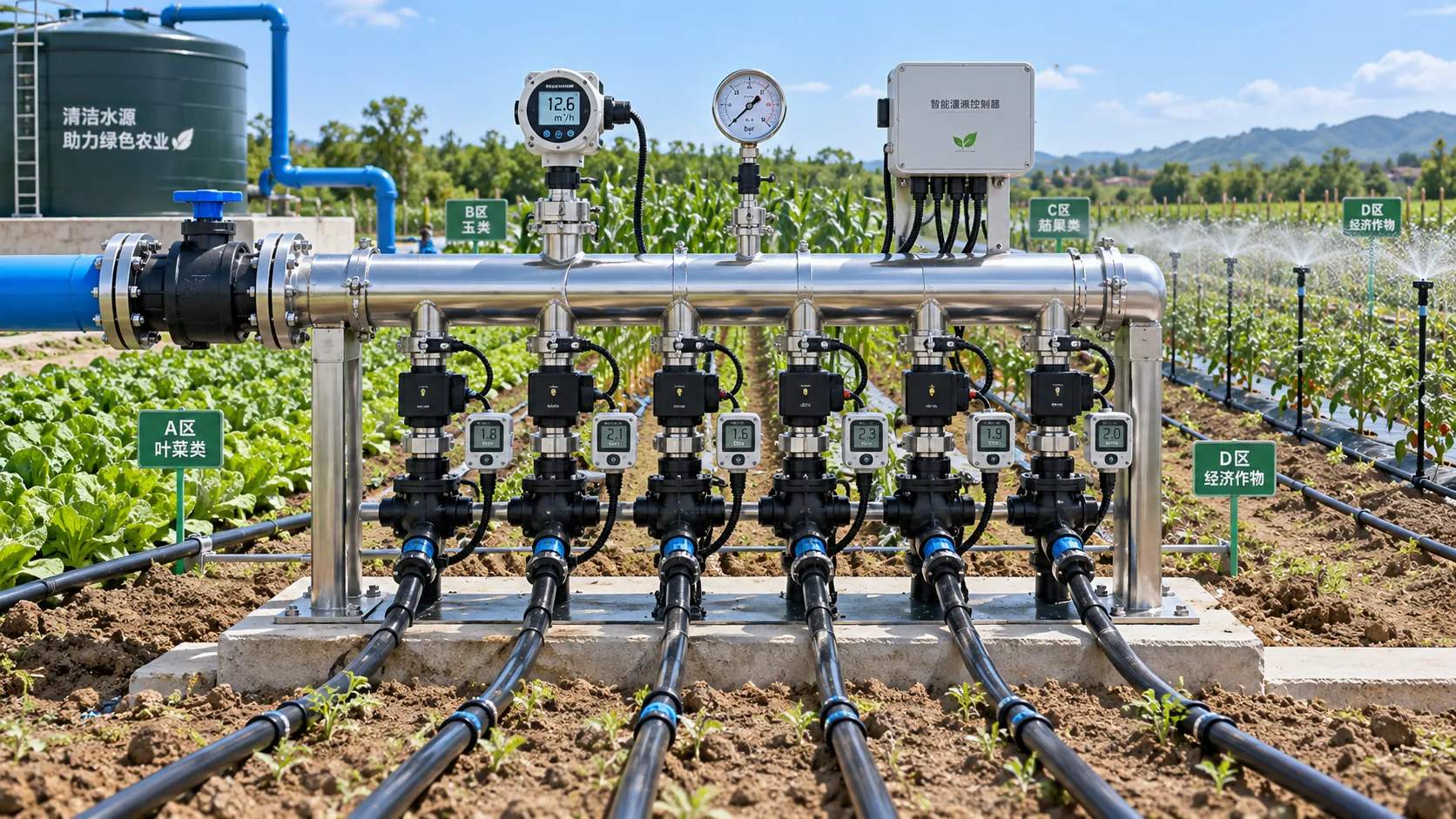
How to Select Smart Irrigation Valves for Multi-Zone Water Management?
Intelligent irrigation systems valves: learn how to match smart valves with multi-zone flow, pressure, control, feedback, and communication needs for reliable water management.
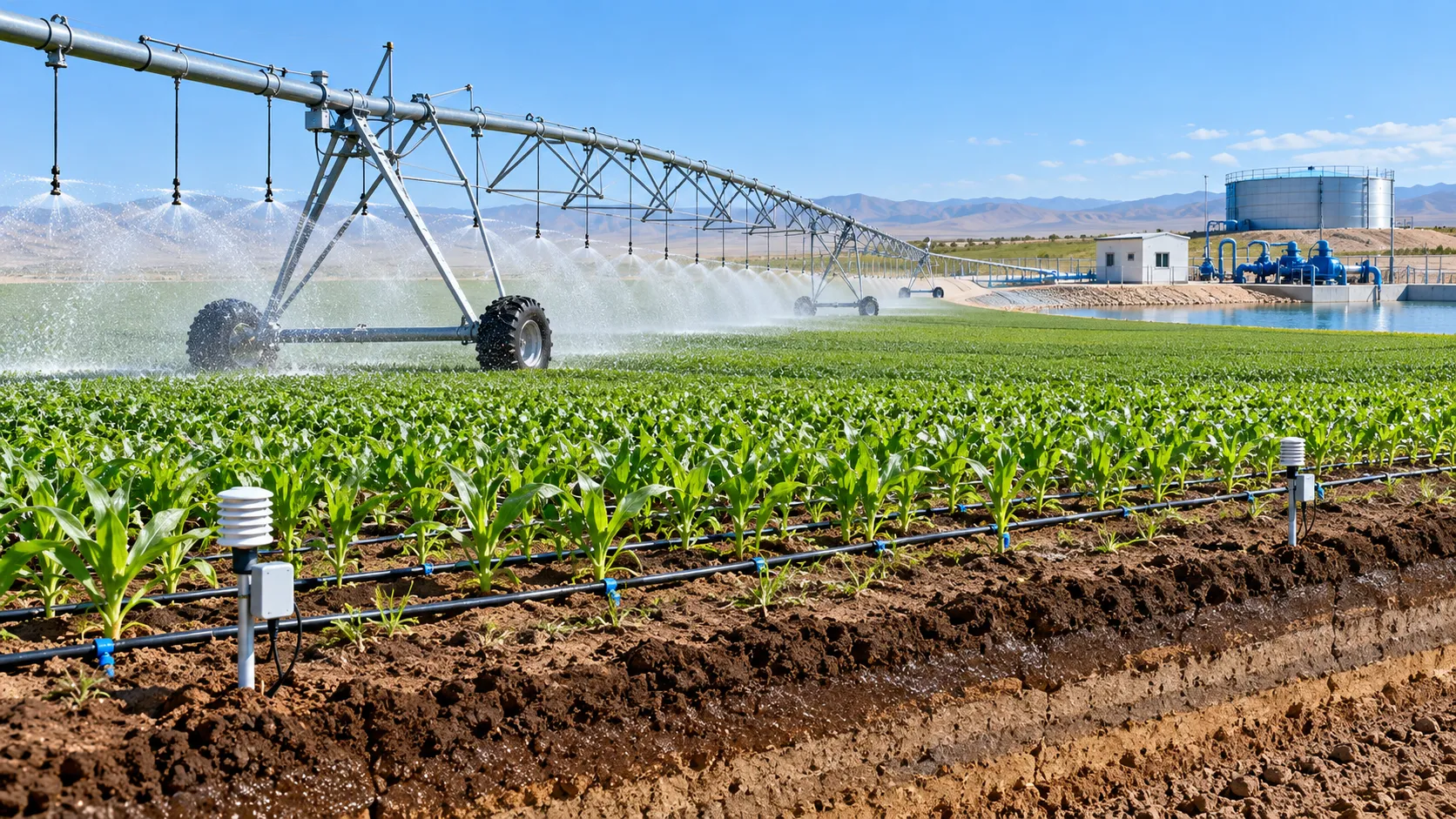
Climate-Smart Farming for Drought: A Practical Plan for Protecting Yields
Climate-smart farming for drought: build smarter water budgets, protect critical crop stages, improve irrigation uniformity, and safeguard yields with practical field-proven strategies.

How Digital Agriculture Platforms Turn Field Data Into Better Input Decisions
Digital agriculture platforms turn field data into smarter fertilizer, water, seed, and equipment decisions—helping farms cut risk, improve margins, and scale sustainability.
Related News
- 00
0000-00
Orchard Water Management: Using Soil Moisture Data to Schedule Irrigation - 00
0000-00
Climate-Smart Farming for Drought: A Practical Plan for Protecting Yields - 00
0000-00
Selecting Real-Time Soil Moisture Sensors for Irrigation Zone Control - 00
0000-00
How Does Climate-Smart Farming Reduce Water Use in Semi-Arid Areas? - 00
0000-00
USDA Rule Takes Effect: Dual FCC and NRCS Approval for Soil Moisture Sensors
Popular Tags
Hydrological Resource Strategist
Weekly Insights
Stay ahead with our curated technology reports delivered every Monday.