
WITC Closes With $213M Soil Moisture Sensor Buying Interest
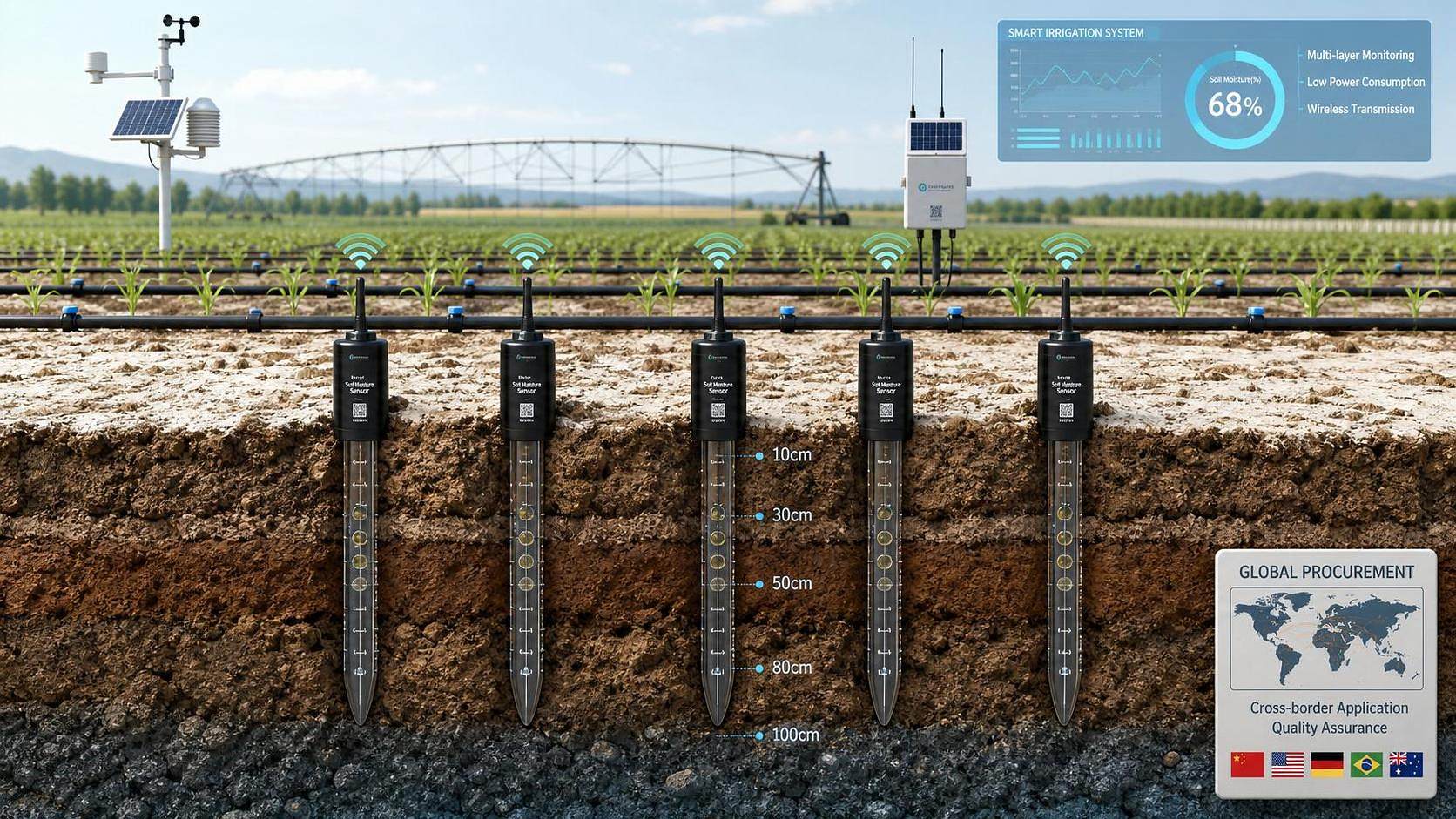




From March 30 to April 1, 2026, the World Irrigation Technology Conference and China International Irrigation Technology Expo (WITC 2026) closed in Beijing with reported on-site purchase intentions of US$213 million for soil moisture sensors. What deserves closer attention is not only the transaction signal itself, but also the concurrent release of a white paper on international mutual recognition for soil moisture sensors under an ISO/IEC 17065 framework, which points to a stronger compliance and certification dimension for manufacturers, exporters, buyers, testing-related service providers, and delivery planning across cross-border procurement.
What the event confirmed
According to the event information, the soil moisture sensor category recorded on-site purchase intentions totaling US$213 million. Of that demand, 67% came from buyers in the Middle East, Australia, and the U.S. state of California. The demand focus was on multilayer profile sensing, LoRaWAN low-power networking, and salt-alkali resistant calibrated models. During the same event, a white paper on international mutual recognition for soil moisture sensors was released under an ISO/IEC 17065 framework.
Where the compliance signal may start to matter
Technical suppliers face a narrower documentation threshold
Analysis shows that manufacturers and export-oriented suppliers may be affected first because buyer interest is already concentrated in specific product capabilities rather than broad sensor demand. In practical terms, this can shift attention toward whether product files, calibration descriptions, model specifications, and conformity-related materials are organized in a way that can support procurement review and certification communication, especially where multilayer sensing, LoRaWAN networking, and salt-alkali calibration are involved.
Buyers and procurement teams may tighten bid and qualification review
From an industry perspective, procurement parties are likely to pay closer attention to whether supplier qualification materials match the technical features being requested. The white paper’s reference to an ISO/IEC 17065 framework suggests that certification and recognition language may become more visible in sourcing discussions, tender documentation, and supplier screening, even if the detailed execution path is not yet confirmed in the input information.
Testing and certification-related service providers may see earlier engagement
Observably, testing bodies and certification-related service providers could become involved earlier in the transaction cycle if mutual recognition becomes a practical reference point in cross-border deals. The likely impact is not a confirmed new rule outcome, but a stronger need for alignment between test reports, calibration records, product claims, and the certification language used in commercial and export documents.
Delivery and after-sales planning may become more specification-driven
For supply chain service firms and after-sales providers, the demand concentration around networking capability and salt-alkali calibration indicates that delivery may depend more heavily on model-specific configuration, traceability records, and post-delivery technical support materials. This matters because compliance expectations in international procurement often surface not only at the ordering stage, but also at acceptance, installation, and service follow-up.
What companies should monitor next
Watch how the white paper is referenced in market practice
It is more appropriate to understand the white paper as an execution signal to monitor rather than a fully settled market rule. Companies should therefore watch whether buyers, distributors, or project documents begin to cite its terminology when setting qualification requirements, conformity review points, or product acceptance conditions.
Review whether existing files support cross-border qualification checks
Analysis shows that exporters and manufacturers should recheck whether their current technical dossiers can clearly support the three demand hotspots identified at the event: multilayer profile sensing, LoRaWAN low-power networking, and salt-alkali resistant calibration. This includes product specifications, testing materials, calibration documentation, and any records used to support consistency between marketing claims and delivered models.
Prepare for closer linkage between certification language and procurement timing
What deserves closer attention is whether certification-related review begins moving earlier in the sales cycle. If that happens, companies may need to align bid documents, qualification files, test materials, and delivery schedules more tightly, particularly for export transactions where procurement decisions depend on both technical fit and documentary completeness.
Keep an eye on buyer-side requirements in the most active demand markets
Observably, the concentration of demand from the Middle East, Australia, and California means companies should monitor how project owners, importers, and channel partners in those markets describe technical requirements and acceptance expectations. The current input does not confirm any unified enforcement detail, so the key task is to track changing wording in procurement documents and market feedback rather than assume a single settled standard in use.
Why this looks more like a market signal than a finished rule change
Analysis shows that this development should not yet be treated as proof of a finalized new regulatory obligation. Instead, it is better read as a combined market-and-compliance signal: demand is concentrating around identifiable technical features, while the release of a mutual recognition white paper under an ISO/IEC 17065 framework suggests that certification language could become more influential in cross-border transactions. The practical implication is that companies should distinguish between confirmed facts from the event and the still-evolving way those facts may be translated into tender terms, qualification review, and acceptance practice.
How to read the event at this stage
At this stage, the event is best understood as an indicator that product specification, certification presentation, and procurement documentation may become more tightly linked in the soil moisture sensor segment. The reported purchase intention amount and the concentration of buyer demand provide a clear commercial signal, while the white paper provides an early reference point for how conformity and mutual recognition may enter business execution. A neutral reading is that the market direction is becoming clearer, but the exact pace and wording of implementation still require continued observation.
Basis of this article
This article is generated from the user-provided news title, event dates, and event summary. For events of this kind, commonly relevant source types may include official event releases, regulator publications, trade or customs authority information, industry association materials, standards organization documents, and reporting by authoritative media. No specific official source link was provided in the input, so any later use of this information should continue to verify official references, execution details, certification interpretation, procurement document changes, market feedback, and how companies implement related requirements in practice.
Related News

When Does Agricultural Machinery Leasing Cost Less Than Owning Equipment?
Agricultural machinery leasing can lower farm costs when use is seasonal or uncertain. Compare utilization, maintenance, cash flow, and risk to make a smarter equipment decision.

How to Evaluate Precision Fertilization System Suppliers for Farm-Scale Deployment
Precision fertilization systems suppliers: learn how to compare accuracy, integration, uptime, service, and total cost for confident farm-scale deployment.

ISOBUS for Smart Agriculture: How It Connects Tractors, Implements, and Farm Data
ISOBUS for smart agriculture connects tractors, implements, terminals, and farm data—helping growers improve precision, documentation, and smarter field decisions.

Automated Water-Saving Irrigation: How to Cut Water Use Without Reducing Crop Yields
Automated water-saving irrigation helps farms cut water use, protect crop yields, improve scheduling, and gain reliable control with sensors, flow monitoring, and smart zones.

Selecting Grain Farm Equipment by Acreage, Crop Mix, and Harvest Window
Agricultural equipment selection for grain farming: match machinery to acreage, crop mix, and harvest windows to improve uptime, efficiency, and returns.

Poultry Equipment Selection: Evaluating Durability, Cleaning, and Compatibility
Poultry equipments selection guide: evaluate durability, cleaning access, and system compatibility to improve hygiene, reduce downtime, and support efficient flock management.

How to Select Heavy-Duty Farm Implements for High-Acreage, High-Horsepower Operations
Heavy duty farm implements: learn how to match draft, hydraulics, hitch capacity, frame strength, and field conditions for reliable high-acreage performance.
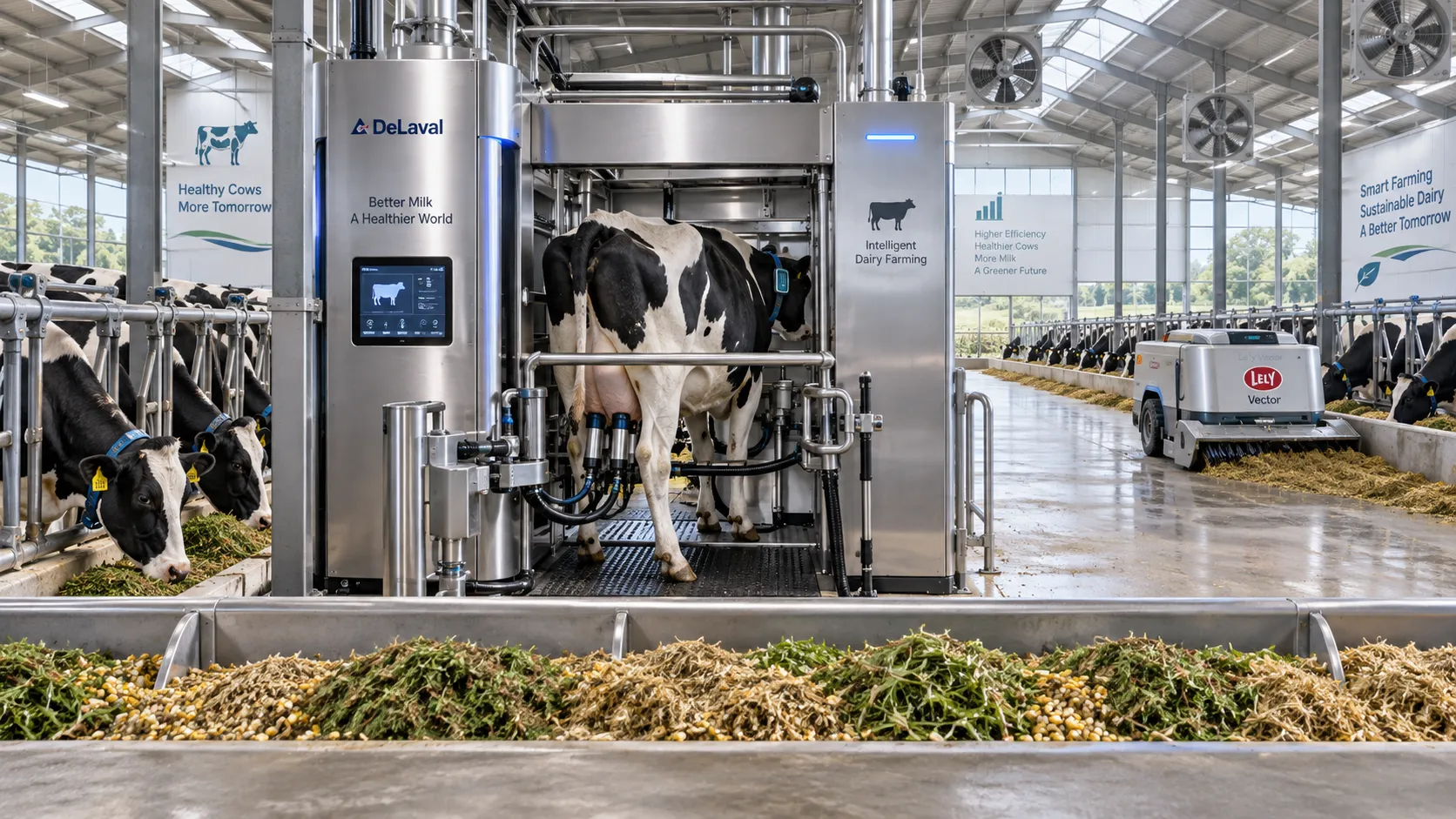
Smart Farming Technology for Dairy Farms: Where Automation Delivers Measurable ROI
Smart farming technology for dairy farms delivers measurable ROI through automation, precision feeding, health monitoring, and data-driven cost control.

How to Select a Heavy-Duty Seeder for Large Acreage and High-Residue Fields
Heavy duty seeders for large acreage: compare residue handling, depth control, downforce, metering accuracy, and precision features to select the right model.
Related News
- 00
0000-00
Selecting Real-Time Soil Moisture Sensors for Irrigation Zone Control - 00
0000-00
How Does Climate-Smart Farming Reduce Water Use in Semi-Arid Areas? - 00
0000-00
USDA Rule Takes Effect: Dual FCC and NRCS Approval for Soil Moisture Sensors - 00
0000-00
EU Rule Takes Effect: Soil Moisture Sensors Need Revised CE-EMC Certification - 00
0000-00
How to Choose Wireless Smart Irrigation Systems for Better Water Control
Popular Tags
Hydrological Resource Strategist
Weekly Insights
Stay ahead with our curated technology reports delivered every Monday.