
How to Choose Wireless Soil Moisture Sensors for Irrigation and Field Monitoring




Why Wireless Soil Moisture Sensor Selection Is Usually Harder Than It Looks
The difficult part of choosing soil moisture sensors wireless for irrigation and field monitoring is not finding a device that can report a moisture value. Many can do that. The real question is whether the sensor can produce data that remains decision-useful after months of field exposure, unstable connectivity, changing soil conditions, and integration with irrigation logic that has to work at operational scale.
Technical evaluators usually discover that sensor selection sits at the intersection of agronomy, communications engineering, power management, enclosure durability, and software interoperability. A sensor that performs well in a product demo may still fail in practice if it drifts in saline soil, drops packets across uneven terrain, or requires battery replacement on a schedule that field crews cannot realistically maintain.
That is why the most useful way to assess a wireless moisture sensing solution is to stop treating it as a single instrument. In the field, it is a measurement chain: probe design, sensing method, firmware, transmission protocol, gateway behavior, cloud platform, alarm logic, and the irrigation actions that follow. Weakness in any one of those layers can reduce the value of the whole system.
Start with the Measurement, Not the Radio
A common buying mistake is to start with range claims, app screenshots, or dashboard features before understanding what is actually being measured. Soil moisture is not a simple universal number. In practice, the most relevant distinction is whether the system estimates volumetric water content, soil water tension, or a related proxy. Those values are not interchangeable, and they support different irrigation decisions.
For broad row-crop irrigation, orchards, and distributed field monitoring, many wireless systems are based on dielectric measurement because it supports automation, continuous logging, and relatively compact electronics. But even within that category, accuracy depends heavily on calibration assumptions, soil texture, bulk density, temperature effects, and salinity. If the vendor speaks only in generic accuracy language without clarifying soil conditions or calibration method, the number is less meaningful than it appears.
The practical question is not whether the sensor is “accurate” in the abstract. It is whether it can distinguish the moisture changes that matter for your irrigation threshold, root-zone management, and crop stress risk. In some projects, directional consistency is more valuable than laboratory-grade absolute precision. In others, especially where irrigation scheduling models or fertigation logic depend on tighter thresholds, calibration quality becomes much more important.
Depth Strategy Often Matters More Than Sensor Count
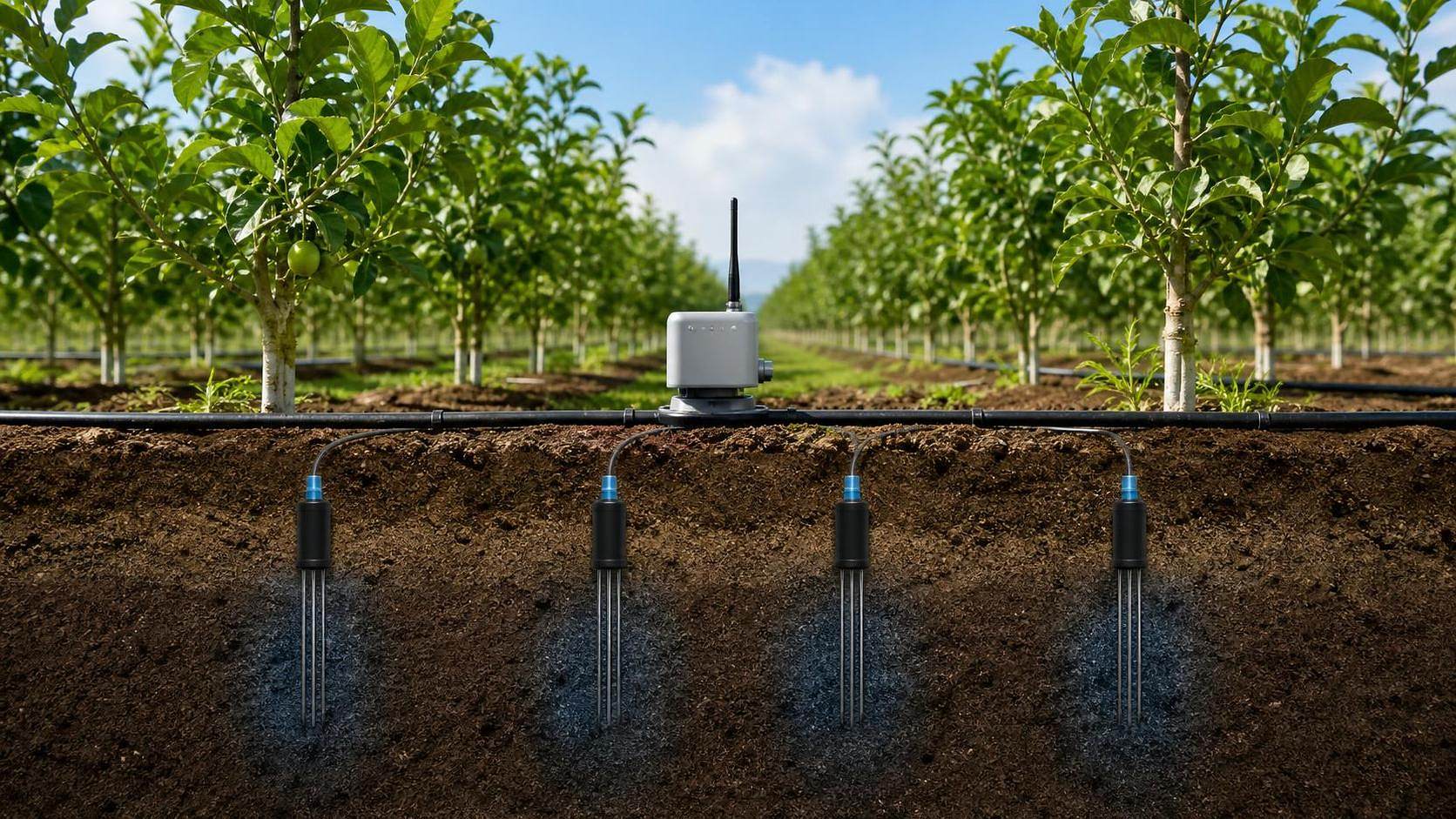
Wireless deployments are often underspecified on depth placement. That creates misleading confidence because field teams see frequent data, but not necessarily the right data. A single shallow-depth reading may react quickly after rain or irrigation, yet tell you little about root-zone recharge or deep percolation. Multi-depth profiles are usually more useful when the objective is irrigation control rather than simple surface monitoring.
This matters especially in systems serving orchards, vineyards, vegetable blocks, and variable-texture fields, where wetting fronts and root activity are not uniform. The evaluator should ask whether the solution supports one integrated probe with multiple sensing depths, several linked nodes, or mixed deployment patterns. Each approach affects installation complexity, replacement cost, and interpretability. More data points do not automatically mean better decisions if the depth architecture is poorly matched to crop rooting behavior.
Connectivity Claims Need Field Context
Wireless performance is often marketed in open-field distance terms, but agricultural deployments rarely resemble ideal line-of-sight conditions. Topography, crop canopy, machinery traffic, irrigation infrastructure, and gateway placement all influence link stability. A radio that looks acceptable in low vegetation can behave differently in a mature corn stand, an orchard block with irregular terrain, or a field with long distances back to the control shed.
For that reason, the protocol discussion should move beyond names such as LoRaWAN, proprietary sub-GHz, NB-IoT, LTE-M, or Bluetooth-assisted provisioning. The key issue is how the system behaves when conditions are imperfect. Does it buffer data during outages? How much onboard memory is available? Does the gateway support remote diagnostics? Can transmission intervals be adjusted to preserve battery without losing agronomic relevance? These are operational questions, not branding questions.
In large agricultural estates, network architecture can become a decisive selection factor. A direct-to-cellular node may simplify installation in remote blocks, but recurring connectivity costs and power draw need to be considered. A gateway-based design may lower node cost and battery burden, yet increase planning complexity. Neither model is universally better. The right choice depends on acreage layout, serviceability, and whether the farm already has telemetry infrastructure for pumps, valves, or weather stations.
Battery Life Numbers Need Interpretation
Quoted battery life can be one of the least reliable comparison points if the assumptions are hidden. Sampling frequency, transmission interval, temperature extremes, retransmission behavior, and firmware updates all affect energy consumption. A sensor advertised for multi-year life may achieve that only under infrequent reporting and strong signal conditions.
For technical evaluation, a better question is: what maintenance rhythm will this create across the full installed base? On a small trial plot, periodic battery replacement may be trivial. Across hundreds of nodes, it becomes a labor planning issue. Solar assistance can help, but only if the mechanical design holds up under dust, shading, and seasonal sunlight variability. Energy autonomy should be evaluated as part of ownership logistics, not just electronics efficiency.
Environmental Robustness Is Not a Side Detail
Moisture sensors fail in the field for ordinary reasons: water ingress, damaged connectors, rodent activity, UV exposure, improper burial, corrosion, and impact from machinery or field crews. That is why enclosure rating, cable strain relief, connector sealing, and mechanical mounting deserve more attention than they usually get in spreadsheet comparisons.
It is also worth separating ingress protection from true field durability. An enclosure may carry an IP rating yet still perform poorly if cable junctions, probe transitions, or antenna assemblies are vulnerable. In irrigated agriculture, repeated wet-dry cycles and fertilizer exposure can reveal weaknesses slowly rather than immediately. Evaluators should look for evidence of service design: replaceable parts, fault alerts, and installation methods that reduce the chance of hidden damage.
Data Without Context Does Not Improve Irrigation
One of the most persistent misunderstandings in smart irrigation is the belief that more moisture readings automatically improve water decisions. In reality, isolated sensor values are rarely enough. The system becomes useful when moisture data is interpreted alongside crop stage, irrigation events, weather inputs, evapotranspiration estimates, soil type, and sometimes pressure or flow data from the irrigation network.
This is where platform integration matters. Some wireless sensor solutions are strong at remote measurement but weak at operational workflow. A technical team should check whether data can be exported through documented APIs, whether the platform supports threshold logic by field zone, and whether timestamps, units, and depth labels are consistent enough to feed farm management or irrigation control software without manual correction. Clean integration often matters more than visual polish in the dashboard.
If the intended use includes closed-loop or semi-automated irrigation, then latency, data validation rules, and fail-safe behavior become central. A delayed or obviously erroneous reading should not trigger an unnecessary irrigation cycle. The best systems are not simply connected; they are designed to behave predictably when data quality is imperfect.
What to Probe During Vendor Evaluation
Vendor discussions are often dominated by nominal specifications. That misses the real selection work. The more revealing questions are operational:
- How is the sensor calibrated, and for which soil conditions are published performance claims relevant?
- What happens to data during communication loss or gateway failure?
- How are firmware updates handled across a distributed fleet?
- Can the platform distinguish sensor fault, dry soil, and installation error?
- What are the installation tolerances for depth, orientation, and soil contact?
- How is battery health reported, and how early are service alerts issued?
- Is the system intended for advisory monitoring, direct irrigation control, or both?
These questions expose whether the supplier understands field operations or mainly sells connected hardware. In agriculture, that difference shows up quickly after deployment.
A Useful Comparison Lens
The Sensible Way to Decide
For most evaluation teams, the best path is not to choose the sensor with the longest feature list. It is to define the irrigation decision the system must support, then verify whether the sensing method, deployment geometry, communications design, and software behavior can support that decision reliably over time.
In other words, select from the field backward. A wireless soil moisture sensor is valuable when it reduces uncertainty at the point where water, crop response, labor, and control logic meet. If a proposed solution cannot explain that chain clearly, it is probably not ready for serious irrigation management, no matter how modern the hardware looks.
That is the standard worth applying: not whether the system can sense moisture, but whether it can keep producing dependable, interpretable, operationally usable moisture intelligence across an actual farming season.
Related News
Specification Planning: A Practical Framework for Defining Equipment Requirements
Application guidance for specification planning: define measurable equipment requirements, prioritize performance, and avoid costly procurement mistakes.

How North American Farms Can Select Crop Monitoring Systems by Acreage and Connectivity
Crop monitoring systems North America: learn how to match acreage, connectivity, sensors, and data workflows for reliable, actionable farm decisions.

Where to Find Reliable Product Information for Comparing Farm Equipment
Product information resources agriculture buyers can trust: compare farm equipment with technical specs, manuals, field data, dealer support, and lifecycle insights.
Selecting Real-Time Soil Moisture Sensors for Irrigation Zone Control
Soil moisture sensors real time: learn how to select reliable probes, optimize zone control, improve irrigation decisions, and scale precision water management.
Tractor Hydraulic Systems Troubleshooting: Diagnosing Weak Lift and Slow Implements
Tractor hydraulic systems troubleshooting made practical: diagnose weak lifts and slow implements with proven pressure, flow, valve, and oil-supply checks.
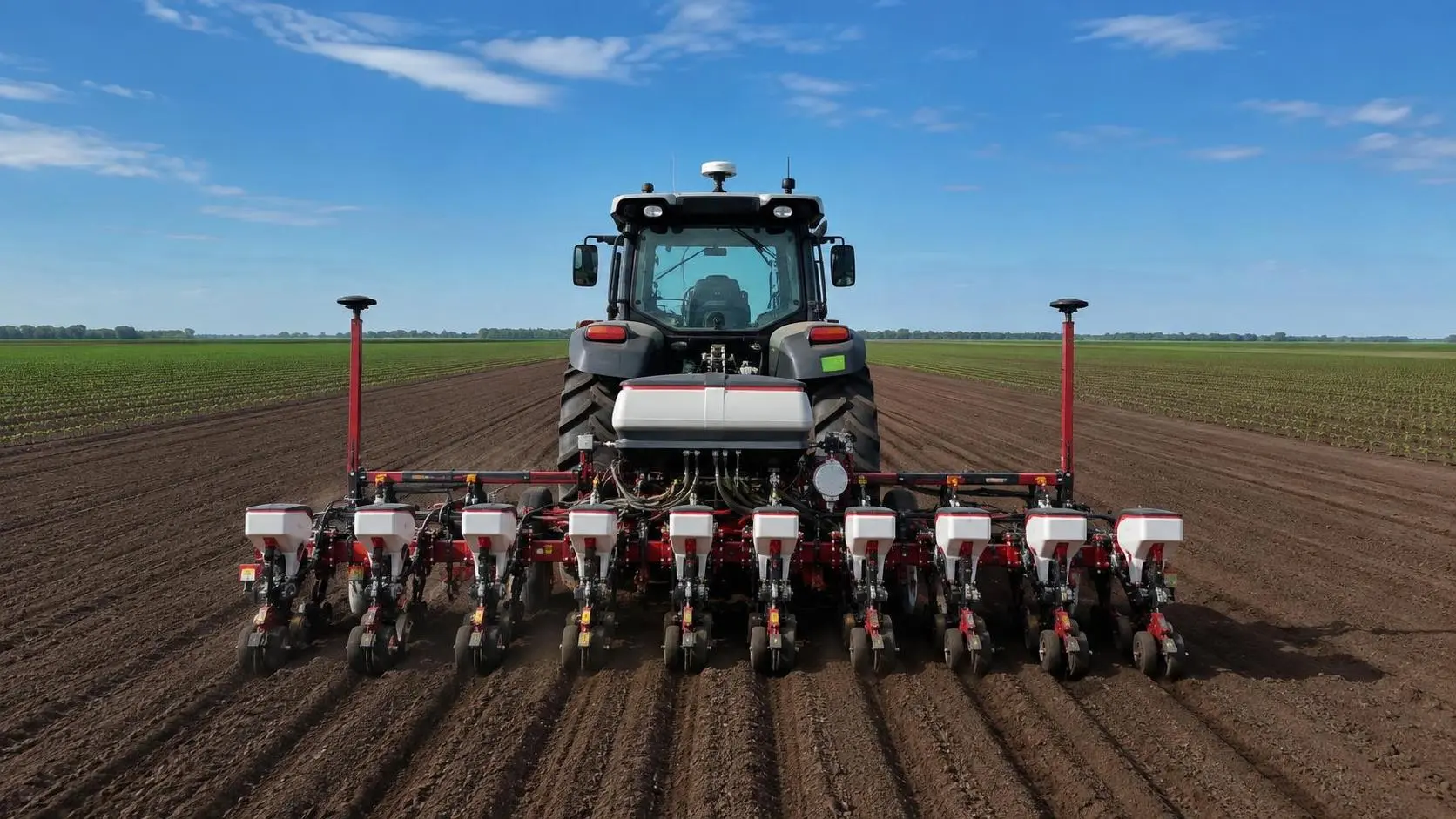
How Tractor Intelligence Systems Improve Field Efficiency and Input Accuracy
Agricultural machinery intelligence for tractors improves field efficiency, input accuracy, data traceability, and implement control. Explore smarter evaluation strategies.
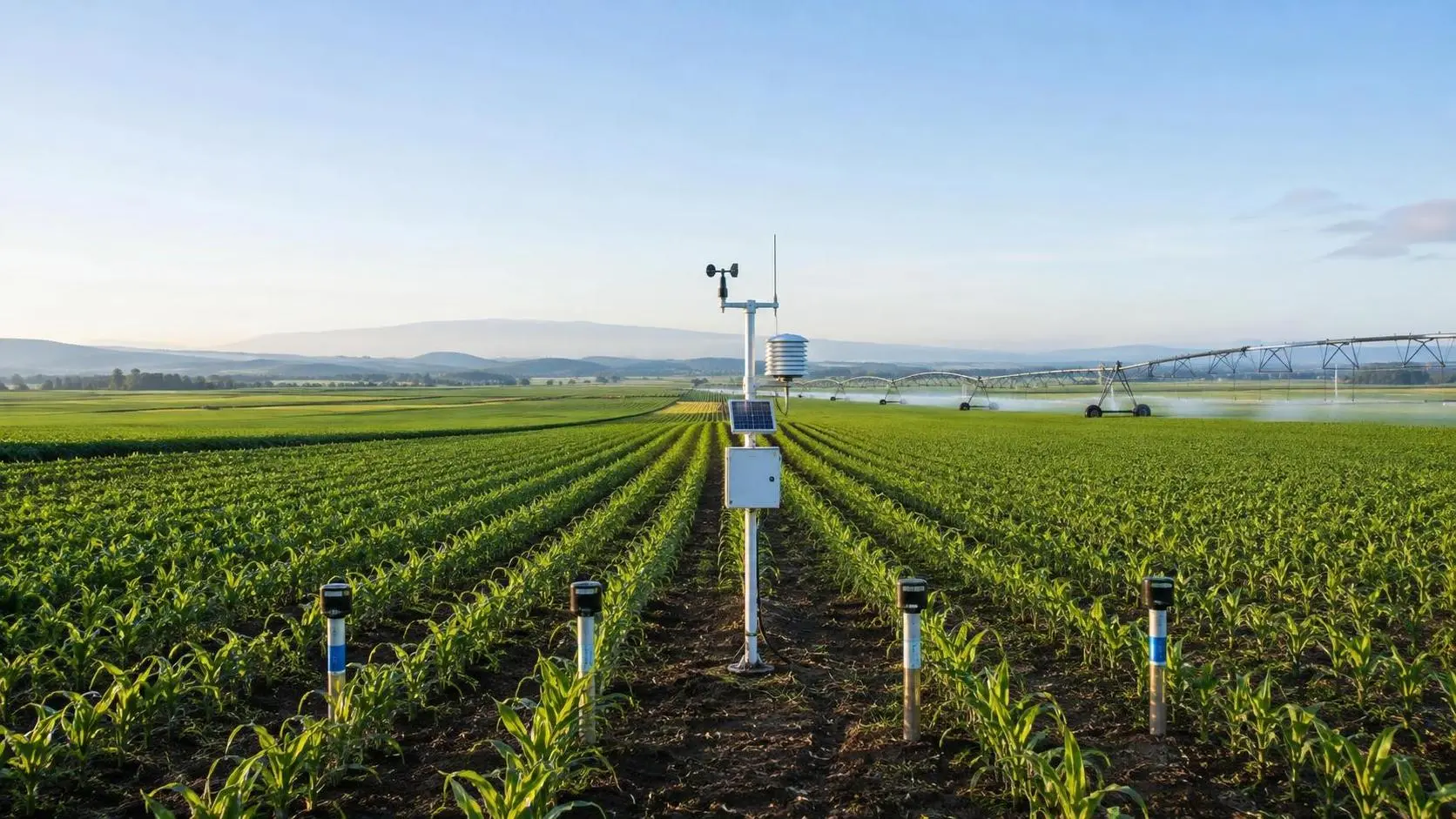
How to Evaluate Crop Monitoring System Manufacturers for Large-Scale Farms
Compare crop monitoring systems manufacturers for large-scale farms. Evaluate data quality, integration, durability, lifecycle costs, support, and pilots for smarter decisions.
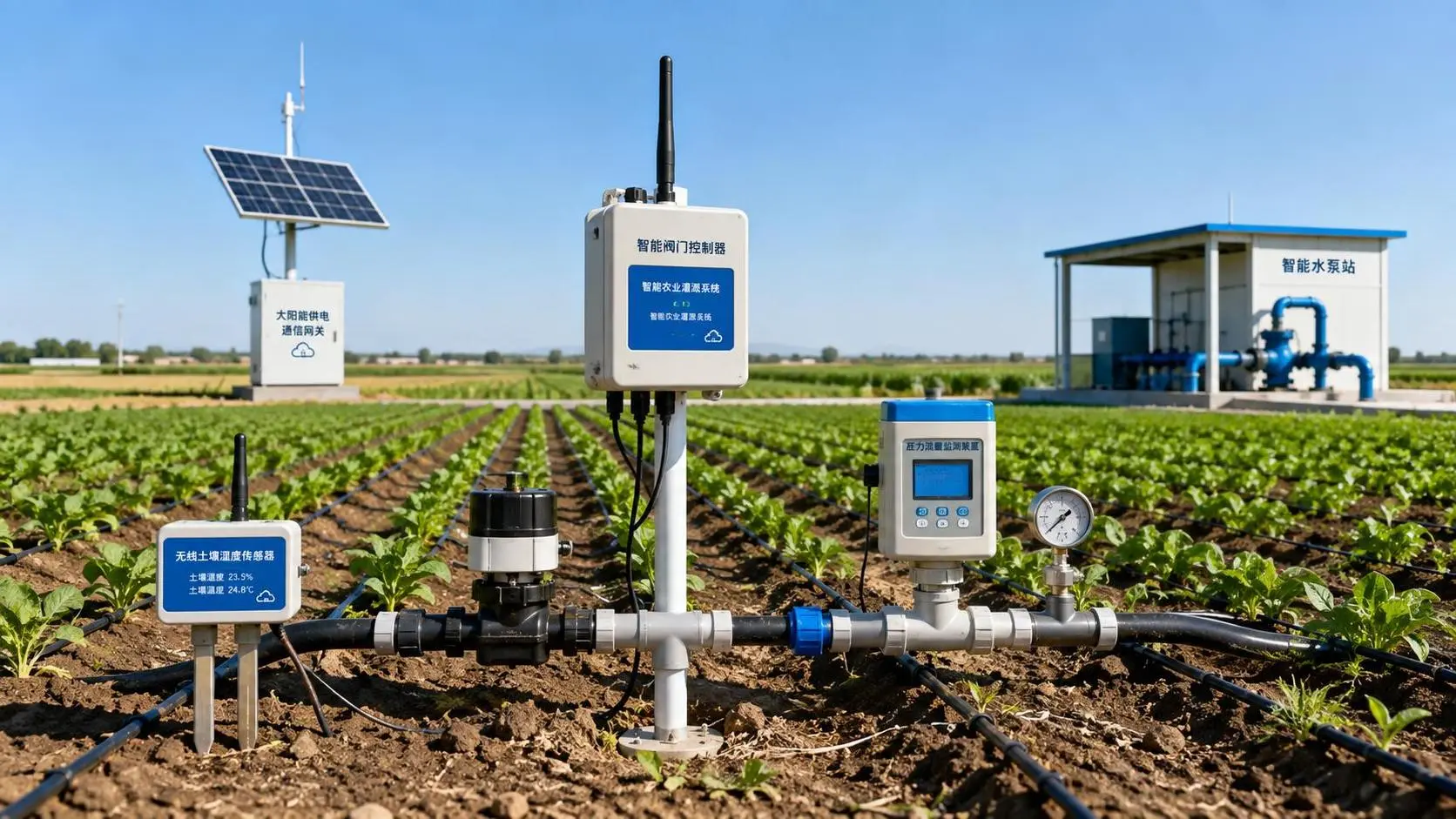
Wireless Agricultural Automation for Remote Irrigation and Field Monitoring
Agricultural automation wireless solutions improve remote irrigation with reliable field data, local control, flow verification, and smarter monitoring. Explore resilient deployment strategies.
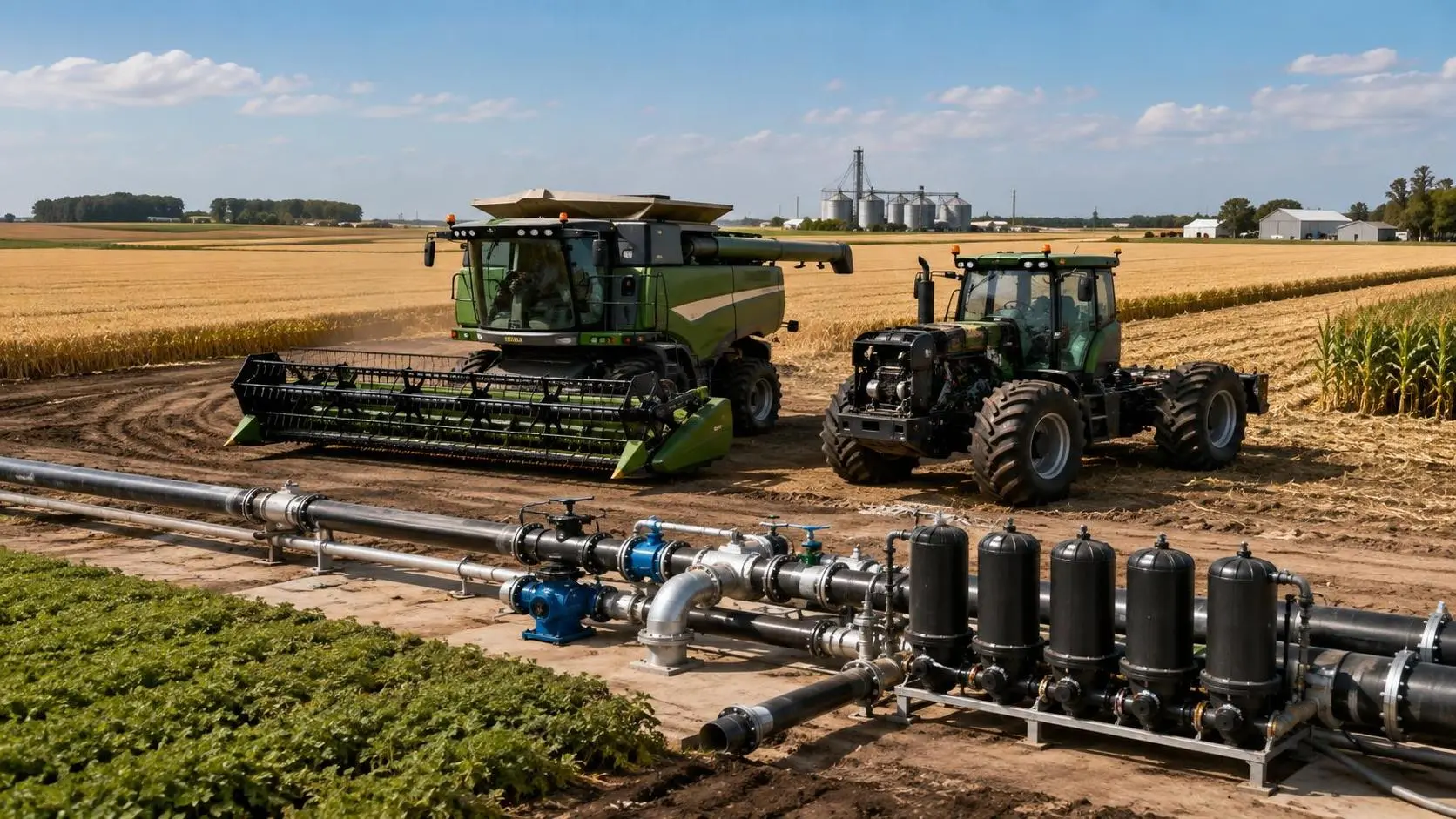
Agricultural Product Information Market Guide: Key Data for Sourcing Decisions
Agricultural product information market guide for smarter sourcing—compare machinery, irrigation, precision tools, lifecycle costs, and supplier risk.
Related News
- 00
0000-00
Selecting Real-Time Soil Moisture Sensors for Irrigation Zone Control - 00
0000-00
How Does Climate-Smart Farming Reduce Water Use in Semi-Arid Areas? - 00
0000-00
USDA Rule Takes Effect: Dual FCC and NRCS Approval for Soil Moisture Sensors - 00
0000-00
EU Rule Takes Effect: Soil Moisture Sensors Need Revised CE-EMC Certification - 00
0000-00
How to Choose Wireless Smart Irrigation Systems for Better Water Control
Popular Tags
Hydrological Resource Strategist
Weekly Insights
Stay ahead with our curated technology reports delivered every Monday.