
Selecting Real-Time Soil Moisture Sensors for Irrigation Zone Control




Selecting Real-Time Soil Moisture Sensors for Irrigation Zone Control
Selecting soil moisture sensors real time for irrigation zone control is not mainly a question of choosing the most sophisticated probe. It is a question of whether the measurement can represent a manageable part of the field, arrive in time to influence an irrigation decision, and remain credible after months of heat, fertigation, machinery traffic, and changing crop conditions.
For technical evaluators, the sensor is only one element of a control chain: soil profile, crop rooting pattern, irrigation hardware, communications, software logic, and field operations all affect the final result. A sensor that produces stable readings but is installed in an unrepresentative location may encourage the wrong irrigation event. A well-positioned probe with unreliable telemetry may be equally unsuitable for automated control. The practical objective is not simply more data; it is defensible, zone-specific action.
That distinction matters in large operations, where a single irrigation block can cover meaningful variation in texture, topography, emitter performance, and crop vigor. Real-time monitoring can support shorter decision cycles, but it does not eliminate the need for agronomic judgment. It should make that judgment more visible, repeatable, and easier to scale.
Start with the irrigation-zone decision, not the sensor catalogue
Before comparing sensing technologies, define what the irrigation zone controller must decide. Is the system intended to alert an operator when depletion approaches a threshold? Should it recommend a run time? Or will it directly trigger valves, pumps, or variable-rate irrigation commands? These are different use cases. A manual advisory system can tolerate delayed data review and occasional field validation. Closed-loop control requires much stronger confidence in communications, data quality, fail-safe behavior, and the rules that prevent a bad reading from causing an unnecessary irrigation cycle.
The zone itself also needs scrutiny. Irrigation boundaries are often designed around hydraulic layout, not soil behavior. A block may contain sandy rises, heavier low areas, different planting dates, or irrigation pressure differences. In that situation, one sensor may still be useful as a reference point, but it should not be treated as the average condition of the entire zone. Technical teams should identify whether they are monitoring a uniform management unit, a representative sub-area, or a known high-risk location. Each choice leads to different placement and control logic.
A useful planning question is: what error would be more costly in this zone? In shallow-rooted vegetables, a missed dry period can develop quickly. In deeper-rooted perennial systems, persistent over-irrigation may be the larger concern because it can move water and nutrients below the active root zone. The answer should influence sensor depth, reporting frequency, alert thresholds, and the degree of automation.
Choose the measurement principle for the soil and operating environment
The market includes several approaches to soil-water measurement. Volumetric water-content sensors commonly infer moisture from the soil’s dielectric response. Tensiometers measure soil water tension through a water-filled instrument and are often valued where the plant’s effort to extract water is central to irrigation management. Other systems may estimate matric potential or use probes that provide readings across multiple depths. None should be selected solely because it has a familiar output unit or a polished dashboard.
Volumetric measurements can be effective for tracking wetting and drying trends, especially when the evaluator understands the local soil’s response. Yet mineral composition, bulk density, salinity, temperature, air gaps around the probe, and installation quality can affect interpretation. Tensiometric approaches may offer intuitive irrigation signals in suitable moisture ranges, but their operating limits, servicing needs, and suitability in dry soils require careful review. In saline or heavily fertigated fields, the supplier should clearly explain how electrical conductivity and nutrient concentration affect readings and any associated calibration procedure.
Accuracy claims need to be read in context. Ask what medium was used to establish the stated performance, whether the figure assumes soil-specific calibration, and what field conditions were excluded. A laboratory specification is not necessarily a field-control specification. For irrigation zone control, repeatability and the ability to detect meaningful changes over time can be as important as a single absolute reading. The evaluation should include trend behavior after irrigation, during dry-down, and under expected temperature and salinity conditions.
Depth placement determines whether “real time” means anything useful
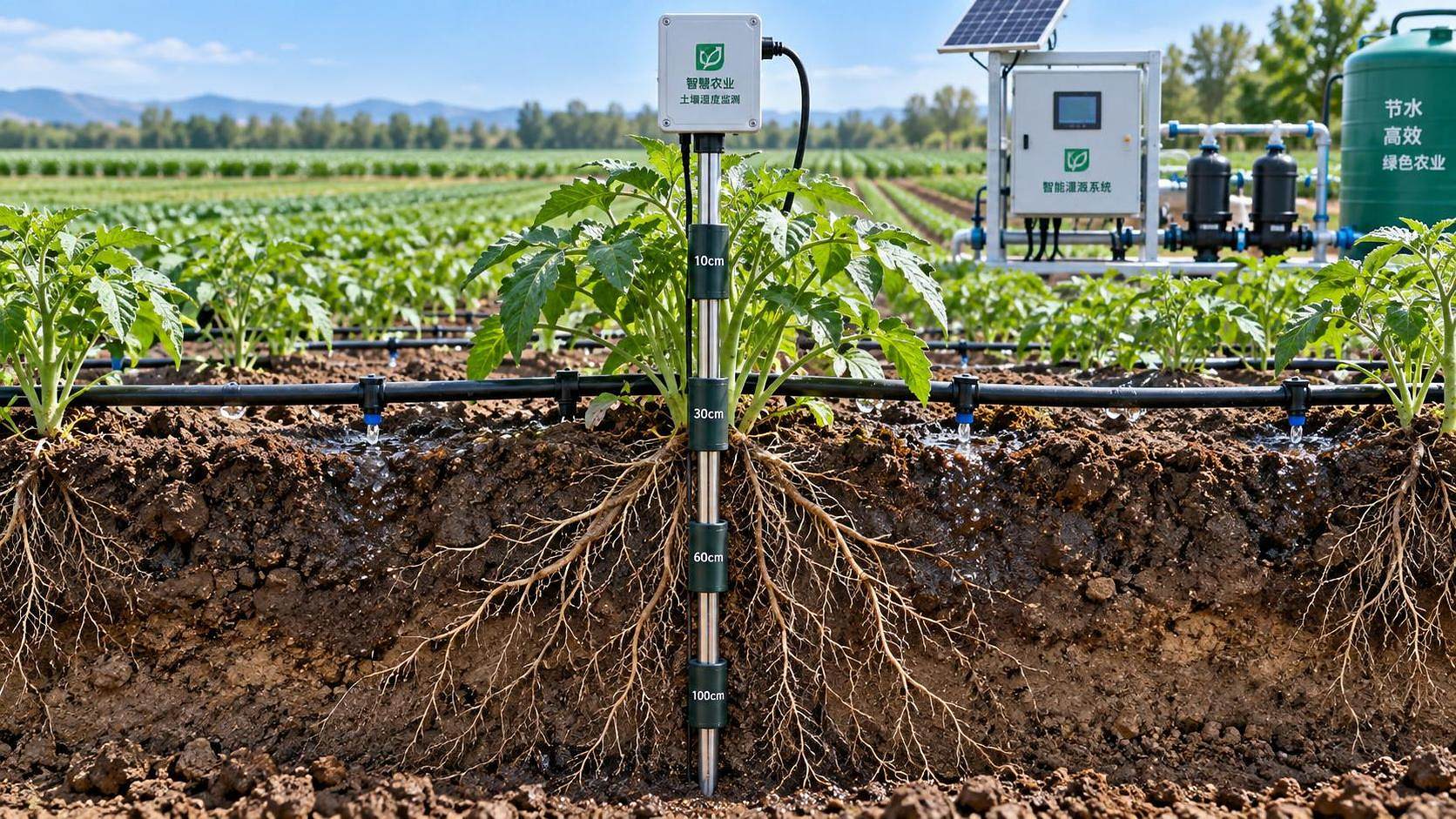
A real-time transmission interval does not compensate for poor depth selection. Sensors should be located according to crop rooting depth, irrigation method, soil layering, and the decision being supported. A shallow measurement can show whether a light irrigation has reached the upper root zone; deeper observations help indicate root-zone reserves and potential deep percolation. In many projects, a profile view is more informative than a single-depth number because it reveals the movement of water rather than just a moisture state at one point.
Placement should also reflect the wetting pattern. Under drip irrigation, the relevant measurement position may differ substantially from that in sprinkler or pivot-irrigated fields. A probe placed too near an emitter can report conditions that the majority of the root zone does not experience. Too far away, and it may fail to register the intended irrigation pulse. Installation plans should document distance from the emitter or crop row, depth intervals, orientation where relevant, and the reason the location represents the zone.
Installation quality is a recurring source of misleading data. Poor soil contact, smeared installation holes in fine-textured soils, voids around the sensing surface, damaged cables, and disturbed soil structure can all change the signal. A commissioning procedure should therefore include baseline readings, comparison with field observations or independent samples where appropriate, confirmation that irrigation produces a plausible response, and a record of each installation point. Without this discipline, remote data can look precise while being agronomically unreliable.
Assess latency, connectivity, and controller integration as one system
For soil moisture sensors real time, “real time” is often used loosely. A system may measure frequently but transmit only at scheduled intervals; another may send data promptly but rely on a network that becomes intermittent during critical periods. The appropriate latency depends on irrigation dynamics. A slow-moving orchard irrigation decision may not require minute-by-minute updates. Short-cycle irrigation on light soil, or systems expected to respond to faults rapidly, may justify more frequent reporting.
The connectivity review should be physical, not theoretical. Evaluate network coverage at the actual sensor locations, terrain effects, distance to gateways, antenna exposure, power requirements, seasonal canopy changes, and the maintenance burden of batteries or solar assemblies. A pilot deployment should include locations most likely to fail, not only those close to farm infrastructure. If cellular, radio, or low-power wide-area networks are proposed, verify the practical support model in the operating region and who will diagnose an outage.
Integration is where many otherwise capable installations become fragmented. The evaluator should confirm how sensor data reaches the irrigation platform: through an open interface, a documented protocol, a cloud-to-cloud connection, or manual export. More importantly, determine what the controller does when data are missing, stale, outside reasonable bounds, or inconsistent with other signals. A robust design normally has a fallback schedule, alarm escalation, manual override, and clear ownership of threshold changes. Automation should fail safely rather than silently continue on an assumption that the field no longer supports.
Do not buy a sensor network without a data-governance plan
Sensor procurement is often treated as hardware acquisition, yet data access can shape the long-term value of the deployment. Technical teams should clarify who owns raw and processed readings, how long they remain available, whether historical data can be exported, and what happens if a subscription ends or a platform changes. These questions are especially relevant to farms working with multiple irrigation brands, crop advisers, machinery platforms, or regional distributors.
Data quality needs operating rules. Define acceptable ranges, identify readings that require review, and assign responsibility for responding to alerts. A rainfall event, broken dripline, localized leak, or field operation can create a genuine anomaly; a flat line may indicate a dead device rather than remarkably stable soil moisture. Software should make it easy to distinguish sensor health from crop-water conditions. Otherwise, staff may gradually ignore alerts, undermining the purpose of the network.
This is also why irrigation decisions should not rest on moisture data alone. Weather observations, rainfall records, irrigation flow or pressure information, crop stage, and field inspection provide necessary context. A soil probe can show the profile response, while flow monitoring can reveal whether the planned volume was actually delivered. Combining those signals is more valuable than asking any single device to explain the entire irrigation system.
Build the selection around maintainability, not the first season
A technically sound comparison includes the work required after installation. Review enclosure durability, cable protection, probe removal procedures, battery replacement, recalibration expectations, firmware updates, spare-part availability, and support response pathways. Machinery traffic and seasonal labor activities can be as consequential as sensor electronics. In large fields, marking and protecting locations may be necessary; in permanent crops, access for service may be the deciding factor.
Cost should be modeled as a system cost: sensing points, gateways, communications, software subscriptions, installation labor, training, calibration, replacements, and integration work. A lower initial device price can be outweighed by expensive proprietary connectivity or difficult field servicing. Conversely, a more capable multi-depth system may reduce the number of separate instruments needed in a zone, but only if its profile information will be used in scheduling decisions.
A limited pilot is usually more informative than a paper comparison. It should cover contrasting soil conditions, at least one challenging communication area, and a complete irrigation cycle. The review should examine not only data availability, but whether staff can interpret the information and act on it without vendor intervention. If the pilot reveals uncertainty, that is a useful outcome: it identifies where placement, training, thresholds, or integration logic need revision before rollout.
A decision framework for scalable precision irrigation
The strongest selection process moves from field variability to control requirements, then from control requirements to sensor architecture. Start by mapping irrigation zones, soil differences, crop stages, water source constraints, and existing control equipment. Define the decision each monitored point must support. Specify the needed depth profile, data latency, communications resilience, and maintenance capacity. Only then compare sensor technologies and commercial platforms.
AP-Strategy approaches intelligent irrigation as part of a wider Agriculture 4.0 operating model, where field sensors, precision tools, hydraulic controls, and farm machinery data must work together rather than remain isolated systems. Its Strategic Intelligence Center tracks the practical links between water-saving irrigation networks, transpiration-oriented decision models, and the equipment infrastructure needed to execute prescriptions reliably. That perspective is useful because an irrigation sensor is not a standalone digital accessory; it is an input to a physical system that must deliver water accurately in the field.
The right deployment will rarely be the one with the most sensors or the fastest dashboard refresh. It will be the configuration whose measurements represent the zone, whose data survive operational reality, and whose control rules are understood by the people responsible for the crop. Before committing to a broad rollout, require clear installation documentation, integration testing, fallback behavior, and a plan for validating readings through the first irrigation season. That is how real-time soil moisture data becomes a dependable basis for zone control rather than another stream of information awaiting interpretation.
Related News
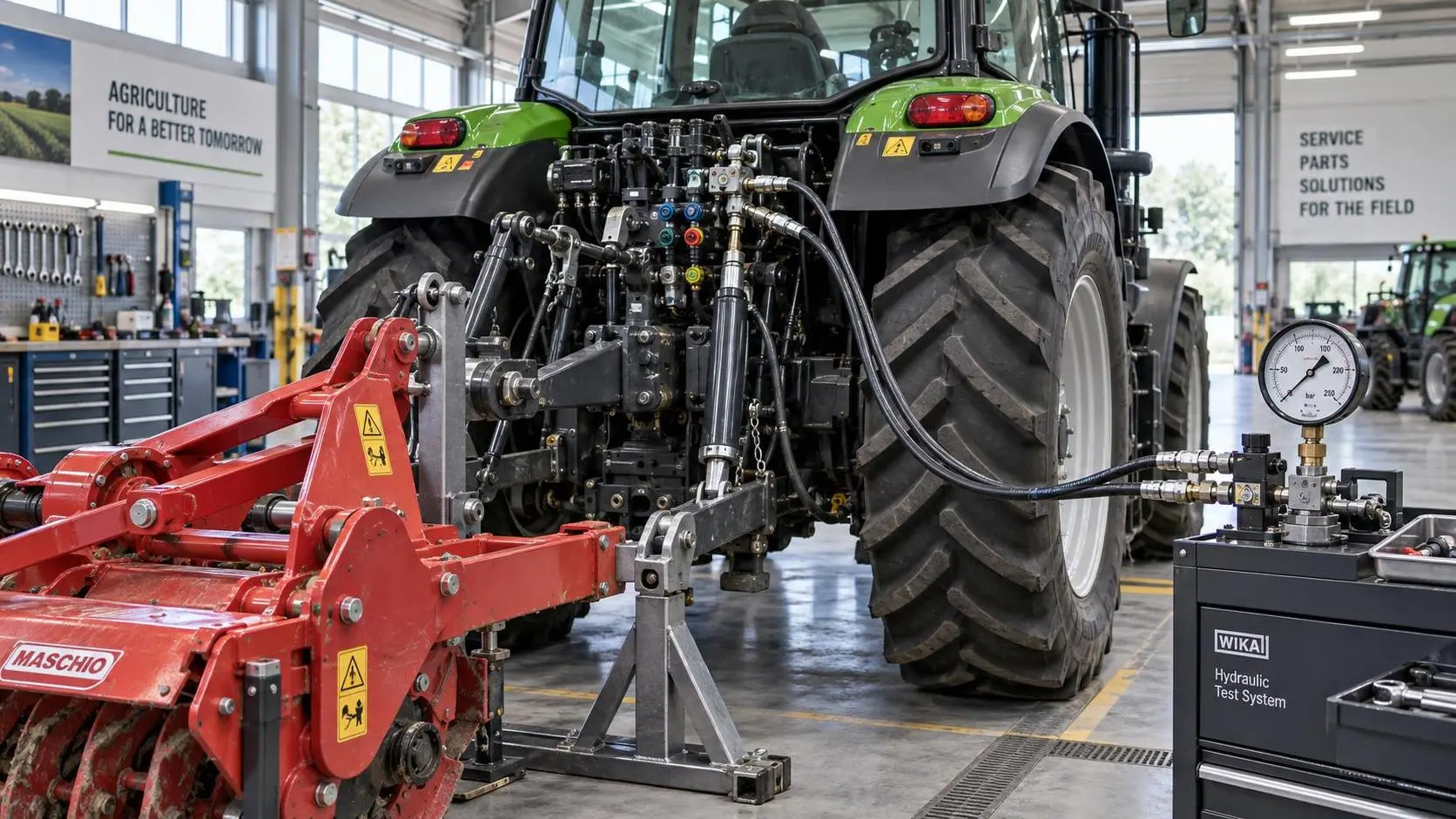
Tractor Hydraulic Systems Troubleshooting: Diagnosing Weak Lift and Slow Implements
Tractor hydraulic systems troubleshooting made practical: diagnose weak lifts and slow implements with proven pressure, flow, valve, and oil-supply checks.
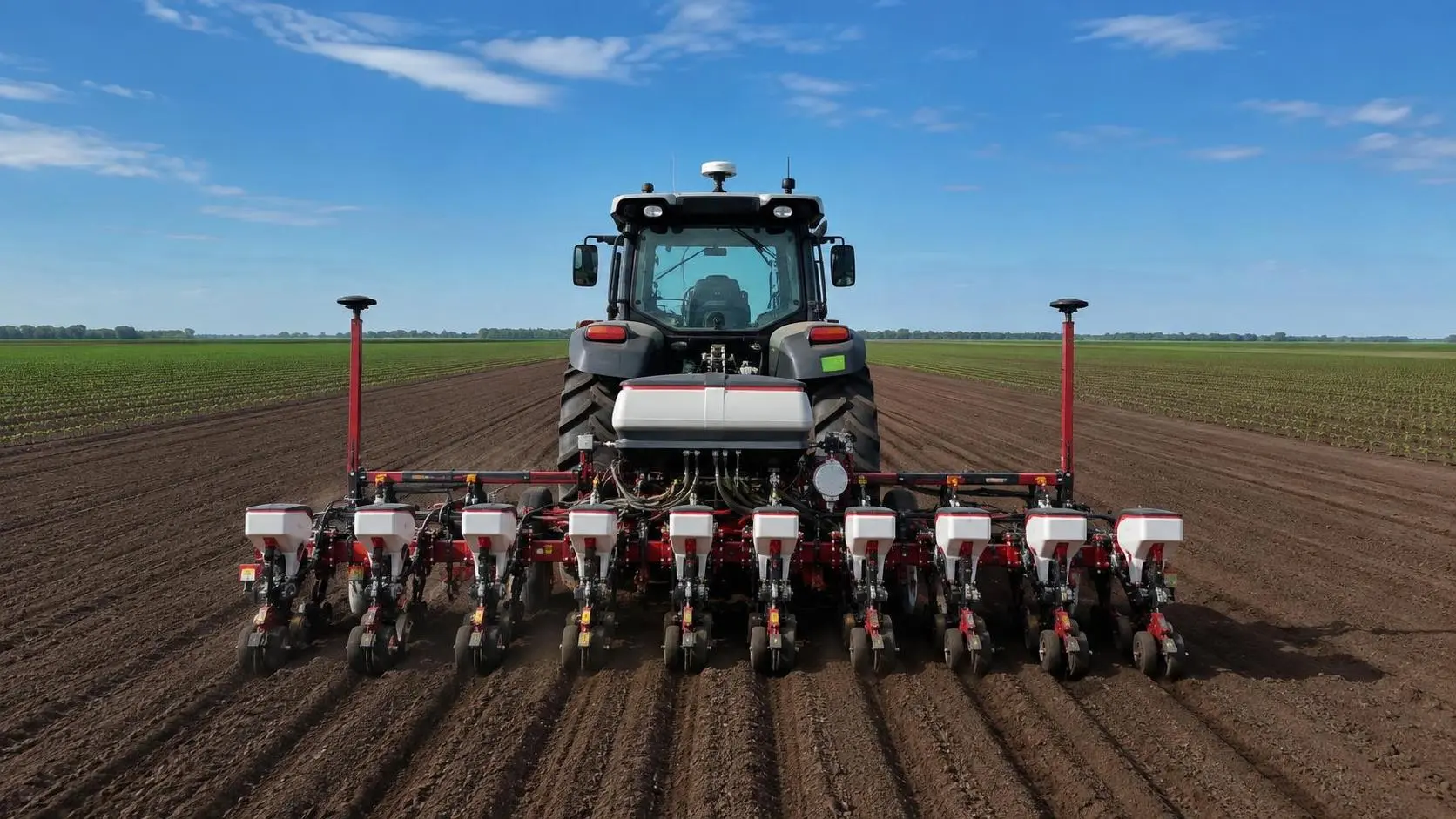
How Tractor Intelligence Systems Improve Field Efficiency and Input Accuracy
Agricultural machinery intelligence for tractors improves field efficiency, input accuracy, data traceability, and implement control. Explore smarter evaluation strategies.
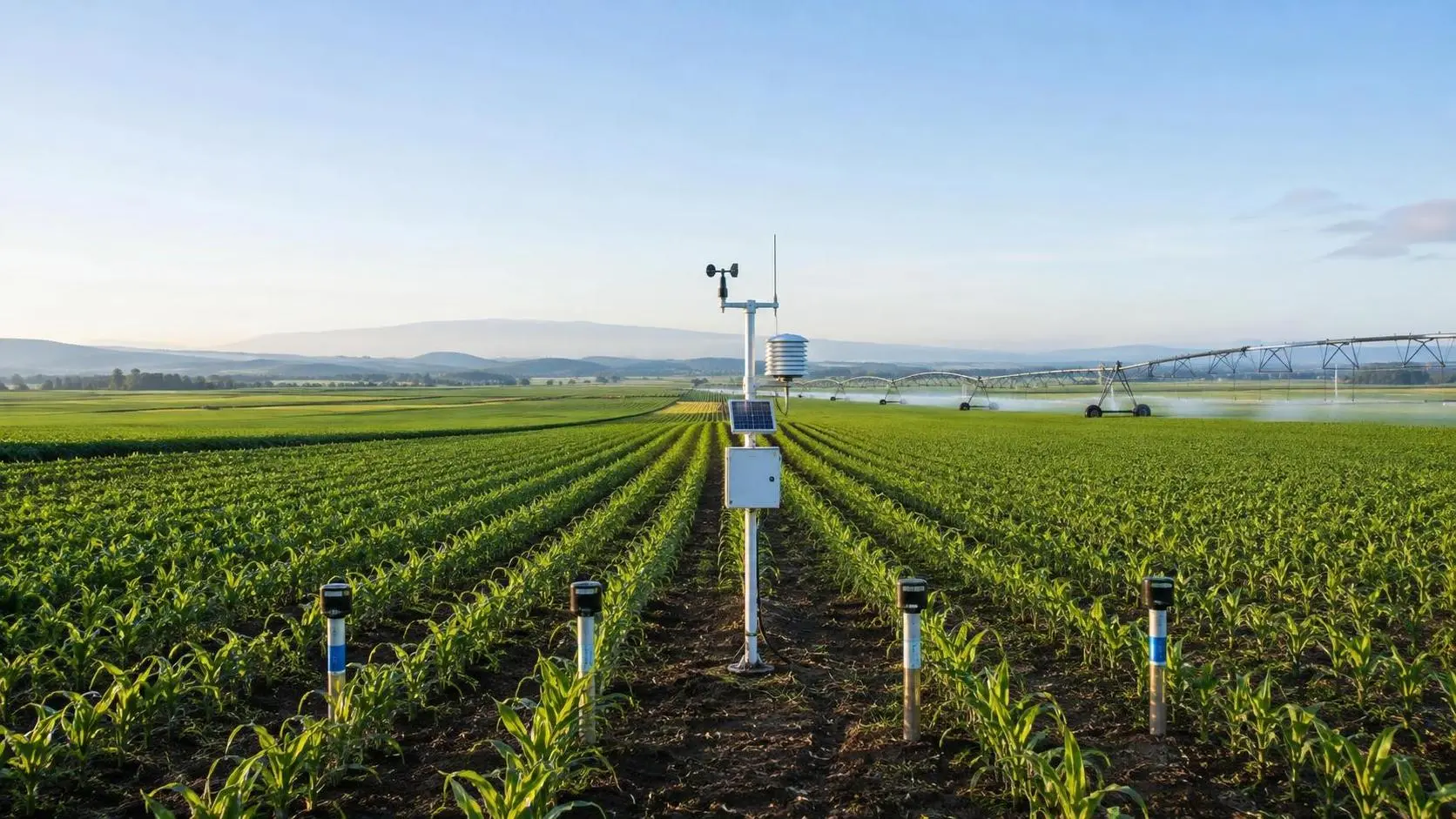
How to Evaluate Crop Monitoring System Manufacturers for Large-Scale Farms
Compare crop monitoring systems manufacturers for large-scale farms. Evaluate data quality, integration, durability, lifecycle costs, support, and pilots for smarter decisions.
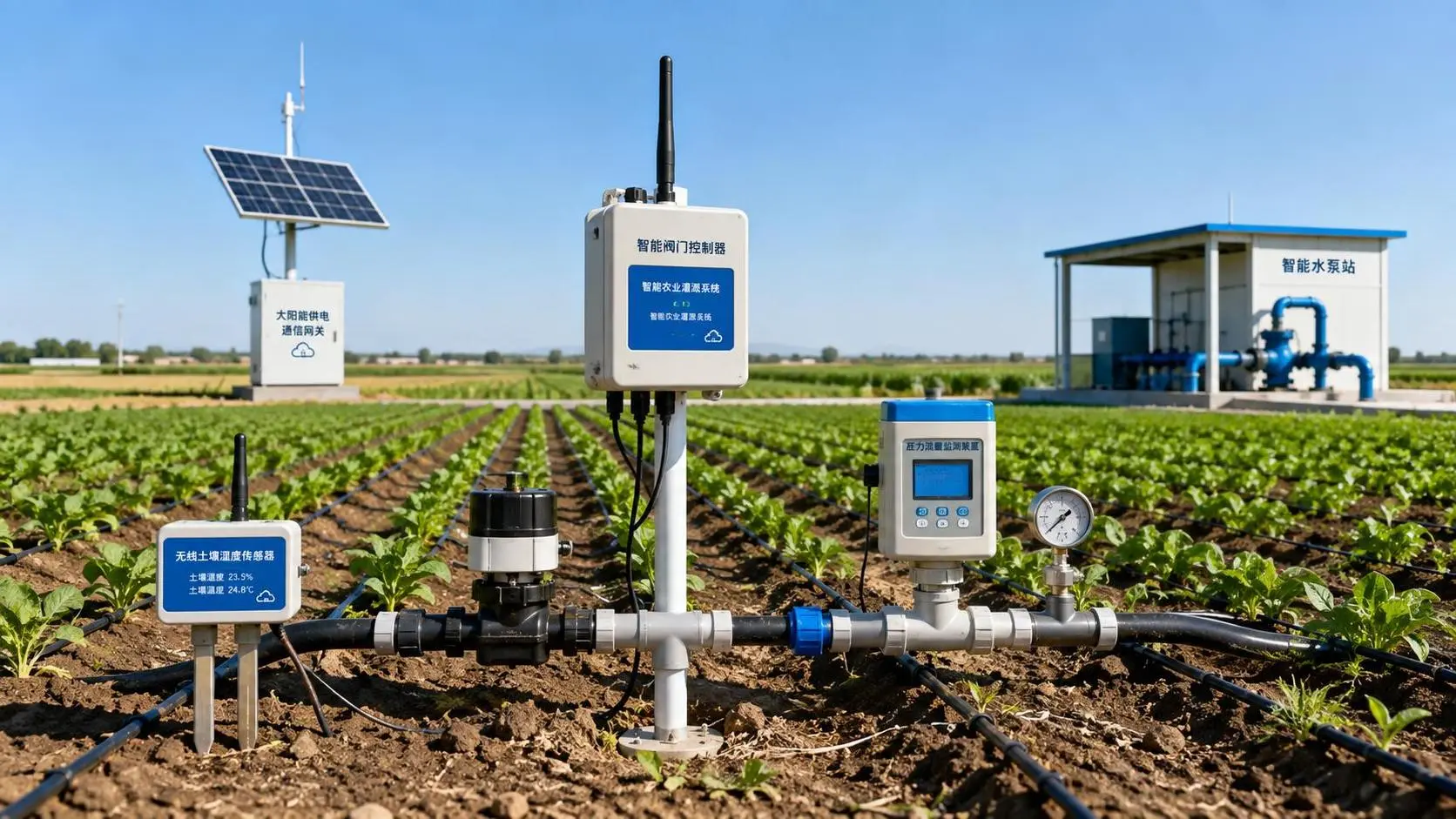
Wireless Agricultural Automation for Remote Irrigation and Field Monitoring
Agricultural automation wireless solutions improve remote irrigation with reliable field data, local control, flow verification, and smarter monitoring. Explore resilient deployment strategies.
Agricultural Product Information Market Guide: Key Data for Sourcing Decisions
Agricultural product information market guide for smarter sourcing—compare machinery, irrigation, precision tools, lifecycle costs, and supplier risk.
Large-Scale Farm Equipment Cost Comparison: Price, Fuel, and Lifecycle Value
Large-scale farm equipment cost comparison: evaluate price, fuel, maintenance, downtime, and lifecycle value to choose tractors, combines, irrigation, and smart tools with confidence.
A Procurement Specification Preparation Example for Buying Farm Equipment
Procurement specification preparation example for farm equipment: learn to define requirements, compare suppliers, control lifecycle costs, and buy with confidence.
What Tractor Horsepower Is Needed for a Three-Bottom Moldboard Plow?
What tractor horsepower is needed for three-bottom moldboard plow? Compare 60–100 hp needs by soil, depth, traction, and plow width for a confident equipment match.
How Does Climate-Smart Farming Reduce Water Use in Semi-Arid Areas?
How does climate-smart farming reduce water use in semi-arid zones? Discover precision irrigation, soil monitoring, and smarter crop planning for resilient yields.
Related News
- 00
0000-00
Selecting Real-Time Soil Moisture Sensors for Irrigation Zone Control - 00
0000-00
How Does Climate-Smart Farming Reduce Water Use in Semi-Arid Areas? - 00
0000-00
USDA Rule Takes Effect: Dual FCC and NRCS Approval for Soil Moisture Sensors - 00
0000-00
EU Rule Takes Effect: Soil Moisture Sensors Need Revised CE-EMC Certification - 00
0000-00
How to Choose Wireless Smart Irrigation Systems for Better Water Control
Popular Tags
Hydrological Resource Strategist
Weekly Insights
Stay ahead with our curated technology reports delivered every Monday.