
Q1 Power Market Trading Up 25.6% — Impacts on Smart Agri-Equipment Manufacturing





On May 7, 2026, China’s National Energy Administration reported that power market trading volume in Q1 2026 reached 1.8416 trillion kWh, up 25.6% year-on-year. This expansion in market-based electricity supply is directly relevant to manufacturers of smart agricultural machinery—especially those producing intelligent irrigation systems and autonomous field robots—as it alleviates summer peak-load electricity constraints and supports Q2 export delivery commitments to Europe, the U.S., and Australia.
Event Overview
According to official disclosure by the National Energy Administration on May 7, 2026, nationwide electricity trading volume in the first quarter of 2026 totaled 1.8416 trillion kilowatt-hours, representing a 25.6% increase compared to the same period in 2025. No further breakdowns (e.g., by region, contract type, or participant category) were provided in the initial release.
Industries Affected
Smart agricultural equipment manufacturers (OEM/integrated producers)
These firms—particularly those assembling intelligent irrigation controllers, GPS-guided tractors, and autonomous robotic harvesters—face high electricity demand during summer production ramp-ups. The expanded trading volume signals improved access to flexible, market-priced power, reducing reliance on rigid grid allocations and lowering risk of production curtailment during peak hours.
Export-oriented Tier-1 suppliers (e.g., battery, sensor, and precision drive module vendors)
As OEMs scale output to meet Q2 overseas delivery schedules, upstream suppliers face tighter component delivery windows. Increased electricity market liquidity indirectly supports stable factory operations across the supply chain, though direct exposure remains limited unless suppliers operate energy-intensive processes (e.g., metal stamping, PCB reflow).
International logistics and compliance service providers
Higher Q2 shipment volumes—enabled by uninterrupted production—may increase demand for export documentation support (e.g., CE/UKCA conformity assessments, IEC 62040-3 compliance verification for UPS-integrated units) and customs coordination, especially for time-sensitive air freight shipments to EU and North American markets.
What Enterprises and Practitioners Should Monitor and Act On
Track regional electricity trading rule updates beyond national totals
Analysis shows that provincial-level trading mechanisms (e.g., spot market pilot expansions in Shandong and Jiangsu) may differ significantly in pricing volatility and scheduling lead times. Firms with multi-province manufacturing footprints should monitor local dispatch announcements—not just the national aggregate figure.
Verify power supply continuity clauses in OEM contracts with overseas buyers
Observably, several recent EU tender documents now include force majeure language referencing ‘grid instability’ as grounds for delayed delivery penalties. Manufacturers should cross-check whether their current commercial terms align with newly strengthened domestic power supply reliability indicators.
Assess exposure to summer peak-hour electricity pricing tiers
From an industry perspective, the 25.6% growth reflects both volume and participation expansion—not necessarily lower average prices. Firms relying on real-time bidding or intraday markets should model cost sensitivity under projected July–August price spikes before committing to fixed-price export quotations.
Prepare contingency protocols for localized grid constraints
Current more relevant than broad policy trends is the fact that even with higher national trading volume, localized bottlenecks (e.g., transformer capacity limits in industrial parks hosting multiple agri-tech lines) remain possible. Manufacturers should audit site-level substation load margins and pre-negotiate backup generation or load-shifting agreements with local utilities.
Editorial Perspective / Industry Observation
This data point is best understood not as an immediate operational shift but as a reinforcing signal: growing electricity market maturity is beginning to translate into tangible production enablers for capital- and energy-intensive advanced manufacturing segments. Analysis shows the growth rate exceeds GDP and industrial output growth in Q1 2026, suggesting structural improvement in market design rather than cyclical demand surge alone. However, observable lag remains between trading volume expansion and downstream impact visibility—most firms will only confirm benefits after June production planning cycles conclude. The indicator matters less as a standalone metric and more as a leading proxy for future scalability of energy-dependent export sectors.
Conclusion:
The 25.6% year-on-year rise in Q1 electricity trading volume reflects measurable progress in market-based power allocation—but its practical value for smart agricultural equipment exporters lies not in the headline number itself, but in how reliably and granularly that capacity reaches individual production sites during critical delivery windows. It is better interpreted as an enabling condition, not a guaranteed outcome.
Information Sources:
- National Energy Administration of China (official release, May 7, 2026)
Note: Regional implementation details, pricing dynamics, and utility-level contract terms remain subject to ongoing observation and are not yet publicly available.
Related News

How Sensor Feedback Enables Accurate Variable-Rate Fertilization in Field Conditions
Precision fertilization systems with sensor feedback improve variable-rate accuracy by verifying flow, managing latency, and ensuring reliable field application.

How to Select Precision Crop Protection Equipment for Variable Field Conditions
Precision crop protection equipment selection made simple: compare terrain, canopy, weather, control accuracy, and data workflows for reliable applications.

When Does Agricultural Machinery Leasing Cost Less Than Owning Equipment?
Agricultural machinery leasing can lower farm costs when use is seasonal or uncertain. Compare utilization, maintenance, cash flow, and risk to make a smarter equipment decision.

How to Evaluate Precision Fertilization System Suppliers for Farm-Scale Deployment
Precision fertilization systems suppliers: learn how to compare accuracy, integration, uptime, service, and total cost for confident farm-scale deployment.

ISOBUS for Smart Agriculture: How It Connects Tractors, Implements, and Farm Data
ISOBUS for smart agriculture connects tractors, implements, terminals, and farm data—helping growers improve precision, documentation, and smarter field decisions.

Automated Water-Saving Irrigation: How to Cut Water Use Without Reducing Crop Yields
Automated water-saving irrigation helps farms cut water use, protect crop yields, improve scheduling, and gain reliable control with sensors, flow monitoring, and smart zones.

Selecting Grain Farm Equipment by Acreage, Crop Mix, and Harvest Window
Agricultural equipment selection for grain farming: match machinery to acreage, crop mix, and harvest windows to improve uptime, efficiency, and returns.
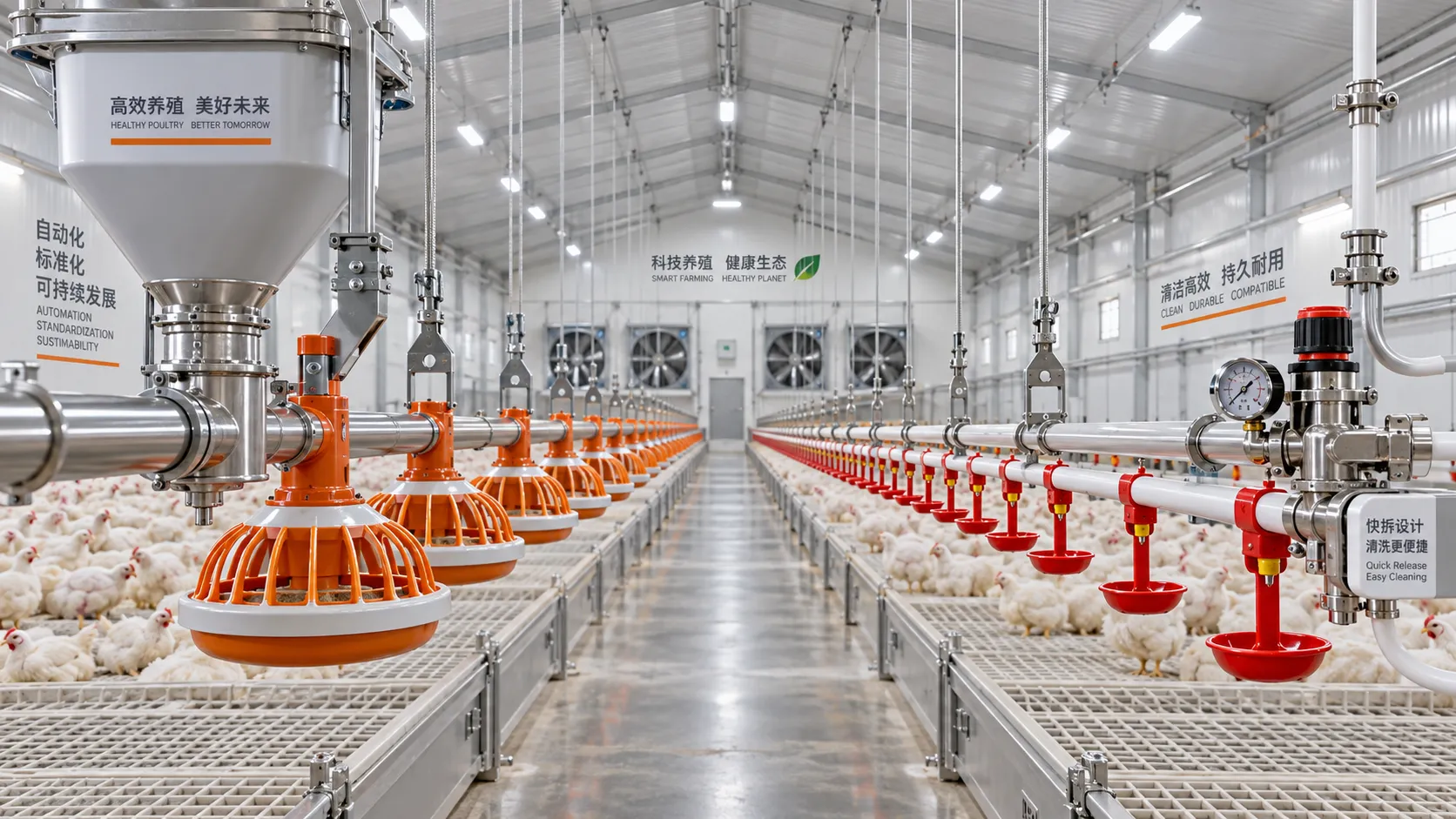
Poultry Equipment Selection: Evaluating Durability, Cleaning, and Compatibility
Poultry equipments selection guide: evaluate durability, cleaning access, and system compatibility to improve hygiene, reduce downtime, and support efficient flock management.

How to Select Heavy-Duty Farm Implements for High-Acreage, High-Horsepower Operations
Heavy duty farm implements: learn how to match draft, hydraulics, hitch capacity, frame strength, and field conditions for reliable high-acreage performance.
Related News
- 00
0000-00
Automated Water-Saving Irrigation: How to Cut Water Use Without Reducing Crop Yields - 00
0000-00
How to Evaluate Drip Irrigation System Manufacturers for Large Farm Projects - 00
0000-00
Wireless Agricultural Automation for Remote Irrigation and Field Monitoring - 00
0000-00
Designing Water-Saving Drip Irrigation Systems for High-Value Orchards - 00
0000-00
How to Choose Irrigation Solutions for Arid Regions Based on Water Source and Crop Needs
Popular Tags
Hydrological Resource Strategist
Weekly Insights
Stay ahead with our curated technology reports delivered every Monday.