
How Accurate Is Satellite Positioning Under Real Field Conditions?
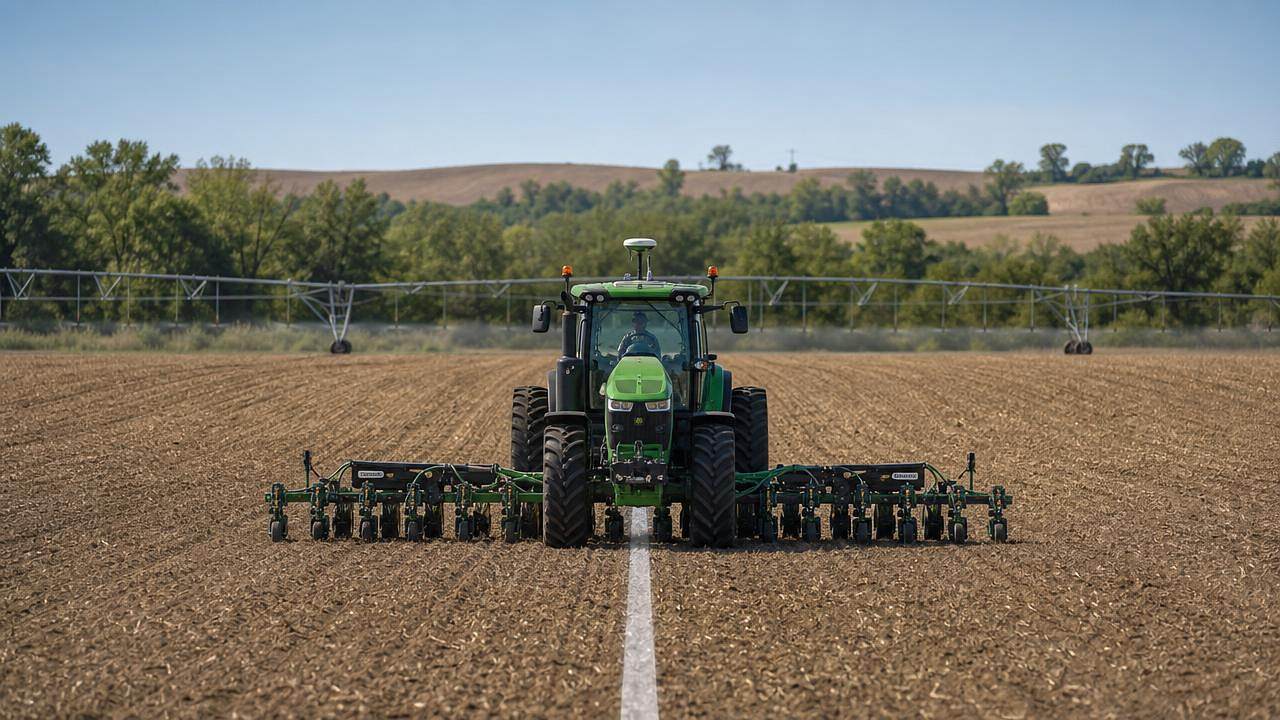




How accurate is satellite positioning when signals face canopy cover, terrain variation, machinery vibration, and changing weather in real field conditions? For technical evaluators in modern agriculture, the answer directly affects guidance, input placement, harvesting efficiency, and irrigation precision. This article examines the real-world performance limits of satellite positioning, the variables that reduce accuracy, and the correction strategies that determine whether positioning data is truly decision-grade.
In controlled demonstrations, satellite positioning can appear remarkably stable. In production fields, however, the gap between nominal accuracy and usable operational accuracy often becomes the key issue. A receiver rated at sub-meter performance may drift beyond 1 meter near tree lines, while a centimeter-level correction service may still underperform if antenna installation, machine dynamics, or signal latency are not properly managed.
For AP-Strategy readers evaluating tractors, combines, intelligent implements, and irrigation control systems, the practical question is not only “How accurate is satellite positioning?” but also “Under which field conditions, at what speed, over what pass length, and with what correction architecture?” Those details determine whether positioning data supports steering, section control, yield mapping, drainage layout, or prescription application with acceptable confidence.
What Satellite Positioning Accuracy Really Means in Agricultural Field Work
Satellite positioning accuracy is not a single number. Technical evaluators usually need to separate at least 4 performance layers: absolute accuracy, pass-to-pass accuracy, repeatability over time, and integrity under signal stress. A system that maintains 15–20 cm pass-to-pass consistency for 20 minutes may still fail a strip-till or controlled-traffic requirement if repeatability shifts by 30–50 cm the next day.
In broadacre agriculture, different tasks tolerate different error windows. General scouting or coarse asset tracking may remain useful at 1–3 m accuracy. Spraying and fertilizer section control typically benefit from 10–30 cm performance. Row crop planting, banding, and guidance on narrow spacing often require 2.5–5 cm repeatable accuracy, especially where overlap cost or crop damage accumulates over hundreds of hectares.
Common accuracy categories used in technical evaluation
When comparing systems, evaluators should check whether the vendor refers to standalone GNSS, SBAS, differential correction, network RTK, or local RTK. These are not interchangeable performance claims. The headline number may describe static test results rather than moving machinery under vibration, pitch, and multipath reflection from metal components or nearby structures.
- Standalone GNSS: often around 1–3 m in open-sky conditions.
- SBAS-corrected positioning: commonly about 20–60 cm, depending on region and visibility.
- Decimeter differential services: often 5–15 cm pass-to-pass under suitable conditions.
- RTK or network RTK: typically 2–5 cm with stronger repeatability when correction links remain stable.
The table below translates positioning classes into field relevance for machinery and irrigation applications. This is where satellite positioning moves from specification language into operational fit.
The key conclusion is that “accurate enough” depends on task sensitivity. A combine harvesting a 12 m swath and a planter operating on 6-row narrow spacing can use the same satellite positioning hardware, yet the acceptable error threshold may differ by more than 10 times.
Why pass-to-pass and repeatability matter more than brochure claims
In real field operations, pass-to-pass accuracy often drives daily productivity because it controls overlap and skips over 100 m, 500 m, or 1 km passes. Repeatability matters when the machine must return to the same line after 24 hours, 7 days, or an entire season. Technical evaluators should verify both metrics, especially where controlled traffic, tramline matching, or permanent beds are used.
A common mistake is to compare systems only by static benchmark figures. Yet a receiver mounted on a high-clearance sprayer at 18–25 km/h, with boom motion and terrain-induced roll, experiences a very different positioning environment than a static rooftop test. For machinery procurement, moving-platform performance should carry greater weight than laboratory precision.
What Reduces Satellite Positioning Accuracy Under Real Field Conditions
Field accuracy degrades when signal geometry, receiver quality, machine installation, correction latency, and local environment interact. In agriculture, these factors rarely appear one at a time. A machine may face partial canopy shading, side-slope roll, cellular correction dropouts, and vibration within the same 30-minute operation window.
Canopy cover, shelterbelts, and terrain masking
Trees, orchard canopies, forest edges, and steep embankments can reduce visible satellites and distort signal paths. This leads to weaker geometry and higher dilution of precision. Even where a receiver still reports a position fix, confidence may fall sharply. In practical terms, a machine working along shelterbelts or terraced field edges can see error variation increase from a few centimeters to several decimeters.
Low sky visibility also lengthens re-convergence after interruption. If correction lock is lost for 10–30 seconds, recovery may not be immediate. On short headlands or irregular fields, that delay can produce skipped rows, section misfires, or uneven water application in variable irrigation zones.
Machine vibration, antenna placement, and implement drift
Satellite positioning accuracy is never just about the receiver. Mounting location matters. Antennas placed near exhaust stacks, cab edges, grain tank structures, or moving hydraulic components may suffer obstruction or reflected signal noise. On tractors and combines, poor mounting can add small but persistent heading or lateral errors that become costly over 500–800 passes in a season.
Implement drift is another overlooked issue. The tractor may hold line within 2.5 cm, but a side-drafting planter, cultivator, or toolbar can deviate 5–12 cm in slope or loose soil conditions. For technical evaluators, this means the true measurement target is implement accuracy at the point of work, not just roof antenna accuracy.
Three installation checkpoints
- Place the antenna on a stable, central, high-visibility position with minimal metal obstruction.
- Calibrate vehicle dimensions, axle offsets, and implement geometry after any hardware change.
- Validate dynamic accuracy at working speed, such as 8–12 km/h for planting or 20 km/h for spraying.
Weather, ionospheric effects, and correction link stability
Rain itself is usually less damaging than obstruction and communication instability, but weather-related atmospheric change can still affect signal quality. More importantly, storms or poor cellular coverage may interrupt correction delivery. A network RTK solution can perform at 2–3 cm one hour and degrade to float-level accuracy later if the modem loses stable connection for several minutes.
For remote operations, evaluators should treat correction delivery as part of the positioning system, not as a separate utility. If 4G coverage drops below a workable threshold across lowland areas, a theoretically precise subscription service may produce inconsistent field outcomes. In those cases, local radio RTK, buffered corrections, or hybrid fallback modes deserve serious consideration.
The following table summarizes typical real-world factors that influence satellite positioning and the operational symptoms they create in modern field equipment.
For technical assessment, the most important point is interaction effect. One moderate risk factor may be manageable, but 3 factors combined often push satellite positioning below decision-grade quality for precision tasks.
How to Evaluate Whether Positioning Data Is Decision-Grade
A rigorous evaluation should measure performance under the exact operating conditions in which the system will be used. That includes crop stage, machine speed, field geometry, communications environment, and attachment type. A 1-hour test in flat open sky is not enough if the machine normally works under partial canopy, in rolling terrain, or across dispersed fields with inconsistent correction coverage.
A practical 5-step field validation protocol
- Define task tolerance: for example, 2–5 cm for row planting, 10–15 cm for broadacre nutrient placement, or under 30 cm for non-critical mapping.
- Test in at least 3 environments: open field, boundary-obstructed field, and sloped or irregular terrain.
- Run multiple speeds, such as 8 km/h, 15 km/h, and 22 km/h, depending on machinery class.
- Measure both vehicle path and implement path over repeated passes of 200–500 m.
- Log correction dropouts, reacquisition time, and deviation during the first 30–60 seconds after signal recovery.
This process helps distinguish random noise from repeatable weakness. It also reveals whether a system is suitable for combine guidance only, or robust enough for planter control, controlled traffic farming, or irrigation line surveying.
Which metrics should procurement teams compare?
Procurement and engineering teams often overemphasize nominal correction type while underweighting integration quality. A better comparison model includes hardware, correction service, machine interface, diagnostics, and after-sales support. The decision should reflect total field usability over a full season, not just entry cost.
- Pass-to-pass accuracy over 15 minutes and 2 hours
- Day-to-day repeatability after 24 hours and 7 days
- Recovery time after a 10-second or 60-second correction loss
- Compatibility with autosteer, section control, ISOBUS tools, and irrigation planning software
- Local service response time, ideally within 24–72 hours during peak season
Frequent evaluation mistakes
One common mistake is assuming higher satellite count always guarantees better performance. More constellations help, but field results still depend on antenna quality, firmware tuning, correction reliability, and machine calibration. Another mistake is validating only the receiver while ignoring implement side-shift, terrain compensation, and display-to-controller latency.
A third mistake is ignoring seasonal variability. Satellite positioning may test well after harvest in open stubble but behave differently when summer canopy, moisture, and field traffic patterns change. Evaluators should review performance across at least 2 operational windows if the intended use spans planting, in-season treatment, and harvest.
Correction Strategies and System Design Choices That Improve Accuracy
When field conditions are difficult, better results usually come from system design, not from a single hardware upgrade. Satellite positioning accuracy improves when correction source, mounting design, inertial compensation, and workflow discipline are aligned with the job requirement. In other words, a 3 cm target needs more than a premium receiver; it needs a coherent architecture.
Choosing between standalone, subscription correction, and RTK
The right correction strategy depends on operating geography, crop value, machine count, and repeatability needs. For single-machine broadacre work in open landscapes, decimeter services may offer a practical balance between cost and performance. For high-value row crop operations, drainage layout, or permanent traffic lanes, RTK-grade repeatability is usually more defensible.
The table below provides a procurement-oriented view of common correction options for technical evaluators in mechanized agriculture.
The practical takeaway is that the correction method must match the agronomic value of the task. Paying for centimeter-level service without validating field communications and implement behavior can waste budget. Using low-precision correction for high-accuracy row work can cost more through overlap, skips, and rework.
Integration with sensors, IMUs, and machine control
Satellite positioning performs better in real field conditions when paired with inertial measurement units, terrain compensation, and machine control logic that can smooth short signal interruptions. On slopes or rough ground, fused positioning can reduce line instability compared with GNSS-only guidance. This matters for tractors pulling wide implements and for combines where body roll and header width amplify small positioning errors.
For intelligent irrigation, integrating satellite positioning with field survey data, pressure zones, and sensor feedback helps maintain placement quality even when local signal conditions fluctuate. In these workflows, the objective is not simply to locate a point, but to support a repeatable spatial decision process across months or seasons.
Maintenance and service factors that preserve usable accuracy
Accuracy can degrade over time because of loose mounts, cable wear, firmware mismatch, poor calibration after implement changes, or unmonitored correction subscriptions. A strong maintenance routine often prevents more field error than replacing hardware prematurely.
- Inspect antenna mount rigidity every 250 operating hours or at each seasonal setup.
- Recalibrate offsets after tire changes, axle adjustments, or implement replacement.
- Check correction subscription status and communication signal before each major operation window.
- Record recurring deviations by field zone to identify canopy, terrain, or network-related patterns.
For distributors, OEMs, and farm engineering teams, service readiness is part of performance. During planting or harvest, a 48-hour support delay may be more damaging than a modest hardware price difference. That is why technical evaluation should include vendor diagnostics capability, local field support, and update management.
What Technical Evaluators Should Ask Before Approving a System
A robust approval process should test whether satellite positioning can deliver operational value under actual deployment conditions. The right questions help separate nominal precision from deployable precision.
Key approval questions
- What accuracy threshold is required for each task: mapping, spraying, planting, harvesting, or irrigation layout?
- How does the system perform after 1 correction dropout, 3 dropouts, or a full reconnection cycle?
- Does the measured error reflect machine centerline or actual tool position?
- Is local service support available during critical 2–8 week seasonal peaks?
- Can the platform scale from one machine to a fleet without creating inconsistent line sets or data formats?
These questions are especially relevant in mixed fleets where tractors, combines, and intelligent tools may come from different suppliers. Interoperability issues can undermine otherwise strong satellite positioning performance if correction formats, guidance lines, or data export protocols do not align.
Under real field conditions, satellite positioning can range from meter-level utility to centimeter-grade precision, but only when the entire field system supports that result. Accuracy is shaped by canopy cover, terrain, machine dynamics, correction stability, implement behavior, and maintenance discipline. For technical evaluators, the most reliable approach is to assess task-specific tolerance, validate under working conditions, and select correction architecture based on repeatable field outcomes rather than brochure figures alone.
At AP-Strategy, we focus on the connection between positioning performance and agricultural decision quality across large-scale machinery, combine operations, intelligent tools, and water-saving irrigation systems. If you are comparing positioning solutions, validating field-ready precision, or planning a machinery upgrade path, contact us to get a tailored evaluation framework, discuss product details, or explore more precision agriculture solutions.
Related News

When Does Agricultural Machinery Leasing Cost Less Than Owning Equipment?
Agricultural machinery leasing can lower farm costs when use is seasonal or uncertain. Compare utilization, maintenance, cash flow, and risk to make a smarter equipment decision.
How to Evaluate Precision Fertilization System Suppliers for Farm-Scale Deployment
Precision fertilization systems suppliers: learn how to compare accuracy, integration, uptime, service, and total cost for confident farm-scale deployment.
ISOBUS for Smart Agriculture: How It Connects Tractors, Implements, and Farm Data
ISOBUS for smart agriculture connects tractors, implements, terminals, and farm data—helping growers improve precision, documentation, and smarter field decisions.
Automated Water-Saving Irrigation: How to Cut Water Use Without Reducing Crop Yields
Automated water-saving irrigation helps farms cut water use, protect crop yields, improve scheduling, and gain reliable control with sensors, flow monitoring, and smart zones.
Selecting Grain Farm Equipment by Acreage, Crop Mix, and Harvest Window
Agricultural equipment selection for grain farming: match machinery to acreage, crop mix, and harvest windows to improve uptime, efficiency, and returns.
Poultry Equipment Selection: Evaluating Durability, Cleaning, and Compatibility
Poultry equipments selection guide: evaluate durability, cleaning access, and system compatibility to improve hygiene, reduce downtime, and support efficient flock management.
How to Select Heavy-Duty Farm Implements for High-Acreage, High-Horsepower Operations
Heavy duty farm implements: learn how to match draft, hydraulics, hitch capacity, frame strength, and field conditions for reliable high-acreage performance.
Smart Farming Technology for Dairy Farms: Where Automation Delivers Measurable ROI
Smart farming technology for dairy farms delivers measurable ROI through automation, precision feeding, health monitoring, and data-driven cost control.
How to Select a Heavy-Duty Seeder for Large Acreage and High-Residue Fields
Heavy duty seeders for large acreage: compare residue handling, depth control, downforce, metering accuracy, and precision features to select the right model.
Related News
- 00
0000-00
ISOBUS for Smart Agriculture: How It Connects Tractors, Implements, and Farm Data - 00
0000-00
How North American Farms Can Select Crop Monitoring Systems by Acreage and Connectivity - 00
0000-00
How Tractor Intelligence Systems Improve Field Efficiency and Input Accuracy - 00
0000-00
Which equipment for larger fields maintains accuracy at higher speeds? - 00
0000-00
What should a digital ag platform integrate before a farm-wide rollout?
Popular Tags
Tractor Power Architect
Weekly Insights
Stay ahead with our curated technology reports delivered every Monday.