
Which intelligent farm tools deliver real field ROI?
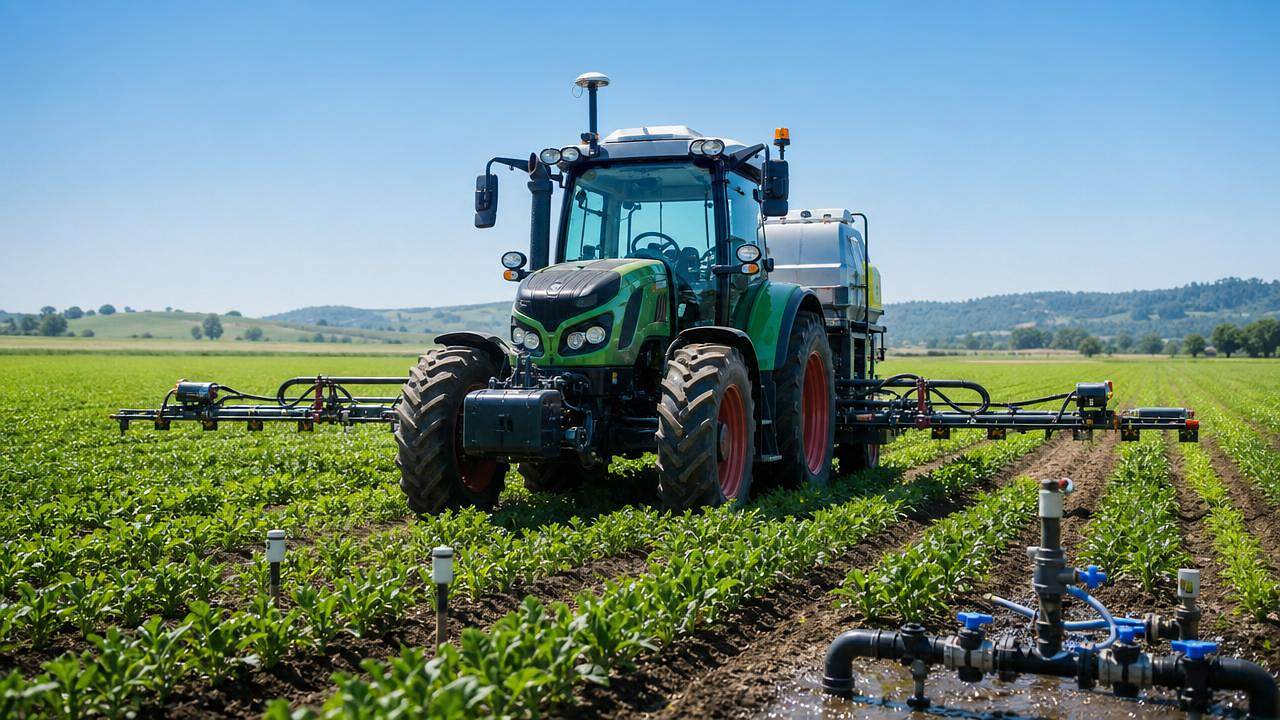




For procurement teams, the real question is no longer whether intelligent farm tools are advanced, but whether they can deliver measurable ROI in demanding field conditions. From sensor-guided implements and prescription application systems to smart irrigation controls and autonomous-ready attachments, buyers must evaluate performance gains, compatibility, serviceability, and long-term operating costs. This article explores which technologies translate Agriculture 4.0 promises into practical value, helping decision-makers identify tools that improve productivity, reduce waste, and support smarter equipment investment strategies.
What makes intelligent farm tools worth procurement attention?
Intelligent farm tools are not simply digital accessories. They combine mechanical functions, positioning data, sensor feedback, control software, and field-ready actuation.
For buyers, value appears when a tool changes an operational outcome: fewer passes, lower input waste, better crop uniformity, or reduced operator dependency.
AP-Strategy evaluates intelligent farm tools through the connection between machinery performance, precision algorithms, irrigation efficiency, and commercial feasibility across long equipment cycles.
- Field productivity: Does the tool increase hectares covered per day without creating maintenance bottlenecks?
- Input control: Can fertilizer, seed, chemical, or water be applied according to prescription maps or sensor readings?
- Fleet compatibility: Will the system integrate with tractors, combines, pumps, terminals, and existing farm software?
- Service resilience: Are wear parts, firmware support, calibration skills, and diagnostics available in the target market?
The strongest purchasing cases usually combine agronomic benefit with mechanical reliability, rather than relying on software claims alone.
Which intelligent farm tools deliver the clearest field ROI?
ROI differs by crop, region, labor cost, field size, and input price. Still, several categories repeatedly justify attention in procurement reviews.
The following comparison helps purchasing teams link intelligent farm tools to measurable operating levers before requesting quotations or trials.
The table shows why “advanced” is not enough. Intelligent farm tools must address a specific cost center or yield-loss mechanism.
AP-Strategy often recommends ranking opportunities by payback visibility, not by feature count. A simple controller can outperform a complex system if implementation is reliable.
Fast-payback technologies for cost-sensitive buyers
When budgets are limited, prioritize intelligent farm tools that reduce consumables immediately, such as spot spraying, irrigation automation, and variable-rate application.
Strategic technologies for large fleets
For larger operations, autonomous-ready implements, fleet telemetry, and harvester feedback systems may justify longer payback through labor optimization and asset utilization.
How should procurement teams evaluate technical performance?
Procurement teams need performance metrics that connect engineering claims with field economics. Brochure language rarely explains calibration stability or downtime exposure.
Before approving intelligent farm tools, request evidence from comparable crops, field conditions, tractor power classes, and communication environments.
Strong suppliers can explain both nominal performance and practical limitations. Vague answers indicate future risk for commissioning, maintenance, and user adoption.
AP-Strategy’s Strategic Intelligence Center encourages buyers to combine technical scoring with lifecycle analysis, especially for long-cycle agri-equipment investments.
Which field scenarios benefit most from intelligent farm tools?
Not every farm needs the same digital stack. The right investment depends on agronomic variability, equipment intensity, water constraints, and operator availability.
Procurement teams can use scenario mapping to avoid buying impressive technology that does not match operational constraints.
High-input row crop production
Variable-rate planters, fertilizer applicators, and section control systems can reduce overlap while supporting population adjustments across soil zones.
Large-scale grain harvesting
Yield mapping, loss monitoring, and cleaning-system feedback help combine fleets reduce invisible losses during compressed harvest windows.
Water-stressed irrigation networks
Smart valves, soil moisture sensors, pump automation, and evapotranspiration-based scheduling can reduce water and energy waste.
Labor-constrained mixed farms
Guidance systems, implement automation, and remote diagnostics help less-experienced operators maintain consistent field quality under time pressure.
- Choose sensor-heavy systems where input savings are measurable and field variability is clearly documented.
- Choose automation tools where labor cost, operator fatigue, or machine utilization creates the main constraint.
- Choose irrigation intelligence where water allocation, pumping cost, or climate volatility affects production risk.
Intelligent farm tools deliver stronger value when buyers begin with the field problem, then work backward to sensors, software, and mechanical interfaces.
What cost factors are often missed in ROI calculations?
Initial purchase price is only one part of the business case. Hidden costs can reshape ROI after the first season.
A realistic budget for intelligent farm tools should include installation, calibration, training, connectivity, subscriptions, spare parts, and seasonal support.
The most credible ROI model uses conservative yield gains and documented input savings. It should also include downtime risk during short weather windows.
For distributors, these cost factors influence inventory planning, technician training, and after-sales capacity just as much as product margin.
How to build a practical procurement checklist?
A structured checklist reduces selection errors when comparing brands, specifications, quotations, and local service promises.
The goal is to create a decision trail that links intelligent farm tools to measurable field requirements and commercial obligations.
- Define the field constraint first, such as chemical waste, irrigation timing, harvest loss, operator inconsistency, or fuel-intensive overlap.
- Confirm compatibility with tractors, hydraulic capacity, terminals, implement geometry, GNSS correction services, and farm management platforms.
- Request a commissioning plan that covers installation, calibration, acceptance testing, operator training, and first-season support.
- Compare total cost over three to five seasons, including subscriptions, software updates, replacement sensors, and dealer service visits.
- Set acceptance criteria before purchase, such as section control response, application accuracy, moisture-sensor reporting, or loss-monitor calibration.
Compatibility questions buyers should not skip
Ask whether the system supports common agricultural communication practices, including ISOBUS where relevant, documented data export, and stable terminal integration.
For water-saving irrigation systems, confirm pump control logic, valve power supply, sensor cable protection, and local water-quality considerations.
For combine-related systems, verify whether the tool is designed for crop moisture variation, residue load, slopes, and cleaning-system adjustments.
What standards and compliance points should buyers consider?
Compliance is not limited to export paperwork. It affects electrical safety, electromagnetic compatibility, data handling, chemical application, and irrigation efficiency.
Because intelligent farm tools often connect electronics with hydraulics, pumps, actuators, and cloud platforms, procurement teams should review documentation early.
- Check regional requirements for electrical safety, EMC performance, radio modules, and wireless communication approvals.
- For sprayers and fertilizer equipment, review calibration procedures, application accuracy claims, and chemical-residue risk controls.
- For irrigation intelligence, examine pressure ratings, filtration requirements, water-use reporting, and pump protection logic.
- For data platforms, clarify data ownership, export rights, user access control, and retention policies.
Why documentation quality predicts service quality
A supplier that provides clear manuals, wiring drawings, calibration steps, and troubleshooting guides is usually easier to support after delivery.
Procurement teams should treat incomplete documentation as a commercial risk, especially for cross-border equipment distribution and multi-site deployment.
Common misconceptions about intelligent farm tools
Misunderstandings can lead to overspending, poor adoption, or disappointed field managers. Smart procurement separates practical automation from unrealistic expectations.
Misconception 1: More sensors always mean better decisions
Additional sensors help only when data quality is stable and operators know how decisions will change. Unused data becomes an operating burden.
Misconception 2: Software can compensate for weak mechanics
Algorithms cannot fully correct poor metering hardware, worn nozzles, unstable pressure, weak frames, or inadequate hydraulic response.
Misconception 3: ROI is identical across regions
Input prices, water scarcity, field size, labor cost, and service networks differ widely. Intelligent farm tools require localized business cases.
FAQ for procurement teams comparing intelligent farm tools
The following questions reflect common concerns from buyers who must balance innovation, delivery timing, budget control, and field reliability.
How long does payback usually take?
Payback depends on acreage, input savings, crop value, and utilization. Tools reducing chemical, seed, fertilizer, or water waste often show clearer first-stage ROI.
Are intelligent farm tools suitable for older tractors?
Some systems can retrofit older tractors, but buyers must verify power supply, hydraulic capacity, mounting points, terminal options, and communication interfaces.
What should be tested before bulk procurement?
Test calibration repeatability, operator workflow, data export, spare part access, sensor durability, and support response during realistic field operations.
Should buyers choose one integrated platform or mixed suppliers?
Integrated platforms simplify support, while mixed suppliers may improve specialization. The safer choice depends on interoperability, service depth, and upgrade flexibility.
Why work with AP-Strategy before finalizing procurement?
AP-Strategy helps procurement teams interpret intelligent farm tools through machinery performance, precision farming algorithms, irrigation strategy, and commercial intelligence.
Our Strategic Intelligence Center tracks large-scale agri-machinery, combine harvesting technology, tractor chassis evolution, prescription farming, and water-saving irrigation systems.
Buyers can consult AP-Strategy for parameter confirmation, product selection logic, delivery risk review, certification considerations, sample evaluation, and quotation comparison.
For distributors and fleet investors, we support technology roadmap discussions, regional demand analysis, service-readiness evaluation, and long-cycle asset allocation planning.
- Clarify which intelligent farm tools match your crop, field size, irrigation structure, and machinery fleet.
- Compare specifications against practical field conditions, not only catalog descriptions.
- Prepare supplier questions covering compatibility, service parts, data access, training, and commissioning responsibilities.
- Build an ROI framework that reflects input costs, labor pressure, water scarcity, and harvest-window risk.
Contact AP-Strategy to discuss your target application, required parameters, expected delivery schedule, certification concerns, and procurement comparison needs.
With the right intelligence, intelligent farm tools become more than equipment upgrades. They become disciplined investments in productivity, sustainability, and smarter cultivation.
Related News
Choosing a Digital Farming Platform Provider: Compatibility and Data Ownership
Compare digital farming platforms providers on equipment compatibility, data ownership, and export rights. Discover practical checks to avoid lock-in and choose with confidence.
How Large-Scale Farm Telematics Cuts Downtime Across Mixed Fleets
Large-scale farm equipment telematics cuts mixed-fleet downtime with real-time alerts, smarter maintenance, and stronger operational control. Learn how to protect critical farm workflows.
How to Size Low-Pressure Water-Saving Irrigation Systems for Uneven Fields
Low pressure water-saving irrigation systems for uneven fields: learn zoning, pressure mapping, pipe sizing, and pump selection to improve uniformity and reduce water waste.
Farm Machinery Sourcing: How to Vet Suppliers, Specs, and Lifecycle Costs
Farm machinery information for sourcing: learn to vet suppliers, compare specifications, control lifecycle costs, and secure reliable uptime for smarter equipment purchases.
What to compare in integrated seeding combinations for heavy soils
Compare integrated seeding combinations for heavy soils: depth control, residue flow, consolidation, traction, and field capacity for more uniform crop establishment.
When an integrated seeding combination improves field efficiency
Integrated seeding combination improves field efficiency, protects planting windows, and balances speed with seedbed quality, tractor capacity, and reliable establishment.
Which costs matter most when calculating precision agriculture ROI?
Calculating ROI on precision agriculture equipment? Discover the costs that shape returns, from installation and subscriptions to downtime, labor, and data integration.
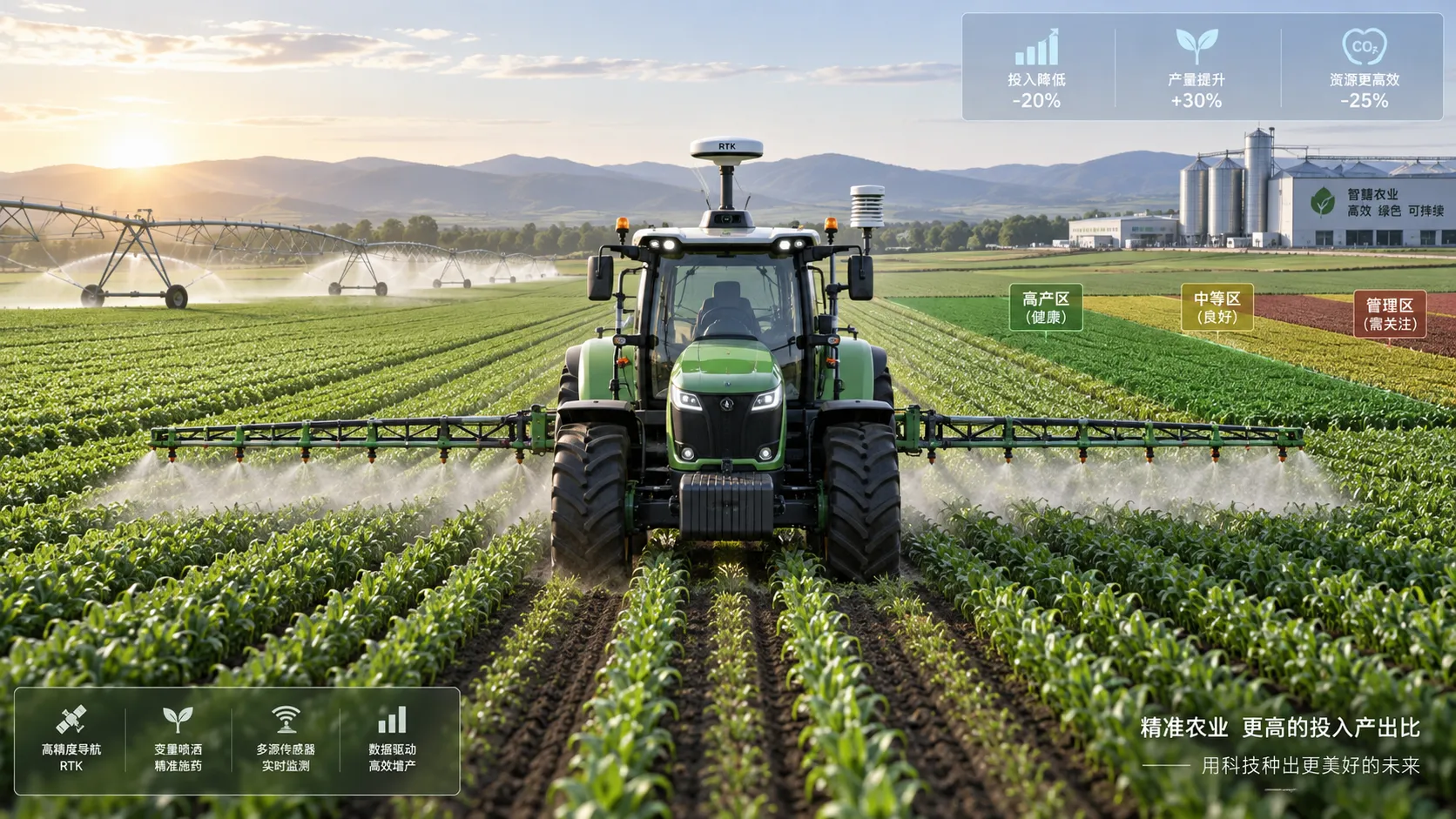
How to calculate ROI on precision agriculture equipment before buying
Calculating ROI on precision agriculture equipment: learn to assess total ownership costs, savings, payback, NPV, risks, and farm-scale value before you buy.
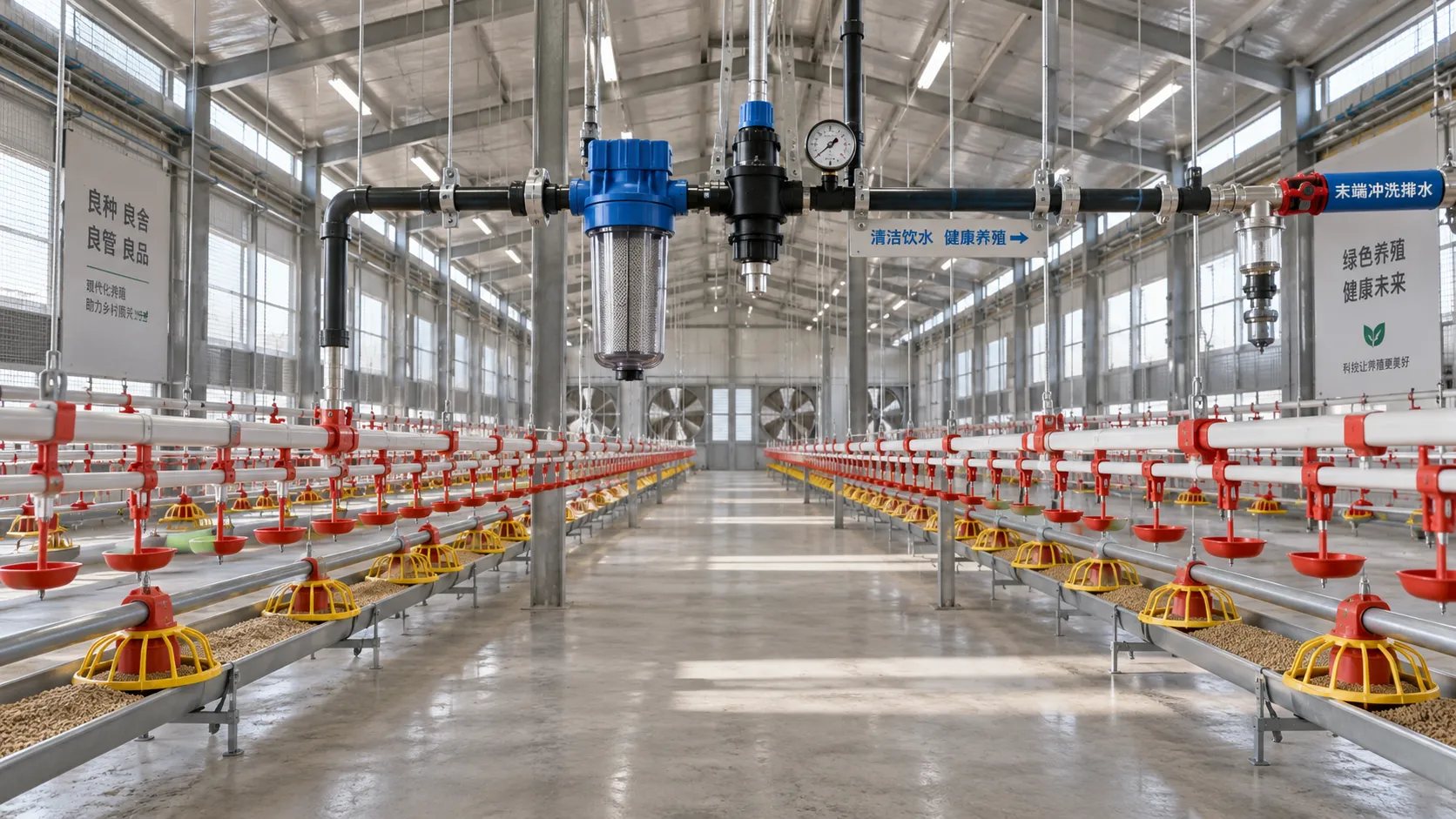
Planning Nipple Drinker Installation for Different Chicken House Layouts
How to install nipple drinker for chicken houses: plan line layouts, pressure control, flushing access, and maintenance for reliable water delivery.
Related News
- 00
0000-00
What separates robotic automation providers for equipment production? - 00
0000-00
Which field data collection provider fits an agricultural robotics program? - 00
0000-00
How Autonomous Machinery for Crop Scouting Helps Growers Detect Field Issues Earlier - 00
0000-00
How to Evaluate Autonomous Machinery for Vineyards by Terrain, Tasks, and ROI - 00
0000-00
Brazil ANVISA Rule Requires Portuguese Risk Labels for Farm Robots
Popular Tags
Tractor Power Architect
Weekly Insights
Stay ahead with our curated technology reports delivered every Monday.