
EU Stage V Rule Adds OBD Mandate for CVT Exports





EU Stage V Rule Adds OBD Mandate for CVT Exports
Image distribution plan: No image placeholders are required for this article because the requested placeholder quantity is zero.
From June 1, 2026, the European Union fully enforces Stage V emission requirements for non-road mobile machinery, affecting CVT transmission exports because newly certified and imported systems must integrate real-time OBD modules aligned with ISO 22839 and pass EU Type-Approval verification.
What Has Been Confirmed Under the New Requirement
The confirmed event date is June 1, 2026. From that date, the European Union fully applies Stage V emission rules for non-road mobile machinery, commonly referred to as NRMM.
Under the stated requirement, all newly certified and imported CVT transmission systems must include a real-time onboard diagnostics module that complies with ISO 22839. The products must also pass EU Type-Approval verification.
Products that do not meet the requirement may be refused customs clearance or removed from sale. The rule directly affects Chinese agricultural machinery manufacturers and core component exporters serving the European market, particularly in delivery scheduling and technical adaptation costs.
Where the Pressure Falls Across the Value Chain
Exporters handling direct trade with Europe
Direct trade companies are affected because customs clearance and market access are tied to compliance with the Stage V-related OBD and EU Type-Approval requirements. The impact is most visible in export documentation, shipment timing, customer delivery commitments, and product compliance declarations.
These companies may need to pay closer attention to whether each shipment involves newly certified or imported CVT transmission systems, whether the OBD module is documented against ISO 22839, and whether EU Type-Approval verification has been completed before dispatch.
Procurement teams sourcing components and subsystems
Procurement companies and purchasing departments are affected because CVT transmission compliance now depends not only on the transmission assembly itself but also on the readiness of diagnostic modules and related technical documentation.
The impact may appear in supplier selection, component specification review, purchasing lead times, and contract terms. Buyers should monitor whether suppliers can provide ISO 22839-aligned diagnostic modules and whether the purchased subsystem supports the verification process required for EU Type-Approval.
Manufacturers integrating CVT systems into machinery
Processing and manufacturing companies are affected because integration of a real-time OBD module may require technical adaptation before the final machinery or core component package can be accepted for European delivery.
Business links likely to require attention include engineering design, assembly coordination, testing preparation, product configuration management, and technical file consistency. Manufacturers should verify that the CVT transmission, diagnostic module, and approval documentation are aligned before export schedules are confirmed.
Supply chain service providers supporting clearance and delivery
Supply chain service companies are affected because non-compliant products may face customs refusal or sales removal. This places greater importance on pre-shipment compliance review, document checking, and coordination between exporters, logistics providers, customs brokers, and European buyers.
Service providers may need to watch for changes in required paperwork, approval evidence, shipment routing risks, and last-mile delivery timing when products fall within the scope of NRMM-related Stage V enforcement.
Practical Priorities for Companies Preparing Shipments
Confirm the approval status before accepting European orders
Companies should review whether products intended for Europe are newly certified or imported CVT transmission systems subject to the requirement. If so, the compliance route should include an OBD module aligned with ISO 22839 and EU Type-Approval verification before commercial delivery is committed.
Align technical specifications with the OBD requirement
The real-time diagnostic module should be treated as a mandatory technical element rather than an optional feature. Exporters and manufacturers should ensure that product specifications, customer technical files, and internal engineering records all reflect the same OBD configuration.
Recheck delivery plans against certification timing
Because non-compliant products may be refused customs clearance or removed from sale, delivery schedules should leave room for technical adaptation and verification. Companies serving European buyers may need to reassess lead times, shipment cut-off dates, and purchase order milestones.
Strengthen supplier and document control
Suppliers providing diagnostic modules or CVT-related components should be assessed for their ability to support ISO 22839 alignment and EU Type-Approval documentation. Technical files, test-related materials, traceability records, and after-sales information should be consistent with the configured product delivered to Europe.
Industry Reading: Compliance Moves Closer to Product Design
From an industry perspective, this requirement indicates that emission-related compliance for non-road mobile machinery is moving deeper into core components and diagnostic capability, rather than remaining only at the final machine approval stage.
Analysis shows that the practical burden may fall on coordination between exporters, component suppliers, and machinery manufacturers. The need to integrate a real-time OBD module can affect engineering timelines, documentation preparation, and approval sequencing.
What deserves closer attention is the shift in purchasing and technical acceptance criteria. European buyers may place greater emphasis on verified diagnostic functions, approval readiness, and traceable compliance files when reviewing CVT transmission suppliers.
It is more appropriate to understand this as a compliance and delivery-risk issue rather than only a product upgrade. Without verified alignment to the stated requirements, exporters may face delays at customs or sales-channel restrictions.
Outlook for CVT Transmission Exporters
The June 1, 2026 enforcement of the EU Stage V requirement raises the compliance threshold for CVT transmission systems used in non-road mobile machinery. For Chinese agricultural machinery manufacturers and core component exporters, the key issue is to connect engineering adaptation, OBD integration, approval verification, and delivery planning in a more coordinated way.
A rational conclusion is that companies with earlier compliance review and tighter supplier coordination may be better positioned to manage shipment uncertainty. However, actual impact will still depend on implementation details, verification practices, and buyer requirements in subsequent transactions.
Information Basis and Items to Monitor
This article is based on the user-provided news title, event date, and event summary. Specific official source links were not provided in the input and should be verified continuously.
For this type of regulatory development, companies would typically monitor official regulatory publications, type-approval guidance, customs implementation notices, standards documentation, buyer compliance requirements, and market access instructions. Follow-up attention should be given to policy details, certification execution practices, tender document changes, customs review requirements, and industry feedback.
Related News
Choosing an Agriculture 4.0 Supplier: Compatibility, Support, and Total Cost
Choose an Agriculture 4.0 supplier with confidence. Learn how to verify compatibility, assess support, and compare total ownership costs to avoid hidden fees and costly downtime.
Low-Pressure Drip Irrigation: How to Fix Uneven Watering Without Raising Pressure
Optimize low pressure water-saving irrigation systems: discover how to fix uneven watering, clear blockages, and reduce hydraulic losses without raising supply pressure.
Comparing Farm Equipment Supplier Quotes: Price, Freight, and Warranty
Simplify supplier comparison for farm equipment price: assess freight, field-ready costs, and warranty coverage. Learn how to avoid hidden charges and choose a reliable supplier.
Choosing a Digital Farming Platform Provider: Compatibility and Data Ownership
Compare digital farming platforms providers on equipment compatibility, data ownership, and export rights. Discover practical checks to avoid lock-in and choose with confidence.
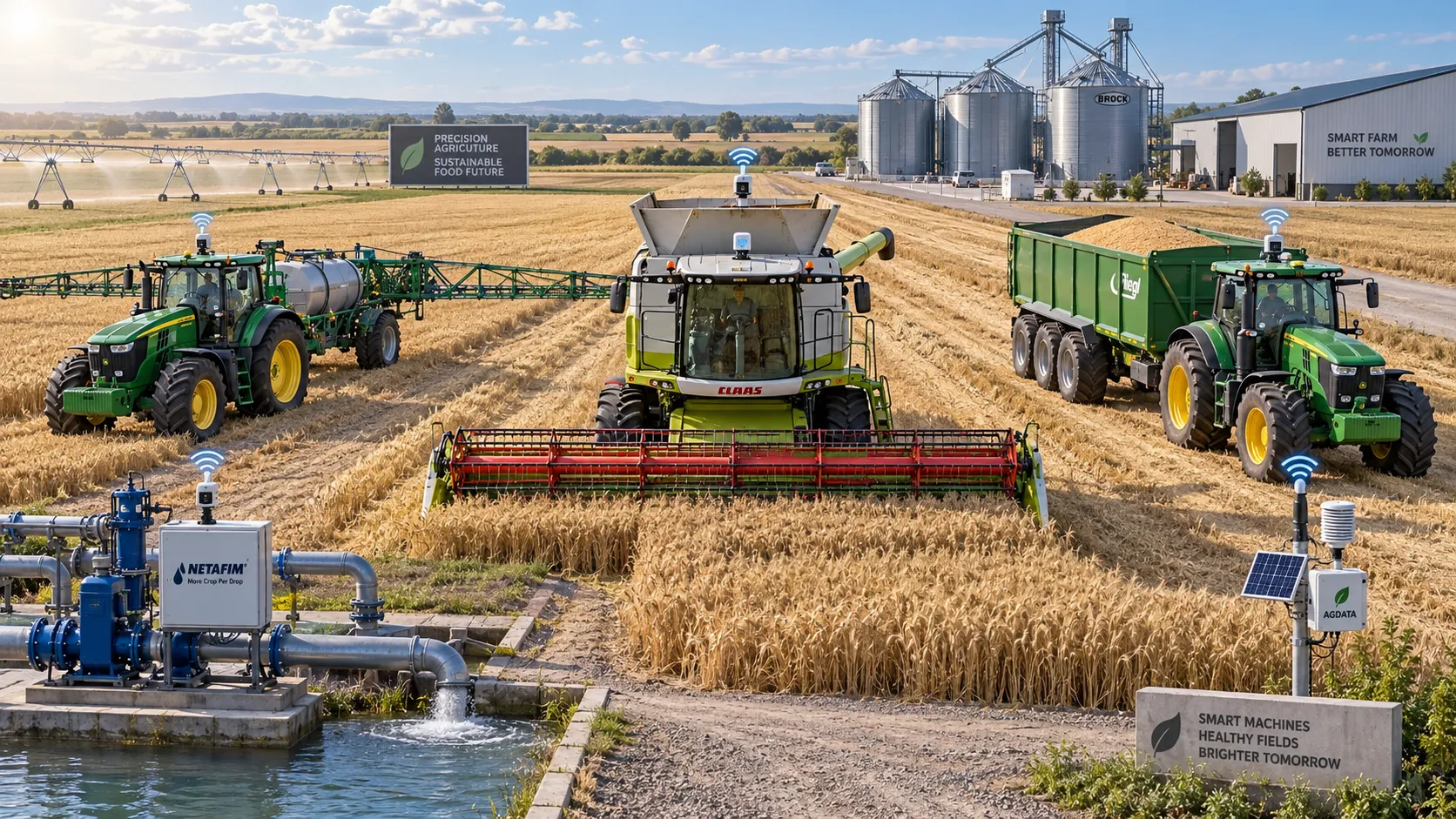
How Large-Scale Farm Telematics Cuts Downtime Across Mixed Fleets
Large-scale farm equipment telematics cuts mixed-fleet downtime with real-time alerts, smarter maintenance, and stronger operational control. Learn how to protect critical farm workflows.

How to Size Low-Pressure Water-Saving Irrigation Systems for Uneven Fields
Low pressure water-saving irrigation systems for uneven fields: learn zoning, pressure mapping, pipe sizing, and pump selection to improve uniformity and reduce water waste.

Farm Machinery Sourcing: How to Vet Suppliers, Specs, and Lifecycle Costs
Farm machinery information for sourcing: learn to vet suppliers, compare specifications, control lifecycle costs, and secure reliable uptime for smarter equipment purchases.

How telemetry for agriculture helps identify equipment downtime
Telemetry for agriculture helps detect early warning signs, prioritize maintenance, and reduce costly equipment downtime before field operations are disrupted.
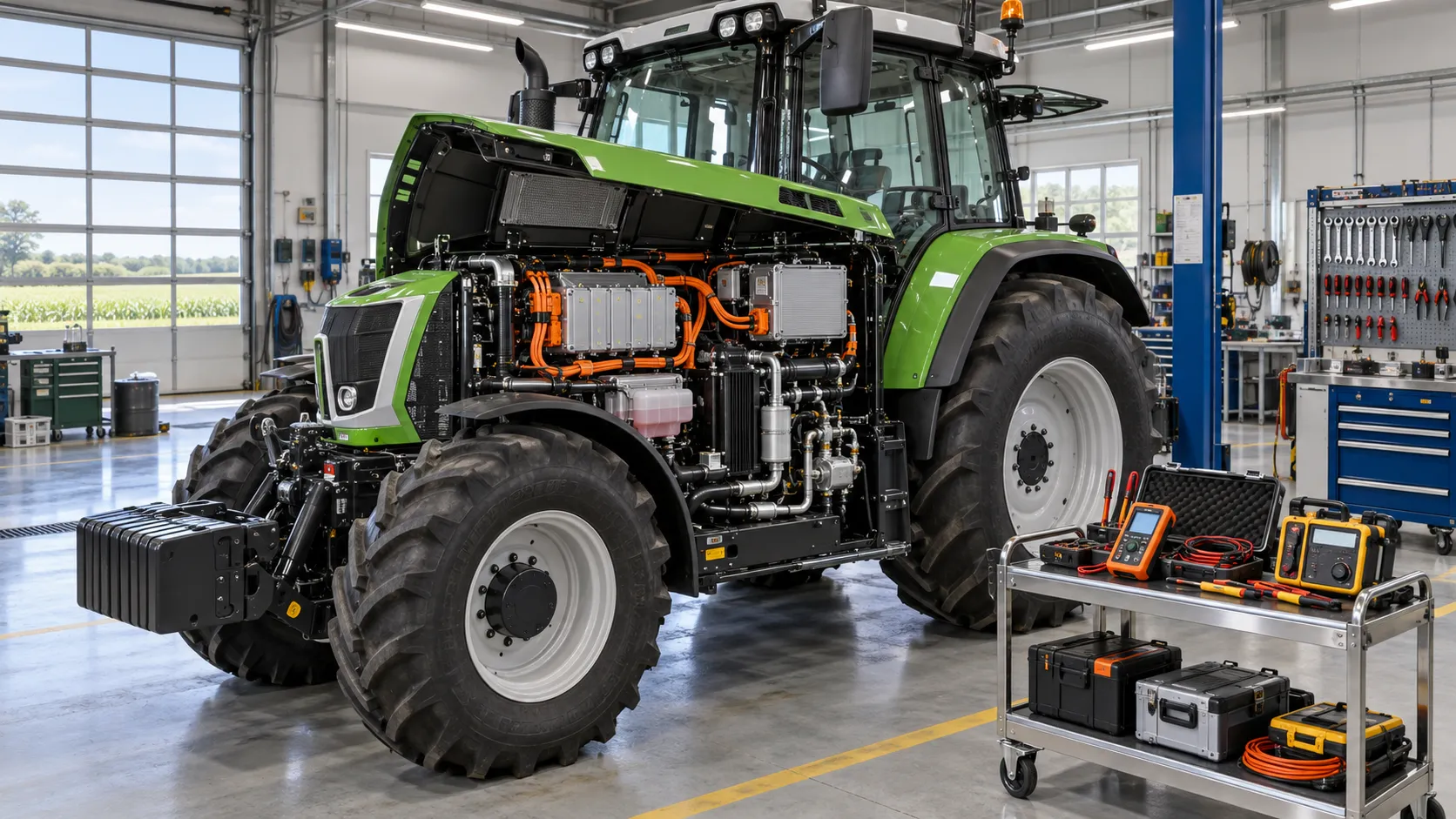
What maintenance challenges come with hybrid agricultural machines?
Hybrid agricultural machines demand smarter maintenance. Discover key challenges in high-voltage safety, batteries, software diagnostics, cooling, and parts planning.
Related News
- 00
0000-00
Fuel-Efficient Tractor Powertrain: Which Specs Matter Most for Total Operating Cost? - 00
0000-00
CVT Transmissions Price Explained: What Drives Cost in Agricultural Machinery? - 00
0000-00
Dedicated CVT Rail Link Signals New Export Execution Standard - 00
0000-00
TUV Rheinland Sets New ASIL-B Rule for CVT Systems - 00
0000-00
ANVISA Clears First China-Made Bio-Based CVT Fluid for Brazil
Popular Tags
Tractor Power Architect
Weekly Insights
Stay ahead with our curated technology reports delivered every Monday.