
EU Rule Takes Effect: EN 13845:2026 Required for Drip Irrigation Logic
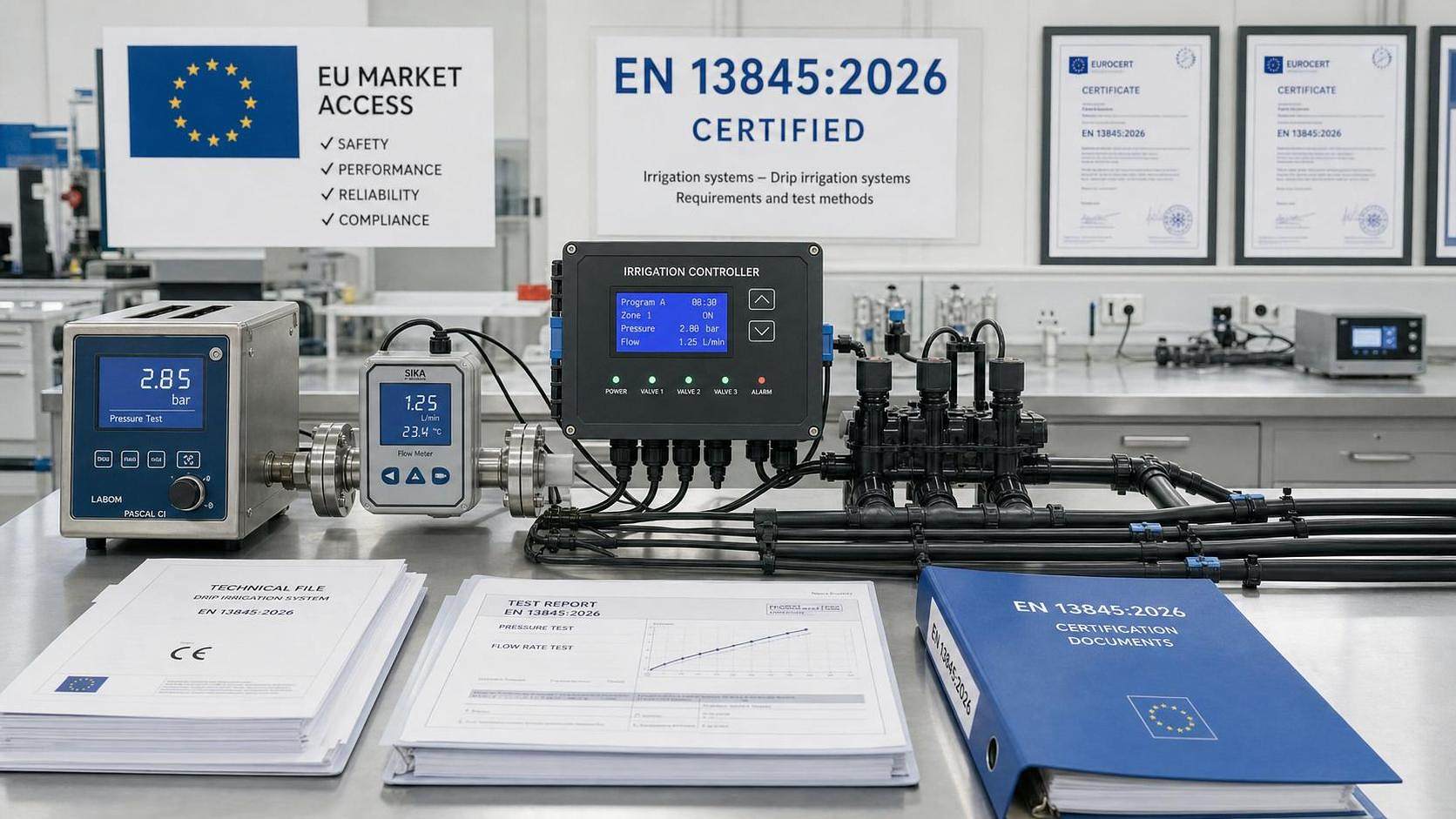




On July 15, 2026, the EU put into effect a revised compliance requirement for irrigation equipment under EU Regulation 2026/1128, making EN 13845:2026 certification a market-entry condition for Drip Irrigation Logic systems sold into the EU. For exporters, manufacturers, testing-related service providers, buyers, and distribution channels handling these products, the change deserves attention because it links technical performance, certification status, customs clearance, and continued product listing more directly than before.
What the new requirement now makes mandatory
According to the provided event information, all Drip Irrigation Logic products entering the EU market must pass the EN 13845:2026 dual certification covering water-saving performance and pressure stability. The updated standard adds hard indicators including real-time flow deviation of no more than +/-3.5% and smart valve set durability of at least 20,000 cycles. The same information states that the change directly affects type-testing arrangements for Chinese exporters and the updating of CE technical documentation. Products that do not obtain the required certification will face refusal at customs clearance or removal from sale.
Where the pressure will appear across the business chain
For exporters preparing EU shipments
These companies are the most directly exposed because the rule applies to products entering the EU market. The impact is likely to concentrate on pre-shipment compliance checks, product testing schedules, document readiness, and shipment release risk. What deserves closer attention is whether the product file, certification status, and CE technical documents are aligned before export, since the provided information indicates that uncertified products may be blocked from clearance or taken down from the market.
For manufacturers managing product design and validation
Manufacturing companies involved in Drip Irrigation Logic equipment may feel the effect through design verification and validation work. The newly stated thresholds on flow deviation and valve durability mean that technical performance must be evidenced through the relevant certification pathway. In practical terms, the affected links are likely to include type testing, internal performance checks, and document preparation tied to EN 13845:2026 and CE files.
For buyers, distributors, and channel operators handling EU-bound products
Procurement and distribution participants may be affected because certification status becomes part of product availability and sales continuity. From an industry perspective, purchasing decisions, supplier screening, and listing management are the business points that may need adjustment. Attention should be placed on whether the supplied model has completed the required certification and whether the related technical and compliance documents can support continued sale into the EU market.
For testing and certification-related service providers
Testing and certification-related firms may see changes in workload and timing because the event information specifically points to effects on type-test arrangements and CE technical file updates. Their role is likely to become more central in helping product suppliers verify whether the new EN 13845:2026 indicators have been addressed in the required documentation and testing sequence.
What companies should review now
Check whether product scope and certification scope match
Analysis shows that companies supplying Drip Irrigation Logic equipment into the EU should first verify whether the products they place on the market fall within the scope affected by the new requirement, and whether existing certification coverage, if any, corresponds to EN 13845:2026 rather than an earlier basis. This is especially relevant where market access depends on whether the certification status can support customs clearance and continued listing.
Revisit test plans against the new technical thresholds
Observably, the added thresholds on real-time flow deviation and smart valve durability make test planning a near-term issue rather than a later paperwork issue. Companies should pay close attention to whether type-testing schedules, sample preparation, and technical evidence are sufficient to address the stated +/-3.5% flow deviation limit and the 20,000-cycle durability requirement.
Update CE technical documentation with care
The provided information explicitly notes an effect on CE technical file updates. From an operational standpoint, exporters and manufacturers should review whether declarations, technical descriptions, performance evidence, and supporting records remain consistent with the revised EN 13845:2026 requirement. Where documentation lags behind the applied standard, the commercial risk may extend beyond testing into shipment timing and sales continuity.
Watch execution signals in procurement and delivery workflows
It is more appropriate to understand this stage as one where companies should monitor how the requirement is reflected in procurement documents, customer acceptance conditions, shipment reviews, and after-sales traceability expectations. The input does not provide detailed enforcement procedures, so businesses should treat these points as areas for continued verification rather than as settled practice.
Why this matters beyond a single technical update
Analysis shows that this development is not just a technical revision in isolation; it functions as a market-access signal. The immediate confirmed fact is that certification under EN 13845:2026 has become mandatory for the relevant products entering the EU. The broader industry meaning, based on the provided information, is that compliance for Drip Irrigation Logic equipment is moving closer to measurable performance thresholds that can affect export timing, document readiness, and sales continuity. At the same time, detailed enforcement interpretation, customer-side implementation, and market feedback still require observation.
How this change is best understood at this stage
At present, this is best understood as an already effective rule change with direct compliance consequences, rather than as a policy signal waiting for future activation. The confirmed impact lies in certification, testing arrangements, CE documentation updates, and the risk of customs refusal or delisting for non-compliant products. A cautious reading is still necessary, because the input does not provide fuller detail on execution practice beyond those confirmed points.
Basis of this article and what still needs verification
This article is based on the user-provided news title, event date, and event summary. For events of this kind, relevant source categories typically include official regulatory notices, releases from supervisory authorities, customs or trade administration information, industry association updates, standards organization documents, and reporting by authoritative media. No specific official source link was provided in the input, so the exact official publication path still needs to be verified on an ongoing basis. Further observation is also needed on detailed implementation language, certification interpretation in practice, possible changes in tender or procurement documents, industry feedback, and how companies execute the requirement in actual export and delivery workflows.
Related News
Comparing Farm Equipment Supplier Quotes: Price, Freight, and Warranty
Simplify supplier comparison for farm equipment price: assess freight, field-ready costs, and warranty coverage. Learn how to avoid hidden charges and choose a reliable supplier.
Choosing a Digital Farming Platform Provider: Compatibility and Data Ownership
Compare digital farming platforms providers on equipment compatibility, data ownership, and export rights. Discover practical checks to avoid lock-in and choose with confidence.
How Large-Scale Farm Telematics Cuts Downtime Across Mixed Fleets
Large-scale farm equipment telematics cuts mixed-fleet downtime with real-time alerts, smarter maintenance, and stronger operational control. Learn how to protect critical farm workflows.
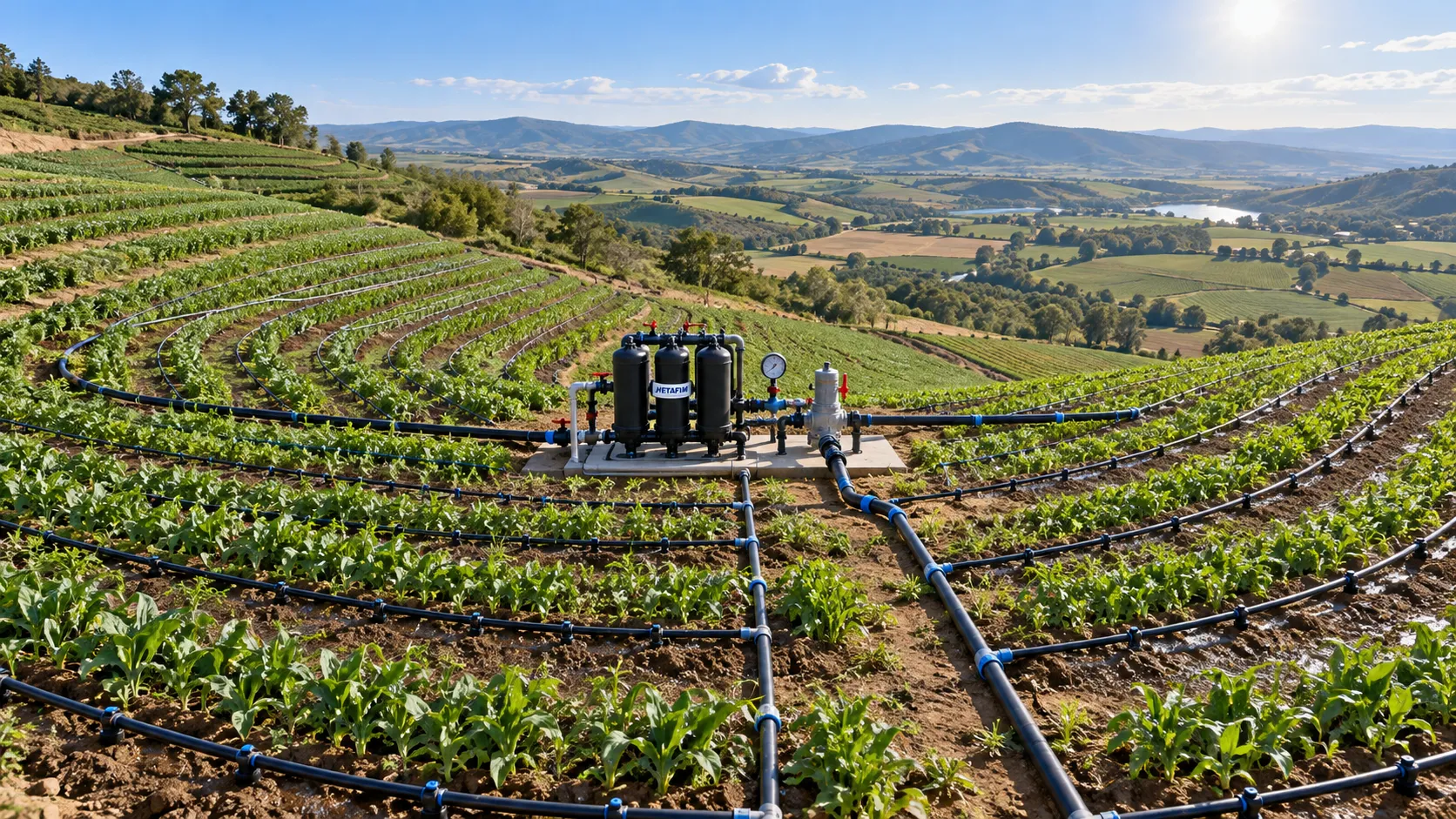
How to Size Low-Pressure Water-Saving Irrigation Systems for Uneven Fields
Low pressure water-saving irrigation systems for uneven fields: learn zoning, pressure mapping, pipe sizing, and pump selection to improve uniformity and reduce water waste.

Farm Machinery Sourcing: How to Vet Suppliers, Specs, and Lifecycle Costs
Farm machinery information for sourcing: learn to vet suppliers, compare specifications, control lifecycle costs, and secure reliable uptime for smarter equipment purchases.
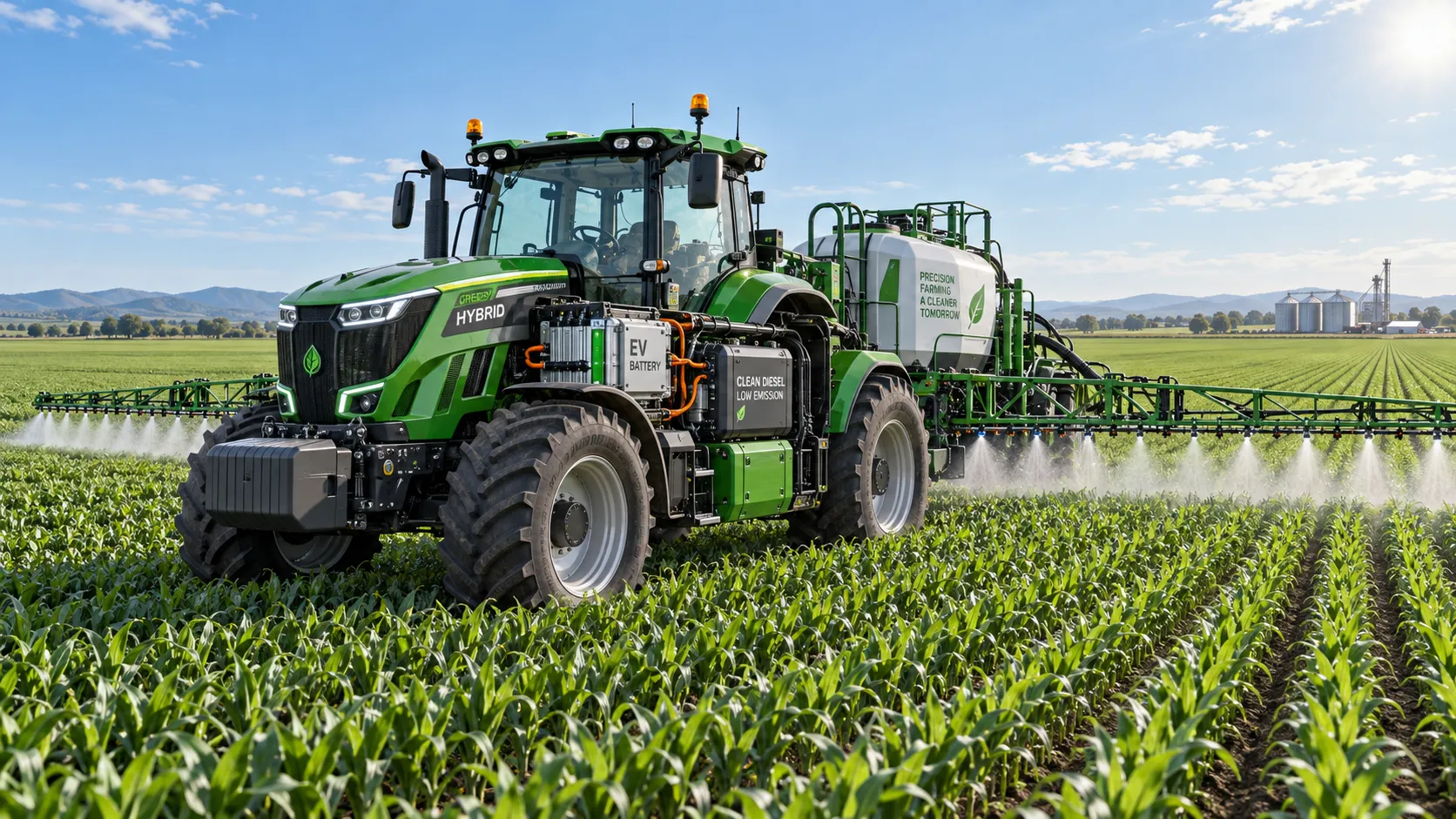
Can hybrid propulsion systems reduce fuel use in farm machinery?
Hybrid propulsion systems for agricultural machinery can cut fuel use and boost productivity. Explore savings potential, key trade-offs, and smart investment factors.
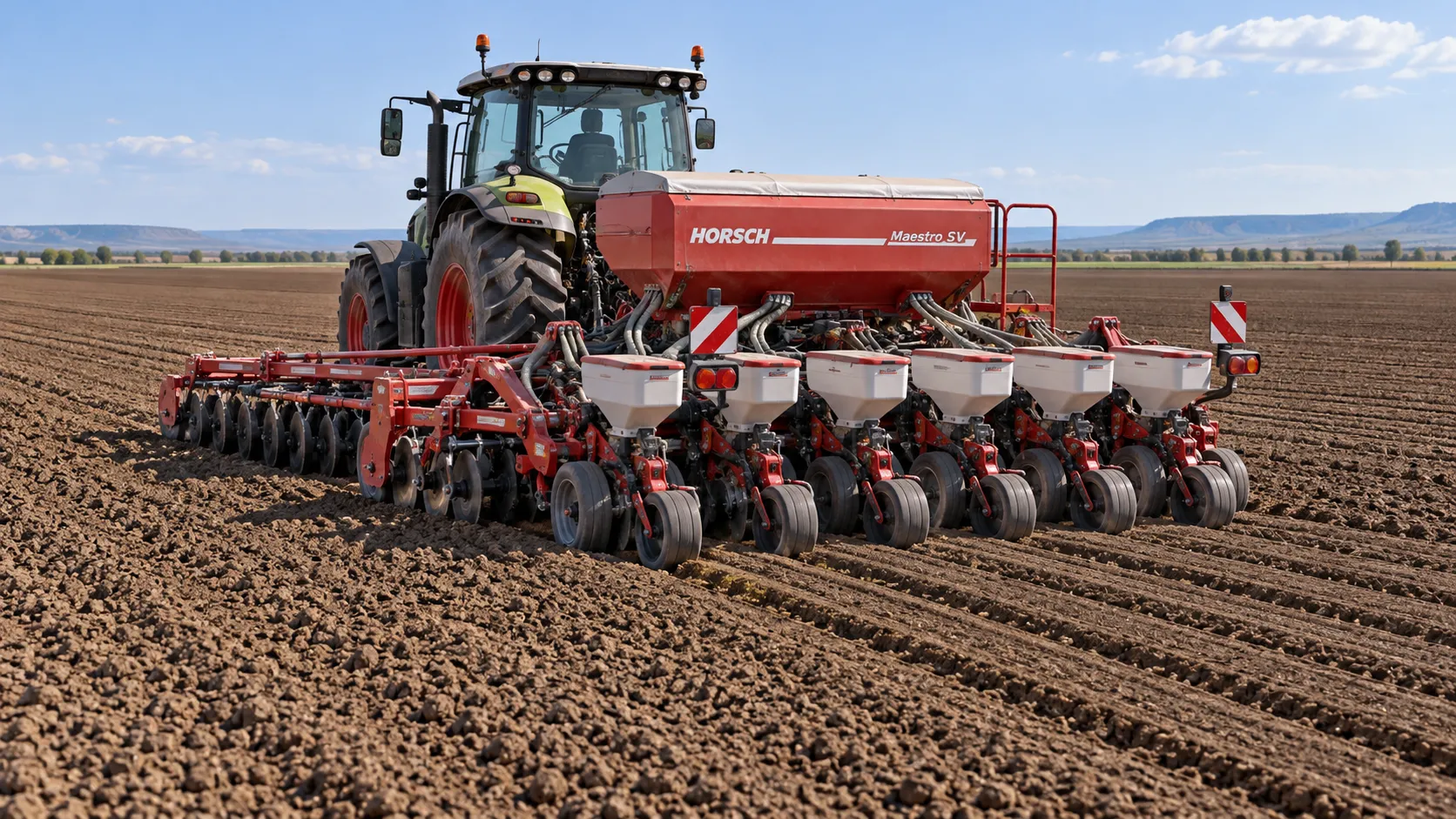
What to compare in integrated seeding combinations for heavy soils
Compare integrated seeding combinations for heavy soils: depth control, residue flow, consolidation, traction, and field capacity for more uniform crop establishment.
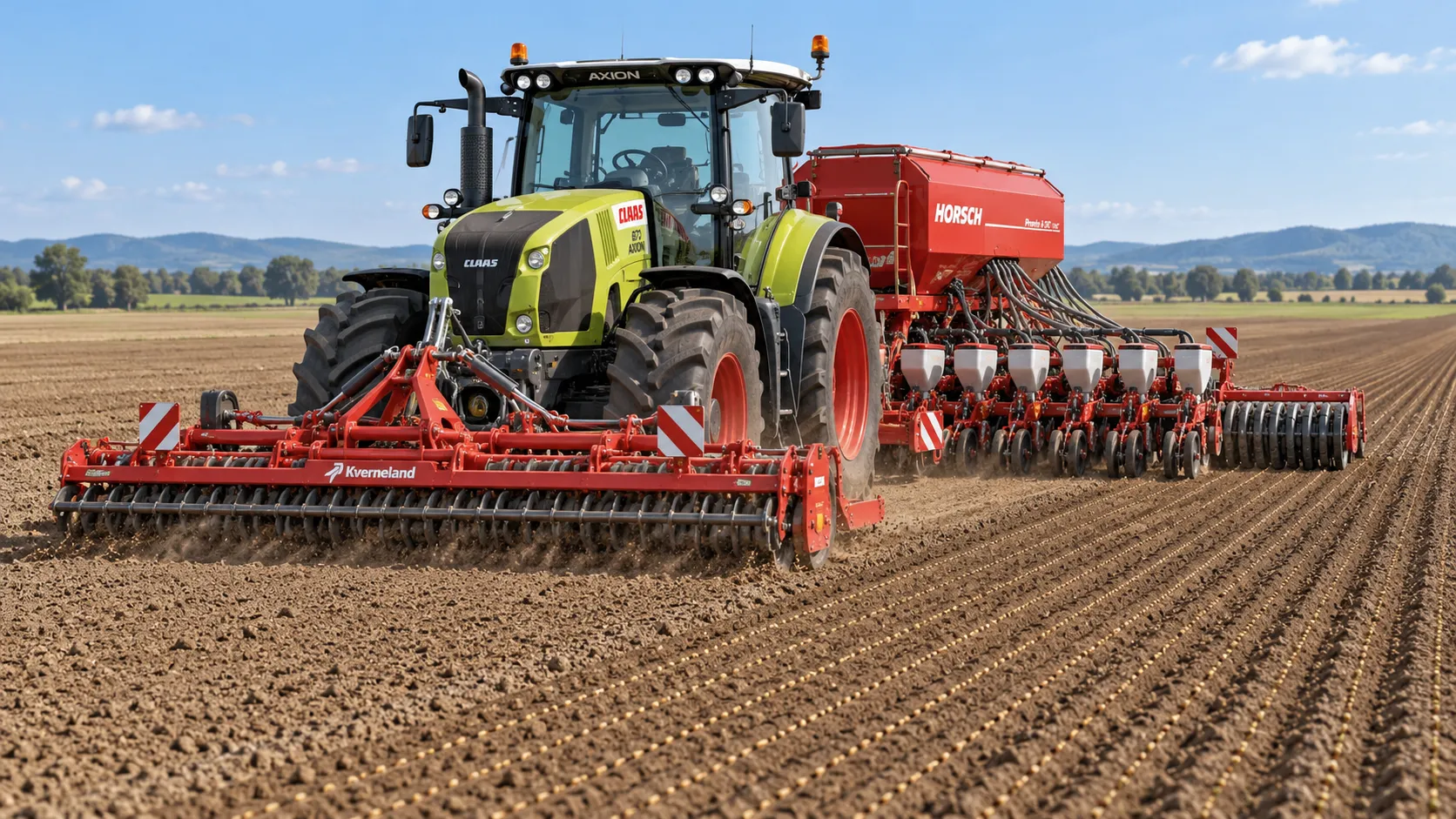
When an integrated seeding combination improves field efficiency
Integrated seeding combination improves field efficiency, protects planting windows, and balances speed with seedbed quality, tractor capacity, and reliable establishment.
Which costs matter most when calculating precision agriculture ROI?
Calculating ROI on precision agriculture equipment? Discover the costs that shape returns, from installation and subscriptions to downtime, labor, and data integration.
Related News
- 00
0000-00
How to Size Low-Pressure Water-Saving Irrigation Systems for Uneven Fields - 00
0000-00
Drip vs. Micro-Sprinkler Irrigation: Which System Fits Your Orchard? - 00
0000-00
How to Select Smart Irrigation Valves for Multi-Zone Water Management? - 00
0000-00
Automated Water-Saving Irrigation: How to Cut Water Use Without Reducing Crop Yields - 00
0000-00
How to Evaluate Drip Irrigation System Manufacturers for Large Farm Projects
Popular Tags
Hydrological Resource Strategist
Weekly Insights
Stay ahead with our curated technology reports delivered every Monday.