
Smart Farming Solutions in Latin America: Which Technologies Fit Large Farms Best?
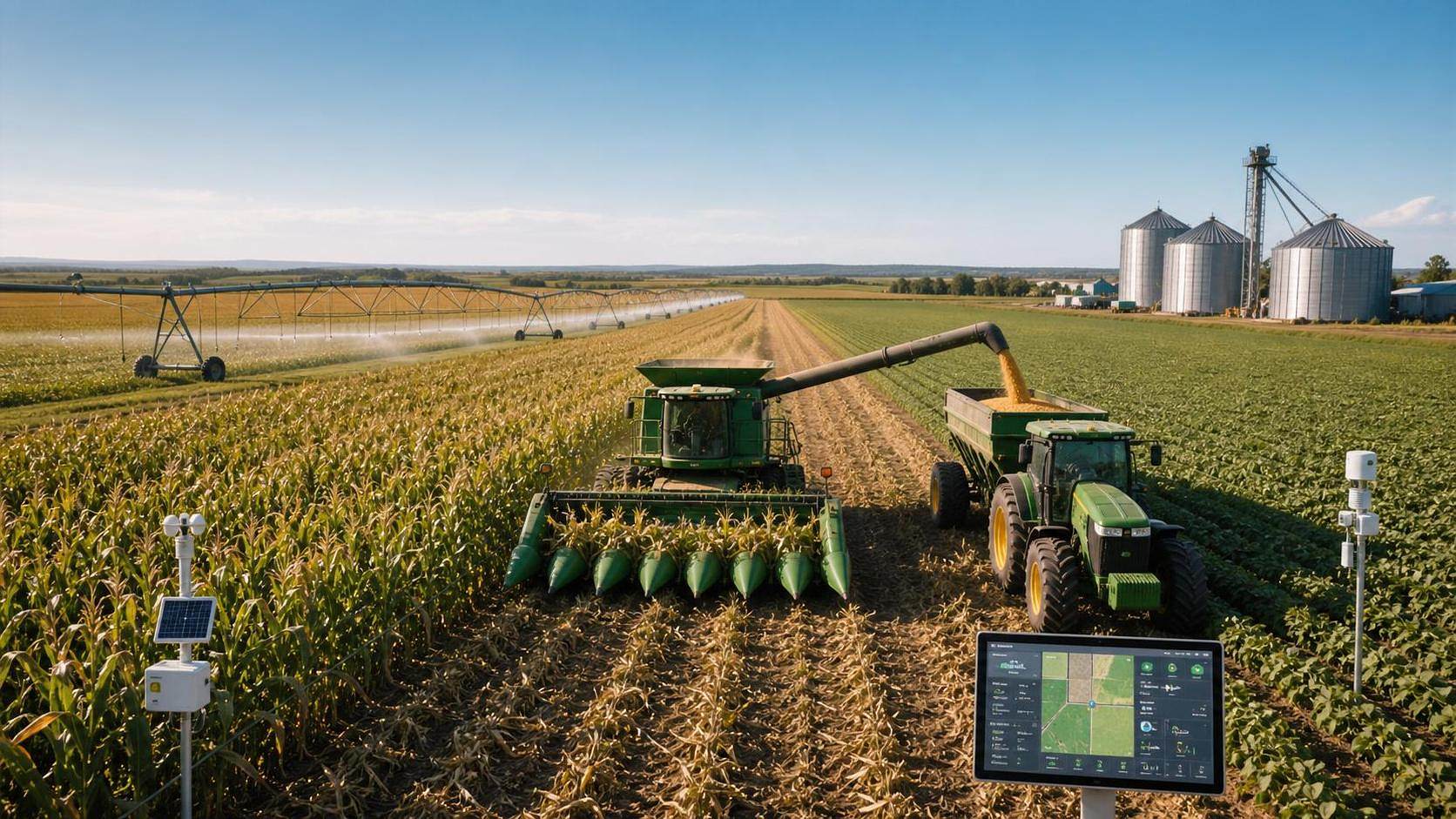




Why smart farming solutions Latin America uses cannot be chosen the same way everywhere
For large farms in Latin America, technology selection has moved beyond simple modernization. It now shapes cost control, harvest timing, water security, and operational resilience across very large field footprints.
That is why smart farming solutions Latin America adopts need to be judged by field conditions, crop systems, machine intensity, and infrastructure stability, not by headline features alone.
In practice, a soybean estate in Brazil, a sugar operation in Mexico, and an irrigated grain farm in Argentina may all use digital tools, yet their priorities differ sharply.
Some operations need better machinery coordination during narrow harvest windows. Others need irrigation logic that protects yield when rainfall becomes unreliable. In both cases, scale changes everything.
This is also where AP-Strategy’s perspective matters. Its focus on large-scale machinery, combine harvesting, tractor chassis, intelligent farm tools, and water-saving systems reflects the real decision chain behind Agriculture 4.0 adoption.
Actual field conditions create very different technology priorities
The strongest smart farming solutions Latin America offers are rarely the most complex. They are the ones that remain accurate, serviceable, and financially defensible over several seasons.
A large rainfed farm usually starts with variability mapping, satellite guidance, and machine telematics. These tools reduce overlap, fuel waste, and timing losses before advanced automation is added.
An irrigated operation often reaches a different conclusion. Water scheduling, pressure monitoring, emitter uniformity, and evapotranspiration models can influence margin more directly than autonomous driving features.
Where logistics are fragmented, the bottleneck may sit outside the crop itself. Harvest intelligence, fleet dispatch, and grain movement tracking then become more valuable than isolated sensor deployments.
The common thread is simple. Smart farming solutions Latin America needs must match the main source of operational loss, whether that loss comes from water, time, labor, machine inefficiency, or incomplete field visibility.
A quick comparison of the main large-farm scenarios
When large row-crop farms need scale first, precision starts with machinery discipline
Across large soybean, corn, and wheat areas, the first meaningful gains often come from machine control rather than laboratory-grade analytics. Overlap reduction can deliver measurable savings very quickly.
In these operations, smart farming solutions Latin America suppliers promote most successfully usually combine guidance, section control, variable-rate application, and fleet telematics on one usable platform.
The reason is practical. Large fields magnify small inefficiencies. A few percentage points of seed overlap, sprayer misses, or idle machine time can become a major seasonal cost.
This setting also favors strong tractor chassis performance and hydraulic stability. Digital control only works well when the underlying machine behaves consistently under heavy loads and long workdays.
A common mistake is buying variable-rate capability before building clean field boundaries, repeatable guidance lines, and data transfer routines. The software looks advanced, but execution remains inconsistent.
What usually deserves priority in this setting
- Reliable GNSS guidance with minimal downtime during peak field activity.
- Implement control systems that reduce overlap on seeding, spraying, and fertilization passes.
- Telematics that link fuel use, field progress, and service alerts across the fleet.
- Data layers that support prescription maps only after base operations become consistent.
Where irrigation decides margin, sensor networks must connect to hydraulic reality
For farms exposed to irregular rainfall or aquifer pressure, smart farming solutions Latin America increasingly center on water-saving irrigation systems. Here, the best technology is rarely the one with the most dashboards.
More useful systems combine soil moisture sensing, weather inputs, pump control, and distribution monitoring with clear field-level action rules. Without that connection, data remains descriptive instead of operational.
Large farms often discover that irrigation uniformity matters more than adding more sensors. If pressure variation, clogged emitters, or uneven pivot performance remain unresolved, decision models become misleading.
This is where hydrological intelligence becomes a business issue, not just a technical one. Water scheduling affects power consumption, yield stability, and compliance with tightening sustainability expectations.
AP-Strategy’s attention to transpiration prediction and resource-saving standards fits this reality well. Large irrigated farms need tools that connect biological demand with field hardware performance.
Harvest windows change the value equation for smart farming solutions Latin America relies on
During harvest, the biggest risk is often not average efficiency but timing failure. A delayed or poorly coordinated harvest can erase gains achieved earlier in the season.
That is why combines, grain carts, trucks, and storage logistics should be treated as one connected system. Intelligent harvesting only works when data improves decisions in real time.
For large cereal or oilseed farms, yield mapping and cleaning-loss monitoring are especially valuable. They reveal whether poor results come from crop variability, machine settings, or operator inconsistency.
In difficult crop conditions, farms often overfocus on engine power and undercheck threshing adjustment, residue flow, and calibration discipline. Smart farming solutions Latin America should therefore include practical feedback loops, not just performance claims.
If grain transport is slow or unloading points are distant, dispatch visibility may deliver more return than adding another isolated harvester feature. The best investment depends on where delay actually occurs.
The technologies may look similar, but implementation risk is not
Many large farms compare tools by feature lists, yet rollout risk usually comes from compatibility, service access, and staff routines. Similar-looking systems can perform very differently after one full season.
In actual deployment, these points deserve close attention:
- Can machine data, satellite layers, and irrigation records be read in one workflow?
- Is local service strong enough during planting and harvest peaks?
- Do power supply, mobile connectivity, and field distance limit real-time use?
- Will calibration and maintenance routines be realistic under labor constraints?
- Does the system still create value if autonomy features are used only partially?
A frequent misjudgment is assuming that two neighboring operations need the same smart farming solutions Latin America promotes widely. Soil, water rights, field shape, and logistics can change the answer completely.
A practical way to decide what fits best before committing capital
The most effective path is usually staged adoption. Start where losses are measurable, where data can be trusted, and where field teams can sustain the process during the busiest weeks.
For many operations, that means building a sequence rather than buying a complete digital stack at once. Machinery guidance, telematics, irrigation intelligence, and harvest analytics should enter in a sensible order.
A sound decision framework for smart farming solutions Latin America should include four tests:
- Identify the largest current source of yield or cost leakage.
- Check whether field infrastructure supports accurate deployment.
- Estimate maintenance, training, and integration effort over multiple seasons.
- Compare technology value under both normal and stressed climate conditions.
Large farms that follow this approach usually make cleaner investment decisions. They avoid paying for data they cannot operationalize and focus on technologies that improve performance at scale.
The next useful step is to map each production block by water exposure, machine intensity, logistics risk, and service access. That creates a realistic fit standard for future smart farming investments.
Related News
Choosing a Digital Farming Platform Provider: Compatibility and Data Ownership
Compare digital farming platforms providers on equipment compatibility, data ownership, and export rights. Discover practical checks to avoid lock-in and choose with confidence.
How Large-Scale Farm Telematics Cuts Downtime Across Mixed Fleets
Large-scale farm equipment telematics cuts mixed-fleet downtime with real-time alerts, smarter maintenance, and stronger operational control. Learn how to protect critical farm workflows.
How to Size Low-Pressure Water-Saving Irrigation Systems for Uneven Fields
Low pressure water-saving irrigation systems for uneven fields: learn zoning, pressure mapping, pipe sizing, and pump selection to improve uniformity and reduce water waste.
Farm Machinery Sourcing: How to Vet Suppliers, Specs, and Lifecycle Costs
Farm machinery information for sourcing: learn to vet suppliers, compare specifications, control lifecycle costs, and secure reliable uptime for smarter equipment purchases.
Can hybrid propulsion systems reduce fuel use in farm machinery?
Hybrid propulsion systems for agricultural machinery can cut fuel use and boost productivity. Explore savings potential, key trade-offs, and smart investment factors.
What to compare in integrated seeding combinations for heavy soils
Compare integrated seeding combinations for heavy soils: depth control, residue flow, consolidation, traction, and field capacity for more uniform crop establishment.
When an integrated seeding combination improves field efficiency
Integrated seeding combination improves field efficiency, protects planting windows, and balances speed with seedbed quality, tractor capacity, and reliable establishment.
Which costs matter most when calculating precision agriculture ROI?
Calculating ROI on precision agriculture equipment? Discover the costs that shape returns, from installation and subscriptions to downtime, labor, and data integration.
How to calculate ROI on precision agriculture equipment before buying
Calculating ROI on precision agriculture equipment: learn to assess total ownership costs, savings, payback, NPV, risks, and farm-scale value before you buy.
Related News
- 00
0000-00
Can hybrid propulsion systems reduce fuel use in farm machinery? - 00
0000-00
How Does Farm Mechanization Affect Food Security in Developing Regions? - 00
0000-00
Agricultural Technology Insights by Region: Where Adoption Is Growing Fastest - 00
0000-00
How Climate-Smart Agriculture Technology Improves Yield, Soil Health, and Risk Resilience - 00
0000-00
Smart Farming Solutions in Latin America: Which Technologies Fit Large Farms Best?
Popular Tags
Prof. Marcus Chen
Weekly Insights
Stay ahead with our curated technology reports delivered every Monday.