
FDA Sets IP68 Rule for Soil Moisture Sensor Imports
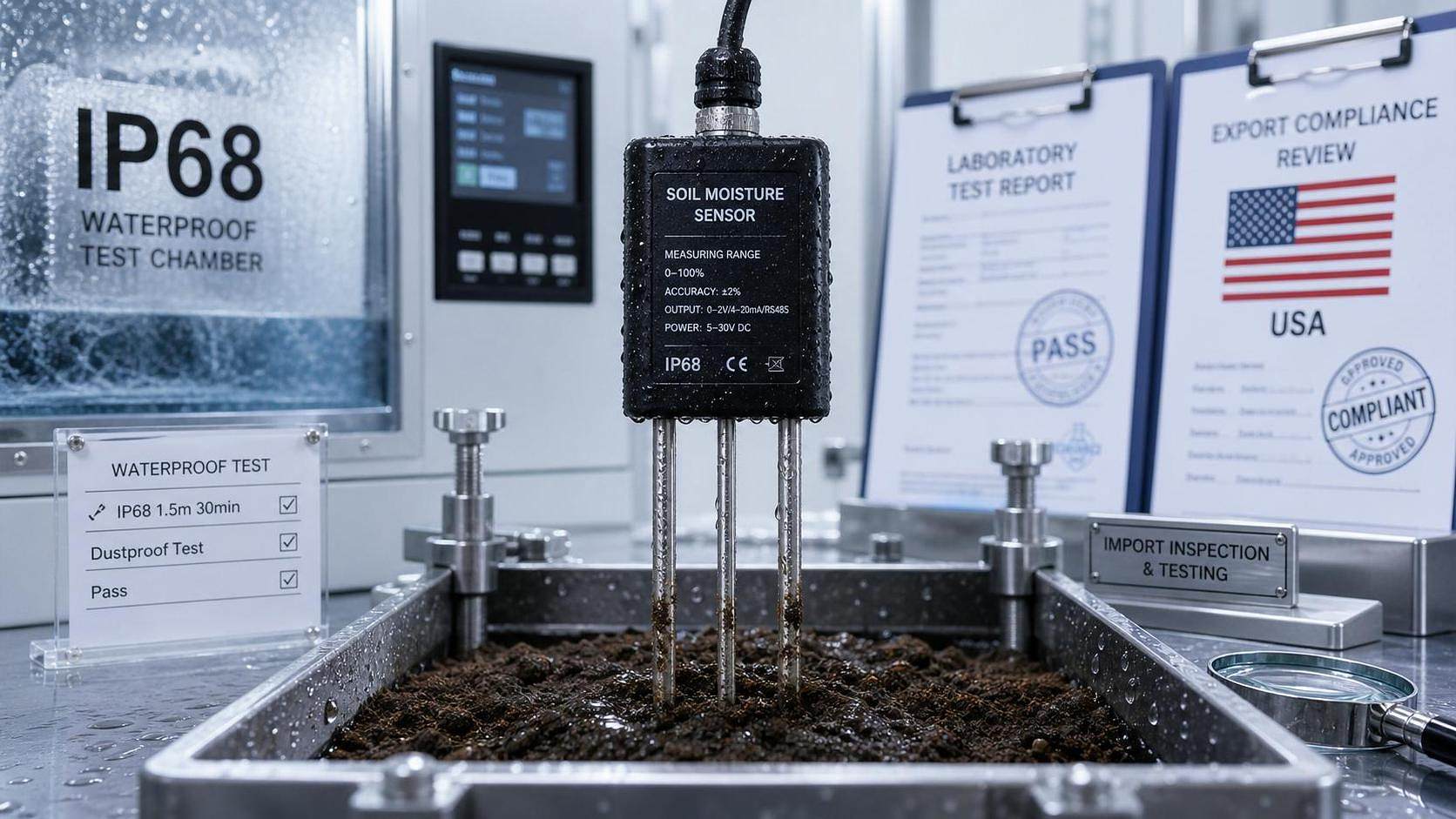




On July 14, 2026, the U.S. Food and Drug Administration issued a technical notice that changes the import compliance path for Soil Moisture Sensors entering the U.S. market. From October 1, 2026, these products must meet the IP68 dust and water protection requirement under IEC 60529:2026 Ed.3 and be supported by a type test report issued by an FDA-recognized laboratory. For exporters, importers, testing-related parties, and procurement teams, this is not just a technical update; it directly affects customs clearance readiness, certification timing, and shipment planning.
What the notice requires from October 2026
The confirmed facts are limited and clear. The FDA released the technical notice on July 14, 2026. The notice states that, starting October 1, 2026, all Soil Moisture Sensors imported into the United States must comply with the IP68 dust and water protection requirement in IEC 60529:2026 Ed.3. The products must also be accompanied by a type test report issued by an FDA-recognized laboratory. According to the event summary provided, products that do not meet the requirement may be refused at the port of entry or returned.
Where the compliance pressure will appear first
Export shipments facing a narrower clearance window
From an industry perspective, exporters are likely to feel the most immediate effect because the new requirement is tied directly to import clearance. The impact is not limited to product design; it extends to whether supporting test documentation is ready before shipment. What deserves closer attention is the alignment between production completion, test report availability, and the October 1, 2026 enforcement date.
Testing and certification work moving closer to the delivery schedule
For businesses involved in certification preparation and testing coordination, the change creates a more explicit document threshold. The required type test report is no longer a supporting preference in practice but part of the clearance path described in the notice. This means companies will need to pay closer attention to whether their existing compliance files match IEC 60529:2026 Ed.3 and whether laboratory recognition status is acceptable for the stated purpose.
Procurement and supply chain planning may need earlier lock-in
Procurement teams, distributors, and supply chain service providers may also be affected because compliance timing can influence booking, inventory movement, and order commitments. Analysis shows that where shipments are tied to fixed delivery windows, any delay in testing or document readiness could translate into a trade execution issue rather than only a technical issue. That makes supplier qualification and document review more relevant at the ordering stage.
Buyers and channel partners will need to review document expectations
For buyers and downstream channel participants, the practical issue is whether incoming products can pass the new import check without disruption. Observably, purchasing specifications, order documents, and product acceptance files may need to reflect the new IP68 and type-report requirement more explicitly. The summary provided does not state how buyers will revise their templates, so this remains a point to monitor rather than a confirmed outcome.
Practical points companies should track now
Check whether current product files match the new standard edition
Companies shipping Soil Moisture Sensors to the United States should first verify whether their current technical and compliance files are aligned with IEC 60529:2026 Ed.3 rather than relying on earlier assumptions about enclosure protection. The confirmed notice points to a specific edition and a specific protection level, so document review should focus on that exact alignment.
Confirm the status and usability of test reports
Another immediate point is the report itself. The event summary specifies that the type test report must come from an FDA-recognized laboratory. Analysis shows that businesses should pay close attention to report origin, report scope, and whether the documentation can be used in the import process as required by the notice. The provided information does not include detailed implementation instructions, so companies should treat this as a compliance checkpoint that still requires verification in practice.
Reassess shipment timing and contract execution risk
Because the effective date is October 1, 2026, delivery schedules that fall around that date deserve special review. Exporters, importers, and logistics coordinators should watch for any mismatch between manufacturing completion and document readiness. It is more appropriate to understand this as a timing and clearance risk that can affect contract performance, not merely as a testing formality.
Watch for follow-up wording in trade and procurement documents
The summary provided confirms the new import requirement, but it does not describe how related trade documents, procurement specifications, or downstream acceptance language will be updated. From an industry perspective, that makes follow-up wording in purchase orders, supplier qualification materials, tender files, and customs-related document checks an area that still requires attention.
How this development should be read at this stage
Analysis shows that this development is best understood as an executed compliance signal rather than a distant policy discussion, because it includes both a clear effective date and a defined documentation condition tied to import clearance. At the same time, it should not yet be treated as a fully mapped execution framework, since the provided information does not include detailed operational guidance, review procedures, or market feedback on implementation. That is why continued attention to enforcement interpretation remains necessary.
What this means for the near-term market response
In practical terms, the notice raises the compliance threshold for Soil Moisture Sensors entering the U.S. market and shifts more responsibility to pre-shipment preparation. The most neutral reading is that the change has already moved beyond a general standards update and into a trade-facing import requirement. Even so, the full market effect will depend on how certification arrangements, document review practices, and shipment scheduling adapt in the months around implementation.
Basis of this article and points still requiring verification
This article is based on the user-provided news title, event date, and event summary. For developments of this type, relevant source categories commonly include official notices, releases from regulatory authorities, customs or trade administration information, industry association updates, standard organization documents, and reporting by established professional media. A specific official source link was not provided in the input, so the exact original publication link still needs to be verified. Further observation is also needed on detailed implementation language, certification interpretation, changes in procurement documents, industry feedback, and how companies execute against the requirement in practice.
Related News
Choosing a Digital Farming Platform Provider: Compatibility and Data Ownership
Compare digital farming platforms providers on equipment compatibility, data ownership, and export rights. Discover practical checks to avoid lock-in and choose with confidence.
How Large-Scale Farm Telematics Cuts Downtime Across Mixed Fleets
Large-scale farm equipment telematics cuts mixed-fleet downtime with real-time alerts, smarter maintenance, and stronger operational control. Learn how to protect critical farm workflows.
How to Size Low-Pressure Water-Saving Irrigation Systems for Uneven Fields
Low pressure water-saving irrigation systems for uneven fields: learn zoning, pressure mapping, pipe sizing, and pump selection to improve uniformity and reduce water waste.

Farm Machinery Sourcing: How to Vet Suppliers, Specs, and Lifecycle Costs
Farm machinery information for sourcing: learn to vet suppliers, compare specifications, control lifecycle costs, and secure reliable uptime for smarter equipment purchases.

Can hybrid propulsion systems reduce fuel use in farm machinery?
Hybrid propulsion systems for agricultural machinery can cut fuel use and boost productivity. Explore savings potential, key trade-offs, and smart investment factors.
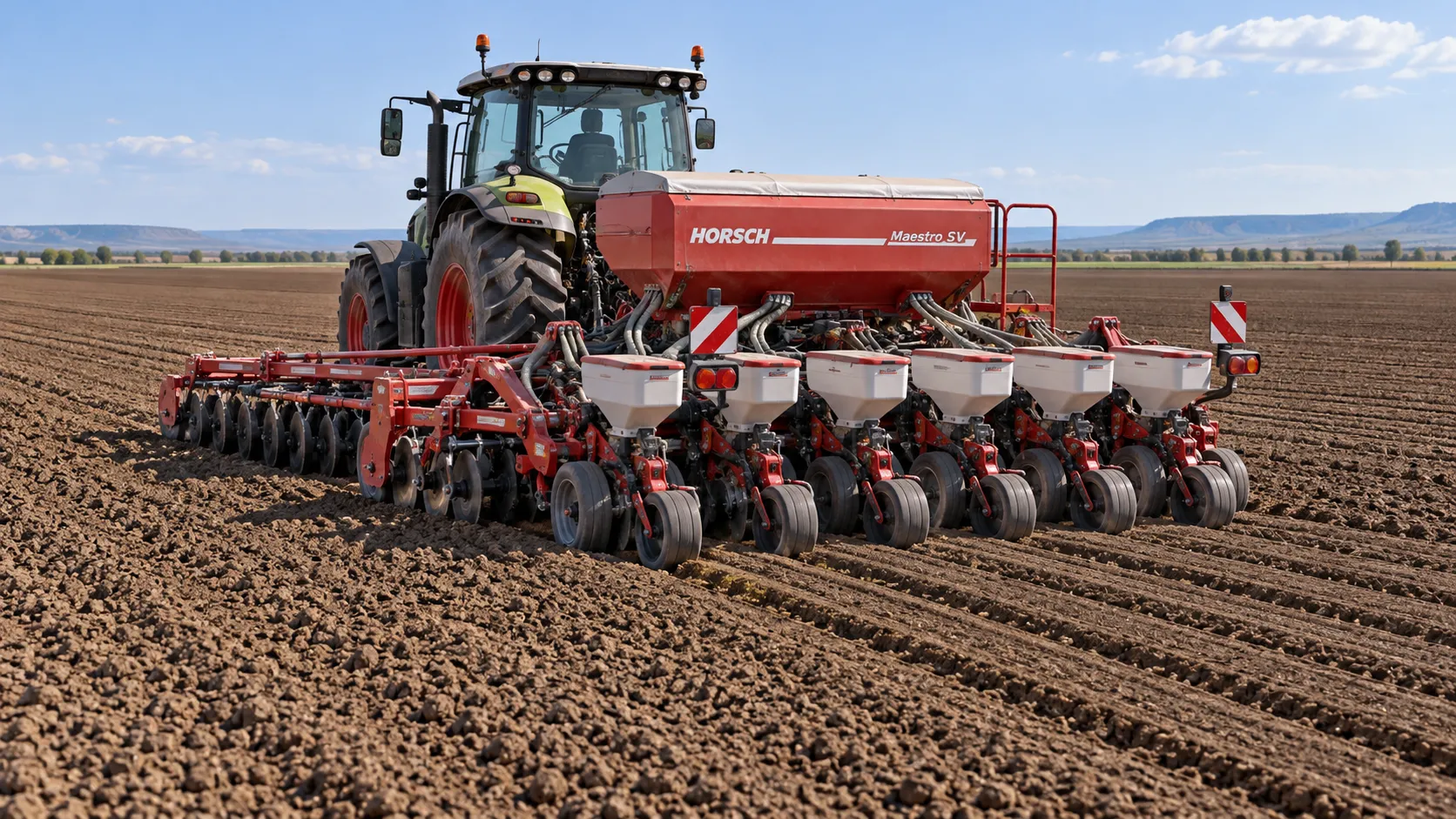
What to compare in integrated seeding combinations for heavy soils
Compare integrated seeding combinations for heavy soils: depth control, residue flow, consolidation, traction, and field capacity for more uniform crop establishment.
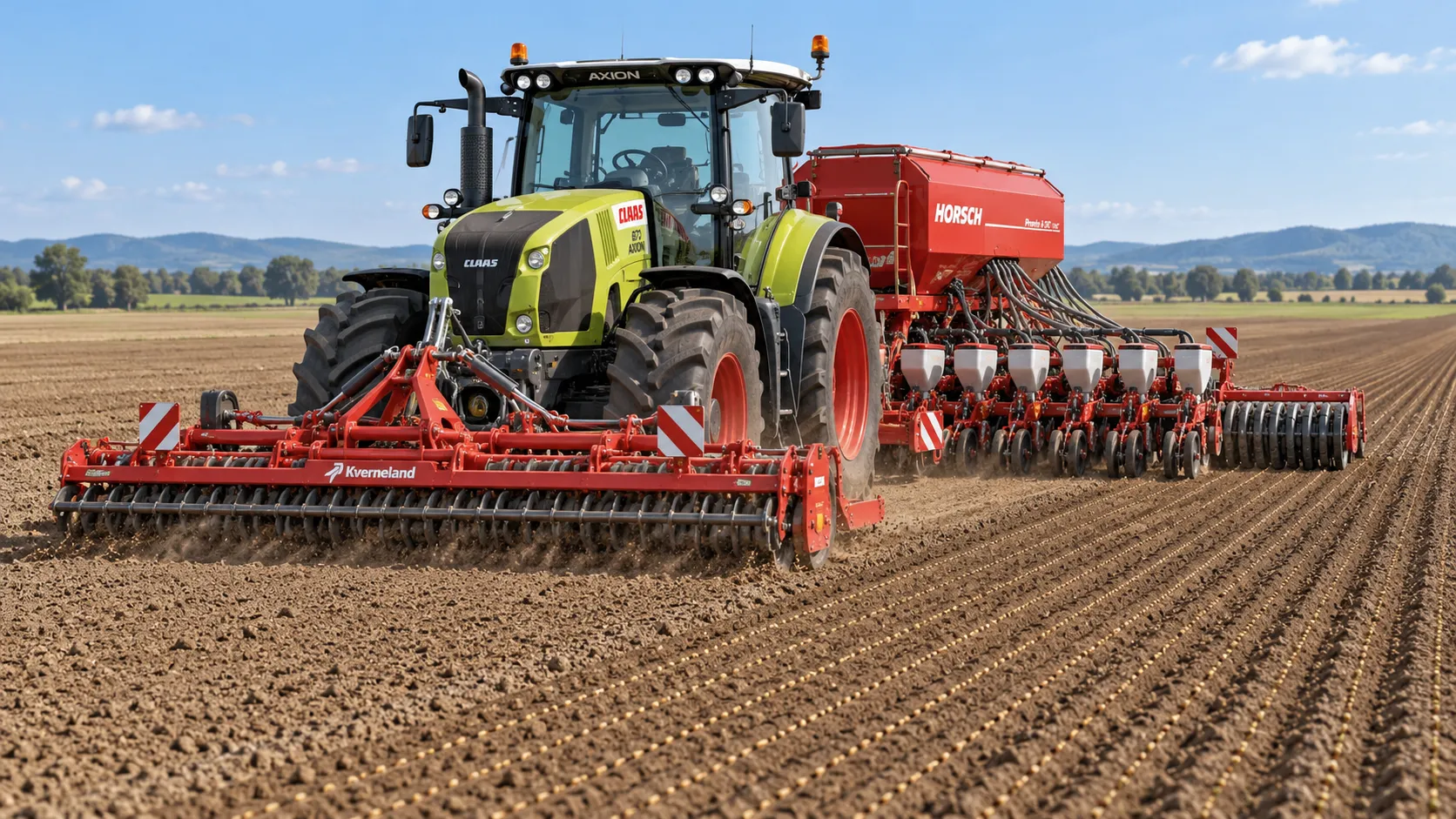
When an integrated seeding combination improves field efficiency
Integrated seeding combination improves field efficiency, protects planting windows, and balances speed with seedbed quality, tractor capacity, and reliable establishment.
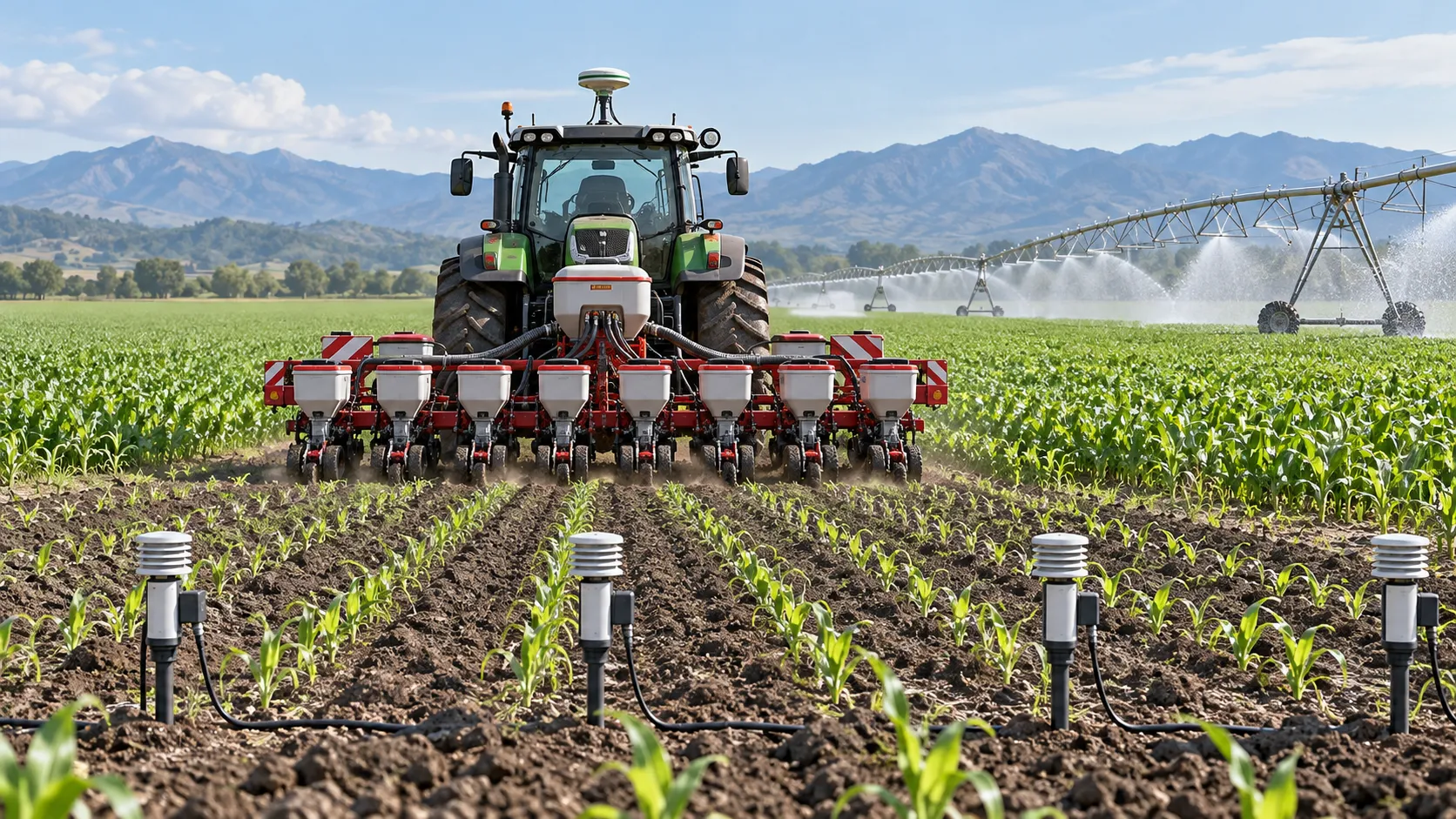
Which costs matter most when calculating precision agriculture ROI?
Calculating ROI on precision agriculture equipment? Discover the costs that shape returns, from installation and subscriptions to downtime, labor, and data integration.
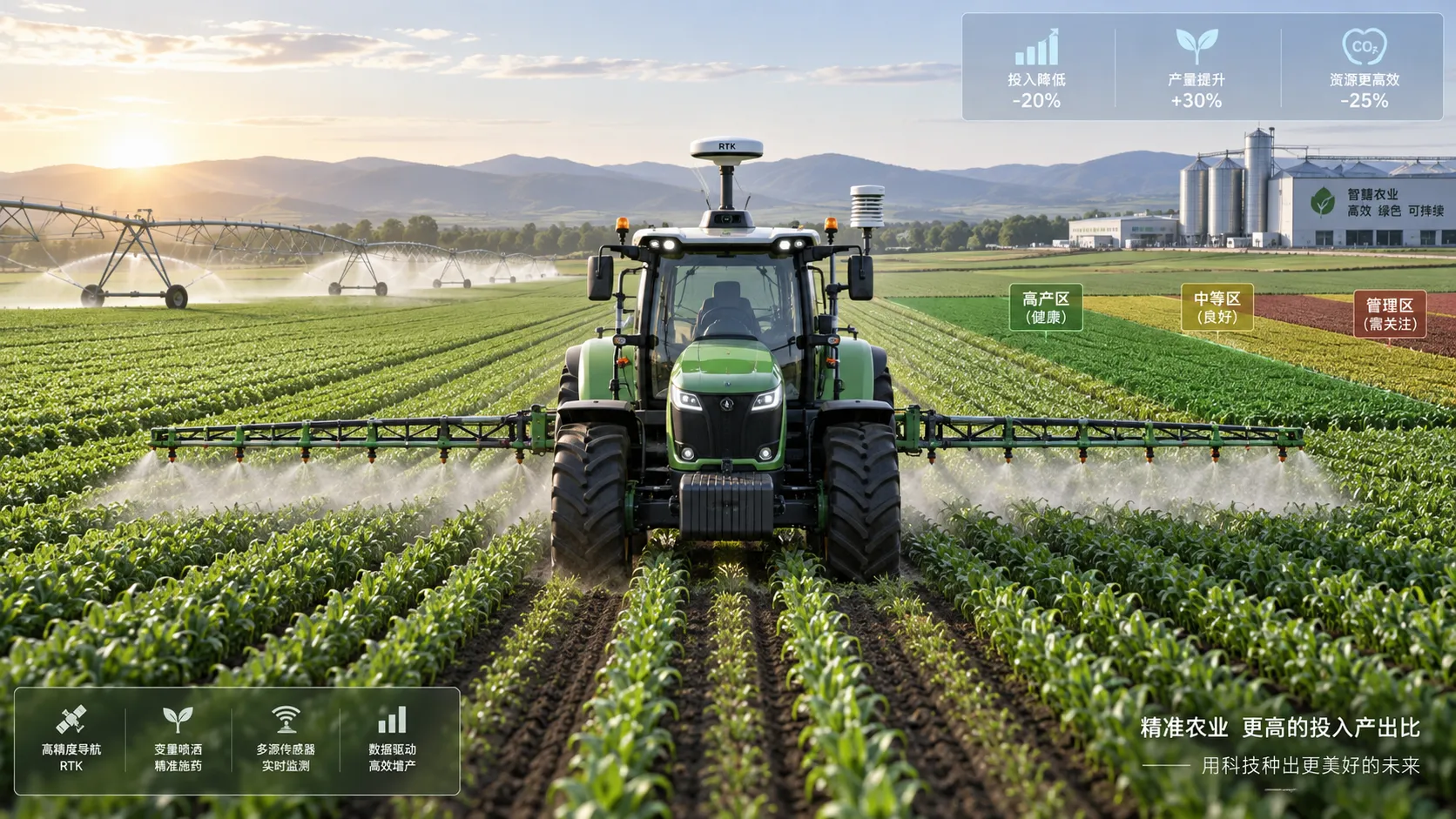
How to calculate ROI on precision agriculture equipment before buying
Calculating ROI on precision agriculture equipment: learn to assess total ownership costs, savings, payback, NPV, risks, and farm-scale value before you buy.
Related News
- 00
0000-00
Orchard Water Management: Using Soil Moisture Data to Schedule Irrigation - 00
0000-00
Climate-Smart Farming for Drought: A Practical Plan for Protecting Yields - 00
0000-00
Selecting Real-Time Soil Moisture Sensors for Irrigation Zone Control - 00
0000-00
How Does Climate-Smart Farming Reduce Water Use in Semi-Arid Areas? - 00
0000-00
USDA Rule Takes Effect: Dual FCC and NRCS Approval for Soil Moisture Sensors
Popular Tags
Hydrological Resource Strategist
Weekly Insights
Stay ahead with our curated technology reports delivered every Monday.