
OECD-Compliant Large-Scale Farm Equipment: What Buyers Should Verify Before Ordering
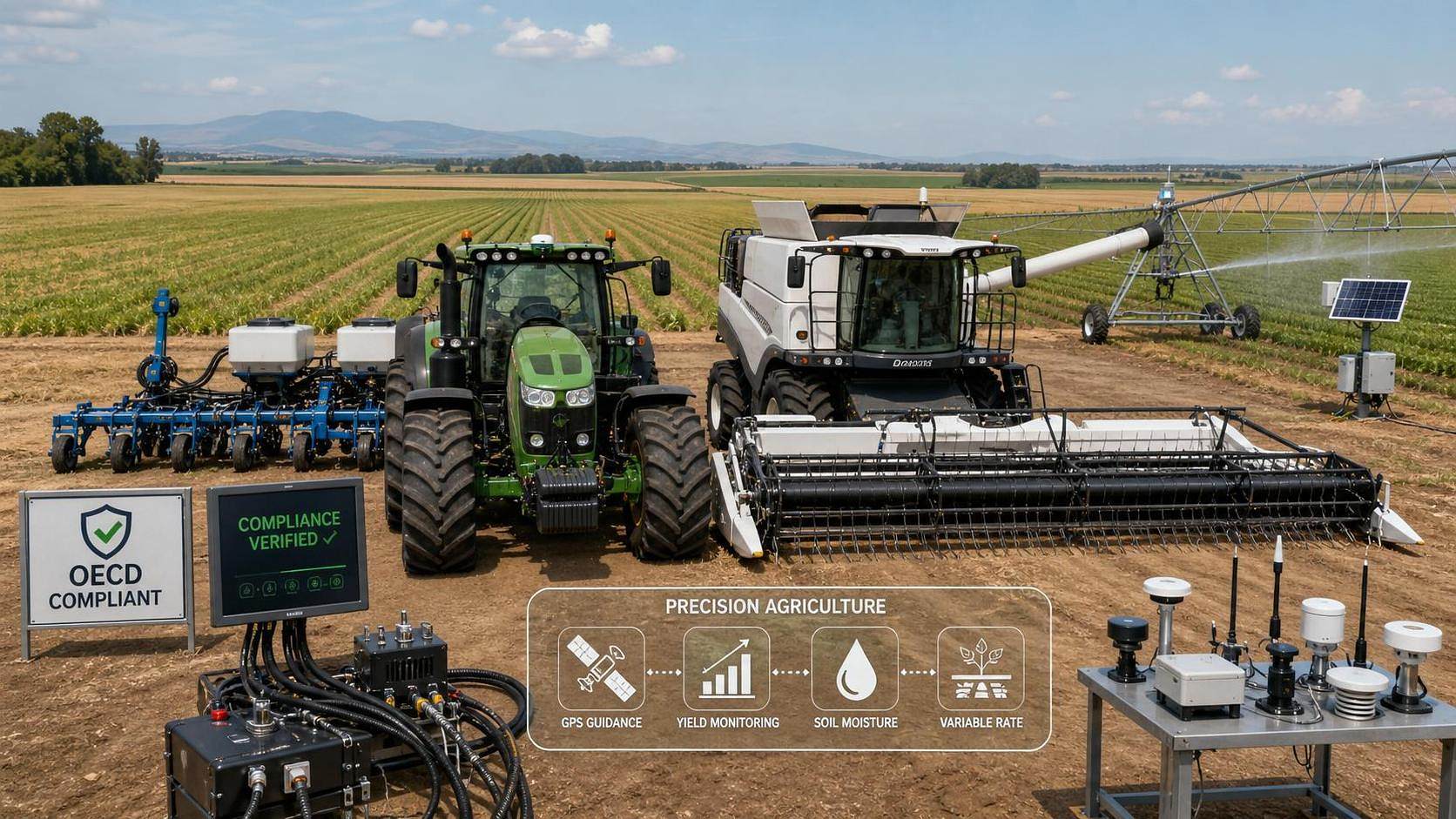




Ordering large-scale farm equipment OECD compliant models is rarely a simple purchasing exercise. It sits at the intersection of regulatory acceptance, machine durability, operator safety, agronomic fit, and long-term service economics. In a market shaped by food security pressures, precision farming, and sustainability targets, the real question is not whether a machine looks competitive on paper, but whether its verified performance will hold up across seasons, regions, and workloads.
That is why buyers increasingly treat compliance as a decision framework rather than a label. OECD testing can support credibility, but it should be read alongside field data, component quality, digital compatibility, and after-sales depth. Across the Agriculture 4.0 transition, this broader view matters even more for combines, tractor platforms, intelligent implements, and water-saving systems tied to complex operating plans.
Why OECD compliance matters beyond formal certification
For large agricultural assets, compliance affects more than import paperwork. It influences financing confidence, insurance discussions, resale expectations, operator protection, and the ability to compare machines across suppliers using recognized benchmarks.
In practical terms, large-scale farm equipment OECD compliant status usually signals that certain testing protocols have been met or documented. That can include tractor performance, safety structures, noise, braking behavior, or other standardized evaluations, depending on the equipment category.
Still, compliance should not be confused with universal suitability. A machine may pass recognized tests and yet perform poorly in high-moisture harvest conditions, heavy clay soils, steep fields, or fragmented logistics networks. Verification has to continue past the certificate.
The current industry context behind stricter verification
Global procurement for agricultural machinery now faces tighter scrutiny from several directions. Equipment values are higher, downtime is costlier, environmental reporting is more visible, and digital systems are deeply embedded in field operations.
At the same time, large farms and distribution networks are buying into mixed fleets. One operation may combine tractors, harvesters, smart tools, and irrigation controls from different origins. That makes standardized verification more useful, but also more complex.
This is where intelligence-led assessment becomes valuable. AP-Strategy has built its perspective around five core areas: large-scale agri-machinery, combine harvesters, tractor chassis, intelligent farm tools, and water-saving irrigation systems. Those categories reflect how machinery decisions now connect mechanical power, field data, and resource efficiency.
The wider market also rewards better discipline before ordering. Grain price volatility, environmental policy shifts, labor shortages, and autonomous technology adoption all raise the cost of making a poor equipment choice.
What should actually be verified before ordering
The most effective reviews move from documents to operating reality. That means checking not only whether a supplier claims large-scale farm equipment OECD compliant status, but how that claim is supported and where its limits begin.
1. Test reports and traceable documentation
Start with original test references, certification scope, issue dates, and the exact model covered. Small naming differences matter. A platform family may contain variants with different transmissions, axles, cabs, or hydraulic outputs.
Check whether the report applies to the delivered configuration. Optional tires, ballast packages, guidance systems, headers, or emission setups can materially change field behavior.
2. Safety systems and operator protection
Safety verification is not a box-ticking exercise on high-value machinery. Cab structure, rollover protection, braking response, visibility, emergency access, guarding, lighting, and control layout all shape daily risk.
For harvesters and heavy tractors, fatigue and visibility deserve special attention. Machines that meet standards but create poor line-of-sight or confusing control logic often generate hidden operating costs later.
3. Field performance under local conditions
Bench tests and certification reports do not replace agronomic reality. Buyers should ask for evidence from crop types, field lengths, soil loads, residue volumes, and climate conditions that resemble the intended operating environment.
For combines, that includes grain loss control, cleaning stability, unloading efficiency, and header compatibility. For tractors, pay attention to drawbar power, hydraulic consistency, traction management, and fuel use at working load.
4. Parts support and service depth
A compliant machine with weak support can become an expensive liability during planting or harvest windows. Parts lead times, regional stock, technician availability, remote diagnostics, and warranty execution should be reviewed before any deposit is released.
This point is especially important for advanced equipment carrying sensors, telematics modules, electronic valves, and precision controllers. Mechanical uptime now depends on software and electronics as much as steel.
5. Total operating value over the asset cycle
Purchase price is only the visible layer. The better comparison includes fuel efficiency, wear life, calibration needs, software subscriptions, training requirements, seasonal storage demands, and residual value in secondary markets.
When evaluating large-scale farm equipment OECD compliant options, the stronger bid is often the one with fewer interruptions, cleaner data integration, and more predictable maintenance intervals.
Where verification standards differ by equipment type
Not every machine should be reviewed through the same lens. The key checks vary by use case, even when the procurement logic remains consistent.
This category view reflects a broader truth. Compliance is only one layer of confidence. Real procurement quality comes from matching certification, performance data, and service capability to the actual job.
Common weak points hidden behind a strong specification sheet
Well-presented quotations often emphasize horsepower, tank size, header width, or working capacity. Those figures matter, but they can distract from the places where risk usually appears.
- Certification applies to a base model, not the ordered variant.
- Local dealer support exists on paper, but specialist parts remain offshore.
- Precision farming features require additional paid licenses or unlocked modules.
- Fuel efficiency was measured outside realistic seasonal load conditions.
- Operator comfort is acceptable in short demos, but poor over long shifts.
- Telemetry data cannot integrate with the farm management platform already in use.
These issues become more serious as machinery fleets become more connected. In AP-Strategy’s intelligence model, performance, algorithms, and sustainability should be read together, because that is how they behave in the field.
A practical review process before signing
A disciplined ordering process helps translate compliance into dependable performance. It also creates a cleaner basis for comparing offers that look similar at first glance.
Build the shortlist around operating scenarios
Define crop systems, annual hours, terrain, transport distances, residue levels, water conditions, and digital infrastructure first. Then judge whether large-scale farm equipment OECD compliant candidates fit those realities.
Request evidence in comparable conditions
Ask for test reports, field references, maintenance schedules, and uptime records from similar markets. If a machine is promoted for high-output harvesting, the proof should come from similar crop pressure.
Score support as seriously as hardware
Assign formal weight to service response, spare inventory, software support, and training. The stronger the electronics package, the more important this scoring becomes.
Check the long-cycle economics
Estimate cost per operating hour, expected wear components, fuel or energy demand, and residual value. This creates a clearer picture than headline pricing alone.
What a confident next step looks like
The smartest machinery decisions usually come from a layered review. Confirm the compliance basis, test the fit against local field conditions, examine support depth, and then compare life-cycle value.
For any large-scale farm equipment OECD compliant purchase, the goal is not just to clear a standards threshold. It is to secure productive capacity that can survive real workloads, integrate with precision systems, and remain serviceable through the full asset cycle.
That is also where independent market intelligence becomes useful. A structured review of test evidence, operating scenarios, and commercial support can narrow uncertainty before the order is placed. From there, the next move is simple: turn every proposal into a verification checklist, and let documented proof decide the shortlist.
Related News
Comparing Farm Equipment Supplier Quotes: Price, Freight, and Warranty
Simplify supplier comparison for farm equipment price: assess freight, field-ready costs, and warranty coverage. Learn how to avoid hidden charges and choose a reliable supplier.
Choosing a Digital Farming Platform Provider: Compatibility and Data Ownership
Compare digital farming platforms providers on equipment compatibility, data ownership, and export rights. Discover practical checks to avoid lock-in and choose with confidence.
How Large-Scale Farm Telematics Cuts Downtime Across Mixed Fleets
Large-scale farm equipment telematics cuts mixed-fleet downtime with real-time alerts, smarter maintenance, and stronger operational control. Learn how to protect critical farm workflows.
How to Size Low-Pressure Water-Saving Irrigation Systems for Uneven Fields
Low pressure water-saving irrigation systems for uneven fields: learn zoning, pressure mapping, pipe sizing, and pump selection to improve uniformity and reduce water waste.
Farm Machinery Sourcing: How to Vet Suppliers, Specs, and Lifecycle Costs
Farm machinery information for sourcing: learn to vet suppliers, compare specifications, control lifecycle costs, and secure reliable uptime for smarter equipment purchases.
Can hybrid propulsion systems reduce fuel use in farm machinery?
Hybrid propulsion systems for agricultural machinery can cut fuel use and boost productivity. Explore savings potential, key trade-offs, and smart investment factors.
What to compare in integrated seeding combinations for heavy soils
Compare integrated seeding combinations for heavy soils: depth control, residue flow, consolidation, traction, and field capacity for more uniform crop establishment.
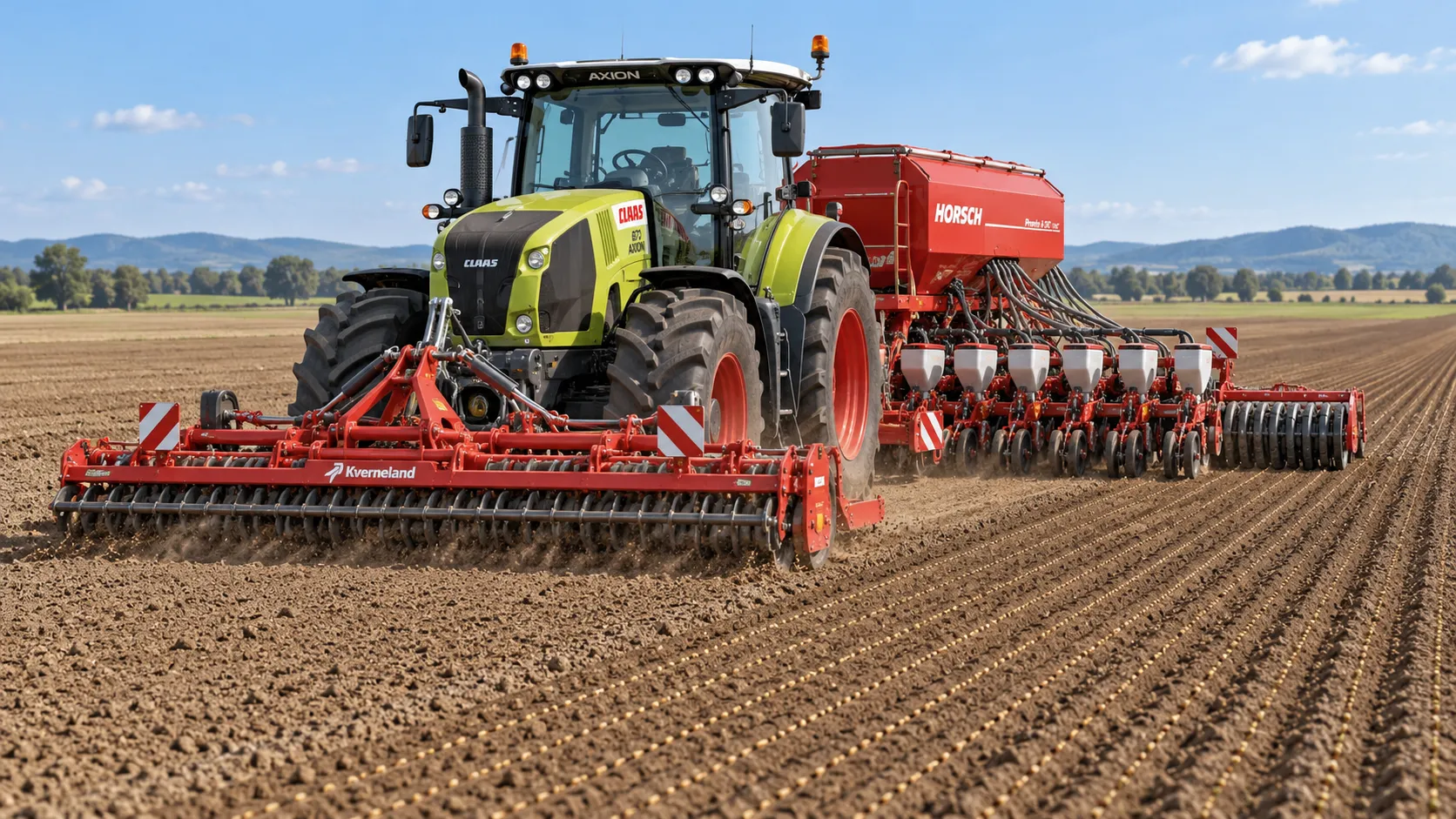
When an integrated seeding combination improves field efficiency
Integrated seeding combination improves field efficiency, protects planting windows, and balances speed with seedbed quality, tractor capacity, and reliable establishment.
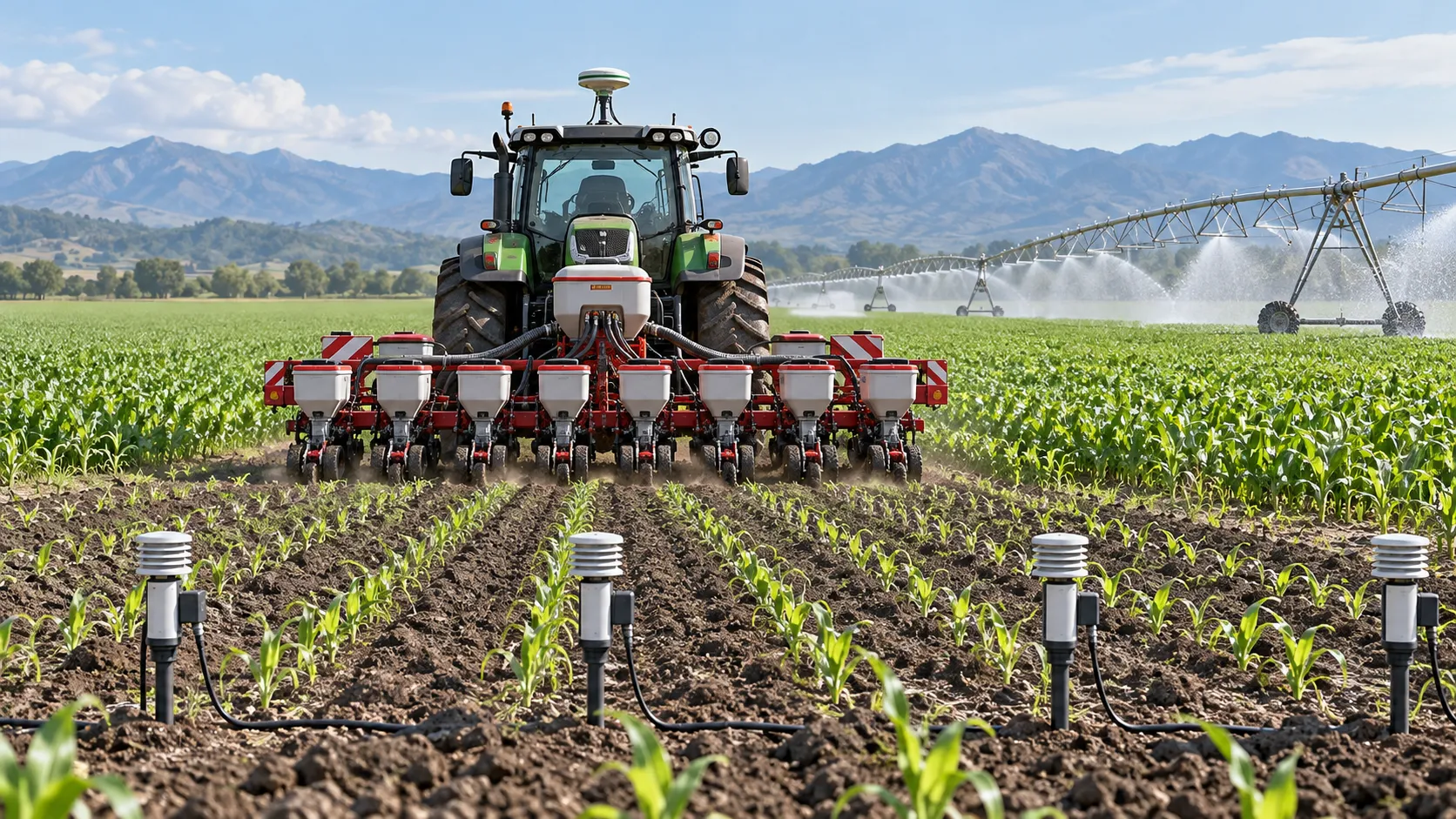
Which costs matter most when calculating precision agriculture ROI?
Calculating ROI on precision agriculture equipment? Discover the costs that shape returns, from installation and subscriptions to downtime, labor, and data integration.
Related News
- 00
0000-00
Comparing Farm Equipment Supplier Quotes: Price, Freight, and Warranty - 00
0000-00
Choosing a Digital Farming Platform Provider: Compatibility and Data Ownership - 00
0000-00
How Large-Scale Farm Telematics Cuts Downtime Across Mixed Fleets - 00
0000-00
Farm Machinery Sourcing: How to Vet Suppliers, Specs, and Lifecycle Costs - 00
0000-00
Which costs matter most when calculating precision agriculture ROI?
Popular Tags
Ms. Elena Rodriguez
Weekly Insights
Stay ahead with our curated technology reports delivered every Monday.