
How to Read Agricultural Equipment Specifications for Sprayers Before You Compare Models
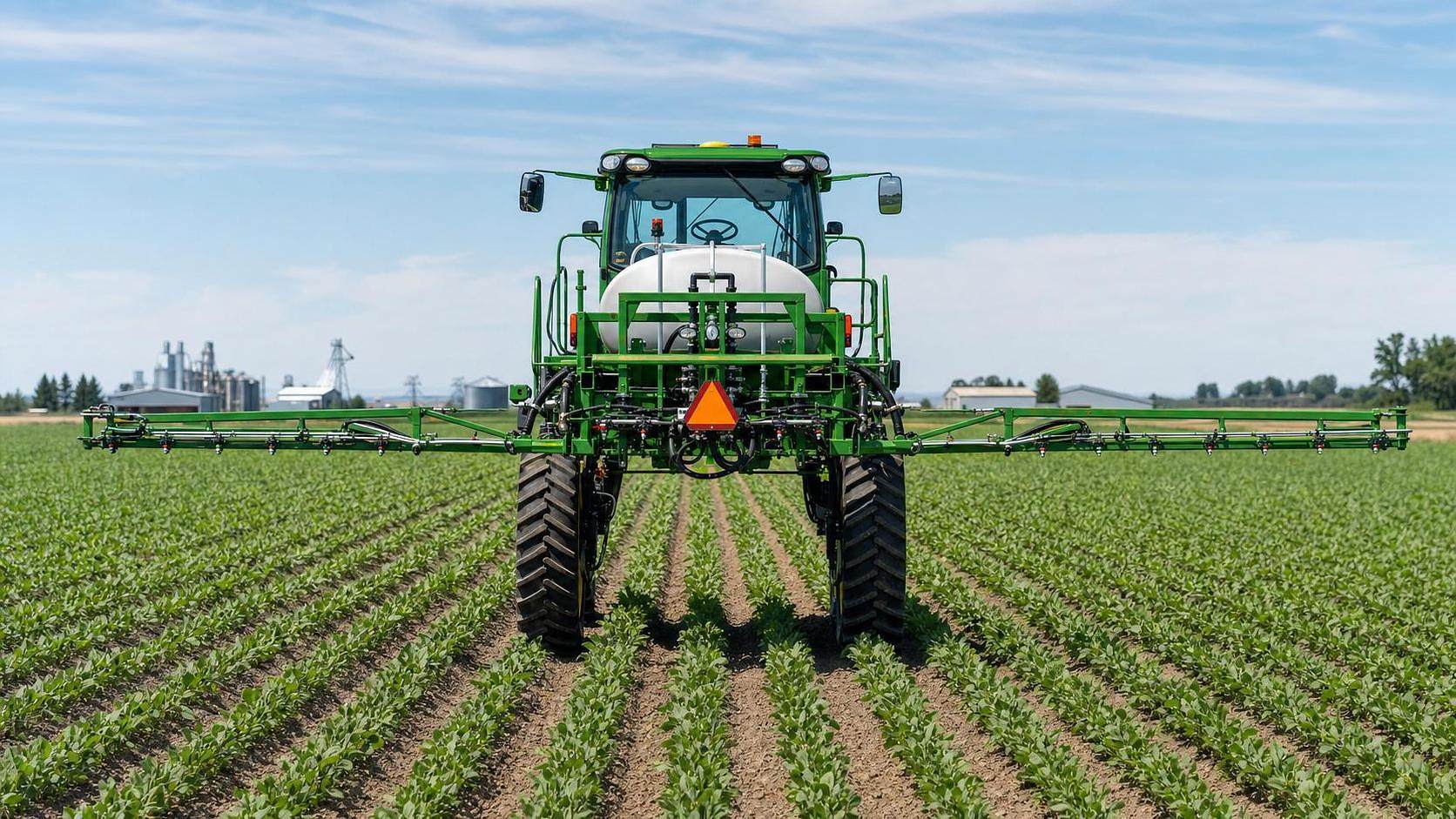




Before any side-by-side model comparison begins, the real work is learning how to read agricultural equipment specifications for sprayers in context. A larger tank, wider boom, or higher pressure rating can look impressive on paper, yet those headline figures say little about spray quality, field capacity under real conditions, or long-term operating cost. For evaluation work tied to Agriculture 4.0 priorities, the better question is not which machine posts the biggest number, but which specification set supports stable coverage, controllable drift, data-ready operation, and dependable performance across varying crops, weather windows, and input strategies.
Why specification reading matters more than model marketing
Sprayer buying decisions increasingly sit at the intersection of machinery performance, agronomic accuracy, and sustainability pressure.
That is why agricultural equipment specifications for sprayers now deserve the same scrutiny applied to tractors, combines, and intelligent irrigation systems.
In practical terms, spray equipment influences chemical placement, resistance management, water use, labor scheduling, and crop protection timing.
Poor interpretation of specifications often leads to a mismatch between machine capability and field requirements.
That mismatch may show up as inconsistent droplet size, excessive overlap, weak penetration, drift losses, or underused digital control features.
From the broader AP-Strategy perspective, this is not only an equipment issue.
It is part of a larger shift toward precision tasks, resource-saving standards, and data-based asset decisions across the agri-equipment chain.
Start with the operating mission, not the brochure headline
The most useful way to read agricultural equipment specifications for sprayers is to anchor them to the intended operating mission.
A self-propelled field sprayer for broadacre cereals should not be judged by the same priorities as an orchard unit or a compact mounted sprayer.
The core mission usually combines six variables:
- target crop and canopy structure
- field size and shape
- application volume per hectare
- terrain and soil traffic limits
- required work rate during short spray windows
- level of precision control expected from the farm system
Without that baseline, specification comparison becomes distorted.
One model may look stronger because of tank size, while another may actually deliver better daily output through faster filling, steadier boom control, and less downtime.
The specifications that deserve first attention
Tank capacity and refill logistics
Tank size matters, but only alongside refill speed, agitation design, clean water capacity, and chemical induction efficiency.
A large tank can reduce refill frequency.
It can also increase axle load, soil compaction risk, and transport inefficiency if the chassis is not well balanced.
Boom width, structure, and height control
Boom width affects work rate, but boom stability affects application quality.
The relevant reading includes suspension type, section layout, breakaway protection, height control sensors, and structural rigidity in uneven terrain.
A wide boom with weak stability may create more overlap and drift than a slightly narrower one.
Pump output and pressure range
Pump capacity should be matched to target flow demand, agitation needs, and future precision upgrades.
Pressure range alone is not enough.
What matters is whether the machine can maintain stable pressure across realistic field speeds and nozzle combinations.
Nozzle system and rate control architecture
Many agricultural equipment specifications for sprayers mention nozzle count and control type, yet leave the real operating flexibility unclear.
Check whether the system supports individual nozzle control, pulse-width modulation, automatic section control, and easy nozzle body changes.
These details shape drift management, overlap reduction, and prescription accuracy.
What the specification sheet may hide
Some of the most important performance risks are not obvious in a condensed product sheet.
That is why agricultural equipment specifications for sprayers should be read as a starting point, not a final conclusion.
This gap between brochure language and operational reality is where many comparison mistakes begin.
Digital capability now belongs in the core specification review
Sprayers are no longer judged only by hydraulics, steel, and pump output.
In a precision environment, digital architecture is part of the machine’s productive value.
This includes GNSS accuracy, task data handling, section and nozzle control logic, sensor compatibility, and display usability.
For AP-Strategy’s intelligence lens, this aligns with the wider convergence between hardcore mechanics and precision farming algorithms.
A sprayer that cannot exchange reliable field data may still spray.
It will struggle to support traceability, prescription workflows, and optimization across seasons.
When reviewing agricultural equipment specifications for sprayers, pay close attention to:
- ISOBUS or equivalent integration pathways
- guidance accuracy and correction compatibility
- as-applied data export options
- variable-rate application support
- remote diagnostics and software update structure
Spray quality is a system outcome, not a single metric
One common mistake is treating pressure or speed as the main indicator of performance.
Actual spray quality depends on several linked conditions working together.
Nozzle selection, boom height, pressure stability, travel speed, droplet spectrum, and weather adaptation all shape deposition results.
That means agricultural equipment specifications for sprayers should be tested against expected application scenarios, not read in isolation.
For example, fungicide work in dense canopies may prioritize penetration and droplet retention.
A pre-emergence herbicide pass may place more weight on uniform soil coverage and drift avoidance.
The right specification set changes with the job.
Lifecycle cost should be built into technical reading
Side-by-side model comparison often overvalues purchase price and undervalues operating structure.
A sound review of agricultural equipment specifications for sprayers should include service intervals, wear parts, calibration complexity, fuel use, tire impact, and cleaning time.
It is also worth checking frame durability, boom joint life, pump maintenance access, and electronics support across regions.
These elements affect uptime just as much as nominal output.
Where sustainability targets matter, the review should extend to input efficiency and reduced rework.
A machine that lowers overlap, drift, and residue waste may deliver better economic results even if its headline capacity is not the largest.
A practical framework for comparing models
A disciplined comparison process usually produces better conclusions than feature-by-feature browsing.
One useful approach is to score agricultural equipment specifications for sprayers across four layers.
- Mission fit: crop system, field pattern, application volumes, seasonal work window
- Performance control: boom behavior, rate accuracy, nozzle flexibility, pressure stability
- Digital readiness: mapping, automation, diagnostics, integration with farm data systems
- Ownership efficiency: maintenance load, uptime risk, consumables, support network
This method keeps the evaluation anchored to business use rather than isolated specifications.
It also makes trade-offs visible.
A model may rank lower in raw capacity but higher in spray consistency and data value.
Where to look next
Reading agricultural equipment specifications for sprayers well means moving from numbers to operating meaning.
The most reliable comparisons connect mechanical data, agronomic effect, software capability, and lifecycle economics.
That broader view is increasingly necessary as spray systems become part of connected, resource-conscious field strategies.
The next step is to build a comparison sheet around the actual spray mission, then pressure-test each specification against field conditions, control requirements, and support realities.
When that process is handled carefully, model selection becomes less about brochure scale and more about measurable fit, stable output, and long-term operational intelligence.
Related News
Choosing a Digital Farming Platform Provider: Compatibility and Data Ownership
Compare digital farming platforms providers on equipment compatibility, data ownership, and export rights. Discover practical checks to avoid lock-in and choose with confidence.
How Large-Scale Farm Telematics Cuts Downtime Across Mixed Fleets
Large-scale farm equipment telematics cuts mixed-fleet downtime with real-time alerts, smarter maintenance, and stronger operational control. Learn how to protect critical farm workflows.
How to Size Low-Pressure Water-Saving Irrigation Systems for Uneven Fields
Low pressure water-saving irrigation systems for uneven fields: learn zoning, pressure mapping, pipe sizing, and pump selection to improve uniformity and reduce water waste.
Farm Machinery Sourcing: How to Vet Suppliers, Specs, and Lifecycle Costs
Farm machinery information for sourcing: learn to vet suppliers, compare specifications, control lifecycle costs, and secure reliable uptime for smarter equipment purchases.
Can hybrid propulsion systems reduce fuel use in farm machinery?
Hybrid propulsion systems for agricultural machinery can cut fuel use and boost productivity. Explore savings potential, key trade-offs, and smart investment factors.
What to compare in integrated seeding combinations for heavy soils
Compare integrated seeding combinations for heavy soils: depth control, residue flow, consolidation, traction, and field capacity for more uniform crop establishment.
When an integrated seeding combination improves field efficiency
Integrated seeding combination improves field efficiency, protects planting windows, and balances speed with seedbed quality, tractor capacity, and reliable establishment.
Which costs matter most when calculating precision agriculture ROI?
Calculating ROI on precision agriculture equipment? Discover the costs that shape returns, from installation and subscriptions to downtime, labor, and data integration.
How to calculate ROI on precision agriculture equipment before buying
Calculating ROI on precision agriculture equipment: learn to assess total ownership costs, savings, payback, NPV, risks, and farm-scale value before you buy.
Related News
- 00
0000-00
How to Choose Plant Protection Equipment for Vineyard Pests - 00
0000-00
How to Read Agricultural Equipment Specifications for Sprayers Before You Compare Models - 00
0000-00
BIS Extends Fast-Track Approval for Self-Propelled Sprayers - 00
0000-00
Intelligent Sprayer Technology: Which Functions Matter Most for Field Efficiency? - 00
0000-00
How to Choose Plant Protection Equipment for Orchards by Tree Height, Row Spacing, and Spray Drift
Popular Tags
Agri-Mechanization Fellow
Weekly Insights
Stay ahead with our curated technology reports delivered every Monday.