
Intelligent Sprayer Technology: Which Functions Matter Most for Field Efficiency?
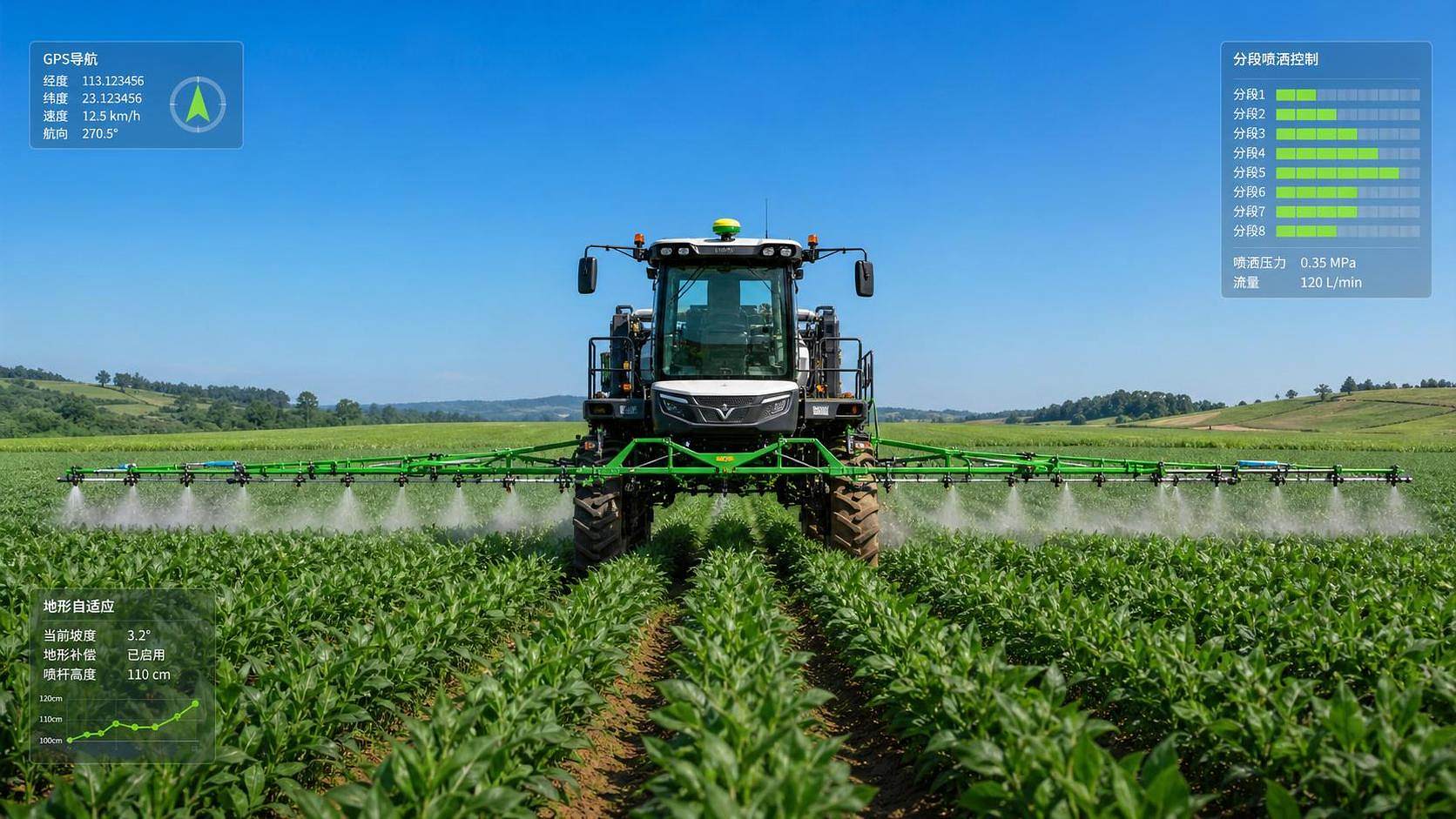




Field efficiency starts with the job, not the spec sheet
Intelligent sprayer technology matters because spraying windows are short, inputs are expensive, and field conditions rarely stay consistent for long.
A sprayer that performs well on paper may still lose efficiency when wind shifts, terrain changes, or crop density becomes uneven.
That is where agricultural machinery intelligence for sprayers becomes practical rather than theoretical.
The best functions are not simply the most advanced ones. They are the ones that protect coverage quality while reducing overlap, drift, refill delays, and operator correction.
Within the broader Agriculture 4.0 transition, AP-Strategy tracks this issue as part of a larger shift toward data-linked field equipment.
Sprayers now sit beside combines, chassis systems, and irrigation networks in the same decision chain: use fewer resources, keep output stable, and respond faster to changing field conditions.
Why the right functions change from one field situation to another
Not every spraying task asks the machine to solve the same problem.
Broadacre cereal fields usually reward speed, boom stability, and section control.
High-value crops often put more pressure on droplet consistency, canopy penetration, and chemical accuracy.
Variable topography changes the priority again, because terrain compensation and steering precision start affecting both application quality and operator fatigue.
In actual use, the more useful judgment method is simple: identify what causes the most waste in the field, then match intelligence functions to that loss point.
- If waste comes from overlap, guidance and automatic section shutoff deserve priority.
- If waste comes from underdosing or overdosing, flow control and nozzle monitoring matter more.
- If waste comes from weather sensitivity, real-time sensing and drift management become decisive.
- If downtime is the bigger issue, refill logic, diagnostics, and calibration support move higher on the list.
This is why agricultural machinery intelligence for sprayers should be judged by field bottlenecks, not by feature count.
In large open fields, speed only helps when coverage stays disciplined
Large-acreage operations often focus first on travel speed and tank capacity.
That makes sense, but field efficiency drops quickly when higher speed causes boom bounce, uneven pressure, or missed strips near irregular boundaries.
Here, the most valuable intelligent sprayer functions are usually GPS guidance, auto-steering integration, section control, and boom height automation.
These functions do not just make operation easier. They preserve workable speed without turning speed into application risk.
Flow-rate stability is equally important in this setting. Long passes magnify small dosing errors.
When pressure fluctuates during acceleration or headland turns, chemical use rises while coverage quality falls.
For broadacre work, agricultural machinery intelligence for sprayers should therefore include closed-loop rate control that reacts quickly to speed changes.
What matters most in this situation
- Sub-meter or higher guidance accuracy for long straight passes.
- Fast section response at headlands and irregular field edges.
- Stable boom height over changing ground contours.
- Reliable rate control during speed variation and partial shutoff.
In specialty crops, precision often matters more than outright hectares per hour
Orchards, vineyards, and dense vegetable systems create a different workload.
The challenge is not just moving quickly across the field. The challenge is getting the spray where biology and canopy structure actually require it.
This is where sensor-guided modulation, pulse-width control, and nozzle-by-nozzle monitoring become more valuable than raw boom width.
A denser canopy, row gaps, or mixed plant vigor can turn a fixed application pattern into a costly compromise.
Agricultural machinery intelligence for sprayers supports better matching between plant structure and spray delivery, especially when prescriptions vary within the same block.
In these settings, real-time feedback matters because visual uniformity is misleading.
Two adjacent rows can require different output because of moisture, disease pressure, or canopy volume.
Without sensor support, accuracy depends too heavily on manual adjustment and operator memory.
Uneven terrain changes the value of control systems
Rolling ground exposes weak control logic very quickly.
On slopes or rough surfaces, a sprayer may technically maintain output while still losing effective coverage because boom position and droplet path become unstable.
In this environment, terrain-responsive suspension, independent boom leveling, and responsive steering correction are not optional refinements.
They are core efficiency tools.
A common mistake is to treat hilly fields as a minor variation of flat-field work.
In practice, the same machine setup can behave very differently once boom movement, wheel slip, and delayed shutoff start interacting.
For this reason, agricultural machinery intelligence for sprayers should be evaluated together with chassis response and hydraulic stability, not as a software layer alone.
A quick comparison helps separate useful functions from nice extras
The same feature can have very different value depending on the field context.
Where agricultural machinery intelligence for sprayers often gets misjudged
One frequent error is focusing only on accuracy claims while ignoring implementation friction.
A smart control package loses value when calibration is slow, diagnostics are unclear, or data cannot integrate with existing farm records.
Another mistake is assuming all variable-rate capability delivers equal value.
If field maps are weak, sensor input is unreliable, or agronomic zones are poorly defined, advanced modulation may add complexity without improving results.
There is also a long-term cost issue that gets overlooked.
Nozzle wear, sensor contamination, software updates, and hydraulic maintenance all influence whether smart spraying stays efficient after the first season.
AP-Strategy often frames this as a system question rather than a device question.
Field intelligence only pays off when machine control, agronomic logic, and service support remain connected.
A practical way to match functions with real operating conditions
Before comparing brands or control packages, it helps to define the field conditions that create the biggest efficiency losses.
- Map where overlap, drift, or missed coverage happens most often.
- Check whether speed changes are causing dosage instability.
- Review whether terrain or canopy variation is driving inconsistent results.
- Confirm how easily the system can be calibrated, cleaned, and maintained.
- Measure whether the data output can support repeatable decisions next season.
That process usually reveals which intelligent sprayer functions are operational necessities and which are secondary upgrades.
In many cases, the strongest return does not come from the most complex package.
It comes from agricultural machinery intelligence for sprayers that fits field shape, crop structure, chassis behavior, and maintenance reality at the same time.
What to review before the next upgrade decision
The most important sprayer functions are the ones that keep efficiency stable under real field variation.
For some operations, that starts with guidance and section control.
For others, it depends more on sensor-led dosing, terrain response, or stronger diagnostics.
A useful next step is to review actual spraying logs, identify where time or chemical is being lost, and build a short list of functions against those conditions.
That kind of disciplined comparison gives agricultural machinery intelligence for sprayers real decision value, especially in a market where precision, sustainability, and machine interoperability increasingly move together.
Related News
Tractor Chassis Price: What Buyers Should Compare Beyond the Initial Quote
Tractor chassis price is only the start. Compare load capacity, compatibility, durability, and lifecycle costs to choose a reliable, high-value chassis.
How to Select Smart Irrigation Valves for Multi-Zone Water Management?
Intelligent irrigation systems valves: learn how to match smart valves with multi-zone flow, pressure, control, feedback, and communication needs for reliable water management.
Climate-Smart Farming for Drought: A Practical Plan for Protecting Yields
Climate-smart farming for drought: build smarter water budgets, protect critical crop stages, improve irrigation uniformity, and safeguard yields with practical field-proven strategies.
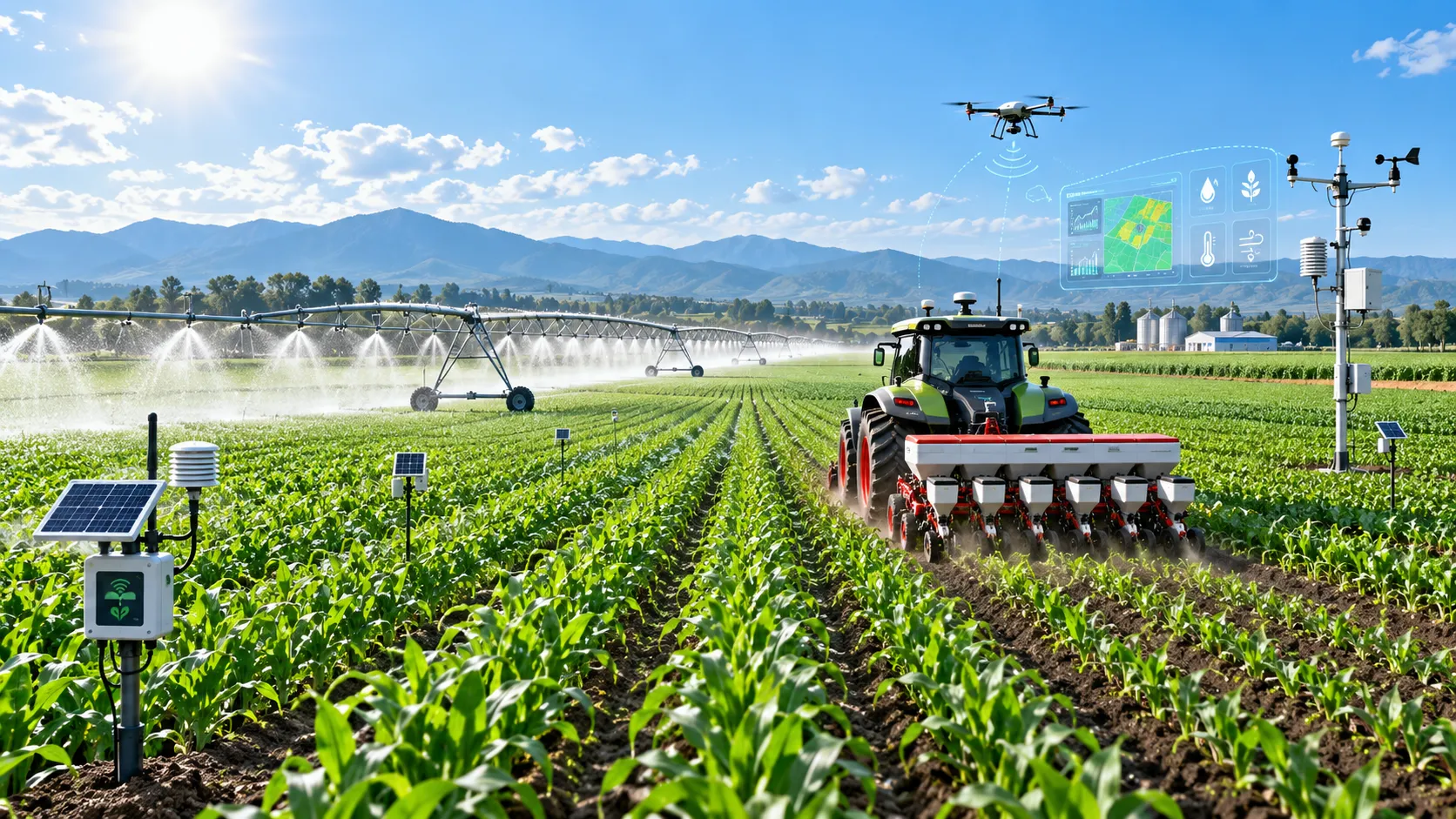
How Digital Agriculture Platforms Turn Field Data Into Better Input Decisions
Digital agriculture platforms turn field data into smarter fertilizer, water, seed, and equipment decisions—helping farms cut risk, improve margins, and scale sustainability.
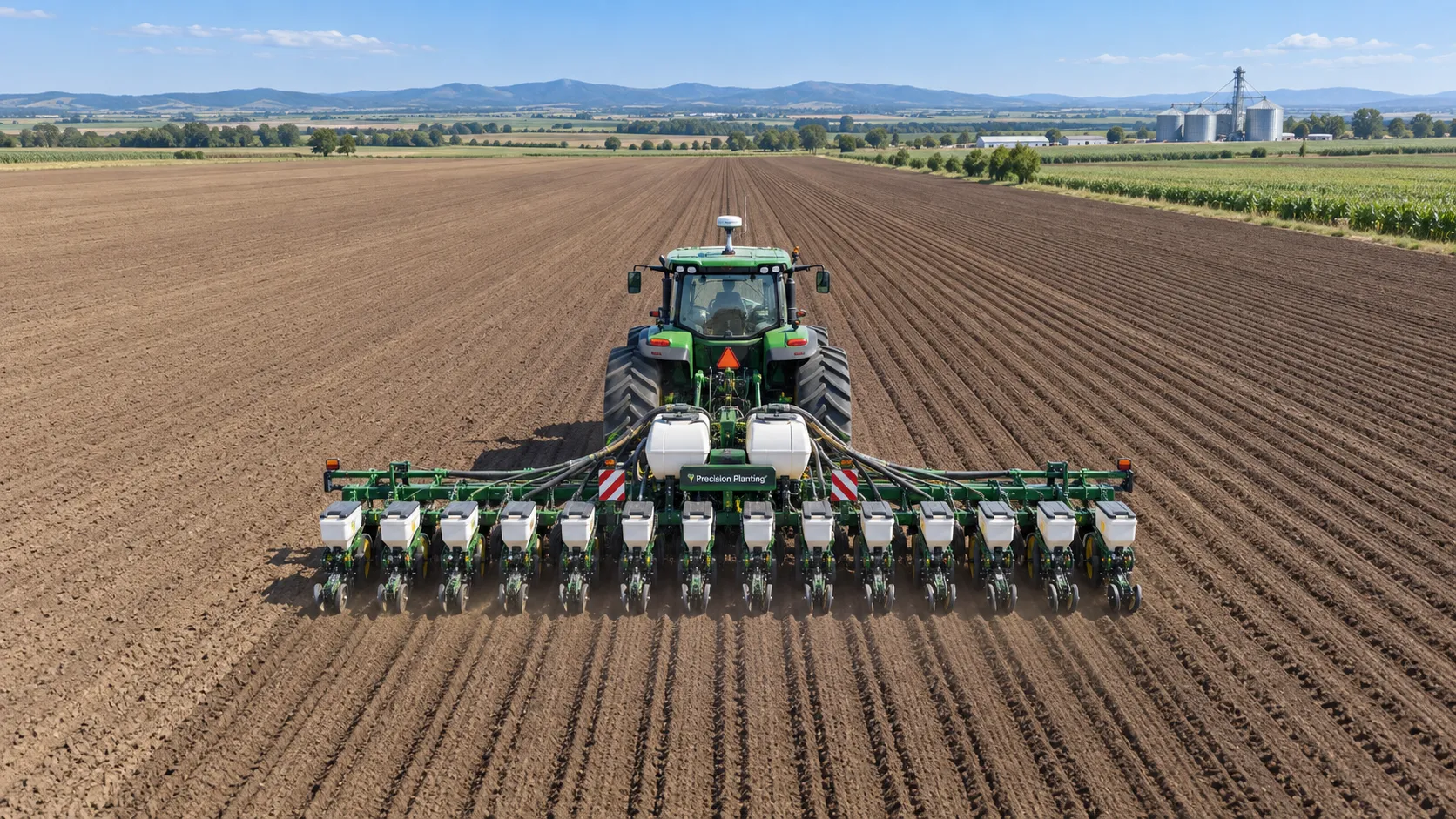
GPS-Guided Farm Machinery: Where It Delivers Measurable Field Efficiency Gains
Agri-mechanization GPS guided systems deliver measurable field efficiency gains through reduced overlap, precise planting, smarter inputs, and reliable farm data.
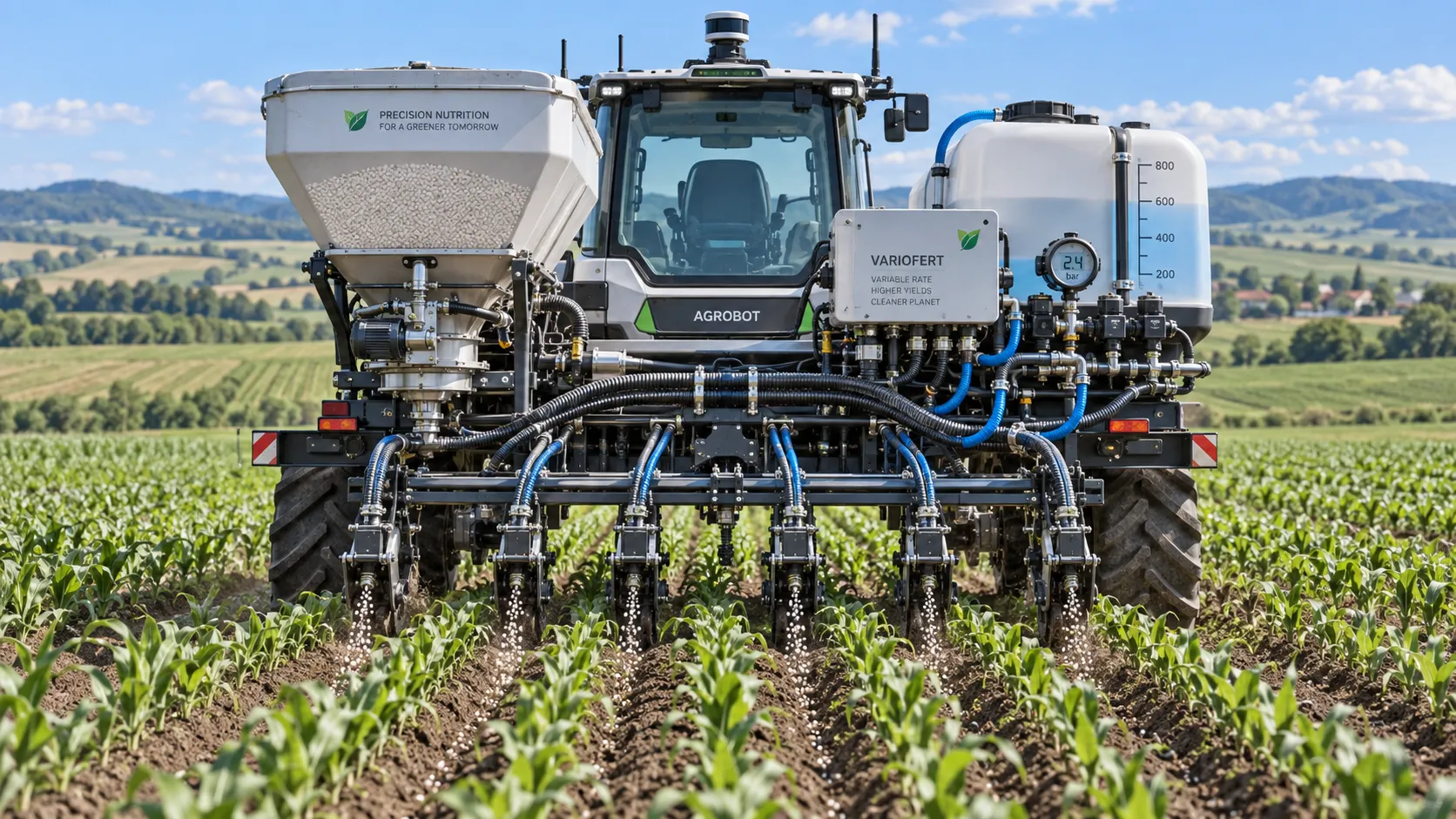
How Sensor Feedback Enables Accurate Variable-Rate Fertilization in Field Conditions
Precision fertilization systems with sensor feedback improve variable-rate accuracy by verifying flow, managing latency, and ensuring reliable field application.
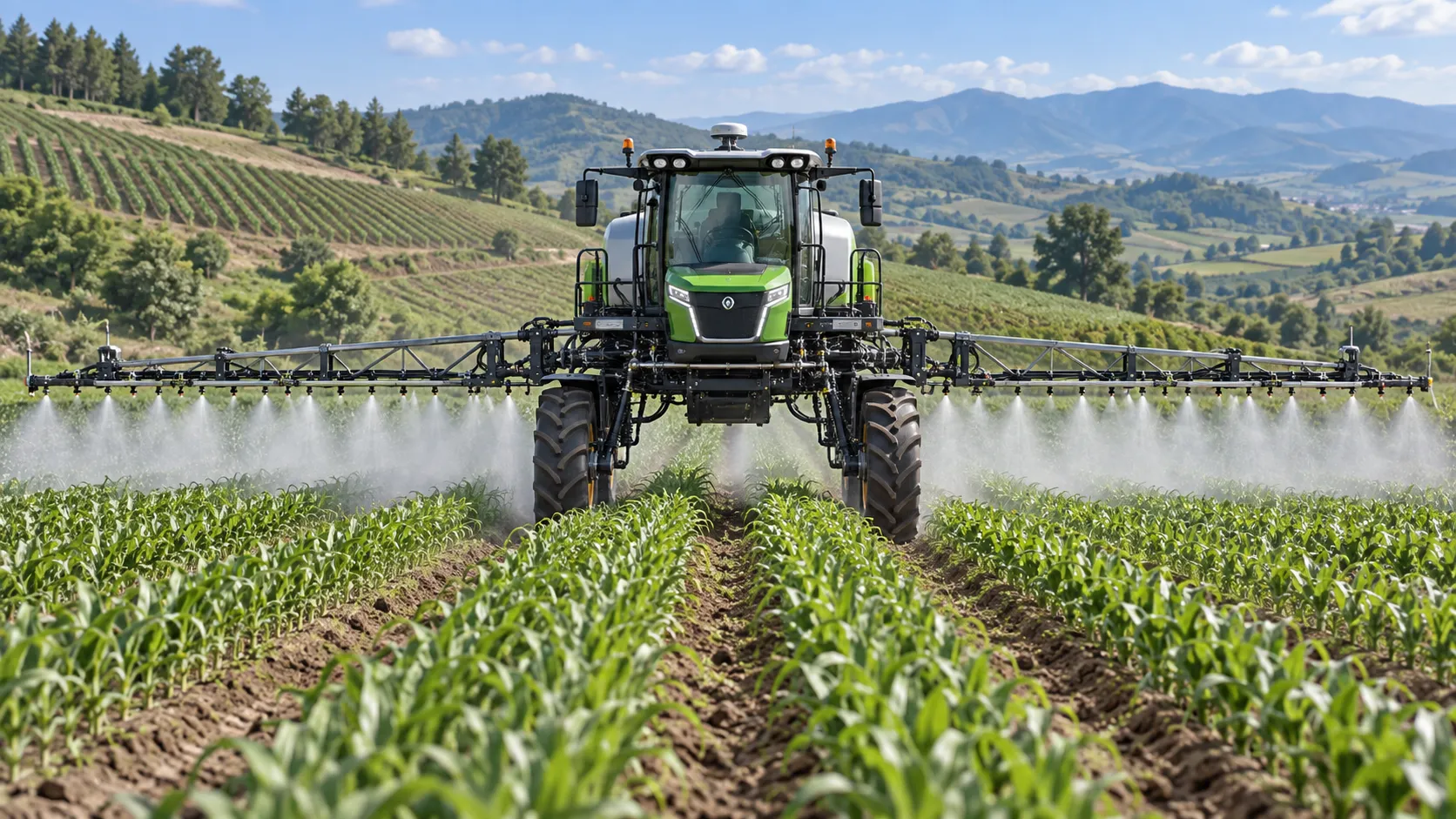
How to Select Precision Crop Protection Equipment for Variable Field Conditions
Precision crop protection equipment selection made simple: compare terrain, canopy, weather, control accuracy, and data workflows for reliable applications.
When Does Agricultural Machinery Leasing Cost Less Than Owning Equipment?
Agricultural machinery leasing can lower farm costs when use is seasonal or uncertain. Compare utilization, maintenance, cash flow, and risk to make a smarter equipment decision.
How to Evaluate Precision Fertilization System Suppliers for Farm-Scale Deployment
Precision fertilization systems suppliers: learn how to compare accuracy, integration, uptime, service, and total cost for confident farm-scale deployment.
Related News
- 00
0000-00
How to Choose Plant Protection Equipment for Vineyard Pests - 00
0000-00
How to Read Agricultural Equipment Specifications for Sprayers Before You Compare Models - 00
0000-00
BIS Extends Fast-Track Approval for Self-Propelled Sprayers - 00
0000-00
Intelligent Sprayer Technology: Which Functions Matter Most for Field Efficiency? - 00
0000-00
How to Choose Plant Protection Equipment for Orchards by Tree Height, Row Spacing, and Spray Drift
Popular Tags
Agri-Mechanization Fellow
Weekly Insights
Stay ahead with our curated technology reports delivered every Monday.