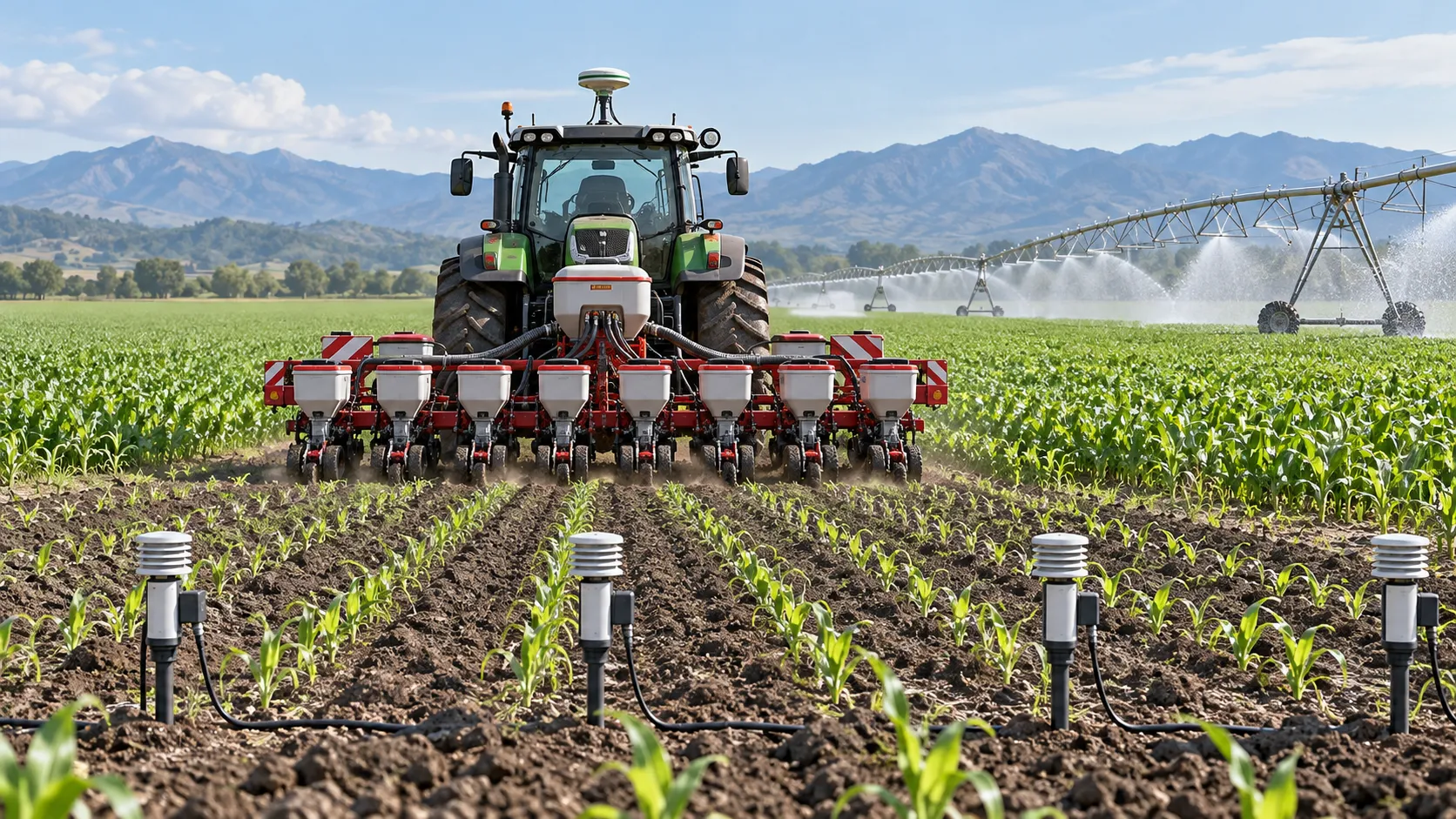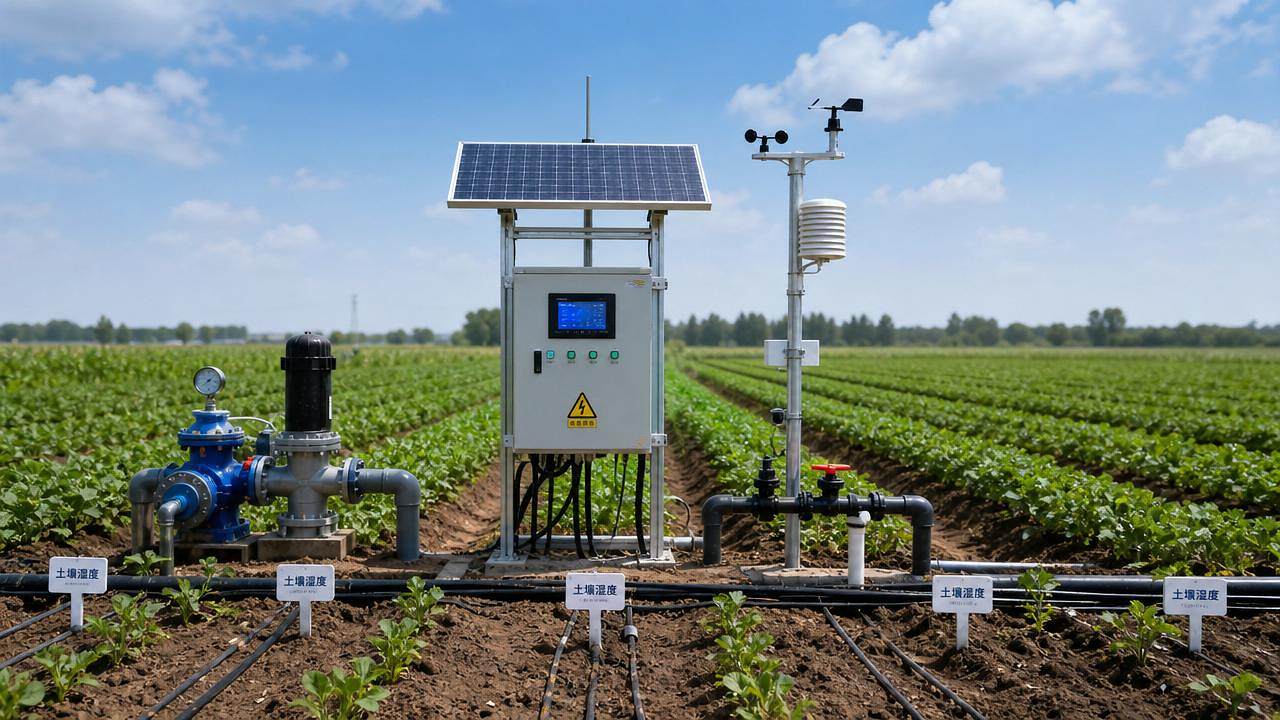




Smart irrigation networks cut water costs when they operate as decision systems, not merely as connected valves or remote-control devices.
For technical evaluators, savings appear when sensors, hydraulics, weather intelligence, and crop-demand models continuously adjust irrigation timing and volume.
The critical question is not whether the platform is smart, but whether it corrects costly water decisions faster than operators can.
The Short Answer: Savings Begin When Decisions Become Site-Specific
Smart irrigation networks reduce water costs when field variability is large enough that fixed schedules consistently overwater some zones.
If every block has similar soil, slope, crop stage, and pressure behavior, automation may improve convenience before reducing water bills.
The strongest savings usually come from farms with variable soils, uneven infiltration, mixed crop stages, or expensive pumped water.
In those conditions, networked control prevents irrigation from being applied uniformly where crop demand is clearly non-uniform.
A practical benchmark is whether the system can reduce applied water without lowering yield, quality, or root-zone reliability.
Technical evaluators should therefore test savings against agronomic outcomes, not only against reduced runtime or lower flow totals.
Search Intent: What Evaluators Are Really Trying to Confirm
Most searches for smart irrigation networks are not looking for a basic definition of sensors, controllers, and cloud dashboards.
The real intent is usually economic: when does the technology justify its capital cost, integration effort, and maintenance burden?
Evaluators also want to know which performance claims are measurable and which depend on idealized demonstrations or vendor assumptions.
They need evidence that water savings result from better control logic, not from simply irrigating less and accepting hidden stress.
That makes the evaluation question operational: does the network improve irrigation accuracy under real weather, pressure, and labor constraints?
The most useful assessment connects water volume, pumping energy, crop response, maintenance events, and operator intervention into one framework.
Where Water Costs Actually Come From
Water cost is rarely just the price of water delivered through a meter or extracted from a well.
It includes pumping energy, filtration losses, pressure regulation, labor for checking zones, and repairs caused by poor hydraulic visibility.
In some regions, allocation penalties, groundwater restrictions, and reporting obligations make wasted water even more expensive.
Smart irrigation networks cut costs fastest when they address these combined cost drivers rather than only reducing scheduled irrigation minutes.
For example, shifting irrigation to lower-tariff electricity periods may reduce cost even when total water volume changes modestly.
Likewise, detecting abnormal flow can prevent pipe breaks or clogged laterals from becoming repeated water and yield losses.
Sensor Density: The First Technical Threshold
A network cannot make accurate water decisions if its sensing layer fails to represent field variability.
Soil moisture sensors should be placed by management zone, not only by convenience, power availability, or existing valve locations.
Texture changes, rooting depth, slope position, salinity risk, and irrigation uniformity should influence sensor placement strategy.
Too few sensors create a false sense of precision, where dashboards look advanced but decisions still depend on unverified averages.
Too many sensors can also increase calibration work, data noise, and maintenance costs without improving control decisions.
The right density is reached when additional sensors rarely change irrigation recommendations for a defined management zone.
Hydraulic Control Determines Whether Data Can Become Savings
Even excellent crop and soil data cannot save water if the hydraulic system cannot act on zone-level recommendations.
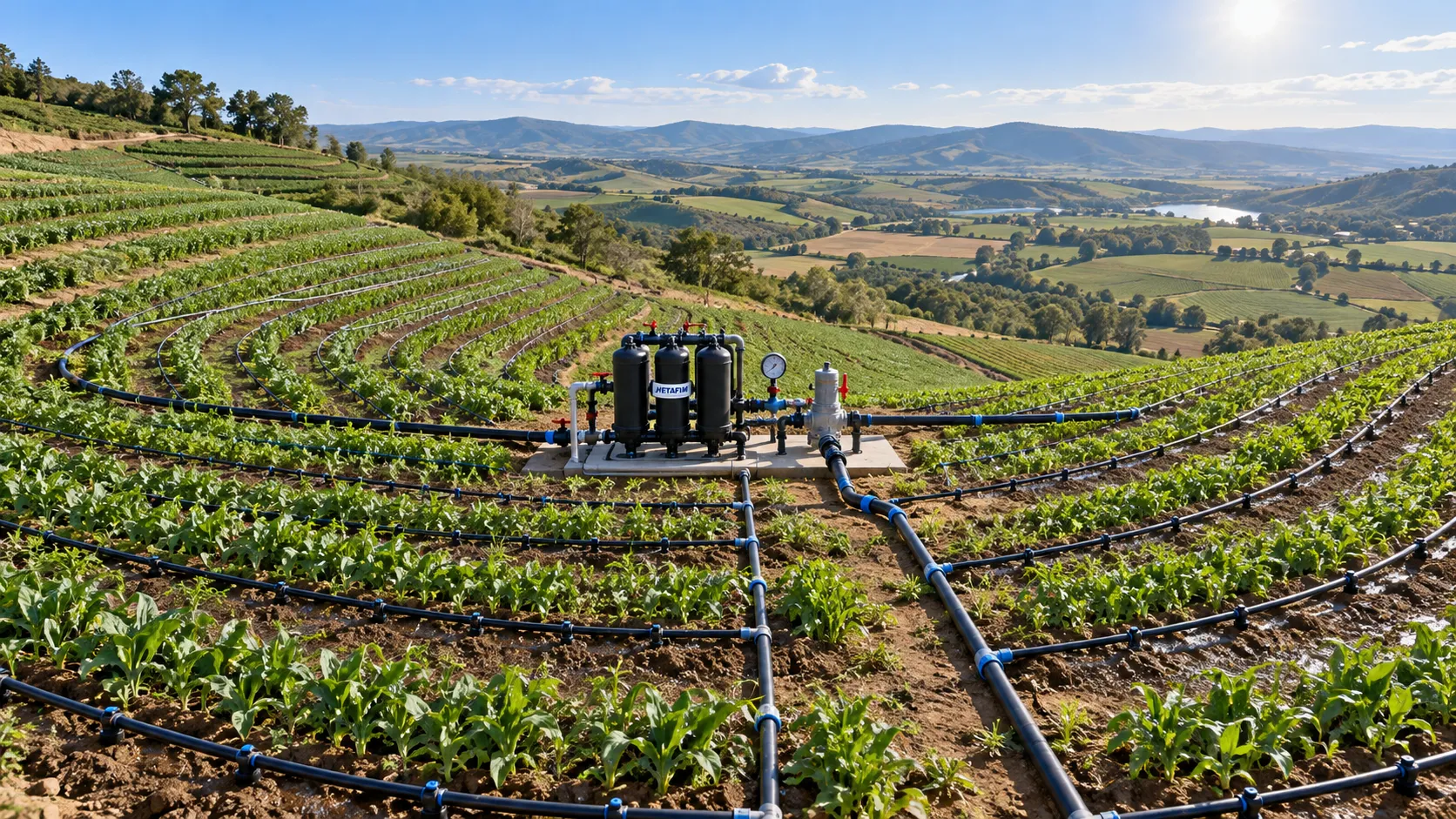
Valves, pumps, filtration units, pressure regulators, and flow meters must support flexible scheduling without destabilizing delivery pressure.
Networks reduce costs when they can irrigate smaller zones precisely, maintain target pressure, and avoid unnecessary system-wide runtime.
Poor hydraulic design often forces operators to irrigate in large blocks because the system cannot handle more granular control.
In that case, software may identify overwatering, but physical infrastructure prevents the recommendation from being executed.
Technical evaluations should include pump curves, pressure maps, valve response times, and flow verification under multiple operating combinations.
Weather Intelligence Must Be Local Enough to Matter
Evapotranspiration-based irrigation only reduces costs when weather inputs reflect actual field conditions rather than distant regional averages.
Temperature, solar radiation, wind, humidity, and rainfall can vary enough to change irrigation demand significantly across large operations.
Local weather stations, calibrated satellite data, and reliable forecasting improve the network’s ability to delay unnecessary irrigation.
The value is especially high before rainfall events, during heat waves, or when wind changes sprinkler distribution efficiency.
Forecast confidence should be visible to operators, because uncertain weather should trigger cautious adjustments rather than aggressive cutbacks.
Good platforms explain why a schedule changed, allowing agronomists to trust recommendations during volatile weather windows.
Crop-Demand Models Turn Connectivity Into Agronomic Control
Smart irrigation networks create durable savings when they understand crop stage, rooting behavior, canopy development, and allowable depletion.
A young crop, mature orchard, and late-season grain field cannot be controlled with the same moisture threshold logic.
Crop-demand models should combine evapotranspiration, soil water holding capacity, phenology, and yield sensitivity during critical growth periods.
This prevents the common mistake of saving water during stages where minor stress causes disproportionate yield or quality loss.
The best systems make deficit irrigation intentional, transparent, and limited to crops or stages where it is economically defensible.
For evaluators, the key is whether the model supports local agronomic rules, not only generic crop libraries.
When Leakage and Anomaly Detection Change the Business Case
In large irrigation systems, hidden leaks, blocked emitters, broken sprinklers, and pressure anomalies can quietly erase expected savings.
Flow meters, pressure sensors, and pump telemetry allow smart irrigation networks to identify abnormal behavior soon after it begins.
This capability is especially valuable where fields are distant, labor is limited, or irrigation occurs at night.
Leakage detection reduces direct water loss, but it also protects crop uniformity and prevents overcompensation in later irrigations.
Anomaly alerts should be tied to actionable diagnostics, such as suspected valve failure, clogged filter, or pressure drop location.
Otherwise, operators may receive many alarms but still spend excessive time finding the actual failure point.
Pump Energy Often Decides the Payback Period
Many farms pay as much attention to energy as to water volume because irrigation depends on high-duty pumping.
Smart scheduling can reduce peak demand charges, avoid inefficient pump operating ranges, and align irrigation with energy tariffs.
Variable frequency drives, pump sequencing, reservoir management, and pressure optimization can materially improve the cost equation.
The network should calculate not only how much water a crop needs, but when delivery is cheapest and hydraulically efficient.
This is where water-saving irrigation systems become resource optimization systems across water, power, equipment wear, and labor.
Technical evaluation should compare cost per cubic meter delivered, not only total cubic meters applied.
Data Quality Requirements Before Trusting Automation
Automation should not be fully trusted until the data layer has passed calibration, validation, and failure-mode testing.
Soil probes require installation depth checks, sensor-specific calibration, and comparison against manual readings or known field conditions.
Flow and pressure sensors must be verified against expected hydraulic performance, especially after filter changes or seasonal maintenance.
Weather feeds should be checked for missing data, sensor drift, shading problems, and unrealistic rainfall or radiation values.
A reliable network flags suspicious inputs and avoids making aggressive irrigation reductions based on faulty signals.
The strongest platforms document data confidence so operators can distinguish model uncertainty from actual water stress.
Which Farms See the Strongest Water-Cost Reductions?
Smart irrigation networks usually perform best on high-value crops, water-limited regions, and operations with complex irrigation infrastructure.
Orchards, vineyards, vegetables, seed crops, and specialty crops often justify investment because uniform water management affects quality.
Large field-crop operations can also benefit when pumping energy is high or water allocations are increasingly restricted.
Farms with multiple soil zones, variable topography, and long laterals tend to reveal savings faster than uniform fields.
The business case is stronger when operators already collect yield maps, soil surveys, weather data, or remote-sensing imagery.
Existing precision agriculture data reduces the cost and uncertainty of building meaningful irrigation management zones.
When Smart Irrigation Networks May Not Cut Costs
Not every farm will see immediate water-cost reductions from smart irrigation, even if the technology functions correctly.
If water is inexpensive, soils are uniform, and current irrigation practices are already disciplined, savings may be limited.
Systems also underperform when installation quality is poor, communications are unreliable, or operators override recommendations without feedback loops.
Another risk appears when vendors emphasize dashboards while offering weak agronomic modeling or limited hydraulic integration.
In these cases, the network may improve visibility but fail to change the decisions that drive water cost.
Evaluators should treat connectivity as a prerequisite, not as proof that the system will generate measurable savings.
Metrics Technical Evaluators Should Demand
A credible evaluation should define baseline performance before deployment, including applied water, energy use, yield, and labor hours.
Water-use efficiency should be measured as yield or revenue per unit of water, not simply reduced application volume.
Zone-level uniformity, irrigation event accuracy, pressure stability, and anomaly response time should also be tracked.
Energy metrics should include kilowatt-hours per cubic meter, peak demand exposure, and pump efficiency under actual schedules.
Operational metrics matter too, including alarm resolution time, manual overrides, sensor uptime, and communications availability.
The most convincing proof combines agronomic, hydraulic, and financial indicators over at least one full irrigation season.
How to Structure a Practical Pilot
A pilot should begin with a representative field, not the easiest block or the most problematic one.
The selected area should include meaningful variability in soil, pressure, crop condition, and irrigation scheduling difficulty.
Before activation, establish a baseline using historical water use, pump energy, yield records, and operator observations.
During the pilot, compare automated recommendations against agronomist decisions, manual soil checks, and actual crop response.
Do not judge success only by dashboard adoption; judge whether decisions changed and whether those changes improved outcomes.
A strong pilot ends with transferable rules for sensor placement, control thresholds, maintenance responsibilities, and ROI assumptions.
Integration With Broader Agriculture 4.0 Systems
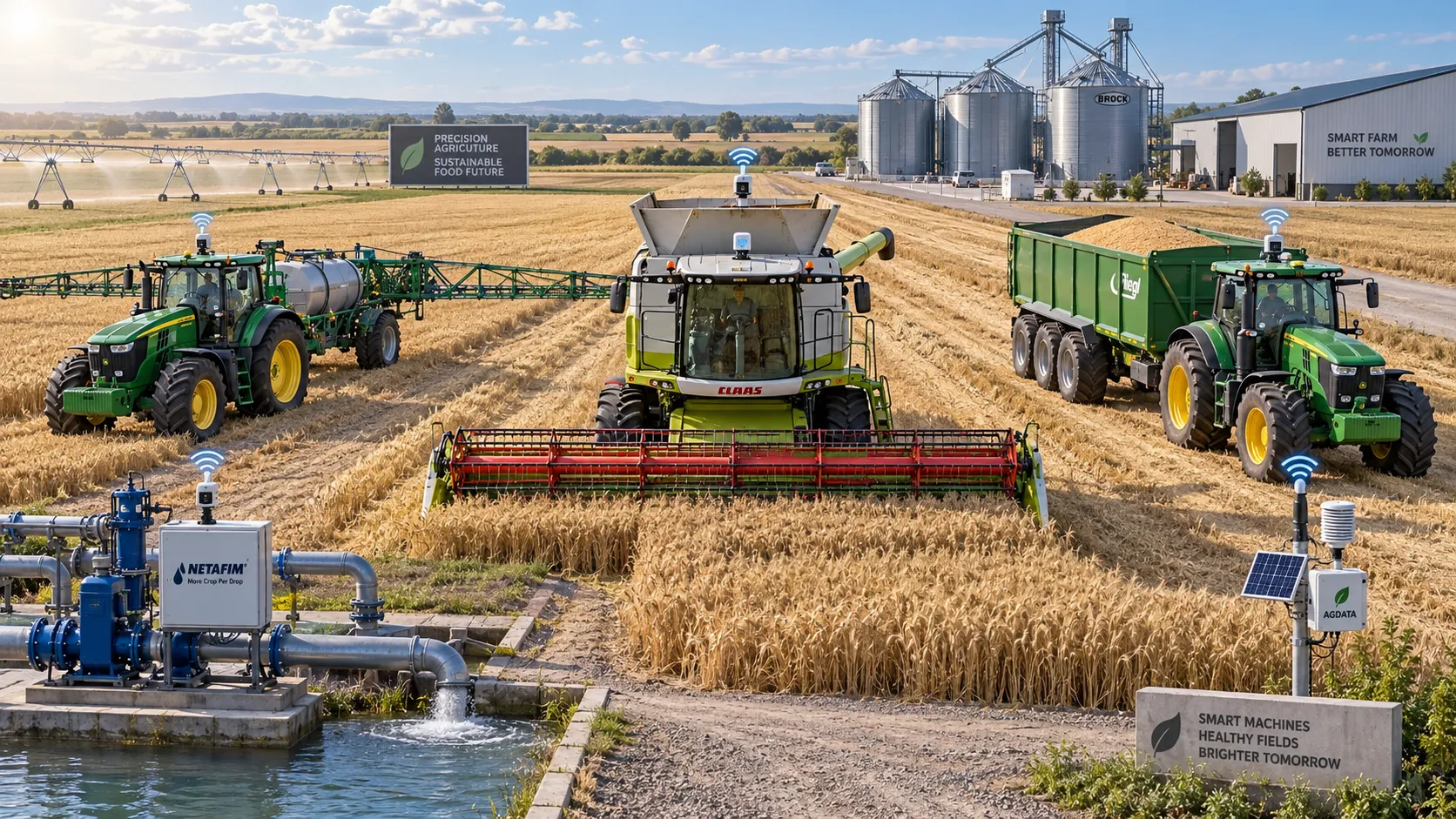
Smart irrigation networks become more valuable when connected with broader precision farming and machinery intelligence systems.
Yield maps, soil electrical conductivity, satellite imagery, and variable-rate prescriptions can improve irrigation zone design.
Combine harvester data may reveal stress patterns that irrigation logs alone did not fully explain during the season.
Tractor and implement operations also influence infiltration through compaction, residue distribution, and traffic patterns.
For Agriculture 4.0 evaluators, irrigation should not be isolated from the mechanical and agronomic data ecosystem.
The goal is a field decision brain where water, machinery, crop models, and sustainability targets reinforce one another.
Commercial Signals That a Platform Is Mature
Mature smart irrigation platforms provide transparent algorithms, integration documentation, service support, and clear hardware compatibility boundaries.
They allow data export, support open interfaces, and avoid locking evaluators into unexplained recommendations or proprietary reporting only.
They also provide maintenance workflows for sensor replacement, calibration intervals, firmware updates, and communication outage handling.
For large-scale farms, vendor strength matters because irrigation is mission-critical during narrow seasonal windows.
A low-cost platform can become expensive if support delays cause missed irrigations or unresolved false alarms.
Procurement should assess lifecycle reliability, not just initial device price or dashboard appearance.
ROI: What a Realistic Payback Model Includes
A realistic ROI model includes hardware, installation, subscriptions, data integration, training, maintenance, and periodic sensor replacement.
Benefits should include saved water, reduced energy, lower labor, fewer failures, improved yield stability, and compliance advantages.
High-quality models also assign value to risk reduction, especially during drought, allocation limits, or high-temperature periods.
The payback period shortens when the system improves multiple cost categories rather than water volume alone.
Evaluators should run scenarios for conservative, expected, and high-stress seasons because irrigation value changes with climate pressure.
The best investment cases remain positive even when water savings are moderate but energy and reliability gains are strong.
Conclusion: The Conditions That Make Savings Real
Smart irrigation networks cut water costs when they close the loop between field measurement, crop demand, hydraulic action, and financial outcomes.
The clearest gains appear where variability is significant, pumped water is costly, and management decisions must adapt quickly.
For technical evaluators, the priority is to test whether the system changes irrigation decisions safely and measurably.
Look beyond connected valves and ask whether sensor placement, weather data, crop models, and hydraulic controls work together.
If the network protects yield while reducing unnecessary water, energy, labor, and failures, the cost reduction is genuine.
If it only adds visibility without changing controllable decisions, it may be useful infrastructure but not a water-cost solution.