
How smart irrigation networks cut water waste on farms




How smart irrigation networks cut water waste on farms
As water scarcity reshapes farm economics, technical evaluators need more than broad sustainability claims—they need measurable performance signals.
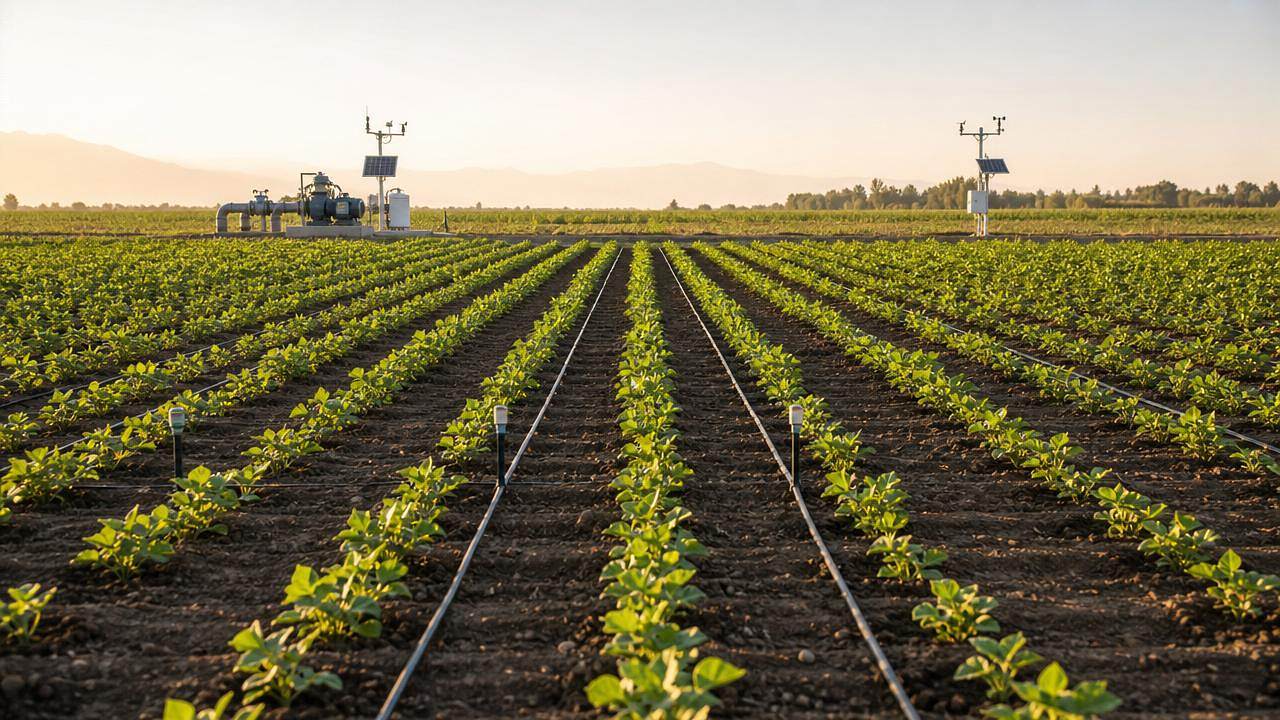
Smart irrigation networks combine soil sensors, weather data, flow control, and predictive algorithms to deliver water only where crops can use it.
By shifting irrigation from fixed schedules to responsive field systems, they reduce runoff, overwatering, energy demand, and nutrient leaching.
For Agriculture 4.0 strategies, smart irrigation networks also connect water management with yield stability, equipment efficiency, and sustainability reporting.
What are smart irrigation networks, and why do they matter?
Smart irrigation networks are connected systems that sense crop water demand, analyze field conditions, and control irrigation equipment automatically or semi-automatically.
A typical network includes soil moisture probes, weather stations, pressure sensors, valves, pumps, controllers, and cloud-based decision software.
The value is not only automation. The deeper value is timing, precision, and feedback across changing farm conditions.
Traditional irrigation often follows calendar rules. That approach can ignore rainfall, evapotranspiration, soil texture, slope, and crop growth stage.
Smart irrigation networks compare these variables continuously. They adjust watering decisions before stress, waste, or field imbalance becomes visible.
This matters because farms face stricter groundwater limits, higher energy costs, and greater weather volatility across many production regions.
When designed well, smart irrigation networks become part of the farm’s operational intelligence, not merely an accessory to pipes and pumps.
How do smart irrigation networks reduce water waste in daily operation?
Water waste usually comes from five sources: excess duration, poor timing, uneven distribution, leakage, and irrigation during low crop uptake.
Smart irrigation networks target each source through measurement, control, and prediction.
They irrigate according to plant-available water
Soil sensors estimate water at root depth. Controllers then avoid watering when moisture is already adequate for crop function.
This prevents deep percolation, where water moves below the root zone and becomes unavailable to the plant.
They account for weather before valves open
Weather-based scheduling uses rainfall forecasts, temperature, wind, humidity, and evapotranspiration estimates.
Smart irrigation networks can delay irrigation before rain or increase attention during hot, dry, windy periods.
They detect abnormal flow and pressure
Flow meters and pressure sensors reveal leaks, clogged emitters, broken pipes, or pump inefficiency earlier than manual inspection.
Fast detection reduces lost water and protects fertilizer programs where fertigation is integrated.
They match irrigation zones to field variability
Fields are rarely uniform. Sandier areas dry faster, while heavier soils may hold water longer.
Smart irrigation networks allow zone-based control, helping each area receive an appropriate amount instead of one field-wide average.
Which farms gain the most from smart irrigation networks?
The strongest gains usually appear where water is expensive, restricted, variable, or strongly connected to yield quality.
Large-scale row crop farms can use smart irrigation networks to coordinate pivots, pumps, and field sensors across broad areas.
Orchards and vineyards benefit because root zones, fruit quality, and deficit irrigation strategies require precise control.
Vegetable operations often see value from tighter moisture management, especially when crop uniformity and harvest timing affect market returns.
Greenhouses and protected agriculture can also apply the same logic, although systems may emphasize substrate sensors and nutrient solution management.
In regions facing groundwater rules, smart irrigation networks support documentation by recording when, where, and how much water was applied.
They also support mixed fleets, where tractors, sprayers, harvesters, and irrigation assets must fit one data-driven production plan.
How should smart irrigation networks be selected and compared?
Selection should begin with the field problem, not the software dashboard.
A farm struggling with uneven pressure needs different capabilities than one trying to improve evapotranspiration-based scheduling.
Smart irrigation networks should be evaluated across hardware reliability, agronomic intelligence, connectivity, integration, serviceability, and data ownership.
- Sensor accuracy: verify soil depth, calibration needs, and suitability for local soil texture.
- Control precision: compare valve, pump, pivot, and drip zone compatibility.
- Connectivity: assess cellular, LoRaWAN, satellite, radio, or hybrid communication options.
- Decision logic: review whether recommendations use weather, crop stage, soil data, and historical trends.
- Integration: check links with farm management software, machinery telemetry, and sustainability reporting tools.
- Maintenance: consider battery life, sensor replacement, firmware updates, and local technical support.
The best smart irrigation networks are not necessarily the most complex. They are the most consistent under real field constraints.
Compatibility with existing pumps, filtration, emitters, and controllers can determine whether savings appear quickly or remain theoretical.
What risks and mistakes reduce the value of smart irrigation networks?
The first mistake is treating automation as a substitute for agronomy.
Smart irrigation networks need correct crop coefficients, root depth assumptions, soil maps, and local operating rules.
A second mistake is placing too few sensors in highly variable fields.
One probe cannot represent every soil type, elevation change, or irrigation performance issue across a large block.
A third risk is poor data interpretation. A dashboard can display moisture trends without explaining irrigation consequences.
This is where decision thresholds matter. Alerts must be practical, timely, and linked to actual field actions.
Cybersecurity and data access also deserve attention, especially when pumps and valves are remotely controlled.
Smart irrigation networks should include user permissions, secure communication, backups, and manual override procedures.
Finally, low-quality installation can damage performance. Sensor depth, valve wiring, filtration, and pressure regulation all affect results.
What costs, implementation steps, and performance signals should be tracked?
Costs vary by crop, acreage, irrigation method, sensor density, communication architecture, and automation level.
A phased rollout often reduces risk. Start with high-value blocks, water-limited zones, or fields with known distribution problems.
Smart irrigation networks should be assessed against baseline water use, yield, energy consumption, labor hours, and crop quality indicators.
Useful performance signals include applied water per hectare, pump runtime, moisture stability, runoff events, and pressure deviation frequency.
Implementation should include field mapping, hydraulic inspection, sensor planning, controller configuration, staff training, and seasonal review.
A practical pilot should run through at least one full irrigation season.
That period captures heat waves, rainfall interruptions, crop stage changes, and maintenance events.
How do smart irrigation networks fit broader Agriculture 4.0 decisions?
Agriculture 4.0 depends on connected decisions across machinery, crops, water, energy, and market requirements.
Smart irrigation networks contribute one of the most measurable resource-efficiency layers in that system.
They can inform planting density, hybrid selection, nutrient timing, harvest planning, and stress management strategies.
For large farms, irrigation data can be compared with combine yield maps and satellite imagery after harvest.
That comparison reveals whether yield gaps came from water stress, soil limitations, machinery passes, or pest pressure.
Smart irrigation networks also help align sustainability goals with operational discipline.
Instead of claiming water stewardship generally, farms can demonstrate reductions through logged applications and performance trends.
This is why AP-Strategy views irrigation intelligence as a core pillar beside harvest technology and tractor chassis performance.
FAQ summary: quick answers on smart irrigation networks
The strongest business case appears when water savings, energy savings, labor efficiency, and yield protection are measured together.
Smart irrigation networks should be judged by field evidence, not by the number of dashboard features.
Conclusion: turning water control into field intelligence
Smart irrigation networks cut water waste by connecting sensing, prediction, and control into one practical operating loop.
They reduce unnecessary applications, reveal failures sooner, and help crops receive water at the right time and depth.
The next step is a structured field audit. Map water risks, compare irrigation zones, and define measurable success indicators.
With disciplined implementation, smart irrigation networks become a strategic asset for resilient, efficient, and data-driven farming.
Related News
Choosing a Digital Farming Platform Provider: Compatibility and Data Ownership
Compare digital farming platforms providers on equipment compatibility, data ownership, and export rights. Discover practical checks to avoid lock-in and choose with confidence.
How Large-Scale Farm Telematics Cuts Downtime Across Mixed Fleets
Large-scale farm equipment telematics cuts mixed-fleet downtime with real-time alerts, smarter maintenance, and stronger operational control. Learn how to protect critical farm workflows.
How to Size Low-Pressure Water-Saving Irrigation Systems for Uneven Fields
Low pressure water-saving irrigation systems for uneven fields: learn zoning, pressure mapping, pipe sizing, and pump selection to improve uniformity and reduce water waste.
Farm Machinery Sourcing: How to Vet Suppliers, Specs, and Lifecycle Costs
Farm machinery information for sourcing: learn to vet suppliers, compare specifications, control lifecycle costs, and secure reliable uptime for smarter equipment purchases.
What to compare in integrated seeding combinations for heavy soils
Compare integrated seeding combinations for heavy soils: depth control, residue flow, consolidation, traction, and field capacity for more uniform crop establishment.
When an integrated seeding combination improves field efficiency
Integrated seeding combination improves field efficiency, protects planting windows, and balances speed with seedbed quality, tractor capacity, and reliable establishment.
Which costs matter most when calculating precision agriculture ROI?
Calculating ROI on precision agriculture equipment? Discover the costs that shape returns, from installation and subscriptions to downtime, labor, and data integration.
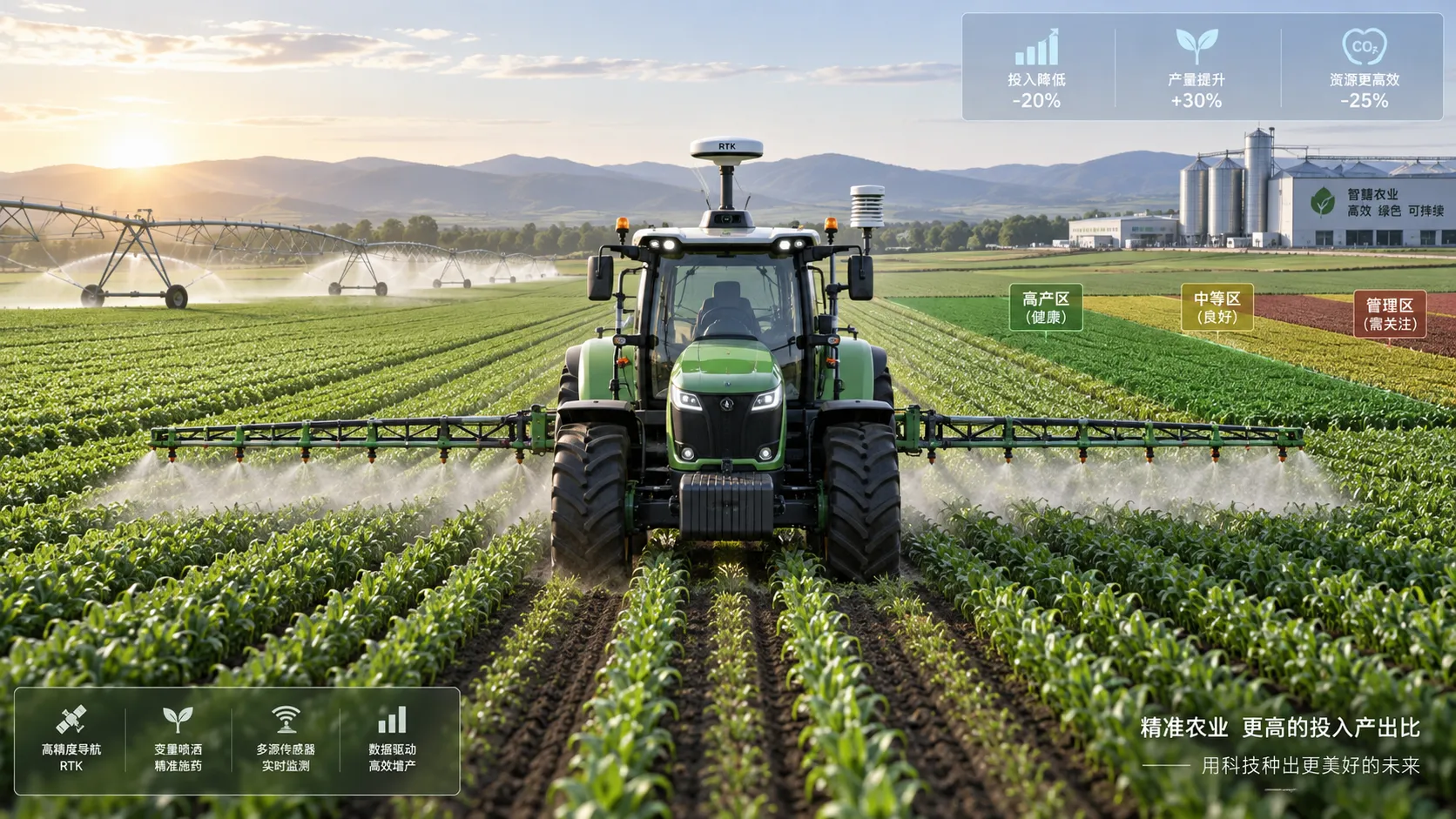
How to calculate ROI on precision agriculture equipment before buying
Calculating ROI on precision agriculture equipment: learn to assess total ownership costs, savings, payback, NPV, risks, and farm-scale value before you buy.
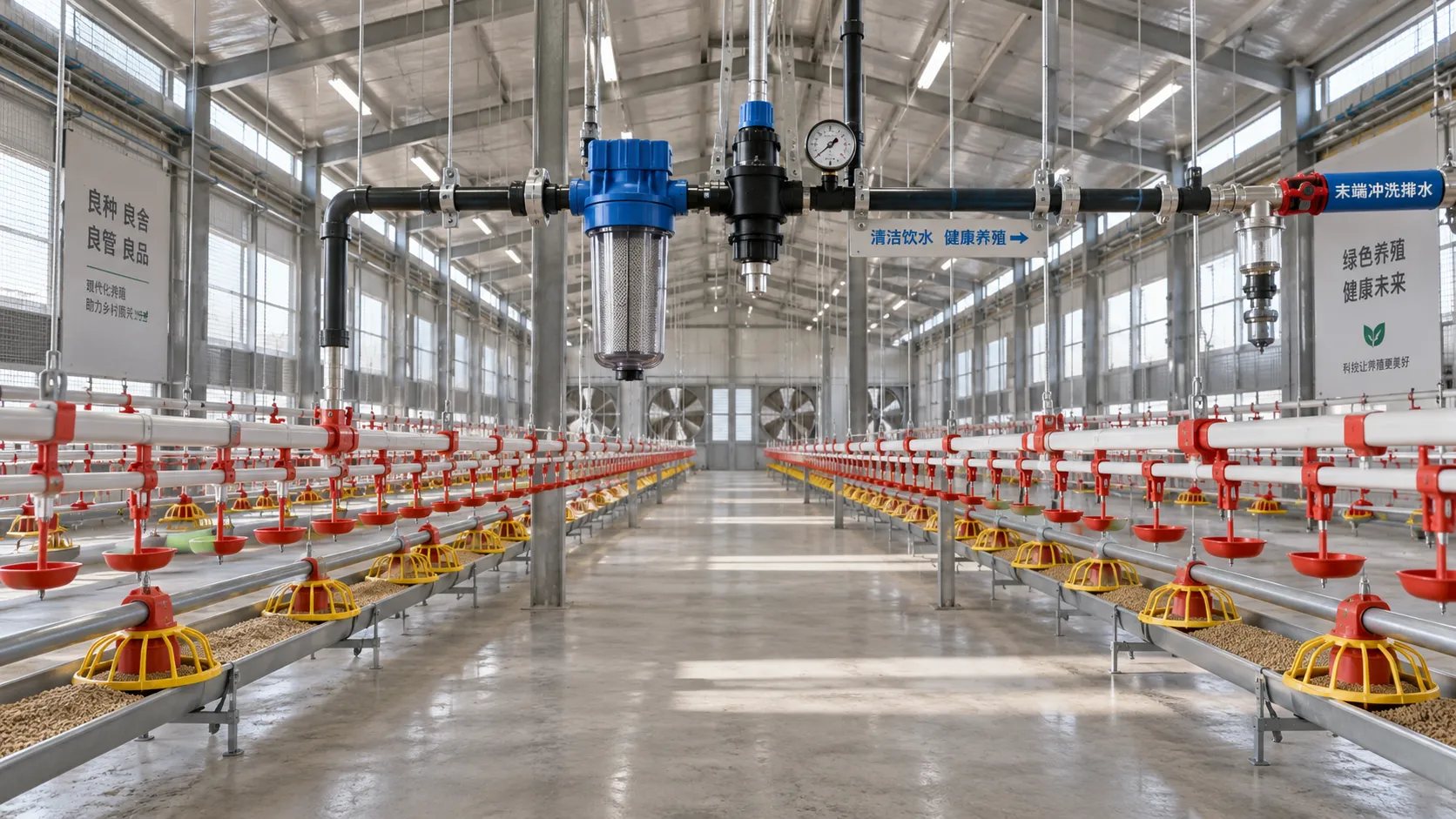
Planning Nipple Drinker Installation for Different Chicken House Layouts
How to install nipple drinker for chicken houses: plan line layouts, pressure control, flushing access, and maintenance for reliable water delivery.
Related News
- 00
0000-00
Orchard Water Management: Using Soil Moisture Data to Schedule Irrigation - 00
0000-00
Climate-Smart Farming for Drought: A Practical Plan for Protecting Yields - 00
0000-00
Selecting Real-Time Soil Moisture Sensors for Irrigation Zone Control - 00
0000-00
How Does Climate-Smart Farming Reduce Water Use in Semi-Arid Areas? - 00
0000-00
USDA Rule Takes Effect: Dual FCC and NRCS Approval for Soil Moisture Sensors
Popular Tags
Hydrological Resource Strategist
Weekly Insights
Stay ahead with our curated technology reports delivered every Monday.