
Are intelligent irrigation systems worth the upgrade?
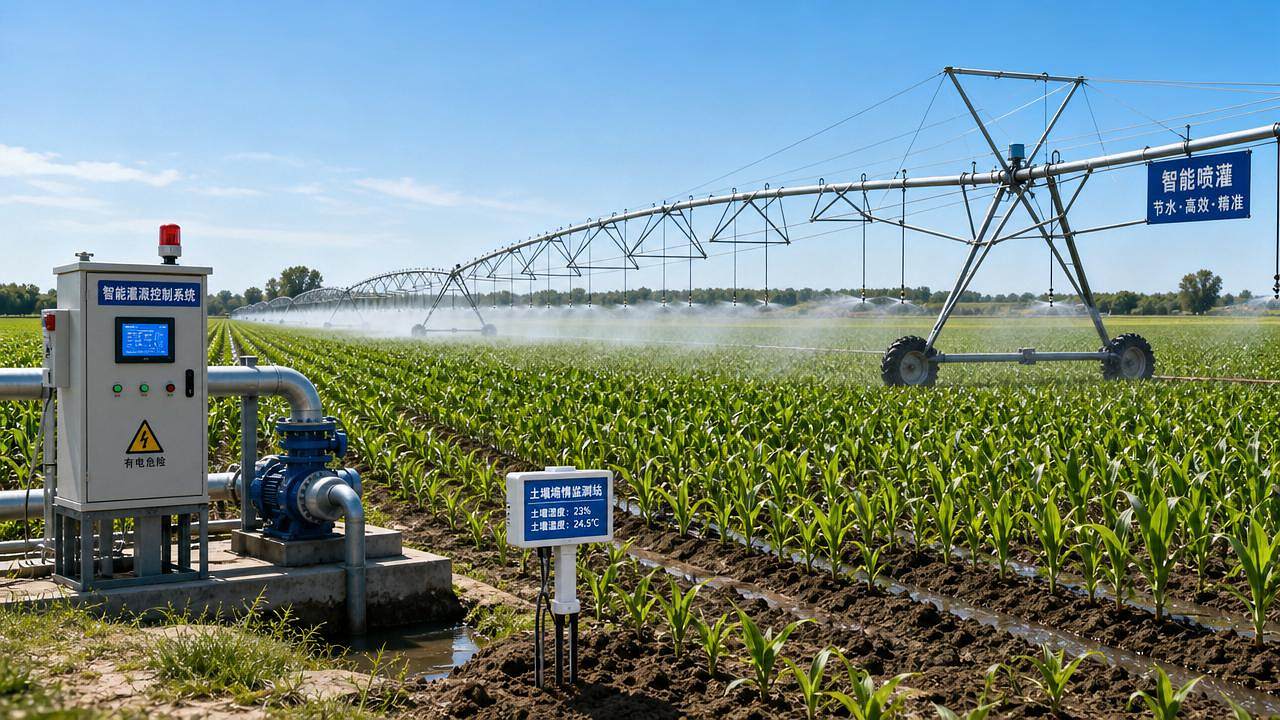




Are Intelligent Irrigation Systems Worth the Upgrade?
As farms face tighter water regulations, rising energy costs, and pressure to improve yield stability, intelligent irrigation systems are gaining serious attention.
The upgrade is not only about automation. It connects sensors, weather data, hydraulic control, and field-level decisions into measurable water efficiency.
For large-scale agriculture, the real question is not whether smart irrigation is modern. It is whether each scenario can justify investment.
When Intelligent Irrigation Systems Create Real Scenario Value
Traditional irrigation often works on fixed schedules. That approach can waste water when soil moisture, crop demand, and weather change quickly.
Intelligent irrigation systems shift decisions from calendar-based watering to condition-based control. This matters most where variability is expensive.
The strongest value appears in farms with high water costs, uneven soils, regulated withdrawals, or crops sensitive to moisture stress.
The weakest value appears where water is abundant, fields are small, labor is inexpensive, and crop margins cannot absorb new capital spending.
A useful assessment starts with the field problem. Then match control technology, data accuracy, and maintenance capacity to that problem.
Scenario 1: Water-Restricted Regions Need Precision First
In water-restricted regions, intelligent irrigation systems can move from convenience to necessity. Compliance, allocation limits, and drought risk shape every decision.
Soil moisture sensors and evapotranspiration models help reduce unnecessary application. Variable irrigation zones prevent overwatering low-demand areas.
The core judgment point is withdrawal control. If water rights or pumping hours are limited, smart scheduling can preserve yield with less volume.
Remote monitoring also reduces delayed reactions. When heat waves or wind events arrive, irrigation changes can be made before stress becomes visible.
Scenario 2: High-Value Crops Reward Moisture Accuracy
Fruit, vegetables, seed crops, and specialty crops often benefit strongly from intelligent irrigation systems. Quality loss can exceed water cost.
These crops may require narrow moisture ranges during flowering, fruit sizing, or maturation. Overwatering can reduce quality and invite disease.
Smart irrigation platforms support stage-based irrigation recipes. They help align water delivery with crop biology, not just field habit.
The upgrade is easier to justify when crop value per hectare is high. Even modest yield protection can support a strong payback.
Scenario 3: Large Fields Need Zoning, Not Just Automation
Large fields rarely behave uniformly. Soil texture, slope, drainage, and crop vigor often differ within the same irrigation block.
Intelligent irrigation systems are most effective when they divide fields into practical management zones. Automation alone cannot solve poor zoning.
Variable rate control, pressure regulation, and mapped soil data allow water to follow field demand. This reduces both stress and runoff.
The key judgment is infrastructure readiness. Pumps, valves, emitters, pivots, and control panels must support the intended level of precision.
Scenario 4: Energy-Intensive Pumping Changes the ROI Equation
Where pumping energy is high, intelligent irrigation systems can create savings beyond water. Fewer runtime hours directly reduce operating cost.
Smart scheduling can avoid peak electricity periods. Pressure monitoring can detect leaks, clogged filters, or inefficient pump performance earlier.
The strongest energy case appears in deep wells, long pipelines, high-pressure systems, and regions with time-of-use power tariffs.
ROI should include kilowatt-hours, maintenance savings, reduced system wear, and improved equipment utilization during narrow irrigation windows.
Scenario 5: Labor Constraints Make Remote Control Valuable
Labor availability is a major factor in irrigation performance. Manual valve checks and field visits consume time during critical operating periods.
Intelligent irrigation systems reduce routine inspection needs through alerts, dashboards, and automatic control logic. This improves response speed.
Remote control is especially useful for dispersed fields, night irrigation, or operations where equipment teams already manage multiple machinery platforms.
The judgment point is communication reliability. Weak cellular coverage or unstable gateways can reduce confidence in automatic decisions.
Different Irrigation Scenarios Require Different Upgrade Priorities
This comparison shows why intelligent irrigation systems should not be evaluated as a single product category. Scenario fit decides value.
How to Match Intelligent Irrigation Systems to Field Needs
A strong upgrade plan starts with measurable constraints. Water volume, pumping cost, crop sensitivity, and field variability should be documented first.
- Map soil zones before buying advanced controls.
- Confirm pump and valve compatibility with automation.
- Choose sensors that match root depth and crop stage.
- Use weather data that reflects local field conditions.
- Define alert thresholds before the first irrigation cycle.
Intelligent irrigation systems should also integrate with broader farm equipment decisions. Water timing affects planting, spraying, harvesting, and trafficability.
For Agriculture 4.0 operations, irrigation data becomes part of the field intelligence layer. It supports yield maps, crop models, and input planning.
Common Misjudgments That Reduce Smart Irrigation Payback
One common mistake is assuming automation equals intelligence. A timer-based controller may reduce labor but still water at the wrong moment.
Another mistake is installing sensors without maintenance planning. Poor calibration, damaged cables, and misplaced probes can produce misleading recommendations.
Connectivity is often underestimated. Intelligent irrigation systems need reliable data transfer, especially when remote control is central to the business case.
Some upgrades fail because hydraulic limits are ignored. Smart software cannot overcome undersized pipes, unstable pressure, or poor filtration.
ROI can also be overstated when only water savings are counted. The full model should include yield stability, energy, labor, and risk reduction.
A Practical ROI Framework for Upgrade Decisions
The upgrade is worth deeper analysis when at least three value streams are present. Single-benefit cases require more caution.
- Water savings from reduced over-irrigation.
- Energy savings from shorter or better-timed pumping.
- Yield protection during heat, drought, or growth-stage stress.
- Labor reduction from fewer manual checks.
- Asset protection through leak and pressure monitoring.
A pilot zone is often better than a full-field rollout. It reveals sensor accuracy, crop response, and operational acceptance.
The pilot should include baseline data. Without previous water use, pumping hours, and yield records, savings become difficult to prove.
Where Intelligent Irrigation Systems Fit in Modern Farm Strategy
Smart irrigation is becoming connected to broader mechanization strategy. It interacts with autonomous tractors, precision sprayers, and combine performance planning.
Stable moisture improves field access and crop uniformity. That can support cleaner harvesting, better logistics, and more predictable machinery utilization.
Intelligent irrigation systems also support sustainability reporting. Verified water efficiency is increasingly relevant to financing, regulation, and food supply chains.
The strategic value grows when irrigation data is combined with satellite imagery, yield maps, soil tests, and equipment telemetry.
Action Steps Before Approving an Upgrade
Before investing, define the problem in operational terms. Avoid broad claims such as “save water” without field-level evidence.
- Audit current irrigation schedules, failures, and energy bills.
- Identify zones with repeated stress, runoff, or uneven yield.
- Compare sensor, controller, valve, and pump compatibility.
- Build ROI using conservative water, energy, and yield assumptions.
- Start with a pilot that can be measured across one season.
Intelligent irrigation systems are worth the upgrade when they solve a costly, measurable, and recurring field problem.
They are less compelling when used as isolated technology without zoning, maintenance, data discipline, or hydraulic readiness.
For AP-Strategy’s Agriculture 4.0 perspective, the best decision links water control with machinery efficiency and long-term resource resilience.
The next practical step is a scenario-based irrigation assessment. Measure constraints first, then select intelligent irrigation systems that match the field reality.
Related News
Choosing a Digital Farming Platform Provider: Compatibility and Data Ownership
Compare digital farming platforms providers on equipment compatibility, data ownership, and export rights. Discover practical checks to avoid lock-in and choose with confidence.
How Large-Scale Farm Telematics Cuts Downtime Across Mixed Fleets
Large-scale farm equipment telematics cuts mixed-fleet downtime with real-time alerts, smarter maintenance, and stronger operational control. Learn how to protect critical farm workflows.
How to Size Low-Pressure Water-Saving Irrigation Systems for Uneven Fields
Low pressure water-saving irrigation systems for uneven fields: learn zoning, pressure mapping, pipe sizing, and pump selection to improve uniformity and reduce water waste.
Farm Machinery Sourcing: How to Vet Suppliers, Specs, and Lifecycle Costs
Farm machinery information for sourcing: learn to vet suppliers, compare specifications, control lifecycle costs, and secure reliable uptime for smarter equipment purchases.
What to compare in integrated seeding combinations for heavy soils
Compare integrated seeding combinations for heavy soils: depth control, residue flow, consolidation, traction, and field capacity for more uniform crop establishment.
When an integrated seeding combination improves field efficiency
Integrated seeding combination improves field efficiency, protects planting windows, and balances speed with seedbed quality, tractor capacity, and reliable establishment.
Which costs matter most when calculating precision agriculture ROI?
Calculating ROI on precision agriculture equipment? Discover the costs that shape returns, from installation and subscriptions to downtime, labor, and data integration.
How to calculate ROI on precision agriculture equipment before buying
Calculating ROI on precision agriculture equipment: learn to assess total ownership costs, savings, payback, NPV, risks, and farm-scale value before you buy.
Planning Nipple Drinker Installation for Different Chicken House Layouts
How to install nipple drinker for chicken houses: plan line layouts, pressure control, flushing access, and maintenance for reliable water delivery.
Related News
- 00
0000-00
Orchard Water Management: Using Soil Moisture Data to Schedule Irrigation - 00
0000-00
Climate-Smart Farming for Drought: A Practical Plan for Protecting Yields - 00
0000-00
Selecting Real-Time Soil Moisture Sensors for Irrigation Zone Control - 00
0000-00
How Does Climate-Smart Farming Reduce Water Use in Semi-Arid Areas? - 00
0000-00
USDA Rule Takes Effect: Dual FCC and NRCS Approval for Soil Moisture Sensors
Popular Tags
Hydrological Resource Strategist
Weekly Insights
Stay ahead with our curated technology reports delivered every Monday.