
Vietnam Tightens Import Rules for Soil Moisture Sensors
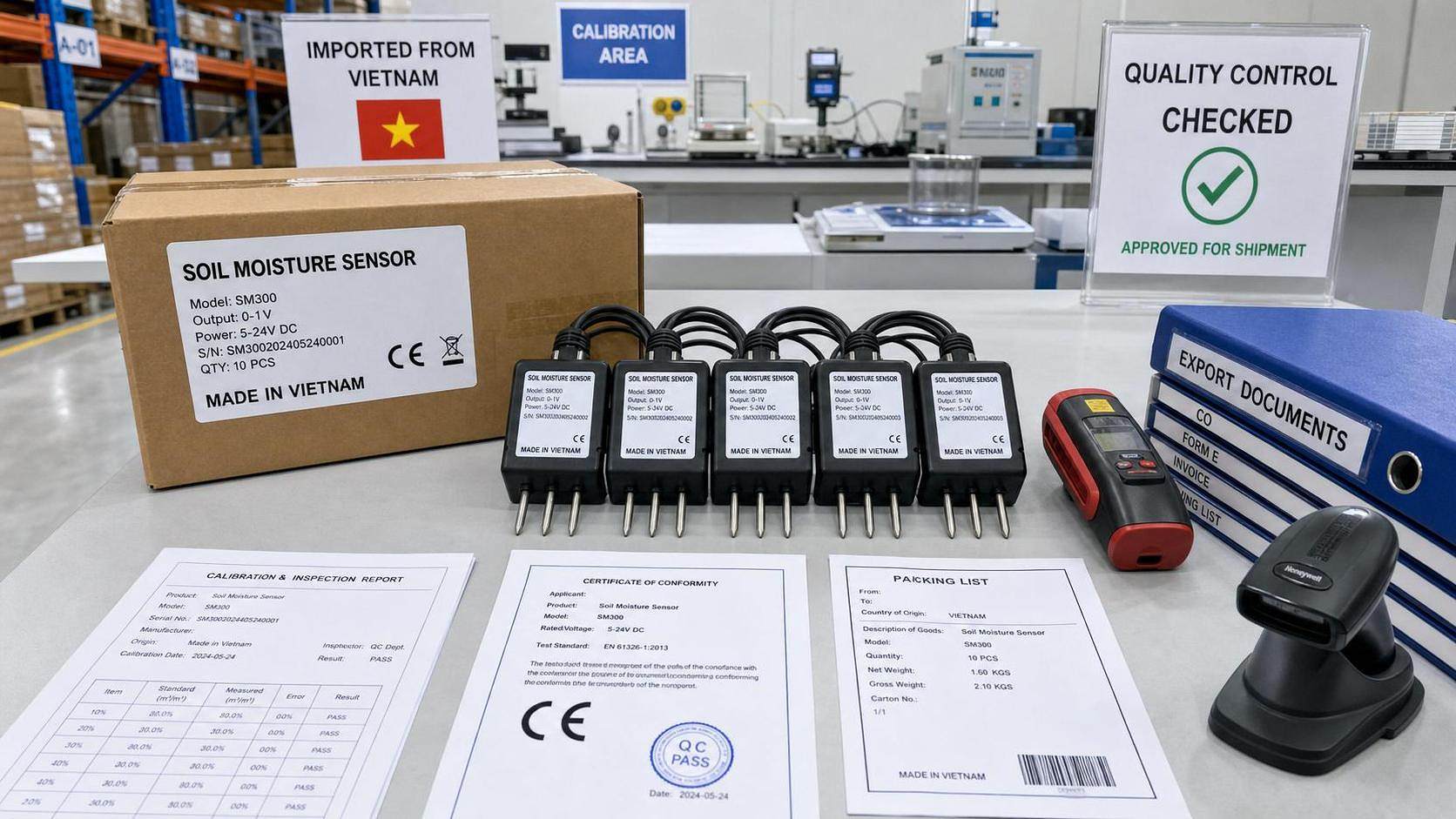




On July 4, 2026, Vietnam’s Ministry of Agriculture and Rural Development (MARD) issued Circular 18/2026/TT-BNNPTNT, immediately changing import compliance requirements for Soil Moisture Sensors. From that date, imported products must carry a Vietnamese-language infrared-readable label (VIE-IRL) and be accompanied by a field moisture gradient calibration report issued by a laboratory recognized by the Vietnamese side. Because the rule applies to all countries of origin with no transition period, exporters, packaging teams, compliance staff, distributors, and supply chain service providers should pay close attention to how labeling and documentation are handled before shipment.
What the Circular Now Requires
The confirmed information provided shows that Circular 18/2026/TT-BNNPTNT was released by MARD on July 4, 2026. The measure requires all imported Soil Moisture Sensors to include a Vietnamese-language infrared-readable label identified as VIE-IRL. It also requires a field moisture gradient calibration report from a laboratory recognized by the Vietnamese side. The new requirement took effect immediately, with no transition period. The rule applies to imports from all countries of origin. The provided information also indicates that Chinese suppliers exporting to Vietnam need to adjust both packaging and the supporting document chain accordingly.
Where the Immediate Pressure Is Likely to Appear
Exporters now face a packaging and document timing issue
From an industry perspective, direct trading companies and exporters may be affected first because the new rule changes two practical steps at once: product labeling and supporting technical documentation. The impact is likely to appear before shipment and at the point where export documents are assembled. What deserves closer attention is whether existing stock, packaging formats, and shipment files can still move without adjustment under an immediate-effect rule.
Manufacturers may need to align product preparation with market-specific compliance
Analysis shows that manufacturers supplying Soil Moisture Sensors into Vietnam may need to revisit how export-bound units are prepared. The requirement is not limited to the device itself; it extends to the compliance materials accompanying the shipment. For suppliers serving multiple markets, the issue may center on whether Vietnam-bound goods now require a separate packaging workflow and a separate calibration-report process.
Distributors and import-side operators may see higher scrutiny on arrival
Observably, channel companies, importers, and local distribution operators may feel the impact at customs clearance and handover stages. The immediate concern is not only whether the product is shipped, but whether the label and calibration report are both accepted in practice. These parties should therefore focus on document completeness, consistency between shipment paperwork and product identification, and communication with upstream suppliers before cargo is dispatched.
Service providers in the supply chain may need to adjust coordination steps
Logistics coordinators, customs service providers, and compliance support teams may also be affected because the rule adds operational dependencies outside ordinary transport planning. Analysis shows that the pressure point is coordination: packaging readiness, laboratory documentation, and shipment scheduling now appear more closely linked. Where timelines are already tight, the lack of a transition period may make pre-shipment verification more important than usual.
What Companies Should Watch Closely Right Now
Track whether official wording is further clarified
What deserves closer attention is how the new wording is interpreted in day-to-day enforcement. The confirmed facts establish the label and local-recognition calibration requirements, but businesses should continue tracking whether additional official clarification appears around scope, document format, or enforcement practice. That distinction matters because the legal requirement and the operational interpretation are not always identical.
Review packaging workflows for Vietnam-bound shipments
For companies already exporting Soil Moisture Sensors, the immediate operational task is to verify whether existing packaging can accommodate the Vietnamese-language infrared-readable label requirement. This is a practical issue for export planning, especially where products were previously packaged under a unified format for multiple destinations.
Check the document chain before goods are released
Analysis shows that the calibration report requirement could become a central checkpoint in shipment readiness. Companies should focus on whether the report is issued by a laboratory recognized by the Vietnamese side and whether the document chain matches the specific goods being exported. In practical terms, this is likely to affect internal review, handoff between supplier and exporter, and communication with customers or import partners.
Reset delivery communication where lead times are exposed
Because there is no transition period, businesses may need to revisit delivery commitments already in motion. Observably, the main issue is not broad strategy but execution discipline: what can still ship, what needs relabeling, and what requires supporting calibration documentation before release. Clear communication across suppliers, buyers, and logistics partners may reduce disputes over timing and document readiness.
How This Development Is Best Understood
Analysis shows that this update should be read first as an immediate compliance change rather than as a complete picture of long-term market direction. The absence of a transition period makes it operationally urgent, but the broader industry meaning still depends on how consistently the requirements are enforced and whether further clarification follows. It is more appropriate to understand this as a concrete short-term rule change with possible longer-term signaling value for technical compliance in agricultural equipment imports.
Why the Market Should Keep Watching
At this stage, the industry significance lies in the combination of three elements already confirmed: immediate effect, labeling specificity, and the requirement for a locally recognized calibration report. Together, these points suggest a higher compliance threshold for imported Soil Moisture Sensors entering Vietnam. A neutral reading is that the rule already matters in current operations, while its broader commercial impact still needs continued observation rather than assumption.
Basis of This Article and Ongoing Verification
This article is based on the user-provided news title, event date, and event summary concerning MARD’s July 4, 2026 release of Circular 18/2026/TT-BNNPTNT. For developments of this kind, relevant source categories typically include official government notices, company announcements, industry association updates, authoritative media coverage, and standards-related documents. A specific official source link was not provided in the input, so the exact official publication path still needs to be continuously verified. Follow-up attention should focus on any additional official clarification, enforcement interpretation, and practical document requirements linked to the new import rule.
Related News

Tractor Chassis Price: What Buyers Should Compare Beyond the Initial Quote
Tractor chassis price is only the start. Compare load capacity, compatibility, durability, and lifecycle costs to choose a reliable, high-value chassis.
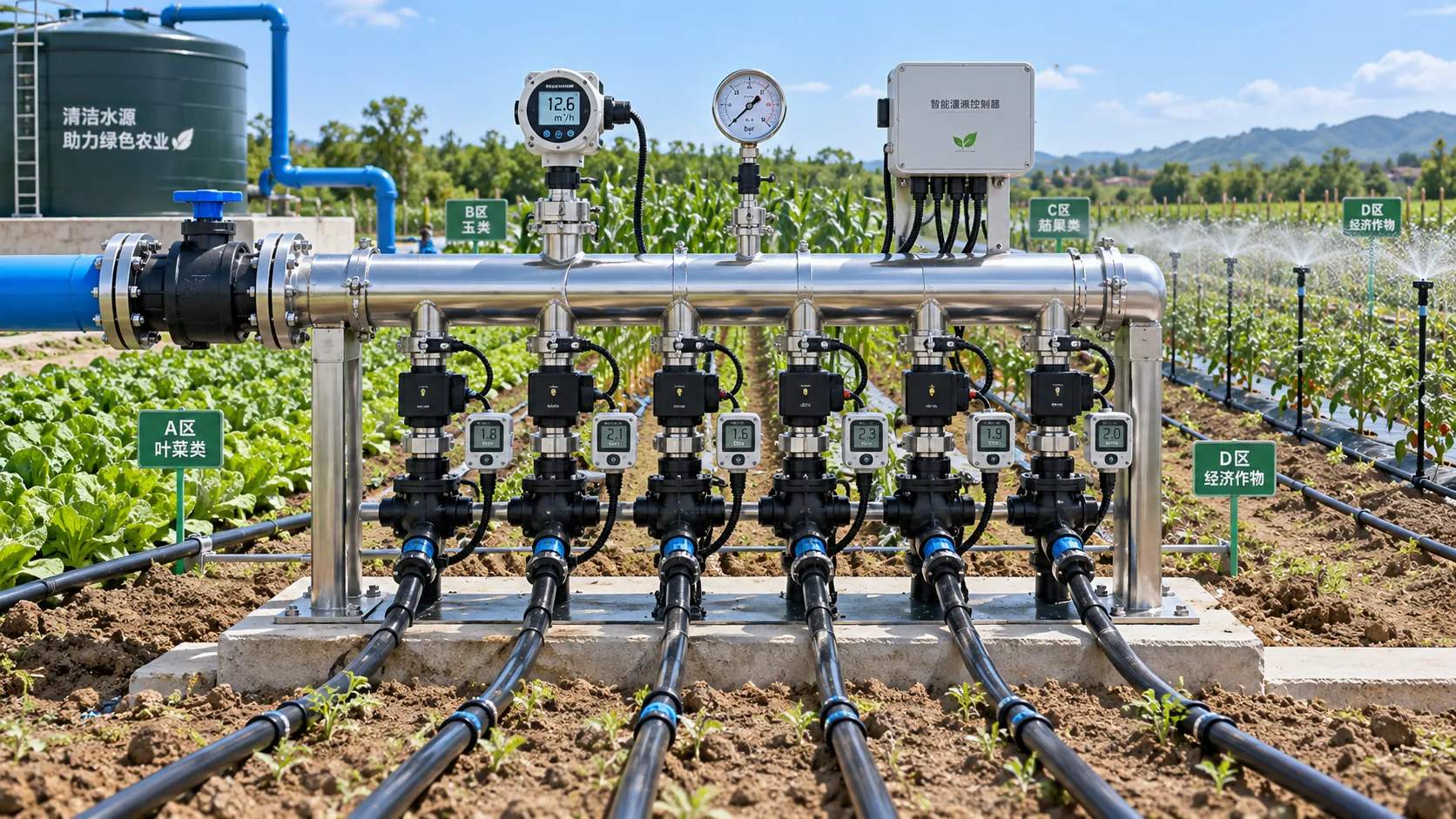
How to Select Smart Irrigation Valves for Multi-Zone Water Management?
Intelligent irrigation systems valves: learn how to match smart valves with multi-zone flow, pressure, control, feedback, and communication needs for reliable water management.
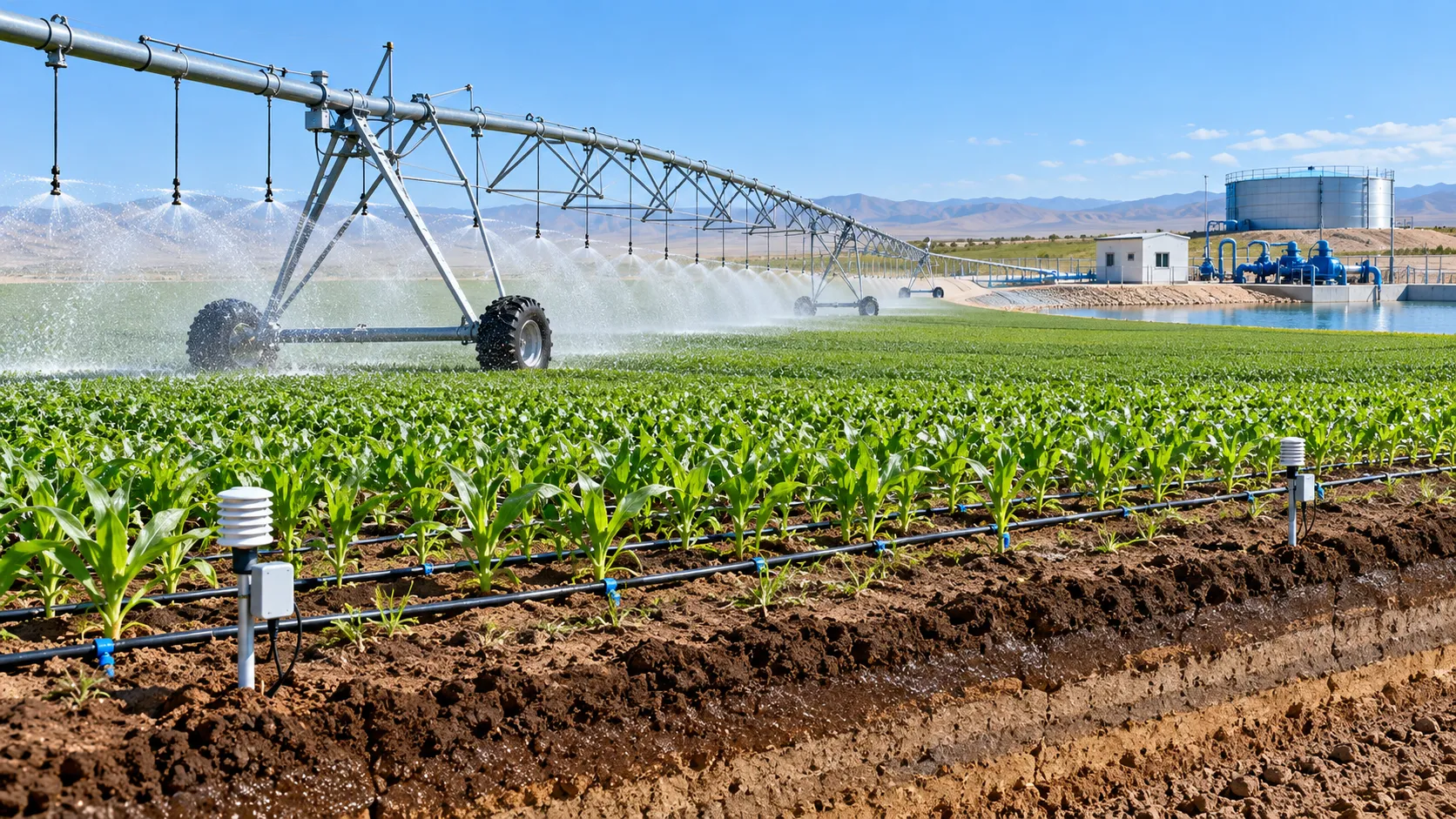
Climate-Smart Farming for Drought: A Practical Plan for Protecting Yields
Climate-smart farming for drought: build smarter water budgets, protect critical crop stages, improve irrigation uniformity, and safeguard yields with practical field-proven strategies.

How Digital Agriculture Platforms Turn Field Data Into Better Input Decisions
Digital agriculture platforms turn field data into smarter fertilizer, water, seed, and equipment decisions—helping farms cut risk, improve margins, and scale sustainability.
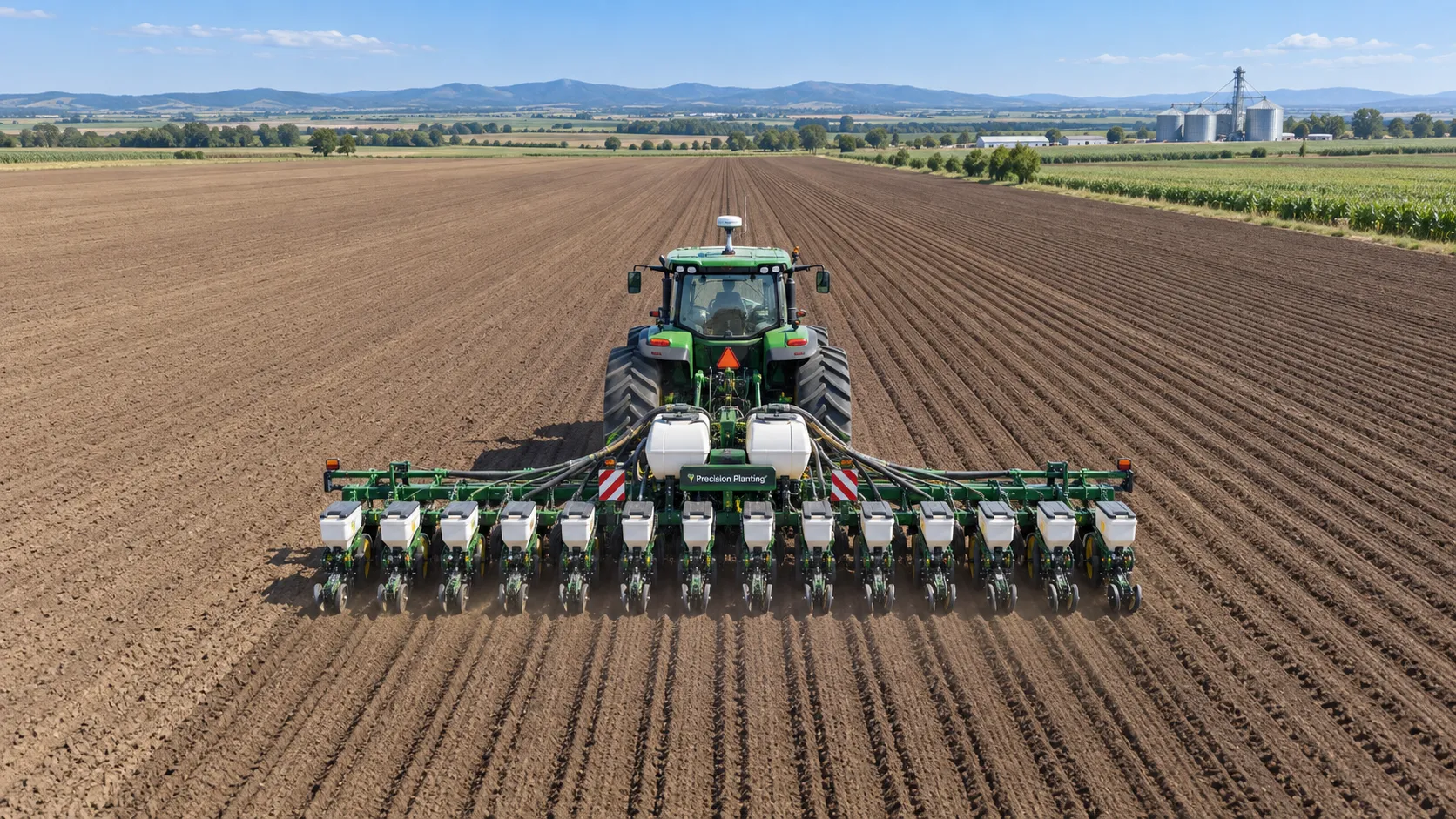
GPS-Guided Farm Machinery: Where It Delivers Measurable Field Efficiency Gains
Agri-mechanization GPS guided systems deliver measurable field efficiency gains through reduced overlap, precise planting, smarter inputs, and reliable farm data.

How Sensor Feedback Enables Accurate Variable-Rate Fertilization in Field Conditions
Precision fertilization systems with sensor feedback improve variable-rate accuracy by verifying flow, managing latency, and ensuring reliable field application.

How to Select Precision Crop Protection Equipment for Variable Field Conditions
Precision crop protection equipment selection made simple: compare terrain, canopy, weather, control accuracy, and data workflows for reliable applications.

When Does Agricultural Machinery Leasing Cost Less Than Owning Equipment?
Agricultural machinery leasing can lower farm costs when use is seasonal or uncertain. Compare utilization, maintenance, cash flow, and risk to make a smarter equipment decision.

How to Evaluate Precision Fertilization System Suppliers for Farm-Scale Deployment
Precision fertilization systems suppliers: learn how to compare accuracy, integration, uptime, service, and total cost for confident farm-scale deployment.
Related News
- 00
0000-00
Climate-Smart Farming for Drought: A Practical Plan for Protecting Yields - 00
0000-00
Selecting Real-Time Soil Moisture Sensors for Irrigation Zone Control - 00
0000-00
How Does Climate-Smart Farming Reduce Water Use in Semi-Arid Areas? - 00
0000-00
USDA Rule Takes Effect: Dual FCC and NRCS Approval for Soil Moisture Sensors - 00
0000-00
EU Rule Takes Effect: Soil Moisture Sensors Need Revised CE-EMC Certification
Popular Tags
Hydrological Resource Strategist
Weekly Insights
Stay ahead with our curated technology reports delivered every Monday.