
Intelligent Irrigation Systems vs Drip Timers: Which Setup Fits Large Fields Better?
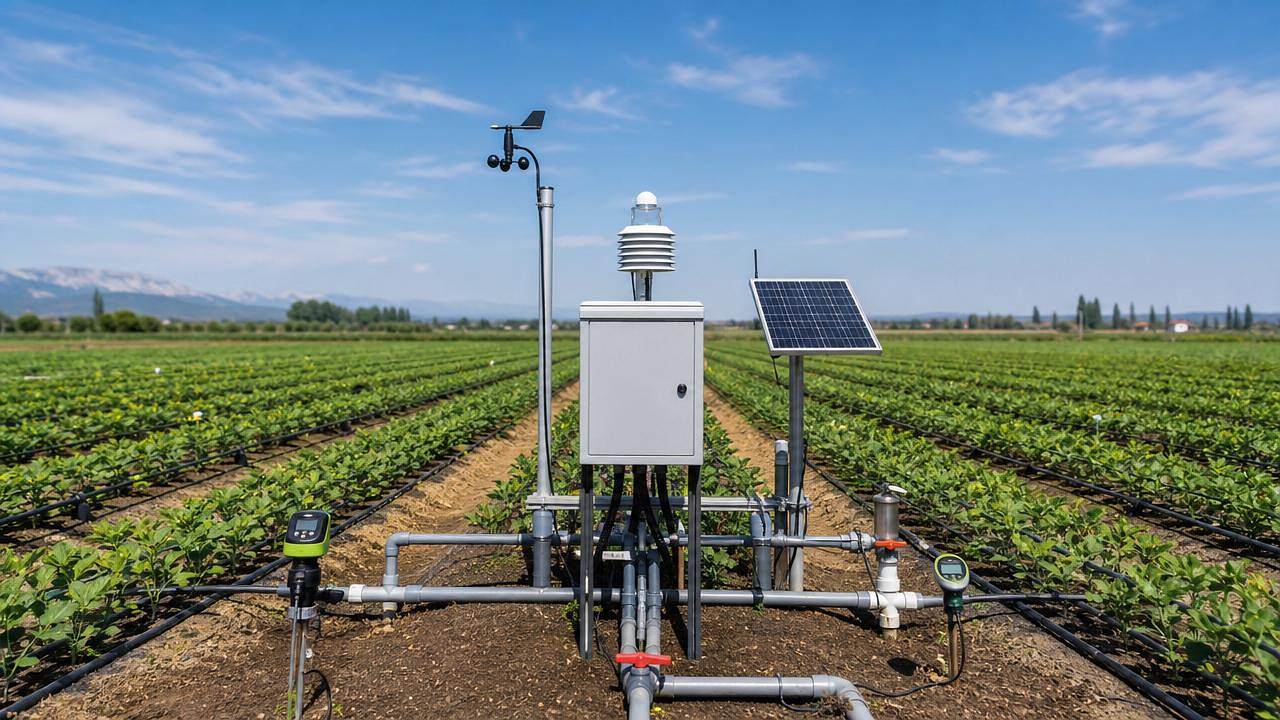




When technical assessment teams compare water delivery options for broad-acre agriculture, the most important conclusion is usually clear from the start: drip timers can support basic scheduling, but intelligent irrigation systems are generally the better fit for large fields where variability, scale, and operational risk matter.
That does not mean timers have no role. They remain useful in simple, low-variability layouts with stable water supply conditions and limited integration requirements. However, once field size increases and irrigation decisions depend on pressure, weather, soil moisture, zoning, and reporting, timer-based control often becomes too blunt.
For large-field environments, the core decision is less about whether automation exists and more about whether the control architecture can adapt fast enough to field reality. That is why intelligent irrigation systems increasingly outperform timer-led setups in technical evaluations focused on precision, labor efficiency, and long-term operating value.
What searchers usually want to know before choosing between these two setups
The core search intent behind this topic is comparative decision support. Readers are not looking for a generic definition of irrigation technology. They want to know which option performs better in large fields, why it performs better, and under what conditions a simpler solution still makes sense.
For technical evaluators, the practical questions are direct. Can the system maintain uniform application across long runs? Can it react to weather and crop demand changes? How much manual intervention is still required? What data can be collected and connected to broader farm management platforms?
They also want to identify hidden tradeoffs. A timer may look cheaper at purchase, but poor response to field variability can create losses through overwatering, under-irrigation, pressure imbalance, labor calls, and weak traceability. In broad-acre operations, those costs accumulate quickly.
Start with the basic distinction: scheduling device versus decision-capable control system
A drip timer is fundamentally a scheduling tool. It turns irrigation zones on and off based on fixed time logic, sometimes with limited calendar programming. In small or uniform applications, that can be enough. In large fields, it often means irrigation follows the clock rather than the condition of the field.
Intelligent irrigation systems go beyond scheduling. They typically combine controllers, sensors, connectivity, pressure feedback, weather inputs, flow monitoring, and sometimes algorithmic decision support. The result is not just automated timing, but adaptive water management based on measurable variables.
This difference matters because large fields rarely behave as one uniform irrigation block. Soil texture shifts, elevation changes, evapotranspiration rates, wind exposure, and pumping conditions can vary significantly across the same operation. A fixed timer cannot interpret those changes. A smart system can at least detect and respond to them.
Why large fields expose the limits of drip timers faster than smaller sites
In compact plots, the consequences of imperfect timing are easier to contain. In large fields, even small scheduling errors scale into significant water waste or crop stress. A timer may activate a zone exactly as programmed, yet still deliver the wrong amount because the field condition changed since the schedule was set.
Large fields also increase the probability of uneven hydraulics, emitter clogging, line leaks, valve issues, and pump fluctuations. Timers generally do not identify those problems. They assume execution happened as planned. For technical teams, that lack of feedback is one of the biggest structural weaknesses.
Another problem is management complexity. As field area expands, the number of zones, submains, valves, and operating windows often increases. Updating timer schedules across multiple blocks can become labor-intensive and error-prone, especially during weather transitions or critical crop growth stages.
Accuracy at scale: where intelligent irrigation systems create real technical advantage
For large-field irrigation, accuracy is not only about starting at the right time. It is about applying the right volume, in the right zone, under the right conditions, with enough feedback to verify the result. This is where intelligent irrigation systems usually create the strongest technical edge.
Sensor-linked control allows irrigation events to reflect soil moisture thresholds, line pressure status, flow deviations, or weather forecasts. That means the system can delay, shorten, split, or trigger irrigation based on actual demand instead of static assumptions. For broad-acre operations, this can significantly improve distribution efficiency.
Technical evaluators should pay attention to how accuracy is defined by vendors. Some systems advertise smart capabilities but only offer remote timer access. True intelligent irrigation systems should support condition-based logic, anomaly detection, and verifiable performance data, not merely app-based scheduling convenience.
In water-constrained regions, this distinction becomes even more important. Precision at scale supports compliance, sustainability reporting, and water productivity targets. When every cubic meter matters, the ability to document why irrigation occurred and how much was delivered becomes strategically valuable.
Labor efficiency is not just about fewer workers, but fewer interventions
Many buyers first compare these options through labor cost alone, but technical assessment should look deeper. The main efficiency benefit of intelligent irrigation systems is not simply labor reduction. It is intervention reduction across the full operating cycle, from scheduling to troubleshooting to reporting.
With timers, teams often spend time manually adjusting schedules after rainfall, heat spikes, pumping changes, or crop stage transitions. They may also need frequent field checks to confirm whether planned irrigation actually occurred. That routine becomes expensive when labor is scarce or fields are geographically spread.
Smart systems reduce this burden by centralizing visibility. Operators can review zone status, receive alerts for abnormal flow or pressure, and update decisions remotely. For large operations, this shortens response time and reduces the chance that small failures turn into large agronomic losses.
There is also a knowledge management benefit. Timer-based irrigation often depends heavily on the experience of specific staff members who know how and when to adjust schedules. Intelligent systems convert part of that know-how into documented logic and data, making operations more repeatable and less person-dependent.
Data integration matters more than many timer comparisons admit
For technical readers, one of the most important evaluation criteria is whether the irrigation setup can connect with the rest of the farm’s digital environment. This is a major separation point between basic timers and modern intelligent irrigation systems.
Large-field operations increasingly rely on agronomic data layers such as weather stations, remote sensing, soil probes, pump telemetry, fertigation logs, and platform-level farm management software. A standalone timer usually contributes little to that ecosystem. It executes a schedule, but it does not enrich decision intelligence.
By contrast, intelligent irrigation systems can support integrated management. They can combine field measurements with irrigation records, helping teams analyze water use efficiency, compare zone performance, and correlate irrigation events with crop response. That is especially useful for technical assessments, audits, and optimization cycles.
For operations moving toward Agriculture 4.0 standards, integration is not optional. It affects traceability, asset planning, maintenance scheduling, and strategic water allocation. A system that cannot share meaningful operational data may become a bottleneck even if it functions adequately at the valve level.
Cost comparison: the cheaper setup is not always the lower-cost choice
On initial purchase price, drip timers usually win. They are simpler, easier to deploy, and attractive where budgets are tight. But for large-field evaluation, capital cost should not be the only lens. Total operating economics often favor intelligent irrigation systems over time.
The reason is straightforward. If a timer-based setup causes repeated over-irrigation, delayed response to weather changes, unnoticed line issues, or excessive site visits, the apparent savings can disappear through water loss, energy inefficiency, crop inconsistency, and labor overhead.
Smart systems do require higher upfront investment, along with communication infrastructure, training, and possibly subscription fees. Yet in large fields, those costs may be offset by improved water-use efficiency, lower manual adjustment workload, stronger fault detection, and better crop outcome consistency.
Technical teams should model at least five cost categories: equipment acquisition, installation complexity, communications and software, labor inputs, and agronomic risk exposure. When these are considered together, timer systems often look economical only in relatively simple and stable irrigation environments.
Where drip timers still make sense in large-field operations
A strong evaluation should not assume that intelligent irrigation systems are automatically justified everywhere. Drip timers still have a role when field conditions are uniform, irrigation blocks are straightforward, crop sensitivity is moderate, and the operation does not require deep data integration.
They can also work as secondary control devices in segmented systems where higher-level scheduling decisions are made elsewhere. In some cases, timers may serve low-priority zones, trial blocks, or temporary installations where full smart control would not generate enough return.
If technical teams are assessing expansion phases, a timer approach may be acceptable as an interim step, especially where connectivity infrastructure is not yet reliable. But that should be treated as a transitional architecture, not necessarily the target state for complex broad-acre water management.
The key is to avoid using a timer beyond its design logic. Once irrigation outcomes depend on dynamic field data, remote supervision, multi-zone optimization, or verifiable reporting, the limitations of timer-only control tend to become operationally expensive.
Evaluation checklist for technical assessment teams
When comparing proposals, technical teams should focus less on marketing labels and more on decision-critical performance questions. First, ask whether the system can sense, interpret, and act on changing field conditions. If the answer is no, it is not truly intelligent in an operational sense.
Second, review scalability. Can the platform manage many zones, long-distance communications, and uneven hydraulic conditions without excessive manual intervention? Large-field suitability depends on stable control under complexity, not just successful operation in a demo block.
Third, examine visibility and diagnostics. Does the system provide real-time status, flow anomalies, pressure alerts, irrigation history, and zone-level reporting? Technical evaluators should be able to verify not only planned irrigation but actual execution quality.
Fourth, test integration capacity. Check compatibility with sensors, weather feeds, pump controls, fertigation modules, and farm management platforms. A system isolated from the broader digital stack may limit future optimization, even if current needs seem modest.
Finally, assess serviceability. Large-field irrigation reliability depends on maintenance pathways, local support capacity, software stability, and spare parts access. The smartest system on paper can still underperform if the support model is weak.
Final verdict: which setup fits large fields better?
For most broad-acre operations, intelligent irrigation systems fit large fields better than drip timers. They offer stronger control precision, better responsiveness to field variability, lower intervention burden, and far more value in data-rich agricultural environments.
Drip timers remain viable where irrigation demands are simple and operational variability is low. But in large fields, simplicity can become a hidden liability if it limits adaptation, visibility, and verification. The bigger the field and the higher the performance expectations, the more that limitation matters.
For technical assessment teams, the most practical decision framework is this: if irrigation success depends mainly on repeating a fixed schedule, timers may be enough. If irrigation success depends on reacting to conditions, coordinating multiple variables, and documenting performance, intelligent irrigation systems are the better strategic choice.
In today’s resource-sensitive, data-driven agricultural landscape, large-field water management is increasingly judged by precision, resilience, and system intelligence. On those criteria, intelligent irrigation systems are usually the stronger long-term fit.
Related News
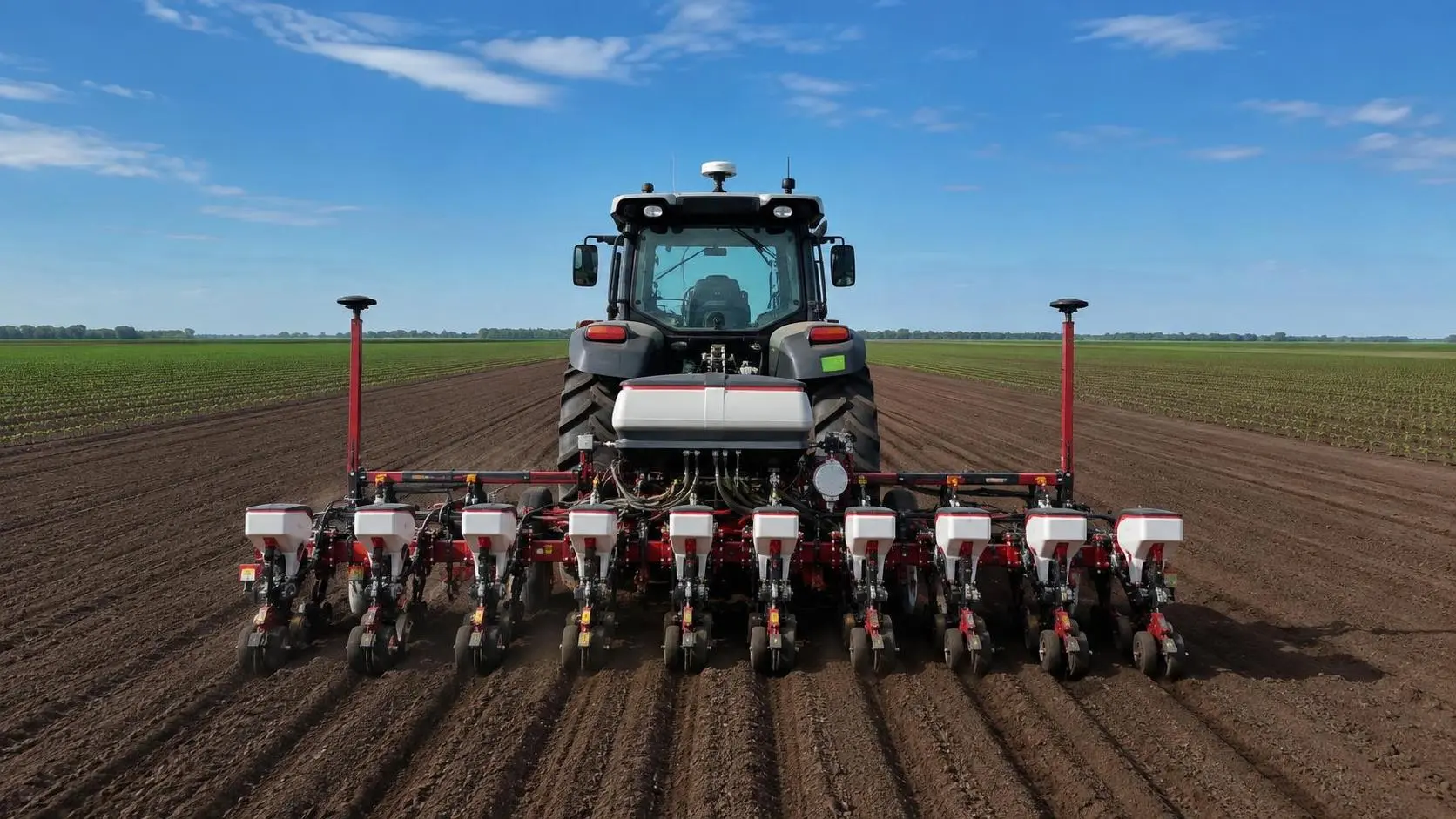
How Tractor Intelligence Systems Improve Field Efficiency and Input Accuracy
Agricultural machinery intelligence for tractors improves field efficiency, input accuracy, data traceability, and implement control. Explore smarter evaluation strategies.
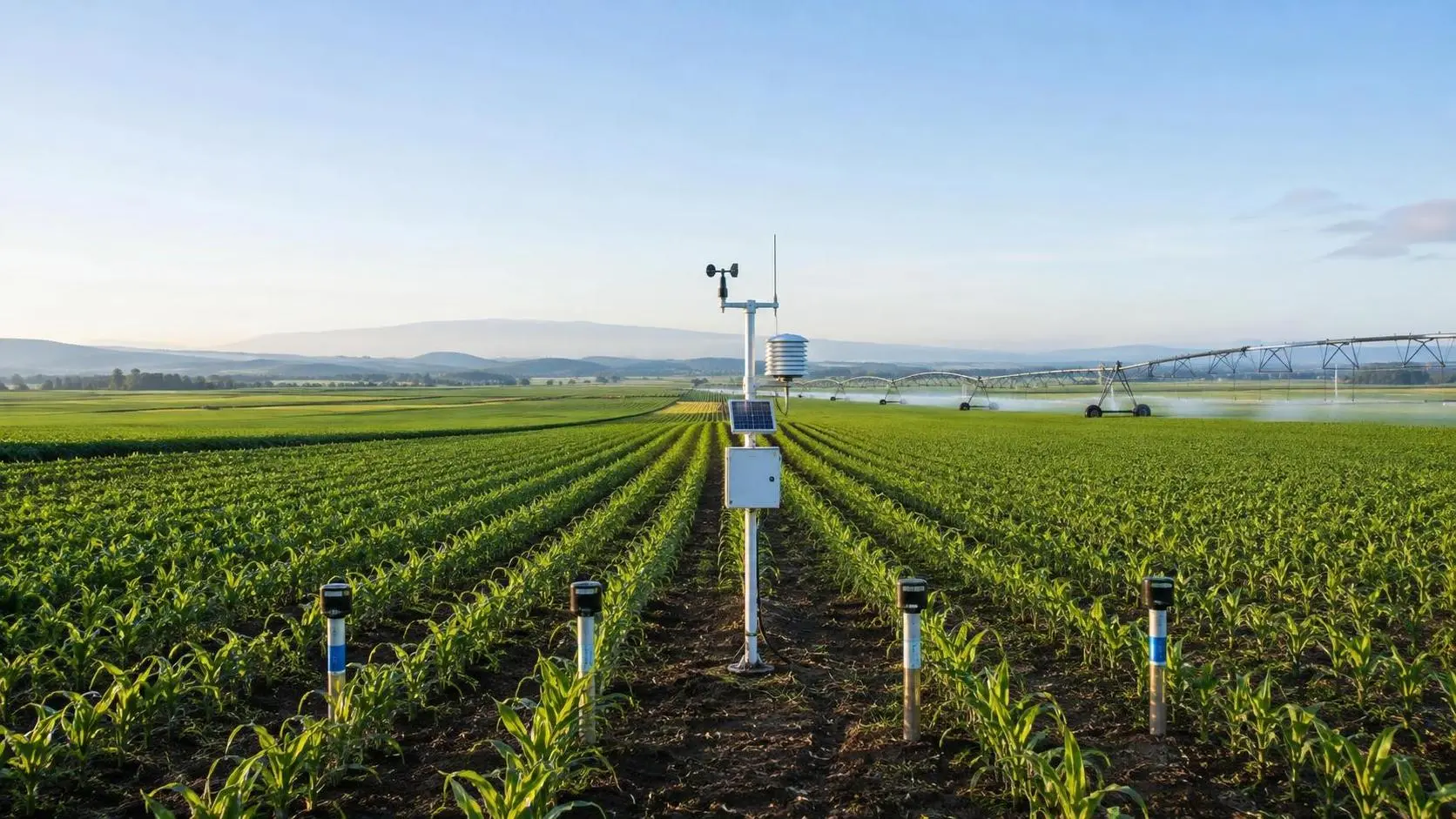
How to Evaluate Crop Monitoring System Manufacturers for Large-Scale Farms
Compare crop monitoring systems manufacturers for large-scale farms. Evaluate data quality, integration, durability, lifecycle costs, support, and pilots for smarter decisions.
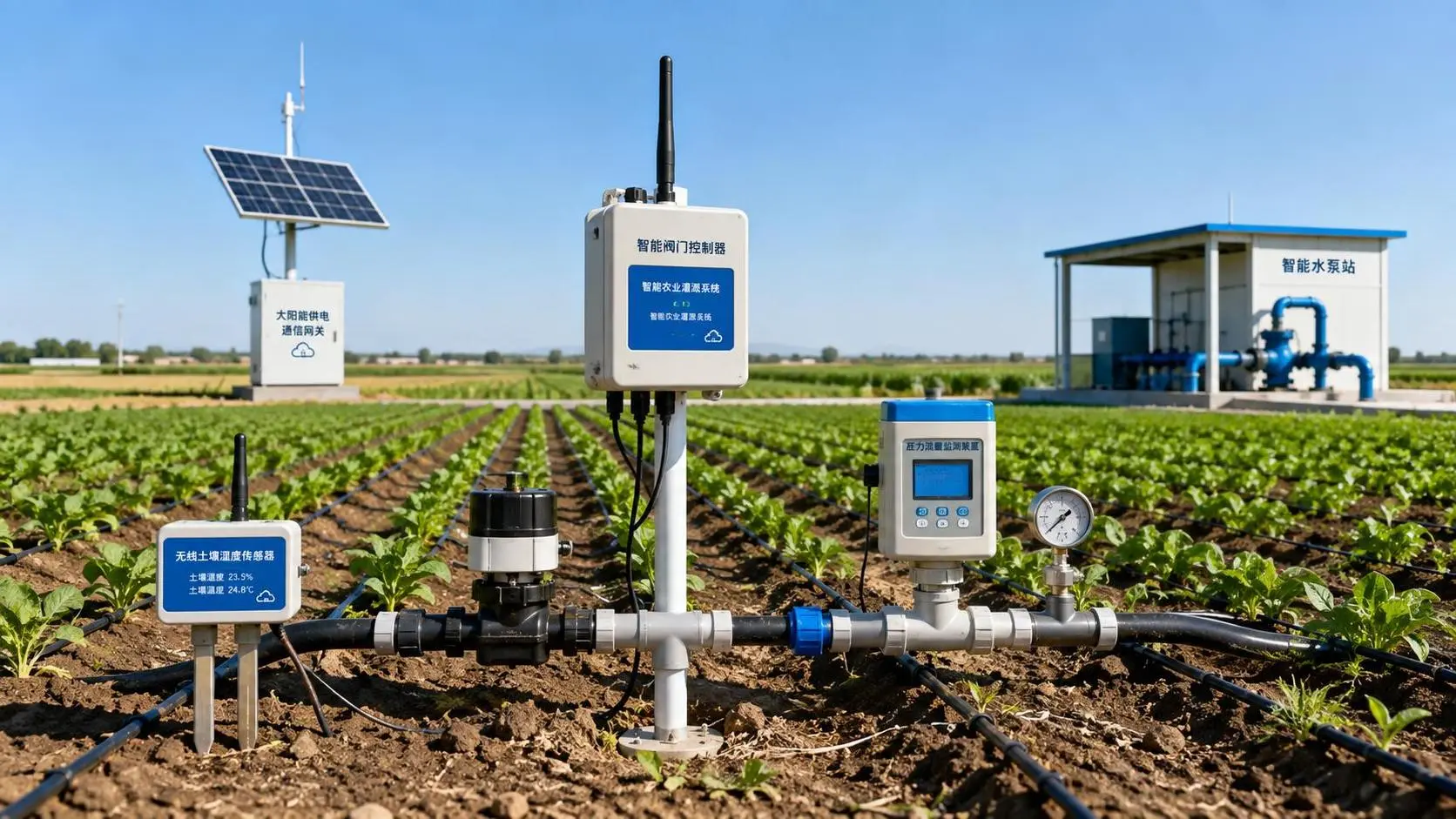
Wireless Agricultural Automation for Remote Irrigation and Field Monitoring
Agricultural automation wireless solutions improve remote irrigation with reliable field data, local control, flow verification, and smarter monitoring. Explore resilient deployment strategies.
Agricultural Product Information Market Guide: Key Data for Sourcing Decisions
Agricultural product information market guide for smarter sourcing—compare machinery, irrigation, precision tools, lifecycle costs, and supplier risk.
Large-Scale Farm Equipment Cost Comparison: Price, Fuel, and Lifecycle Value
Large-scale farm equipment cost comparison: evaluate price, fuel, maintenance, downtime, and lifecycle value to choose tractors, combines, irrigation, and smart tools with confidence.
A Procurement Specification Preparation Example for Buying Farm Equipment
Procurement specification preparation example for farm equipment: learn to define requirements, compare suppliers, control lifecycle costs, and buy with confidence.
What Tractor Horsepower Is Needed for a Three-Bottom Moldboard Plow?
What tractor horsepower is needed for three-bottom moldboard plow? Compare 60–100 hp needs by soil, depth, traction, and plow width for a confident equipment match.
How Does Climate-Smart Farming Reduce Water Use in Semi-Arid Areas?
How does climate-smart farming reduce water use in semi-arid zones? Discover precision irrigation, soil monitoring, and smarter crop planning for resilient yields.
Can Sustainable Farming Be Profitable Without Reducing Yields?
Are sustainable farming practices profitable without yield loss? Discover precision strategies that cut waste, protect yields, and improve farm margins.
Related News
- 00
0000-00
Wireless Agricultural Automation for Remote Irrigation and Field Monitoring - 00
0000-00
Designing Water-Saving Drip Irrigation Systems for High-Value Orchards - 00
0000-00
How to Choose Irrigation Solutions for Arid Regions Based on Water Source and Crop Needs - 00
0000-00
How IoT Smart Irrigation Networks Help Farms Cut Water Use and Improve Yield - 00
0000-00
USDA Rule Takes Effect for Drip Irrigation Imports
Popular Tags
Hydrological Resource Strategist
Weekly Insights
Stay ahead with our curated technology reports delivered every Monday.