
How to Evaluate Autonomous Machinery for Vineyards by Terrain, Tasks, and ROI




How to Evaluate Autonomous Machinery for Vineyards by Terrain, Tasks, and ROI
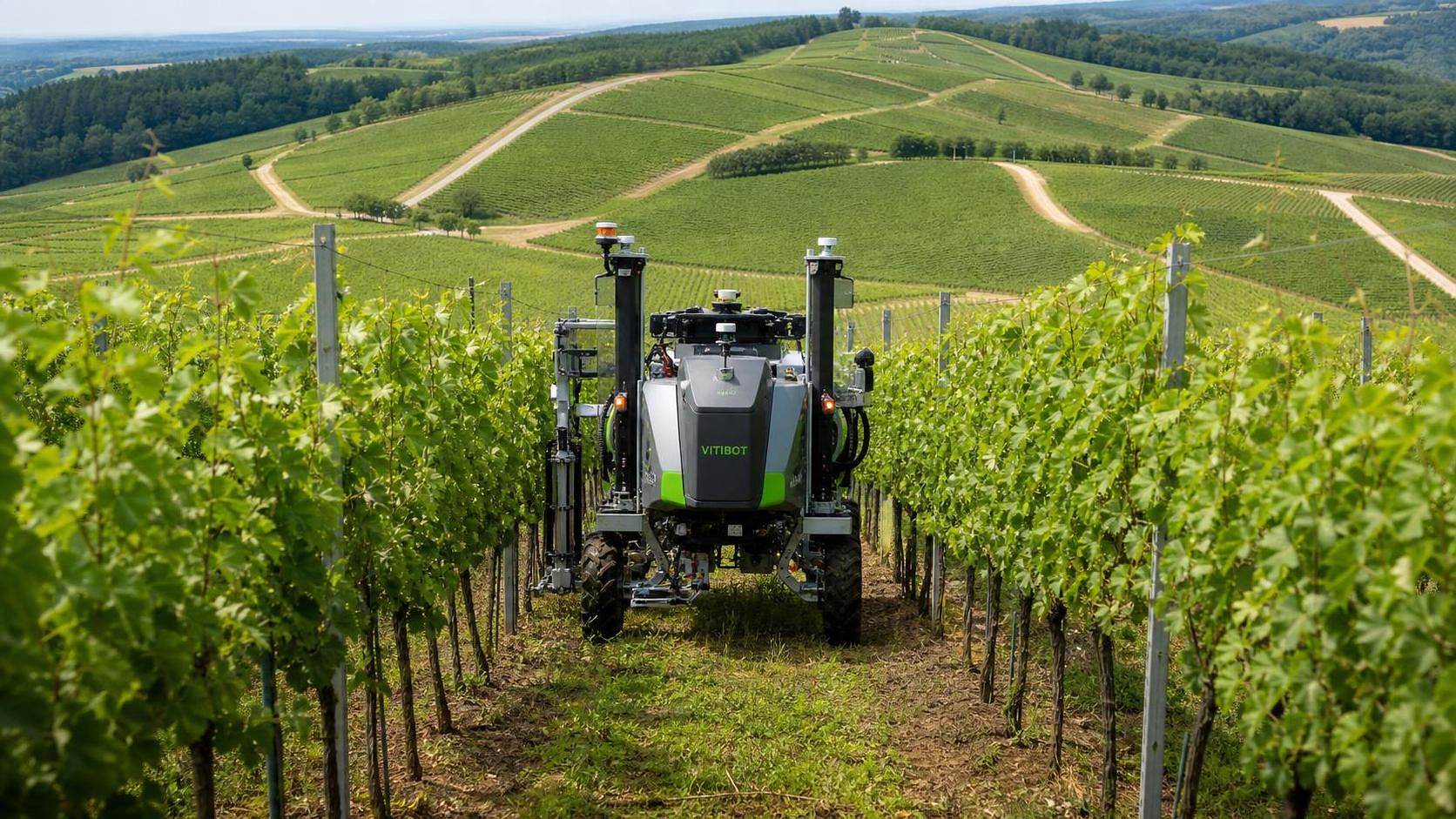
Choosing autonomous machinery for vineyards is no longer just a technology decision. It is a capital allocation decision with long consequences. If the machine does not match your row geometry, slope profile, spray program, labor model, and maintenance reality, autonomy turns into an expensive workaround. If it does match, it can stabilize operations in areas where labor is tight, improve timing on repetitive passes, and give managers better control over cost per hectare.
For decision-makers comparing autonomous machinery for vineyards, the fastest way to reduce procurement risk is to stop looking at autonomy as a feature and start treating it as a fit question. Fit to terrain. Fit to tasks. Fit to the economics of your operation. That is the checklist that matters in procurement meetings, pilot trials, and board-level approvals.
Start with the vineyard, not the machine brochure
A surprising number of evaluations begin with a demo unit and end with a row-measurement problem. That is backwards. Before you compare vendors, pin down the field conditions that will either allow autonomy to work smoothly or force constant operator intervention.
- Row width and variability. Measure actual operating width, not nominal planting width from old plans.
- Headland space. Tight turns can erase the theoretical efficiency of a compact autonomous platform.
- Slope and side-slope exposure. This is one of the first elimination filters, especially for lightweight robotic platforms.
- Soil bearing capacity across seasons. A machine that behaves well in dry summer conditions may struggle after irrigation or rain.
- Trellis layout, canopy overhang, posts, wires, and low obstacles that affect sensor visibility and clearance.
- Mixed blocks. Older and newer vineyard sections often create navigation inconsistencies that matter more than sales presentations suggest.
If your estate has significant block-to-block variation, evaluate by the most difficult commercially important block, not the easiest showcase parcel. Vendors naturally want to demonstrate in ideal conditions. Procurement teams should do the opposite.
Be precise about the jobs you want it to do
“Autonomous vineyard equipment” covers very different use cases: mowing, undervine weeding, spraying, transport, scouting, and in some cases multi-tool carrier work. The mistake is to assume autonomy delivers the same value across all of them.
In most vineyards, repetitive passes with predictable paths are the cleaner starting point. Mowing and routine transport are often easier to operationalize than tasks where drift control, nozzle performance, or variable biomass require closer supervision. Spraying deserves extra caution. Performance depends not just on navigation, but on application quality, refill logistics, weather windows, and local regulatory expectations. Where pesticide application rules, operator supervision requirements, or machine-road movement rules apply, verify them jurisdiction by jurisdiction rather than assuming the same deployment model is legal everywhere. Some details may be market-specific and should be marked 【待核实】 until local counsel or compliance staff confirm them.
A useful internal question is simple: which task causes the most timing pressure, labor disruption, or quality inconsistency today? That is usually where the best ROI case starts.
Terrain tolerance is not a detail
In vineyard robotics, terrain is often the deal-breaker hidden behind a successful demo. Ask for the manufacturer’s documented operating limits on slope, cross-slope, traction conditions, and weather restrictions. If those limits are stated vaguely, that is already a signal.
Do not accept “works on hilly vineyards” as an answer. Ask what happens when wheel slip increases, GNSS signal quality drops near tree lines, or ruts alter implement stability. Ask whether the system slows, pauses, requests intervention, or continues with reduced accuracy. Those failure behaviors matter more than the best-case spec sheet.
If your operation includes steep or erosion-prone parcels, evaluate ground pressure, track or wheel configuration, rollover mitigation design, emergency stop access, and remote shutdown procedures. This is especially important for unmanned or lightly supervised operation.
Check the autonomy stack the way you would check a powertrain
The autonomy system is not magic. It is a combination of positioning, perception, path planning, safety logic, connectivity, and software support. For buyers, the practical question is not whether the machine is “AI-enabled.” It is whether the machine can complete work repeatedly with acceptable supervision.
If a supplier cannot explain fallback modes in plain operational language, involve your technical team early. The problem is usually not the concept. It is support maturity.
Look hard at implement compatibility and workflow friction
This is where many business cases get weaker. The base platform may be capable, but the real operation depends on tools, refill cycles, battery charging or fuel logistics, washdown, transport between blocks, and supervisor availability. A vineyard manager does not buy autonomy in isolation. They buy a working day.
Check hitch standards, hydraulic capacity, PTO requirements where relevant, implement weight limits, and whether approved third-party tools are actually field-proven. For spray applications, ask who is responsible for calibration and compatibility when tank, pump, controller, and autonomous carrier come from different suppliers. Shared accountability sounds fine in a proposal. It becomes messy during a narrow spray window.
Also check transport reality. Some autonomous vineyard units are excellent inside the block and awkward outside it. If road transfer, trailer loading, or farm-to-farm movement is frequent, that affects utilization more than many ROI models admit.
Do not treat safety and compliance as a procurement appendix
Autonomous machinery for vineyards raises a higher bar for safety review than conventional compact tractors or tool carriers. Ask for documented risk assessment material, emergency stop architecture, geofencing logic, worker interaction rules, and incident reporting procedures. In some markets, machinery directives, CE-related obligations, functional safety practices, or local workplace regulations may apply, but the exact interpretation depends on machine category and deployment model 【待核实】.
One practical test: can your field crew explain, in less than five minutes, what to do when the machine stops mid-row, loses signal, or detects a person? If the answer depends entirely on the vendor’s remote team, you do not yet have an operationally mature deployment.
Build the ROI model from avoided pain, not from abstract efficiency
This is where senior management usually needs a cleaner view. The return case should not rely on a vague assumption that autonomous equipment is “more advanced.” Tie it to measurable operating changes.
- Reduced dependency on scarce seasonal operators for repetitive passes.
- More reliable task timing during narrow agronomic windows.
- Lower idle time if one supervisor can oversee more than one machine or combine supervision with other tasks.
- Potential reduction in crop or trellis damage from consistent path tracking, but only if verified in trial conditions.
- Lower rework on tasks such as mowing or intra-row maintenance when coverage is consistent.
Then subtract the costs that are easy to ignore: software subscriptions, connectivity, charging infrastructure or fuel logistics, service response contracts, replacement sensors, supervisor training, and the learning curve in the first season. Include downtime assumptions. Include parts lead times. Include the possibility that the first year operates below target utilization. That is normal for new deployment models.
If a supplier ROI sheet does not show those frictions, rebuild the model yourself.
Run a pilot that is hard enough to teach you something
A short demo in a clean block is useful for visibility, not for procurement confidence. A real pilot should cover representative terrain, actual crew interaction, routine interruptions, and enough time to expose support quality.
- Select one easy block and one commercially important difficult block.
- Define success metrics before the machine arrives: completed hectares, intervention frequency, quality of work, downtime causes, and supervisor hours.
- Record every stoppage by category. Navigation issue, terrain issue, implement issue, human override, refill delay, software issue.
- Test shift handover and daily startup. Those practical routines often decide whether the system scales.
- Review vendor support responsiveness during the trial, not after it.
What you want from a pilot is not a perfect result. You want a credible operating profile.
Questions worth asking before signature
Some of the most expensive surprises appear after purchase order approval. Ask these directly:
- What functions are standard, and what requires a paid software tier?
- What is the support SLA during peak season?
- Can local dealers diagnose autonomy-related faults, or does everything escalate to the manufacturer?
- What happens if connectivity is interrupted?
- Who owns the operating data, and can it be exported in a usable format?
- How many units are already deployed in comparable vineyard conditions? If the vendor cannot substantiate this, treat broad claims carefully.
You do not need inflated promises. You need operating clarity.
A practical buying stance
The strongest purchasing decisions usually come from a fairly plain discipline: map your terrain constraints, isolate the task that creates the biggest operational pain, test the machine in conditions that resemble real work, and build the ROI case around labor exposure, timing reliability, and supervision load. Everything else is secondary.
For enterprise buyers, autonomous machinery for vineyards is worth evaluating seriously, but only with field-level detail and contract-level discipline. A machine that fits the vineyard can earn its place. A machine that only fits the presentation rarely does.
Related News
How Tractor Intelligence Systems Improve Field Efficiency and Input Accuracy
Agricultural machinery intelligence for tractors improves field efficiency, input accuracy, data traceability, and implement control. Explore smarter evaluation strategies.
How to Evaluate Crop Monitoring System Manufacturers for Large-Scale Farms
Compare crop monitoring systems manufacturers for large-scale farms. Evaluate data quality, integration, durability, lifecycle costs, support, and pilots for smarter decisions.
Wireless Agricultural Automation for Remote Irrigation and Field Monitoring
Agricultural automation wireless solutions improve remote irrigation with reliable field data, local control, flow verification, and smarter monitoring. Explore resilient deployment strategies.
Agricultural Product Information Market Guide: Key Data for Sourcing Decisions
Agricultural product information market guide for smarter sourcing—compare machinery, irrigation, precision tools, lifecycle costs, and supplier risk.
Large-Scale Farm Equipment Cost Comparison: Price, Fuel, and Lifecycle Value
Large-scale farm equipment cost comparison: evaluate price, fuel, maintenance, downtime, and lifecycle value to choose tractors, combines, irrigation, and smart tools with confidence.
A Procurement Specification Preparation Example for Buying Farm Equipment
Procurement specification preparation example for farm equipment: learn to define requirements, compare suppliers, control lifecycle costs, and buy with confidence.
What Tractor Horsepower Is Needed for a Three-Bottom Moldboard Plow?
What tractor horsepower is needed for three-bottom moldboard plow? Compare 60–100 hp needs by soil, depth, traction, and plow width for a confident equipment match.
How Does Climate-Smart Farming Reduce Water Use in Semi-Arid Areas?
How does climate-smart farming reduce water use in semi-arid zones? Discover precision irrigation, soil monitoring, and smarter crop planning for resilient yields.
Can Sustainable Farming Be Profitable Without Reducing Yields?
Are sustainable farming practices profitable without yield loss? Discover precision strategies that cut waste, protect yields, and improve farm margins.
Related News
- 00
0000-00
How Autonomous Machinery for Crop Scouting Helps Growers Detect Field Issues Earlier - 00
0000-00
How to Evaluate Autonomous Machinery for Vineyards by Terrain, Tasks, and ROI - 00
0000-00
Brazil ANVISA Rule Requires Portuguese Risk Labels for Farm Robots - 00
0000-00
EU CE Update Sets EN ISO 13849-1:2025 for Autonomous Robots - 00
0000-00
How AI Autonomous Agricultural Machinery Works in Large-Scale Field Operations
Popular Tags
Tractor Power Architect
Weekly Insights
Stay ahead with our curated technology reports delivered every Monday.