
A Procurement Specification Preparation Example for Buying Farm Equipment
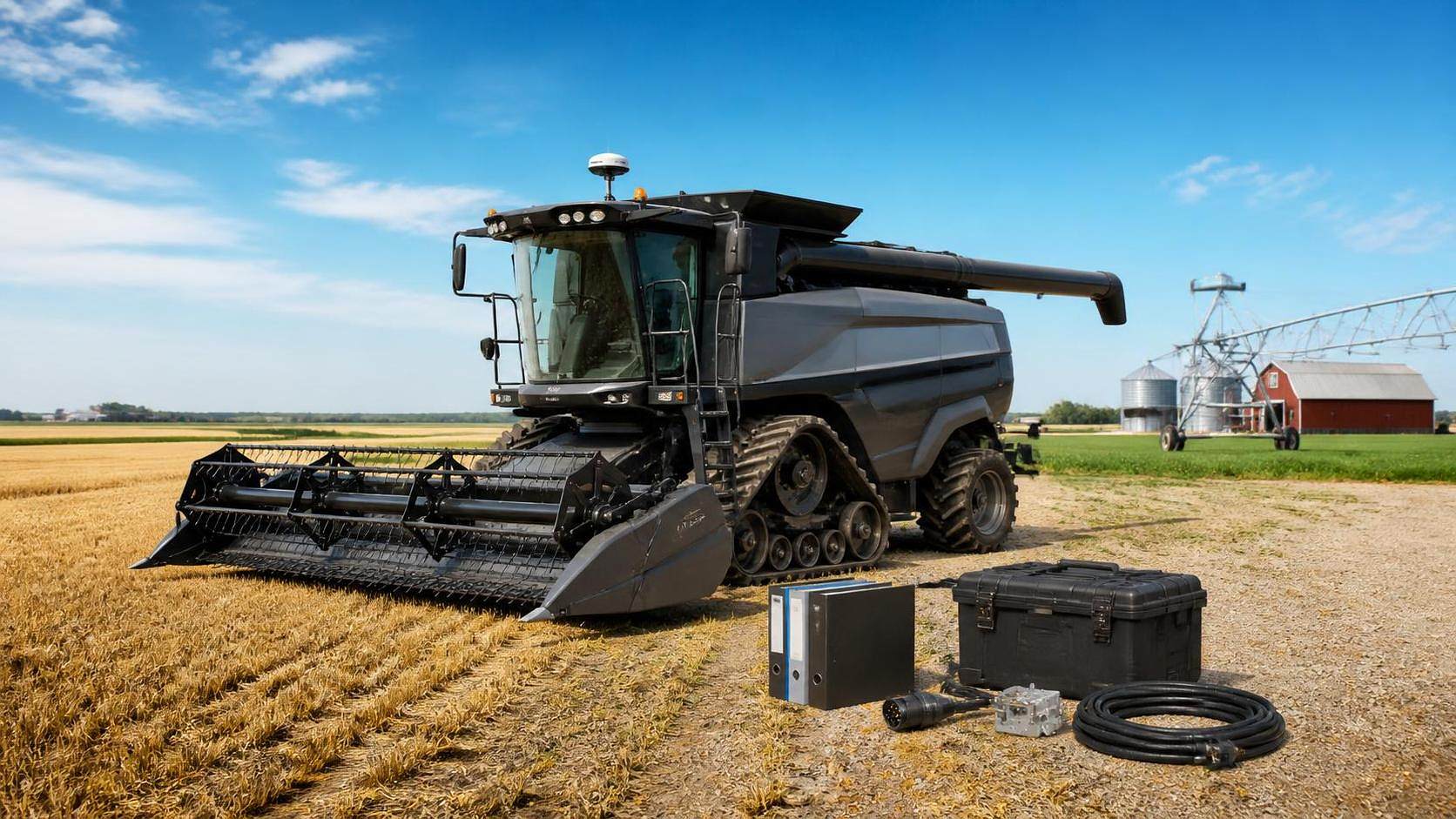




A clear procurement specification preparation example helps purchasing professionals compare farm equipment on more than price alone. For tractors, combine harvesters, intelligent implements, and irrigation systems, well-defined requirements reduce technical risk, support transparent supplier evaluation, and protect long-term productivity. A machine that appears economical at the quotation stage can become expensive quickly if it cannot work in local soil conditions, integrate with existing guidance systems, or receive parts support during the narrow harvest window.
Farm equipment procurement sits at the intersection of machinery, agronomy, labor planning, data management, and capital control. The specification is where those interests become a buying document that suppliers can understand and evaluators can score consistently. It should not be a copied manufacturer brochure, nor a wish list full of vague phrases such as “high performance” or “advanced technology.” It should describe the work that must be done, the conditions under which it must be done, and the evidence required before acceptance.
Start with the field operation, not the machine model
Procurement teams are often asked to buy a “250 hp tractor,” a “large combine,” or a “smart irrigation system.” Those labels are useful starting points, but they are not yet specifications. They do not explain the crop mix, field geography, annual operating hours, labor availability, soil compaction risk, or expected digital workflow.
A better approach is to begin with an operational brief prepared jointly by farm management, operators, maintenance personnel, and procurement. This brief converts practical farm requirements into measurable purchasing criteria. For example, a contractor operating in heavy clay may need traction, hydraulic capacity, and service accessibility more urgently than a higher advertised engine output. A grain farm with short harvest windows may value grain-loss monitoring, unloading speed, and dealer response capacity above a long list of optional cabin features.
Before drafting the request for quotation, ask a few questions that reveal the real buying need:
- What crop, acreage, workload, and seasonal time window must the equipment handle?
- What are the terrain, soil, temperature, dust, and moisture conditions?
- Which existing implements, trailers, irrigation lines, or data platforms must connect to the new asset?
- What downtime is acceptable during planting, spraying, or harvest?
- Will operators need automation, telematics, satellite guidance, or variable-rate capability?
- How long is the intended ownership period, and who will maintain the equipment?
These answers give the specification a commercial purpose: acquire dependable productive capacity, rather than simply purchase a piece of equipment with an attractive headline price.
A practical procurement specification preparation example
Consider a farm group purchasing a combine harvester for cereal crops. The farm operates across several blocks of land, harvests wheat and barley, faces occasional wet conditions, and has limited tolerance for harvest delays. Its procurement team wants bids that can be compared fairly across brands.
Instead of issuing a brief request such as “quote one modern combine harvester,” the team may prepare a structured specification like the following.
1. Scope and intended use
Requirement: Supply, commission, and provide operator handover for one self-propelled combine harvester intended for wheat and barley harvesting. The machine must operate efficiently across variable field conditions, including uneven ground, dry straw, and periods of elevated grain moisture.
Why this matters: The intended-use statement keeps suppliers focused on the farm’s actual crop environment. A machine optimized for a different crop profile may still be capable, but it must demonstrate that it can meet the stated conditions without excessive grain loss, cleaning difficulty, or operator intervention.
2. Capacity and crop-handling requirements
- Specify the required header width range based on field layout, transport access, and expected throughput.
- State crop types, typical and peak yield conditions, straw volume, and moisture range where known.
- Require an adjustable threshing, separation, and cleaning system suitable for the crop mix.
- Request supplier documentation on grain-loss monitoring and in-cab adjustment functions.
- Define minimum grain tank volume and unloading arrangement appropriate for the farm’s logistics plan.
A useful drafting principle is to avoid demanding a particular engineering solution unless compatibility makes it necessary. Procurement may require “real-time grain-loss monitoring with operator alerts,” for instance, without insisting on a proprietary sensor design. This preserves competition while maintaining the operational standard the farm needs.
3. Powertrain, mobility, and soil protection
Requirement: The combine must provide adequate power reserve for expected crop loads and terrain, with a drivetrain suitable for field and road movement. The supplier shall state tire or track options, ground-pressure considerations, transport width, turning performance, and recommended operating limitations in wet conditions.
This section is especially important where soil structure is a long-term asset. Compaction caused by poorly matched equipment can affect future crop performance long after the harvest is complete. A lower purchase price may not offset the agronomic cost of unsuitable axle load, tire configuration, or track selection.
4. Precision agriculture and data integration
Requirement: The equipment must support guidance and field-data workflows used by the purchaser, including compatibility with the farm’s preferred positioning correction service or an equivalent interoperable solution. It must provide harvest data capture, export capability in commonly used agricultural data formats, and clear rules on data ownership, access, storage, and subscription charges.
Digital features deserve more than a line saying “GPS included.” Ask whether automated guidance is factory-fitted or optional, what level of positioning accuracy is available, whether remote diagnostics require a subscription, and whether the farm can access raw operational data without being locked into a single platform. Intelligent farm tools are valuable when information moves smoothly from the machine to crop planning, maintenance decisions, and future input applications.
5. Operator safety and working environment
The specification should require compliance with applicable safety, road-use, and machine-guarding regulations in the destination market. It may also request emergency-stop arrangements, visibility provisions, warning systems, lighting, fire-risk protection, and safe maintenance access.
Cabin requirements should be tied to the workday rather than treated as luxuries. During harvest, the person in the seat may spend long hours making decisions that affect grain quality and machine survival. Climate control, visibility, ergonomic controls, camera systems, and intuitive display design can influence both safety and output. Suppliers should identify which features are standard and which are optional.
6. Service, parts, and acceptance support
Requirement: The bidder shall describe local service coverage, normal and emergency response arrangements, parts stocking capability, warranty terms, technician training, and pre-season inspection services. The bidder must also provide a commissioning plan and operator training schedule.
For seasonal equipment, support is not an afterthought. A farm does not experience downtime evenly throughout the year; a breakdown on a quiet winter day is different from a stoppage during a weather-sensitive harvest. Procurement documents should therefore ask suppliers to explain how they handle priority support during critical operating periods, rather than accepting generic service claims.
Turn requirements into measurable evaluation criteria
Once the technical specification is drafted, the purchasing team needs a method for comparing offers. The lowest compliant bid may be the right result in some cases, but only after “compliant” has been defined properly. Evaluation becomes more defensible when technical requirements, commercial terms, and lifecycle costs are separated.
Weightings should reflect the procurement context. For a machine required immediately before harvest, delivery certainty and service capability may carry substantial weight. For a long-term irrigation project, water-use performance, control-system interoperability, filtration design, and spare-parts availability may deserve more attention than initial acquisition cost.
Do not confuse specifications with brand preferences
One of the most common weaknesses in agricultural procurement is writing a specification around a familiar model. Sometimes standardization is justified: a fleet may already rely on a specific diagnostic platform, attachment system, or maintenance inventory. Even then, the reason should be documented clearly.
In most cases, describe the performance outcome rather than copying a brand’s literature. A requirement for a tractor might state the needed drawbar performance, hydraulic flow, lift capacity, transmission operating range, guidance compatibility, and service access. It should not silently exclude alternatives by naming a proprietary feature that is unrelated to the actual task.
This distinction protects competition and gives procurement teams better negotiating leverage. It also forces internal stakeholders to clarify what they truly cannot compromise on.
Cost should be calculated across the working life
Farm equipment cost is more complex than the purchase order value. A sound buying specification asks bidders to make ownership costs visible. For large machinery, that may include fuel or energy consumption assumptions, maintenance intervals, wearable components, software subscriptions, operator training, transport preparation, and expected support packages. For irrigation systems, include filtration maintenance, pumping energy, emitter replacement, controller licensing, seasonal shutdown procedures, and water-monitoring equipment.
Not every future cost can be predicted precisely, but assumptions should be explicit. If one supplier’s price includes five years of telematics access and another includes one year, the offers are not directly comparable. If a quotation excludes commissioning, header transport equipment, or operator training, procurement should record the gap before calculating total cost.
The same thinking applies to sustainability objectives. Water-saving irrigation, variable-rate application, and reduced overlap through guidance systems may create value through better resource control. The specification should request evidence relevant to the intended operating conditions, not broad environmental claims that cannot be tested on the farm.
Include a field demonstration and acceptance plan
A brochure can confirm dimensions and options; it cannot always reveal how comfortably a machine handles local residue, slopes, dust, or operator workflow. Where the investment is substantial, a field demonstration or structured acceptance test can reduce uncertainty.
The acceptance plan should state what will be checked on delivery and during commissioning. Examples include verification of ordered configuration, safety equipment, calibration, guidance activation, data transfer, hydraulic connections, operator training, and required documents. For a combine, the farm may also agree with the supplier on an initial in-field setup review. For irrigation equipment, acceptance could include pressure testing, controller configuration, zone operation, and leakage inspection.
Keep acceptance conditions practical. They should confirm that the supplied asset matches the awarded specification, not create uncontrolled performance guarantees affected by weather, crop conditions, or operator practices. Clear acceptance criteria avoid disputes while encouraging careful installation and handover.
Final review: can every bidder answer the same question?
Before issuing the tender or request for quotation, review the document from a supplier’s perspective. Are the required and preferred features clearly separated? Are units, interfaces, delivery location, commercial terms, and response formats stated? Have internal stakeholders agreed on the scoring approach? If different bidders could interpret a requirement in radically different ways, revise it.
The strongest procurement specification preparation example is not the longest document. It is the one that makes the farm’s operational priorities visible, allows technically credible suppliers to respond on an equal basis, and gives decision-makers a fair view of cost and risk over time.
For procurement professionals navigating Agriculture 4.0, this discipline is increasingly important. Machinery performance, precision-farming algorithms, intelligent implements, and water-management systems now influence one another. A well-written specification creates the practical link between field reality and investment strategy—helping every tractor, combine, irrigation controller, and connected tool earn its place in the farming operation.
Related News
Choosing Drip Irrigation Systems for Open Fields: Soil, Slope, and Water Quality
Choose drip irrigation systems for open fields with confidence. Discover how soil, slope, and water quality shape emitter spacing, pressure, and filtration—and avoid costly design mistakes.
Choosing Crop Protection Equipment for Hot, Windy Middle Eastern Farms
Compare crop protection equipment Middle East farms need for hot, windy conditions. Discover key nozzle, drift-control, and durability checks to choose the right sprayer.
Choosing an Agriculture 4.0 Supplier: Compatibility, Support, and Total Cost
Choose an Agriculture 4.0 supplier with confidence. Learn how to verify compatibility, assess support, and compare total ownership costs to avoid hidden fees and costly downtime.
Low-Pressure Drip Irrigation: How to Fix Uneven Watering Without Raising Pressure
Optimize low pressure water-saving irrigation systems: discover how to fix uneven watering, clear blockages, and reduce hydraulic losses without raising supply pressure.
Comparing Farm Equipment Supplier Quotes: Price, Freight, and Warranty
Simplify supplier comparison for farm equipment price: assess freight, field-ready costs, and warranty coverage. Learn how to avoid hidden charges and choose a reliable supplier.
Choosing a Digital Farming Platform Provider: Compatibility and Data Ownership
Compare digital farming platforms providers on equipment compatibility, data ownership, and export rights. Discover practical checks to avoid lock-in and choose with confidence.
How Large-Scale Farm Telematics Cuts Downtime Across Mixed Fleets
Large-scale farm equipment telematics cuts mixed-fleet downtime with real-time alerts, smarter maintenance, and stronger operational control. Learn how to protect critical farm workflows.
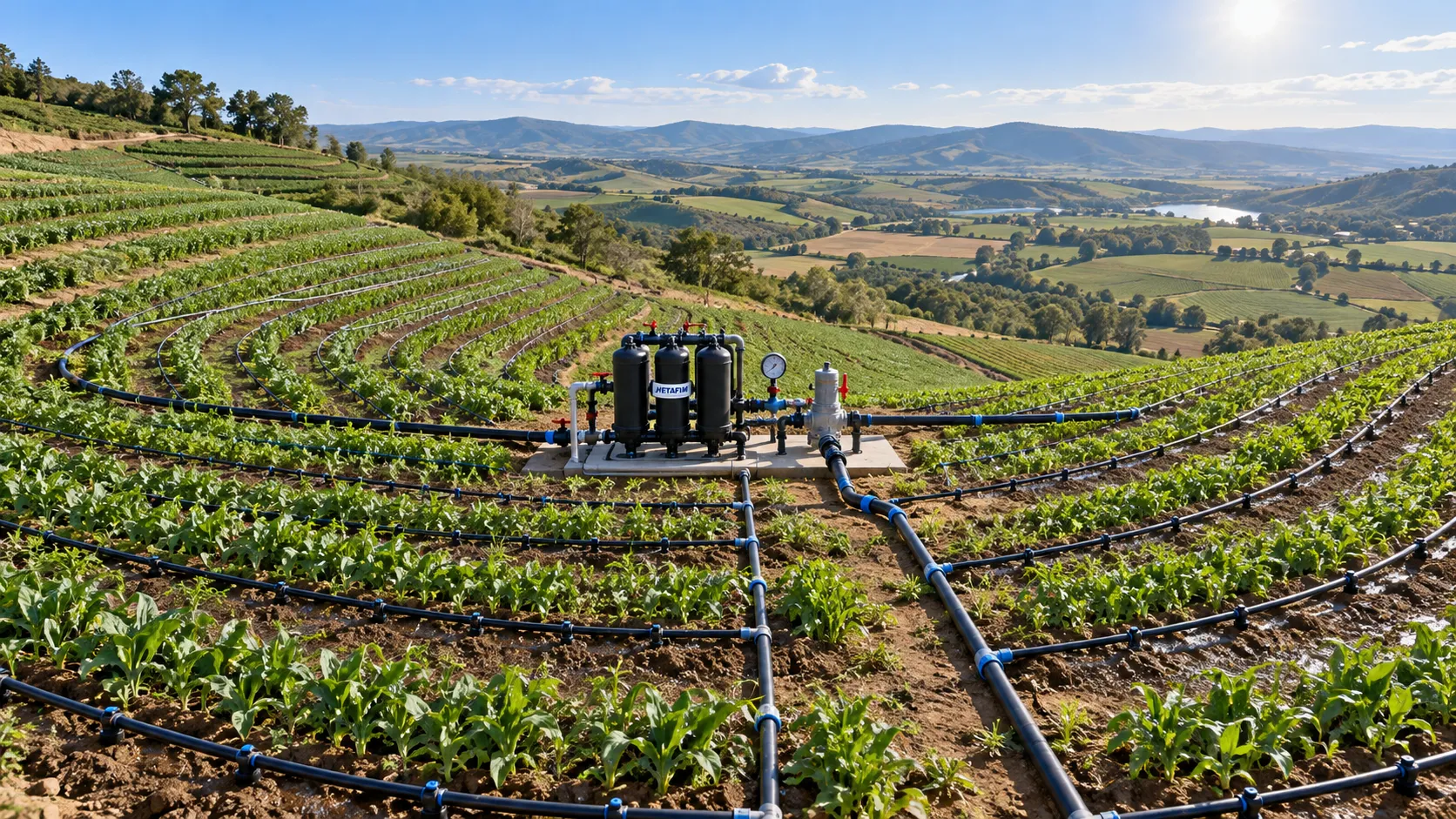
How to Size Low-Pressure Water-Saving Irrigation Systems for Uneven Fields
Low pressure water-saving irrigation systems for uneven fields: learn zoning, pressure mapping, pipe sizing, and pump selection to improve uniformity and reduce water waste.
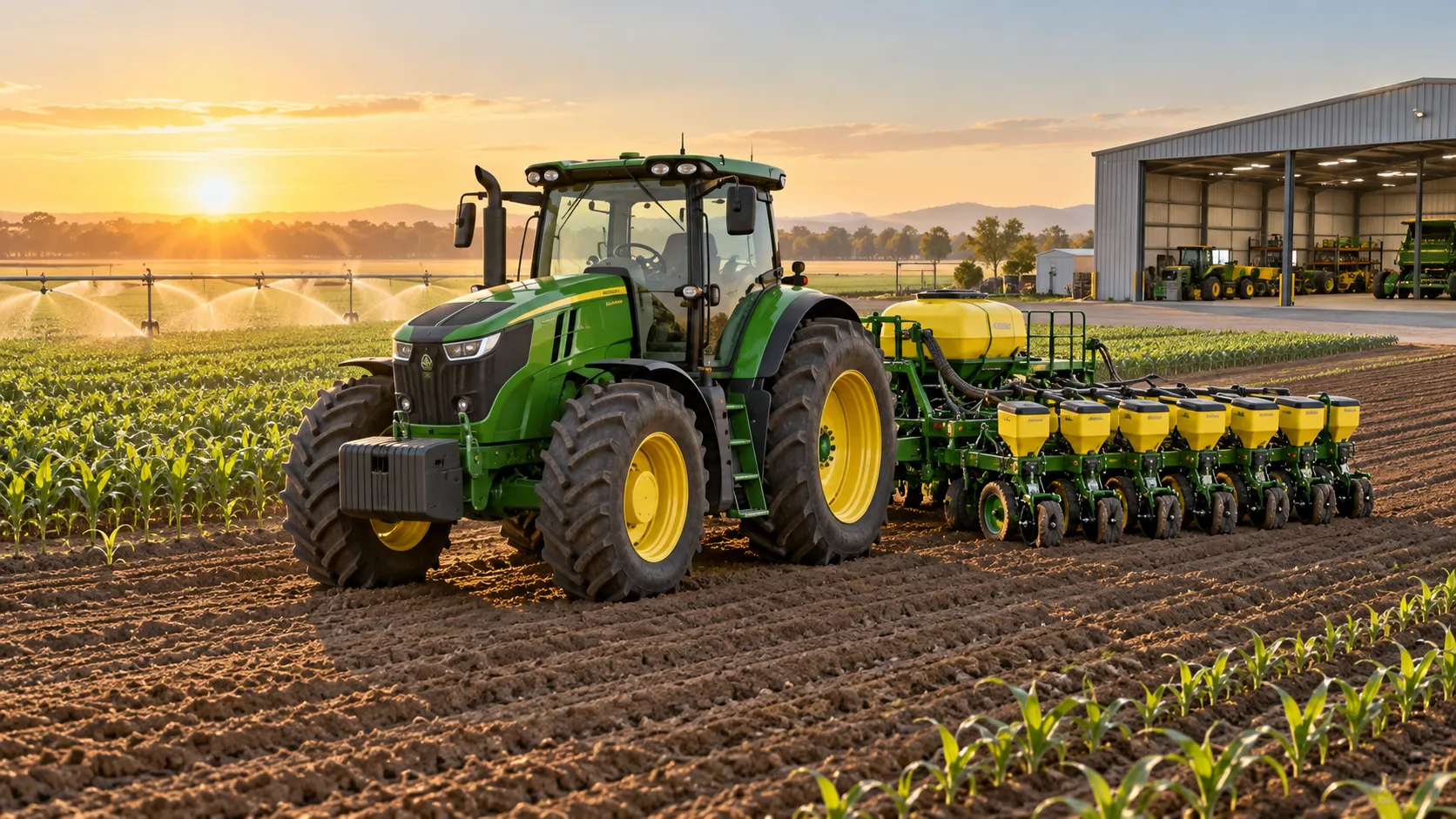
Farm Machinery Sourcing: How to Vet Suppliers, Specs, and Lifecycle Costs
Farm machinery information for sourcing: learn to vet suppliers, compare specifications, control lifecycle costs, and secure reliable uptime for smarter equipment purchases.
Related News
- 00
0000-00
Choosing Crop Protection Equipment for Hot, Windy Middle Eastern Farms - 00
0000-00
Choosing an Agriculture 4.0 Supplier: Compatibility, Support, and Total Cost - 00
0000-00
Comparing Farm Equipment Supplier Quotes: Price, Freight, and Warranty - 00
0000-00
Choosing a Digital Farming Platform Provider: Compatibility and Data Ownership - 00
0000-00
How Large-Scale Farm Telematics Cuts Downtime Across Mixed Fleets
Popular Tags
Ms. Elena Rodriguez
Weekly Insights
Stay ahead with our curated technology reports delivered every Monday.