
Can Sustainable Farming Be Profitable Without Reducing Yields?




Can Sustainable Farming Be Profitable Without Reducing Yields?
Can sustainable farming practices be profitable without yield loss? In many situations, yes—but not because a farm simply “uses less.” The profitable version of sustainability is about reducing waste while protecting the agronomic conditions that support crop output: timely planting, uniform emergence, adequate moisture, nutrient availability, low field losses, and reliable harvest capacity.
That distinction matters. Cutting fertilizer without understanding soil variability can reduce costs and still damage yield. Reducing irrigation duration without accounting for crop stage and evapotranspiration can create water stress at exactly the wrong moment. On the other hand, applying inputs only where and when they are needed can improve margins without asking the farm to accept a production penalty.
For large farms, contractors, machinery distributors, and equipment investors, the real question is not whether sustainable agriculture sounds attractive. It is whether the system can preserve output across uneven fields, changing weather, labour constraints, and volatile input prices. Agriculture 4.0 is making that question more practical to answer because equipment, sensors, positioning systems, and farm data can now be connected to actual field decisions.
What Does “Profitable Sustainability” Actually Mean on a Farm?
A sustainable farming program is profitable when its total economic effect is positive over a realistic operating period. That includes more than fuel or fertilizer savings. It may include lower rework, fewer passes across the field, reduced harvesting loss, more stable crop quality, longer equipment life, less downtime, and lower exposure to water restrictions or input shocks.
The yield question should also be handled carefully. A farm does not need every field zone to produce the same output as before. Low-performing areas may respond better to a different seed rate, irrigation schedule, crop choice, or management approach. What matters commercially is whole-farm gross margin and the reliability of production, not maintaining one uniform treatment across every hectare.
There is a common mistake in equipment planning: comparing the purchase price of a precision tool with the price of a conventional implement, while ignoring the operating system around it. A section-control sprayer, for example, has value only if field boundaries are reasonably accurate, operators understand the display, prescription files are usable, and the farm can act on the records generated. Precision hardware without disciplined workflow often becomes expensive automation of old habits.
Can Input Savings Be Achieved Without Starving the Crop?
Often, yes. The objective is not blanket reduction; it is removal of avoidable overlap, misapplication, and poorly timed application. Satellite guidance, implement control, soil sampling, crop sensing, and yield maps can help identify where an input is earning a return and where it is simply being applied by routine.
Variable-rate fertilization is a good example. It is not automatically profitable just because the machine can change rates. The agronomy has to support the prescription. Soil type, nutrient history, expected yield potential, crop rotation, and local weather risk all affect whether changing rates makes sense. In a highly variable field, a uniform rate may be the expensive choice. In a relatively uniform field, the practical gain from complex zoning may be small.
The same principle applies to crop protection. Auto-section control can reduce double application around headlands, wedges, and irregular boundaries. Yet its value depends on field geometry, boom width, spraying frequency, and the cost of the product used. A grower should calculate the likely avoided overlap before treating the technology as a guaranteed payback item.
Good sustainability economics begins with a baseline: how much seed, fertilizer, water, fuel, labour, and time does the operation currently use, and where is waste most likely occurring? Without that baseline, “savings” are easy to claim and difficult to prove.
Why Intelligent Irrigation Is Often the Strongest Starting Point
Water is one of the clearest places where sustainable practice and yield protection can align. Irrigation is not merely about applying fewer cubic metres. It is about maintaining the root-zone conditions needed for crop development while avoiding unnecessary pumping, nutrient leaching, runoff, or disease pressure associated with poorly managed water.
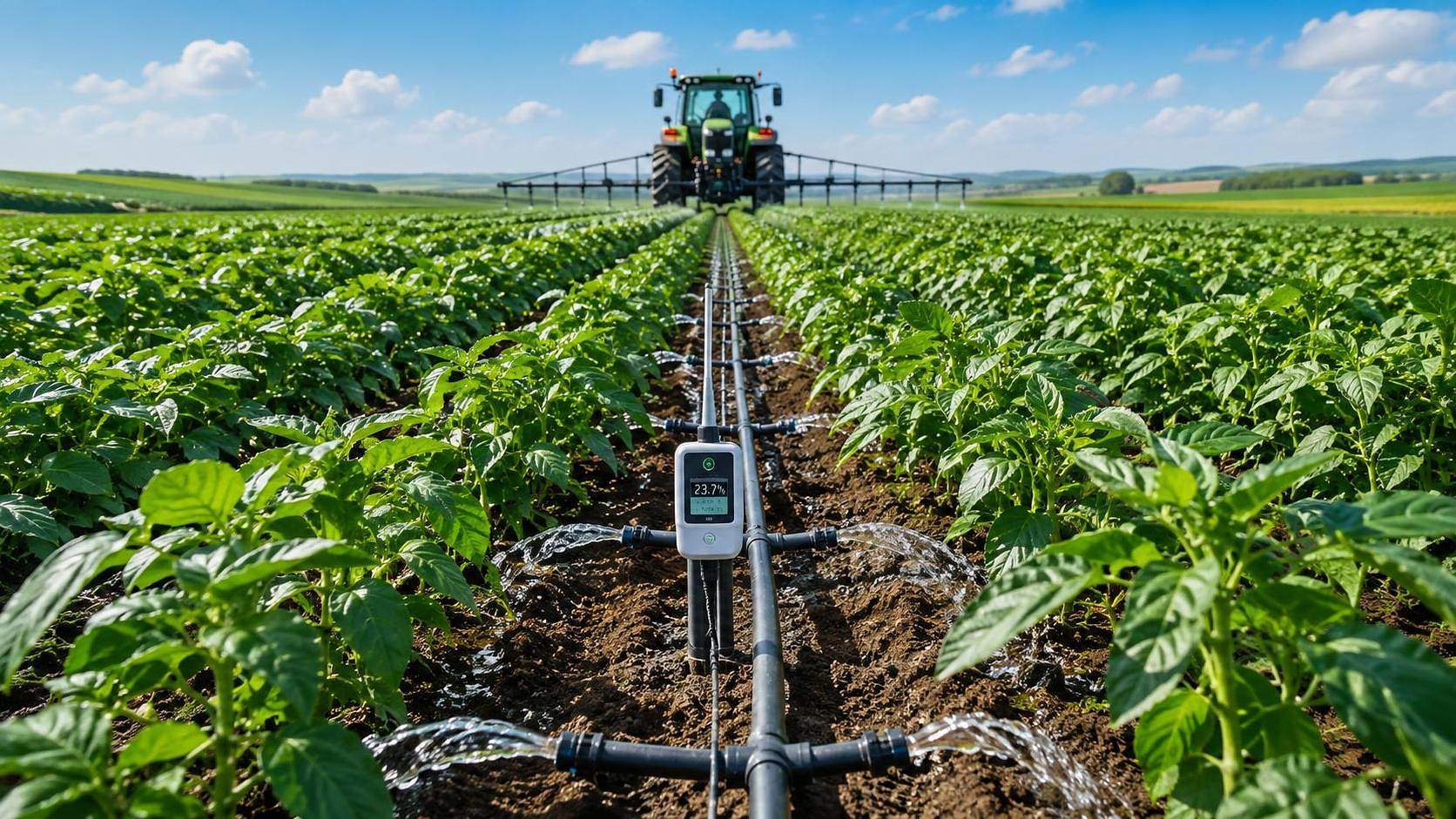
Smart irrigation networks can combine flow information, pressure monitoring, soil moisture observations, weather data, and crop-stage planning. In more advanced setups, transpiration-based models can support decisions about when irrigation is likely to be productive. The important word is “support.” A model does not remove the need for field inspection. A sensor placed in an unrepresentative location or a clogged drip line can lead to confident-looking but misleading decisions.
For drip and micro-irrigation systems, maintenance is part of profitability. Filtration, pressure consistency, emitter condition, flushing routines, and water quality all influence whether the designed application actually reaches the crop. A system that saves water on paper but delivers unevenly across the block can create yield variability that costs more than the water saved.
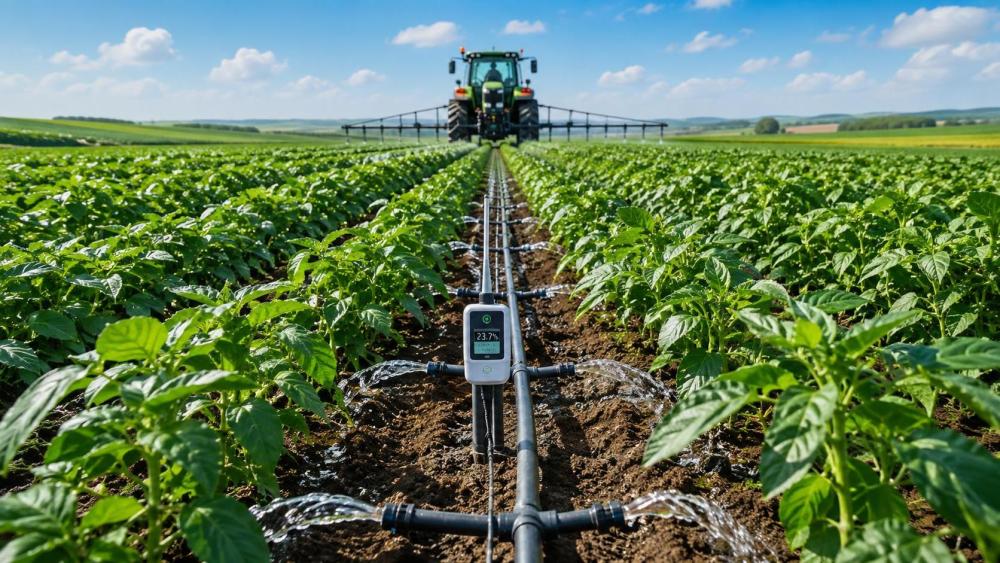
The most useful irrigation investments are usually tied to a specific operating pain point: high energy use for pumping, restricted water allocation, uneven distribution, labor-intensive scheduling, or uncertainty during heat periods. The technology should be selected around that problem, not around the most impressive dashboard.
Does Better Machinery Efficiency Protect Both Margin and Soil?
Yes, but the benefits depend heavily on timing and setup. Large-scale machinery can reduce the number of passes required to complete fieldwork, which can lower fuel use and limit unnecessary traffic. At the same time, an oversized or poorly managed machine can increase soil compaction risk, especially in wet conditions. Bigger equipment is not automatically more sustainable; it has to match soil bearing capacity, field layout, transport constraints, and the farm’s workable weather window.
Tractor chassis design matters more than it is sometimes given credit for. Transmission control, hydraulic response, tire or track configuration, ballast management, and implement matching affect fuel consumption, wheel slip, traction, and ground pressure. A tractor operating in the right load range may complete work more efficiently than a higher-horsepower machine used without proper matching. The operational details are not glamorous, but they show up in fuel records and soil condition.
The harvest stage deserves equal attention. Sustainable production can be undermined by grain left in the field, excessive damage, poor cleaning performance, or delayed harvesting caused by unreliable equipment. Combine harvesters equipped with monitoring and adjustment support can help operators respond to changing crop conditions, moisture levels, slope, and throughput. But no algorithm eliminates the need to check actual losses behind the machine. Calibration and operator judgment remain essential.
This is why harvest loss should not be treated as a minor technical issue. If the farm has invested throughout the season in water, nutrients, crop protection, and labour, avoidable loss at the header or cleaning system directly weakens the financial case for every upstream sustainability measure.
Where Do Farms Usually Lose Money During the Transition?
The transition tends to fail when too many changes are introduced at once. A farm may adopt reduced tillage, new guidance equipment, different fertility practices, irrigation automation, and a new data platform in one season. If results become disappointing, nobody can clearly identify whether the problem came from agronomy, machinery setup, weather, operator training, or software integration.
Another weak point is data ownership and interoperability. Equipment from different manufacturers may not exchange information smoothly. A yield map that cannot be cleaned, interpreted, and converted into a workable prescription has limited value. Before buying connected machinery or intelligent farm tools, operators should ask practical questions: Can the data be exported? Who has access? Will the system work with existing displays, controllers, and farm-management software? What happens if a subscription changes?
Labour planning is also frequently underestimated. Automation can reduce repetitive manual work, but it may increase the need for technically capable staff during setup, diagnostics, and seasonal troubleshooting. A sophisticated irrigation controller or autonomous-capable machine is only as dependable as the support network behind it—local service, parts availability, remote diagnostics, and people who can make decisions when conditions change.
What Is the Sensible Investment Sequence?
For most operations, the best sequence starts with measurement and operational discipline rather than a complete technology overhaul. Guidance accuracy, machine maintenance, fuel tracking, irrigation uniformity checks, and harvest-loss assessment can reveal obvious inefficiencies before major capital is committed.
From there, investments should address the constraint that is actually limiting profit. A water-stressed farm may gain more from improved filtration, pressure monitoring, and scheduling than from another layer of soil analytics. A large grain operation losing harvest time in narrow weather windows may prioritize combine capacity, telemetry, or better service coverage. A farm with inconsistent input performance across fields may benefit from mapping and variable-rate capability—but only after its data process is workable.
- Measure a known loss or constraint before selecting a solution.
- Pilot new practices on representative fields, not only on the easiest ground.
- Track yield, quality, labour, fuel, water, input use, and machinery downtime together.
- Review results across more than one season where weather variability is significant.
- Include training, maintenance, data management, and dealer support in the investment decision.
How Should Distributors and Equipment Decision-Makers Read the Market?
Demand for autonomous functions, precision fertilization tools, efficient harvest systems, and water-saving equipment is real, but it is not identical across markets. In some regions, labor scarcity pushes automation. In others, water access and pumping costs make irrigation intelligence the stronger driver. Large arable farms may focus on operational scale and uptime, while high-value irrigated crops may care more about distribution uniformity and crop-quality protection.
This is where strategic intelligence matters. AP-Strategy follows the connection between large-scale agri-machinery, combine harvesting technology, tractor chassis development, intelligent tools, and water-management systems rather than treating them as separate product categories. That connection reflects how farms actually operate: a planting decision affects fertility timing; soil traffic affects water behavior; irrigation influences crop maturity; harvest settings determine how much of the season’s production reaches storage.
For distributors, a credible sustainability proposition should therefore include more than a machine specification. It should explain application fit, expected operating demands, compatibility with existing equipment, service requirements, and the management decisions the technology can improve. Buyers are increasingly wary of broad claims. They want to know what the system changes on Monday morning during a busy season.
So, Are Sustainable Farming Practices Profitable Without Yield Loss?
They can be, provided sustainability is treated as precision management rather than blanket austerity. Farms protect yield when they preserve the fundamentals—timeliness, water availability, nutrient balance, crop health, and harvest quality—while removing unnecessary inputs and operational waste.
The strongest projects do not begin with a fashionable technology label. They begin with a measurable problem in the field, a realistic equipment and data plan, and a willingness to check whether the promised improvement is actually occurring. In agriculture, sustainability earns its place when it works under pressure: during a dry week, a compressed harvest window, a machinery breakdown, or a season when margins leave little room for guesswork.
- combine harvesting technology
- Agriculture 4.0
- tractor chassis
- intelligent farm tools
- smart irrigation networks
- precision fertilization tools
- sustainable farming practices
- combine harvesters
- tractor chassis design
- large-scale agri-machinery
- irrigation systems
- Are sustainable farming practices profitable without yield loss
Related News
Agricultural Product Information Market Guide: Key Data for Sourcing Decisions
Agricultural product information market guide for smarter sourcing—compare machinery, irrigation, precision tools, lifecycle costs, and supplier risk.
Large-Scale Farm Equipment Cost Comparison: Price, Fuel, and Lifecycle Value
Large-scale farm equipment cost comparison: evaluate price, fuel, maintenance, downtime, and lifecycle value to choose tractors, combines, irrigation, and smart tools with confidence.
A Procurement Specification Preparation Example for Buying Farm Equipment
Procurement specification preparation example for farm equipment: learn to define requirements, compare suppliers, control lifecycle costs, and buy with confidence.
How Does Climate-Smart Farming Reduce Water Use in Semi-Arid Areas?
How does climate-smart farming reduce water use in semi-arid zones? Discover precision irrigation, soil monitoring, and smarter crop planning for resilient yields.
What Are the Risks of Switching to Climate-Smart Farming Mid-Season?
What are the main risks of switching to climate-smart agriculture mid-season? Explore yield, irrigation, equipment, cost, and labor risks with practical steps for safer adoption.
How to Choose Plant Protection Equipment for Vineyard Pests
How to choose the right plant protection equipment for vineyard pests: compare sprayers, nozzles, precision tools, drift control, and canopy coverage for smarter vineyard protection.
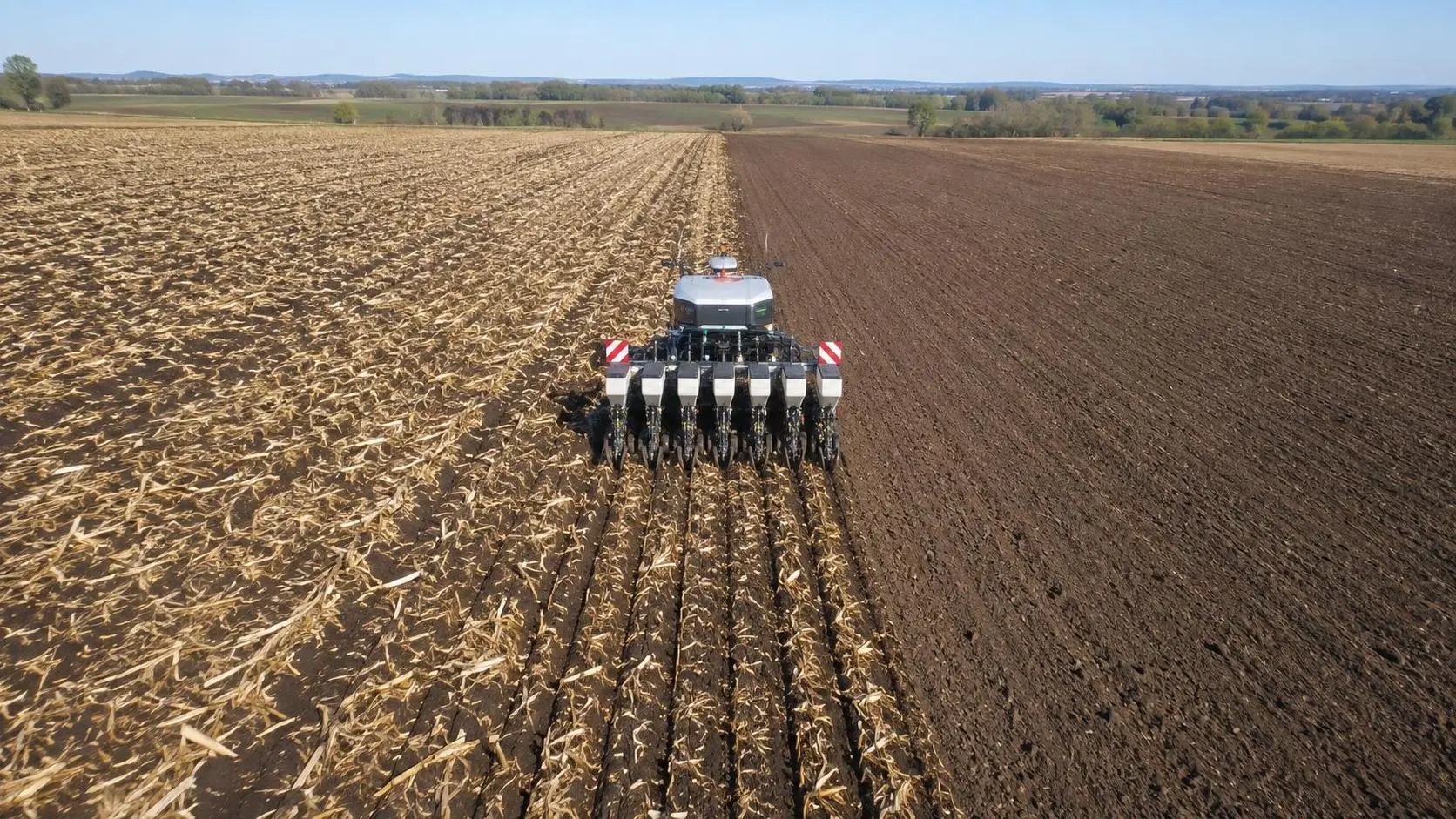
What Is the Difference Between No-Till and Conventional Tillage?
What is the difference between no-till and conventional soil preparation? Compare residue management, costs, erosion control, equipment, and planting performance.
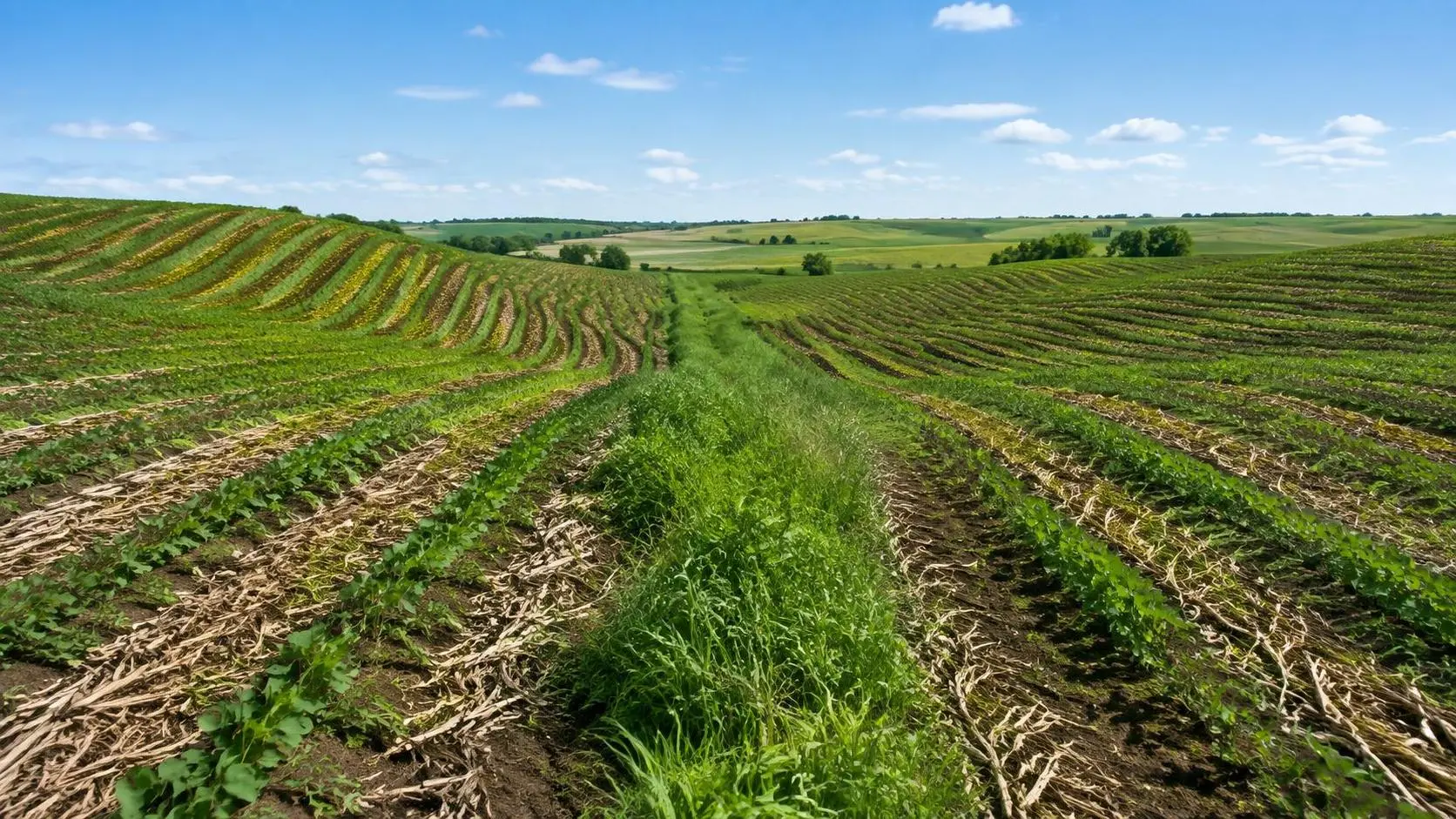
Does No-Till Farming Reduce Erosion on Hilly Farmland?
Does no-till soil preparation reduce erosion on hilly farmland? Discover how residue cover, soil structure, cover crops, and runoff management protect slopes.
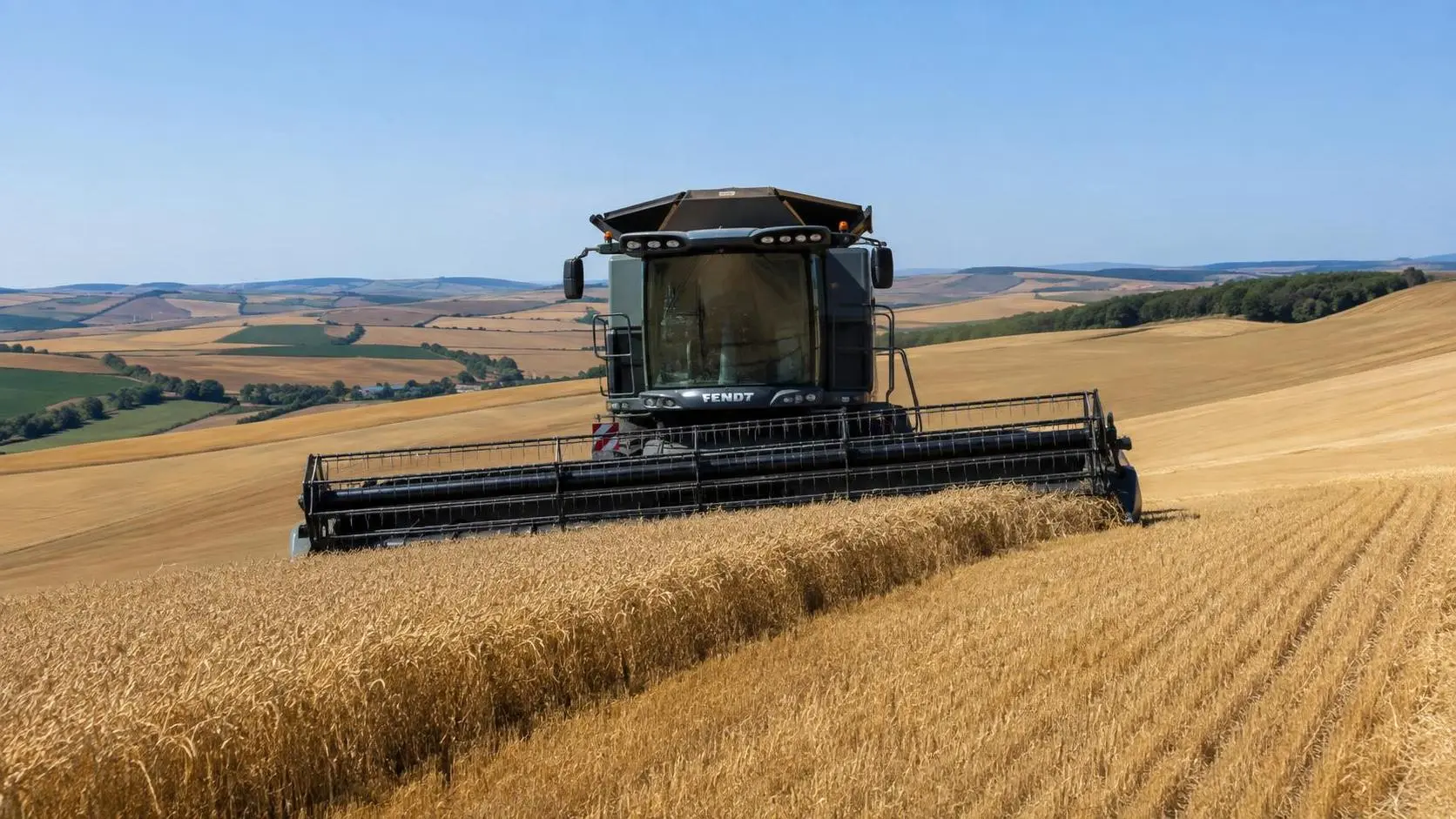
What Harvesting Machinery Works Best for Small Grains on Hills?
What harvesting machinery works best for small grain on hilly terrain? Compare hillside combines, compact models, headers, and traction options for safer, cleaner harvests.
Related News
- 00
0000-00
Agricultural Product Information Market Guide: Key Data for Sourcing Decisions - 00
0000-00
Large-Scale Farm Equipment Cost Comparison: Price, Fuel, and Lifecycle Value - 00
0000-00
A Procurement Specification Preparation Example for Buying Farm Equipment - 00
0000-00
Can Sustainable Farming Be Profitable Without Reducing Yields? - 00
0000-00
What Are the Risks of Switching to Climate-Smart Farming Mid-Season?
Popular Tags
Ms. Elena Rodriguez
Weekly Insights
Stay ahead with our curated technology reports delivered every Monday.