
How to Choose Plant Protection Equipment for Vineyard Pests
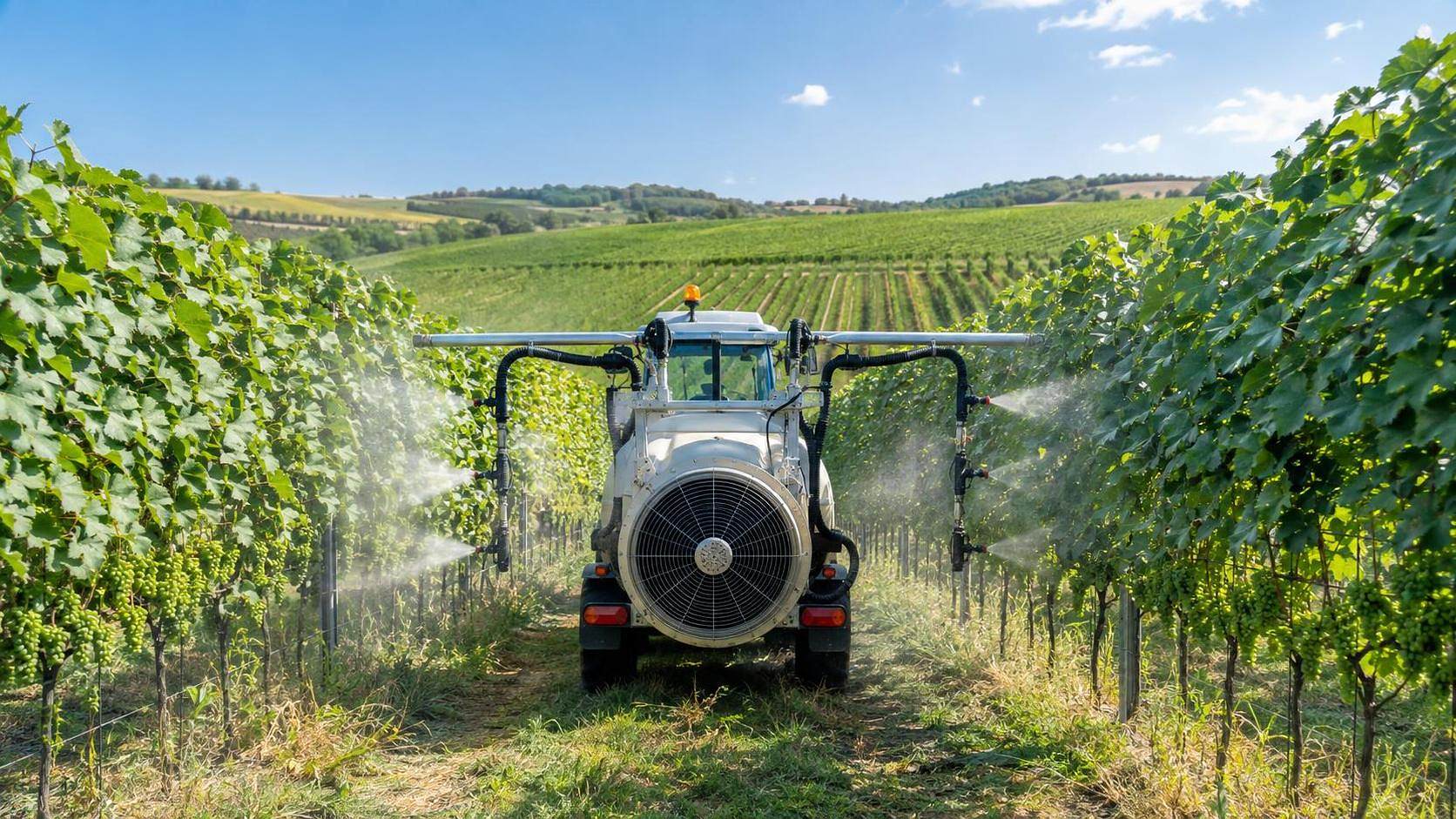




Choosing effective vineyard pest control tools requires more than comparing tank capacity, horsepower, or purchase price. Knowing how to choose the right plant protection equipment for vineyard pests means matching the machine to the vineyard’s canopy, row spacing, terrain, pest pressure, spray windows, and long-term sustainability objectives.
In a vineyard, poor application quality is rarely invisible for long. Missed clusters may become disease hotspots; excessive air volume can push droplets beyond the canopy; uneven coverage can leave one side of a vine protected while the other remains exposed. The best equipment is not automatically the largest or most automated option. It is the system that places the intended dose on the intended plant surface with the least practical waste.
For growers managing high-value grapes, that decision affects fruit quality, labor scheduling, input costs, compliance, and the confidence to act quickly when pest pressure rises.
Start with the vineyard, not the sprayer catalogue
Before comparing equipment types, map the physical and biological reality of the operation. A compact vineyard with narrow rows and steep slopes has different needs from a broad-acre estate with long, level blocks. Likewise, an open young canopy is not sprayed in the same way as a dense, late-season vertical shoot positioned canopy.
Key questions include:
- What are the row width, headland space, slope, and soil traffic conditions?
- How tall and dense is the canopy at each major spray timing?
- Which risks matter most: powdery mildew, downy mildew, Botrytis, leafhoppers, mites, mealybugs, or other local pests?
- How many hectares must be covered during a realistic weather window?
- Are homes, roads, watercourses, neighboring crops, workers, or sensitive habitats close to the blocks?
- Will the equipment be operated by a dedicated spray team or by staff who also handle other seasonal work?
These answers shape the practical choice more reliably than a brochure’s maximum output figure. A machine that seems efficient on paper can become a bottleneck if it cannot turn safely on terraces, refill quickly, or maintain a stable target rate on variable terrain.
Which equipment types suit vineyard pest management?
Most vineyards use some variation of air-assisted spraying because grapevine canopies create a complex three-dimensional target. However, the way air, liquid, nozzles, and sensors are combined makes a substantial difference.
Conventional air-blast sprayers
Tractor-mounted or trailed air-blast sprayers remain common because they can carry a useful tank volume and project droplets into dense foliage. A fan-generated air stream carries spray through the canopy, making this format suitable for many established vineyards.
They are often a sensible choice where blocks are reasonably uniform, annual spray volume is high, and the tractor fleet already supports the required implement weight. Their main limitation is that they can waste product and increase drift if fan output, nozzle arrangement, travel speed, and canopy density are not carefully matched. “More air” is not always better. Excessive airflow may drive droplets through the canopy rather than depositing them on leaves and clusters.
Tower, cross-flow, and multi-fan sprayers
Where canopies are tall, dense, or especially variable, tower or cross-flow designs can improve air distribution along the vine wall. These systems direct airflow closer to the target and may provide more consistent upper-canopy coverage than a basic rear-fan arrangement.
They deserve consideration in vigorous vineyards, high-wire training systems, or blocks where disease control depends on reaching inner foliage and fruiting zones. The trade-off can be greater cost, added machine height, and a need to check clearance beneath trellis structures.
Recycling tunnel sprayers
Tunnel or recycling sprayers enclose the vine row during application and capture a portion of spray that does not deposit on the canopy. The recovered liquid may be filtered and returned to the tank, depending on the design and local operating requirements.
This approach can be particularly valuable in early-season, sparse-canopy conditions, where conventional spraying often sends a large share of liquid past the target. It can also reduce off-target movement in sensitive settings. Yet tunnel systems are not a universal answer: they may be slower in irregular blocks, require careful fit to vine geometry, and can be less convenient where row widths or terrain change frequently.
Sensor-guided precision sprayers
LiDAR, ultrasonic, optical, or camera-based systems can detect canopy presence and control nozzles or flow sections accordingly. Rather than applying a fixed output through gaps, missing vines, or thin foliage, the machine adjusts delivery to the measured target.
This makes sensor-guided equipment attractive for vineyards with variable vigor, replanted areas, uneven stands, or a strong need to document input use. Precision hardware is most effective when paired with sound agronomy. A sensor can measure canopy structure, but it does not replace decisions about disease thresholds, label rates, water volume, or the timing of an application.
Autonomous platforms and drones
Autonomous ground vehicles can reduce operator exposure and may be useful where repetitive passes, labor shortages, and consistent route planning justify the investment. Their practical fit depends on site safety, supervision requirements, terrain, row-end design, and local rules.
Drones are often discussed for vineyard spraying because they can access steep or fragmented sites. In practice, payload limits, battery logistics, droplet deposition, wind sensitivity, and aviation or pesticide regulations must be assessed carefully. They may complement ground equipment in difficult locations, but they should not be assumed to replace a well-calibrated ground sprayer across every block.
How do canopy density and crop stage change the choice?
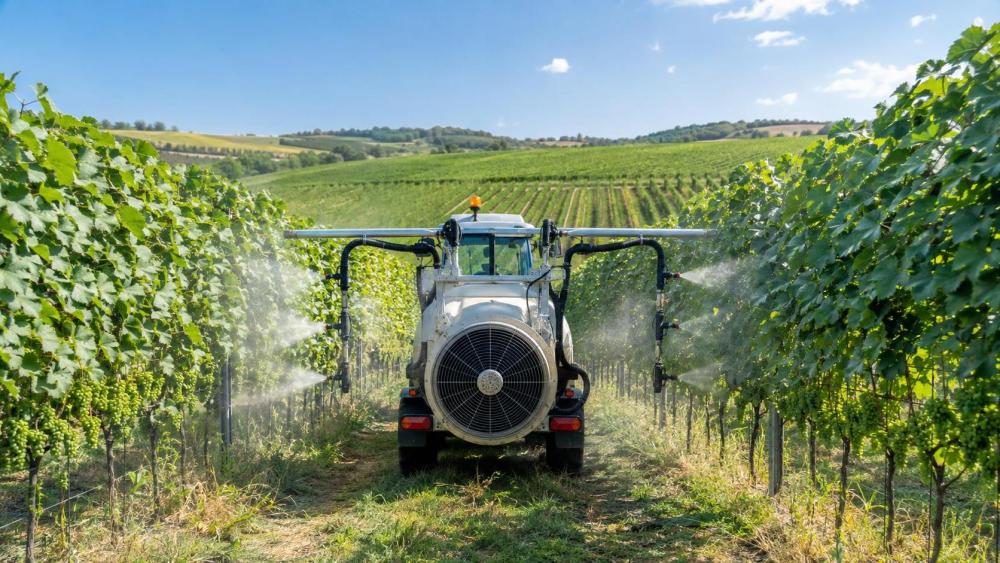
Vineyards are not static targets. A spray setup that works well at bud break may be unsuitable around bunch closure, when foliage is thicker and cluster-zone penetration becomes more important. Equipment should therefore offer enough adjustment range for the season.
Look for independently controllable nozzle zones, adjustable fan speed or air deflectors, and a boom or tower layout that aligns with the fruiting zone and canopy height. In many situations, closing unnecessary nozzles and reducing air output is more valuable than simply increasing application volume.
A useful rule is to think in terms of canopy-adapted spraying. Sparse vines need less liquid and gentler air movement. Dense canopies may need an altered droplet spectrum, more deliberate air direction, or slower travel to improve penetration. The goal is balanced deposition across the outer leaves, inner canopy, and cluster area—not a visibly wet exterior with little protection inside.
What nozzle and droplet choices reduce drift without sacrificing coverage?
Nozzles are a small component with an outsized influence on pest-control performance. Their selection affects flow rate, droplet size, pattern, penetration, and drift potential. Fine droplets can improve coverage on difficult targets, but they are also more vulnerable to wind movement and evaporation. Coarser droplets are generally less drift-prone, although excessively coarse droplets may reduce coverage on certain surfaces.
There is no single “best” nozzle for every vineyard application. Instead, choose from nozzle types approved for the intended product and compatible with the required pressure range. Air-induction nozzles, for example, can support drift reduction in appropriate situations, while hollow-cone patterns are widely used where fine coverage is essential. Always follow pesticide-label directions, as they may specify nozzle categories, droplet-size requirements, buffer zones, or other application conditions.
Equipment should also allow the operator to change nozzles efficiently as canopy conditions and products change. Color-coded nozzle bodies, clear pressure gauges, anti-drip valves, and accessible filters reduce errors during busy spray periods.
Do capacity and work rate matter more than precision?
Neither should be treated as optional. A highly precise sprayer that cannot cover the vineyard before rain or infection risk arrives may fail operationally. Conversely, a high-capacity machine that applies unevenly can create costly rework and inconsistent crop protection.
Estimate work rate using the actual field situation: row length, turning time, refill distance, water availability, travel speed, terrain, and cleaning procedures. Do not calculate only from theoretical hectares per hour. A vineyard with narrow headlands, scattered parcels, or steep slopes can lose a considerable amount of time outside the productive spray pass.
Tank size should fit the refill infrastructure and the safe lifting capacity of the available tractor. Bigger tanks reduce refill stops, but weight can increase soil compaction, reduce stability on slopes, and limit access after rainfall. In some vineyards, a smaller, agile unit with reliable water logistics is the more productive choice.
How should terrain and tractor compatibility influence the decision?
Sprayer selection is inseparable from tractor selection. Confirm drawbar requirements, hydraulic demand, power take-off compatibility, implement weight, braking capability, and tire configuration. On slopes, center of gravity and tank behavior matter greatly; a partially filled tank can shift liquid weight during turns and make an otherwise manageable machine less stable.
For hillside vineyards, prioritize stability, steering clearance, dependable braking, and a configuration appropriate to local safety guidance. Row width also matters. Equipment that barely fits between posts may damage vines, irrigation lines, or trellis hardware when the operator is working under time pressure.
Modern tractor chassis, hydraulic control, and guidance technologies can improve consistency, especially across long working days. GPS-based section control and documented application records are useful additions, but they should support—not distract from—basic operator awareness of wind, nozzle condition, and canopy response.
What should a vineyard spray-equipment inspection include?
Before buying or commissioning a machine, request a practical evaluation rather than relying only on specification sheets. If possible, test it in a representative block with similar rows, canopy dimensions, and terrain. Water-sensitive paper or other deposition assessment methods can reveal uneven distribution that is difficult to see during normal operation.
- Check left-to-right airflow balance and whether deflectors direct air into, rather than over, the canopy.
- Measure actual nozzle output; worn nozzles can distort rates and patterns even when they look clean.
- Confirm agitation keeps the spray mixture uniform throughout the tank.
- Inspect filters, strainers, hoses, seals, pumps, and anti-drip valves for serviceability.
- Assess visibility, access for cleaning, and the time required to switch nozzle zones or settings.
- Ask how application data, calibration records, and maintenance alerts are stored if the system includes digital controls.
Calibration is not a one-time event at delivery. It should be repeated through the season, after nozzle replacement, after repairs, and whenever travel speed, target volume, or canopy structure changes. A simple routine of checking output, pressure, speed, and coverage can prevent many expensive mistakes.
How does plant protection equipment fit into integrated pest management?
The sprayer is only one part of vineyard pest management. Monitoring, weather data, disease forecasting, canopy management, sanitation, beneficial insects, and resistance-management programs determine whether an application is necessary and which material should be used.
Good equipment makes these decisions more effective by applying treatments accurately when action is justified. It can also support lower-impact practices: reducing spray through gaps, limiting drift near sensitive areas, using canopy-volume-based rates, and retaining clear records for audits or internal review.
This is especially relevant as growers face tighter expectations around water use, chemical stewardship, worker safety, and environmental protection. Precision does not mean spraying more frequently. It means making each pass more intentional.
Frequently asked questions about vineyard pest-control equipment
Is an air-blast sprayer enough for most vineyards?
For many vineyards, yes—provided it is correctly sized, well maintained, and calibrated for the canopy. An air-blast sprayer becomes less suitable when terrain, row geometry, drift sensitivity, or highly variable canopy density makes consistent application difficult. In those cases, tower, recycling, or sensor-guided options may offer a better fit.
Should I choose a mounted or trailed vineyard sprayer?
Mounted units can be maneuverable and useful in smaller blocks, but they are limited by tractor lift capacity and tank size. Trailed sprayers usually offer larger capacity and may suit larger acreages, though they need adequate headland room and careful operation on slopes. The existing tractor fleet often decides which format is realistic.
Can precision sensors replace operator judgment?
No. Sensors can improve consistency by detecting vine presence or canopy volume, but they cannot judge whether weather, disease risk, label restrictions, or pest thresholds support an application. The best results come from combining field observation, agronomic planning, and machine intelligence.
What is the most common purchasing mistake?
Buying for peak capacity while overlooking calibration, airflow management, service access, and vineyard fit. A machine that matches the row, canopy, operator skill level, and spray window will usually deliver more value than an oversized system with features that cannot be used effectively.
A practical final decision
When deciding how to choose the right plant protection equipment for vineyard pests, begin with a field-by-field assessment, then narrow the options according to canopy architecture, work-rate needs, terrain, and drift risk. Compare not just purchase cost, but also water logistics, maintenance, operator training, chemical savings potential, and the quality of application data.
For vineyard managers, the most reassuring choice is one that performs consistently on an ordinary, demanding day—not only under ideal demonstration conditions. Equipment that delivers even coverage, respects the surrounding environment, and adapts to the changing vine through the season gives pest-management decisions a far stronger foundation.
Related News
Agricultural Product Information Market Guide: Key Data for Sourcing Decisions
Agricultural product information market guide for smarter sourcing—compare machinery, irrigation, precision tools, lifecycle costs, and supplier risk.
Large-Scale Farm Equipment Cost Comparison: Price, Fuel, and Lifecycle Value
Large-scale farm equipment cost comparison: evaluate price, fuel, maintenance, downtime, and lifecycle value to choose tractors, combines, irrigation, and smart tools with confidence.
A Procurement Specification Preparation Example for Buying Farm Equipment
Procurement specification preparation example for farm equipment: learn to define requirements, compare suppliers, control lifecycle costs, and buy with confidence.
What Are the Risks of Switching to Climate-Smart Farming Mid-Season?
What are the main risks of switching to climate-smart agriculture mid-season? Explore yield, irrigation, equipment, cost, and labor risks with practical steps for safer adoption.
What Is the Difference Between No-Till and Conventional Tillage?
What is the difference between no-till and conventional soil preparation? Compare residue management, costs, erosion control, equipment, and planting performance.
Does No-Till Farming Reduce Erosion on Hilly Farmland?
Does no-till soil preparation reduce erosion on hilly farmland? Discover how residue cover, soil structure, cover crops, and runoff management protect slopes.
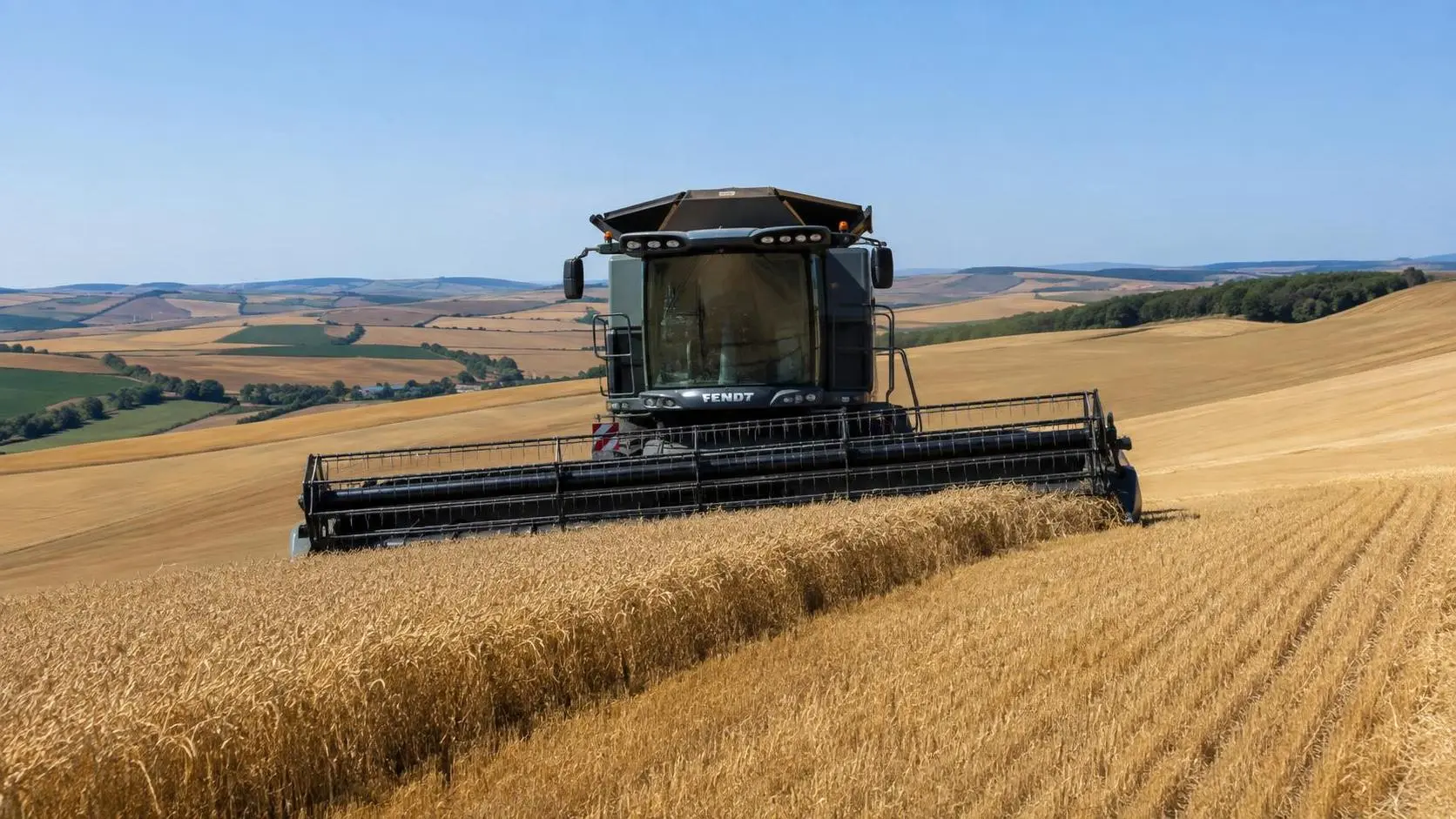
What Harvesting Machinery Works Best for Small Grains on Hills?
What harvesting machinery works best for small grain on hilly terrain? Compare hillside combines, compact models, headers, and traction options for safer, cleaner harvests.
How Does Farm Mechanization Affect Food Security in Developing Regions?
How does farm mechanization impact food security in developing regions? Discover how right-sized equipment, service access, and loss reduction build resilient food systems.
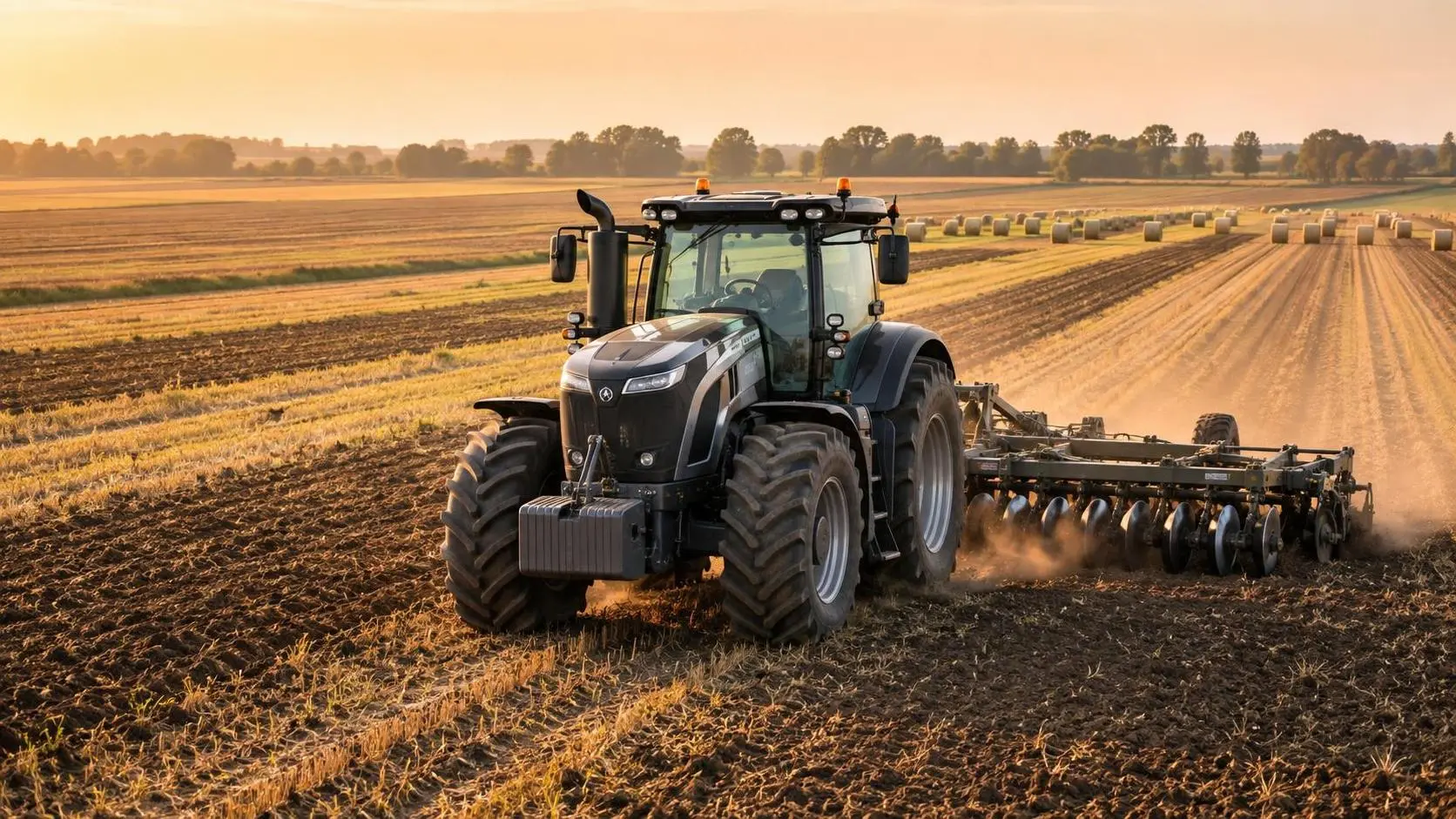
Which Implements Are Compatible With a 200 HP Tractor for Mixed Cropping?
What implements are compatible with a 200HP tractor for mixed cropping? Explore practical matches for tillage, drilling, baling, spraying, and hauling.
Related News
- 00
0000-00
How to Choose Plant Protection Equipment for Vineyard Pests - 00
0000-00
How to Read Agricultural Equipment Specifications for Sprayers Before You Compare Models - 00
0000-00
BIS Extends Fast-Track Approval for Self-Propelled Sprayers - 00
0000-00
Intelligent Sprayer Technology: Which Functions Matter Most for Field Efficiency? - 00
0000-00
How to Choose Plant Protection Equipment for Orchards by Tree Height, Row Spacing, and Spray Drift
Popular Tags
Agri-Mechanization Fellow
Weekly Insights
Stay ahead with our curated technology reports delivered every Monday.