
How to Use a Global Agricultural Equipment Directory to Compare Suppliers and Reduce Sourcing Risk




Why does a global agricultural equipment directory matter before any supplier talks begin?
Cross-border sourcing often fails long before pricing becomes the issue.
The bigger risk usually starts with weak supplier screening, unclear specialization, or poor visibility into regional service capacity.
That is where an agricultural equipment directory becomes useful.
A strong directory helps compare suppliers in one structured view.
Instead of jumping between trade fair brochures, scattered websites, and incomplete catalogs, buyers can build an early shortlist faster.
For global sourcing, this matters even more in agriculture.
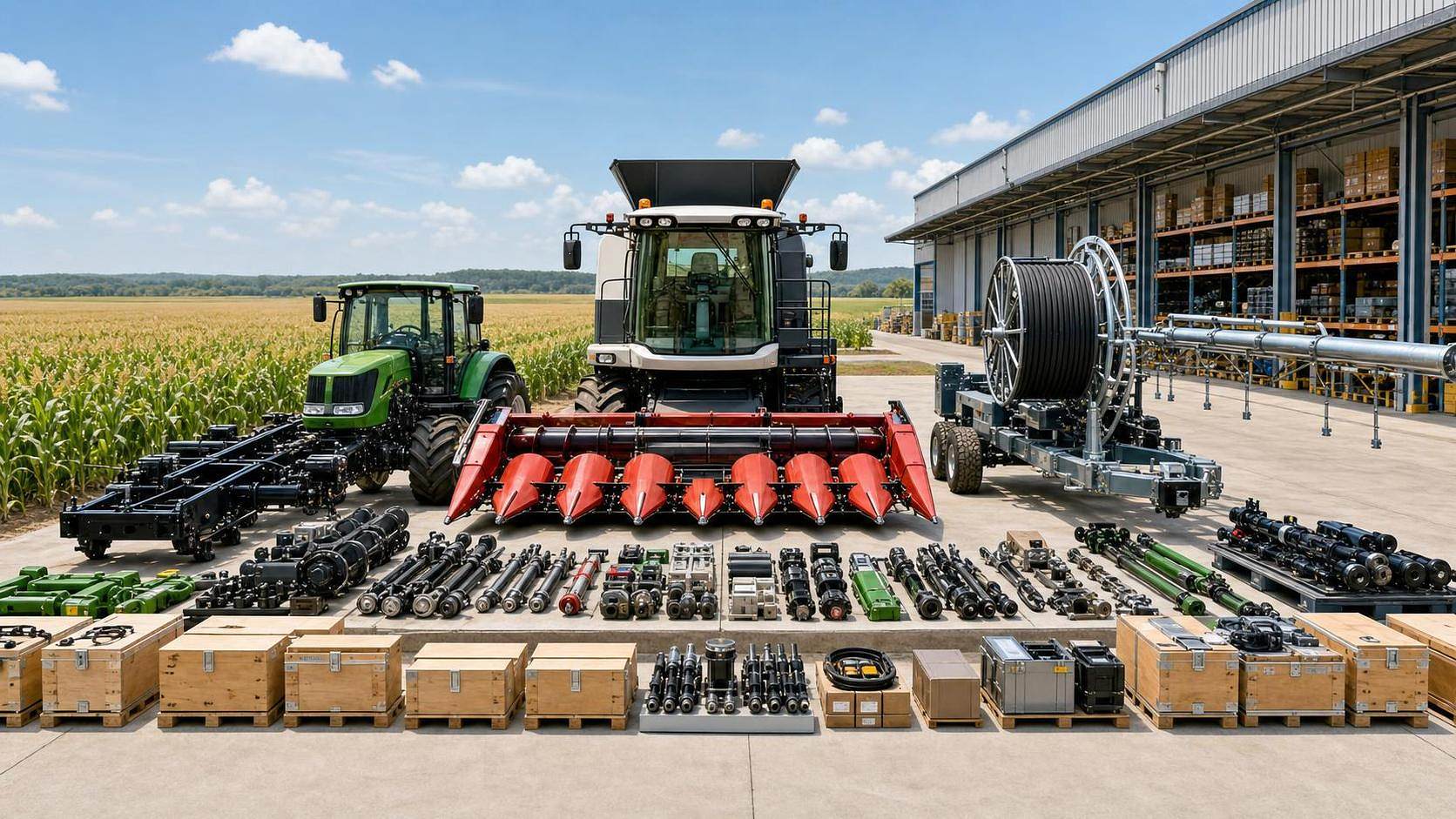
Large-scale machinery, combine harvesters, tractor chassis, precision farm tools, and irrigation systems all carry different technical risks.
A supplier that looks strong in tillage equipment may be weak in telematics integration or spare parts support.
An agricultural equipment directory global sourcing process should reveal those gaps early.
In practice, the best directories do more than list names.
They show product focus, export footprint, compliance signals, and market relevance.
That saves time and reduces the cost of talking to the wrong companies.
This is also why intelligence-led platforms such as AP-Strategy stand out.
By connecting machinery performance, precision farming trends, and sustainability demands, directory data becomes easier to interpret in commercial terms.
What should you compare first when using a directory for global sourcing?
Many teams start with price range.
That is understandable, but it is rarely the right first filter.
A better starting point is supplier fit.
Look at whether the supplier matches the exact machine category, operating environment, and support expectations.
For example, a combine harvester supplier serving dry grain regions may not be ideal for humid, mixed-crop harvesting conditions.
A directory becomes more valuable when it helps compare depth, not just breadth.
The table below shows the most useful first-round checks.
If a directory lacks these details, treat it as a lead source, not a decision tool.
For agricultural equipment directory global sourcing work, depth of information matters more than a large supplier count.
How can you tell whether a listed supplier is actually reliable?
A listing alone proves very little.
Reliable evaluation comes from combining directory signals with external validation.
The more technical the equipment, the less useful simple profile claims become.
A practical check is consistency.
Do the listed product categories match public product manuals, trade records, and service network information?
Do claimed certifications appear current and relevant to the export destination?
For irrigation and precision tools, confirm software compatibility and sensor standards as well.
For combines and tractor chassis, check whether operating data, fuel efficiency claims, or loss-control claims are explained with real testing context.
Platforms informed by sector intelligence can help here.
AP-Strategy, for example, tracks developments in harvesting efficiency, chassis transmission trends, and irrigation prediction models.
That kind of context helps separate marketing language from technically credible positioning.
A supplier may look competitive on paper, yet still be behind the market in automation, emissions readiness, or water-efficiency logic.
When comparing options, watch for these warning signs:
- Very broad product claims with little technical detail
- No evidence of service support outside the home market
- Old certifications presented as if they were current
- No reference to software, hydraulics, or integration capability
- Generic case studies that do not match the target crop or field condition
A reliable directory helps you spot these issues quickly, but it should never replace direct verification.
Is comparing suppliers by category enough, or do you need market intelligence too?
Category comparison is only the first layer.
A supplier can be strong in a category, yet poorly aligned with market direction.
That creates hidden sourcing risk.
Consider intelligent farm tools.
Two suppliers may both offer precision systems, but one supports satellite guidance and variable-rate control, while the other still relies on basic monitoring.
The price gap may look significant at first.
Over a full operating cycle, however, the cheaper option may create compatibility costs or poor field performance.
This is why agricultural equipment directory global sourcing should include trend awareness.
Watch signals tied to food security policy, regional water scarcity, autonomous machinery demand, and precision fertilization adoption.
Those factors influence what equipment remains commercially viable over time.
In actual sourcing decisions, market intelligence helps answer harder questions:
- Will this platform still meet regulatory expectations in two years?
- Is this supplier investing in the same technologies the market is moving toward?
- Can this product support sustainability targets without a costly redesign?
That is where sector portals with strategic analysis become more useful than a static directory.
What are the common mistakes that increase sourcing risk?
The most common mistake is treating all listed suppliers as equally comparable.
They are not.
Some are OEM specialists.
Some are exporters with limited engineering depth.
Others are strong in one region but weak in service execution abroad.
Another mistake is overvaluing headline machine specifications.
Horsepower, tank size, or working width matter, but they do not tell the full story.
Downtime risk often comes from wear parts, control systems, calibration support, and operator training.
For water-saving irrigation systems, field adaptability and maintenance logic can matter more than headline flow capacity.
A third mistake is ignoring timing.
Agricultural cycles are unforgiving.
Late delivery of harvest or irrigation equipment can destroy the value of a nominally cheaper contract.
Use the directory to ask better timing questions early:
- What is the current production queue?
- Which components have long lead times?
- Is localization or adaptation needed before shipment?
- How quickly can spare parts be dispatched during peak season?
A directory supports faster discovery, but sourcing risk falls only when comparison criteria are disciplined.
How should you turn directory research into a shortlist that is worth contacting?
Start by reducing the list to a manageable decision set.
Five to eight qualified names are usually enough for early comparison.
The shortlist should reflect technical fit, regional readiness, and commercial credibility.
One useful method is to score suppliers across weighted criteria.
Do not score only product features.
Include delivery reliability, support depth, and alignment with future operating needs.
This is also a sensible point to bring in intelligence sources such as AP-Strategy.
Its coverage of combine performance, chassis evolution, smart tools, and irrigation efficiency can sharpen shortlist assumptions.
A supplier comparison becomes more useful when it reflects where the agri-equipment market is actually going.
What is the smartest next step after directory comparison?
The directory should lead to better questions, not fast conclusions.
Once the shortlist is ready, request evidence in a structured way.
Ask for machine specifications, compliance documents, reference installations, parts support plans, and realistic lead-time commitments.
Then compare answers against field conditions and operating priorities.
An agricultural equipment directory global sourcing process works best when it combines listing data, technical checks, and market intelligence.
That combination helps reduce sourcing risk before contract pressure begins.
In a market shaped by food security, automation, and water efficiency, supplier comparison cannot stay superficial.
The practical next move is clear: define the application need, build a comparison matrix, verify the claims, and keep one eye on future-fit technology.
That is how a directory shifts from a contact list to a real sourcing advantage.
- food security
- tractor chassis
- intelligent farm tools
- water-saving irrigation
- autonomous machinery
- combine harvesters
- water-saving irrigation systems
- agricultural equipment
- agricultural equipment directory
- combine harvester
- irrigation systems
- combine harvester supplier
- agricultural equipment directory global sourcing
Related News
How to Evaluate Crop Monitoring System Manufacturers for Large-Scale Farms
Compare crop monitoring systems manufacturers for large-scale farms. Evaluate data quality, integration, durability, lifecycle costs, support, and pilots for smarter decisions.
Wireless Agricultural Automation for Remote Irrigation and Field Monitoring
Agricultural automation wireless solutions improve remote irrigation with reliable field data, local control, flow verification, and smarter monitoring. Explore resilient deployment strategies.
Agricultural Product Information Market Guide: Key Data for Sourcing Decisions
Agricultural product information market guide for smarter sourcing—compare machinery, irrigation, precision tools, lifecycle costs, and supplier risk.
Large-Scale Farm Equipment Cost Comparison: Price, Fuel, and Lifecycle Value
Large-scale farm equipment cost comparison: evaluate price, fuel, maintenance, downtime, and lifecycle value to choose tractors, combines, irrigation, and smart tools with confidence.
A Procurement Specification Preparation Example for Buying Farm Equipment
Procurement specification preparation example for farm equipment: learn to define requirements, compare suppliers, control lifecycle costs, and buy with confidence.
What Tractor Horsepower Is Needed for a Three-Bottom Moldboard Plow?
What tractor horsepower is needed for three-bottom moldboard plow? Compare 60–100 hp needs by soil, depth, traction, and plow width for a confident equipment match.
How Does Climate-Smart Farming Reduce Water Use in Semi-Arid Areas?
How does climate-smart farming reduce water use in semi-arid zones? Discover precision irrigation, soil monitoring, and smarter crop planning for resilient yields.
Can Sustainable Farming Be Profitable Without Reducing Yields?
Are sustainable farming practices profitable without yield loss? Discover precision strategies that cut waste, protect yields, and improve farm margins.
What Are the Risks of Switching to Climate-Smart Farming Mid-Season?
What are the main risks of switching to climate-smart agriculture mid-season? Explore yield, irrigation, equipment, cost, and labor risks with practical steps for safer adoption.
Related News
- 00
0000-00
How to Evaluate Crop Monitoring System Manufacturers for Large-Scale Farms - 00
0000-00
Agricultural Product Information Market Guide: Key Data for Sourcing Decisions - 00
0000-00
Large-Scale Farm Equipment Cost Comparison: Price, Fuel, and Lifecycle Value - 00
0000-00
A Procurement Specification Preparation Example for Buying Farm Equipment - 00
0000-00
Can Sustainable Farming Be Profitable Without Reducing Yields?
Popular Tags
Ms. Elena Rodriguez
Weekly Insights
Stay ahead with our curated technology reports delivered every Monday.