304 vs 316 Stainless Steel for Ingredient Processing Equipment
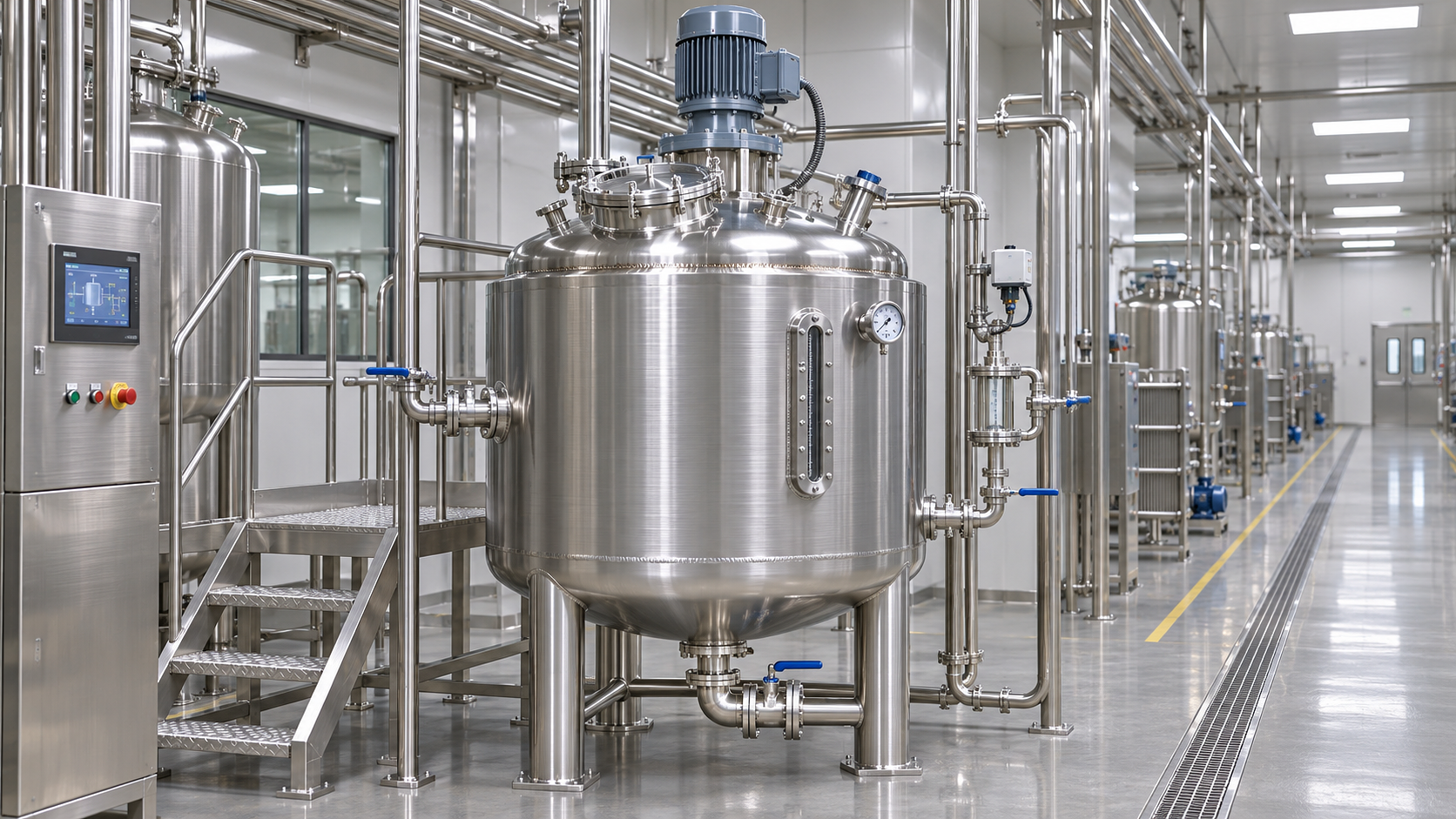




Choosing between 304 and 316 stainless steel can affect corrosion resistance, equipment life, and operating costs in ingredient processing. The decision depends on chloride exposure, cleaning chemicals, temperature, and ingredient composition—not simply material price. For anyone assessing ingredient processing technology stainless steel specifications, the useful question is not which grade is better in general, but where the additional resistance of 316 will make a measurable difference to durability, hygiene, and lifecycle risk.
The difference that matters in service
Both 304 and 316 are austenitic stainless steels used in tanks, piping, mixers, conveyors, and other processing equipment. Their corrosion resistance comes from a protective chromium-rich passive layer. That layer can repair itself when the surface is clean and exposed to suitable conditions, but it is not immune to chemical attack or damage beneath deposits.
The distinction is molybdenum. Type 316 contains it; type 304 generally does not include it as an intentional alloying addition. Molybdenum improves resistance to localized corrosion, particularly pitting and crevice corrosion in many chloride-containing environments. This is why 316 is often considered for salt-bearing ingredients, aggressive washdown conditions, and equipment exposed to saline water.
That advantage has limits. Neither grade is universally resistant to every acid, sanitizer, temperature, or concentration. A 316 tank can still pit under a gasket or fail in a poorly controlled cleaning regime. Conversely, specifying 316 for a dry, low-chloride application may add cost without addressing the actual cause of wear or downtime.
Start with the complete exposure, not just the recipe
An equipment specification may describe the product as “food powder” or “plant extract,” but those labels reveal little about corrosion. Ask what reaches the metal during production, cleaning, idle periods, and maintenance. A seemingly dry powder can absorb moisture; a liquid ingredient can concentrate as it dries around a seal. Water used for rinsing may introduce chlorides even when the recipe does not.
For each contact surface, record the ingredients and additives, chloride concentration where known, pH, operating temperature, and expected contact time. Include start-up and shutdown conditions: stagnant liquid trapped in a pump or valve can be more troublesome than the moving product. Consider whether evaporation, recirculation, or incomplete rinsing could leave a more concentrated residue than the bulk fluid.
Acidity deserves a separate assessment. A low pH alone does not determine whether 304 or 316 will be suitable; the identity and concentration of the acid, temperature, and presence of other chemicals matter. Some aggressive media can challenge both grades. Where the chemistry is uncertain or the consequence of failure is high, seek corrosion data for the actual mixture or arrange a representative materials test rather than relying on a generic compatibility chart.
Cleaning can be the harshest part of the process
A vessel may handle a mild ingredient for most of the day and encounter its most aggressive exposure during cleaning. Review the full clean-in-place or manual wash sequence: detergent and sanitizer chemistry, concentration, temperature, dwell time, rinse quality, and whether surfaces drain afterward. Chlorine-containing products require particular attention because inappropriate concentration, temperature, or contact time can damage stainless steel.
Confirm the cleaning chemical supplier’s limits for the selected grade and the equipment manufacturer’s instructions. Do not assume that a product described as suitable for stainless steel is appropriate at any concentration or exposure time. Changes to water source or sanitation procedure should trigger a review of the material assumptions, especially where equipment was selected for a narrow operating window.
Where 304 is a sensible choice—and where 316 earns consideration
Type 304 can be a practical choice for dry ingredient handling, low-chloride process water, or non-aggressive formulations when the cleaning regime is compatible. Examples may include hoppers and transfer equipment for ingredients that remain dry and do not leave corrosive deposits. The important qualification is “remain dry”: condensation, wet cleaning, and residues at joints can change the exposure.
Type 316 deserves closer attention for equipment handling salt-containing solutions, moist ingredients with chloride residues, or repeated exposure to wash water with meaningful chloride content. Heated processing, extended contact, and difficult-to-inspect crevices can strengthen the case. In these situations, the extra material cost may be justified by reducing the likelihood of localized corrosion, although the benefit must be assessed against the specific chemistry and design.
A mixed-grade design can also be reasonable. Product-contact surfaces and components exposed to cleaning fluids might be specified in 316L, while external supports or guards use 304 or another suitable material. That distinction works only if the boundary is explicit. Spray, leaks, condensation, and cleaning runoff can expose supposedly non-contact parts to the same environment as the product zone.
Neither grade should be chosen for corrosion resistance alone when abrasion is the dominant problem. Grain, mineral ingredients, and other abrasive solids can wear elbows, screw flights, and discharge points. Changing from 304 to 316 does not automatically solve that mechanism; geometry, replaceable wear parts, operating velocity, and suitable wear-resistant materials may matter more. Any alternative material must still meet the application’s hygiene and contact requirements.
Fabrication and hygienic design can outweigh the grade
Pitting and contamination often begin where liquid or residue is retained: under gaskets, inside poorly drained pipework, at lap joints, or around rough welds. A well-designed 304 system may therefore be easier to maintain than a 316 system with dead legs and inaccessible seams. Material selection and hygienic design must be reviewed together.
For welded equipment, 304L and 316L are low-carbon variants commonly considered to reduce the risk of sensitization associated with welding. The appropriate grade and welding procedure depend on section thickness, fabrication method, heat exposure, and service conditions. Low-carbon material does not compensate for incomplete weld penetration, contamination, or heat tint left untreated where the application requires its removal.
Specify the required condition of product-contact welds and the inspection method, not simply “sanitary welds.” Discuss surface finish in functional terms: a smooth, cleanable surface without defects that trap residue. If a numerical roughness limit is needed, agree on the measurement method, locations, and acceptance criteria with the supplier. A roughness value alone does not establish cleanability or guarantee the absence of pits and crevices.
Post-fabrication cleaning and passivation requirements should also be clear. Iron contamination from tools or fabrication environments can cause surface rust; weld discoloration and embedded debris may require appropriate treatment before passivation. Agree on the process, inspection, and documentation for the finished assembly rather than assuming that stainless steel arrives ready for service.
Turn the grade choice into a usable specification
A purchase description that says only “stainless steel construction” leaves too much open. The evaluator should define which surfaces contact ingredients, cleaning solutions, and rinse water, then identify material grades for each relevant component. Include less obvious items such as valve bodies, fasteners exposed to product, pump internals, strainers, and instrument connections. Gaskets and seals need their own chemical and temperature compatibility review.
The following information gives fabricators a stronger basis for a comparable quotation:
- Normal and credible worst-case product compositions, including salt content and pH where available.
- Operating and cleaning temperatures, contact times, chemical concentrations, and water quality.
- Required material grade by component, including whether low-carbon grades are specified for welded parts.
- Drainability, access for inspection, weld acceptance, surface finish, and post-fabrication treatment requirements.
- Material traceability documents and inspection records appropriate to the project’s risk and contractual requirements.
- Applicable food-contact, hygiene, pressure-equipment, or local market requirements, confirmed for the intended use and jurisdiction.
Ask suppliers to identify exceptions and proposed substitutions before fabrication begins. A fitting or pump supplied through a separate vendor may not automatically match the vessel specification. Material certificates can support traceability, but they do not demonstrate that the assembled system is cleanable or compatible with the intended process.
Compare lifecycle exposure, not just the material premium
The price difference between grades matters, but it should be viewed against the cost and difficulty of inspection, repair, replacement, cleaning, and unplanned interruption. A removable hopper panel and a welded-in process line do not carry the same consequence of failure. Nor does every pit mean the same thing: its location, progression, and effect on cleanability determine the response.
A useful evaluation compares the installed alternatives using the same duty and maintenance assumptions. Identify the parts that are difficult to replace, the likely inspection intervals, and what evidence would trigger intervention. Where corrosion data are limited, consider testing representative coupons or components in the actual product and cleaning sequence. The test should include stagnant periods and crevices if those occur in service; a short immersion in fresh product alone may miss the governing risk.
This systems view connects with AP-Strategy’s wider focus on agricultural equipment and resource use. Water quality, cleaning demand, material durability, and maintainability are linked across the agricultural value chain, from harvested inputs to processing. Reducing water or chemical consumption is worth examining, but only alongside the cleaning effectiveness and material compatibility needed for the application.
Before approving a specification, confirm the most demanding credible exposure and the components that will actually see it. If 304 meets those conditions with suitable fabrication and cleaning, there is no automatic reason to upgrade every part. If chloride exposure, retained moisture, or failure consequences remain uncertain, investigate those uncertainties before treating 316 as either unnecessary expense or a complete safeguard.
Related News
Agricultural Automation Still Needs Human Oversight, Study Finds
Agricultural automation still needs human oversight. Discover how AI and smart equipment are reshaping farm jobs, skills, and decisions.
Choosing a Precision Fertilization Equipment Manufacturer: What to Check
Choose a precision fertilization equipment manufacturer with confidence. Compare accuracy, compatibility, service and total ownership costs before you buy.
China's Autumn Grain Harvest Highlights Role of Machinery and Precision Farming
China's autumn grain harvest highlights machinery and precision farming. Explore how coordinated practices support harvesting and yield improvement.
Drip vs. Center Pivot Irrigation: Maintenance Tasks and Costs Compared
Use this irrigation solution comparison by maintenance to weigh drip vs. center pivot tasks, costs and downtime—and choose the best fit for your field.
EIMA 2026: Six Tractor of the Year Awards Include Autonomous Robot
Explore the Tractor of the Year awards at EIMA 2026, featuring six winners, including the AgXeed autonomous robot and leading tractor models.
Choosing Irrigation Systems for Government Projects: Water, Cost and Compliance
What factors affect irrigation system selection for government projects? Explore water supply, lifecycle costs and compliance to make a confident, well-informed choice.
Choosing an Agricultural Machinery Platform: Listings, Pricing, and Support
Choosing an agricultural machinery platform? Compare listings, pricing, supplier verification, and support to make a more confident equipment purchase.
Ofwat Launches £8 Million Agri-Water Innovation Challenge
Ofwat’s £8 million Agri-Water Innovation Challenge supports smart irrigation, water reuse and water-saving solutions. Explore the funding and its potential impact.
Choosing a Water-Saving Irrigation Supplier: 5 Key Procurement Criteria
Choose a water-saving irrigation systems supplier with confidence. Explore five procurement criteria to reduce risk and maximize long-term value.
Related News
- 00
0000-00
Choosing Irrigation Systems for Government Projects: Water, Cost and Compliance - 00
0000-00
Choosing an Agricultural Machinery Platform: Listings, Pricing, and Support - 00
0000-00
Choosing a Water-Saving Irrigation Supplier: 5 Key Procurement Criteria - 00
0000-00
304 vs 316 Stainless Steel for Ingredient Processing Equipment - 00
0000-00
Choosing a Large Farm Equipment Exporter: Parts, Shipping and Warranty
0000-00
Popular Tags
Ms. Elena Rodriguez
Weekly Insights
Stay ahead with our curated technology reports delivered every Monday.