
EU Sets EN 17493:2026 Rule for Drip Irrigation Logic Imports
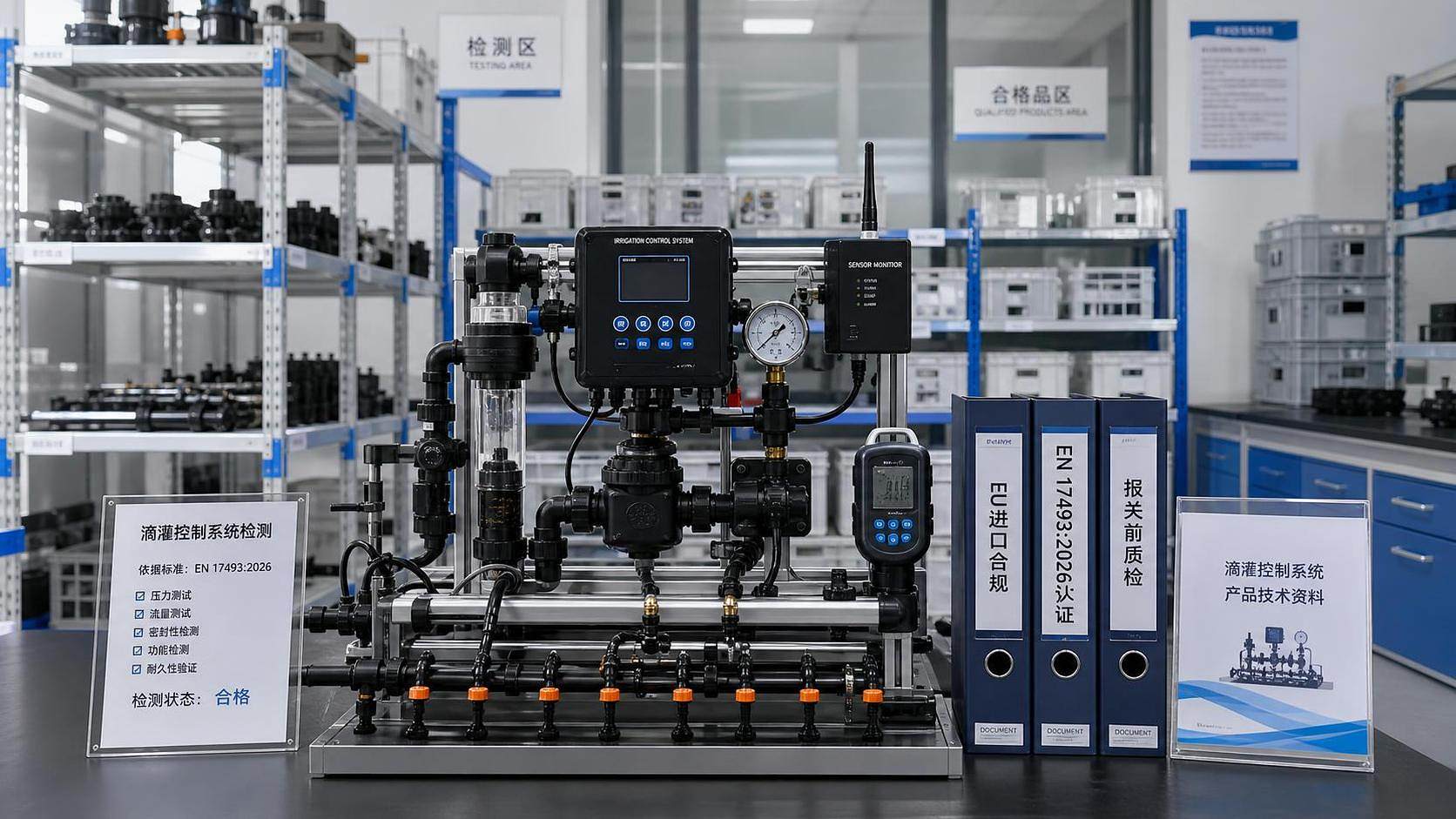




On October 1, 2026, a new EU compliance threshold takes effect for imported Drip Irrigation Logic equipment. Based on Regulation (EU) 2026/1892 issued by the European Commission on July 21, 2026, products entering the EU market must meet EN 17493:2026 certification requirements. For exporters, importers, and supply chain teams serving the European market, this is not just a standards update: it directly affects customs clearance, delivery timing, and the technical documentation path linked to CE-related market access.
What the new requirement formally introduces
The confirmed facts are clear. The European Commission issued Regulation (EU) 2026/1892 on July 21, 2026. Under that regulation, from October 1, 2026 onward, all imported Drip Irrigation Logic systems must obtain certification under the new EN 17493:2026 standard. The stated scope of that certification includes water-pressure adaptability, emitter flow consistency, and compliance of AI-driven irrigation scheduling. The information provided also indicates that non-certified products will be refused customs clearance.
Where the operational impact is likely to appear first
Exporters shipping into the EU market
From an industry perspective, exporters are among the first groups likely to feel the impact because the rule applies at the import stage. The main pressure points are shipment readiness, compliance status before dispatch, and the timing needed to align products and documents with EN 17493:2026. What deserves closer attention is whether existing product lines and shipment plans to Europe can still move within current lead times once certification becomes mandatory.
Manufacturers responsible for product performance and technical files
Manufacturing companies may be affected through product verification and documentation work. Because the new certification covers water-pressure adaptability, emitter flow consistency, and AI-driven irrigation scheduling compliance, the impact is likely to extend beyond label changes and into product validation and technical record updates. The provided information specifically notes implications for CE technical documentation upgrades, which makes document control and specification traceability a practical issue rather than an administrative one.
Importers, distributors, and delivery coordination teams
Import-side businesses and channel operators may face risk around customs timing and order fulfillment. If a product lacks the required certification, it may not clear customs, which can disrupt inventory planning, customer commitments, and inbound scheduling. Analysis shows that these participants should pay close attention to supplier readiness, document completeness, and whether pending orders fall before or after the October 1, 2026 enforcement date.
Service providers managing compliance and trade execution
Compliance advisers, testing coordinators, certification support teams, and logistics service providers may also be affected because the rule changes the practical sequence of export preparation. Observably, the need to coordinate certification status with shipment and customs processes becomes more immediate when market entry depends on proof of conformity rather than post-arrival correction.
What companies should review now
Check which products fall within the rule’s scope
Companies involved in Drip Irrigation Logic exports to the EU should first confirm which products are covered by the new requirement. In practical terms, that means identifying product categories destined for Europe and reviewing whether they will need EN 17493:2026 certification before shipment.
Reassess documentation linked to EU market access
The supplied information points to an upgrade path for CE technical documentation. That makes it important for businesses to review whether existing technical files, conformity materials, and supporting records are sufficient once EN 17493:2026 becomes a mandatory condition for imported products in this category.
Adjust delivery planning and customer communication
Because uncertified products may be denied customs clearance, delivery schedules and contract execution may require closer review. What deserves closer attention is the gap between regulatory effective dates and actual shipment arrangements, especially for orders already in planning, production, or transit preparation.
Track whether official wording or implementation guidance evolves
Analysis shows that businesses should distinguish between the confirmed rule and any later implementation clarifications. The regulation and effective date are already identified in the provided information, but companies still need to watch for any further official wording, procedural guidance, or related updates that affect how certification is demonstrated in practice.
Why this reads as more than a routine standards update
As an editorial observation, this development is better understood as an immediate compliance change with longer-term signaling value. The immediate part is clear: from October 1, 2026, imported Drip Irrigation Logic equipment without EN 17493:2026 certification faces customs rejection. The longer-term signal lies in the scope of the standard itself, which reaches not only physical performance factors such as pressure adaptability and emitter flow consistency, but also AI-driven irrigation scheduling compliance. Observably, that broadens the compliance conversation from hardware performance alone to system logic and control behavior as well.
How the market is likely to read the change
It is more appropriate to understand this as a concrete short-term market-entry requirement and, at the same time, a longer-term regulatory signal worth continued monitoring. The rule already creates a defined compliance threshold for EU-bound products in this segment. At the same time, the practical business impact will depend on how quickly affected companies align certification, technical files, and shipment planning with the new requirement.
Basis of this article and points still to verify
This article is based on the user-provided news title, event date, and event summary concerning Regulation (EU) 2026/1892, the October 1, 2026 enforcement timing, and the EN 17493:2026 certification requirement for imported Drip Irrigation Logic equipment. For this type of development, relevant source categories would typically include official regulatory notices, company compliance notices, industry association updates, authoritative media reporting, and standards-related documents. The specific official source link was not provided in the input, so continued verification remains necessary. Follow-up attention should focus on any official implementation clarification, certification practice details, and documentation expectations tied to EU market entry.
Related News
Agricultural Product Information Market Guide: Key Data for Sourcing Decisions
Agricultural product information market guide for smarter sourcing—compare machinery, irrigation, precision tools, lifecycle costs, and supplier risk.
Large-Scale Farm Equipment Cost Comparison: Price, Fuel, and Lifecycle Value
Large-scale farm equipment cost comparison: evaluate price, fuel, maintenance, downtime, and lifecycle value to choose tractors, combines, irrigation, and smart tools with confidence.
A Procurement Specification Preparation Example for Buying Farm Equipment
Procurement specification preparation example for farm equipment: learn to define requirements, compare suppliers, control lifecycle costs, and buy with confidence.
What Are the Risks of Switching to Climate-Smart Farming Mid-Season?
What are the main risks of switching to climate-smart agriculture mid-season? Explore yield, irrigation, equipment, cost, and labor risks with practical steps for safer adoption.
How to Choose Plant Protection Equipment for Vineyard Pests
How to choose the right plant protection equipment for vineyard pests: compare sprayers, nozzles, precision tools, drift control, and canopy coverage for smarter vineyard protection.
What Is the Difference Between No-Till and Conventional Tillage?
What is the difference between no-till and conventional soil preparation? Compare residue management, costs, erosion control, equipment, and planting performance.

Does No-Till Farming Reduce Erosion on Hilly Farmland?
Does no-till soil preparation reduce erosion on hilly farmland? Discover how residue cover, soil structure, cover crops, and runoff management protect slopes.
What Harvesting Machinery Works Best for Small Grains on Hills?
What harvesting machinery works best for small grain on hilly terrain? Compare hillside combines, compact models, headers, and traction options for safer, cleaner harvests.
How Does Farm Mechanization Affect Food Security in Developing Regions?
How does farm mechanization impact food security in developing regions? Discover how right-sized equipment, service access, and loss reduction build resilient food systems.
Related News
- 00
0000-00
Designing Water-Saving Drip Irrigation Systems for High-Value Orchards - 00
0000-00
How to Choose Irrigation Solutions for Arid Regions Based on Water Source and Crop Needs - 00
0000-00
How IoT Smart Irrigation Networks Help Farms Cut Water Use and Improve Yield - 00
0000-00
USDA Rule Takes Effect for Drip Irrigation Imports - 00
0000-00
EU Rule Takes Effect for Drip Irrigation Logic
Popular Tags
Hydrological Resource Strategist
Weekly Insights
Stay ahead with our curated technology reports delivered every Monday.