
How to Evaluate Drip Irrigation System Manufacturers for Large Farm Projects
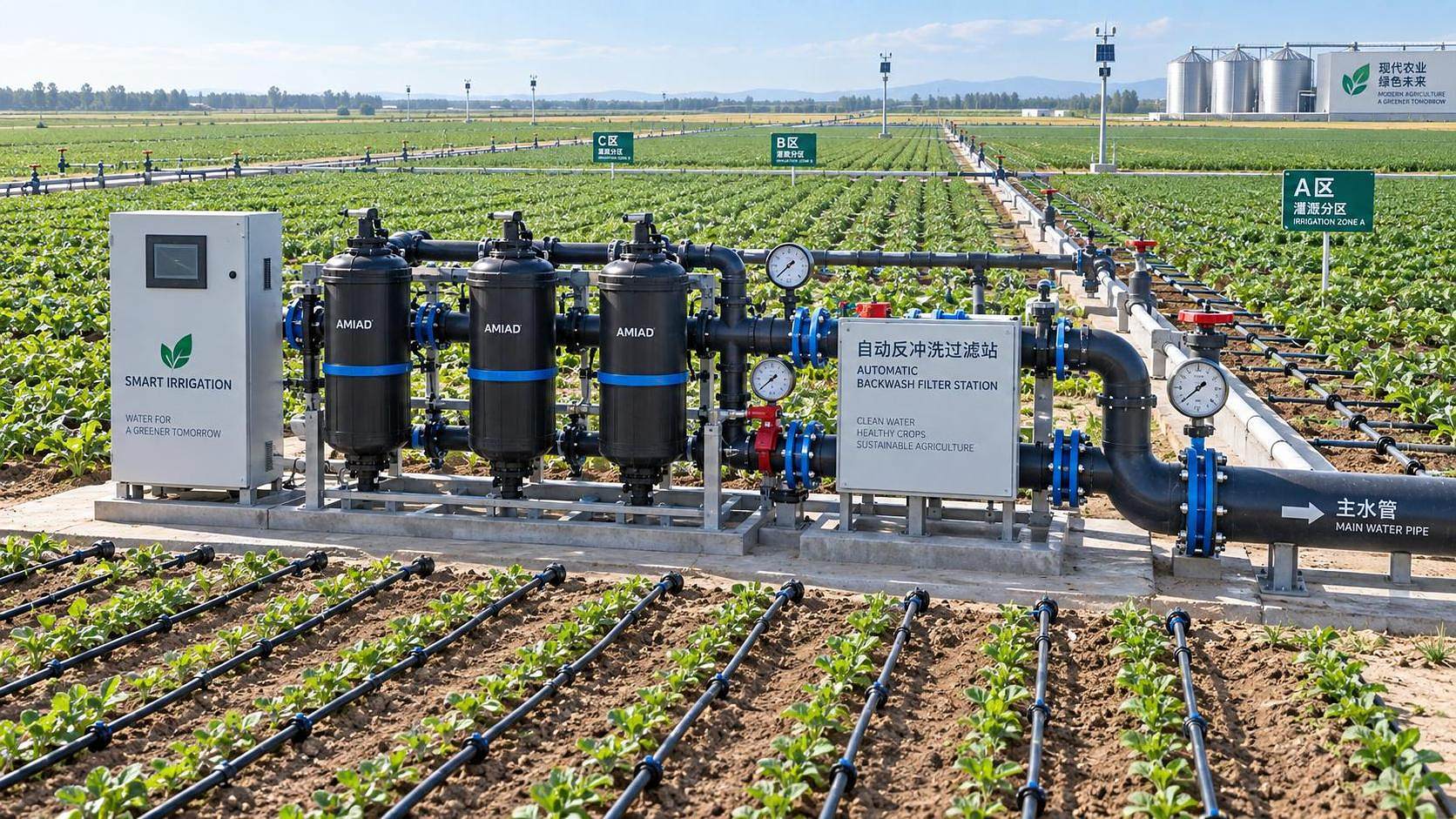




How to Evaluate Drip Irrigation System Manufacturers for Large Farm Projects
Selecting a drip irrigation systems manufacturer for a large farm project requires more than comparing unit prices for tape, filters, valves, and fittings. On a commercial farm, irrigation is an operating system that must work across variable soils, water sources, crop cycles, labor conditions, and power constraints. A low initial quotation can become expensive if the layout creates uneven pressure, filtration is undersized, spare parts are difficult to obtain, or the system cannot expand with the farm.
For project managers, the central question is not simply whether a supplier can provide components. It is whether that manufacturer can translate field conditions into a technically coherent, maintainable irrigation network. The right partner reduces uncertainty before installation and supports practical decisions long after commissioning.
Start With the Project Conditions, Not the Catalog
Manufacturers can only design responsibly when the project brief is specific. Before reviewing suppliers, define the cultivable area, crop plan, planting pattern, irrigation windows, topography, water source, water-quality information, available pumping capacity, energy arrangement, and expected phases of expansion. A manufacturer that asks for this information early is usually approaching the project as an engineering task rather than a component sale.
The water source deserves particular attention. Surface water, wells, reservoirs, reclaimed water, and blended sources introduce different risks. Suspended solids, algae, sand, iron, organic matter, and chemical precipitation can all affect filtration choices and emitter performance. It is not enough for a proposal to state that a filter is included. The supplier should explain how the selected filtration approach relates to the available water analysis, expected flow rate, flushing process, and maintenance capacity on site.
Likewise, a flat block of annual crops and an undulating orchard should not be treated as variations of the same design. Elevation differences influence pressure management. Long lateral runs affect uniformity. Row geometry changes material quantities and valve zoning. Permanent crops may justify more durable infrastructure, while seasonal field crops may prioritize flexibility and efficient replacement. A capable drip irrigation systems manufacturer will make these trade-offs visible rather than hiding them inside a single bill of materials.
Assess Hydraulic Design Capability
Hydraulic design is where many large projects succeed or fail quietly. The system must deliver water at usable pressure and reasonably consistent application across each irrigation block. That depends on the relationship among pump duty, mainline and submain sizing, friction losses, elevation changes, valve selection, flow demand, lateral length, emitter characteristics, and the number of zones operating at one time.
Ask each candidate manufacturer to describe its design basis, not just provide a layout drawing. What operating pressure is assumed at the inlet of each block? How are friction losses accounted for? What is the maximum irrigation demand used for sizing? How will pressure be verified during commissioning? If pressure-compensating emitters are proposed, why are they necessary for the terrain and operating conditions? These questions reveal whether the design is grounded in field hydraulics.
Uniformity should be discussed as a project outcome, but it should not be accepted as a vague promise. Request the manufacturer’s calculation assumptions, the proposed method of field testing, and the corrective process if measured performance differs from the design expectation. Actual results can be affected by installation quality, source-water changes, operator practices, and later modifications, so a credible supplier will be precise about what it controls and what must be monitored after handover.
Look beyond emitter flow rate
Emitter flow rate is important, but it is only one design variable. Emitter spacing, wall thickness, flow-path configuration, clogging resistance, pressure range, and compatibility with fertigation all matter. For subsurface systems, root intrusion management, burial depth, flushing design, and the ability to locate or repair damaged lines deserve separate review. For surface drip, UV exposure, field traffic, retrieval practices, and seasonal replacement logistics may have greater influence on lifecycle cost.
A manufacturer should be able to explain why a particular product configuration fits the crop and operating model. If every project receives the same recommendation regardless of field size, water quality, or terrain, the proposal may be standardized for convenience rather than optimized for the farm.
Examine Manufacturing Control and Material Traceability
Large farms need consistency across many hectares and multiple installation phases. That makes manufacturing discipline more relevant than a polished brochure. Evaluate how the supplier controls raw materials, dimensions, emitter insertion or molding, pressure testing, packaging, batch identification, and final inspection. The goal is not to demand a generic list of certificates; it is to understand whether the delivered product can be traced and checked if a problem appears in the field.
Request product data sheets that state the parameters relevant to the proposed application, then ask how those parameters are verified. Where local regulations, tender documents, or export-market requirements apply, confirm the exact standard and documentation needed rather than assuming a claim of “compliance” covers the project. Requirements vary by location, crop type, funding structure, and water source.
It is also sensible to inspect samples from the actual production line or production batch where procurement timing allows. Check connection quality, wall consistency, marking legibility, fitting compatibility, and packaging protection. Samples cannot replace full quality assurance, but they can expose mismatches between a quoted specification and the physical product.
Treat Filtration, Flushing, and Fertigation as One System
Drip systems are frequently evaluated around the emitter, yet many operating failures begin upstream. Filtration must match the source water and the emitter’s sensitivity; it must also be sized for the required flow without creating unacceptable pressure loss. A filter station that works in a clean-water demonstration may struggle with variable surface water during peak irrigation periods.
Ask manufacturers how backflushing is initiated, what pressure or flow conditions are assumed, where flush water goes, and how operators know when cleaning is needed. The answer should be practical. If the proposed system requires frequent manual intervention, confirm that the farm has the staffing and routines to carry it out consistently.
Where fertilizers or acids will be injected, review the complete fertigation arrangement: injection method, mixing practice, safety provisions, isolation valves, non-return protection, compatibility of materials, and flushing sequence. Chemical management must follow local rules and the manufacturer’s technical guidance. The irrigation supplier may not control the farm’s agronomy program, but a competent one will identify interfaces that can affect equipment durability and water distribution.
Test Scalability and Automation Claims
Large farms are rarely static. Land may be developed in phases, crop mixes may change, and water allocations or pumping arrangements may evolve. Review whether the manufacturer’s design leaves sensible provisions for additional blocks, future filtration capacity, control valves, communication infrastructure, and hydraulic adjustments. Building expansion capacity into every component can be wasteful, but ignoring likely growth can force expensive rework later.
Automation should be evaluated in the same disciplined way. Remote valve control, soil-moisture sensors, flow meters, pressure sensors, weather data, and scheduling software can improve visibility, but only if the architecture is usable by the field team. Ask who owns the operating data, whether controls can integrate with existing farm platforms, how the system behaves during a communications failure, and whether manual operation remains possible.
The most useful intelligent irrigation design is not necessarily the one with the most sensors. It is the one that turns reliable field data into clear irrigation decisions while allowing technicians to diagnose faults quickly. This is especially relevant when irrigation is part of a wider precision-farming program involving machinery schedules, crop monitoring, and input management.
Compare Delivery Capability, Not Just Lead Time
A large project often depends on a narrow installation window. Delays in pipe, fittings, valves, filtration equipment, or control components can disrupt land preparation and planting. When evaluating a drip irrigation systems manufacturer, ask for a realistic supply plan: production capacity, shipment sequence, packing method, documentation, contingency arrangements, and the supplier’s approach to phased delivery.
Supply reliability also has a maintenance dimension. Determine which items are standard stock, which are made to order, and which critical spares should be held on site. A system with proprietary components may be appropriate, but the project team should understand the implications for future replacements. Compatibility between pipes, connectors, valves, controllers, and locally available parts should be confirmed before procurement is finalized.
Installation support matters as much as shipment. Clarify whether the manufacturer supplies field supervision, installer training, commissioning procedures, pressure-test guidance, as-built documentation, and operating manuals tailored to the installed system. These are not administrative extras. They are the records and skills that enable a farm to operate the network properly after the project team leaves.
Use a Weighted Evaluation Rather Than a Lowest-Price Decision
A structured comparison helps prevent price from dominating decisions that will affect years of operation. The weighting should reflect the project’s risks. A farm using difficult surface water may place greater weight on filtration engineering and service support. An estate with major elevation changes may emphasize hydraulic design and pressure management. A remote project may value spare-parts planning and installer training more heavily than advanced automation.
The commercial comparison should include more than material price. Consider pumping implications, installation complexity, expected maintenance labor, consumables, flushing water, replacement exposure, and the cost of lost irrigation capacity during a fault. Some of these items cannot be estimated precisely before operation, but discussing them openly produces a more realistic decision.
Red Flags During Manufacturer Evaluation
Several warning signs are worth taking seriously. Be cautious when a supplier provides a design without reviewing water quality or elevation data; cannot explain the relationship between filter selection and emitter protection; offers unusually broad performance claims without test conditions; or avoids committing to a commissioning and support scope. Another concern is a quotation with incomplete assumptions, where essential valves, air-release devices, flushing arrangements, controls, fittings, or installation support appear only after the initial price comparison.
A manufacturer does not need to promise that every field risk can be eliminated. In fact, suppliers who identify uncertainties early are often more credible than those who present every project as routine. Good technical communication includes boundaries: what must be supplied by the farm, which field data must be confirmed, and what operating discipline is necessary to protect the system.
Make Irrigation Procurement Part of the Farm’s Wider Operating Strategy
Irrigation decisions increasingly connect with broader questions of mechanization, crop planning, labor availability, energy use, and water stewardship. At The Global Agri-Pulse Hub (AP-Strategy), intelligent irrigation is examined alongside large-scale machinery, harvesting technology, tractor power systems, and precision farm tools because these systems shape one another in real operations. An irrigation schedule affects field access, fertilizer timing, sensor interpretation, and the working rhythm of the entire farm.
That wider view is useful when comparing manufacturers. The strongest proposal is not automatically the most complex one. It is the one that matches the farm’s water reality, crop economics, maintenance capability, and future management model. Before awarding the contract, request a final design review covering hydraulic calculations, water treatment, equipment lists, delivery milestones, installation responsibilities, testing procedures, training, and spare-parts planning. If those elements cannot be explained clearly before purchase, they are unlikely to become clearer after the system is in the ground.
Related News
Specification Planning: A Practical Framework for Defining Equipment Requirements
Application guidance for specification planning: define measurable equipment requirements, prioritize performance, and avoid costly procurement mistakes.

How North American Farms Can Select Crop Monitoring Systems by Acreage and Connectivity
Crop monitoring systems North America: learn how to match acreage, connectivity, sensors, and data workflows for reliable, actionable farm decisions.

Where to Find Reliable Product Information for Comparing Farm Equipment
Product information resources agriculture buyers can trust: compare farm equipment with technical specs, manuals, field data, dealer support, and lifecycle insights.
Selecting Real-Time Soil Moisture Sensors for Irrigation Zone Control
Soil moisture sensors real time: learn how to select reliable probes, optimize zone control, improve irrigation decisions, and scale precision water management.
Tractor Hydraulic Systems Troubleshooting: Diagnosing Weak Lift and Slow Implements
Tractor hydraulic systems troubleshooting made practical: diagnose weak lifts and slow implements with proven pressure, flow, valve, and oil-supply checks.
How Tractor Intelligence Systems Improve Field Efficiency and Input Accuracy
Agricultural machinery intelligence for tractors improves field efficiency, input accuracy, data traceability, and implement control. Explore smarter evaluation strategies.
How to Evaluate Crop Monitoring System Manufacturers for Large-Scale Farms
Compare crop monitoring systems manufacturers for large-scale farms. Evaluate data quality, integration, durability, lifecycle costs, support, and pilots for smarter decisions.
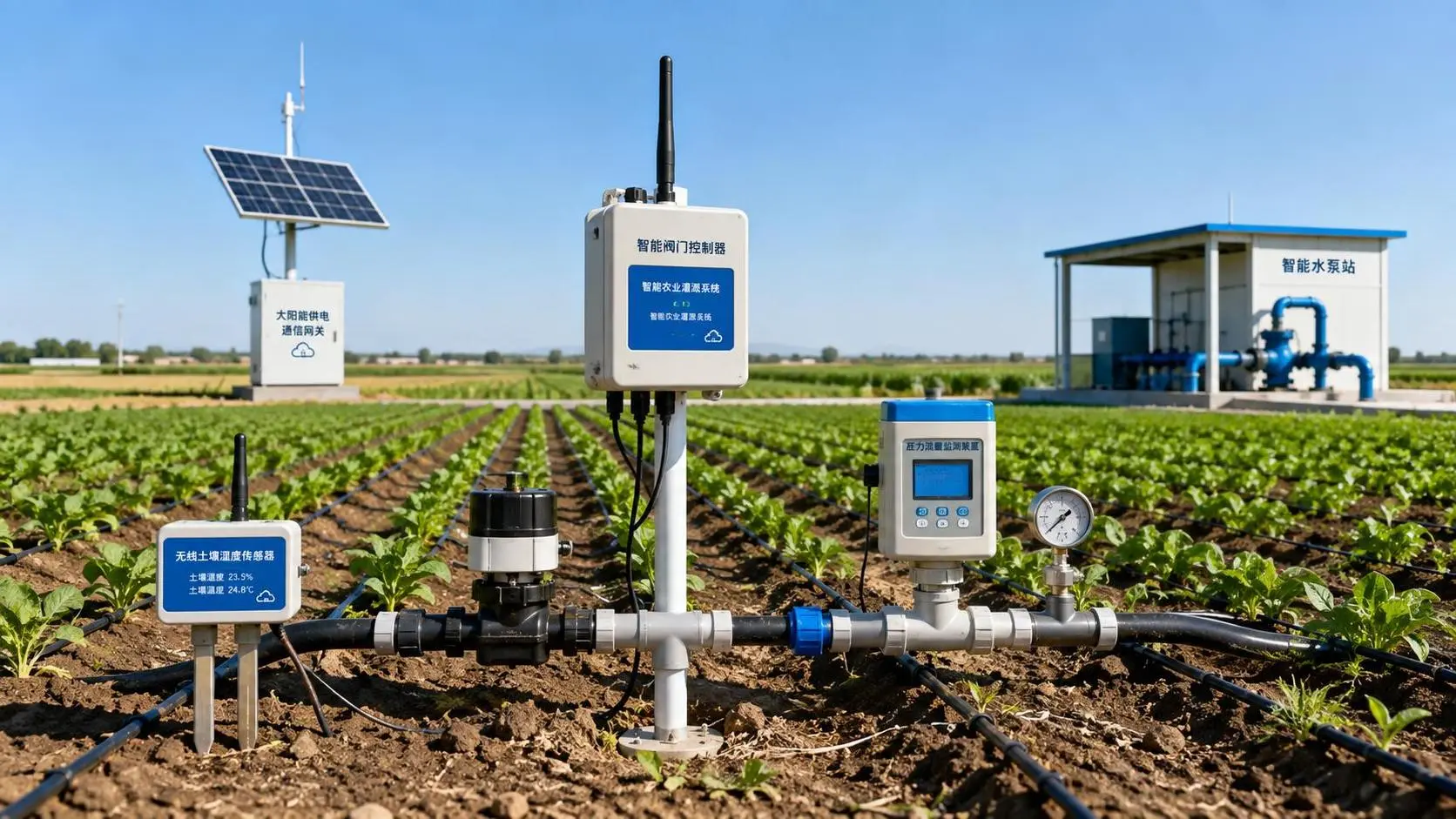
Wireless Agricultural Automation for Remote Irrigation and Field Monitoring
Agricultural automation wireless solutions improve remote irrigation with reliable field data, local control, flow verification, and smarter monitoring. Explore resilient deployment strategies.
Agricultural Product Information Market Guide: Key Data for Sourcing Decisions
Agricultural product information market guide for smarter sourcing—compare machinery, irrigation, precision tools, lifecycle costs, and supplier risk.
Related News
- 00
0000-00
How to Evaluate Drip Irrigation System Manufacturers for Large Farm Projects - 00
0000-00
Wireless Agricultural Automation for Remote Irrigation and Field Monitoring - 00
0000-00
Designing Water-Saving Drip Irrigation Systems for High-Value Orchards - 00
0000-00
How to Choose Irrigation Solutions for Arid Regions Based on Water Source and Crop Needs - 00
0000-00
How IoT Smart Irrigation Networks Help Farms Cut Water Use and Improve Yield
Popular Tags
Hydrological Resource Strategist
Weekly Insights
Stay ahead with our curated technology reports delivered every Monday.