
How to Validate Precision Farming Algorithm Accuracy Before Field Deployment
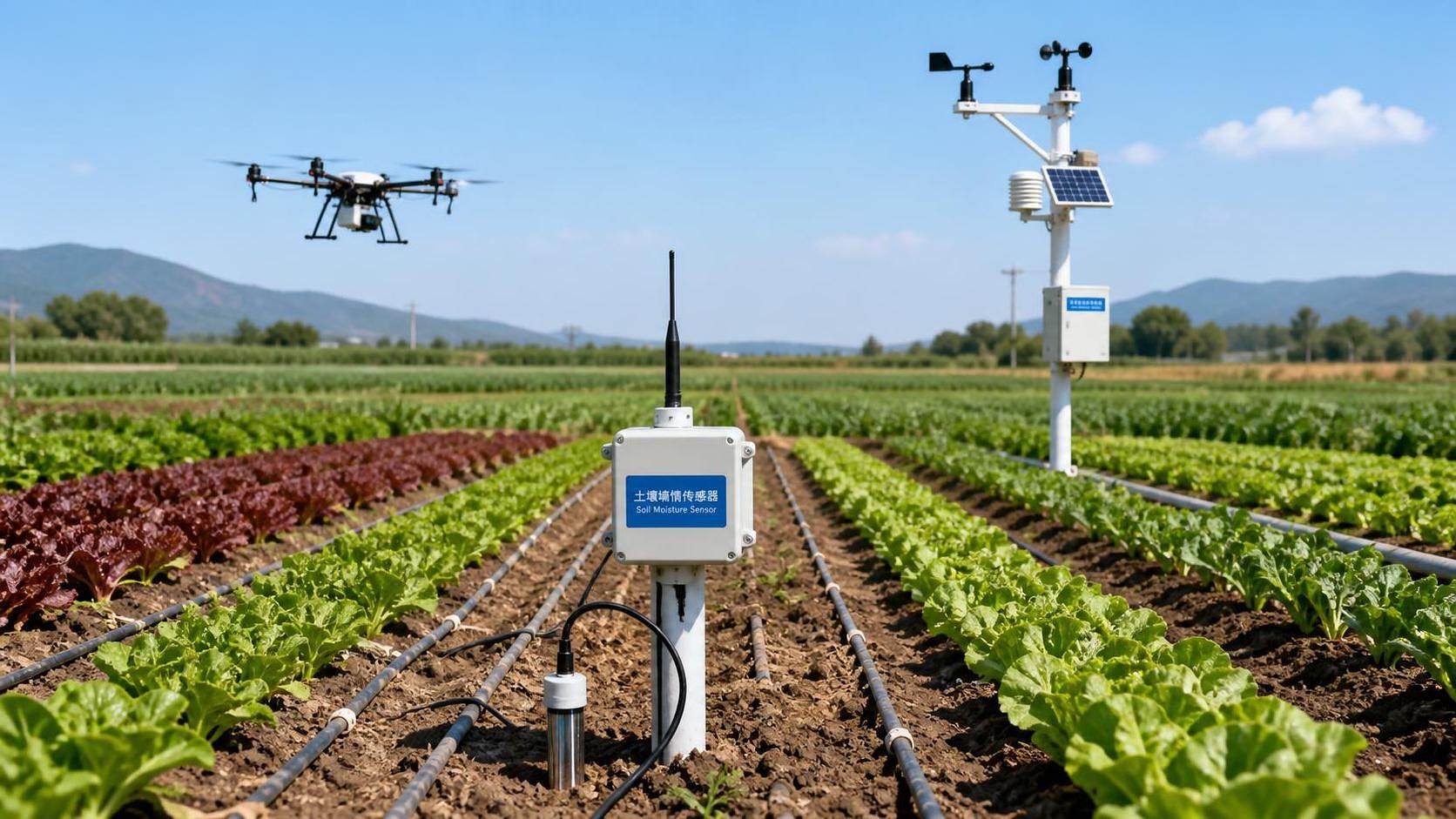




Accuracy Is a Deployment Decision, Not a Model Score
Before a precision tool is allowed to influence planting depth, nitrogen rate, spray timing, irrigation scheduling, or combine settings, technical evaluators need to answer a more demanding question than “How accurate is the algorithm?” The practical question is whether its errors are understood, bounded, and acceptable for the decisions it will make under field conditions.
That distinction matters because precision farming algorithms accuracy is often presented through a single validation metric calculated on historical or carefully prepared datasets. A low root mean square error, high classification score, or strong correlation can be useful evidence, but it is not evidence of operational readiness by itself. Agricultural systems are exposed to changing soil conditions, incomplete sensor data, machinery vibration, shifting management practices, crop variety differences, and weather events that rarely resemble a clean development dataset.
For technical evaluation teams, pre-deployment validation should therefore be treated as a structured risk-reduction process. The goal is not to prove that an algorithm is universally correct. It is to determine where it performs reliably, where it becomes uncertain, what happens when it is wrong, and whether farm operators can act on its outputs safely and economically.
Start With the Decision the Algorithm Will Control
Accuracy requirements should be derived from the decision, not from a vendor’s preferred benchmark. A model that estimates crop water stress for weekly advisory reporting can tolerate a different error profile from a model that automatically opens irrigation valves. Likewise, a yield-prediction model used for seasonal planning has a different risk profile from a real-time weed-detection model linked to spot spraying equipment.
Evaluators should define the intended action in operational terms before reviewing performance claims:
- What physical action will the output trigger, recommend, or prevent?
- What is the cost of a false positive, a false negative, and an uncertain result?
- How quickly must the system respond for its output to retain value?
- Can an operator review or override the recommendation?
- Does the decision affect crop quality, water use, chemical compliance, machinery safety, or only management reporting?
Consider an irrigation recommendation algorithm. If it slightly overestimates evapotranspiration in a water-abundant area, the main consequence may be extra pumping cost. In a water-constrained region, the same bias can affect allocation plans, energy use, nutrient movement, and regulatory compliance. An identical numerical error therefore has different significance depending on the production system and local constraints.
For this reason, an acceptance threshold should be tied to decision value. Instead of asking only whether an irrigation forecast is within a specified error band, ask whether the recommendation consistently produces an acceptable irrigation outcome compared with the farm’s existing method. This shifts validation from abstract prediction quality to operational utility.
Establish Ground Truth Before Comparing Outputs
Every validation program depends on the quality of its reference measurements. In precision agriculture, “ground truth” is often less straightforward than it appears. Soil moisture probes may have placement bias. Yield monitors can drift or require calibration. Satellite-derived vegetation indicators can be obscured by cloud cover. Manual scouting may vary between agronomists. Laboratory results may be accurate but not spatially representative of the entire field.
Technical teams should document how each reference variable is measured, at what depth or scale, how often it is sampled, and what uncertainty remains in the measurement process. An algorithm should not be rejected simply because it differs from a reference system whose own variability has not been quantified. Equally, it should not be accepted because it agrees with a weak reference dataset.
For soil-related models, ground-truth design usually needs to account for substantial within-field variation. A small number of conveniently placed samples may not represent compacted zones, slope transitions, irrigation-edge effects, or differing soil textures. For harvesting algorithms, validation needs reconciled yield, grain moisture, and loss measurements rather than untreated combine-monitor logs. For crop-health classification, field observations should distinguish between visible symptoms, confirmed disease incidence, nutritional stress, and damage caused by other factors.
The important principle is traceability. A reviewer should be able to connect each algorithm output to the underlying observation, identify the timestamp, understand the measurement method, and determine whether the reference data were available independently of model development.
Separate Development Validation From Independent Field Validation
A common weakness in agricultural AI evaluation is accidental leakage between model development and testing. Data from the same field, season, farm, or sensor campaign may be split into training and test subsets. The resulting score can look strong because the model has already seen conditions closely related to the supposedly unseen examples.
This is particularly risky when spatially adjacent samples are involved. Neighboring grid cells often share soil, management history, crop condition, and weather exposure. Randomly splitting them can make a model appear more generalizable than it is. The same issue arises when consecutive time-series records are separated without respecting their temporal order.
A more credible approach uses independent holdout conditions. Depending on the intended deployment scope, that may include:
- Fields not used during model development.
- Farms with different management practices or machinery configurations.
- A subsequent growing season with new weather conditions.
- Different crop varieties, planting dates, or irrigation regimes.
- Sensor units and data pipelines not involved in initial calibration.
The level of independence should match the commercial claim. A model intended for a single irrigated maize operation may reasonably be validated against nearby fields with similar infrastructure, while a platform marketed across regions needs evidence from materially different agroclimatic zones. Claims of broad applicability require broad validation. There is no statistical shortcut around that requirement.
Test the Conditions That Make Farms Difficult
Average performance can conceal the conditions that matter most. Farms do not experience averages; they experience heat waves, delayed planting, pressure loss in irrigation lines, wet harvest windows, dust-covered sensors, weak connectivity, and abrupt shifts in field operations.
Validation should deliberately include stress conditions rather than treating them as inconvenient outliers. For a machine-vision system, this may mean testing across low-angle light, shadows, residue cover, mud, dust, partial occlusion, and differing travel speeds. For irrigation models, relevant cases may include rainfall forecast error, missing weather-station readings, soil probe failure, and unusual heat or wind conditions. For variable-rate application tools, test scenarios should include GPS degradation, lag between prescription output and implement response, boundary transitions, and inconsistent application hardware behavior.
It is useful to segment results rather than report one blended number. Performance can be examined by soil type, crop growth stage, field zone, machinery speed, weather class, time of day, and data-quality condition. This exposes whether the algorithm is reliably useful across the intended operating envelope or whether it only performs well in the most common cases.
An evaluator should also ask whether poor performance is detectable. A system that identifies low-confidence conditions and requests human review may be operationally safer than one that returns a confident-looking result outside its validated range. In field deployment, uncertainty communication is a feature, not an admission of weakness.
Measure More Than Predictive Error
Technical reviews often focus on a metric chosen for model training rather than one that reflects field risk. The appropriate measurement depends on the output type and the action tied to it.
For continuous predictions such as yield, soil moisture, nitrogen demand, or evapotranspiration, mean absolute error and root mean square error are useful starting points. But they should be accompanied by bias analysis. A model that consistently underestimates crop water need may have an acceptable average error while systematically increasing crop stress during critical growth stages.
For classifications such as weed identification, disease alerting, or irrigation-zone status, overall accuracy is rarely enough. Precision, recall, false-positive rate, false-negative rate, and class-specific performance provide a clearer picture. Missing a rare but high-impact disease may be more consequential than incorrectly flagging a common low-risk condition. Class imbalance must therefore be made visible rather than buried within an aggregate score.
For prescription algorithms, the final variable of interest may be neither the prediction nor the classification. It may be the realized application rate, water volume, nutrient uptake, harvest loss, fuel use, or economic return. Evaluators should trace the full chain:
- Input data quality.
- Algorithm prediction or recommendation.
- Machine or operator response.
- Actual field action.
- Agronomic and economic outcome.
This matters especially for large-scale equipment. A highly accurate model can still create poor outcomes if its prescription format is incompatible with a tractor controller, if a sprayer cannot respond quickly enough to changing commands, or if a combine’s sensor feedback loop is slower than field conditions change. Algorithm validation and equipment integration validation must be connected.
Check Calibration, Not Just Ranking Ability
An algorithm may correctly rank high-risk and low-risk zones while assigning unreliable probability values. For example, a disease model may identify the fields most likely to need inspection, but a stated 80% risk may in reality correspond to a much lower or higher occurrence rate. This is a calibration problem.
Calibration is important whenever confidence scores drive operational thresholds. If a farm manager applies treatment when predicted risk exceeds a threshold, poorly calibrated probabilities can cause systematic over-treatment or delayed intervention. The same applies to water-stress alerts, equipment-failure predictions, and yield-risk planning.
Validation should compare predicted probability bands with observed frequencies. When an algorithm reports high confidence, does the event actually occur at a correspondingly high rate? When it reports uncertainty, does the error rate rise as expected? A model that is modestly accurate but well calibrated can often be managed with clear operating rules. A highly accurate model with unreliable confidence may be harder to govern in the field.
Use Baselines That Reflect Actual Farm Practice
An algorithm does not need to outperform an imaginary manual process. It must be compared with the current decision method available to the farm. That baseline may be a skilled agronomist, a soil-probe schedule, a fixed-rate program, a weather-based rule, a combine operator’s experience, or another software platform.
Baseline design prevents misleading claims. A new nitrogen recommendation model may outperform a simple field average but offer little improvement over an established zone-management process. A harvest-loss detection system may appear effective in controlled trials yet fail to improve the adjustments made by experienced operators under changing crop conditions.
Evaluation should account for labor, timing, and repeatability as well as prediction quality. A recommendation that is slightly less accurate than expert assessment may still be valuable if it identifies priority zones early enough to support action across thousands of hectares. Conversely, a highly accurate model with complex sample requirements may have limited value if the farm cannot sustain the data-collection workflow.
Validate the Data Pipeline and Failure Modes
Field algorithms operate through data pipelines, not isolated datasets. Inputs move from sensors, satellites, machinery controllers, weather feeds, and farm-management systems through transformation, transmission, storage, and decision logic. Failure at any stage can invalidate a sound model.
Pre-deployment testing should include missing records, delayed uploads, duplicated observations, incorrect field boundaries, GPS coordinate shifts, sensor drift, unit conversion errors, and communication interruptions. Teams should verify what the system does when data are stale or outside expected ranges. Does it stop? Does it fall back to a conservative rule? Does it silently continue using outdated inputs?
These questions become more important as autonomous machinery and closed-loop control expand. An advisory system can often tolerate temporary data gaps if an operator recognizes the limitation. A system tied to autonomous irrigation, variable-rate application, or machine adjustments needs explicit fail-safe behavior and auditable logs.
Data provenance also deserves attention. Technical evaluators should determine who owns raw field data, derived models, prescription records, and machine telemetry; how long data are retained; whether algorithms are retrained using customer data; and whether version changes can alter recommendations without a clear record. These are governance issues, but they directly affect the reproducibility of accuracy claims.
Run a Controlled Pilot Before Scaling
Independent validation can establish plausibility, but a controlled pilot reveals local fit. The pilot should be designed around a limited number of representative fields and a defined decision cycle. It should include untreated or conventionally managed comparison areas where operationally feasible, while avoiding experimental designs that create unacceptable agronomic risk.
For example, an irrigation algorithm can be tested against the existing schedule across matched management zones, with soil moisture, crop condition, water use, and yield-related observations recorded throughout the season. A variable-rate fertilization model can be assessed through strip trials or zone comparisons, provided local agronomic guidance supports the design. A combine optimization model can be checked against measured grain loss, grain quality, throughput, and operator interventions under different crop conditions.
The pilot protocol should specify success criteria before results are reviewed. Otherwise, teams may select favorable metrics after the fact. Criteria might include acceptable error under defined conditions, a reduction in unnecessary field passes, lower water use without yield penalty, improved detection lead time, or a specified rate of operator overrides. The correct criteria depend on the decision, but they should be agreed by agronomy, operations, machinery, and data stakeholders.
Interpret “Generalizable” Claims With Care
Precision agriculture suppliers frequently use broad language such as adaptive, self-learning, crop-agnostic, or region-ready. These descriptions may be technically meaningful, but they do not remove the need for local evidence. A model can adapt over time while still beginning with assumptions that are unsuitable for a new crop system, soil regime, irrigation infrastructure, or machinery fleet.
Transferability should be evaluated through identifiable variables: climate zone, field size, crop type, cultivar, tillage system, sensor brand, imagery resolution, irrigation method, equipment control interface, and management intensity. The question is not whether a model has been deployed elsewhere. It is whether the conditions that govern its performance are sufficiently similar, or whether recalibration and new validation are needed.
This is where organizations such as AP-Strategy can add value as intelligence platforms rather than product promoters. The market is moving toward tighter links between heavy equipment telemetry, satellite positioning, field sensors, and resource-efficiency targets. Yet the value of that integration depends on whether performance evidence travels with the technology. Procurement teams should seek documentation of test conditions, version history, data requirements, and limitations alongside any claimed performance figures.
Build Acceptance Criteria Around Operational Boundaries
A mature deployment decision produces an operating boundary, not just a pass or fail result. The boundary describes the conditions under which the algorithm may be used, the conditions requiring review, and the conditions that prohibit automated action.
For instance, a crop-water model might be approved for advisory use across validated soil types, require agronomist review after extended sensor outages, and be prevented from issuing automated commands when rainfall data are unavailable or predicted water demand falls outside the calibrated range. A weed-detection system might operate automatically only above a confidence threshold and at machine speeds proven to preserve image quality.
These rules should be visible to operators and maintainers. They should also be revisited after software updates, sensor replacements, new crop varieties, major machinery modifications, or unusual seasonal conditions. Accuracy is not a certificate that can be issued once and forgotten. It is a performance characteristic that must be monitored as the farm system changes.
The strongest pre-deployment validation programs do not seek perfect predictions. They establish evidence that a precision tool improves a specific decision under stated conditions, quantify what can go wrong outside those conditions, and ensure that people and machines respond safely when uncertainty rises. That is the standard that turns an agricultural algorithm from an impressive demonstration into a dependable field capability.
Related News
How Large-Scale Farm Telematics Cuts Downtime Across Mixed Fleets
Large-scale farm equipment telematics cuts mixed-fleet downtime with real-time alerts, smarter maintenance, and stronger operational control. Learn how to protect critical farm workflows.
How to Size Low-Pressure Water-Saving Irrigation Systems for Uneven Fields
Low pressure water-saving irrigation systems for uneven fields: learn zoning, pressure mapping, pipe sizing, and pump selection to improve uniformity and reduce water waste.
Farm Machinery Sourcing: How to Vet Suppliers, Specs, and Lifecycle Costs
Farm machinery information for sourcing: learn to vet suppliers, compare specifications, control lifecycle costs, and secure reliable uptime for smarter equipment purchases.
Which costs matter most when calculating precision agriculture ROI?
Calculating ROI on precision agriculture equipment? Discover the costs that shape returns, from installation and subscriptions to downtime, labor, and data integration.
How to calculate ROI on precision agriculture equipment before buying
Calculating ROI on precision agriculture equipment: learn to assess total ownership costs, savings, payback, NPV, risks, and farm-scale value before you buy.
Planning Nipple Drinker Installation for Different Chicken House Layouts
How to install nipple drinker for chicken houses: plan line layouts, pressure control, flushing access, and maintenance for reliable water delivery.
Tractor Specification Sheets: Matching PTO, Hydraulics, and Weight to Farm Tasks
Specification-oriented articles for tractors: match PTO, hydraulics, lift capacity, ballast, and weight to real farm tasks for safer, more efficient equipment choices.
How to Evaluate Dynamic Feedback Algorithm Suppliers for Precision Farming Systems
Dynamic feedback algorithms supplier evaluation guide for precision farming—compare validation, integration, safety, and pilots to choose with confidence.
How to Specify Combine Harvester Systems for High-Moisture Grain and Variable Field Conditions
Combine harvester systems for high-moisture grain: learn how to specify threshing, cleaning, headers, traction, and automation for reliable harvests in variable fields.
Related News
- 00
0000-00
How to Evaluate Dynamic Feedback Algorithm Suppliers for Precision Farming Systems - 00
0000-00
How Sensor Feedback Enables Accurate Variable-Rate Fertilization in Field Conditions - 00
0000-00
How to Select Precision Crop Protection Equipment for Variable Field Conditions - 00
0000-00
How to Evaluate Precision Fertilization System Suppliers for Farm-Scale Deployment - 00
0000-00
How to Select a Precision Fertilization System for Variable Corn Field Conditions
Popular Tags
Tractor Power Architect
Weekly Insights
Stay ahead with our curated technology reports delivered every Monday.