
US Ends T86 Relief for Small Parcels
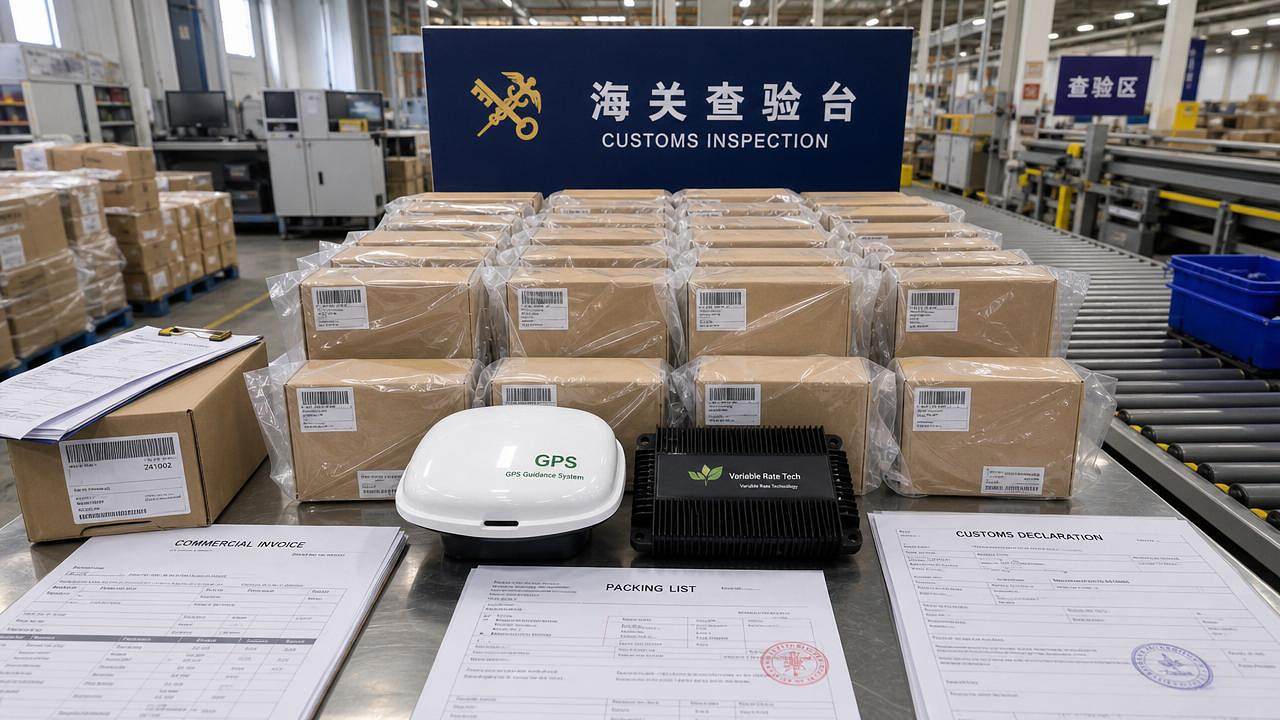




Starting on May 2, 2026, U.S. Customs and Border Protection will no longer allow the T86 simplified clearance channel for commercial parcels under USD 800 when the goods are from China. For exporters and importers handling modular agricultural electronics such as GPS Guidance Systems and Variable Rate Tech components, this shifts small-package trade from a fast-entry model to full customs declaration and duty payment, making samples, after-sales spare parts, and small trial shipments more sensitive to classification accuracy and clearance timing.
What has changed in parcel clearance
According to the provided event summary, CBP has fully removed the T86 simplified customs entry route for Chinese goods shipped in commercial parcels valued below USD 800, effective May 2, 2026. Under this change, all such commercial small parcels must complete full customs declaration procedures and pay applicable duties.
The confirmed impact described in the input is that shipments involving modular agricultural electronic components, including GPS Guidance Systems and Variable Rate Tech products, face disruption in sample delivery, after-sales replenishment of spare parts, and fulfillment of small and medium trial orders. The input also confirms that importers need to adopt new HS code classification and allow additional time for customs clearance.
Where the operational pressure is likely to appear
Sample and trial-order shipments lose a simplified path
From an industry perspective, exporters using small parcels to move product samples or test-market quantities are likely to feel the change first because the former simplified route is no longer available for the covered shipments. The practical effect is concentrated in shipment preparation, customs filing, and delivery scheduling, where classification work and duty handling become part of the process rather than an exception.
After-sales spare parts may require tighter planning
For after-sales service flows, the issue is not only cost but also timing. Small replacement components for installed equipment often depend on rapid dispatch, and the move to full declaration means importers and service partners need to pay closer attention to customs documents, HS classification consistency, and additional clearance lead time before promising replenishment windows.
Importers and customs-facing teams must adjust documentation habits
The input specifically indicates that importers must activate new HS code classification. That makes customs-facing functions, including trade compliance and shipment documentation teams, more exposed to execution risk if product descriptions, technical materials, or item mapping are not aligned with the updated filing approach. What deserves closer attention is the link between product documentation and customs treatment, especially for modular electronic components shipped in different combinations or quantities.
Supply chain service providers may see process changes rather than a single cost issue
For logistics and supply chain intermediaries, the rule change is likely to affect handoff timing, document readiness, and customs coordination. Analysis shows the operational burden is not limited to tariffs alone; it also reaches booking assumptions, clearance sequencing, and communication with buyers waiting for samples, replacement parts, or initial test shipments.
What companies should review now
Recheck classification readiness for affected product lines
Companies dealing in GPS Guidance Systems, Variable Rate Tech, and similar modular agricultural electronics should review whether current product descriptions and internal item records can support the required HS code treatment referenced in the input. The available information does not provide detailed implementation criteria, so this is more appropriately treated as a priority review point rather than a confirmed finished procedure.
Allow more time in delivery and procurement planning
Because the input states that additional customs clearance time should be reserved, exporters, importers, and buyers should closely watch delivery commitments tied to samples, after-sales parts, and small-batch orders. Observably, procurement planning and service response planning become more dependent on customs timing than under the previous simplified parcel route.
Align technical files and shipping documents
What deserves closer attention is whether technical descriptions, packing data, and customs documents can support consistent declaration for modular components. Where products are shipped as parts, kits, or replacement units, documentation alignment may become a practical compliance issue even before broader commercial effects are visible.
Keep watching execution language and market practice
The provided information confirms the rule change and its immediate trade relevance, but it does not include detailed enforcement guidance, filing examples, or later interpretive updates. Companies should therefore continue tracking how the rule is applied in practice through customs-facing workflows, buyer requirements, and shipment acceptance expectations.
Why this matters beyond a single customs adjustment
Analysis shows this development is more than a narrow parcel-handling update for the affected trade flows. It signals that low-value commercial shipments of the covered goods can no longer rely on a lighter entry route, which directly changes how businesses organize sample circulation, spare-parts response, and small-volume order testing. It is more appropriate to understand this as an already effective rule change with operational consequences, while still recognizing that the detailed execution approach may require continued observation.
How the market may need to read this development
For the industry, the immediate meaning of this event lies in execution discipline rather than headline impact. The confirmed facts already point to longer customs handling and renewed classification work for affected small parcels. A neutral reading is that companies should treat this as a landed compliance and delivery adjustment, while avoiding assumptions about wider consequences that are not yet stated in the available information.
Basis of this article and what still needs verification
This article is generated from the user-provided news title, event date, and event summary. For events of this type, relevant source categories commonly include official notices, regulator releases, customs or trade authority updates, industry association communications, standards-related documents, and reporting by authoritative media. No specific official source link was provided in the input, so the underlying official reference still needs to be continuously verified. Follow-up attention should remain on implementation details, customs interpretation, classification practice, tender or procurement document changes, industry feedback, and how companies execute the new requirements in actual shipments.
Related News

How Tractor Intelligence Systems Improve Field Efficiency and Input Accuracy
Agricultural machinery intelligence for tractors improves field efficiency, input accuracy, data traceability, and implement control. Explore smarter evaluation strategies.

How to Evaluate Crop Monitoring System Manufacturers for Large-Scale Farms
Compare crop monitoring systems manufacturers for large-scale farms. Evaluate data quality, integration, durability, lifecycle costs, support, and pilots for smarter decisions.

Wireless Agricultural Automation for Remote Irrigation and Field Monitoring
Agricultural automation wireless solutions improve remote irrigation with reliable field data, local control, flow verification, and smarter monitoring. Explore resilient deployment strategies.

Agricultural Product Information Market Guide: Key Data for Sourcing Decisions
Agricultural product information market guide for smarter sourcing—compare machinery, irrigation, precision tools, lifecycle costs, and supplier risk.

Large-Scale Farm Equipment Cost Comparison: Price, Fuel, and Lifecycle Value
Large-scale farm equipment cost comparison: evaluate price, fuel, maintenance, downtime, and lifecycle value to choose tractors, combines, irrigation, and smart tools with confidence.

A Procurement Specification Preparation Example for Buying Farm Equipment
Procurement specification preparation example for farm equipment: learn to define requirements, compare suppliers, control lifecycle costs, and buy with confidence.

What Tractor Horsepower Is Needed for a Three-Bottom Moldboard Plow?
What tractor horsepower is needed for three-bottom moldboard plow? Compare 60–100 hp needs by soil, depth, traction, and plow width for a confident equipment match.

How Does Climate-Smart Farming Reduce Water Use in Semi-Arid Areas?
How does climate-smart farming reduce water use in semi-arid zones? Discover precision irrigation, soil monitoring, and smarter crop planning for resilient yields.

Can Sustainable Farming Be Profitable Without Reducing Yields?
Are sustainable farming practices profitable without yield loss? Discover precision strategies that cut waste, protect yields, and improve farm margins.
Related News
- 00
0000-00
How Tractor Intelligence Systems Improve Field Efficiency and Input Accuracy - 00
0000-00
China’s Temporary Helium Export Ban Reshapes Irrigation Supply Chains - 00
0000-00
Tianjin to Host 2026 China Farm Machinery Expo - 00
0000-00
Guangxi Subsidy Plan Signals Smarter Farm Machinery Supply Shift - 00
0000-00
EU Rule Takes Effect for GPS Guidance System Imports
Popular Tags
Tractor Power Architect
Weekly Insights
Stay ahead with our curated technology reports delivered every Monday.