
What will Agriculture 4.0 change on farms in 2026?
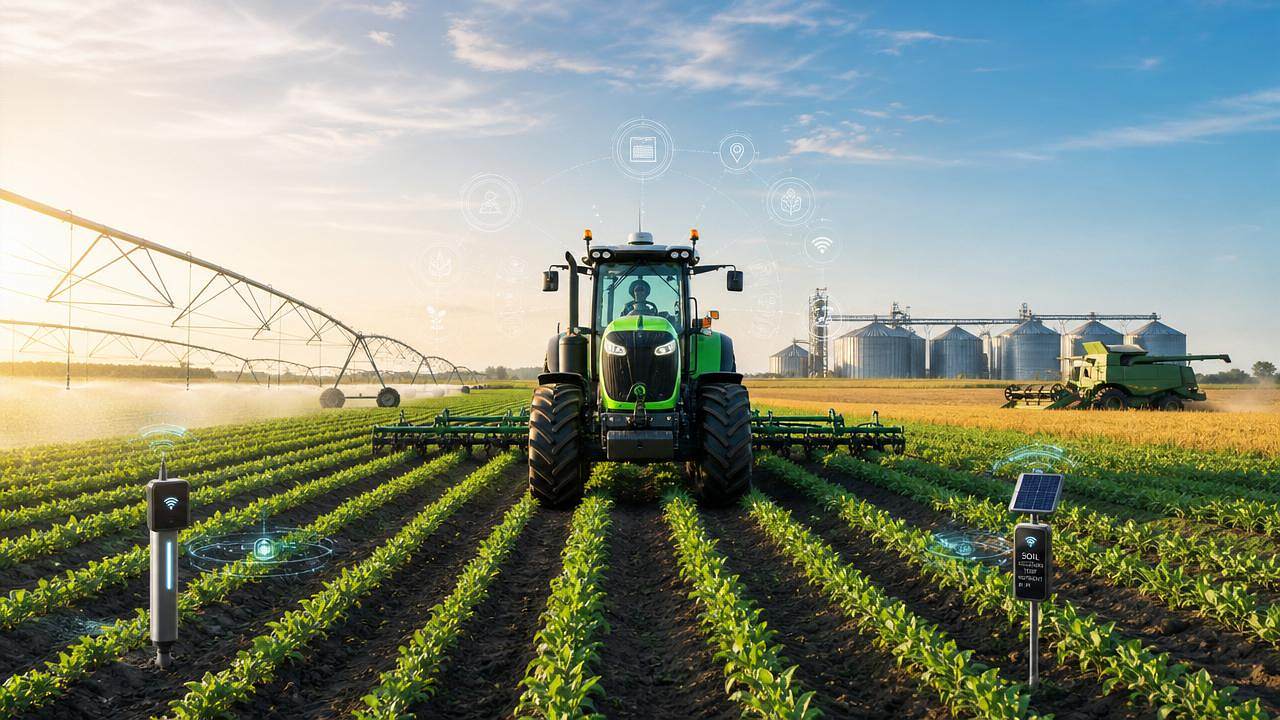




What will Agriculture 4.0 change on farms in 2026?
By 2026, Agriculture 4.0 will move from pilot projects to practical farm-scale transformation, reshaping how growers plan, plant, irrigate, harvest, and manage equipment fleets.
For agri-mechanization, precision algorithms, and sustainability analysis, the issue is no longer whether digital farming works.
The central issue is how fast autonomous machinery, intelligent irrigation, sensor prescriptions, and data-linked decisions will redefine productivity and resilience.
Agriculture 4.0 as a farm operating model
Agriculture 4.0 describes a connected production model where machines, agronomy, water systems, and market signals share operational data.
It combines autonomous equipment, satellite positioning, sensors, artificial intelligence, cloud platforms, and resource-efficient field tools.
In 2026, Agriculture 4.0 will be less about isolated devices and more about coordinated field execution.
A tractor chassis, planter, sprayer, irrigation valve, and combine harvester will increasingly act as one decision chain.
This shift matters because farm performance now depends on timing, input accuracy, fuel control, water discipline, and harvest loss reduction.
Agriculture 4.0 connects these factors through measurable feedback instead of seasonal guesswork.
Industry signals shaping 2026 adoption
Several forces are pushing Agriculture 4.0 into daily farm operations.
Labor scarcity, grain price volatility, water stress, emission pressure, and equipment cost inflation are changing investment priorities.
These signals explain why Agriculture 4.0 is becoming a strategic layer above individual machinery purchases.
It helps align field operations with business risk, climate uncertainty, and food security requirements.
Changes in large-scale agri-machinery
Large-scale machinery will remain central to farm productivity, but Agriculture 4.0 will change how equipment is selected and used.
The traditional focus on horsepower and working width will expand toward data readiness, automation compatibility, and energy efficiency.
Tractor chassis platforms will face stronger expectations for electronic hydraulic control, high-efficiency transmission, and implement data exchange.
Power will still matter, especially in heavy tillage, transport, and planting windows.
Yet Agriculture 4.0 will reward machines that convert power into controlled, documented, and repeatable field performance.
- Autosteer will reduce overlap and operator fatigue.
- Telematics will support maintenance planning and fuel analysis.
- Implement control will improve depth, rate, pressure, and section accuracy.
- Hybrid and electric assistance will gain relevance in selected duty cycles.
By 2026, Agriculture 4.0 will make mechanical reliability and digital interoperability inseparable purchase factors.
Harvesting with lower loss and better feedback
Combine harvesters will be one of the clearest proof points for Agriculture 4.0 value.
Harvest losses, grain quality, fuel consumption, and throughput can be measured more precisely than before.
Sensors already monitor grain flow, moisture, cleaning shoe load, rotor pressure, and tailings volume.
In 2026, Agriculture 4.0 will connect those signals with automatic setting recommendations and field-level yield maps.
That means fewer manual adjustments during changing crop density, slope, humidity, and residue conditions.
The improvement is not only higher daily capacity.
It is also more consistent grain quality, better logistics planning, and cleaner data for post-harvest decisions.
Agriculture 4.0 will also strengthen coordination between combines, grain carts, dryers, and storage systems.
When harvest timing is short, connected routing and load tracking can reduce idle time across the fleet.
Intelligent irrigation and water-saving systems
Water management may become the most strategic Agriculture 4.0 frontier in climate-sensitive regions.
Traditional irrigation schedules often depend on fixed calendars or visual crop stress.
Agriculture 4.0 replaces delayed observation with soil sensors, weather data, evapotranspiration models, and automated valve control.
Smart irrigation systems can adjust water delivery by zone, crop stage, soil texture, and forecasted heat risk.
This supports higher water productivity, lower pumping cost, and stronger drought resilience.
In 2026, intelligent irrigation will increasingly be evaluated as a production system, not only a water delivery asset.
Precision prescriptions across crop operations
Agriculture 4.0 will expand prescription farming from advanced operations into more routine crop management.
Variable-rate seeding, fertilization, and spraying depend on reliable maps, sensor feedback, and implement execution.
The practical change is simple: every field zone can receive a different operational instruction.
Seed density can follow yield potential, soil fertility, drainage, and historical performance.
Fertilizer placement can reflect nutrient removal, soil tests, crop demand, and application timing.
Crop protection can become more selective through camera guidance, weed detection, and section control.
This is where Agriculture 4.0 links agronomy and machinery most directly.
A prescription only creates value when the implement can execute it accurately at field speed.
Typical farm scenarios for Agriculture 4.0
Different farm environments will adopt Agriculture 4.0 through different entry points.
The strongest gains usually appear where operational complexity, resource constraints, or timing pressure are high.
These scenarios show that Agriculture 4.0 is not one product category.
It is a layered operating architecture built from machinery, software, sensors, and disciplined management.
Business meaning for equipment and farm decisions
The business meaning of Agriculture 4.0 is stronger asset productivity over the full equipment lifecycle.
A machine is no longer judged only by purchase price, rated output, or brand reputation.
Decision quality now includes service data, software support, compatibility, fuel efficiency, and measurable field outcomes.
For large-scale equipment, downtime during planting or harvest can erase significant seasonal value.
Agriculture 4.0 reduces that risk through remote diagnostics, predictive maintenance, and better parts planning.
For irrigation systems, business value comes from water saved, yield protected, and energy optimized.
For precision tools, value depends on reduced input waste and more reliable agronomic execution.
This is why Agriculture 4.0 decisions should connect operational data with financial performance.
Practical implementation priorities
Successful Agriculture 4.0 adoption in 2026 will require staged implementation instead of technology accumulation.
The first priority is to identify the operational bottleneck with the highest economic or resource impact.
- Start with measurable problems, such as water use, harvest loss, overlap, or fuel consumption.
- Select equipment that supports open data exchange and future software upgrades.
- Build clean field records before relying on advanced prescriptions.
- Verify sensor accuracy under local soil, crop, and weather conditions.
- Train teams around workflows, not only screens and dashboards.
- Track return through yield, loss reduction, water savings, and machine utilization.
Agriculture 4.0 works best when the digital layer strengthens existing agronomic discipline and mechanical capability.
It works poorly when data is collected without ownership, validation, or operational follow-through.
Risks and attention points
The main risks in Agriculture 4.0 are not limited to cost.
Data fragmentation, weak connectivity, cybersecurity gaps, and incompatible machinery can reduce the expected gains.
Connectivity is especially important for large fields, remote irrigation assets, and multi-machine harvest operations.
Another concern is over-automation without agronomic review.
Algorithms can support decisions, but soil variability, crop stress, and machine wear still require expert interpretation.
Agriculture 4.0 should therefore include human oversight, documented assumptions, and routine calibration.
Long-term value also depends on clear data governance.
Ownership, access rights, platform portability, and service continuity should be reviewed before major deployment.
The 2026 direction for smarter farms
In 2026, Agriculture 4.0 will change farms by turning machinery and resource systems into connected decision networks.
The most visible changes will appear in autonomous guidance, harvester optimization, intelligent irrigation, and precision prescriptions.
The deeper change will be cultural and operational.
Farm decisions will increasingly be evaluated through evidence, timing, lifecycle cost, and sustainability performance.
AP-Strategy follows this transition across large-scale agri-machinery, combine harvesting technology, tractor chassis, intelligent tools, and water-saving irrigation systems.
The next practical step is to map current field bottlenecks against available Agriculture 4.0 capabilities.
From there, equipment, data, and sustainability investments can be prioritized with clearer operational evidence.
Visioning Agri-Pulse, Intelligence Navigating Cultivation: Agriculture 4.0 is becoming the decision brain for resilient, efficient, and measurable farming.
Related News
Choosing a Digital Farming Platform Provider: Compatibility and Data Ownership
Compare digital farming platforms providers on equipment compatibility, data ownership, and export rights. Discover practical checks to avoid lock-in and choose with confidence.
How Large-Scale Farm Telematics Cuts Downtime Across Mixed Fleets
Large-scale farm equipment telematics cuts mixed-fleet downtime with real-time alerts, smarter maintenance, and stronger operational control. Learn how to protect critical farm workflows.
How to Size Low-Pressure Water-Saving Irrigation Systems for Uneven Fields
Low pressure water-saving irrigation systems for uneven fields: learn zoning, pressure mapping, pipe sizing, and pump selection to improve uniformity and reduce water waste.
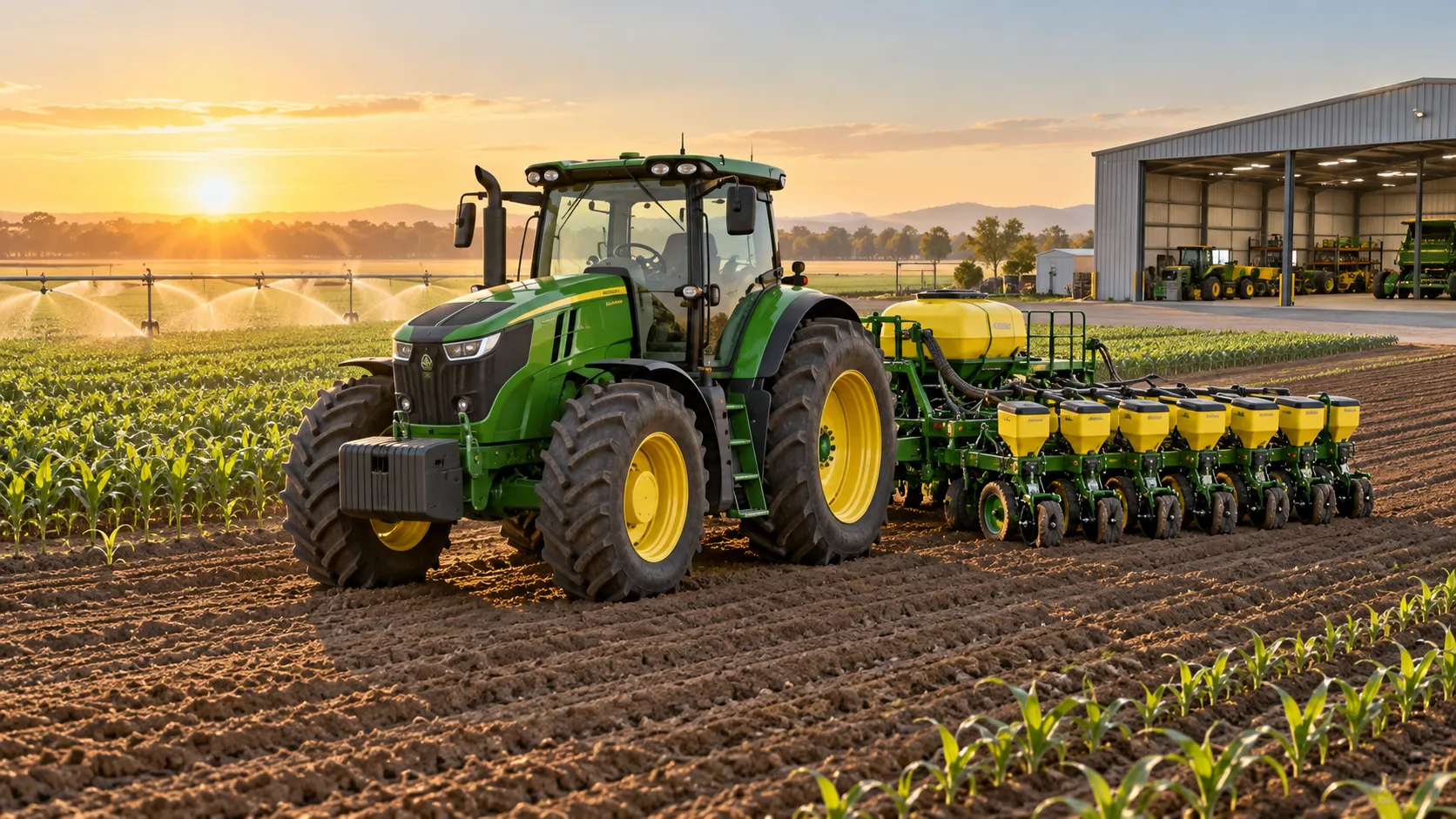
Farm Machinery Sourcing: How to Vet Suppliers, Specs, and Lifecycle Costs
Farm machinery information for sourcing: learn to vet suppliers, compare specifications, control lifecycle costs, and secure reliable uptime for smarter equipment purchases.
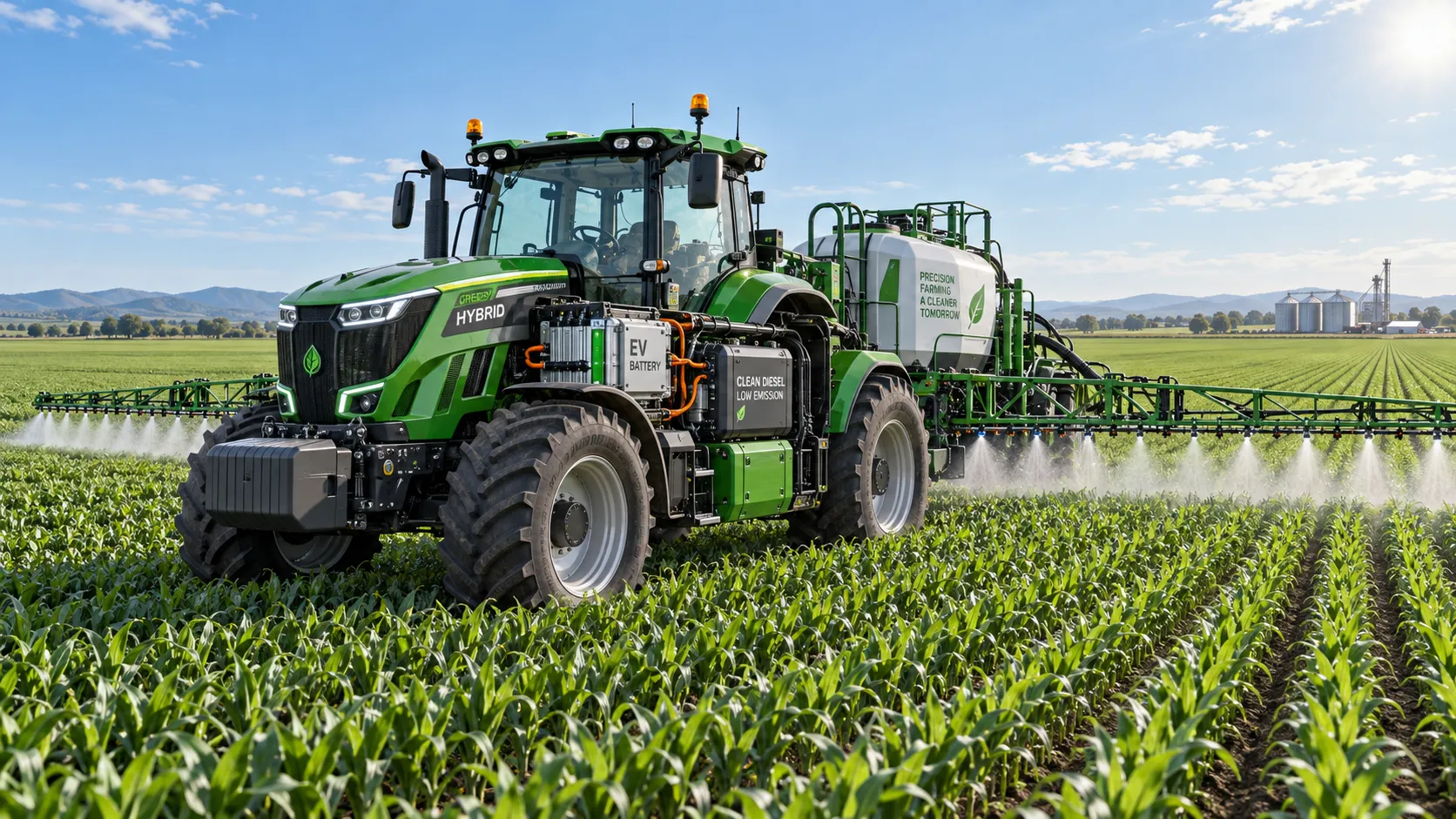
Can hybrid propulsion systems reduce fuel use in farm machinery?
Hybrid propulsion systems for agricultural machinery can cut fuel use and boost productivity. Explore savings potential, key trade-offs, and smart investment factors.
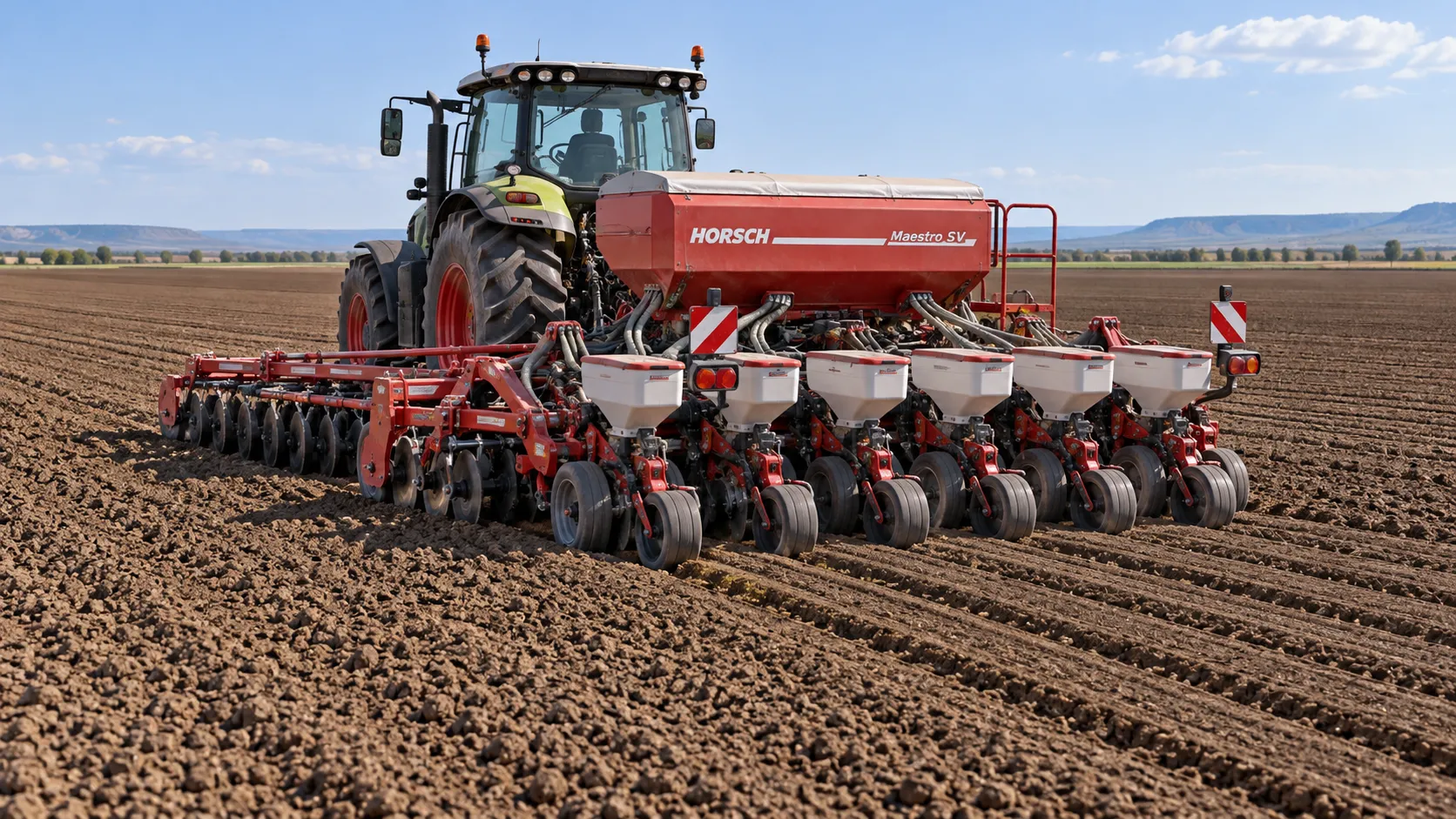
What to compare in integrated seeding combinations for heavy soils
Compare integrated seeding combinations for heavy soils: depth control, residue flow, consolidation, traction, and field capacity for more uniform crop establishment.
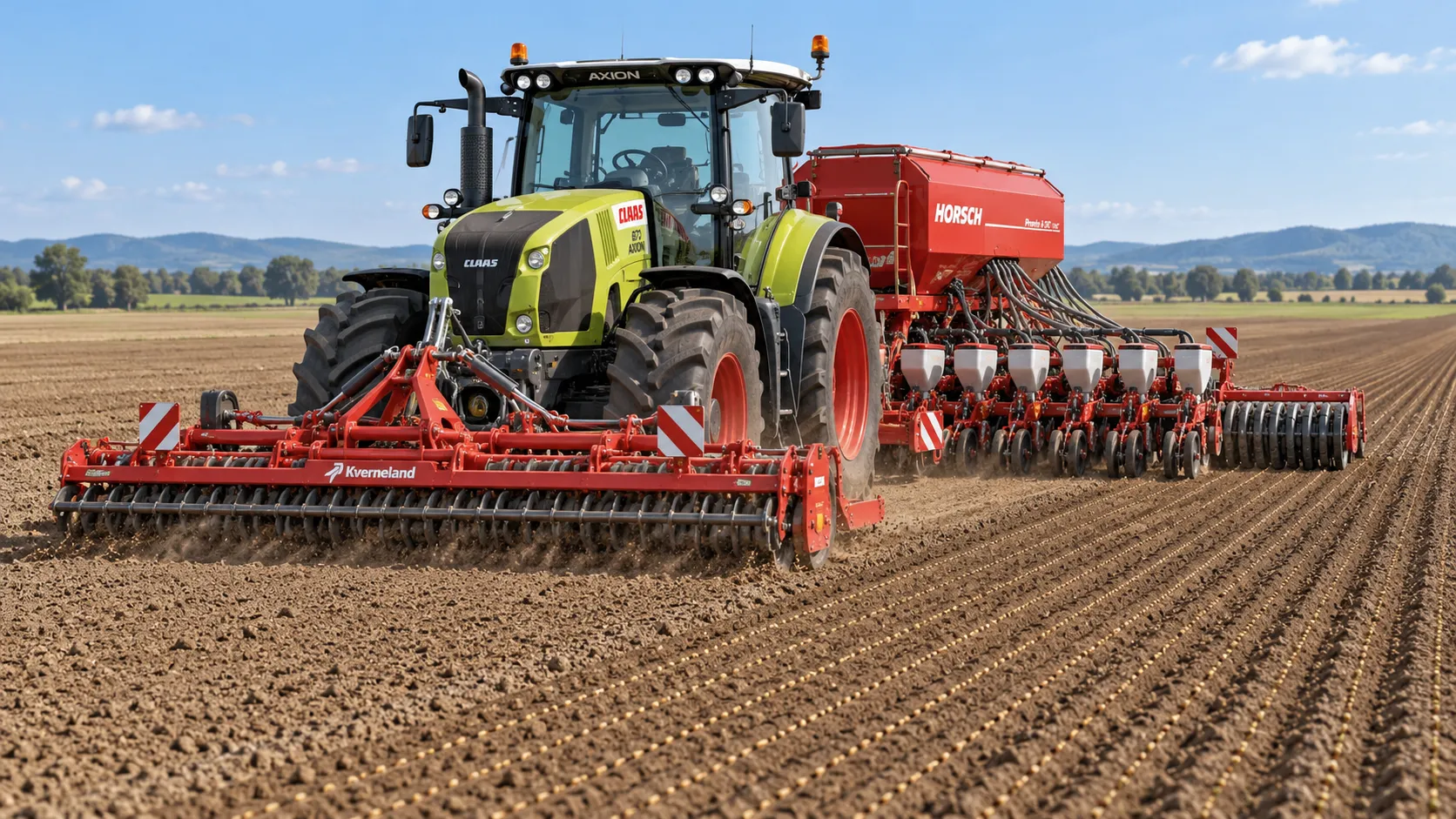
When an integrated seeding combination improves field efficiency
Integrated seeding combination improves field efficiency, protects planting windows, and balances speed with seedbed quality, tractor capacity, and reliable establishment.
Which costs matter most when calculating precision agriculture ROI?
Calculating ROI on precision agriculture equipment? Discover the costs that shape returns, from installation and subscriptions to downtime, labor, and data integration.
How to calculate ROI on precision agriculture equipment before buying
Calculating ROI on precision agriculture equipment: learn to assess total ownership costs, savings, payback, NPV, risks, and farm-scale value before you buy.
Related News
- 00
0000-00
Can hybrid propulsion systems reduce fuel use in farm machinery? - 00
0000-00
How Does Farm Mechanization Affect Food Security in Developing Regions? - 00
0000-00
Agricultural Technology Insights by Region: Where Adoption Is Growing Fastest - 00
0000-00
How Climate-Smart Agriculture Technology Improves Yield, Soil Health, and Risk Resilience - 00
0000-00
Smart Farming Solutions in Latin America: Which Technologies Fit Large Farms Best?
Popular Tags
Prof. Marcus Chen
Weekly Insights
Stay ahead with our curated technology reports delivered every Monday.