
Rail Corridor Gains Cut Pivot System Delivery to 28 Days
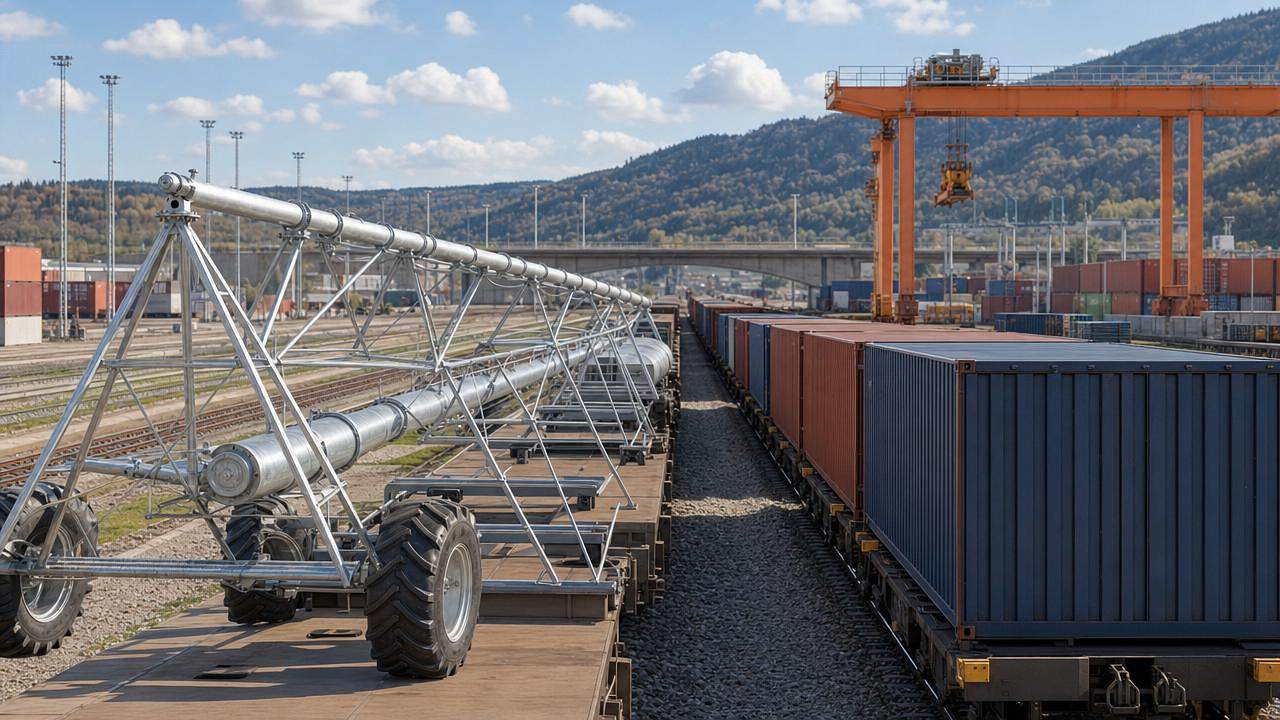




As of the May 31, 2026 statistical cutoff, the latest operating data around the China-Europe Railway Express middle corridor points to a practical shift in cross-border delivery conditions rather than a routine traffic update. According to a June 10, 2026 briefing by China State Railway Group, the Xi'an-Horgos-Almaty-Warsaw corridor handled 2,037 train services in May, while the newly commissioned Aktobe intelligent transshipment hub in Kazakhstan coincided with a reduction in average overland delivery time for complete Center Pivot Systems exports from 38 days to 28 days. For exporters, buyers, logistics providers, and after-sales operators serving Eastern Europe, Central Asia, and Black Sea coastal markets, this is worth watching because it may affect delivery commitments, procurement timing, documentation flow, and the way supply chain responsiveness is assessed in actual transactions.
What the confirmed update shows
The confirmed facts are limited but commercially relevant. China State Railway Group stated on June 10, 2026 that the China-Europe Railway Express middle corridor linking Xi'an, Horgos, Almaty, and Warsaw recorded 2,037 train runs in May, setting a new monthly high. At the same time, Kazakhstan's newly activated Aktobe intelligent transshipment hub entered operation. Against that backdrop, the average overland transit time for complete Center Pivot Systems exports fell from 38 days to 28 days. The summary provided for this article also states that the change materially improves supply chain responsiveness for buyers in Eastern Europe, Central Asia, and along the Black Sea coast.
Why the delivery shift matters across the supply chain
Export contracting is likely to feel the impact first
From an industry perspective, exporters of complete Center Pivot Systems may be among the first to reassess operating assumptions. A shorter average rail delivery window can affect lead-time wording in quotations, shipment scheduling, and contract execution planning. What deserves closer attention is not only speed itself, but whether sales teams, trade operations staff, and logistics partners align their delivery promises with the latest corridor performance without assuming that every shipment will automatically follow the new average.
Buyers and project planners may adjust procurement rhythm
For overseas purchasers and project-based procurement teams, a ten-day reduction in average land transit can influence purchasing calendars, installation sequencing, and stock planning. Analysis shows that where complete systems are ordered for time-sensitive deployment, shorter transit may change how buyers evaluate supplier responsiveness. At the same time, buyers still need to verify shipment terms, document readiness, and any product-specific conformity requirements before treating faster rail movement as a substitute for full procurement diligence.
Logistics and transshipment service providers face execution pressure
Supply chain service providers are also affected because the reported improvement is linked not only to train volume but also to the activation of a new intelligent transshipment hub. Observably, that puts more attention on handover efficiency, cargo coordination, and documentation accuracy at corridor interfaces. Even when transit time improves, service providers still need to monitor whether packing lists, cargo descriptions, transport documents, and handoff procedures remain fully consistent with customer requirements and destination-side expectations.
After-sales and field support planning may need recalibration
For businesses responsible for installation support, spare parts preparation, and quality traceability, faster delivery of complete systems can compress the gap between shipment and on-site readiness. This may affect how technical files, commissioning materials, and post-delivery service arrangements are sequenced. It is more appropriate to understand this as an operational adjustment signal rather than proof that every downstream support step has already become faster.
What companies should watch next
Check whether internal lead-time standards need updating
Companies using historical rail assumptions in bids, contracts, or procurement planning should review whether the 38-day benchmark is still being used in internal templates. Analysis shows that updating assumptions too slowly can weaken competitiveness, while updating them too aggressively can create delivery risk if route conditions fluctuate.
Keep compliance files synchronized with faster shipment cycles
Where complete Center Pivot Systems exports involve technical documentation, inspection records, product files, or buyer-required conformity materials, a shorter delivery cycle can reduce the buffer available for document correction. What deserves closer attention is whether document preparation, review, and release processes are fast enough to match the reported transit improvement.
Monitor tender and purchase terms for timing changes
Companies participating in tenders or negotiated procurement should watch for shifts in requested delivery dates, acceptance schedules, or supplier performance clauses. The input does not provide detailed execution rules, so it cannot be concluded that procurement terms have already changed. Still, market participants should be alert to the possibility that buyers may begin referencing shorter rail lead times in commercial discussions.
Prepare for tighter coordination between shipment and service readiness
Exporters, distributors, and service teams should pay attention to whether installation planning, customer notification, and traceability records can keep pace with shorter transit. Observably, delivery acceleration creates value only when customs-facing paperwork, receiving arrangements, and after-sales preparation are coordinated in advance.
How this signal should be read at this stage
Analysis shows that this development is best read as an execution signal with immediate commercial relevance, rather than as a fully defined new regulatory regime. The train volume milestone and the commissioning of the Aktobe intelligent transshipment hub together indicate that corridor performance is changing in a way that can affect trade execution. At the same time, the available input does not establish detailed new compliance rules, formal procurement mandates, or standardized contractual revisions. For that reason, industry participants should treat the shorter 28-day average as a meaningful operating reference, while continuing to verify how it is reflected in actual orders, bid documents, service arrangements, and customer expectations.
A practical reading for the market
In practical terms, the reported reduction in overland delivery time for complete Center Pivot Systems suggests that rail-based export planning for the middle corridor is becoming more responsive for certain destination markets. The industry significance lies less in headline traffic volume alone and more in the interaction between corridor throughput and transshipment capability. It is more appropriate to understand this update as a grounded change in execution conditions that deserves close follow-up, not as a basis for broad conclusions about all routes, all products, or all trade scenarios.
Basis of this article and what still needs verification
This article is generated from the user-provided news title, event date, and event summary. For this type of development, relevant source categories usually include official railway announcements, regulator or transport authority releases, customs or trade administration information, industry association updates, standards-related documents, and reporting by established professional media. No specific official source link was provided in the input, so the exact official link remains to be verified. Further observation is still needed on detailed execution language, buyer-side acceptance practice, documentation requirements, tender wording, market feedback, and how companies actually translate the shorter average transit time into procurement and delivery decisions.
Related News

Selecting Real-Time Soil Moisture Sensors for Irrigation Zone Control
Soil moisture sensors real time: learn how to select reliable probes, optimize zone control, improve irrigation decisions, and scale precision water management.
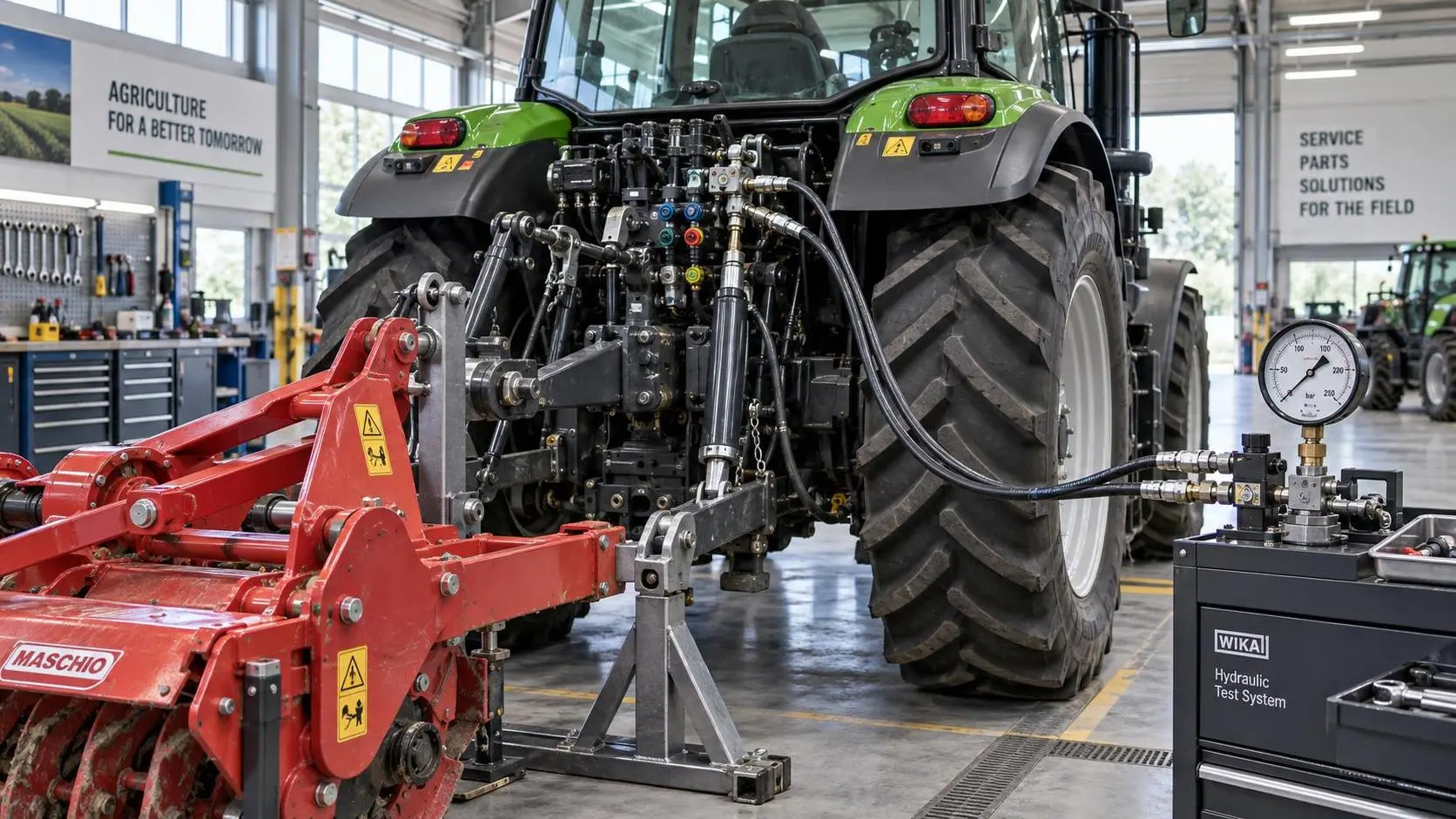
Tractor Hydraulic Systems Troubleshooting: Diagnosing Weak Lift and Slow Implements
Tractor hydraulic systems troubleshooting made practical: diagnose weak lifts and slow implements with proven pressure, flow, valve, and oil-supply checks.

How Tractor Intelligence Systems Improve Field Efficiency and Input Accuracy
Agricultural machinery intelligence for tractors improves field efficiency, input accuracy, data traceability, and implement control. Explore smarter evaluation strategies.

How to Evaluate Crop Monitoring System Manufacturers for Large-Scale Farms
Compare crop monitoring systems manufacturers for large-scale farms. Evaluate data quality, integration, durability, lifecycle costs, support, and pilots for smarter decisions.

Wireless Agricultural Automation for Remote Irrigation and Field Monitoring
Agricultural automation wireless solutions improve remote irrigation with reliable field data, local control, flow verification, and smarter monitoring. Explore resilient deployment strategies.

Agricultural Product Information Market Guide: Key Data for Sourcing Decisions
Agricultural product information market guide for smarter sourcing—compare machinery, irrigation, precision tools, lifecycle costs, and supplier risk.

Large-Scale Farm Equipment Cost Comparison: Price, Fuel, and Lifecycle Value
Large-scale farm equipment cost comparison: evaluate price, fuel, maintenance, downtime, and lifecycle value to choose tractors, combines, irrigation, and smart tools with confidence.

A Procurement Specification Preparation Example for Buying Farm Equipment
Procurement specification preparation example for farm equipment: learn to define requirements, compare suppliers, control lifecycle costs, and buy with confidence.

What Tractor Horsepower Is Needed for a Three-Bottom Moldboard Plow?
What tractor horsepower is needed for three-bottom moldboard plow? Compare 60–100 hp needs by soil, depth, traction, and plow width for a confident equipment match.
Related News
- 00
0000-00
India Opens Duty Relief for Center Pivot Imports - 00
0000-00
What to Check Before Working With a Precision Irrigation Systems Factory - 00
0000-00
Red Sea Shock Tightens CPS Capacity, Rates Jump 37% - 00
0000-00
Red Sea Escalation Tightens Center Pivot Shipping - 00
0000-00
Red Sea Disruption Extends Center Pivot Transit to 42 Days
Popular Tags
Hydrological Resource Strategist
Weekly Insights
Stay ahead with our curated technology reports delivered every Monday.