
GPS Guidance System Lead Times Extend on Chip Disruption
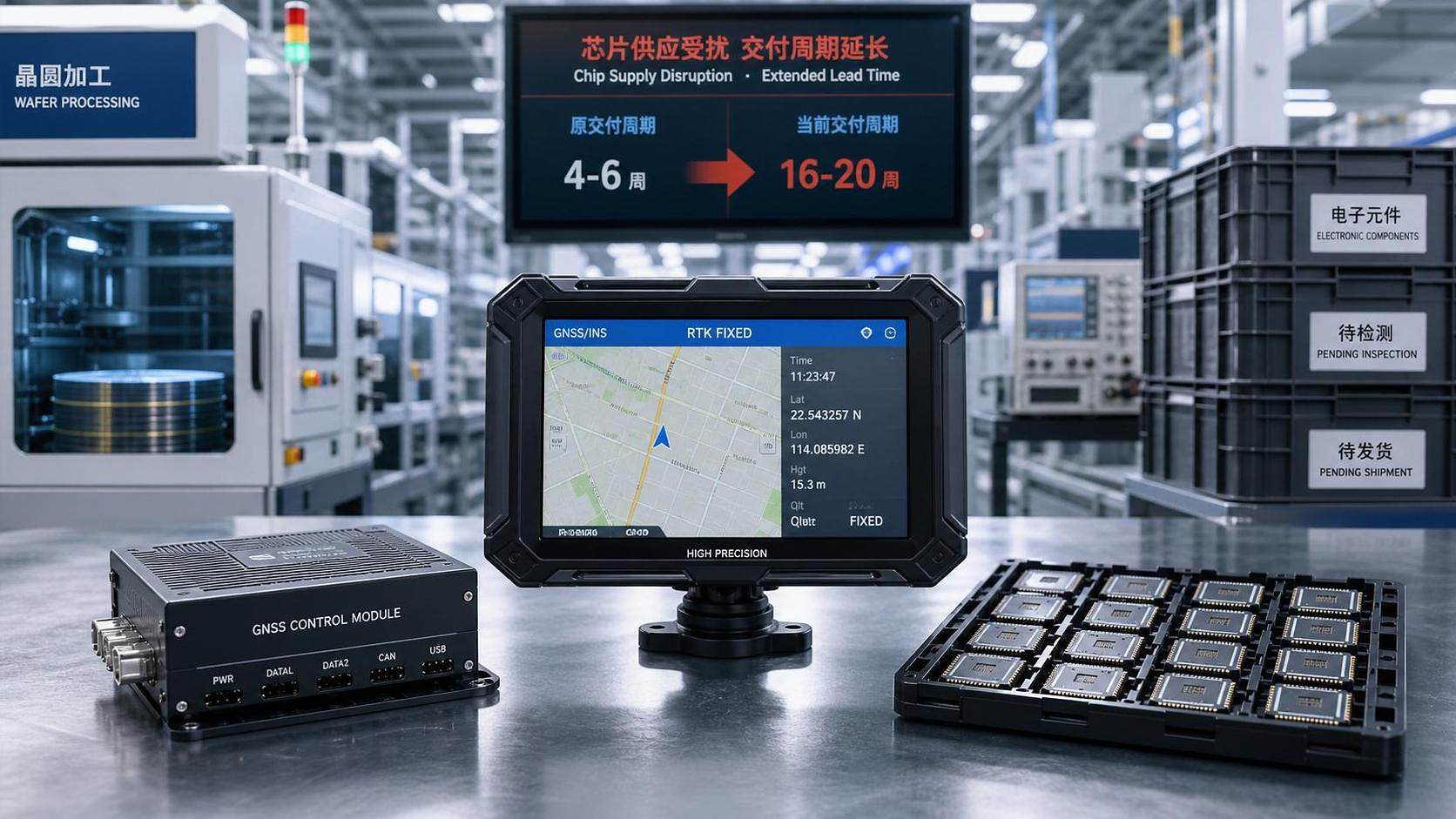




The timing of this disruption is not clearly specified in the source input, but a June 15, 2026 notice cited from Germany’s semiconductor industry association, ZVEI, indicates that a sudden nitrogen system failure at a Dresden wafer fab has cut output of the GNS-8X3 ASIC by 40%. Because this chip is used in high-precision GNSS and inertial fusion modules, and is also a core component in export-oriented navigation terminals from China, the development deserves close attention from GPS guidance system manufacturers, supply-chain teams, exporters, procurement functions, and downstream buyers tracking Q3 delivery risk.
What Has Been Confirmed So Far
According to the provided information, the affected component is the dedicated ASIC model GNS-8X3 used in high-precision GNSS guidance and inertial fusion applications. ZVEI reported on June 15, 2026 that the disruption was linked to an unexpected nitrogen system failure at a wafer fab in Dresden, Germany, and that this incident caused production capacity for the chip to drop by 40%.
The same input states that major global GPS guidance system manufacturers, including Topcon, Trimble, and leading Chinese OEMs, have already notified customers. Their general Q3 delivery window has reportedly been extended from 12 weeks to 18 weeks. The chip is also identified in the source information as a core material item for China’s export-oriented navigation terminals.
Where the Pressure May Appear Across the Chain
Manufacturers face immediate delivery scheduling strain
From an industry perspective, GPS guidance system manufacturers are the first group likely to feel the direct effect because the disclosed delay is already showing up in customer delivery windows. The main pressure point is not only component availability, but also production scheduling, order allocation, and shipment commitments tied to Q3 programs.
Export-oriented terminal businesses may see tighter material coordination
Analysis shows that companies shipping navigation terminals from China may need to pay closer attention because the affected ASIC is described as a core material for export products. If the chip remains constrained, the impact may appear in material matching, export order planning, and coordination between assembly timelines and customer delivery expectations.
Procurement and supply-chain teams will need sharper visibility
For sourcing and supply-chain functions, the issue is less about headline disruption and more about visibility into confirmed lead times, supplier communication rhythm, and changes in allocation status. What deserves closer attention is whether the reported extension from 12 to 18 weeks remains limited to the current Q3 window or begins to affect later delivery planning.
Downstream buyers may need to reassess project timing
For buyers, distributors, and service-side partners relying on GPS guidance systems, the likely impact is concentrated in project scheduling, equipment delivery coordination, and expectation management with end users. Observably, the practical concern is whether existing purchase plans assumed the earlier 12-week cycle and now require adjustment.
Operational Priorities for Companies Right Now
Track official and supplier-side updates closely
Analysis shows that companies should distinguish between the confirmed facts already disclosed and any later interpretation in the market. The most important practical step is to keep monitoring official notices, supplier communications, and customer-facing delivery updates related to the GNS-8X3 supply situation.
Review orders tied to Q3 shipment windows
Because the disclosed delivery window has moved from 12 weeks to 18 weeks, businesses with Q3 shipment commitments should recheck which orders, contracts, or inventory plans depend on the affected chip. This is especially relevant where delivery terms, export timing, or installation schedules were built around the original cycle.
Strengthen customer communication on lead-time changes
For sales, account, and fulfillment teams, the immediate task is to align external communication with the latest confirmed supplier message. What deserves closer attention is consistency: different functions inside the same company should avoid giving different assumptions on delivery timing before further updates are confirmed.
Check documentation and execution readiness in export business
For export-oriented navigation terminal suppliers, the issue is not limited to procurement alone. Observably, businesses should also verify whether their documentation flow, shipment sequencing, and customer commitment records can absorb a six-week extension without creating unnecessary execution disputes.
Why This Matters Beyond a Single Delay
This section is an editorial observation rather than a statement of fact. It is more appropriate to understand this development first as a near-term supply disruption with clear delivery implications, because the confirmed information already points to reduced chip output and longer customer lead times. At the same time, it also signals how dependent parts of the GPS guidance system market remain on specific semiconductor components used in precision positioning and fusion modules.
Analysis shows that the key issue is not simply that one chip has been disrupted, but that the disruption has quickly translated into revised lead times across major manufacturers. That makes this more than a localized factory incident from a business-planning standpoint, even though the longer-term extent of impact still requires further verification.
How the Market Should Read This Development
At this stage, a balanced reading is most appropriate. The confirmed facts support the view that GPS guidance system deliveries are under short-term pressure, especially for Q3 orders linked to the affected ASIC. They do not yet, on their own, support broader conclusions about long-term structural change, wider shortages beyond the disclosed component, or final downstream business outcomes.
In practical terms, this is best understood as a developing industry signal that merits continued monitoring. The immediate takeaway is delivery risk management; the broader takeaway is the need for closer attention to single-component exposure in precision navigation hardware supply chains.
Basis of This Article
This article is generated from the user-provided news title, event timing note, and event summary. The specific official source link was not provided in the input, so the underlying notice and any subsequent updates still require ongoing verification.
For this type of industry development, commonly relevant source categories include official notices, company announcements, industry association disclosures, authoritative media reports, and standard-setting or technical documentation where applicable. Follow-up attention should remain on any new statements from ZVEI, affected manufacturers, and supply-chain participants regarding production recovery, shipment timing, and whether the Q3 delay extends further.
Related News
How to Evaluate Drip Irrigation System Manufacturers for Large Farm Projects
Drip irrigation systems manufacturer evaluation guide for large farms: compare hydraulic design, filtration, quality control, scalability, delivery, and support.

Specification Planning: A Practical Framework for Defining Equipment Requirements
Application guidance for specification planning: define measurable equipment requirements, prioritize performance, and avoid costly procurement mistakes.

How North American Farms Can Select Crop Monitoring Systems by Acreage and Connectivity
Crop monitoring systems North America: learn how to match acreage, connectivity, sensors, and data workflows for reliable, actionable farm decisions.

Where to Find Reliable Product Information for Comparing Farm Equipment
Product information resources agriculture buyers can trust: compare farm equipment with technical specs, manuals, field data, dealer support, and lifecycle insights.

Selecting Real-Time Soil Moisture Sensors for Irrigation Zone Control
Soil moisture sensors real time: learn how to select reliable probes, optimize zone control, improve irrigation decisions, and scale precision water management.

Tractor Hydraulic Systems Troubleshooting: Diagnosing Weak Lift and Slow Implements
Tractor hydraulic systems troubleshooting made practical: diagnose weak lifts and slow implements with proven pressure, flow, valve, and oil-supply checks.

How Tractor Intelligence Systems Improve Field Efficiency and Input Accuracy
Agricultural machinery intelligence for tractors improves field efficiency, input accuracy, data traceability, and implement control. Explore smarter evaluation strategies.

How to Evaluate Crop Monitoring System Manufacturers for Large-Scale Farms
Compare crop monitoring systems manufacturers for large-scale farms. Evaluate data quality, integration, durability, lifecycle costs, support, and pilots for smarter decisions.
Wireless Agricultural Automation for Remote Irrigation and Field Monitoring
Agricultural automation wireless solutions improve remote irrigation with reliable field data, local control, flow verification, and smarter monitoring. Explore resilient deployment strategies.
Related News
- 00
0000-00
How North American Farms Can Select Crop Monitoring Systems by Acreage and Connectivity - 00
0000-00
How Tractor Intelligence Systems Improve Field Efficiency and Input Accuracy - 00
0000-00
China’s Temporary Helium Export Ban Reshapes Irrigation Supply Chains - 00
0000-00
Tianjin to Host 2026 China Farm Machinery Expo - 00
0000-00
Guangxi Subsidy Plan Signals Smarter Farm Machinery Supply Shift
Popular Tags
Tractor Power Architect
Weekly Insights
Stay ahead with our curated technology reports delivered every Monday.