
How Satellite Positioning Improves Field Accuracy: RTK, PPP, and Signal Limits Explained
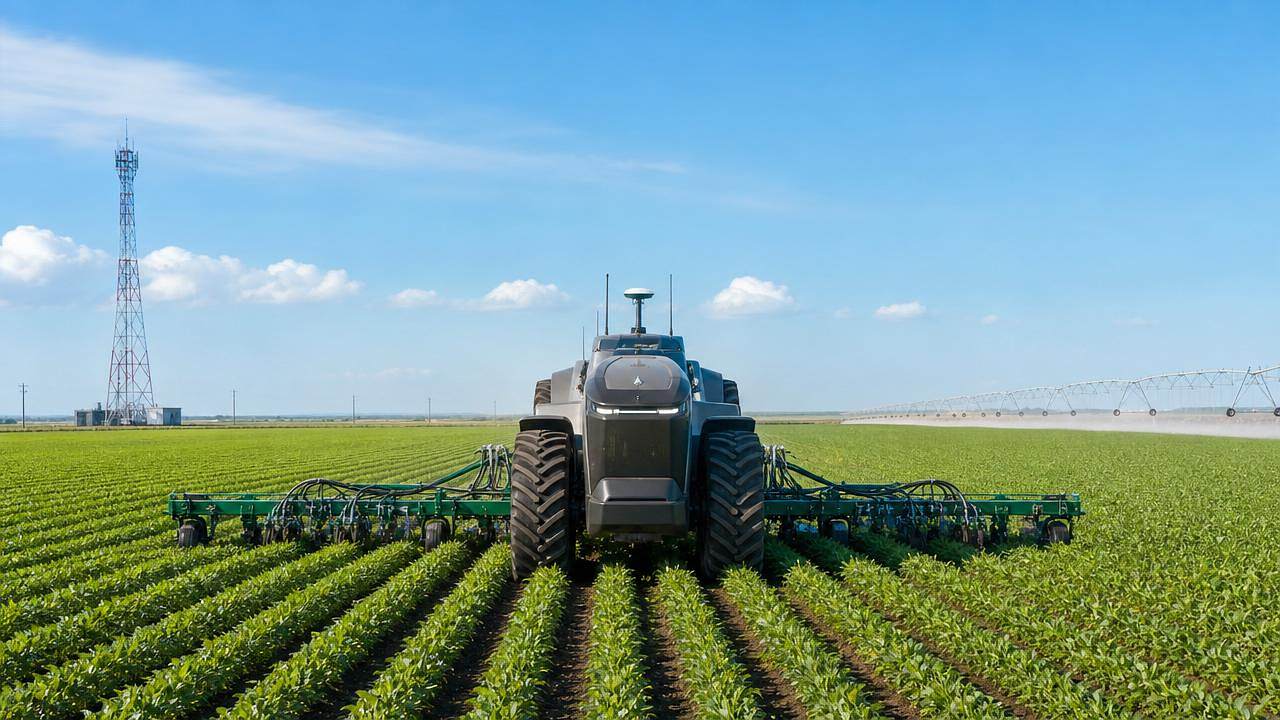




How Satellite Positioning Improves Field Accuracy: RTK, PPP, and Signal Limits Explained
For modern field guidance, satellite positioning is not a background feature.
It shapes steering quality, overlap rates, input control, and machine-to-machine consistency.
That matters across large tractors, combines, and intelligent irrigation equipment.
For technical comparisons, the key question is simple.
Which satellite positioning method delivers the field accuracy a workflow actually needs?
RTK and PPP answer that question differently.
Their correction logic, convergence speed, and signal dependence are not interchangeable.
Understanding those differences helps align precision targets with operating reality.
Why Satellite Positioning Now Defines Practical Field Accuracy
In Agriculture 4.0, guidance is tied to every major field decision.
A few centimeters can change seeding spacing, spraying overlap, and harvest efficiency.
That is why satellite positioning sits at the center of precision farming evaluation.
The signal is not only guiding a machine.
It is supporting agronomic repeatability across passes, seasons, and equipment brands.
More clearly now, farms expect one guidance layer to support several tasks.
Those tasks include strip-till, controlled traffic, variable-rate application, and auto-steer harvesting.
This also means accuracy must be judged by operation type, not by marketing labels alone.
The Three Accuracy Questions That Matter Most
- How accurate is the pass-to-pass position during one operation?
- How repeatable is the line after hours, days, or seasons?
- How stable is satellite positioning under real signal stress?
Those questions separate useful technical evaluation from headline specification reading.
How RTK Satellite Positioning Works in the Field
RTK stands for Real-Time Kinematic positioning.
It improves satellite positioning by using correction data from a known reference station.
That reference compares expected and measured satellite signals.
It then sends real-time corrections to the rover on the machine.
In practical terms, RTK is built for very high local accuracy.
That makes it the benchmark for row crop seeding and repeatable wheel tracking.
Where RTK Usually Performs Best
- Planting where row placement directly affects emergence and later mechanical operations.
- Strip-till systems that require season-to-season line repeatability.
- Controlled traffic farming with fixed wheel lanes.
- High-value specialty cropping where overlap costs rise quickly.
The main advantage is fast correction and tight local precision.
The tradeoff is infrastructure dependence.
RTK satellite positioning needs base stations, radio links, or cellular network access.
RTK Evaluation Points
- Check baseline distance to the reference source.
- Check correction latency during steering events.
- Check recovery time after temporary signal loss.
- Check compatibility with mixed fleets and controller brands.
How PPP Changes the Satellite Positioning Model
PPP means Precise Point Positioning.
Instead of relying on a nearby local base, PPP uses precise orbit and clock corrections.
Those corrections are generated from wider reference networks and delivered to the receiver.
The result is a more globally scalable satellite positioning model.
It reduces dependence on local base station ownership.
That is especially attractive in remote agricultural regions or cross-border equipment deployment.
Where PPP Usually Fits Better
- Large broadacre operations with wide geographic coverage.
- Fleets that move across regions with uneven RTK network support.
- Applications where sub-inch repeatability is less critical than reliable coverage.
- Machines requiring simpler deployment and fewer local infrastructure decisions.
PPP has one issue that still matters in practice.
It often needs convergence time before reaching full accuracy.
That delay may be acceptable in some field operations.
It may be far less acceptable during tight headland turns or frequent stop-start work.
RTK vs PPP: What Technical Evaluators Should Actually Compare
The usual RTK versus PPP debate becomes clearer when tied to operating conditions.
A better comparison uses correction behavior, recovery stability, and repeatability targets.
In short, the best satellite positioning choice is task-dependent, not ideology-driven.
Signal Limits Still Shape Real Performance
Even the best correction service cannot eliminate every signal limit.
This is where many guidance claims meet operational reality.
Satellite positioning quality is still affected by atmosphere, terrain, canopy, and receiver design.
The Most Common Limits in Agricultural Use
- Multipath from metal surfaces, grain bins, and nearby structures.
- Tree lines or uneven terrain blocking part of the sky view.
- Cellular correction interruptions in rural coverage gaps.
- Ionospheric disturbance affecting signal stability.
- Low-grade antennas or weak integration with steering controllers.
A useful evaluation does not stop at nominal accuracy numbers.
It tests how satellite positioning behaves when the field becomes imperfect.
That is often where equipment differences become visible.
How Accuracy Needs Change by Machine and Task
Not every machine asks the same thing from satellite positioning.
A tractor chassis pulling a planter has different tolerance than a combine in a wide header pass.
An intelligent irrigation system may prioritize geospatial consistency over instant steering precision.
Typical Field Demands
- Seeding: highest demand for repeatable row accuracy.
- Spraying: strong need for overlap control and section timing.
- Harvesting: stable guidance helps reduce fatigue and header inefficiency.
- Irrigation mapping: reliable spatial reference supports uniform resource application.
This is why satellite positioning must be evaluated as part of the full machine system.
A Practical Evaluation Framework for Satellite Positioning
A strong review framework keeps the discussion technical and useful.
It also prevents overbuying precision that never creates operational value.
- Define the required accuracy by task, not by brochure class.
- Match RTK or PPP to local infrastructure conditions.
- Measure pass-to-pass drift during a full working day.
- Test recovery after correction dropouts or obstructed sky view.
- Review data compatibility with steering, implement, and farm management platforms.
- Estimate total ownership cost, including subscriptions, networks, and support.
From a decision standpoint, this framework is more durable than headline centimeter claims.
It ties satellite positioning performance directly to field output and risk control.
Choosing the Right Precision Standard for Real Operations
The bigger lesson is straightforward.
Satellite positioning is only valuable when correction logic matches operational demands.
RTK remains a strong choice for high-repeatability line work and intensive precision tasks.
PPP offers a compelling path where scale, mobility, and coverage simplicity matter more.
Neither method escapes signal limits completely.
That is why field validation remains essential.
In practical agricultural planning, the best satellite positioning strategy is the one that stays accurate when conditions stop being ideal.
Use that standard, and guidance investment becomes easier to justify across machinery, harvesting systems, and intelligent irrigation networks.
Related News
How to Evaluate Drip Irrigation System Manufacturers for Large Farm Projects
Drip irrigation systems manufacturer evaluation guide for large farms: compare hydraulic design, filtration, quality control, scalability, delivery, and support.
Specification Planning: A Practical Framework for Defining Equipment Requirements
Application guidance for specification planning: define measurable equipment requirements, prioritize performance, and avoid costly procurement mistakes.

How North American Farms Can Select Crop Monitoring Systems by Acreage and Connectivity
Crop monitoring systems North America: learn how to match acreage, connectivity, sensors, and data workflows for reliable, actionable farm decisions.

Where to Find Reliable Product Information for Comparing Farm Equipment
Product information resources agriculture buyers can trust: compare farm equipment with technical specs, manuals, field data, dealer support, and lifecycle insights.
Selecting Real-Time Soil Moisture Sensors for Irrigation Zone Control
Soil moisture sensors real time: learn how to select reliable probes, optimize zone control, improve irrigation decisions, and scale precision water management.
Tractor Hydraulic Systems Troubleshooting: Diagnosing Weak Lift and Slow Implements
Tractor hydraulic systems troubleshooting made practical: diagnose weak lifts and slow implements with proven pressure, flow, valve, and oil-supply checks.
How Tractor Intelligence Systems Improve Field Efficiency and Input Accuracy
Agricultural machinery intelligence for tractors improves field efficiency, input accuracy, data traceability, and implement control. Explore smarter evaluation strategies.
How to Evaluate Crop Monitoring System Manufacturers for Large-Scale Farms
Compare crop monitoring systems manufacturers for large-scale farms. Evaluate data quality, integration, durability, lifecycle costs, support, and pilots for smarter decisions.
Wireless Agricultural Automation for Remote Irrigation and Field Monitoring
Agricultural automation wireless solutions improve remote irrigation with reliable field data, local control, flow verification, and smarter monitoring. Explore resilient deployment strategies.
Related News
- 00
0000-00
How North American Farms Can Select Crop Monitoring Systems by Acreage and Connectivity - 00
0000-00
How Tractor Intelligence Systems Improve Field Efficiency and Input Accuracy - 00
0000-00
China’s Temporary Helium Export Ban Reshapes Irrigation Supply Chains - 00
0000-00
Tianjin to Host 2026 China Farm Machinery Expo - 00
0000-00
Guangxi Subsidy Plan Signals Smarter Farm Machinery Supply Shift
Popular Tags
Tractor Power Architect
Weekly Insights
Stay ahead with our curated technology reports delivered every Monday.